Disclosure: airfryerkitchensupply.com is reader-supported. When you buy through links on our site, we may earn an affiliate commission at no extra cost to you.
Where to Buy
Every verified pick in this guide to the best electronic pool vacuums is sold through Amazon, where you can check price on Amazon for the exact size, colour, or configuration you want before ordering: Dolphin Robotic Pool Vacuum (In-Ground, up to 40 ft), Dolphin Nautilus CC Robotic Pool Vacuum, WYBOT C1 Cordless Robotic Pool Vacuum, AIPER Seagull Pro Cordless Robotic Pool Cleaner, S1 Pro Cordless Robotic Pool Cleaner (Above Ground), POOL BLASTER Max Cordless Pool Vacuum. Stock and configurations move often on home gear, so confirm the live listing details — dimensions, materials, and care instructions — on the product page itself before you commit.
A quick note on how to use this page: start with the Quick Picks if you already know your situation, read the full review of any pick that catches your eye, and then work through the buying guide and mistakes sections before you order. Those later sections are where most returns are prevented, because they cover the measurements, compatibility checks, and care realities that a product photo never shows.
The best electronic pool vacuums share one defining trait: they carry their own motor and their own filtration, so they clean under their own power instead of borrowing suction from your pool pump. That family covers corded robotic cleaners that scrub walls and waterlines, cordless robots that drop in and run on a battery, and handheld battery vacuums for spot-cleaning steps and spas. What it does not cover is the suction-side or pressure-side cleaner that plugs into your plumbing — those are different machines with different ownership costs, and they are excluded here on purpose.
Electronic cleaners changed pool ownership because they decouple cleaning from the circulation system. A robot scrubs the floor and climbs the walls while the pump rests, traps debris in its own basket or cartridge, and — in the cordless generation — does it all without a cable crossing the deck. The trade-offs are equally real: robots cost more upfront than suction cleaners, batteries and brushes are consumables, and a cleaner sized wrong for your pool is an expensive ornament.
The six picks below cover the realistic spread: two proven corded Dolphin robots for in-ground pools, two cordless WYBOT and AIPER robots for cable-free cleaning, a cordless above-ground specialist, and a handheld Pool Blaster for steps, spas, and spot work. Each is judged on pool type and size fit, wall climbing, filtration, runtime or cable practicality, and the maintenance rhythm it asks of you.
In this guide
Quick Picks
These six picks cover the realistic spread of the best electronic pool vacuums market, from the value end to the premium end. Each one earned its slot for a distinct reason, and each carries a badge that tells you, at a glance, the job it does best.
- Dolphin Robotic Pool Vacuum (In-Ground, up to 40 ft) — Best Overall Corded Robot. The proven in-ground workhorse: smart navigation, an active scrubbing brush, and wall climbing for pools up to 40 feet. Positioned in the mid-range tier.
- Dolphin Nautilus CC Robotic Pool Vacuum — Best Value Corded Robot. The Nautilus formula at a friendlier tier: wall climbing and scrubbing with top-load filter access that makes the weekly rinse painless. Positioned in the mid-range tier.
- WYBOT C1 Cordless Robotic Pool Vacuum — Best Cordless for In-Ground Pools. Cable-free in-ground cleaning with a long 160-minute runtime: charge it, drop it in, and fish it out when the pool is done. Positioned in the mid-range tier.
- AIPER Seagull Pro Cordless Robotic Pool Cleaner — Best Cordless Cleaning Power. The cordless power pick: four motors, planned navigation paths, and wall climbing for larger in-ground pools. Positioned in the premium tier.
- S1 Pro Cordless Robotic Pool Cleaner (Above Ground) — Best for Above-Ground Pools. The above-ground specialist: a light cordless robot tuned for flat-bottom vinyl pools, with 130 minutes to cover them. Positioned in the budget tier.
- POOL BLASTER Max Cordless Pool Vacuum — Best Handheld for Steps and Spas. Not a robot — a rechargeable handheld vacuum for the jobs robots miss: steps, spas, swim-outs, and the leaf pile in the corner. Positioned in the budget tier.
How These Picks Were Chosen
The first gate was definitional: a pick had to be genuinely electronic — self-powered with its own motor and onboard filtration — and confirmed on this site’s own account, with the listed title matching the model described. Suction-side and pressure-side cleaners, however good, were excluded because they answer a different search and a different ownership question.
Within the family we judged cleaning coverage first: floor-only cleaners are cheaper, but walls and the waterline are where algae and scum announce themselves, so wall-climbing earned its premium in our weighting. Filtration came second — basket capacity and filter fineness decide how often you stop to empty and how much fine silt actually leaves the pool. Third came practicality: cable length and swivel behaviour on corded models, runtime and charge time on cordless ones, and the weight of the machine when you haul it out dripping.
The six slots were then spread deliberately across pool types and budgets: in-ground corded, in-ground cordless, above-ground cordless, and handheld — because the most expensive mistake in this category is buying an excellent cleaner for the wrong pool.
The 6 Best Electronic Pool Vacuums
Each review below follows the same pattern: who the pick suits and who it does not, three strengths, three honest trade-offs, the specifications we could verify, and a plain verdict. Badges match the Quick Picks above so you can cross-reference without hunting.

Dolphin Robotic Pool Vacuum (In-Ground, up to 40 ft) — Best Overall Corded Robot
This Dolphin is the default answer for a mid-size in-ground pool. Its smart navigation maps an efficient route instead of wandering randomly, the scrubbing brush works the floor and walls rather than merely vacuuming over them, and the corded design means unlimited runtime — drop it in for a full cycle whenever the pool needs it, including the day before a party. It suits in-ground pools up to 40 feet with typical shapes. It is less suited to above-ground pools, whose liners and walls are not built for a climbing robot of this weight and grip.
Strengths
- Smart navigation covers the pool systematically instead of bouncing randomly
- Active scrubbing brush loosens algae film and stuck debris, not just loose dirt
- Corded power means no runtime anxiety and no battery to age
Trade-offs
- The cable needs managing — a swivel helps, but you still coil and store it
- Heavier to lift out of the water than cordless rivals
- Overkill for small above-ground pools, and not rated for them
Key specs
- Type: Corded robotic cleaner
- Pool fit: In-ground, up to 40 ft (Amazon listing)
- Cleaning: Floor and walls, scrubbing brush, smart navigation
- Filtration: Onboard basket/cartridge (model configuration)
Dolphin’s long presence in robotic cleaning shows in the details that matter by the third month: navigation that does not leave scallop patterns of missed dirt, a brush that actually scrubs, and a power supply that lives happily on a deck box. The up-to-40-foot rating covers the great majority of residential in-ground pools, and corded operation means the cleaning cycle you start is the cycle that finishes — no half-cleaned pool because a battery faded.
Ownership rhythm is simple: run it two or three times a week in season, rinse the filter basket after each run (a two-minute job), and store it out of the water on its caddy or in shade. Treated that way, a Dolphin-class robot is a multi-season purchase, and its brushes and tracks are the consumables to budget for in qualitative terms.
Best for: In-ground pools up to 40 ft wanting systematic, scrubbing, set-and-forget cleaning / Not suited for: Above-ground pools, or anyone who hates handling a cable
Check the current price on Amazon for the Dolphin Robotic Pool Vacuum (In-Ground, up to 40 ft) in your size and colour before you order.
Dolphin Nautilus CC Robotic Pool Vacuum — Best Value Corded Robot
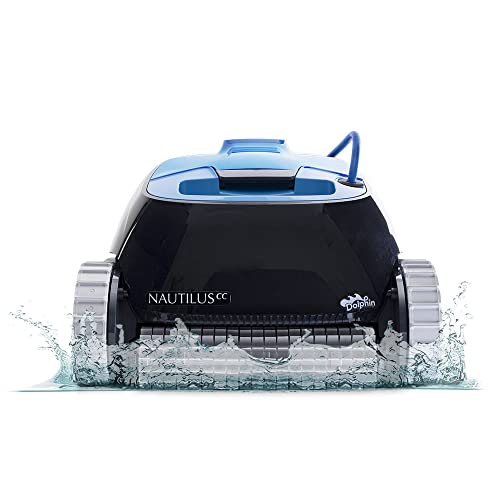
The Nautilus CC is the value expression of the Dolphin idea — the same wall-climbing, scrubbing approach, with a top-load filter basket you lift out from above instead of flipping the machine over. That single design choice decides how often owners actually clean the filter, which decides how well the robot keeps cleaning. It suits in-ground pools and, per its listing, above/in-ground use within its size class. It is less suited to owners of very large pools, who should step up to the higher-coverage model above.
Strengths
- Top-load filter access — the basket lifts out without turning the robot over
- Wall-climbing scrubber covers floor, walls, and the waterline approach
- Dolphin parts and support ecosystem behind a value-tier machine
Trade-offs
- Smaller filter capacity than the flagship-class models — rinse it more often in leaf season
- Corded, with the same cable management as any corded robot
- Navigation is capable rather than the smartest in the range
Key specs
- Type: Corded robotic cleaner
- Filter access: Top load (Amazon listing)
- Cleaning: Wall climbing scrubber brush
- Pool fit: Above/in-ground within size class (Amazon listing)
Ask robot owners what they neglect and the answer is always the filter — because on bottom-access models, cleaning it means hauling a wet robot out, flipping it, and getting soaked for your trouble. The Nautilus CC’s top-load basket removes that friction, and a filter that is easy to rinse gets rinsed, which keeps suction and cleaning performance where they should be. It is an unglamorous feature that outperforms smarter-sounding ones in real ownership.
As the value corded pick, it asks you to accept a smaller basket and simpler navigation in exchange for the tier. In a pool without heavy leaf fall, that trade is barely visible; under big trees in autumn, you will rinse more often — a fair bargain, honestly labelled.
Best for: In-ground pool owners wanting Dolphin cleaning with the easiest filter routine / Not suited for: Very large pools or heavy leaf-fall pools needing maximum basket capacity
Check the current price on Amazon for the Dolphin Nautilus CC Robotic Pool Vacuum in your size and colour before you order.

WYBOT C1 Cordless Robotic Pool Vacuum — Best Cordless for In-Ground Pools
The WYBOT C1 is for owners who look at a cleaning cable and see the whole problem. Fully cordless, it charges on the deck, drops in, and runs a full floor-walls-waterline cycle on a battery rated up to 160 minutes — long enough for most residential in-ground pools in a single session. It suits pools where a cable crossing the deck is a trip hazard or an eyesore, and owners happy to trade a charging routine for cable freedom. It is less suited to anyone who wants to run back-to-back cycles all day; a battery machine keeps battery hours.
Strengths
- No cable at all — nothing to coil, tangle, or trip over
- Long runtime covers most in-ground pools in one session
- Cleans floor, walls, and waterline in a single drop-in cycle
Trade-offs
- Battery is a consumable that will age over seasons of use
- Must be retrieved and recharged after each session — no leaving it on duty
- Costs more than a comparable corded cleaner for the same pool size
Key specs
- Type: Cordless robotic cleaner
- Runtime: Up to 160 mins (Amazon listing)
- Pool fit: In-ground pools (Amazon listing)
- Cleaning: Floor, walls, waterline (4-in-1 positioning)
Cordless robots won their place by removing the category’s daily annoyance. There is no power supply to shelter, no cable to untwist, and no cord draped across the coping stones — the pool looks like a pool, not a worksite, even mid-clean. The C1’s long runtime is what makes that freedom practical rather than theoretical: short-runtime cordless cleaners that die mid-pool teach owners to stop trusting them.
The discipline it asks in return is a charging rhythm. Bring it out after each session (leaving any robot sitting in chlorinated water ages seals and finishes), rinse the filter, and put it on charge so it is ready for the next run. Owners who keep that rhythm love cordless; owners who want a machine that lives in the pool should buy corded.
Best for: In-ground owners who value a cable-free deck and will keep a charging routine / Not suited for: Anyone wanting unlimited back-to-back cycles or a cleaner that lives in the water
Check the current price on Amazon for the WYBOT C1 Cordless Robotic Pool Vacuum in your size and colour before you order.

AIPER Seagull Pro Cordless Robotic Pool Cleaner — Best Cordless Cleaning Power
The Seagull Pro is the cordless robot for bigger, harder-working pools. Its quad-motor drive gives it the traction to climb walls and hold a planned WavePath route instead of wandering, and 150 minutes of runtime covers large in-ground pools in a session. It suits owners of bigger pools who want cordless freedom without giving up systematic coverage. It is less suited to small pools, where its capability — and its premium tier — are more machine than the water needs.
Strengths
- Quad-motor drive climbs walls confidently and holds its route
- WavePath navigation cleans in planned lines, not random bounces
- Long runtime sized for larger in-ground pools
Trade-offs
- Premium tier — the most expensive cordless route in this guide
- A substantial machine to lift out of the water when wet
- Battery care and charging discipline are part of ownership
Key specs
- Type: Cordless robotic cleaner
- Drive: Quad-motor (Amazon listing)
- Navigation: WavePath (Amazon listing)
- Runtime: 150 mins (Amazon listing)
Navigation is where cordless robots separate. A random-bounce cleaner eventually covers a pool the way a dropped leaf eventually crosses it; a path-planning cleaner like the Seagull Pro covers it in lines, in one battery, with the walls included. On a large pool that difference is the difference between a finished job and a hopeful one, and the quad motors supply the grip that wall climbing on tile or plaster actually requires.
AIPER’s positioning is premium and the machine should be judged that way: fit and finish, route intelligence, and retrieval — it parks at the wall when the battery runs low rather than dying mid-pool, a small behaviour that saves a lot of net-fishing. If your pool is large and your tolerance for cables is zero, this is the considered choice.
Best for: Larger in-ground pools wanting planned, powerful, cable-free cleaning / Not suited for: Small pools or budget-led buyers — corded value models serve those better
Check the current price on Amazon for the AIPER Seagull Pro Cordless Robotic Pool Cleaner in your size and colour before you order.

S1 Pro Cordless Robotic Pool Cleaner (Above Ground) — Best for Above-Ground Pools
Above-ground pools need their own cleaner logic: flat or gently dished vinyl floors, no wall climbing required (and no wall structure to climb), and a machine light enough to lift over the side. The S1 Pro is built exactly to that brief — cordless, 130 minutes of runtime, and coverage sized for above-ground footprints. It suits round and oval above-ground pools whose owners are tired of manual vacuuming through the skimmer. It is less suited to in-ground pools, where wall climbing and heavier debris handling are the job.
Strengths
- Purpose-built for above-ground pools — right weight, right cleaning pattern
- 130-minute runtime covers typical above-ground sizes in one session
- Cordless drop-in use suits pools with no nearby outlet for a power supply
Trade-offs
- Floor-focused cleaning — it will not scrub in-ground walls or waterlines
- Vinyl-safe gentleness means less muscle for heavy in-ground debris
- Battery routine applies, as with all cordless models
Key specs
- Type: Cordless robotic cleaner
- Pool fit: Above-ground pools (Amazon listing)
- Runtime: 130 mins (Amazon listing)
- Coverage: Up to 1,292 sq ft class (Amazon listing)
The most common above-ground cleaning mistake is buying an in-ground robot and watching it struggle — too heavy for the walls, too aggressive for the liner, too much money for the job. A dedicated above-ground cordless cleaner inverts every one of those problems: it is light, it is gentle on vinyl, and its runtime is matched to the smaller water volume it serves.
For above-ground owners the quality-of-life change is the headline. Manual vacuuming through a skimmer plate is the chore that makes people use their pool less; a drop-in robot that runs while you do something else is how the pool gets used more. At the budget tier, that is the correct purchase logic.
Best for: Above-ground pool owners wanting drop-in automatic cleaning matched to vinyl pools / Not suited for: In-ground pools needing wall climbing and waterline scrubbing
Check the current price on Amazon for the S1 Pro Cordless Robotic Pool Cleaner (Above Ground) in your size and colour before you order.
POOL BLASTER Max Cordless Pool Vacuum — Best Handheld for Steps and Spas
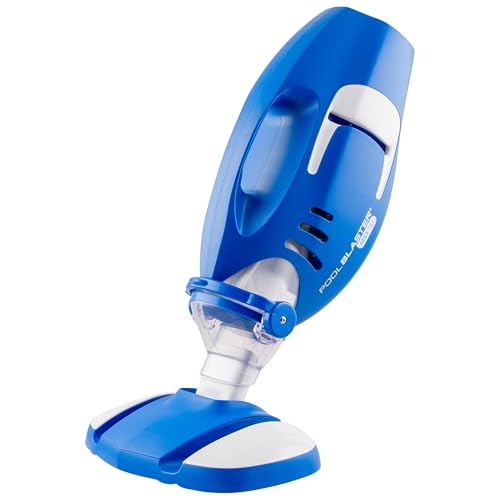
Every pool has places robots do badly: tight steps, spa spillovers, beach entries, and the corner where the wind parks every leaf. The Pool Blaster Max is the tool for those places — a self-contained rechargeable vacuum with its own debris chamber that works by hand or on a standard telescopic pole. It suits every pool owner as a complement to a robot, and small pool and spa owners as a main cleaner. It is less suited to cleaning an entire large pool floor, which would be a long afternoon at walking pace.
Strengths
- Fully self-contained — no hoses, no pump, no booster needed
- Reaches steps, spas, and corners that robots cannot serve
- Works in both in-ground and above-ground pools and attached spas
Trade-offs
- Manual tool — you are the navigation system
- Debris chamber is sized for spot work, not a whole leaf-strewn pool
- Runtime is per-charge; big jobs need a recharge break
Key specs
- Type: Handheld cordless vacuum
- Power: Rechargeable battery (Amazon listing)
- Use: Spot cleaning, steps, spas, whole small pools
- Pool fit: In-ground and above-ground (Amazon listing)
The Pool Blaster line has survived for years because the niche is permanent: robots are getting better and steps are not getting simpler. A handheld with genuine suction and a reusable filter bag handles the grit that collects on tanning ledges and the sand that settles in spa seats — the debris owners actually see and touch — in a five-minute session between robot runs.
Judge it as a complement and it is an easy recommendation at its tier. Judge it as a whole-pool cleaner for a large in-ground pool and you will be disappointed by physics, not by the product. Many owners in this category end up with exactly the pairing this guide suggests: a robot for the acreage, a Pool Blaster for the details.
Best for: Spot-cleaning steps, spas, and corners alongside a robot — or as the main cleaner for small pools and spas / Not suited for: Whole-floor cleaning of a large pool on its own
Check the current price on Amazon for the POOL BLASTER Max Cordless Pool Vacuum in your size and colour before you order.
Comparison Table
| Pick | Badge | Key spec | Best for |
|---|---|---|---|
| Dolphin Robotic Pool Vacuum (In-Ground, up to 40 ft) | Best Overall Corded Robot | Corded robot, wall-climbing scrubbing brush, smart navigation, pools up to 40 ft | In-ground pools up to 40 ft wanting systematic, scrubbing, set-and-forget cleaning |
| Dolphin Nautilus CC Robotic Pool Vacuum | Best Value Corded Robot | Corded robot, wall climbing, top-load filter access | In-ground pool owners wanting Dolphin cleaning with the easiest filter routine |
| WYBOT C1 Cordless Robotic Pool Vacuum | Best Cordless for In-Ground Pools | Cordless robot, up to 160 mins runtime (listing), floor/wall/waterline cleaning | In-ground owners who value a cable-free deck and will keep a charging routine |
| AIPER Seagull Pro Cordless Robotic Pool Cleaner | Best Cordless Cleaning Power | Cordless, quad-motor, WavePath navigation, wall climbing, 150 mins runtime | Larger in-ground pools wanting planned, powerful, cable-free cleaning |
| S1 Pro Cordless Robotic Pool Cleaner (Above Ground) | Best for Above-Ground Pools | Cordless robot for above-ground pools, 130-min runtime, flat-bottom cleaning | Above-ground pool owners wanting drop-in automatic cleaning matched to vinyl pools |
| POOL BLASTER Max Cordless Pool Vacuum | Best Handheld for Steps and Spas | Handheld rechargeable vacuum, pole-attached or hand-held, spot cleaning | Spot-cleaning steps, spas, and corners alongside a robot — or as the main cleaner for small pools and spas |
Read the table as a shortlist, not a ranking. The best electronic pool vacuums for your home depends on the constraints in the buying guide below — size, material, care, and how the product will actually be used day to day — far more than on any single headline feature.
How to Choose an Electronic Pool Vacuum
Start with your pool, not with the cleaner. In-ground or above-ground, floor material, and length decide the class you should shop in before any brand matters. A wall-climbing robot earns its premium only in an in-ground pool with walls worth scrubbing; in a flat-bottom above-ground pool that same machine is wasted money and extra weight. Measure your pool’s length and check it against the cleaner’s rating — corded models by cable reach, cordless models by runtime and coverage.
Then choose your power philosophy:
- Corded robots (the Dolphins) — unlimited runtime, strongest sustained cleaning, a cable to manage. Best for larger pools, heavy debris, and owners who run long cycles.
- Cordless robots (WYBOT, AIPER, S1 Pro) — total deck freedom, a charging routine, a battery that ages. Best for typical residential pools cleaned in single sessions.
- Handheld vacuums (Pool Blaster) — no automation, total control. Best for steps, spas, spot work, and very small pools.
Finally, check filtration against your debris. Leaf-heavy pools need basket capacity; pools plagued by fine silt and sand need finer filtration and will clog a coarse basket’s flow quickly. The filter you will rinse weekly deserves as much attention as the motor you will never see.
Wall Climbing, Waterline Scrubbing, and What Coverage Really Means
Manufacturers describe coverage in layers: floor only, floor and walls, or floor, walls, and waterline. Each layer is a real capability difference. Floor-only cleaners leave the wall base — where algae starts — to your brush. Wall climbers scrub the walls on each cycle. Waterline cleaning attacks the scum line of sunscreen and oils that forms at the surface, the single most visible dirt in a pool.
Climbing is a traction problem. A robot climbs by driving water through itself fast enough to pin it to the wall while its tracks grip; slippery algae films, very smooth tile, and sharp floor-to-wall corners all defeat marginal climbers. Quad-motor and brush-equipped models exist because grip is the job. If your pool has a tight cove radius or fibreglass steps, expect any robot to need a handheld helper — which is why the Pool Blaster holds a slot in this guide rather than pretending robots do everything.
Navigation matters as much as climbing. Systematic scanners and path-planners finish a pool in one rated cycle; random-bounce cleaners need longer and still miss patches. For cordless models especially, where the battery is the budget, navigation efficiency is cleaning capacity.
Battery vs Cable: The Real Ownership Difference
The corded ownership pattern: the robot can live on a caddy by the pool, runs as long and as often as you ask, and its consumables are brushes, tracks, and filters. Its costs are chore-shaped — five minutes managing a cable each session, and a power supply that must stay dry and shaded. The cordless pattern inverts it: zero cable chores, but the machine must come out, be rinsed, and go on charge after every session, and its battery will lose capacity over seasons the way every rechargeable battery does.
Neither is the ‘modern’ or ‘old-fashioned’ choice — they are different contracts. Households that clean little and often, and hate cables on the deck, thrive with cordless. Households with big pools, heavy leaf fall, or a cleaner that runs most days are better served by corded endurance. Be honest about which household yours is; the wrong contract is how good cleaners end up resold.
Whichever you choose, one rule is universal: do not store any electronic cleaner sitting in the pool. Chlorine and sun age seals, cables, and batteries. Out, rinsed, shaded — that habit doubles the useful life of everything in this guide.
Pool Surfaces and Shapes: Matching the Robot to Your Pool’s Reality
Robots do not experience your pool as a rectangle of water; they experience it as a surface with a texture, a slope, and a set of obstacles. Plaster and pebble finishes give tracks honest grip, which is why wall climbing is most reliable on them. Smooth tile and fibreglass are the hard mode of climbing — marginal robots slide, and the quad-motor and brush-equipped picks in this guide earn their tiers exactly there. Vinyl liners sit between: grippy enough for rated above-ground cleaners, but vulnerable to aggressive brushes, which is why in-ground robots and vinyl pools are a pairing to avoid unless the maker rates the machine for it.
Shape matters as much as surface. Rectangular pools are the navigation easy case, and every pick here handles them. Freeform and kidney pools, beach entries, and built-in benches break planned paths into segments; systematic-navigation models recover gracefully, while random-bounce cleaners need longer sessions. Deep-end slopes are a quiet filter too: a robot that stalls on a steep hopper wastes its battery circling the shallow end, so owners of dramatic depth changes should favour the stronger-drive picks and run the deep clean as its own session.
Obstacles deserve a pre-season audit: ladders, raised drain covers, in-floor cleaning heads, and loose toys all stop robots or tangle cables. Five minutes removing what can be removed, before the first run of the season, is worth more than any navigation feature sold since.
The True Cost Rhythm of an Electronic Cleaner
Electronic cleaners cost money in a rhythm, not a single payment, and buying well means knowing the beat. The predictable consumables are brushes and tracks or wheels, which wear by friction against your pool’s surface; filters and baskets, which last seasons if rinsed and die early if left clogged and wet; and, on cordless models, the battery, which fades gradually over years of charge cycles. None of these are surprises — they are the pool equivalent of tyres on a car — and the picks in this guide were chosen partly because their makers support them with available parts.
The avoidable costs are behavioural. A robot stored in the pool ages its seals and cable in chlorine and sun, converting a multi-season machine into a two-season one. A filter left unrinsed forces the motor to work against its own dirt on every run. A cable stored kinked on a hook develops memory that tangles forever. Each of these is a habit, not a purchase, and each is covered in this guide’s setup routine because the cheapest maintenance is the kind done in two minutes after every swim-day clean.
Set against that rhythm is what the electronic cleaner replaces: the hours of manual vacuuming, the wear on the main pump from suction-side cleaning, and the pool parties not hosted because the water was not ready. Households that swim weekly recover the machine’s cost in reclaimed weekends within a couple of seasons — the arithmetic that makes a robot the pool purchase owners most consistently say they should have made earlier.
Winterising and Storing an Electronic Pool Cleaner
The off-season decides a cleaner’s lifespan as surely as the swimming season does. Before storage, give the robot its most thorough clean of the year: filter rinsed and fully dried before it is put away (a filter stored damp grows the smell you will meet in spring), brushes checked for wrapped hair and string, and the whole machine dried in shade. Corded models should have their cable inspected along its length for nicks, then coiled loosely in large loops — tight coils and hooks teach cables a permanent tangle.
Store the machine indoors, out of freezing garages if the maker warns against frost, and never under a pile of pool chemicals whose fumes corrode contacts and seals. Cordless batteries prefer partial charge for long storage rather than full or empty; charge the machine once mid-winter if the manual asks for it, and always give it a full charge and a short test run before the first spring clean, when a dead battery is an unwelcome surprise.
Keep the manual and any spare filters with the machine, in the same box or bin. The household that can find its cleaner’s filter stock in April is the household whose pool opens on time — a small organisational virtue that this guide recommends with complete seriousness.
How to Use a Robotic Pool Vacuum for a Full Clean
A robot does the work, but the owner sets the conditions. This routine gets a complete clean out of any robot in this guide, corded or cordless.
- Brush the steps, swim-outs, and waterline by hand first if they are visibly filmed — two minutes with a pool brush knocks debris into the water column where the robot can collect it.
- Check the robot’s filter basket or cartridge is clean and seated, and (for cordless models) that the battery is fully charged. A half-clogged filter is the top cause of ‘my robot stopped cleaning well.’
- Lower the robot into the water slowly, letting air escape so it sinks to the floor under its own weight — trapped air makes robots float and wander.
- For corded models, feed out only as much cable as the pool needs and keep the power supply at least a few metres from the water’s edge, shaded and dry. Start the cycle and let it run to completion without interruption.
- Retrieve the robot by its handle (or cable, gently, only until you can reach the handle), let it drain over the pool, then rinse the filter with a hose until the water runs clear.
- Store the robot out of the water, shaded, with the cable loosely coiled or the battery on charge. Note the session in your phone if you are building the habit — two to three sessions a week keeps most pools ahead of algae.
Follow that rhythm and the pool stays clean with less total effort than one big rescue clean a month — robots reward frequency, not heroics.
Common Buying Mistakes
Buying an in-ground robot for an above-ground pool. Wall-climbing robots are heavy, grippy, and rated for rigid in-ground walls. On a vinyl above-ground pool they are the wrong weight and the wrong tool. Match the cleaner class to the pool class — the S1 Pro exists precisely for this reason.
Leaving the cleaner living in the pool. Chlorinated water and sun degrade seals, cables, finishes, and batteries. Every cleaner in this guide should come out, be rinsed, and be stored shaded after its cycle. Storage habits decide lifespan more than brand does.
Running a robot with a clogged filter. A full basket strangles flow, kills wall climbing, and leaves dirt behind — then the robot gets blamed. Rinse the filter after every session. It takes two minutes and it is the whole maintenance secret of this category.
Expecting a robot to do steps and spas. Robots clean broad surfaces. Steps, ledges, and attached spas are handheld territory. Budget for the pairing — robot plus a Pool Blaster-type tool — instead of resenting the robot for geometry.
Ignoring the first algae bloom. Robots maintain clean pools brilliantly and rescue green pools slowly. If the water has gone green, treat the water chemistry first and brush the surfaces; then let the robot maintain what you have recovered.
Final Recommendation
For a mid-size in-ground pool, the corded Dolphin is the complete answer — systematic, scrubbing, and tireless — with the Nautilus CC as the value route to the same cleaning with an easier filter routine. For cable-free in-ground cleaning, the WYBOT C1 covers most pools in one long session, and the AIPER Seagull Pro is the powerful, path-planned step up for larger water. Above-ground owners should buy the S1 Pro without a second thought, and every pool benefits from a Pool Blaster Max standing by for steps and spas.
Match the class to your pool, rinse the filter religiously, and store the machine out of the water. Do those three things and an electronic vacuum quietly removes the worst chore in pool ownership.
One last word on expectations: an electronic cleaner maintains a pool that is chemically balanced and structurally sound — it is not a substitute for water testing, brushing the tight corners by hand now and then, or fixing the filter problem that keeps clouding the water. Owners who keep that division of labour clear get a pool that looks professionally kept with a fraction of the professional’s visits. Owners who ask the robot to compensate for neglected chemistry blame a good machine for a chemistry problem, and this guide would rather you spent the money in the right order: test kit first, robot second, sparkling water all season, with the robot quietly doing the heavy work in between swims. That division — you handle chemistry and corners, the machine handles acreage and routine — is the arrangement behind every effortlessly clean pool you have ever admired at a neighbour’s house, and it is achievable in a single purchase when the purchase is matched to the pool.
Related guides in this series: Best Robotic Pool Cleaners Best Cordless Pool Vacuums Best Above Ground Pool Vacuums Best Pool Cleaners For Leaves Best Automatic Pool Cleaners Best Pool Vacuum For Algae
Frequently Asked Questions
What makes a pool vacuum ‘electronic’?
It carries its own motor and filtration, so it cleans under its own power. Robotic cleaners and battery handhelds are electronic. Suction-side and pressure-side cleaners are not — they borrow power from your pool’s plumbing and pump, which makes them a different category with different costs and behaviour.
Are cordless pool robots as good as corded ones?
For a typical residential pool cleaned in a single session, yes — modern cordless robots climb walls, scrub, and navigate properly. Corded models still win on unlimited runtime, back-to-back cycles, and having no battery to age. The choice is a routine preference, not a quality verdict.
How often should I run a robotic pool cleaner?
Two to three sessions a week in season keeps most pools ahead of dirt and algae. Run an extra cycle after storms, heavy use, or a pool party. Frequent short maintenance beats occasional rescue cleaning for both the water and the machine.
Can a robot clean my pool steps and attached spa?
Not thoroughly — steps, ledges, and spas are too tight and irregular for a floor robot’s path. A handheld cordless vacuum like the Pool Blaster Max is the right tool for those areas, and most robot owners end up pairing the two.
How long do robotic pool cleaners last?
With rinsed filters, shaded storage out of the water, and brush and track replacements as they wear, a quality robot serves for multiple seasons. Cordless models add a battery that will gradually lose capacity over years. Storage and filter habits influence lifespan more than the badge on the shell.
Will a pool robot remove algae?
A scrubbing robot removes loose algae and prevents build-up as part of maintenance, and it is excellent at keeping walls and floors from filming over. An active green bloom is a water-chemistry problem first: balance and treat the water, brush the surfaces, and then let the robot maintain the recovery.
Can I swim while the robot is cleaning?
Makers generally advise against swimming with a corded robot in the water, for the obvious reason that there is a power cable in the pool. Cordless models remove the cable but the sensible habit is the same: run the clean, retrieve the machine, then swim. A cleaning cycle is short, and the pool is more pleasant without sharing it with the staff.


