Disclosure: airfryerkitchensupply.com is reader-supported. When you buy through links on our site, we may earn an affiliate commission at no extra cost to you.
Where to buy
The best electric sausage smokers are specialists wearing generalist clothes: sausage demands low, stable temperatures held for hours, room to hang links without them touching, and gentle, even smoke that seasons without cooking the fat out. Every pick below is a verified electric smoker, ranked by sausage criteria first: verified low-temperature range where a listing states one, hanging hardware where a listing includes it, rack layout, and the patience of its smoke system. If you smoke sausage weekly, start with the CLIVIA or the S-hook cabinet; if sausage is one dish among many, the Masterbuilt and Bradley picks cover it within a broader repertoire.
- CLIVIA Electric Smoker, 4-Rack Digital Commercial — Check the current price on Amazon
- 30-Inch Electric Smoker with Clear Window, Wheels and S-Hooks — Check the current price on Amazon
- Bradley Smoker 4-Rack Digital Smoker BTDS76P — Check the current price on Amazon
- Masterbuilt 30-Inch Digital Electric Smoker MB20071117 — Check the current price on Amazon
- EAST OAK 30-Inch Electric Smoker with Wheels — Check the current price on Amazon
- Masterbuilt 30-Inch Analog Electric Smoker MB20070210 — Check the current price on Amazon
In this guide
Quick Picks
Six cabinets judged on sausage work: temperature floor, temperature manners, hanging and racking options, and smoke gentleness. The badges name the sausage job each machine does best, and the two specialist picks lead because sausage is a low-temperature craft before it is anything else.
CLIVIA Electric Smoker, 4-Rack Digital Commercial — Best for Sausage Temperature Control: Sausage smoking is a temperature staircase: start low to dry the casings, rise gently to set the smoke, finish at a careful warmth that cooks without rendering. — Check price on Amazon
30-Inch Electric Smoker with Clear Window, Wheels and S-Hooks — Best Hanging Setup: Hanging is the difference between sausage that smokes evenly and sausage that steams where links touch the rack or each other. — Check price on Amazon
Bradley Smoker 4-Rack Digital Smoker BTDS76P — Best Consistent Low Smoke: Sausage punishes smoke inconsistency: a surge makes one end of the batch harsh, a fade leaves the rest pale. — Check price on Amazon
Masterbuilt 30-Inch Digital Electric Smoker MB20071117 — Best All-Round Sausage Cabinet: Most households do not own a sausage-only smoker, and this Masterbuilt is the guide’s answer for them: a proven all-round cabinet whose side loader and digital calm make it genuinely good at sausage while remaining the brisket and ribs machine the rest of the year. — Check price on Amazon
EAST OAK 30-Inch Electric Smoker with Wheels — Best for Long Snack-Stick Sessions: Snack sticks and jerky-style sausage work are marathons of low, even exposure, and this EAST OAK is built like a marathoner: a 12-hour timer, a side loader whose listing promises far longer smoking per load, and 725 square inches to spread a serious batch across. — Check price on Amazon
Masterbuilt 30-Inch Analog Electric Smoker MB20070210 — Best Simple Sausage Starter: Fresh sausage, smoked gently for dinner rather than cured for keeping, is where many sausage smokers begin, and this analog Masterbuilt is the honest starter for that beginning: small batches, attended cooks, simple controls, and smoke you manage by hand while you learn what the craft actually involves.. — Check price on Amazon
How These Picks Were Chosen
Sausage rewrote the usual selection criteria. Raw power and maximum temperature, the specs that headline most smoker listings, matter little here; what matters is the bottom of the range and the steadiness inside it. Sausage is typically smoked low, often beginning very gently and stepping up gradually, and a cabinet that cannot hold low temperatures calmly will render fat, toughen casings and undo careful seasoning.
Hanging was the second criterion. Links smoke best hung, separated, with air and smoke moving around each one, so cabinets with hooks, tall interiors or rack layouts that accept hanging earned credit. The pick whose verified listing actually includes S-hooks leads that part of the ranking on evidence rather than assumption.
Every linked pick was verified against Amazon listing data for this site, and every temperature figure quoted in a spec box comes from a verified listing title. Where a machine’s sausage virtue is general steadiness rather than a stated number, the review says so in words instead of inventing a specification.
The 6 Best Electric Sausage Smokers

CLIVIA Electric Smoker, 4-Rack Digital Commercial — Best for Sausage Temperature Control
Sausage smoking is a temperature staircase: start low to dry the casings, rise gently to set the smoke, finish at a careful warmth that cooks without rendering. The CLIVIA is the only pick whose verified listing states a range beginning low enough to walk that whole staircase inside one cabinet, which is why it leads this guide.
Strengths
- Verified range of 86–248°F reaches genuinely low sausage-smoking temperatures
- Digital control with a 0–12 hour timer and auto shutoff suits staged sausage cooks
- Stainless 4-rack cabinet is listed for sausage among its named uses
Trade-offs
- Low ceiling means this cabinet will not double as a hot finisher
- Less familiar brand, so confirm seller support before buying
- Four racks suit links well but whole large cuts less so
| Specification | Detail |
|---|---|
| Temperature range | 86–248°F (from listing title) |
| Format | 4-rack stainless steel cabinet |
| Timer | 0–12H timer with auto shutoff (in listing title) |
| Control | Digital |
The listing names sausage among the foods this stainless cabinet is built for, and the specification supports the claim rather than merely decorating it. The timer and auto shutoff suit the shorter, staged sessions sausage asks for, and the four racks take links laid flat when hanging space is not arranged. If sausage is your main craft, fresh, cured or snack sticks, this is the most purpose-aligned machine here, and its low ceiling is a specialisation to embrace rather than a limitation to apologise for.
Best for: dedicated sausage smokers wanting verified low control / Not suited for: cooks needing one cabinet for sausage and high-heat work alike

30-Inch Electric Smoker with Clear Window, Wheels and S-Hooks — Best Hanging Setup
Hanging is the difference between sausage that smokes evenly and sausage that steams where links touch the rack or each other. This 30-inch cabinet is the only pick whose verified listing includes S-hooks in the box, alongside a water pan, chip tray and a clear window, which makes it the most complete hanging setup here without buying accessories first.
Strengths
- S-hooks are included in the verified listing, ready for hanging links
- Water pan, chip tray and clear window are all part of the listed package
- Wheels make a 30-inch cabinet easy to position for sausage days
Trade-offs
- A generalist cabinet whose low-end manners you will learn by practice
- Window needs wiping across long, smoky sessions
- Hanging capacity depends on link length and your arrangement
| Specification | Detail |
|---|---|
| Format | 30-inch vertical cabinet on wheels |
| Hanging hardware | S-hooks included (in listing title) |
| Smoke source | Wood chip tray |
| Moisture | Water pan included (in listing title) |
Arrange links with space between them, let the window spare you door openings while you watch colour develop, and use the wheels to place the cabinet out of the wind, because low-temperature work is where a breeze shows up in the results. For the home sausage maker producing regular batches of links, kielbasa or summer sausage, this package answers the craft’s specific needs more directly than cabinets with bigger headlines and no hooks.
Best for: link and kielbasa makers who hang their sausage / Not suited for: buyers wanting a stated digital low-temperature range above all

Bradley Smoker 4-Rack Digital Smoker BTDS76P — Best Consistent Low Smoke
Sausage punishes smoke inconsistency: a surge makes one end of the batch harsh, a fade leaves the rest pale. The Bradley’s timed bisquette feed is the most consistent smoke supply in this guide, advancing fresh wood on a cycle for exactly the hours you set, which maps beautifully onto sausage’s staged, patient cooks.
Strengths
- Automatic bisquette feed keeps gentle smoke steady for the whole session
- Digital timing lets you set smoke hours separately from total time
- Even, mild smoke profile suits sausage seasoning without overwhelming it
Trade-offs
- Bisquettes are a recurring proprietary purchase
- No hanging hardware is part of the headline package
- Cabinet output is gentle by design, which caps hot finishing
| Specification | Detail |
|---|---|
| Format | 4-rack vertical cabinet |
| Smoke source | Automatic bisquette feed (Bradley system) |
| Control | Digital |
The flavour fit is equally good. Sausage seasoning is deliberate, salt, cure and spice in balance, and the Bradley’s even, moderate smoke seasons the links without bulldozing that balance the way a heavy chip surge can. Plan your bisquette stock as part of the recipe, hang or rack the links with space around them, and this cabinet will produce batch after batch with the repeatability that sausage making, more than any other smoking craft, is really about.
Best for: repeat-batch sausage makers who value consistency / Not suited for: cooks who want to burn loose chips and chunks

Masterbuilt 30-Inch Digital Electric Smoker MB20071117 — Best All-Round Sausage Cabinet
Most households do not own a sausage-only smoker, and this Masterbuilt is the guide’s answer for them: a proven all-round cabinet whose side loader and digital calm make it genuinely good at sausage while remaining the brisket and ribs machine the rest of the year. The loader matters here more than anywhere, because opening a door on hanging links swings them together and dumps the low heat sausage depends on.
Strengths
- Side loader adds smoke without opening the door on hanging links
- 710 sq in across racks that take links, sticks and other cuts alike
- Digital steadiness covers sausage days and brisket days in one machine
Trade-offs
- No hooks in the headline package; arrange hanging with your own hardware
- Its low-end is a generalist’s low-end, learned rather than stated
- Chip refills on the longest snack-stick sessions still need planning
| Specification | Detail |
|---|---|
| Cooking area | 710 sq in (from listing title) |
| Format | 30-inch vertical cabinet, 4 chrome racks |
| Smoke source | Side wood chip loader |
| Control | Digital |
Learn its low band with a forgiving first batch, snack sticks or a simple fresh sausage, and record the dial settings that hold your target temperatures, because a generalist cabinet rewards that small homework with years of dual service. Add inexpensive hooks or a hanging arrangement of your own, keep the water pan modest for sausage work, and this single purchase covers the widest menu in the guide without embarrassing itself at any of it.
Best for: households wanting one cabinet for sausage and everything else / Not suited for: specialists who want a verified very-low temperature floor

EAST OAK 30-Inch Electric Smoker with Wheels — Best for Long Snack-Stick Sessions
Snack sticks and jerky-style sausage work are marathons of low, even exposure, and this EAST OAK is built like a marathoner: a 12-hour timer, a side loader whose listing promises far longer smoking per load, and 725 square inches to spread a serious batch across. If your sausage making runs to big, regular batches, the capacity-plus-endurance combination is the argument.
Strengths
- Digital 12-hour timer frames the longest sausage sessions
- Side loader rated for extended uninterrupted smoking per load
- 725 sq in takes large batches of sticks and links at once
Trade-offs
- Wheels are convenience, not sausage kit; the craft kit you add yourself
- Timer confidence still needs probe verification per batch
- Big batches magnify any seasoning mistake across a lot of sausage
| Specification | Detail |
|---|---|
| Cooking area | 725 sq in (from listing title) |
| Format | 30-inch vertical cabinet on wheels |
| Timer | Digital 12-hour timer (in listing title) |
| Smoke source | Side chip loader |
Batch discipline is the skill this machine rewards. Weigh seasoning for the whole load, keep link sizes uniform so the batch finishes together, and rotate racks if your early batches show a gradient. The wheels, unexpectedly, help the craft: sausage days are long, and a cabinet you can position precisely, out of wind, near the prep space, makes those days smoother. For volume sausage work at home, this is the guide’s production pick.
Best for: high-volume snack stick and batch sausage makers / Not suited for: occasional sausage cooks making a few links at a time
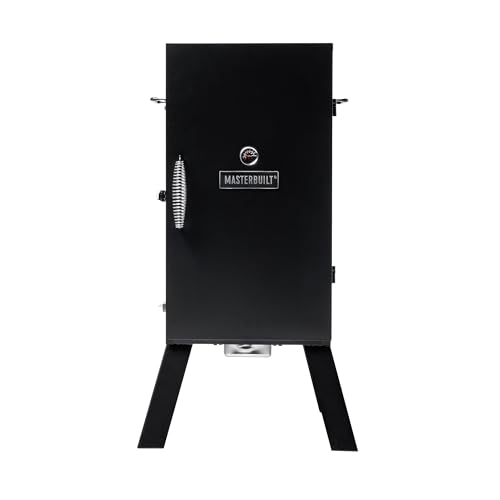
Masterbuilt 30-Inch Analog Electric Smoker MB20070210 — Best Simple Sausage Starter
Fresh sausage, smoked gently for dinner rather than cured for keeping, is where many sausage smokers begin, and this analog Masterbuilt is the honest starter for that beginning: small batches, attended cooks, simple controls, and smoke you manage by hand while you learn what the craft actually involves.
Strengths
- Analog simplicity suits the short, attended cooks of fresh sausage
- 535 sq in is a sensible size for learning batches
- Chip tray smoke is easy to keep gentle at sausage temperatures
Trade-offs
- The cook is the thermostat, which new sausage makers must learn
- No timer or shutoff; sessions are attended by design
- Tray reloads open the cabinet and disturb low heat
| Specification | Detail |
|---|---|
| Cooking area | 535 sq in (from listing title) |
| Format | 30-inch vertical cabinet, chrome racks |
| Control | Analog dial |
| Smoke source | Wood chip tray |
The learning is the value. You will discover how casing dries before smoke, how a small temperature rise changes fat behaviour, and how little smoke fresh sausage actually wants, because the machine automates none of it away. Keep batches modest, keep notes, and let this cabinet teach you the fundamentals. If the craft takes hold, the specialists above will be waiting, and this one will still earn its place on short, simple cooks.
Best for: beginners learning sausage on fresh, attended batches / Not suited for: makers of cured sausage needing precise staged control
Comparison Table
| Pick | Badge | Key spec | Best for |
|---|---|---|---|
| CLIVIA Electric Smoker, 4-Rack Digital Commercial — Check price on Amazon | Best for Sausage Temperature Control | 86–248°F range, timer with auto shutoff, 4 racks | dedicated sausage smokers wanting verified low control |
| 30-Inch Electric Smoker with Clear Window, Wheels and S-Hooks — Check price on Amazon | Best Hanging Setup | S-hooks included, water pan, window, wheels | link and kielbasa makers who hang their sausage |
| Bradley Smoker 4-Rack Digital Smoker BTDS76P — Check price on Amazon | Best Consistent Low Smoke | Automatic bisquette feed, digital timing, 4 racks | repeat-batch sausage makers who value consistency |
| Masterbuilt 30-Inch Digital Electric Smoker MB20071117 — Check price on Amazon | Best All-Round Sausage Cabinet | 710 sq in, side loader, digital control | households wanting one cabinet for sausage and everything else |
| EAST OAK 30-Inch Electric Smoker with Wheels — Check price on Amazon | Best for Long Snack-Stick Sessions | 725 sq in, 12-hour timer, extended-load loader | high-volume snack stick and batch sausage makers |
| Masterbuilt 30-Inch Analog Electric Smoker MB20070210 — Check price on Amazon | Best Simple Sausage Starter | 535 sq in, analog dial, chip tray | beginners learning sausage on fresh, attended batches |
How to Choose an Electric Smoker for Sausage
Temperature floor first. Sausage smoking lives low, and the most important number on a sausage smoker is the lowest temperature it can hold steadily, not the highest it can reach. A verified low range, like the CLIVIA’s in this guide, is gold; where a listing does not state the floor, expect to learn the machine’s low band by practice and judge it with a good thermometer rather than the dial.
Temperature manners come second. At sausage temperatures, an electric element cycles in pulses, and cabinets differ in how wide the swing around the set point feels at the food. Digital control generally narrows the swing; analog control asks the cook to average it out with patience and small adjustments. Fat is the witness: sausage that sweats fat early in the cook is telling you the temperature rose too fast, whatever the dial claimed.
Space and hanging come third. Links need separation, sticks need length, and summer sausage needs a cabinet tall enough to hang without the ends nearing the heat. Count your typical batch honestly, a few dinner links or a season’s worth of sticks, and size the cabinet, and its hanging arrangement, to that reality rather than to the biggest batch you can imagine.
Smoke gentleness is the final criterion. Sausage takes smoke readily and shows excess immediately, so systems that feed smoke gradually, a loader’s metered chips, a bisquette’s timed advance, outrank systems that deliver smoke in surges. Choose the machine whose smoke you can keep thin for hours, because that is the machine your seasoning blends were designed for.
The Sausage Smoking Method: Drying, Smoking and Finishing
Sausage smoking is a staircase, and each step has a purpose. The first step is drying: links hang at a low warmth with airflow so the casings dry and become receptive, because smoke will not take evenly to a wet casing. Rushing this step is the beginner’s signature error, producing pale, patchy sausage no amount of later smoke fully repairs.
The second step is the smoke itself, applied gently while the temperature rises in small stages. This is where the electric cabinet earns its keep, holding each stage while the smoke does its slow work on colour and flavour. Keep the smoke thin, keep the links separated, and let the staircase climb gradually: fat renders when temperature sprints, and rendered fat leaves sausage dry and crumbly no matter how good the seasoning was.
The final step is finishing to a safe internal temperature, verified with a probe in the thickest link, followed by the cooling or blooming rest that sets colour and firms texture. Follow the temperature guidance of the recipe and curing tradition you are working in, exactly, because sausage is a preserved food as well as a delicious one, and its safety rules, cures, temperatures and times, are not areas for improvisation. The smoker is a tool inside that discipline, and the discipline is what makes the results repeatable.
How to Hang and Arrange Sausage for Even Smoke
Hanging beats racking wherever the cabinet allows it, because a hung link is surrounded by moving air and smoke on every side. Use hooks, dowels or the cabinet’s own hardware, keep every link clear of its neighbours, and keep the whole arrangement clear of the walls and the heat source. Links that touch smoke unevenly, shield each other and can stick, marking the batch with pale stripes where they met.
Where racking is the option, space links with a finger’s width between them and rotate the racks during long sessions if your cabinet shows a gradient, as most do. Uniform link size is the quiet hero of the whole craft: links of the same thickness dry, smoke and finish together, while a mixed batch guarantees that some are perfect as others overcook.
Load the cabinet with the cook’s stages in mind. Sausage that will be handled, turned or moved between stages belongs where you can reach it without dismantling the arrangement, and the water pan, where used, should be modest for sausage work: the goal is gentle humidity support, not the steamy environment a brisket enjoys. Arrange once, arrange carefully, and then let the staircase climb undisturbed.
Casings, Grind and Mixture: The Sausage Before the Smoker
A smoker can only finish what the mixture starts, and sausage makers who blame their cabinet for texture problems are usually looking one step too late. The grind decides the bite: a coarse grind for rustic links that chew, a fine grind, properly emulsified where the style demands it, for the smooth snap of a frankfurter style. Temperature during mixing decides the bind, because meat worked cold holds its fat in suspension, while meat worked warm smears that fat and produces the crumbly, greasy result that no smoking schedule can rescue.
Casings are the second pre-smoker decision, and they interact with the smoker directly. Natural casings give the prized snap and take smoke beautifully, but they vary, tear and demand gentle handling through the drying stage. Collagen casings are uniform, forgiving and consistent, the learner’s friend and the batch maker’s workhorse. Fibrous casings serve the big summer-sausage formats that hang longest in the cabinet. None is the correct choice in the abstract; each matches a sausage, a skill level and a tolerance for variability, and the smoker’s job, even heat, thin smoke, patient stages, serves all three when the cook has chosen deliberately.
Seasoning and cure form the third decision, and here this guide repeats its safety position in its strongest form: the mixture’s salt, cure and spice system is a tested recipe to be followed exactly, weighed rather than guessed, and sourced from a reputable authority for the specific sausage being made. The smoker sections of this guide can teach heat and smoke; the mixture’s chemistry belongs to the recipe, and the division of authority is what makes home sausage both excellent and safe.
Snack Sticks and Jerky-Style Work: The Long Low Sessions
Snack sticks are the electric sausage cabinet’s signature long session: thin links, hours of gentle heat and smoke, and a finish judged by bend and bite as much as by the probe. Their thinness is their discipline, because a stick dries as it smokes, and the line between properly dried and merely cooked-then-tough is walked with temperature patience. The batch pick in this guide, with its long timer and extended loader loads, exists because sticks punish machines that need frequent opening, and reward machines that can hold a low line half a day without drama.
Uniformity decides a stick batch more than any other variable. Sticks of even thickness, hung or racked with space, seasoned from one well-mixed batch, finish together; a mixed batch finishes as an argument, some perfect, some pale, some hard. The production habit worth building is weighing and recording: mixture weight, stick count, cabinet settings, hours, and the result, because sticks are a repeat craft, and the second batch improves exactly as much as the first batch was documented.
Cooling and storage complete the session with the same care as the smoke. Sticks bloom as they cool, colour deepening and texture setting, and they should rest before packaging rather than being sealed warm. Follow your recipe’s guidance on refrigeration and shelf life as strictly as its smoking figures, because a dried sausage product is a preserved food with rules at every stage, and the cabinet’s long, calm work deserves an equally careful ending.
Summer Sausage and Big Formats: Hanging Heavy in an Electric Cabinet
Summer sausage and its large-format relatives test a cabinet differently from links: sheer hanging weight, long hours at the staircase’s gentle pace, and a diameter that makes internal temperature a slow, serious measurement. The cabinet questions change accordingly. Is the hanging arrangement strong enough for the full batch’s weight? Does the interior height keep the hanging chubs clear of the heat source with room for air to circulate? Can the machine hold its low stages for the many hours a thick format needs to come up to temperature safely and evenly?
The probe discipline for big formats is the craft’s most important habit. The centre of a thick chub lags hours behind the cabinet’s air, and the only honest knowledge of it is a probe placed in the thermal centre of the thickest piece, read patiently. Recipes for these formats specify their targets and their staging for good reason, and the electric cabinet’s virtue is that it can execute a long, staged schedule without the cook feeding a fire, leaving the cook’s attention free for the measurements that actually govern safety and quality.
Resting and blooming finish the format as they finish links, at larger scale and slower pace. A summer sausage sliced too early shows a texture its maker will misjudge; rested properly, the same sausage slices clean, tastes integrated and stores as intended. The electric cabinet, the hanging hardware and the recipe are a system, and this guide’s picks were ranked as components of that system, which is why hanging evidence and low-range evidence, where listings provide them, carried the weight they did.
Troubleshooting Sausage: Reading What the Batch Is Telling You
Pale, patchy colour is the batch’s most common report, and it almost always reads the same way: the casings went into smoke wet, or the links touched and shielded each other, or the smoke ran too thin for too short a time at the stage when colour sets. The fixes are procedural rather than purchases: dry the casings until they feel papery, space the links, and hold the smoke stage at its full, gentle length. A new cabinet is rarely the answer to a pale batch; a patient first hour usually is.
Fat on the surface, greasy casings and a crumbly bite form the second report, and they read as heat history: the temperature climbed too fast at some point, whatever the dial claimed, and the fat began to render before the structure set. The fixes are a slower staircase, a thermometer trusted over the dial, and, for the next batch, mixture discipline, meat kept cold through grinding and mixing, because smeared fat renders at temperatures properly bound fat survives. The smoker and the mixture share this fault, and honest troubleshooting checks both.
Tough casings and shrivelled links make the third report, usually a story of the drying and finishing stages being rushed in opposite directions: insufficient drying early, then too much heat or too long a finish late, driving moisture out of a casing that never set properly. The remedy is the staircase again, respected in both directions. Sausage troubleshooting, practised this way, is a reading skill: the batch is a record of everything that happened to it, and the electric cabinet, precisely because it holds conditions steady, makes that record unusually legible. Learn to read it, and every batch teaches the next.
Building a Sausage Rotation: Fresh, Smoked and Cured Across the Year
Sausage making settles, in households that keep it, into a rotation, and the electric cabinet’s steadiness is what makes the rotation reliable. Fresh sausages anchor the weekly end: small batches, gently smoked for dinner, the analog and all-round picks earning their place in the repertoire they were bought for. These are the training cooks and the family favourites, and their forgiving nature keeps the craft pleasant between the bigger projects.
Smoked sausages form the rotation’s middle: kielbasa-style links, snack sticks in their long sessions, the batches that fill a freezer shelf and a season’s sandwiches. This is where the specialist picks, the low-range cabinet and the hanging setup, justify themselves, because the middle of the rotation is where volume and repetition live, and where a machine’s low-temperature manners stop being a specification and become the difference between a batch that sings and a batch that merely happened.
Cured and large-format projects crown the rotation a few times a year: summer sausage, sticks in serious quantity, the recipes whose discipline this guide has treated with full seriousness. Planned against the calendar, bought for deliberately, and executed with the recipe’s figures followed to the letter, these projects are the craft’s ceremonies. A household rotation that contains all three levels uses its cabinet across the whole of the machine’s abilities, which is the deepest sense in which a sausage smoker, like every pick in this programme, earns its price: not in the cook it performs once, but in the rhythm it makes possible.
Recording Batches: The Sausage Maker’s Notebook
Sausage is the most record-dependent craft in this programme, because its variables are numerous, its sessions are long, and its results are judged weeks later when memory has edited them. The notebook, paper or digital, is therefore not an accessory but a tool of the trade, and its minimum entry is short: date, recipe and batch size, mixture notes, casing, cabinet settings and stage times, internal temperatures reached, and, days later, the verdict at the table. Five minutes per batch buys the entire improvement curve of the following year.
The notebook’s first service is fault-finding. When a batch disappoints, the record distinguishes the suspects: a mixture worked warm, a drying stage shortened, a staircase climbed eagerly, a cabinet gradient unrotated. Without the record, every fault is a mystery and every fix a guess; with it, sausage making becomes the most improvable cooking a household practises, because its evidence survives to be consulted.
Its second service is repetition of success, which matters more. The batch your family asks for by name exists because its figures were written down; the version reconstructed from memory is a tribute act. Electric cabinets support the notebook beautifully, because their steadiness makes settings meaningful, a dial position or a programme that produced a result once will produce it again. In a craft built on cures, ratios and patience, that repeatability is the machine’s deepest contribution, and the notebook is where the cook banks it.
From Links to Legacy: Keeping a Sausage Practice for Years
Sausage making, kept past its first enthusiastic season, becomes one of a household’s defining food practices, and the electric cabinet’s role in that longevity deserves a closing word. The practice survives because its sessions are calm: a machine that holds its staircase without a fire to feed fits sausage making around work, family and weather in a way that fussier equipment cannot, and crafts that fit a life are the crafts that are still being practised in a decade. Every pick in this guide was ultimately judged on that fitness, its temperatures and hooks and timers all in service of a rotation that repeats.
The practice also survives because it feeds people in a particular way. A freezer shelf of your own sticks, links and summer sausage is a standing invitation, to gatherings, to gifts, to the ordinary Tuesday elevated by something made properly. Sausage makers consistently report that the craft’s social gravity, the requests, the standing orders from family, the recipes requested by name, becomes its engine, and the cabinet, humming patiently through its long low sessions, is the quiet infrastructure under all of it.
Keep the notebook, keep the recipes honest, keep the temperatures disciplined, and the practice will keep itself. That is the real recommendation beneath this guide’s six badges: choose the machine whose low, patient character matches the sausage life you intend to live, and then live it, batch by recorded batch, until the craft is simply one of the things your household does, and does well.
Gift Batches and Feeding a Crowd with Smoked Sausage
Smoked sausage is the most giftable product in this programme, and planning a batch for giving is a distinct discipline from planning one for the freezer. Uniform links, impeccably recorded process, conservative adherence to the recipe’s figures at every stage, and packaging only after the batch has bloomed and been tasted by its maker: those are the standards a gift batch is held to, because it carries your name into kitchens you will not supervise. The electric cabinet supports the discipline precisely where it matters, holding the long, low, repeatable conditions that make a gift batch identical to the batch your family approved, and the notebook closes the loop by proving which batch that was. Give generously, label honestly with contents and date, and let the recipients’ requests, which will come, plan your rotation’s next ceremony.
Calibrating a New Sausage Cabinet: The First Batch Protocol
A new sausage cabinet should be calibrated before it is trusted, and the protocol is simple enough to state in one paragraph. Run the first batch as a forgiving fresh sausage, with a trusted thermometer riding alongside the cabinet’s own indication at the food’s level, and record where the machine’s low band truly sits at each setting you intend to use. Note how the chamber recovers after the door closes, how the racks differ, and how the smoke behaves in the first hour. That single documented batch converts the cabinet from a listing’s promises into your measured instrument, and every later batch, sticks, links and summer sausage alike, is planned against those measurements rather than against hope. Sausage making rewards measured instruments more than any other smoking craft, because its margins live at temperatures other cooks never visit, and the hour spent calibrating is the cheapest insurance a sausage maker ever buys.
Common Buying Mistakes
The defining sausage mistake is heat that climbs too fast. Fat renders out, casings toughen, and the sausage emerges dry and greasy at once. Climb the temperature staircase in small, patient stages, and distrust any session that reaches finishing temperature ahead of the recipe’s schedule.
Second is smoking wet casings. Links that go into smoke before their surfaces dry take colour unevenly and flavour poorly. The drying stage feels like doing nothing, which is exactly why beginners skip it and exactly why their first batches disappoint.
Third is crowding. Links touching links, or a cabinet packed to prove its capacity, produce steamed, striped, uneven sausage. Space is an ingredient in this craft; use less of the cabinet and get more from it.
Fourth is improvising on safety. Curing salts, temperatures and times in sausage making are a tested system, not a style choice. Follow a reputable recipe’s figures exactly, verify internal temperature with a probe, and treat any source that waves at the numbers as a source to close.
Final Recommendation
Choose by your sausage life: the CLIVIA if verified low-temperature control is your craft’s centre, the S-hook cabinet if hanging links is your regular method, and the Bradley if batch-to-batch consistency matters most. The Masterbuilt digital serves households where sausage shares the cabinet with brisket and ribs, the wheeled EAST OAK serves volume stick makers, and the analog Masterbuilt teaches beginners the fundamentals honestly.
Whichever cabinet you choose, the craft’s rules travel with it: dry the casings, climb the temperatures gently, keep the smoke thin, space the links, and follow your recipe’s safety figures to the letter. Sausage rewards that discipline more reliably than any other food a smoker makes.
Check the CLIVIA Electric Smoker, 4-Rack Digital Commercial on Amazon · Check the 30-Inch Electric Smoker with Clear Window, Wheels and S-Hooks on Amazon · Check the Bradley Smoker 4-Rack Digital Smoker BTDS76P on Amazon
Best Electric Smokers Best Electric Barbecue Smokers Best Electric Outdoor Smokers Best 30 Inch Electric Smokers Best Electric Natural Wood Smokers
Frequently Asked Questions
What temperature is sausage smoked at in an electric smoker?
Sausage is smoked low, in stages: a gentle drying phase first, then gradually rising temperatures while the smoke is applied, finishing at the internal temperature your recipe specifies. The exact figures belong to the recipe and curing method you are following, and they should be followed precisely rather than generalised.
Is it better to hang sausage or lay it on racks?
Hanging is better where the cabinet allows it, because smoke and air reach every surface and links cannot stick to a rack or each other. Racking works well with spacing and occasional rotation. One pick in this guide includes S-hooks in its verified listing for exactly this purpose.
Why did my smoked sausage turn out dry and crumbly?
The usual cause is temperature rising too fast, which renders fat out of the mixture before the sausage sets. Climb in small stages, keep the early cook genuinely low, and verify with a probe rather than pushing heat to save time.
How much smoke does sausage need?
Less than most beginners apply, delivered thinly and steadily. Sausage takes smoke readily, and its seasoning is balanced to sit alongside the smoke, not underneath it. Systems that feed smoke gradually, loaders and timed bisquette feeds, suit the craft best.
Can I smoke sausage in a regular electric smoker?
Yes, and this guide’s all-round picks do it well. The specialist traits to look for are calm low-temperature behaviour, room to hang or space links, and gentle smoke feeding. A generalist cabinet plus those habits covers most home sausage making.
Do I need a cure for smoked sausage?
That depends on the sausage and the method, and it is a safety question, not a preference. Many traditional smoked sausages are built on curing systems with specific salts, temperatures and times. Follow a reputable recipe designed for the exact sausage you are making, and do not improvise the preservation steps.


