Disclosure: airfryerkitchensupply.com is reader-supported. When you buy through links on our site, we may earn an affiliate commission at no extra cost to you.
Where to buy
Each model in this guide to the best electric multipot cookers was verified against live Amazon catalogue data — capacity, function set and pot type confirmed against the real listings, because ‘multipot’ is a loose retail term applied to almost anything with a lid. Every pick links to Amazon so you can check price on Amazon and confirm the current version before you buy.
- Instant Pot Duo 6 Qt (Best Overall) — check price on Amazon
- Ninja PossibleCooker PRO 8.5-Qt (MC1001) (Best Non-Pressure Multipot) — check price on Amazon
- Instant Pot Rio 6QT 7-in-1 Multi-Cooker (Best Updated Classic) — check price on Amazon
- Chefman 6-Quart 13-in-1 Electric Pressure Cooker (Best Budget) — check price on Amazon
- Sweetcrispy 16-in-1 Electric Pressure Cooker 8QT (Best Large Capacity) — check price on Amazon
- DUMOS 16-in-1 Electric Pressure Cooker, 6QT (Best Value Presets) — check price on Amazon
The best electric multipot cookers are the generalists of the countertop: one pot that pressure cooks or slow cooks, sears, steams, cooks rice and keeps dinner warm — the appliance a household buys when it wants maximum cooking coverage from minimum equipment. The word multipot is used loosely in retail, covering both pressure multi-cookers and non-pressure sear-and-slow pots, and this guide includes both types, labelled honestly, because the choice between them is the first real decision a multipot buyer makes.
Pressure multipots — the Instant Pot pattern — are the speed tools: sealed, fast, and brilliant at grains, beans and braises on a weeknight clock. Non-pressure multipots — the Ninja PossibleCooker pattern — are the flavour tools: they sear in the pot, then slow cook, steam or braise gently, with no pressure concepts to learn. Neither is better in the abstract; they suit different cooks, and the reviews below say plainly which is which.
What every pick here shares is consolidation. A good multipot retires the rice cooker, the slow cooker, the steamer basket routine and half the saucepan work in a typical week. For small kitchens, first homes, rentals and anyone simplifying, that is a genuinely life-improving purchase — provided you choose the type that matches how you cook, which is what this guide is for.
In this guide
Quick Picks
Six multipots: four pressure models from benchmark to budget, the leading non-pressure sear-and-slow pot, and the large-capacity option. Type first, brand second.
- Instant Pot Duo 6 Qt — Best Overall. The original multipot and still the benchmark: seven core functions, a stainless pot, and every recipe on the internet written for it. — Check on Amazon
- Ninja PossibleCooker PRO 8.5-Qt (MC1001) — Best Non-Pressure Multipot. The multipot without pressure: sears properly in its own pot, then slow cooks, braises and steams — with an oven-safe pot for finishing. — Check on Amazon
- Instant Pot Rio 6QT 7-in-1 Multi-Cooker — Best Updated Classic. The classic 7-in-1 formula in Instant Pot’s newer Rio design — the same capability with a friendlier face. — Check on Amazon
- Chefman 6-Quart 13-in-1 Electric Pressure Cooker — Best Budget. A touchscreen multipot with the complete core repertoire at the budget tier — the value door into multipot cooking. — Check on Amazon
- Sweetcrispy 16-in-1 Electric Pressure Cooker 8QT — Best Large Capacity. The big multipot: a full 8 quarts with a ceramic pot and the longest preset list here, for families and batch cooks. — Check on Amazon
- DUMOS 16-in-1 Electric Pressure Cooker, 6QT — Best Value Presets. A preset-rich 6-quart multipot with a ceramic pot and delay start at a keen value tier — the feature-per-dollar pick. — Check on Amazon
How These Picks Were Chosen
‘Multipot’ has no regulated definition, so this guide set one before choosing: an electric countertop pot that performs at least four distinct cooking methods, including either pressure cooking or in-pot searing. Every candidate was verified against live Amazon catalogue data for capacity, functions and pot type; products that were simply rice cookers or slow cookers wearing a multipot title were excluded.
Ranking weighed the two multipot philosophies separately before combining them: pressure models on speed, reliability and ecosystem; the non-pressure model on searing and capacity. Within each type, pot quality, control clarity and support infrastructure decided the order. The final list deliberately spans benchmark, modern, budget, large and non-pressure options, because multipot buyers’ needs genuinely differ that much.
No prices are printed in this guide — multipots are among the most promotion-driven appliances sold online. Check price on Amazon via each pick’s link when you are ready to buy, and confirm the function set on the live listing matches the review.
Terminology note from verification: several products sold as multipots proved on inspection to be single-function rice cookers or slow cookers with ambitious titles, and were excluded. Every pick above performs at least four genuine cooking methods, verified against its listing — the definition this guide set before looking at a single brand.
One bias in this ranking should be declared openly: proven-ness was weighted heavily, because a multipot is a hub appliance whose value compounds with the recipes, accessories and knowledge built around it. A technically equal machine from an unknown line starts with an ecosystem of zero, and for most households — especially first-time buyers — the hub with the deepest support is the rational hub. Adventurous buyers will find the newer names represented here too, ranked where their hardware earns it.
Availability discipline closed the selection: a multipot earns a place in a buyer’s kitchen for years, so each pick had to be a current, supported model with its accessories and documentation properly listed at the time of verification — not a clearance ghost or a listing surviving on old momentum. Two otherwise capable machines were set aside on exactly that ground, because recommending an appliance a reader cannot reliably buy, service or find a gasket for would fail the reader at the exact moment this guide is meant to serve them. The six that remain are the multipots a household can commit to with open eyes.
And a closing word on ranking philosophy for this guide in particular: because a multipot is bought as a household’s central cooking tool, the order above privileges the machines that disappear into daily life — the ones whose controls, cleaning and support never become a topic of household conversation. Novelty was welcome only where it survived that simple, demanding test.
The 6 Best Electric Multipot Cookers, Reviewed
Note the type in each review — pressure or non-pressure — before the badge. That single distinction shapes everything the machine will do in your kitchen.

Instant Pot Duo 6 Qt — Best Overall
The Duo is the machine that created the multipot category, and its formula — pressure cook, slow cook, rice, steam, sauté, yogurt, keep warm in a 6-quart stainless pot — remains the template every rival copies. It is not the newest model in its own family, but it is the most widely owned, the most thoroughly documented, and the reference point for a decade of recipes.
| Capacity | 6 quarts |
| Functions | 7-in-1: pressure, slow, rice, steam, sauté, yogurt, warm |
| Pot | Stainless steel |
| Ecosystem | The original multipot recipe and accessory standard |
Strengths
- The category-defining formula, proven by millions of owners
- Stainless pot sears and lasts
- Unmatched recipes, accessories and community knowledge
Trade-offs
- Newer siblings add functions and quieter releases
- No sous vide or air fry capability
- Slow cook mode is a supporting function, not its star
There is a particular confidence in buying the standard. Every cookbook, video and recipe site assumes this machine’s timings; every accessory is made for it; every problem you might meet has a thousand documented solutions. For a first multipot, that support has a value beyond specification sheets.
The cooking itself needs no apology: pressure performance is fast and consistent, rice and yogurt functions genuinely work, and the stainless pot handles the sear-then-pressure routine that defines good multipot cooking. If you want the multipot, in its purest and best-supported form, this is it.
A word for second-hand and gift buyers, because the Duo is the multipot most often passed between households: check the gasket and the steam release valve before first use, run a water test to confirm it pressurises, and download the current manual rather than trusting memory. The machine’s ubiquity means every part and answer is findable — a used Duo in working order is one of the safest appliance gambles there is.
The Duo’s deepest advantage may be psychological: it is the multipot nobody has to explain. Recipes fit it, friends own it, answers exist for it. In a category where a confused owner is an owner who stops cooking, that familiarity is a feature as real as wattage — and it is why the Duo remains the recommendation for gift-buyers choosing for someone else.
Best for: first-time multipot buyers who want the proven standard / Not suited for: buyers who want the newest functions like sous vide built in
Check on Amazon — check the current price on Amazon before you decide, because listings and included accessories change over time.

Ninja PossibleCooker PRO 8.5-Qt (MC1001) — Best Non-Pressure Multipot
The PossibleCooker PRO is the multipot for cooks who do not want pressure in their kitchen — no seals, no releases, no fill-line rules — but still want one pot to do nearly everything. Its heated base and sides sear meat in the pot itself, and from there it slow cooks, braises, steams, proofs and keeps food warm at a generous 8.5-quart size.
| Capacity | 8.5 quarts |
| Functions | 8-in-1 multi-cooker without pressure |
| Heating | Triple Fusion Heat for searing in the pot |
| Pot | Removable, oven-safe |
Strengths
- Real searing in the cooking pot — no separate pan
- No pressure learning curve at all
- Big capacity and an oven-safe pot
Trade-offs
- No pressure speed for beans and tough cuts
- Large counter footprint
- Coated pot prefers gentle utensils
The flavour argument leads: browning in the same pot you then braise in builds the fond that makes one-pot meals taste complete, and most multipots cannot do it — pressure models sauté, but a dedicated slow cooker cannot sear at all. The PossibleCooker closes that gap and adds the party trick of moving the pot to the oven or the table.
Choose it if your cooking is braise-led, your household is large, or pressure simply does not appeal. It is the strongest argument that a multipot does not need pressure to earn the name.
The PossibleCooker’s glass lid is a bigger deal than it looks on a spec sheet: braising and slow cooking reward observation — a glance at the simmer, the sauce level, the colour — and a glass lid gives you that without lifting and losing heat. Pressure multipots, sealed and opaque, cook blind by comparison. Cooks who like to watch their food tend to bond with this machine quickly.
PossibleCooker owners develop one signature habit: they stop owning a separate serving dish for big meals. The pot that seared and braised the dinner is presentable enough to carry the dinner to the table, and at 8.5 quarts it holds the whole story. One less vessel to wash is a small sentence that explains a lot of owner loyalty.
Best for: braise-loving families who prefer to cook without pressure / Not suited for: weeknight cooks who rely on pressure speed
Check on Amazon — check the current price on Amazon before you decide, because listings and included accessories change over time.
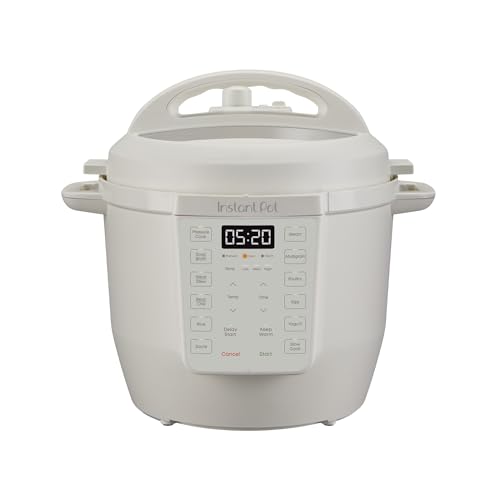
Instant Pot Rio 6QT 7-in-1 Multi-Cooker — Best Updated Classic
The Rio takes the Duo’s seven-function formula and wraps it in Instant Pot’s current design language: a cleaner panel, an easier steam release and a body that looks at home in a modern kitchen. Underneath, it is the same multipot proposition — pressure, slow, rice, steam, sauté, yogurt and warming in a 6-quart pot.
| Capacity | 6 quarts |
| Functions | 7-in-1 multi-cooker |
| Design | Rio body with simplified controls and steam release |
| Programs | Pressure, slow, sauté, steam, rice, yogurt and warmer |
Strengths
- Current design with simpler controls
- The full classic function set
- Same ecosystem and accessories as the Duo family
Trade-offs
- Capability mirrors the Duo rather than exceeding it
- No sous vide or air fry functions
- Slow cooking remains a secondary talent
Choosing between the Rio and the Duo is choosing between generations of the same idea: the Rio’s refinements are ergonomic — controls, release, appearance — rather than culinary. If both are available, the Rio is the nicer daily object; if the Duo is on a deep promotion, its cooking is the Duo’s equal.
For buyers who found the original’s interface dated, the Rio removes the last excuse. It is the classic multipot, tidied.
Between the Rio and the Duo, one practical factor sometimes decides it: availability of the exact colour and bundle. Instant Pot sells the Rio in finishes that suit modern kitchens, and bundles with spare gaskets or a second pot appear in promotions. Since the cooking is equivalent, letting a good bundle on the current model settle the choice is perfectly rational buying.
The Rio also benefits from Instant Pot’s current accessory push: lids, pots and gaskets for the Rio generation are stocked as current-model parts rather than legacy ones. Over a long ownership, buying into the generation the manufacturer is actively supporting is a defensible strategy in itself.
Best for: buyers who want the classic formula in its most modern form / Not suited for: buyers chasing extra functions beyond the core seven
Check on Amazon — check the current price on Amazon before you decide, because listings and included accessories change over time.

Chefman 6-Quart 13-in-1 Electric Pressure Cooker — Best Budget
Chefman’s multipot brings the full pressure multi-cooker repertoire — including delay start and keep warm — to the lowest tier in this guide, with a touchscreen that presents it all clearly. It is aimed at first-time buyers and budget households who want to learn whether multipot cooking fits their life without a premium commitment.
| Capacity | 6 quarts |
| Functions | 13-in-1 multicooker |
| Controls | Touchscreen |
| Programs | Pressure, slow, steamer, sauté, soup, chili, delay start, keep warm |
Strengths
- Complete core function set at a budget position
- Clear touchscreen interface
- Delay start supports scheduled cooking
Trade-offs
- Function count includes preset variations
- Finish and long-term support below the big brands
- Coated pot needs gentle handling
The core test of a budget multipot is whether pressure cooking is sound, and the Chefman passes it: seals properly, cooks the standard repertoire evenly, and behaves predictably across its main programs. The savings live in finish, documentation depth and ecosystem, not in the cooking.
As with all budget picks here, buy it as a tool with a plan — gentle utensils, records kept — and it will teach you multipot cooking at the lowest cost of entry in this guide. Heavy daily users should consider it a stepping stone to the mainstream picks.
The Chefman’s delay start pairs with its budget price in a way worth picturing: load steel-cut oats and water at night, set the delay, and wake to cooked breakfast without owning a second appliance for the job. Budget multipots live or die on whether they get used daily, and a feature that puts one on breakfast duty every morning is a feature that pays for the machine.
Chefman’s touchscreen has one underappreciated audience: cooks who struggle with small printed dials and multi-function buttons. A clear, backlit, touch-driven panel is simply easier to read at arm’s length in a steamy kitchen. Accessibility rarely headlines a budget appliance, but it is a genuine part of this one’s appeal.
Best for: budget buyers and multipot beginners / Not suited for: daily heavy users wanting premium longevity
Check on Amazon — check the current price on Amazon before you decide, because listings and included accessories change over time.

Sweetcrispy 16-in-1 Electric Pressure Cooker 8QT — Best Large Capacity
Sweetcrispy’s 8-quart multipot is the capacity pick among the pressure models: a family-and-freezer size with a ceramic-coated pot and a long list of presets covering pressure cooking, rice, slow cooking, steaming, sautéing, soup and yogurt. It suits households that found 6-quart machines living permanently at their fill line.
| Capacity | 8 quarts |
| Functions | 16-in-1 multi cooker |
| Presets | 12 one-touch presets |
| Pot | Ceramic-coated |
Strengths
- True 8-quart capacity for crowds and batching
- Ceramic pot for easy release and cleanup
- Preset coverage for one-touch cooking
Trade-offs
- Preset count includes overlapping variations
- Ceramic coating needs gentle utensils
- Newer brand with a thinner support track record
Size is a feature with physics attached: an 8-quart pot cooks double batches properly, fits whole chickens and large roasts, and makes stock and beans in freezer-worthy quantities. The ceramic pot keeps that volume manageable at the sink, which matters more as pots get bigger and heavier.
The preset list should be read as shortcuts rather than sixteen technologies, but the shortcuts are convenient and the core functions are all genuinely present. For the big household, this is the multipot sized to your life rather than to an average.
Big multipots change party arithmetic: an 8-quart pot of chili or pulled pork, kept warm in the same vessel it cooked in, is a self-contained catering unit. Owners who host regularly describe the Sweetcrispy less as a cooker and more as their entertaining system. If your gatherings regularly outgrow a 6-quart pot, that framing — not the preset list — is the real reason to buy it.
For the Sweetcrispy, plan storage before purchase: an 8-quart multipot with its lid is a tall object, and owners who measure a cupboard or dedicate a counter corner stay happy, while owners who improvise storage weekly do not. The machine’s size is its virtue in the pot and its demand outside it — both halves deserve respect.
Best for: large families and batch cooks needing 8-quart capacity / Not suited for: small households that rarely fill a 6-quart pot
Check on Amazon — check the current price on Amazon before you decide, because listings and included accessories change over time.
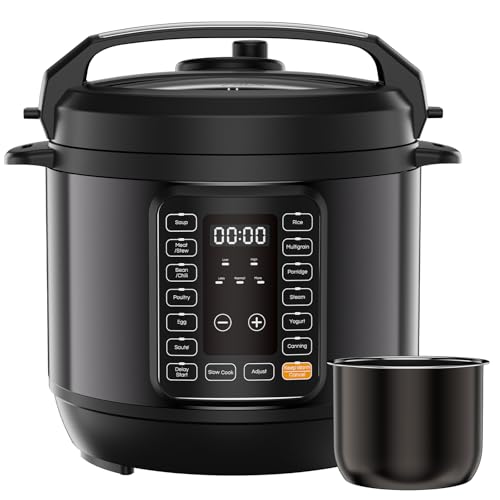
DUMOS 16-in-1 Electric Pressure Cooker, 6QT — Best Value Presets
DUMOS competes on specification per dollar: sixteen listed functions, twelve one-touch presets, a ceramic inner pot, delay start and keep warm, in a 6-quart machine positioned at the value end of the market. For buyers who comparison-shop by feature list, it is the spreadsheet winner of this guide.
| Capacity | 6 quarts |
| Functions | 16-in-1 programmable multi cooker |
| Presets | 12 one-touch presets |
| Pot | Ceramic inner pot with delay start and keep warm |
Strengths
- Ceramic pot at a value tier
- Delay start and keep warm included
- Broad preset coverage for everyday dishes
Trade-offs
- Newer brand; support track record still forming
- Function count flatters the core repertoire
- Documentation is basic
Strip the arithmetic and the useful truth is that the core repertoire is complete and the ceramic pot — usually a mid-tier feature — is present at a value price. Pressure cooking, rice, slow cooking and yogurt all work as they should, and the presets make weeknight operation a one-button affair.
The reservations are the standard value-tier ones: support depth, accessory availability and long-term parts. For a buyer who prioritises features today over infrastructure tomorrow, the DUMOS makes a coherent case for itself.
The DUMOS rewards one ownership habit in particular: register the purchase and keep the receipt somewhere findable. With newer brands, warranty handling is the moment of truth, and buyers who can produce proof of purchase date sail through it. That advice costs nothing, applies to every value pick in this guide, and is the difference between a minor hiccup and a written-off appliance.
The DUMOS makes a sensible first multipot for a specific reason beyond price: its preset-led operation means a beginner’s first ten cooks are single button presses with sensible defaults. Learning multipot cooking on presets, then graduating to manual adjustments, is a gentler curve than a dial-first machine offers — and beginners who succeed early keep cooking.
Best for: feature-focused value buyers who want a ceramic pot / Not suited for: buyers who prioritise brand infrastructure and spares
Check on Amazon — check the current price on Amazon before you decide, because listings and included accessories change over time.
Comparison Table
| Pick | Badge | Key spec | Best for |
|---|---|---|---|
| Instant Pot Duo 6 Qt | Best Overall | 6 qt, 7-in-1 electric pressure cooker, stainless pot | first-time multipot buyers who want the proven standard |
| Ninja PossibleCooker PRO 8.5-Qt (MC1001) | Best Non-Pressure Multipot | 8.5 qt, 8-in-1, sear and slow cook, no pressure | braise-loving families who prefer to cook without pressure |
| Instant Pot Rio 6QT 7-in-1 Multi-Cooker | Best Updated Classic | 6 qt, 7-in-1, updated design, easy steam release | buyers who want the classic formula in its most modern form |
| Chefman 6-Quart 13-in-1 Electric Pressure Cooker | Best Budget | 6 qt, 13-in-1, touchscreen controls | budget buyers and multipot beginners |
| Sweetcrispy 16-in-1 Electric Pressure Cooker 8QT | Best Large Capacity | 8 qt, 16-in-1, ceramic pot, 12 presets | large families and batch cooks needing 8-quart capacity |
| DUMOS 16-in-1 Electric Pressure Cooker, 6QT | Best Value Presets | 6 qt, 16-in-1, ceramic inner pot, 12 one-touch presets | feature-focused value buyers who want a ceramic pot |
The table’s real message: four of these multipots cook under pressure and one — the PossibleCooker — deliberately does not, while the Sweetcrispy trades a tier of brand infrastructure for two extra quarts. Decide the type and the size first; the brand decision then mostly makes itself.
Pot materials split the same way as everywhere in this series: stainless (Instant Pot models) for longevity, ceramic (Sweetcrispy, DUMOS) for easy cleaning. Both are right answers for different kitchens.
How to Choose an Electric Multipot Cooker
Decide pressure or not, first and honestly. Pressure multipots cook dried beans, grains and tough cuts in a fraction of conventional time, at the cost of learning seals, fill lines and releases. Non-pressure multipots sear better, braise gently and ask nothing new of you, at the cost of time. Your weeknight reality — not the feature list — should make this call.
Size next. Six quarts is the multipot standard and suits most households and most published recipes, which are written for it. Eight quarts serves crowds and batch cooks. Smaller households cooking small portions should resist oversizing: pressure cookers in particular dislike near-empty pots, and a multipot that fits your actual cooking gets used daily.
Then the pot and the parts. Stainless for a decade of service, ceramic for easy evenings at the sink. Spare gaskets for pressure models, available for the exact model you are buying — check before purchase, not after the first seal fails. And controls you can imagine using with wet hands at 6pm, because that is the real interface test.
- Type first: pressure for speed, non-pressure for searing and simplicity
- 6 qt standard, 8 qt for crowds and batching
- Pot material: stainless longevity vs ceramic convenience
- Spare gaskets confirmed available for pressure models
- Controls you can use mid-cooking, not just in the showroom
Multipot vs Separate Appliances: The Consolidation Maths
A multipot typically replaces a rice cooker, a slow cooker, a steamer and a yogurt maker, and covers much of a saucepan’s work besides. Counted as counter space and cupboards, that is a winning trade for most kitchens — one footprint, one lid, one pot to wash where four appliances stood.
The honest counterpoint: a multipot is very good at all of those jobs and the absolute best at none of them. A dedicated rice cooker edges it on rice; a dedicated slow cooker is gentler for all-day cooking; a stovetop pot sears harder. Households that cook one of those things daily and seriously sometimes keep the specialist. Households that cook all of them weekly are exactly who multipots were invented for.
Pressure vs Non-Pressure Multipots: A Head-to-Head for Real Kitchens
Put the same dish through both types and the philosophies become flavours. A beef stew in a pressure multipot: sauté the meat in the pot, seal, and eat in about an hour, with tender meat and a sauce that tastes like it simmered all afternoon. The same stew in a non-pressure multipot: sear harder and longer in the pot, braise gently for hours, and arrive at a deeper, more developed result — if you had the hours. Neither result embarrasses the other; they are different points on the time-versus-depth curve, and your life decides which point you live at.
The daily-experience differences matter as much as the food. Pressure multipots demand a small discipline — fill lines, liquid minimums, release choices, gasket care — repaid in speed every single day. Non-pressure multipots demand almost no discipline at all: no seals to check, no steam to manage, a lid you can lift to taste whenever you like. Households with children underfoot or cooks who are simply nervous around pressure consistently prefer the non-pressure life, and that preference is legitimate, not a compromise.
Cost of ownership tilts slightly toward non-pressure over the years — no gaskets to replace — while versatility of diet tilts toward pressure: dried beans, fast grains and stocks are weeknight foods only when pressure makes them quick. Read this guide’s picks with those honest tilts in mind and the right type usually identifies itself.
Five Dishes That Show What a Multipot Is For
If you want to understand a multipot before buying one, imagine it through five dishes. First, the weeknight curry: sauté the aromatics in the pot, add everything, seal, and serve over rice the machine could also have cooked — one pot, half an hour, flavours that suggest far more effort. Second, the dried-bean miracle: beans from the bag, unsoaked, tender in under an hour under pressure — the dish that converts more sceptics than any other.
Third, the Sunday braise in a non-pressure pot: a shoulder seared in its own vessel and left to become spoon-tender while the house does other things. Fourth, the grain base for the week: a big batch of rice, quinoa or oats that becomes lunches. Fifth, the quiet extras — yogurt set overnight, a steamed pudding, proofed dough on a cold day — the dishes nobody buys a multipot for and everybody ends up valuing. A machine that does these five things well has earned the word multipot; every pick in this guide was judged against exactly that standard.
Multipot Ownership: The First Month, Week by Week
Week one belongs to the water test and two forgiving dishes — a soup and a batch of rice — that teach you the machine’s sounds, timings and release without risking dinner. Every multipot sounds slightly different at pressure, and learning your unit’s normal is the foundation of cooking confidently with it. Owners who skip this week and start with a dinner party are the ones who write the anxious reviews.
Week two adds the signature moves: sauté-then-pressure for a curry or stew, and the release decision made deliberately rather than by default. Week three is for the second function you bought — slow mode, yogurt, the non-pressure braise — because a multipot used in one mode is a single cooker with unused rent. By week four, the machine should have three dishes it owns in your kitchen: one fast, one slow, one background staple like grains or yogurt. A multipot with three owned dishes is embedded in your life; a multipot with none after a month was the wrong type, and this guide’s type-first advice exists to prevent exactly that outcome.
Cleaning and Storing a Multipot So It Lasts
Multipots fail socially before they fail mechanically: a pot that smells of last month’s curry, or a gasket that flavours yogurt with onion, teaches a household to stop using the machine. The defence is a small routine. Wash the gasket and lid after aromatic cooks and let them air dry fully; store the lid upside down on the pot so air circulates and the seal is not compressed. Run a monthly steam cycle with water and a splash of vinegar to keep the pot and valve neutral.
Storage matters as much as washing. Keep the cord loosely coiled, never wrapped tight around hot surfaces; keep the accessories — trivet, spare gasket, ladle — with the machine rather than scattered; and if the multipot lives in a cupboard, put it at the front, because the multipot stored behind the waffle maker is a multipot in retirement. These are humble habits, and they are the entire difference between a five-year appliance and a ten-year one.
The Multipot as a First Appliance: A Note for New Households
For someone equipping a first kitchen — a new flat, a student house, a fresh start — the multipot has a claim no other appliance can match: it is the single purchase that makes the widest range of real cooking possible on day one. Before the oven mitts, before the knife block, a multipot plus a cutting board and one knife produces soups, stews, curries, rice, grains, steamed vegetables and yogurt. Every later purchase is an optimisation; this one is the foundation.
Choose the first multipot by the guidance in this article — type by temperament, size by household — and lean toward the supported mainstream picks, because a new cook benefits most from recipes that assume their exact machine. The Duo and the Rio exist in this guide substantially for that reader. A first appliance should reduce the number of things a new household must figure out, and a well-chosen multipot does that better than any other box you can carry home.
How to Use a Multipot for a Week of Cooking
A multipot earns its counter space through rhythm, not novelty. This weekly pattern shows how the owners who love these machines actually use them.
- Start the week with a batch. Use the large capacity for a base ingredient — shredded chicken, a pot of beans, a grain — that becomes two or three different meals across the week.
- Pressure-cook the weeknights. Curries, stews, soups and pasta dishes in the pressure mode are the multipot’s home turf: sauté in the pot, seal, and let pressure do in thirty minutes what a stove does in two hours.
- Slow-cook the planned day. Load the pot in the morning on slow mode for the day your schedule is worst. Dinner that cooks itself is the multipot’s second superpower.
- Steam and reheat gently. Use the steam function and pot-in-pot reheating for vegetables and leftovers; food reheats without the drying and hot spots of a microwave.
- Make the quiet extras. Yogurt overnight, proofed dough in winter, a steamed pudding on Sunday — the functions beyond the big two are where a multipot quietly becomes indispensable.
- Clean as a ritual. Wash the pot, lid and gasket after use; run a water-and-vinegar steam cycle monthly. Five minutes of care keeps flavours clean and seals honest for years.
The pattern matters more than any single recipe: batch, pressure, slow, steam. Once that rhythm is a habit, the multipot stops being an appliance you own and becomes the way your kitchen runs.
Common Buying Mistakes
Choosing by function count alone. Sixteen functions usually means a solid core of six plus preset variations. Buy the core; treat the rest as shortcuts.
Ignoring the pressure question. Pressure and non-pressure multipots are different tools. Buying the wrong type is the one mistake no feature list can compensate for.
Oversizing the pot. An 8-quart multipot for a two-person household wastes energy, counter space and cooking quality on small loads. Match size to portions.
Forgetting the gasket. Pressure multipots depend on a rubber seal with a finite life. No spare gasket available means no long-term appliance.
Expecting oven tricks from a wet-heat pot. Multipots do not crisp, bake or grill. Add an air fryer or small oven later if your cooking needs dry heat — do not blame the multipot for physics.
Final Recommendation
The Instant Pot Duo remains the multipot default: proven, supported and genuinely multi-talented. The Rio is its modern face, the PossibleCooker PRO is the non-pressure alternative for sear-and-braise cooks, the Sweetcrispy serves the big households, and the Chefman and DUMOS open the category to tight budgets without surrendering the core repertoire.
Choose the type by your cooking, the size by your household, and the brand by the support you want behind it — in that order, and a multipot will earn its place on your counter within the first week. Related cooker guides are linked below.
Check the Instant Pot Duo 6 Qt on Amazon. Check the Ninja PossibleCooker PRO 8.5-Qt (MC1001) on Amazon. Check the Instant Pot Rio 6QT 7-in-1 Multi-Cooker on Amazon.
Best Electric Multi Use Pressure Cookers Best Electric Indoor Cookers Best Electric 8 Qt Pressure Cookers Best Electric Egg Cookers Best Electric Cookers With Induction Hobs
Frequently Asked Questions
What is a multipot cooker?
A multipot is an electric countertop pot that performs several cooking methods in one appliance — typically pressure cooking, slow cooking, sautéing, steaming and rice cooking, sometimes with yogurt and sous vide. Some multipots, like the Ninja PossibleCooker, skip pressure and focus on searing and slow cooking instead.
What is the difference between a multipot and a multi-cooker?
In practice, very little — retailers use the terms interchangeably for the same category of do-everything electric pots. When shopping, ignore the label and read the function list and type: pressure or non-pressure, capacity, and pot material tell you what the appliance actually is.
Is a pressure multipot or a non-pressure multipot better?
Pressure models are better for speed — beans, grains and tough cuts in a fraction of the time. Non-pressure models are better for searing and gentle braising, and simpler to learn. Most weeknight-focused households suit pressure; braise-led cooks who dislike pressure suit the non-pressure type.
What size multipot should I buy?
Six quarts is the standard and the size most recipes are written for; it suits households of three to six. Choose 8 quarts for larger families or serious batch cooking. Remember pressure models should be filled no more than about two-thirds, so usable capacity is below the headline figure.
Can a multipot replace my rice cooker and slow cooker?
For most households, yes. Multipot rice and slow cook functions handle the everyday versions of those jobs well. If you cook rice daily to a connoisseur standard or slow cook all day several times a week, a dedicated appliance still has an edge — otherwise the consolidation is a clear win.
How do I keep a multipot’s flavours from mixing?
Wash the gasket and lid thoroughly after strong-flavoured dishes, and consider a second gasket — one for savoury cooking, one for yogurt and desserts. A monthly steam cycle with water and a splash of vinegar keeps the pot itself neutral.
Can a multipot cook rice and a main dish at the same time?
Yes, with the pot-in-pot method: the main dish cooks in the pot’s base while rice sits in a smaller oven-safe container on a trivet above it, both under the same pressure cycle. It is one of the most useful multipot techniques — a curry and its rice, finished together, in one pot and one wash-up.
How loud is a multipot in normal use?
Quiet by kitchen standards. Slow and sear modes are nearly silent; pressure mode involves a gentle hiss during release and soft clicks as the machine regulates. The loudest moment is a manual quick release, which vents steam audibly for under a minute. None of the picks in this guide will disturb a conversation in the next room.
How long should a good multipot last?
With ordinary care — gaskets replaced as they tire, the pot treated according to its material, valves kept clean — a quality multipot should serve a household for many years of regular use. The electronics and heating elements are rarely the limiting factor; seals, coatings and lost accessories are, which is why this guide weighs parts availability so heavily when ranking.


