An electric grill plugs into an outdoor outlet and cooks without propane, charcoal or open flame. That makes it a practical pick for a patio, a deck or a balcony where fuel rules or smoke complaints are a worry. The best electric grills for patios are compact, stable and easy to clean.
The six grills below range from small tabletop models to a larger cart-style unit. We have not used these products ourselves, so confirm the size, power needs and included parts on the current listing before buying. You will also need a safe outdoor-rated outlet and cord.
As an Amazon Associate we earn from qualifying purchases. Links below are affiliate links, and they do not change the product information we give.
What to Look For
| Feature | Why it matters |
|---|---|
| Power | You need an outdoor-rated outlet and a suitable extension cord near the grill |
| Size | Match the cooking area to how many people you feed at once |
| Heat | A strong element helps with searing; weaker ones favor gentle cooking |
| Stand | A cart or fold-out stand frees up patio table space |
| Cleanup | Removable grates and drip trays save scrubbing |
In this guide
Specs at a Glance
| Grill | Style | Cooking surface | Notes |
|---|---|---|---|
| Weber Q 1400 | Tabletop-size | Compact | Cast iron grate |
| Weber Q 2400 | Larger than the Q 1400 | Compact-plus | Side tables |
| Weber Lumin | Stand-mounted | Compact | Check listing |
| Char-Broil Patio Bistro | Compact | Infrared | Rolling cart |
| George Foreman Indoor/Outdoor | Large grate | Freestanding | Indoor or outdoor |
| Ninja Woodfire | Multi-mode | Electric with pellets | Roast and air-crisp |
The 6 Best Electric Grills for Patios

Top pickBest for small balconies and patios
1. Weber Q 1400 Electric Grill
A long-running compact electric grill from Weber with a cast aluminum lid and body and a porcelain-enameled cast iron grate. It is built for small outdoor spaces.
Suits: small balconies and patios. Strengths: a trusted brand and even heat for its size. Weaknesses: a modest grilling area and limited searing. Skip it if you regularly feed a crowd.

Best for couples and small families
2. Weber Q 2400 Electric Grill
A step up from the 1400 with a larger cooking area and a fold-out side table setup, designed for patios that host a few more guests.
Suits: couples and small families. Strengths: extra room and side workspace. Weaknesses: needs more patio space and an outlet nearby. Skip it if you want the smallest option possible.
View Weber Q 2400 Electric Grill on Amazon

Best for apartment balconies and small decks
3. Weber Lumin Electric Grill
A compact electric grill from Weber made for balconies and small outdoor spaces, sold with a stand for stable placement. Check the current listing for the exact size and power rating.
Suits: apartment balconies and small decks. Strengths: a clean, modern design from a known brand. Weaknesses: a premium feel may cost more than basic electrics. Skip it if you prefer a plain tabletop grill.


Best for small patios and townhouse porches
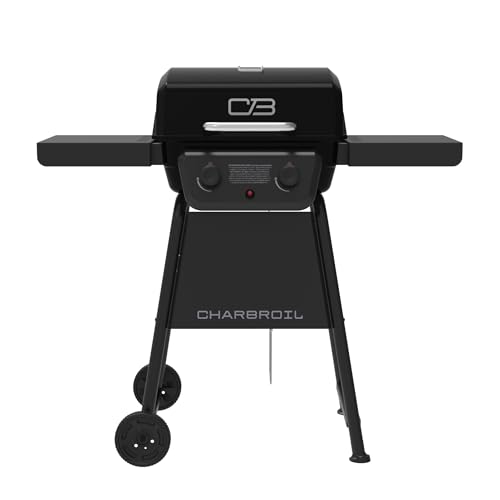
4. Char-Broil TRU-Infrared Patio Bistro Electric Grill
An electric grill with Char-Broil’s infrared cooking system, which is meant to cut flare-ups and help keep food juicy. It is designed with small spaces in mind.
Suits: small patios and townhouse porches. Strengths: infrared heating that limits flare-ups. Weaknesses: a small grate and a fixed cart. Skip it if you want a wide cooking surface.

View Char-Broil TRU-Infrared Patio Bistro Electric Grill on Amazon
Best for easy weeknight grilling
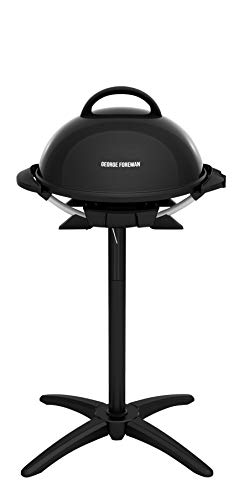
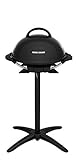
5. George Foreman Indoor/Outdoor Electric Grill
A freestanding electric grill from George Foreman sold for both indoor and outdoor use, with a tall stand and a large non-stick-style grilling surface.
Suits: easy weeknight grilling. Strengths: simple controls and a stand. Weaknesses: less searing power than gas. Skip it if you want a rugged built-in feel.

Best for cooks who want a little smoke from an electric unit
6. Ninja Woodfire Outdoor Grill
An electric outdoor grill from Ninja that uses small wood pellets for smoky flavor and can also roast, bake and air-crisp. It is a multi-purpose option for a patio.
Suits: cooks who want a little smoke from an electric unit. Strengths: several cooking modes in one. Weaknesses: a bigger footprint and more setup. Skip it if you only need a basic grill.

Care and Setup
- Place the grill on a flat, stable surface away from railings and walls.
- Keep the cord dry and off walkways, and use only an outdoor-rated extension cord.
- Let the grill cool before removing the grate for washing.
- Cover the grill when it is not in use to protect it from rain and dust.
Mistakes to Avoid
- Using a light-duty indoor extension cord outside.
- Skipping the preheat before putting food on.
- Overloading a compact grate and steaming food instead of searing it.
- Ignoring building or lease rules about outdoor cooking.
Power and Outlet Planning
An electric grill is only as flexible as its power supply, so plan the electrical side before you pick a model. Look for a weather-protected outdoor receptacle, ideally one with ground-fault protection and a cover that closes over the plug. If your patio has no outdoor outlet, an electrician can add one; running a cord through a window or door is a common workaround, but it creates a trip hazard and can pinch the cable.
If you must use an extension cord, choose one rated for outdoor use and heavy appliances, and pay attention to its gauge and length. Thin cords and long runs can overheat or reduce performance. The grill’s manual and the cord’s label will say what is acceptable, so read both. Keep the connection raised off wet ground and away from the grill body, drips and walkways.
Think about the circuit as well. Electric grills draw a lot of power for their size, so avoid sharing the circuit with other heavy devices like a space heater or a pressure washer. If a breaker trips while preheating, that is a sign the load is too high, not a reason to reset it repeatedly. In apartments, ask your landlord or building manager whether outdoor outlets are meant for cooking appliances. Always unplug the grill and let it cool before moving or covering it.
Element Types and Searing Power
Not every electric grill heats the same way, and the differences affect what you can cook. Many compact models use a heating element under or around the grate. These work well for chicken, sausages, vegetables and thinner cuts, where gentle even heat is enough. Infrared designs use an emitter that radiates heat directly onto food, which can help limit flare-ups and may brown more aggressively. Read the product description to see which approach a model uses.
Searing is where expectations often miss. A thick steak wants a very hot surface, and a small element may not reach the temperature needed for a deep crust. If searing matters, look for language about high heat, a heavy grate that holds energy and a lid that traps heat. If you mostly cook burgers, kebabs and vegetables, a modest element is perfectly adequate.
Grate material also changes results. Cast iron holds heat and gives clear marks but needs seasoning care. Coated or non-stick surfaces are easier to clean but call for non-metal tools. Lids help the grill act more like an outdoor oven for thicker cuts, and they keep the temperature steadier on windy days. Preheat as the manual advises, and avoid crowding the grate, since cold food drops the surface temperature quickly.
Balcony Rules and Neighbor Considerations
Many people choose electric because gas and charcoal are restricted, but that does not mean every rule is waived. Building policies, homeowner association guidelines and local fire codes differ widely, and some cover any outdoor cooking appliance. Read your lease or governing documents, and if the wording is unclear, ask in writing. A short email can save you from having to return a grill that is not permitted.
Think about practical effects on neighbors, too. Electric grills usually make less smoke than charcoal, but they still produce cooking odors and grease. Balconies share air with the units above and beside you, so be considerate about timing, and avoid cooking when windows nearby are likely to be open. Keep the grill well away from railings, siding and overhangs, and follow the minimum clearances in the manual.
Check weight and stability as well. A balcony floor, a rooftop deck or a raised wooden deck has load limits, and a loaded cart plus a cover can be heavier than it looks. Choose a model with a wide, stable base that will not tip if bumped. For small spaces, think about where you will store it in the off-season, whether the legs fold and whether it fits inside a closet or storage box.
Choosing a Size for Your Household
Cooking area drives how many people you can feed at once, but capacity listings can be vague. Think in terms of portions: how many burgers, chicken pieces or skewers would you want to lay out at a time? One or two people can manage with a compact tabletop unit. Three to four people may want a larger grate or be willing to cook in batches. If you host regularly, consider whether a cart-style model with side tables suits you better than a small tabletop, because prep space is as valuable as grate space.
Leave room around the grill. You need space to open the lid, stand safely and put down a platter. Measure the footprint with the lid open and the cord attached, and check that the cord can reach the outlet without stretching. If you are placing it on a table, confirm that the table is heat-resistant and strong enough to hold the grill’s weight.
Think about the way you cook too. Families who grill weeknight meals often value quick preheating and simple controls. People who want to experiment with smoke or roasting may prefer a multi-mode unit, though those take more storage space and more setup. Match the size to your most common meal, not your biggest party of the year, and use batches or a warming tray for occasional crowds.
Cleaning, Storage and When to Replace
Electric grills are among the easier outdoor cookers to keep clean, but they do collect grease. After each cook, let the grill cool, remove the drip tray and wash it with warm soapy water. Brush the grate while it is slightly warm, then wash according to the manual. Never submerge the electrical parts or the control housing. Wipe those with a damp cloth only when unplugged and cool.
Storage affects lifespan. A fitted cover keeps rain, pollen and bird droppings off the surface, but make sure the grill is fully cool and dry before covering it, otherwise trapped moisture can encourage rust or mildew. In cold or wet seasons, store the removable parts indoors if the manufacturer suggests it, and keep the plug and cord somewhere dry.
Check the cord and plug regularly for cracks, melted spots or exposed wire. If the cord looks damaged, stop using the grill and look for a manufacturer-approved replacement or service route rather than taping it. Other signs it is time to replace include an element that no longer heats evenly, a controller that behaves inconsistently, a grate coating that flakes or a body that has rusted through. When shopping for a replacement, ask whether spare grates, trays and covers are available, because easy access to parts can extend the life of the grill.
A Pre-Purchase Checklist for Patio Grillers
An electric grill looks simple, yet the right choice depends on the space you have and the outlet you can reach. Work through these points before you click order on any of the six models.
- Find the nearest outdoor outlet and note its distance from the spot where the grill will sit.
- Check the wattage on the product label and compare it with what the outlet and circuit are meant to supply.
- Measure the footprint with the lid open, since lids often need extra room behind and above.
- Decide whether you need a cart, a tabletop design or a model with folding legs for storage.
- Look at the grate material and the drip tray, because these affect how easy cleanup will be.
- Read your lease, building rules or community guidelines if you live in shared housing.
- Think about where the grill will live when you are not using it, especially through wet or freezing months.
Having these answers in hand turns a vague wish for backyard cooking into a clear shopping brief, and it helps you compare models by what matters for your own space.
Comparing Two Common Layouts
Most electric patio grills fall into either a tabletop style or a cart style. Each suits a different kind of space and a different way of cooking.
| Feature | Tabletop style | Cart style |
|---|---|---|
| Footprint | Small, sits on a sturdy table or ledge | Larger, stands on its own legs or wheels |
| Storage | Easy to carry inside | Often stays outdoors under a cover |
| Work space | You supply your own surface | Side shelves are often included |
| Cooking area | Usually compact | Often more generous |
| Best for | Balconies and small patios | Open decks and larger terraces |
If you grill for one or two people and want flexibility, the compact style is usually enough. If you host often, extra surface area and shelf space begin to matter more.
How to Read a Product Listing
Listings pack a lot into a few lines. Learn which details carry weight and which are just marketing language.
Begin with the specification section, not the headline. Look for the power draw, the cooking surface dimensions, the overall dimensions and the weight. Then check what is included in the box, such as a lid, a drip tray, a stand or a cover. Photos can make a grill look larger than it is, so rely on the numbers.
Next, read the customer questions and the maker’s description for notes about outdoor use, weather and cord length. A listing that is vague about whether the grill is meant for exterior use deserves a closer look at the manual before you order. Finally, confirm the warranty terms and where parts are sold, so a worn tray or grate can be replaced later without trouble.
Following the Manual and Knowing When to Call an Electrician
The maker’s instructions are your main reference for assembly, cord handling, cleaning and storage. Keep the manual somewhere easy to find, and re-read the sections on outdoor electrical use before the first cook.
If your outdoor outlet is missing, loose, damaged or does not match the plug on the grill, do not improvise. A licensed electrician can add or inspect an outdoor outlet, and they can tell you what is appropriate for your home. The same applies if breakers trip repeatedly or you notice scorch marks or heat around a plug. Official guidance from the maker and local codes should always come before shortcuts.
A Short Glossary of Electric Grill Terms
Product pages for electric models use a handful of terms that are easy to misread. Here is a plain guide to the common ones.
- Wattage: the electrical power the element draws while heating, which affects how much current the grill needs.
- Heating element: the metal coil or bar that produces heat under or around the grate.
- Drip tray: a removable pan that catches fat and juices so cleanup is easier.
- Temperature dial: a control that sets the heat level, sometimes with marked zones instead of exact numbers.
- Weather cover: a fitted sleeve that protects the body when the grill sits outdoors between uses.
- Cord length: the reach of the supplied cable, which often decides where the grill can sit.
When two models look similar, these details often explain why one fits your balcony or deck better than the other. Check each one against the maker specification page, and treat anything unclear as a question to settle before you buy.
Choosing a Electric grill Around How You Really Cook
Choosing a electric grill is mostly about cooking area, heat, and where the cooking will happen for a patio or balcony. Start with the surface. Measure it against the food you cook most: a breakfast for four needs room for eggs, bacon, and pancakes at once; a hot pot needs a stable, deep vessel and room around it for plates of raw ingredients; a patio grill needs enough grate space that food is not crowded into steaming itself. The picks above describe their surfaces in their own terms, so translate those descriptions into your actual meals rather than comparing numbers in the abstract.
Heat and control come next. Flat-top cooking rewards even heat across the surface, because pancakes brown unevenly on a griddle with hot and cold patches. Grills benefit from enough power to sear rather than stew, and from lids or covers where the design includes them. Hot pots need steady, adjustable simmering rather than raw power. Look at how each pick handles temperature: dials are intuitive, digital controls can be precise, and both are fine as long as adjustment is easy while your hands are busy and possibly greasy.
Then think about the unglamorous logistics. Grease has to go somewhere: drip trays, grease channels, and removable plates decide whether cleanup takes two minutes or twenty. Cord length decides where an indoor model can sit. Weight and handles decide whether a patio or tabletop model gets moved easily or stays where it first landed. A electric grill that is pleasant to clean and easy to place will be used weekly; one that is awkward becomes a special-occasion chore.
Finally, match the appliance to the cook you are, not the cook you might become. If your real routine is weekend breakfasts and grilled sandwiches, a superb griddle beats a mediocre all-rounder. If you host hot pot nights or teppanyaki-style dinners where everyone gathers around, the social shape of the appliance matters as much as its heat. The descriptions above make clear which job each pick is built for, so let them guide the match.
Where a Electric grill Earns Its Keep
Family breakfasts
Pancakes, eggs, bacon, and toast-adjacent jobs are where a big flat surface shines, because everything cooks at once and arrives at the table together. Set up a simple order of operations: items that tolerate holding go on first, eggs go on last, and a low corner of the surface acts as a warming zone. This is the use case that converts most sceptics, because the alternative is three pans and a traffic jam.
Grilling where outdoor flames are not an option
Balconies, patios with restrictions, and indoor kitchens all benefit from electric grilling: no fuel to store, no open flame, and heat that starts with a dial. You will not replicate the smoke of charcoal, and honest expectations help, but good browning, grill marks, and the convenience of cooking steps from the kitchen are a fair trade for many households.
Shared hot pot and tabletop cooking
Hot pot turns dinner into an event: a simmering broth in the middle, plates of thinly sliced ingredients around it, and everyone cooking their own. An electric hot pot keeps the broth at a steady simmer without a portable burner, and a divided pot, where a pick offers one, lets a spicy and a mild broth share the table. Plan seating, cord routing, and small dishes for sauces before the broth boils.
Weeknight dinners and meal preparation
Flat grills and griddles cook chicken pieces, vegetables, burgers, and wraps quickly and in batches, which makes them quietly useful for preparing several days of lunches at once. The large surface that looks like a weekend luxury on Saturday becomes a batch-cooking tool on Sunday evening.
Setup, Placement and Safety Basics
Set up your electric grill on a flat, stable, heat-resistant surface with ventilation above it, because grilling and griddling produce steam and cooking smells even without smoke. Keep the cord routed so nobody brushes it while carrying plates, and never position a tabletop unit where the cord dangles for a child or pet to catch. If the model has removable plates, trays, or a drip system, fit them before heating and confirm they sit correctly, because grease management only works when every part is in place.
Wash the cooking surfaces and accessories before the first use as the manual directs, then heat the appliance empty briefly if instructed, to clear new-appliance odours. For non-stick surfaces, note the utensil guidance from the start: the coating will last far longer if wood, silicone, or heat-safe plastic tools become your habit rather than metal tongs and forks.
Do a small first cook rather than a feast. A couple of pancakes, a few vegetables, or a single batch of burgers teaches you where the hot spots are, how the thermostat cycles, and how the surface behaves with oil. Every flat-top has its own map of warmer and cooler zones, and learning yours deliberately turns that map into a feature: searing in the hot zone, holding in the cool one.
Getting the Best From It Day to Day
Preheating is the whole game with flat-top and grill cooking. Give the surface time to reach a stable temperature before food goes on, because food added to a still-climbing surface steams and sticks instead of browning. Use a light film of a suitable cooking oil on surfaces that need it, applied to the food or the surface as the manual suggests, and avoid aerosol sprays on non-stick coatings if the manufacturer warns against them, since the propellant residue builds up and turns sticky.
Give food room and leave it alone. Crowding drops the surface temperature and traps steam, so cook in batches that fit comfortably. Once food is down, resist moving it until it releases naturally and has taken on colour; food that is ready to turn lets go of the surface, while food that is forced tears and sticks. Work in zones: a hotter area for searing, a gentler area for holding finished items and cooking delicate foods such as eggs or fish.
Manage grease and moisture as you go. Scrape residue toward the grease channel between batches on a griddle, keep an eye on the drip tray during fatty cooks, and wipe splashes before they bake on. For hot pot cooking, skim the broth occasionally, top it up with hot water rather than cold so the simmer does not die, and keep raw and cooked ingredients on separate plates with separate utensils throughout the meal.
Cleaning, Care and Storage
Clean the electric grill while it is warm but not hot, once it is switched off, because residue lifts far more easily before it cools and sets. Removable plates and trays usually wash in hot soapy water, and some are described as dishwasher safe in the picks above, but confirm for your model. Non-stick surfaces need soft sponges only; scouring pads trade a clean surface today for a ruined coating over the season.
Grease systems need emptying every session, not every few sessions. A drip tray left to accumulate becomes a smell, a mess, and eventually a hazard. Wipe the exterior and the area around the controls with a damp cloth, keeping water away from electrical connections and never immersing a base unit that the manual says must stay dry. If your model has a detachable cord or probe-style control, store it with the unit so it is not lost.
Storage is simple but specific: store the appliance clean and fully dry, with the cord loosely coiled, and protect non-stick surfaces from having heavy pans stacked on them. If the unit lives on a patio, keep it covered and dry between uses and bring detachable electrical parts indoors. A quick wipe before the first use after storage removes dust and any film that has settled.
How the Picks in This Guide Compare
The six picks above are not six versions of the same idea, and comparing them well means comparing them against your own routine rather than against each other in the abstract. Work through them in the order presented, and for each one ask the same three questions: does its style and size fit my space, does the way it works fit the food I cook most, and would its cleaning and storage routine fit my patience? A electric grill that scores well on all three for your household is a better buy than one that wins on a single headline feature.
Consider the Weber Q 1400 Electric Grill. Its description above sets out who it suits and where its limits lie, so measure it against your biggest regular cooking occasion and your smallest everyday one. If it handles the big occasion comfortably but feels oversized for the everyday, decide which of those two days matters more to you, because that judgement, not the feature list, is what owners end up living with.
Consider the Weber Q 2400 Electric Grill. Its description above sets out who it suits and where its limits lie, so measure it against your biggest regular cooking occasion and your smallest everyday one. If it handles the big occasion comfortably but feels oversized for the everyday, decide which of those two days matters more to you, because that judgement, not the feature list, is what owners end up living with.
Consider the Weber Lumin Electric Grill. Its description above sets out who it suits and where its limits lie, so measure it against your biggest regular cooking occasion and your smallest everyday one. If it handles the big occasion comfortably but feels oversized for the everyday, decide which of those two days matters more to you, because that judgement, not the feature list, is what owners end up living with.
Consider the Char-Broil TRU-Infrared Patio Bistro Electric Grill. Its description above sets out who it suits and where its limits lie, so measure it against your biggest regular cooking occasion and your smallest everyday one. If it handles the big occasion comfortably but feels oversized for the everyday, decide which of those two days matters more to you, because that judgement, not the feature list, is what owners end up living with.
Consider the George Foreman Indoor/Outdoor Electric Grill. Its description above sets out who it suits and where its limits lie, so measure it against your biggest regular cooking occasion and your smallest everyday one. If it handles the big occasion comfortably but feels oversized for the everyday, decide which of those two days matters more to you, because that judgement, not the feature list, is what owners end up living with.
Consider the Ninja Woodfire Outdoor Grill. Its description above sets out who it suits and where its limits lie, so measure it against your biggest regular cooking occasion and your smallest everyday one. If it handles the big occasion comfortably but feels oversized for the everyday, decide which of those two days matters more to you, because that judgement, not the feature list, is what owners end up living with.
If you are torn between two of the picks, choose by the routine you will repeat most often: the setup you will do weekly, the parts you will wash, and the space the electric grill will occupy when it is not in use. Features impress on the first day; routines decide satisfaction in the sixth month.
Problems Worth Knowing About
Food sticks to the surface
Sticking usually means the surface was not fully preheated, the food was moved too soon, or the coating is being undermined by metal utensils or spray residues. Preheat properly, use a little oil where the design expects it, and let food release in its own time. If everything sticks everywhere, inspect the coating for damage.
Uneven browning
All flat-tops have warmer and cooler areas, but dramatic patchiness often comes from crowding or from a surface that was still heating. Cook smaller batches, rotate food between zones deliberately, and use the cooler zone for holding rather than treating it as a fault.
Excessive smoke during grilling
Fatty food on a very hot surface will smoke; that is physics, not failure. Trim excess fat, keep the drip tray empty so old grease is not reheating, clean residue from previous sessions, and improve ventilation. Persistent smoke at modest temperatures usually means yesterday’s grease is still on the appliance.
The broth will not hold a simmer, or the surface cycles oddly
Check that the pot or plate is seated correctly on the base and that the control is set as the manual directs. For hot pots, a lid returns the broth to a simmer far faster than turning the dial up and down. If a thermostat cycles, give it a full cycle to settle before judging.
Two Habits That Make the Biggest Difference
Accessories change how these appliances feel day to day more than extra heat settings do. A good spatula that suits the surface, a tray that fits the cooked food, and a splatter screen for fatty indoor grilling all earn their drawer space. When you compare the picks above, note what each includes and what you would need to add, because the true cost of the appliance includes the tools that make it pleasant.
If two picks look evenly matched, decide by cleanup. Stand in your kitchen and imagine the end of the meal: which design lets you lift out a tray, wash a plate, and wipe a surface in a few minutes? The appliance that is easy to clean is the one that comes out for a Tuesday, not just a celebration, and Tuesday use is where these tools really pay for themselves.
A Slower, More Careful Way to Decide
There is a slower way to choose a electric grill that works better than comparing feature lists, and it starts with a week of honest observation. Notice what you cook, how many people you cook for, and where the friction appears: the pan that never fits, the breakfast that takes three batches, the cleanup that puts you off starting. Write those moments down, because they are the specification that matters. A electric grill chosen against your real friction points will satisfy you in a way that one chosen against an idealised version of your cooking never will, and the picks above can then be read as answers to specific problems rather than as a league table.
Next, walk the physical reality of your space with a tape measure and your phone camera. Record the dimensions, the position of sockets, the clearance above and around the counter or patio, and anything that would complicate delivery or installation. Photograph the area where the cooking surface, grease channel and drip tray will need attention, because that is where ownership is won or lost: the part you must clean, fill, empty, or store decides whether the appliance stays pleasant. Compare those photographs and measurements against the descriptions in this guide before you order, and most of the classic disappointments in this category simply never happen.
Then think about the second year, not the first week. In the second year the novelty has gone, and what remains is the routine: how long setup takes when you are tired, whether spare parts and replacement pieces for the cooking surface, grease channel and drip tray are easy to obtain, and whether the appliance still suits a household that may have changed around it. Designs that age well share a pattern: few parts, obvious controls, cleaning that does not need special products, and a manual that answers questions plainly. When two picks above look equal, the one with the calmer second year is usually the right choice.
Making the First Sessions Count
For your first sessions, keep the stakes deliberately low and cook a family breakfast rather than the most ambitious dish you know. The first outings teach you the appliance’s temperament: how it heats, how it responds when you adjust it, and what its normal sounds and smells are. Treat anything unexpected as information, check it against the manual, and adjust one thing at a time on the next attempt. Cooks who rush to a celebration meal on day one often blame the appliance for what is really unfamiliarity, while a couple of low-pressure practice runs turn the same appliance into a trusted tool.
Finally, build the small routine that keeps the appliance ready: a fixed home for it and its accessories, a two-minute tidy after each use rather than a monthly excavation, and a note of the settings and timings that worked for your regular dishes. Readiness is the hidden feature in this whole category. A electric grill that is clean, complete, and where you expect it to be gets used on ordinary Tuesdays, and ordinary Tuesdays are where good kitchen equipment quietly earns back its cost many times over.
Electric Patio Grill FAQ
Are electric grills allowed on apartment balconies?
Rules vary by building and by city, and electric grills are often treated more gently than gas or charcoal. Check your lease or association rules first.
Do electric grills get hot enough to sear?
Some do better than others. Infrared models and those with strong elements sear best, while smaller units favor gentler cooking.
Can I use an electric grill in the rain?
Keep it under cover and do not run it in wet weather. Always follow the maker’s safety guidance for outdoor use.
Can I use any extension cord with an electric grill?
No. Use a cord rated for outdoor use and for the grill's power draw, and keep it as short as practical. Check the grill's manual and the cord's label for the right rating.
Do electric grills add smoke flavor?
Standard electric grills add little smoke flavor because there is no burning fuel. Some models include a pellet or wood chip feature, so check the listing if smoke matters to you.
How long should I preheat an electric grill?
Follow the manual, since preheat times vary by model. A good habit is to wait until the grate is hot to the touch of a spatula, with food sizzling when it lands, before cooking.
Can I grill frozen food on an electric grill?
It is better to thaw meat first, because frozen food cools the surface and can cook unevenly. Check the maker's guidance for safe handling.
What should I do if the breaker keeps tripping?
Stop using the grill and move other loads off that circuit. If it still trips, have an electrician check the outlet and wiring rather than continuing to reset it.
Are electric grills safe near wooden decks?
They are generally less of a fire concern than open flames, but they still get hot and drip grease. Follow the clearance guidance in the manual and use a heat-safe mat if it is advised.
How do I stop the grate from rusting?
Dry it after washing, apply a thin film of oil to bare cast iron if the maker recommends it and cover the grill once it cools. Store it somewhere dry in wet seasons.
Can I use metal utensils on an electric griddle or grill?
Only if the manufacturer says the surface allows it. Most non-stick plates and griddles ask for wood, silicone, or heat-safe plastic tools, and following that guidance is the single biggest factor in how long the coating lasts. Cast iron or bare metal surfaces are more forgiving, but check the manual for your model.
How do I get better browning without smoke?
Dry the surface of the food before it goes on, preheat fully, avoid crowding, and keep the appliance clean so old residue does not burn. Browning comes from a hot, dry surface; smoke comes from fat and residue overheating, so managing those two things separately is the trick.
Is an electric grill suitable for an apartment balcony?
Often yes, and it is a common reason people choose one, but check your building or local rules first, since some restrict all grills regardless of fuel. Electric models avoid open flame and fuel storage, which is what many rules are concerned about, but the rule that applies is the one where you live.
How do I clean a burnt-on patch without damaging the surface?
Let the surface cool, soak the area with a damp cloth, and use the cleaning method the manufacturer recommends. A paste or scraper designed for the surface type works better than force. Burnt patches usually come from sugary marinades, so wipe those spills during cooking when you can.
What size should I choose for a family?
Think in meals, not numbers: picture your biggest regular breakfast or grill session laid out on the surface described in the listing. If the food fits in one comfortable batch with room to move, the size is right. If you would need three batches, go larger or accept the rhythm of batch cooking.
Can I cook frozen food on a griddle or grill?
Thin items cope reasonably, but thick frozen pieces cook unevenly, chilling the surface and steaming rather than browning. Thawing first gives better results and more predictable timing. If you do cook from frozen, use a moderate temperature and allow considerably longer.
How long should a electric grill last?
That depends far more on use and care than on the badge. Appliances in this category that are cleaned as the manual directs, used within their intended job, and stored dry and complete generally serve for years, while neglected ones fail early regardless of quality. Treat the care routine in this guide as part of the purchase, and judge any pick above by whether you will actually keep that routine.
What should I do on the first day I use my new electric grill?
Read the manual’s setup and safety pages, wash the parts it identifies, and run the simplest version of the job the appliance exists for. Keep the session short, note what surprised you, and resist judging the purchase on a single first attempt. Familiarity over the next few sessions is a fairer test, and most early frustrations turn out to be technique that a little practice fixes.
The Short Version
For the smallest brand-name option, the Weber Q 1400. For more room, the Weber Q 2400. For a modern balcony look, the Weber Lumin. For infrared cooking, the Char-Broil Patio Bistro. For indoor and outdoor use, the George Foreman. For a hint of smoke, the Ninja Woodfire.