Disclosure: airfryerkitchensupply.com is reader-supported. When you buy through links on our site, we may earn an affiliate commission at no extra cost to you.
Where to buy
The most reliable place to buy the best electric compost toilets in this guide is Amazon, where bowl, tank, seat and rough-in configuration are stated on one listing and returns are straightforward if the porcelain arrives damaged. Start with the best overall pick, the Nature’s Head Self-Contained Composting Toilet — Close Quarters Spider Handle: Check on Amazon. Every linked pick below was verified against the retailer catalogue for this site on 2026-11-21; any model we could not verify is written about honestly as a pick with no purchase link, rather than given an invented link. Always confirm the exact configuration on the listing before ordering, because toilets are heavy, freight-damaged returns are a hassle, and a wrong rough-in cannot be fixed at install time.
- Nature’s Head Self-Contained Composting Toilet — Close Quarters Spider Handle (Best Overall) — Check on Amazon
- Nature’s Head Self-Contained Composting Toilet — Foot-Spider Handle (Best for Standard Installs) — Check on Amazon
- Separett Villa Urine-Separating Toilet (Best Urine-Diverting with Fan Venting) — Check on Amazon
- OGO Origin Compact Composting Toilet (Best Compact Electric Composter) — Check on Amazon
- Compo Closet Cuddy Composting Toilet (Best for Vans and Small Spaces) — Check on Amazon
- Thinktank Composting Toilet (Best Alternative Design) — Check on Amazon
Introduction: What Shoppers Need to Know First
The best electric compost toilets use a small amount of power — typically a fan, and on some models a motorised agitator or a heated element — to do what passive composting toilets struggle with: control odour reliably, dry the composting chamber, and keep the process working in cold cabins, humid boats and year-round tiny homes. That fan is the whole point of the category. A composting toilet lives or dies on ventilation, and an electric vent fan running continuously turns a marginal, weather-dependent system into a predictable one. This guide covers the verified electric and fan-assisted models worth buying.
Two honesty notes frame everything below. First, ‘electric compost toilet’ covers designs that use power very differently — urine-diverting models with a vent fan, self-contained composters with an agitator, and premium units with powered mixing — so each review states exactly what the electricity does on that model. Second, the category’s most famous name, the Sun-Mar Excel, could not be verified as an Amazon listing in our checks — searches returned only its compost medium accessories — so it is discussed as an unlinked reference point, not given a purchase link. The same applies to electric incinerating toilets, which are a neighbouring technology covered honestly in the guide sections.
Every linked pick was verified on 2026-11-21. Power requirements are modest — most fan models run happily from a small solar setup or a boat’s house battery — but vent routing is the real installation question, and the how-to section treats it as such. If you are new to composting toilets entirely, read the buying guide before the reviews; the reviews assume you have decided that waterless is right for your site.
Key Takeaways
- The fan is the system: continuous ventilation is what makes electric composting predictable and odour-free.
- Choose the philosophy first — composting chamber versus urine-diverting dry toilet — before choosing a model.
- Size for real usage; an undersized chamber is the commonest cause of owner dissatisfaction.
- Plan vent routing and continuous power before purchase; install day is too late.
- Sun-Mar Excel and incinerating toilets are not linked here — no verified listing, so no invented links.
- Ownership is a light rhythm: liquids on schedule, agitator after use, fan always on.
In this guide
Quick Picks
- Nature’s Head Self-Contained Composting Toilet — Close Quarters Spider Handle — Best Overall: The benchmark marine/off-grid composter: fan-ventilated, agitator-equipped, built for tight spaces. — Check on Amazon
- Nature’s Head Self-Contained Composting Toilet — Foot-Spider Handle — Best for Standard Installs: The same proven platform with the foot-spider agitator handle for roomier installs. — Check on Amazon
- Separett Villa Urine-Separating Toilet — Best Urine-Diverting with Fan Venting: Fan-vented urine diversion: no medium, no mixing, high capacity, simple emptying. — Check on Amazon
- OGO Origin Compact Composting Toilet — Best Compact Electric Composter: Small footprint, powered agitation — built for vans, RVs and boats where space is everything. — Check on Amazon
- Compo Closet Cuddy Composting Toilet — Best for Vans and Small Spaces: 12V fan and carbon filter in a self-contained unit made for mobile off-grid life. — Check on Amazon
- Thinktank Composting Toilet — Best Alternative Design: A serious alternative composter for owners who want a different take on the format. — Check on Amazon
How These Picks Were Chosen
We required a genuine electric function — continuous vent fan, powered agitation, or both — because a composting toilet with no fan is a different, passive product and belongs in a different guide. Within that rule we judged ventilation design, chamber capacity against realistic use, how the finished material is handled, build quality for the marine and off-grid environments these serve, and the maker’s track record, since composting toilets are maintained by their owners for years and community knowledge around a model is a real asset.
We also separated true composting designs, which retain and process solids in a chamber, from urine-diverting dry toilets with fans, which dry and store rather than compost in place. Both are legitimate; they suit different sites and different owners, and the reviews label which is which rather than letting the word ‘compost’ blur them. Incinerating toilets — which use high electric heat to reduce waste to ash — are covered as an unlinked alternative because no listing could be verified.
The 6 Best Electric Compost Toilets
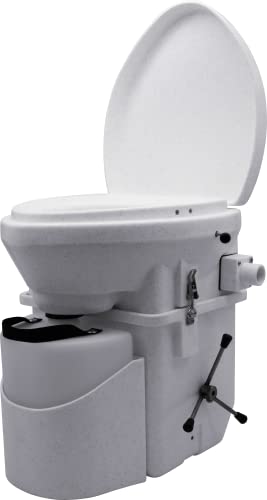
Nature’s Head Self-Contained Composting Toilet — Close Quarters Spider Handle — Best Overall
Nature’s Head is the model this category is measured against, and the close-quarters spider handle version is the one to buy where space is tight — which, in the boats, vans and small cabins these toilets serve, is nearly everywhere. The system separates liquids at the bowl, retains solids in a chamber with a hand agitator that mixes them into a peat or coir medium, and — the electric part that matters — runs a small vent fan continuously, drawing air through the chamber and out through a vent hose. That airflow is what keeps the process aerobic, dry and, in normal use, free of odour in the living space.
Ownership is a rhythm rather than a chore: empty the liquids bottle as needed, turn the agitator after use, and empty the solids chamber at intervals measured in weeks for a couple. The fan’s power draw is small enough for modest solar and battery systems, which is why this toilet dominates off-grid builds. It is a premium purchase, and the agitator is manual — the electricity serves ventilation, not mixing — but for proven, supported, genuinely electric-assisted composting, this remains the default recommendation across every serious off-grid community, and it earns Best Overall here without suspense.
Strengths
- Continuous electric vent fan keeps the chamber dry and odour-controlled
- Manual agitator handle in a close-quarters pattern for tight installs
- Huge owner community — every maintenance question has a known answer
Trade-offs
- Premium tier for the category
- Agitation is hand-cranked; the electricity runs the fan, not the mixing
- Urine bottle needs regular emptying on busy use
| Specification | Verified detail |
|---|---|
| Type | Self-contained composting toilet, verified from Amazon title |
| Handle | Close Quarters Spider handle design, verified from Amazon title |
| Ventilation | Electric fan-ventilated system (model design) |
Best for: Boats, RVs, cabins and tiny homes used regularly or year-round / Not suited for: Buyers wanting fully automatic, motorised composting
Check on Amazon — check price on Amazon for the current listing, configuration and delivery options.

Nature’s Head Self-Contained Composting Toilet — Foot-Spider Handle — Best for Standard Installs
This is the same Nature’s Head platform with the alternative agitator handle geometry, included as its own pick because handle choice is a real installation decision, not a trim level. The foot-spider handle gives a comfortable, positive cranking action where the installation has the side clearance for it — typical in cabins, tiny homes and larger RV bathrooms — while the close-quarters version exists for the genuinely cramped heads found on smaller boats. Everything else owners value is shared: the continuous fan ventilation, the separating bowl, the chamber capacity and the deep pool of community maintenance knowledge.
Choose between the two Nature’s Head picks by measuring your space, not by preference in the abstract: the handle sweeps an arc, and an arc that meets a bulkhead turns a daily action into an annoyance. Beyond that decision, the ownership rhythm is identical — medium preparation, regular agitation, liquids management, chamber emptying at long intervals — and the electric fan remains the component that makes the whole system forgiving of humid climates and cold starts. If your site has room, this is the marginally more comfortable version of the benchmark.
Strengths
- Same fan-ventilated composting system as the Best Overall pick
- Foot-spider handle suits installations with more side clearance
- Shares parts, medium and owner knowledge with the main model
Trade-offs
- Needs more lateral space than the close-quarters version
- Premium tier, as with the platform generally
- Liquids bottle management is part of the routine
| Specification | Verified detail |
|---|---|
| Type | Self-contained composting toilet, verified from Amazon title |
| Handle | Foot-Spider handle, verified from Amazon title |
Best for: Cabins and tiny homes with a little more room around the toilet / Not suited for: Very tight marine heads — choose the close-quarters handle instead
Check on Amazon — check price on Amazon for the current listing, configuration and delivery options.

Separett Villa Urine-Separating Toilet — Best Urine-Diverting with Fan Venting
The Villa represents the other great philosophy in this guide: do not compost in the toilet at all — separate urine away, vent with a fan, dry the solids, and handle them by bag. There is no medium to source, no agitator to turn and no chamber ecology to manage, which is why Separett’s design is beloved on homesteads, in cottages and in school-bus conversions where simplicity beats process. The electric fan is integral to the design, exhausting moisture and odour through a vent, and the high-capacity format suits regular household use rather than occasional weekends.
Be clear about the trade so it never surprises you: what leaves a Villa is dried, bagged material for disposal or further composting elsewhere, not finished compost from the unit. For many owners that is the entire appeal — the toilet stays a simple appliance. It needs a vent path and a plan for urine (container or outlet), and bags are a running cost to budget honestly. If the Nature’s Head is a small composting system you tend, the Villa is a dry toilet you simply use — and for a large share of real sites, that is the wiser purchase.
Strengths
- Urine diversion plus fan venting keeps things dry and low-odour
- No compost medium to buy, store or mix
- High-capacity design suits homesteads, cottages and bus conversions
Trade-offs
- It diverts and dries rather than composting in place — end handling differs
- Solids bags are an ongoing consumable
- Needs vent routing and a urine outlet or container arrangement
| Specification | Verified detail |
|---|---|
| Type | Urine-separating toilet, verified from Amazon title |
| Medium | No additives or mixing needed, verified from Amazon title |
| Capacity | High-capacity design, verified from Amazon title |
Best for: Homesteads, cottages and skoolies wanting the simplest dry system / Not suited for: Owners who specifically want finished compost from the toilet itself
Check on Amazon — check price on Amazon for the current listing, configuration and delivery options.
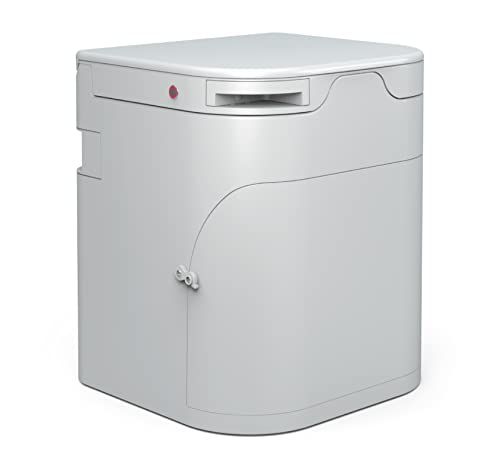
OGO Origin Compact Composting Toilet — Best Compact Electric Composter
Space is the currency of mobile builds, and the OGO Origin spends it carefully: a compact footprint that fits the toilet lockers and wet-bath corners of vans, RVs and boats where the benchmark composters simply do not go. Within that footprint it offers powered agitation — push-button mixing rather than a crank — alongside fan ventilation, which makes it one of the most genuinely ‘electric’ composting toilets in this guide and one of the easiest to live with in a small space you also sleep in.
Compactness is paid for in capacity: a smaller chamber cycles faster, so full-time couples should expect more frequent emptying than a Nature’s Head asks, and the maker’s community is younger and smaller. Neither point diminishes the design’s fitness for its purpose. If your build’s tape measure has already eliminated the larger picks, the Origin is not a compromise to apologise for — it is the purpose-built answer, with electric convenience the big units’ manual cranks do not offer.
Strengths
- Compact footprint fits van and boat spaces larger composters cannot
- Powered agitation removes the hand-cranking routine
- Purpose-designed for mobile, off-grid use
Trade-offs
- Compact chamber means shorter intervals between emptying on heavy use
- Smaller maker ecosystem than Nature’s Head
- Premium for its size class
| Specification | Verified detail |
|---|---|
| Footprint | Compact — 15-inch class footprint stated in Amazon title |
| Use case | Van, RV and boat, verified from Amazon title |
Best for: Van builds, small RVs and boats where footprint decides everything / Not suited for: Full-time households needing maximum chamber capacity
Check on Amazon — check price on Amazon for the current listing, configuration and delivery options.

Compo Closet Cuddy Composting Toilet — Best for Vans and Small Spaces
The Cuddy was designed by and for the van-life end of this market, and its specification shows it: a fan that runs natively on 12 volts, a carbon filter helping the vent stay neighbour-friendly, and a self-contained, chemical-free format that slides into the small, multi-purpose spaces of vans, RVs, boats and tiny homes. Where a Nature’s Head assumes a dedicated toilet corner, the Cuddy assumes a vehicle — lighter expectations, easier cleaning, and a size that can be stowed or moved as the build requires.
Its limits are the honest limits of its class: capacity is sized for couples and typical mobile use, filters and medium are consumables to keep in stock, and as a newer entrant it lacks the decade-deep troubleshooting folklore of the benchmark. For a van build on a 12V system, though, the native electrical fit alone justifies its place — no inverter losses, no workarounds — and owners who match it to realistic use find it a tidy, modern answer to a very specific brief.
Strengths
- 12V fan runs natively from vehicle and off-grid battery systems
- Carbon filter assists odour control at the vent
- Self-contained and chemical-free by design
Trade-offs
- Capacity suits couples and intermittent use more than large households
- Consumable filters and medium are ongoing ownership items
- Newer brand — long-term community knowledge still growing
| Specification | Verified detail |
|---|---|
| Power | 12V fan, verified from Amazon title |
| Capacity | 3.9 gallon class, verified from Amazon title |
| Filtration | Carbon filter, verified from Amazon title |
Best for: Vanlifers and small-space off-gridders on 12V systems / Not suited for: High-throughput family use in a fixed cabin
Check on Amazon — check price on Amazon for the current listing, configuration and delivery options.
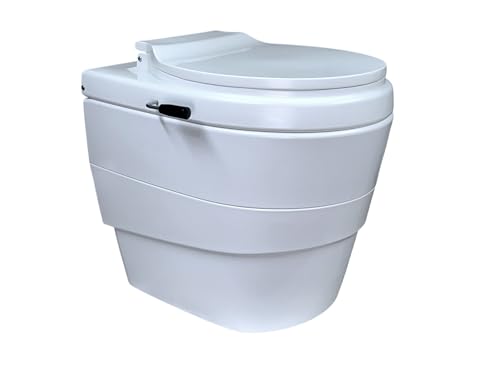
Thinktank Composting Toilet — Best Alternative Design
Every mature category has a credible alternative that exists because the benchmark’s choices do not suit everyone, and the Thinktank is this guide’s. It is a full composting toilet from a specialist maker, aimed at owners who have done the reading — compared chamber designs, vent arrangements and emptying systems — and prefer its particular answers. In a category where owners maintain their own systems for years, that kind of deliberate, informed choice is often the most satisfied one.
The cautions are about information rather than quality. Its listing carries less detail than the big names’, so confirm the exact configuration, vent kit and power arrangement on the listing before ordering, and expect a smaller community when you want a second opinion at midnight. We include it because a six-pick guide that pretends only two designs exist would fail experienced buyers — but first-time composting-toilet owners should start at the top of this guide and arrive here only with a reason.
Strengths
- Full composting-toilet format from a specialist maker
- Suits owners who have compared designs and want an alternative approach
- Waterless and vented for off-grid and marine use
Trade-offs
- Listing detail is thinner than the benchmark models — verify configuration carefully
- Smaller owner community than Nature’s Head
- Availability can vary by listing
| Specification | Verified detail |
|---|---|
| Type | Composting toilet, verified from Amazon title |
| Colour | White, verified from Amazon title |
Best for: Experienced off-gridders comparing specialist designs / Not suited for: First-time buyers who want the deepest possible support community
Check on Amazon — check price on Amazon for the current listing, configuration and delivery options.
Comparison Table
| Pick | Badge | Key spec | Best for |
|---|---|---|---|
| Nature’s Head Self-Contained Composting Toilet — Close Quarters Spider Handle | Best Overall | Self-contained composting toilet, verified from Amazon title | Boats, RVs, cabins and tiny homes used regularly or year-round |
| Nature’s Head Self-Contained Composting Toilet — Foot-Spider Handle | Best for Standard Installs | Self-contained composting toilet, verified from Amazon title | Cabins and tiny homes with a little more room around the toilet |
| Separett Villa Urine-Separating Toilet | Best Urine-Diverting with Fan Venting | Urine-separating toilet, verified from Amazon title | Homesteads, cottages and skoolies wanting the simplest dry system |
| OGO Origin Compact Composting Toilet | Best Compact Electric Composter | Compact — 15-inch class footprint stated in Amazon title | Van builds, small RVs and boats where footprint decides everything |
| Compo Closet Cuddy Composting Toilet | Best for Vans and Small Spaces | 12V fan, verified from Amazon title | Vanlifers and small-space off-gridders on 12V systems |
| Thinktank Composting Toilet | Best Alternative Design | Composting toilet, verified from Amazon title | Experienced off-gridders comparing specialist designs |
How to Choose an Electric Compost Toilet
Decide first between the two philosophies. True composters (Nature’s Head, OGO, Cuddy, Thinktank) retain solids in a chamber with a medium, where the composting process begins; they suit owners happy to tend a simple system and empty it at long intervals. Urine-diverting dry toilets (Separett) separate and dry rather than compost in place; they suit owners who want the simplest possible appliance and are content to bag solids for disposal or outdoor composting. Neither is more ‘real’ than the other — but buying one while expecting the other is the category’s classic dissatisfaction, so choose deliberately.
Then size honestly. Chamber capacity is rated in people-weeks, and manufacturers’ figures assume typical use; a full-time couple, a weekend cabin and a boat used for fortnights are different duties. Count your real usage, consider whether a spare chamber or larger model serves you better, and remember that liquids management — bottle size and emptying access — is the daily reality of every separating design. A toilet that fits your space but not your usage pattern will be emptied too often and resented accordingly.
Finally, plan the electrics and the vent before the purchase, because they are the installation. Fan models draw very little power but draw it continuously, so confirm your battery or solar budget includes it through winter; 12V-native models simplify vehicle installs enormously. Vent routing — a clear path for the hose or duct to outside air, away from open windows — decides whether any of these toilets stays odour-free, and it deserves a drawn plan, not a hopeful improvisation on install day.
A note on medium, since owners ask constantly: the starting medium specified by the maker — typically a peat or coir preparation — is a functional component, not a suggestion to improvise around. Its structure holds moisture at the level the process wants and gives the chamber its working texture. Substitutions chosen for cheapness or convenience are behind a large share of ‘the toilet does not work’ reports for toilets that work perfectly on specification. Buy the right medium, keep a spare bag, and let the system be boring.
Electric Composting, Incinerating and Dry Toilets: The Honest Map
Because the terminology confuses buyers, here is the map this guide uses. Electric compost toilets use power — almost always a vent fan, sometimes an agitator — to assist a biological process; they need no water and no chemicals, and they produce material that finishes composting after removal. Electric incinerating toilets are a different technology entirely: high heat reduces waste to a small amount of sterile ash. They are effective and genuinely waterless, but the leading names could not be verified as Amazon listings in our checks, so they appear here as unlinked: research them through their manufacturers if ash output, high power draw during burn cycles and premium pricing suit your site.
The third neighbour is the dry-flush toilet, which seals waste in film cartridges without composting — convenient, but a consumable-cartridge model rather than a composter, and covered in this programme’s dry-flush guides. And the famous Sun-Mar Excel, a self-contained electric composter with a long history in off-grid homes, must be labelled unlinked here for the same reason as the incinerators: our verification found its compost medium and accessories listed, but not the toilet itself, so it carries no purchase link in this guide. If your heart is set on one, buy it through the manufacturer’s channels with the same vent and capacity planning described here.
Why does this guide insist on the distinctions? Because running costs, power budgets and end products differ completely between these technologies, and a buyer comparing a fan composter’s tiny continuous draw with an incinerator’s heavy burn-cycle draw is not comparing like with like. Choose the technology by your site’s power, your tolerance for consumables, and what you want to handle at emptying time — then choose the model within it. The reviews above are ordered to make exactly that two-step decision easy.
Cold-weather owners should also plan the chamber’s long game: in an unheated cabin closed for winter, follow the maker’s preparation guidance rather than leaving a working chamber to freeze mid-process and surprise you in spring. The steps are simple and seasonal, like draining a boat’s water system, and they belong on the same cabin-closing checklist.
How to Install and Vent an Electric Compost Toilet
Position first: the toilet needs a stable, level mounting and, for separating designs, comfortable access to the liquids bottle. Mark the vent route before fixing anything — the duct or hose should run as directly as possible to outside air, with gentle bends, terminating where exhaust will not drift back through a window or hatch. On boats and vans, that routing decision often dictates the toilet’s location rather than the other way round, and experienced installers plan the vent first and the furniture second. Connect the fan to its supply — 12V native on some models, a small adapter on others — with a fuse, and confirm airflow direction before final assembly.
Commission the chamber properly. Add the starting medium exactly as the maker specifies — the amount and moisture are functional, not suggestions — run the agitator to distribute it, and check the separator alignment so liquids genuinely divert; a misaligned separator is the root cause of most new-owner problems, because liquid in the solids chamber defeats the drying the fan is working to achieve. Run the fan continuously for the first days and trust the process: a correctly vented, correctly separated composting toilet should smell of nothing more than its earthy medium inside the living space.
Build the ownership rhythm early. Liquids bottle emptied on schedule, agitator turned after use on crank models, fan left running — these small consistencies are the whole maintenance burden, and skipping them is how owners manufacture the problems they then blame on the product. Keep spare medium, and bags or filters where your design uses them, stored with the toilet. If odour ever appears, troubleshoot in order — vent airflow, separator alignment, medium moisture, chamber fullness — because the cause is almost always one of those four, and all four are fixable in minutes.
Guests deserve a paragraph in every composting guide. A thirty-second, cheerful briefing — sit for everything, use the agitator or button, nothing else goes in — prevents nearly all visitor incidents, and a small, friendly card in the bathroom removes the need to repeat it. Owners who treat the briefing as hospitality rather than apology report that guests adapt instantly and often leave curious about the system.
Power Budgets for Off-Grid Sites, Worked Honestly
Fan-assisted composters are among the lightest continuous loads in an off-grid home, but ‘light’ deserves a number-shaped discussion. A small vent fan running around the clock consumes, over a day, roughly what a single bright bulb consumes in an evening — trivial in summer on a healthy solar array, worth counting in a dark winter week on a marginal one. The discipline is simply to include it in the site’s load list as a continuous draw, alongside the fridge and the router, rather than discovering it as the mystery load in January.
Twelve-volt-native models simplify the accounting beautifully in vehicles and boats: no inverter standing losses, a direct fused connection to the house bank, and a draw the alternator or solar replaces without thought. Mains-adapter models in fixed cabins are equally undemanding but should be plugged into a circuit that stays live — the fan switched off by a well-meaning visitor closing up the cabin is a classic cause of the odour event that greets the next arrival, blamed forever on the innocent toilet.
Powered agitation, where fitted, changes the budget negligibly: short bursts, user-triggered, lost in the noise of the site’s other loads. The technology that does not share this innocence is the incinerating toilet, covered as unlinked in this guide: its burn cycles draw heavily while they run, and a site considering one must budget it as it would a kettle or a heater — entirely feasible, entirely different arithmetic. Keeping those two ledgers separate is why this guide insists on its terminology.
The practical conclusion is reassuring: if your site can run a fridge, it can run a fan compost toilet without noticing. Size the system for your real continuous loads, wire the fan to an always-on fused feed, and the toilet’s electricity becomes the least interesting number in your off-grid budget — which is exactly where mature technology belongs.
What Finished Material Is, and Handling It Well
New owners most want to know what comes out of the toilet and what they do with it, so here is the plain account. From a chamber composter, emptied at its proper interval, the material is predominantly the medium itself, broken down and earthy, with the composting process well advanced but typically completed after removal — most makers and most local rules treat it as material to be buried, further composted in a dedicated outdoor system, or disposed of according to local regulation, and the maker’s manual for your model gives the specific guidance to follow.
From a urine-diverting dry toilet, the account is simpler still: dried solids in a bag, handled as the maker directs and local rules allow, and a liquids bottle emptied to a soakaway, a grey-water point or a regular toilet as appropriate to the site. Neither output is the horror of imagination; both are routine, brief and — in a correctly vented, correctly separated system — remarkably unremarkable to deal with. Gloves, a designated scoop or tool, and a handwash afterwards are the whole ceremony.
Local rules vary and outrank this guide: some jurisdictions specify how composting-toilet outputs may be used or buried on land, and boat and marina rules govern discharge of liquids in their waters. The time to learn your locality’s position is before installation, not at the first emptying, and makers’ manuals usually summarise the common frameworks helpfully. Compliance here is easy, cheap and part of being a good neighbour to the land the off-grid life celebrates.
Experience compresses the whole topic: owners in their second year describe emptying day the way sailors describe bilge checks — a scheduled, minor, slightly satisfying confirmation that the system is healthy. The dread belongs entirely to the imagination of the first month. Buy the right capacity, follow the maker’s handling guidance, and the end of the process becomes as boring as its beginning — which is the highest praise sanitation technology can earn.
Composting Toilets on Boats: The Marine Particulars
Boats made this category: the Nature’s Head was designed for marine heads compartments, and its dominance afloat teaches the marine particulars clearly. Space is measured in centimetres, so handle arcs and bottle access are planned against bulkheads, not brochures. Venting must exit where spray and following seas cannot reach it, through a fitting chosen for the marine environment, because a vent that admits water defeats the drying the whole system depends on.
Motion matters too. A chamber and bottle that behave in a still cabin must also behave at heel and in a seaway, which is why marine-proven designs secure their internals and why owners mount the unit as the maker directs rather than improvising brackets. Liquids management underway — who empties the bottle, where, and in compliance with the discharge rules of the waters you are in — is a crew routine to agree before the first passage, not an improvisation for the first night watch.
The payoff afloat is substantial: no pump-out queues, no holding-tank odours haunting the cabin in hot weather, no through-hulls for the toilet, and a system whose entire electrical appetite is a small fan on the house bank. For liveaboards and long-distance cruisers especially, that independence compounds daily. It is why the composting toilet, electric fan and all, has become the default refit choice for so many cruising boats — a verdict delivered by the least sentimental user group in this entire guide.
If your boat use is weekends in home waters with easy pump-out access, the calculus is closer and a conventional marine head may serve as well — the electric family guide in this programme covers those. Choose by your cruising pattern, honestly described, and either technology will feel like the obvious one. That is the mark of a mature category: two right answers, and a clear question that separates them.
Troubleshooting the Four Classic Problems
Nearly every difficulty owners meet with an electric composting toilet is one of four, and all four are diagnosable in minutes. Problem: odour in the living space. Check the fan is actually running and the vent path is clear and correctly terminated; then check the separator is diverting liquids where they belong. Nine times in ten, one of those two checks finds it — the system cannot smell when air moves outward and liquids stay out of the chamber. Problem: the chamber seems too wet. That is separation failing, medium exhausted, or capacity exceeded; correct whichever it is rather than adding heat or hope.
Problem: fruit flies or gnats appear around the unit. They arrive through vents or on medium and breed where moisture and material meet air. The remedies are mechanical and calm: check vent screens, refresh the medium’s surface, and let the fan’s drying do its work over a few days; a correctly dry chamber is a poor nursery. Problem: the liquids bottle overflows or is needed constantly. That is a usage-pattern fact, not a fault — the household’s liquid volume exceeds the bottle’s interval, and the answers are a larger bottle arrangement where the model allows, a diverted outlet where the site permits, or simply an emptied-on-schedule routine owned by a named person.
Notice what is absent from that list: mysterious failures. These are simple machines — a fan, a chamber, a separator — and their problems are correspondingly legible, which is a large part of their appeal to owners who maintain their own places. The maker’s manual adds model-specific detail, and the owner communities for the established models have answered each of the four problems hundreds of times in public; a new owner with a question is rarely more than a search away from a veteran’s photograph of the exact fix.
The preventive summary writes itself: fan always on, separator aligned, medium to specification, capacity respected, bottle on schedule. Five habits, none burdensome, and the troubleshooting section becomes the part of the manual you read once for reassurance. That is the mature state of this technology — not that nothing ever needs attention, but that attention is brief, obvious and entirely within the owner’s hands.
Common Buying Mistakes
The first mistake is buying a passive toilet while expecting electric performance — or the reverse, paying for fans and agitators for a fair-weather weekend outhouse that never needed them. Match the technology to the climate and duty: continuous, cold or humid use is where electric assistance earns its keep. The second is ignoring the vent until install day. Every odour horror story in this category traces back to venting that was short, kinked, terminated badly or switched off to save power; the fan is not an accessory, it is the system.
Third, buyers under-size. A chamber at its limit stops drying properly, empties awkwardly and sours the owner on a sound design; when between sizes or usage figures, choose capacity. Fourth, medium mistakes — too little, too wet, or the wrong material entirely — undermine composters that would otherwise work perfectly, and the fix is simply following the maker’s specification instead of improvising. Fifth, expecting any of these to behave like a plumbed toilet for guests without a word of explanation: a thirty-second briefing on separation and cranking saves your system and your visitors’ dignity.
Finally, do not let unverified fame steer the purchase. The category’s best-known names include models that, at verification time, simply were not listed as complete toilets through this programme’s channels — we have labelled them unlinked rather than inventing links, and you should be equally strict with any retailer: buy the verified model, from a listing whose contents you have read, with a vent plan already drawn. Do that and electric composting is one of off-grid living’s most solved problems.
Finally, keep the maker’s manual and a small kit with the toilet: spare medium, any fuses the fan circuit uses, and the vent’s cleaning brush if one is specified. Off-grid equipment rewards the household that treats minor upkeep as part of the place’s rhythm — five prepared minutes now against a problem discovered at the least convenient possible moment, which is when off-grid problems traditionally schedule themselves.
Final Recommendation
Start with the Nature’s Head close-quarters model unless your space clearly suits the foot-spider handle, choose the Separett Villa if you prefer diversion-and-drying simplicity, the OGO Origin where footprint rules, the Cuddy for native 12V van life, and the Thinktank if you are an experienced buyer with a reasoned preference. Treat Sun-Mar and incinerating models as unlinked research paths through their manufacturers.
Above all, plan the vent and the power before the toilet arrives. In this category, installation decisions are performance decisions — get them right and any pick here will serve quietly for years.
Start your shortlist here: Nature’s Head Self-Contained Composting Toilet — Close Quarters Spider Handle for the guide’s main recommendation, and Nature’s Head Self-Contained Composting Toilet — Foot-Spider Handle as the first alternative to compare on configuration and current pricing — check price on Amazon for both before deciding.
Related guides in this programme: Best Electric Toilets · Best Efficient High Tech Toilets · Best Economy Water Saver Toilets · Best Elevated Toilets For Elderly · Best Efficient Toilets
Frequently Asked Questions
How much electricity does an electric compost toilet use?
Very little for fan models — the fan runs continuously but draws a small load that modest solar and battery systems handle easily. Models with powered agitation add brief, small draws. Incinerating toilets are the exception, with heavy draw during burn cycles; they are covered as unlinked in this guide.
Does an electric compost toilet smell?
A correctly installed one should not smell in the living space. The fan vents the chamber continuously, separation keeps liquids out of the solids, and the medium stays aerobic. Odour almost always traces to vent problems, a misaligned separator, or a chamber that is too full or too wet — all fixable.
What is the difference between composting and urine-diverting toilets?
Composting models retain solids in a chamber with a medium, where composting begins, and are emptied at long intervals. Urine-diverting dry toilets like the Separett separate liquids and dry the solids for bagging. Both are waterless; the difference is what you handle and how the toilet is tended.
Why is the Sun-Mar Excel not linked in this guide?
Because verification found only its compost medium and accessories listed, not the toilet itself. Rather than invent a link, we list it as an unlinked reference — it remains a legitimate model to research and buy through the manufacturer’s own channels.
Can these toilets work in winter cabins and cold climates?
Yes — this is where electric assistance earns its place. The fan keeps air moving and the chamber drying when passive systems stall in the cold. In unheated spaces, follow the maker’s guidance on medium and, for long absences, on preparing the chamber.
How often do you empty a composting toilet?
It depends on capacity and use: liquids bottles need frequent attention, while solids chambers typically run for weeks for a couple in regular use. Compact mobile models cycle faster than full-size cabin models. The reviews note capacity honestly for each pick.


