Disclosure: airfryerkitchensupply.com is reader-supported. When you buy through links on our site, we may earn an affiliate commission at no extra cost to you.
Where to buy
First, the clarification that shapes this whole guide: a bee smoker is a beekeeping tool that puffs cool smoke into a hive to calm bees during inspections. It is not a food smoker, and nothing here will cook a brisket. The best electric bee smokers are fan-assisted smokers: a battery fan does the work that bellows do on a traditional smoker, keeping fuel smouldering and directing the smoke while your other hand works the hive. Every pick below was verified against this site’s Amazon listing data, and each review states how that model is powered, because in this niche the power arrangement is the product.
- lakipum Electric Bee Smoker, USB Rechargeable — Check the current price on Amazon
- Electric Bee Smoker, Micro-USB Rechargeable with Heat Cover — Check the current price on Amazon
- LUCKDANO Electric Beehive Smoker with Heat Handle — Check the current price on Amazon
- Semme Electric Bee Smoker with Heat Handle — Check the current price on Amazon
- Anu Limen Electric 5V Beehive Smoker — Check the current price on Amazon
- Bee Smoker Pellets, Beekeeping Fuel (108 Packs) — Check the current price on Amazon
In this guide
Quick Picks
Six verified picks: five electric bee smokers covering USB charging, AA backup, heat handles and a detachable body, plus the prepared pellet fuel that makes any of them behave well. Read the badges as jobs, because at the hive the differences between these tools are practical, not cosmetic.
lakipum Electric Bee Smoker, USB Rechargeable — Best Overall Electric Bee Smoker: The lakipum is the most complete answer to this search: a stainless steel bee smoker, electrically assisted, recharged by USB, and described by its own listing as equipment for hive inspection. — Check price on Amazon
Electric Bee Smoker, Micro-USB Rechargeable with Heat Cover — Best Dual-Power Option: Power anxiety is the rational objection to electric smokers, and this model answers it with redundancy: recharge it by Micro-USB when life is organised, and fall back on AA batteries when it is not. — Check price on Amazon
LUCKDANO Electric Beehive Smoker with Heat Handle — Best Heat Handle Design: Ask beekeepers where a smoker bites them and many will point at the handle side of the tool: a hot can, a long round, a moment of inattention. — Check price on Amazon
Semme Electric Bee Smoker with Heat Handle — Best Rustproof Simplicity: Apiary tools live hard lives: damp sheds, vehicle boots, propolis on every surface. — Check price on Amazon
Anu Limen Electric 5V Beehive Smoker — Best Stated Specifications: The Anu Limen earns its badge for honesty: its verified listing states the tool’s dimensions, its weight, its detachable body and, unusually, what is not in the box, the battery. — Check price on Amazon
Bee Smoker Pellets, Beekeeping Fuel (108 Packs) — Best Prepared Fuel: Every electric smoker in this guide still burns fuel, and the fuel decides the smoke. — Check price on Amazon
How These Picks Were Chosen
Selection began by policing the search itself. Searches for electric bee smokers surface traditional bellows smokers, treatment vaporisers and full beekeeping starter kits alongside the genuine electric tools, so every candidate was checked against its verified listing title: a pick only counts as electric here if the listing itself says so, and the two non-electric categories are discussed in the guide sections, clearly labelled, rather than smuggled into the rankings.
Within the genuine electric field, the ranking weighted field behaviour: how the tool is powered and recharged, because a smoker that goes flat at the apiary is worse than bellows; how it protects the hand and the suit from its own hot can, through heat handles and covers; and how honestly the listing describes the tool, because in a niche full of near-identical stainless cans, a listing that states dimensions, weight and what is not included is a listing from a seller who expects beekeepers to check.
Fuel was treated as part of the product, not an afterthought. Electric fans change how air reaches the fuel, not what the fuel must be: cool-smouldering, clean, natural material. The prepared pellet fuel in the picks earned its place because consistent fuel is what makes a fan-assisted smoker produce the steady, cool smoke that bees actually respond to.
The 6 Best Electric Bee Smokers

lakipum Electric Bee Smoker, USB Rechargeable — Best Overall Electric Bee Smoker
The lakipum is the most complete answer to this search: a stainless steel bee smoker, electrically assisted, recharged by USB, and described by its own listing as equipment for hive inspection. If you run regular inspections and want one hand free for frames while the fan keeps smoke ready, this is the design the whole category is converging on.
Strengths
- USB rechargeable power ends the disposable-battery routine
- Stainless steel hive smoker built specifically for inspection work
- Listing describes it as a smoke sprayer, matching the fan-assisted design
Trade-offs
- Charging discipline replaces battery discipline; a flat tool is a dead tool
- Fan assistance still burns real fuel, so fire rules apply in full
- A newer niche brand, so judge the listing details carefully
| Specification | Detail |
|---|---|
| Body | Stainless steel (from listing title) |
| Power | USB rechargeable (in listing title) |
| Use | Hive inspection (in listing title) |
USB charging suits beekeeping’s rhythm better than it first appears. The tool charges alongside the rest of modern life, at home or from a vehicle, and arrives at the apiary either ready or obviously not, with no half-dead cells discovered at the third hive. Pair that readiness with sensible fuel and the fan’s steady airflow, and inspections become noticeably calmer work: smoke on demand, in small directed puffs, without the pumping that tires a hand and jostles a hive stand. Keep a traditional smoker as your apiary spare, as most electric adopters do, and this becomes the tool you reach for first.
Best for: regular inspections across several colonies / Not suited for: beekeepers who want a tool with no charging routine whatsoever

Electric Bee Smoker, Micro-USB Rechargeable with Heat Cover — Best Dual-Power Option
Power anxiety is the rational objection to electric smokers, and this model answers it with redundancy: recharge it by Micro-USB when life is organised, and fall back on AA batteries when it is not. For beekeepers whose apiary is a drive away and whose kit lives in a vehicle, that belt-and-braces arrangement is worth more than any single clever feature.
Strengths
- Listed as both Micro-USB rechargeable and 4 AA battery powered
- Heat cover protects hands, suit and surroundings from the hot can
- Stainless build aimed at inspections, apiary work and hobbyists alike
Trade-offs
- Two power systems mean two things to maintain and check
- Micro-USB is an older connector than most new kit uses
- Listing language is dense, so confirm the configuration before ordering
| Specification | Detail |
|---|---|
| Body | Stainless steel (from listing title) |
| Power | Micro-USB rechargeable; also listed as 4 AA battery powered |
| Guard | Heat cover (in listing title) |
The heat cover is the second half of the pick’s case. A smoker can is a small furnace, and it gets set down, swung and brushed against suits all afternoon; a fitted cover reduces the casual burns and scorched grass that make beekeepers careless about a tool they should respect. Judge this model as the pragmatic electric choice: not the newest connector, not the sleekest listing, but the one least likely to be powerless on the morning you need it.
Best for: beekeepers who want a battery fallback for charging failures / Not suited for: minimalists who want exactly one power system to manage

LUCKDANO Electric Beehive Smoker with Heat Handle — Best Heat Handle Design
Ask beekeepers where a smoker bites them and many will point at the handle side of the tool: a hot can, a long round, a moment of inattention. The LUCKDANO leads with a heat handle, and in a category of near-identical cans that focus on the part of the tool you actually hold is a legitimate reason to choose it.
Strengths
- Heat handle is the headline feature, aimed at safe one-handed carrying
- Stainless steel beekeeping build for inspection and honey work
- Listing names both driving bees and extracting honey as its jobs
Trade-offs
- Listing states fewer power details, so verify the arrangement before ordering
- Handle comfort is personal; large and small hands judge differently
- Electric assistance still depends on fuel quality for smoke quality
| Specification | Detail |
|---|---|
| Body | Stainless steel (from listing title) |
| Handle | Heat handle (in listing title) |
Its listing also describes the work plainly, calming bees for inspection and for honey extraction, which are the two moments a smoker earns its place in the kit. Treat the power details as your pre-purchase homework, because the listing emphasises the handle and the build over the electrical arrangement, and an electric smoker is a system of can, fan and battery that should be understood whole. Confirmed to your satisfaction, this is the comfort pick for long rounds in warm weather, when every degree of separation from the hot can counts.
Best for: long inspection rounds and warm-weather work / Not suited for: buyers who want every electrical detail stated up front

Semme Electric Bee Smoker with Heat Handle — Best Rustproof Simplicity
Apiary tools live hard lives: damp sheds, vehicle boots, propolis on every surface. The Semme’s rustproof stainless pitch speaks directly to that reality, and its heat handle covers the handling half of the same argument. It is the pick for beekeepers who store kit where it is used and expect it to survive there.
Strengths
- Rustproof stainless positioning suits tools stored in damp sheds and vehicles
- Heat handle included, matching the category’s comfort leaders
- Listing promises easy use, which in this niche means lighting and airflow that behave
Trade-offs
- Specification detail in the listing is brief, so check dimensions against your kit
- Newer brand names in this niche come and go; buy on the listing, not the logo
- Simplicity here means fewer stated extras, not fewer duties
| Specification | Detail |
|---|---|
| Body | Stainless steel, rustproof (from listing title) |
| Handle | Heat handle (in listing title) |
In a niche where many cans look alike, durability claims should be read as maintenance promises: stainless that resists the shed’s damp, a body that hoses or brushes clean of wax and soot, and a fan and switch arrangement that tolerates being knocked about in a kit box. Verify the stated dimensions suit your hand and your smoker box before ordering, because a tool carried on every inspection should fit the kit it travels in. Do that, and this is the low-fuss electric choice.
Best for: beekeepers storing kit in sheds and vehicles / Not suited for: buyers wanting the most detailed specification sheet available

Anu Limen Electric 5V Beehive Smoker — Best Stated Specifications
The Anu Limen earns its badge for honesty: its verified listing states the tool’s dimensions, its weight, its detachable body and, unusually, what is not in the box, the battery. In a niche of vague listings, that completeness lets a beekeeper actually plan: whether it fits the kit box, whether 800 grams suits a long round, and which 5V battery arrangement the apiary will standardise on.
Strengths
- Listing states real dimensions and weight: 10.8 x 9.3 in, 800 g
- Detachable body promises easier cleaning and fuel handling
- Heat barrier handle and steady fume output are both named features
Trade-offs
- Battery not included, stated honestly, but a cost and a step to plan for
- 5V power means matching the tool to a suitable battery or pack
- Heavier specification focus may exceed a small apiary’s needs
| Specification | Detail |
|---|---|
| Size | 10.8 x 9.3 in, 800 g (from listing title) |
| Body | Stainless steel, detachable body (in listing title) |
| Power | 5V; battery not included (in listing title) |
The detachable body is more than a spec-sheet flourish. Smokers clog with ash, tar and propolis, and a body that separates for cleaning gets cleaned, which keeps airflow, and therefore smoke quality, where it should be across a season. The steady-output claim is the one to test on arrival with your usual fuel, because steady cool smoke is the entire point of the tool. Buy the battery deliberately, as part of the purchase, and this is the planner’s pick: the electric smoker whose ownership has the fewest surprises.
Best for: planners who size tools to their kit and standardise batteries / Not suited for: buyers wanting everything, battery included, in one box
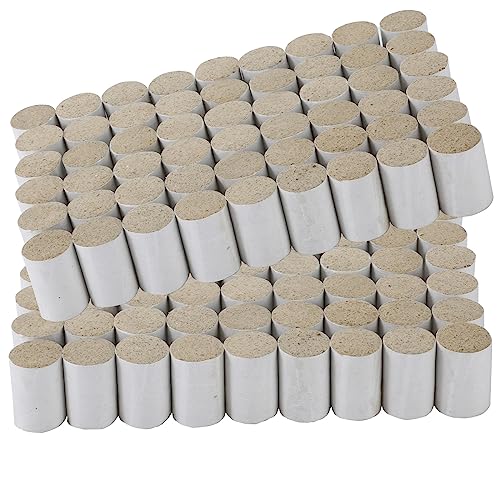
Bee Smoker Pellets, Beekeeping Fuel (108 Packs) — Best Prepared Fuel
Every electric smoker in this guide still burns fuel, and the fuel decides the smoke. These prepared pellets, sold in a bulk box of 108 packs and listed for full combustion and soft smoke, are the pick for beekeepers who have learned that a smoker’s bad days are almost always fuel days: damp, dirty or badly packed material defeating a perfectly good tool.
Strengths
- 108 packs of purpose-made smoker fuel remove fuel improvisation
- Listing promises full combustion and soft smoke, the profile bees respond to
- Prepared fuel behaves consistently in fan-assisted smokers
Trade-offs
- A consumable, so the cost returns every season
- Prepared pellets cost more than gathered natural fuel
- Fuel cannot rescue a smoker with a failing fan or battery
| Specification | Detail |
|---|---|
| Contents | 108 packs of smoker fuel pellets (from listing title) |
| Smoke character | Soft smoke (in listing title) |
Consistency is the real product. A fan-assisted smoker meters air, not fuel quality, and feeding it uniform pellets produces the repeatable, cool smoke that makes inspections calm and comparable from week to week. Gathered fuels, pine needles, burlap, rotted wood, remain honourable and cheap, and many beekeepers will keep using them. But for a new electric owner calibrating a new tool, removing the fuel variable for the first season is sound method, and this box is sized to last exactly that kind of season.
Best for: new electric smoker owners and consistency seekers / Not suited for: beekeepers happily using free gathered fuels
Comparison Table
| Pick | Badge | Key spec | Best for |
|---|---|---|---|
| lakipum Electric Bee Smoker, USB Rechargeable — Check price on Amazon | Best Overall Electric Bee Smoker | Stainless steel, USB rechargeable, fan-assisted | regular inspections across several colonies |
| Electric Bee Smoker, Micro-USB Rechargeable with Heat Cover — Check price on Amazon | Best Dual-Power Option | Micro-USB + AA power, heat cover, stainless | beekeepers who want a battery fallback for charging failures |
| LUCKDANO Electric Beehive Smoker with Heat Handle — Check price on Amazon | Best Heat Handle Design | Stainless steel, heat handle | long inspection rounds and warm-weather work |
| Semme Electric Bee Smoker with Heat Handle — Check price on Amazon | Best Rustproof Simplicity | Rustproof stainless, heat handle | beekeepers storing kit in sheds and vehicles |
| Anu Limen Electric 5V Beehive Smoker — Check price on Amazon | Best Stated Specifications | 10.8 x 9.3 in, 800 g, detachable body, battery not included | planners who size tools to their kit and standardise batteries |
| Bee Smoker Pellets, Beekeeping Fuel (108 Packs) — Check price on Amazon | Best Prepared Fuel | 108 packs, soft smoke, full combustion | new electric smoker owners and consistency seekers |
How to Choose an Electric Bee Smoker
Begin with your apiary’s arithmetic. Count your colonies and your longest inspection round, because those numbers decide whether fan assistance earns its cost at all. Two hives inspected calmly will never repay an electric premium over good bellows. Twenty hives inspected against the weather might repay it in a season of saved effort, calmer bees and a hand that is free for frames instead of pumping.
Next, choose your power philosophy, because the picks above divide exactly there. USB-rechargeable tools suit beekeepers with a tidy charging routine. Dual-power tools suit beekeepers whose kit lives in vehicles and whose mornings are not tidy. A tool with the battery sold separately suits planners who want to standardise on one battery across several apiary devices. None of these is superior in the abstract; each matches a life, and buying against your own habits is how good tools become shed ornaments.
Then judge the hot half of the tool: heat handles, heat covers, shields and the general arrangement for setting the smoker down safely. An electric smoker is still a can of burning fuel, and its handling safety matters more across a long round than any electrical refinement. Stainless construction, cleanable bodies and honest dimensions complete the checklist, because propolis and damp will test all three within a season.
Finally, plan the fuel with the tool. Fan assistance rewards consistent fuel, so new electric owners should consider prepared fuel for their first season, removing one variable while they learn the fan’s behaviour. Experienced beekeepers with a proven gathered fuel can keep it, provided it is dry, clean and natural. The fan meters air; the fuel still makes the smoke, and smoke quality is the product the bees judge.
Why Smoke Calms Bees: The Behaviour Behind the Tool
Smoke works on bee behaviour in two ways that beekeepers have used for centuries. It interferes with the alarm pheromones bees release when the hive is disturbed, slowing the colony’s defensive escalation, and it triggers a feeding response: bees gorge on honey in apparent preparation for abandoning a burning home, and a bee full of honey is a calmer, less agile defender.
That mechanism explains the tool’s design rules, electric or not. The smoke must be cool, because hot smoke and sparks injure bees and provoke the alarm you are suppressing. It must arrive in small, directed puffs, because the skill is a little smoke at the entrance and under the crown board, then a pause, rather than a fogged colony. And the fuel must be clean natural material, because smoke from synthetic or treated material can harm the bees it is meant to calm.
It also explains why the fan matters and why it does not. A fan makes small, precise puffs easier to produce repeatedly, one-handed, across a long round, which is a genuine handling advance. It does not change the bees. The craft remains reading the colony and using the least smoke that keeps the inspection calm, and the best electric smoker is simply the one that makes that restraint easiest to practise.
How to Light and Run an Electric Bee Smoker Through an Inspection Round
Start the smoker before you open anything, and start it properly. Establish a small bed of lit starter fuel in the can, add the main fuel gradually, and use the fan in gentle bursts until the smoker produces thick, cool smoke. A smoker lit in a hurry burns hot, throws sparks and dies young, and an electric fan fed with unlit fuel just blows ash, so the lighting ritual survives electrification unchanged.
Work the round with rhythm: a puff or two at the entrance, a pause, the crown board cracked and a gentle puff across the top bars, then frames worked with the smoker set down somewhere safe, on bare ground, away from dry grass and hive stands. Use the fan for top-up puffs instead of reaching for bellows that are not there, and notice how the free hand changes your frame handling within a single round. Between colonies, a few seconds of fan keeps the fuel alive through a long inspection.
Closing the round matters as much as lighting it. When the last colony is closed, empty remaining fuel into a metal container or onto a safe bare patch, let the can cool fully before it goes into a vehicle or shed, and put the tool on charge while the habit is fresh, because the next round’s first job is a battery check. The majority of smoker accidents happen after the inspection, in the careless ten minutes when a still-hot can meets a car boot or a wooden floor, and the majority of electric smoker failures happen before it, in the forgotten charge.
Fire Safety Around Smokers: Rules That Admit No Exceptions
An electric bee smoker is an open fire carried by hand, and in dry seasons it is the most dangerous object in the apiary. The fan does not change that sentence at all. Keep a clear, bare patch for setting the tool down, carry water or an extinguisher on high-risk days, and follow local fire restrictions absolutely: on total fire ban days, the correct number of lit smokers is zero, and inspections wait.
Transport discipline is the second rule. A smoker travels in a sealed metal box, never loose among suit, veils and cardboard in a vehicle, and never still warm. Many beekeepers use a dedicated metal box for exactly this purpose, and the habit is worth copying from your first season rather than after your first scare. Batteries travel with the same care as any lithium kit: protected terminals, no crushing loads, no charging left unattended in a hot vehicle.
The third rule concerns bees and beekeeper together: protective clothing stays on until colonies are closed, smoke is never directed at people or animals, and other electric apiary tools, notably oxalic acid vaporisers, follow their own stricter rules and are not interchangeable with a smoker in any way. None of this is bureaucracy. It is the accumulated memory of accidents the craft has already had, written down so each new beekeeper does not have to repeat them.
Traditional Bellows Smokers and Starter Kits: The Non-Electric Competition
No honest guide to electric bee smokers can skip the tool they are trying to replace. The traditional smoker, a stainless can, a conical lid and a pair of bellows, often sold in kits like the stainless smoker-and-shield bundles and the multi-piece beekeeping starter sets that crowd this search’s search results, remains the default instrument of world beekeeping. It burns the same fuels as the electric designs, costs little, cannot go flat, and can be repaired with hand tools by the person who owns it.
Starter kits deserve a specific word, because new beekeepers meet this search while assembling their first kit. A kit that bundles a sound traditional smoker with hive tools, a brush and a veil is a rational first purchase, and the electric upgrade, if it comes, comes later, when inspection volume or hand comfort makes the case from experience. Buying electric first is not wrong, but it spends money on a refinement before the basics it refines are owned, and beekeeping budgets always find better uses for money in the first year.
The comparison that matters is therefore not electric versus traditional as rival products, but as stages and complements. Most beekeepers who adopt a fan-assisted smoker keep the bellows smoker as the apiary spare, because the two tools fail in opposite ways: one goes flat, the other tears a bellows or clogs. An apiary with both is an apiary whose inspections never depend on a single point of failure, and that redundancy, more than any feature, is what experienced beekeepers are actually buying.
Reading a Colony: Using Less Smoke Better
The skill an electric smoker should amplify is not smoke production but colony reading. A calm colony on a warm day, working steadily with stores in hand, may need almost no smoke beyond the entrance puffs that announce you. A colony that is queenless, hungry, disturbed by weather or genetics with a shorter temper needs more, applied earlier and with longer pauses to let it work. The beekeeper’s judgement, not the tool’s output, is the variable that decides which inspection happens.
Fan-assisted tools genuinely help this judgement in one specific way: they make the small puff cheap. When producing smoke costs a free hand and a pumping rhythm, beekeepers unconsciously ration it or blast it; when a puff costs a thumb-press, the dosage becomes precise, a little at the entrance, a little across the top bars, nothing for ten minutes while the frames come out. Precision encourages restraint, and restraint is better beekeeping: less stressed bees, clearer observation of the frames, and a colony that settles faster after you close it.
Build the habit of deciding your smoke plan per colony before you lift the roof: what is this colony’s temper, what is today’s weather doing to it, and what is the minimum intervention this inspection needs? The beekeepers whose bees are famous for calm are rarely the ones with the biggest smokers. They are the ones whose plan was made at the hive stand, by observation, before the first puff was ever produced.
Smoker Fuels in Depth: What to Burn and What Never to Burn
Fuel choice is the beekeeper’s quiet craft. The requirements are simple to state and exacting to meet: the material must smoulder rather than flame, produce cool and plentiful smoke, contain nothing that can harm bees, brood or honey, and be dry enough to light reliably at the apiary. Prepared pellets, the fuel pick in this guide, exist because they meet all four requirements out of the bag, which is why they suit a first season with a new electric tool.
Gathered fuels meet them with knowledge instead. Pine needles burn fast and hot if packed loosely, and long and cool if packed tight over a starter. Untreated burlap gives a long, even smoulder that generations of beekeepers swear by. Rotted wood, hessian, wood shavings from untreated timber and dried natural fibres all have their local followings, and the pattern in every case is the same: the beekeeper has learned one fuel deeply, its packing, its lighting, its burn time, rather than chasing novelty. An electric fan does not change that learning; it makes the airflow consistent, which makes the fuel’s own character more visible, not less.
The never list is absolute. No treated or painted timber, no plywood or glued boards, no plastics, no synthetic fabrics, no fuel contaminated with oil or chemicals, and nothing you cannot identify. Smoke touches the bees, the brood and the honey you may later eat, and a fuel that fails the identification test fails entirely. When in doubt, the prepared bag is the correct purchase, and the doubt itself is the sign of a beekeeper who will do well.
Maintaining an Electric Bee Smoker Across a Season
Electric smokers add a maintenance column that bellows never had, and the beekeepers who thrive with them treat it as routine rather than burden. The battery is the first item: charge after use rather than before the next round, store the tool with a healthy charge through winter, and check contacts for the propolis and corrosion that apiary life deposits on everything. A fan that spins weakly in the shed will not recover at the hive.
The can and airflow path are the second item, shared with traditional tools. Ash and tar build up where smoke travels, a detachable body, like the Anu Limen’s in this guide, earns its keep here, and a body that cannot be cleaned will slowly strangle its own airflow until the fan is blamed for the fuel’s neglect. Brush out the can between rounds, clear the fan intake, and check that lids and hinges still seat properly, because a smoker leaking smoke from every seam wastes the beekeeper’s control along with the fuel.
The third item is the pre-season audit, done once, calmly, before the first inspection of spring: fan runs, battery holds, handle and heat protection are sound, fuel stock is dry and sufficient, and the traditional spare is where it should be. Twenty minutes in March prevents the two classic electric failures, the flat battery at the first hive and the clogged can at the third, and it converts the electric smoker from a gadget that might work into a tool that does.
Choosing Your First Smoker as a New Beekeeper
The new beekeeper’s smoker decision is really three decisions wearing one coat: traditional or electric, standard or large can, and which fuel to learn on. The honest default, and the one most mentors give, is a sound traditional stainless smoker, often arriving inside a starter kit with the hive tool, brush and veil the first season also needs. It is cheap, it teaches the craft’s fundamentals in their original form, and it becomes the permanent spare if an electric tool later takes the front line.
The case for starting electric is narrower but real: a beekeeper beginning with many colonies, a beekeeper whose hands make bellows work genuinely difficult, or a beekeeper joining a working apiary where electric tools are already the house standard and the mentoring comes with them. In those cases the picks in this guide apply from day one, with the dual-power and USB models suiting different kit habits, and with prepared fuel recommended for the first season so the new tool and the new beekeeper are not learning two variables at once.
Whichever route is chosen, the first season’s real curriculum is the same: light the smoker properly every time, read the colony before reaching for it, use the least smoke that works, and close every round with the cooling and storage discipline that keeps the tool, and the apiary, safe. A beekeeper who finishes the first season with those habits owns a skill no purchase can shortcut, and the second season’s upgrade decision, electric or not, will be made by experience rather than by advertising.
Smokers in the Honey Harvest and Other Special Jobs
Inspection is the smoker’s day job, but the harvest is its examination. Clearing bees from honey supers asks for calm, efficient work at the moment colonies are heaviest and most defensive of their stores, and the smoker’s role shifts from announcing an inspection to supporting a longer, more deliberate operation. This is where capacity and stamina tell: a can sized for a quick round can run short mid-harvest, and the electric fan’s steady output, on a full charge and a full fuel load, earns its premium in the season’s busiest week.
Other special jobs refine the tool choice further. Queen work and colony manipulations that keep a hive open longer reward the smoker that stays lit and ready through pauses, which is a fuel-packing quality as much as an electrical one. Uniting colonies, moving hives and evening work each bring their own temperaments, and the experienced beekeeper’s answer is rarely a different smoker but a different plan for the same smoker: fuel staged, battery verified, spare within reach.
The harvest also teaches the smoker’s final lesson, which is proportion. Smoke clears and calms, but the harvest’s heavy lifting is done by method, escapes, brushing, gentle handling and timing, with the smoker in support. Beekeepers who expect the tool to do the operation’s work use too much of it and stress the colony at the very moment its stores are being taken. The electric smoker, like the bellows before it, is at its best as the quiet assistant to a calm plan, and the honey tastes no different for it, which is exactly as it should be.
Electric Smokers and the Wider Electric Apiary
The fan-assisted smoker does not arrive in the apiary alone; it joins a small but growing family of electric tools, and understanding the family prevents the category errors this guide has worked to avoid. The vaporiser is the family’s most prominent other member, an electrically heated treatment instrument with its own rules, protective equipment and regulatory frame, bought on veterinary and association advice rather than on a shopping guide’s say-so. Frame warmers, uncapping equipment and workshop tools fill out the bench, each electric in the ordinary sense and none of them interchangeable with a smoker.
What unites the family is a discipline rather than a function: batteries and charging become part of beekeeping’s logistics, alongside fuel, veils and spare frames. Apiaries that adopt electric tools well standardise what can be standardised, keep charging in one place, and write the battery check into the same mental list as the hive tool. Apiaries that adopt them casually discover the family’s failure mode, which is never dramatic and always timed for the worst moment: the flat pack, the missing cable, the charger left in the other vehicle.
The smoker remains the family’s front door because it is used on every visit, and the habits it teaches, charge, check, carry a fallback, transfer to everything electric that follows. A beekeeper whose smoker routine is sound is ready for the wider electric apiary; a beekeeper still negotiating with a flat battery at the first hive has a cheaper lesson to finish first. The tools reward order, and beekeeping, at every level of technology, has always been the craft of people who bring order to a box of bees.
Common Buying Mistakes
The costliest mistake is buying a food smoker for beekeeping, or expecting a bee smoker to cook, because the shared word smoker hides two unrelated tools. A bee smoker makes small puffs of cool smoke for calming insects across minutes; a barbecue cabinet cooks meat across hours. Every pick in this guide belongs to the apiary, and the barbecue machines live in this programme’s other guides, where they belong.
Second is assuming electric means fire-free or smoke-free. These tools burn real fuel in a hot steel can; the fan only moves the air. Fire rules, transport rules and setting-down rules apply in full, and the electric premium buys handling, not exemption.
Third is arriving with a flat battery. The electric smoker’s characteristic failure is silent and total, so build the charge check into the apiary routine, carry the fallback your model allows, spare cells, a power bank, or the apiary’s traditional smoker, and never let a colony inspection depend on a single charge you did not verify.
Fourth is over-smoking. Flooding a colony at every visit stresses the bees and teaches the beekeeper nothing about reading a calm hive. Small puffs, pauses and observation are the technique; the fan is only its newest instrument, and restraint remains the skill that separates beekeepers from smoke operators.
Final Recommendation
For most beekeepers moving electric, the lakipum is the place to start: USB charging, stainless build and a listing written for inspection work. Choose the dual-power model if your kit lives in a vehicle and charging routines fail you, the heat-handle designs if long warm rounds are your norm, and the Anu Limen if you plan your kit by dimensions and standardised batteries. Add the prepared fuel for your first season, whichever tool you choose, and keep the apiary’s traditional smoker as the spare that makes going electric a relaxed decision instead of a gamble.
Size the habit to your apiary: charge before the round, light properly, puff sparingly, cool fully, and store dry. Do those five things and an electric smoker will make your inspections calmer, which is the only promise this category should ever make.
Check the lakipum Electric Bee Smoker, USB Rechargeable on Amazon · Check the Electric Bee Smoker, Micro-USB Rechargeable with Heat Cover on Amazon · Check the LUCKDANO Electric Beehive Smoker with Heat Handle on Amazon
Best Electric Smokers Best Electric Barbecue Smokers Best Smokers Best Accessories For Smokers Best Electric Outdoor Smokers
Frequently Asked Questions
Is a bee smoker the same as a food smoker?
No. A bee smoker is a small hand tool that puffs cool smoke into a hive to calm bees during inspections. A food smoker is a cabinet or grill that cooks meat with smoke over hours. The shared name causes real mis-purchases, which is why this guide separates the two from its first paragraph.
How does an electric bee smoker work?
It burns ordinary smoker fuel in a stainless can, like a traditional smoker, but a battery-powered fan replaces the hand bellows, keeping the fuel smouldering and directing puffs of smoke. Electricity moves the air; the fuel still makes the smoke, and the fire-safety rules are unchanged.
USB rechargeable or battery powered: which is better?
USB models suit a tidy charging routine and cost nothing in cells. AA-powered or dual-power models suit kit that lives in a vehicle, because spare cells rescue a forgotten charge. One pick in this guide offers both systems, and another is sold without a battery so you can standardise your own.
What fuel should I burn in an electric bee smoker?
Cool-smouldering natural materials: prepared smoker pellets, untreated burlap, pine needles or similar clean fuels. Avoid anything synthetic, treated or plastic-containing, store fuel dry, and expect prepared fuel to give the most consistent smoke while you learn a fan-assisted tool.
Can I use an electric bee smoker on a fire ban day?
No. A lit smoker is an open fire regardless of how its air is powered, and fire restrictions apply in full. On ban days, postpone inspections or use the non-fire methods your local beekeeping association recommends for urgent work.
What is the difference between a bee smoker and an oxalic vaporiser?
A smoker burns fuel to make calming smoke for inspections. A vaporiser is an electrically heated treatment tool that disperses oxalic acid for varroa control, under specific rules and protective equipment. They share search results but no function, and neither can do the other’s job.


