Disclosure: airfryerkitchensupply.com is reader-supported. When you buy through links on our site, we may earn an affiliate commission at no extra cost to you.
Where to buy
If you are shopping for the best easy to use smokers, start with the shortlist below. This guide’s angle is operation rather than automation: controls a first-timer can read at a glance, cleaning that does not require a workshop, fuel loading that makes sense on day one, and capacities matched to learning cooks. Every model was checked against its current listing data before inclusion. Start with the EAST OAK if you want the friendliest first smoker, the Smokehouse Little Chief if your smoking is fish and jerky, or the Masterbuilt digital if you want to learn once on a machine you will keep. Check the current price on Amazon, since bundles and window or leg-kit variants change between listings.
- EAST OAK 30-inch Electric Smoker — Best Overall Easy to Use. Check the current price on Amazon.
- Masterbuilt 30-inch Digital Electric Smoker MB20071117 — Best to Learn On and Keep. Check the current price on Amazon.
- Pit Boss 3-Series Electric Vertical Smoker — Best Analog-Simple Electric. Check the current price on Amazon.
- Royal Gourmet SE2805 28-inch Electric Smoker — Best Compact Cabinet. Check the current price on Amazon.
- Smokehouse Little Chief Front Load Smoker — Best for Fish and Jerky. Check the current price on Amazon.
- Masterbuilt 30-inch Analog Electric Smoker MB20070210 — Best Budget Analog Cabinet. Check the current price on Amazon.
The best easy to use smokers are designed for the cook, not the thermostat. Our companion guide to easy smokers ranks machines by how little attention a cook demands; this guide asks a different question — how learnable is the machine itself? Can a first-timer read the controls without a manual open on the patio? Does the first clean-out make sense? When something looks wrong at hour three, can a beginner tell what to adjust? A smoker can be fully automatic and still be a confusing object; the six machines here are the ones whose operation a new smoker genuinely understands by the second cook.
That focus changes the rankings. Viewing windows and built-in probes rise, because visible feedback is how beginners learn. Simple analog machines earn their place alongside digital ones, because one honest dial can be easier to use than a menu system. The Little Chief — a deliberately simple, low-temperature specialist that has introduced people to smoking fish and jerky for decades — belongs in this conversation precisely because there is almost nothing to misunderstand about it. And cleaning runs through every review, because the second cook only happens if the first clean-up was not a punishment.
All picks were verified against current listing data for capacity, racks, probes and control types. Prices vary by variant and season, so none are printed: check price on Amazon for each pick, and read the guide sections for the control, cleaning and capacity judgements that decide whether a smoker is truly easy to use in your hands.
In this guide
Quick Picks
Six smokers chosen for day-one friendliness — readable controls, forgiving cooks, simple cleaning — with badges consistent through the full reviews.
- EAST OAK 30-inch Electric Smoker — Best Overall Easy to Use: Window, built-in probe and side loader across 725 square inches — the beginner can see, measure and feed the cook without opening the door. See it: check price on Amazon.
- Masterbuilt 30-inch Digital Electric Smoker MB20071117 — Best to Learn On and Keep: The benchmark digital cabinet: set the temperature, load chips from the side, and learn on 710 square inches you will not outgrow quickly. See it: check price on Amazon.
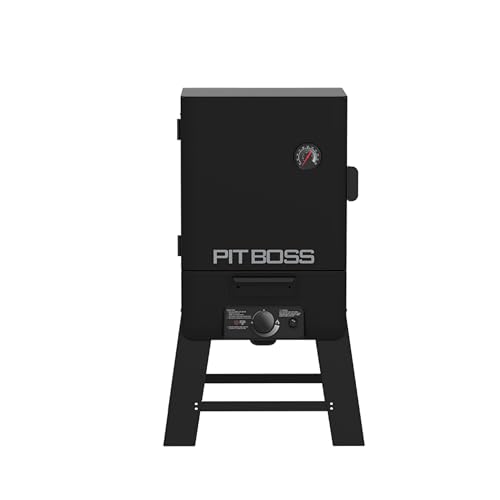
- Pit Boss 3-Series Electric Vertical Smoker — Best Analog-Simple Electric: An analog controller, a wood chip tray and 880 square inches over four racks — one dial, big capacity, no menus. See it: check price on Amazon.
- Royal Gourmet SE2805 28-inch Electric Smoker — Best Compact Cabinet: A 28-inch analog cabinet with 1350W of heat, three grates and 454 square inches — small footprint, simple dial, real smoking. See it: check price on Amazon.
- Smokehouse Little Chief Front Load Smoker — Best for Fish and Jerky: The decades-old simple smoker for fish, jerky, cheese and sausage: front loading, low-to-mid temperatures, almost nothing to learn. See it: check price on Amazon.
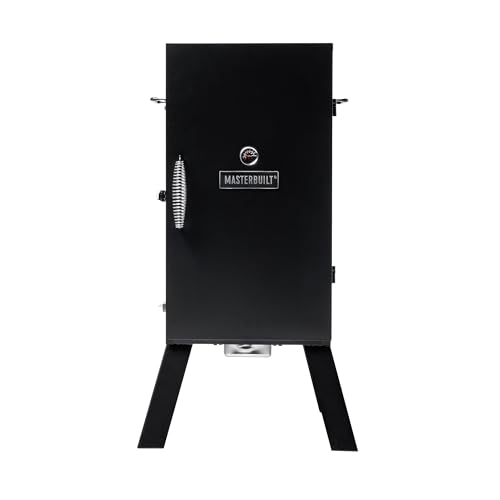
- Masterbuilt 30-inch Analog Electric Smoker MB20070210 — Best Budget Analog Cabinet: The 30-inch Masterbuilt cabinet in analog form: 535 square inches, chrome racks and one dial — the budget route into the family. See it: check price on Amazon.
How These Picks Were Chosen
Selection tested four beginner operations. Reading the machine: are temperature and doneness visible without opening the door or owning extra gadgets? Loading it: can fuel and food go in without dismantling anything or losing the cook’s heat? Cleaning it: do racks, pans and grease paths come apart in a way that makes sense at the sink? And recovering: when a cook drifts — a windy day, an over-full cabinet — does the machine give the beginner one obvious knob to turn?
Capacity was judged for learning cooks: big enough for a brisket and a forgiving family repertoire, not so big that small practice cooks smoke badly. Machines were cut when their controls hid basic information, when cleaning required tools or contortions, or when their fuel systems demanded techniques (fire building, vent choreography) that belong to the traditional craft rather than a first season. The survivors span digital, analog and deliberately simple designs, because ease of use is a property of the whole object, not of its electronics.
The 6 Best Easy to Use Smokers, Reviewed

EAST OAK 30-inch Electric Smoker — Best Overall Easy to Use
Check the current price on Amazon for the current listing, configuration and included attachments before you buy.
Ease of use is mostly information: what is happening in there, and is it done yet? The EAST OAK answers both questions from outside the cabinet. The clear window shows bark forming, fat rendering and food colour deepening — the visual curriculum every beginner needs — while the built-in meat probe puts doneness on the display instead of in a guess. Together they remove the two door-openings that ruin beginner cooks: the peek and the poke.
The operating routine is equally legible. The side chip loader means smoke is added through a obvious external tray — the listing credits it with up to six times longer smoking per load, so the beginner’s chip rhythm is relaxed rather than frantic — and the electric thermostat underneath it all simply holds the number you set across the 725 square inches of rack space. Load, set, watch, probe: a first-timer can narrate the whole cook, which is exactly what learning feels like.
Cleaning follows the cabinet pattern — racks out, pan out, wipe the seals and glass — with the window adding one glass wipe to the list. That is a fair trade for the visibility, and it teaches a good habit early: a clean window next cook is a window you can learn through. For a first smoker that instructs while it cooks, this is the most complete package in the guide.
Strengths
- Window and probe make the cook visible and measurable
- Side loader keeps a relaxed, obvious fuel rhythm
- Generous 725 sq. in. for family learning cooks
Trade-offs
- Window glass needs a degreasing wipe between cooks
- Electric smoke character is gentle
- Brand track record is shorter than Masterbuilt’s
| Specification | Detail |
|---|---|
| Cooking area | 725 sq. in. |
| Probe | Built-in meat probe |
| Window | Clear viewing window |
| Fuel loading | Side chip loader |
Best for: first-time smokers who learn by watching and measuring / Not suited for: cooks who want the plainest possible cabinet with nothing to wipe

Masterbuilt 30-inch Digital Electric Smoker MB20071117 — Best to Learn On and Keep
Check the current price on Amazon for the current listing, configuration and included attachments before you buy.
Some beginner smokers are training wheels; this one is a bicycle you keep. The Masterbuilt digital cabinet’s controls are the category’s reference layout — a digital temperature you set like an oven, a timer, and a side chip loader that keeps the door shut — so the skills a beginner builds here (temperature discipline, chip rhythm, probe judgement) transfer to every smoker they will ever own, while the machine itself stays useful for years.
Seven hundred and ten square inches is the right learning canvas: large enough that a brisket, rib racks and whole chickens all fit with air space, small enough that a single practice chicken still smokes properly. The chrome racks lift out for the sink, the water pan and drip management follow the standard cabinet logic, and the enormous owner community means any question a beginner types at midnight has been answered a hundred times — an ease-of-use feature no specification sheet captures.
It lacks a window and a built-in probe at this configuration, so pair it with an inexpensive leave-in probe thermometer from day one and the information gap closes. Judged as a total learning system — machine, capacity, community, longevity — it remains the safest first purchase in smoking, and the one least likely to be replaced in year two.
Strengths
- Reference digital controls that teach transferable skills
- Capacity fits the full beginner repertoire without waste
- Huge owner community answers every midnight question
Trade-offs
- No window or built-in probe in this configuration
- Electric smoke profile is gentle
- Door-opening for checks costs heat until you add a probe
| Specification | Detail |
|---|---|
| Cooking area | 710 sq. in. |
| Racks | Chrome-coated smoking racks |
| Fuel loading | Side wood chip loader |
| Control | Digital temperature control |
Best for: beginners who want one smoker to learn on and keep for years / Not suited for: visual cooks who want a window, or fish-and-jerky specialists
Pit Boss 3-Series Electric Vertical Smoker — Best Analog-Simple Electric
Check the current price on Amazon for the current listing, configuration and included attachments before you buy.
Not every beginner wants a computer between them and lunch. The Pit Boss 3-Series electric makes the case for the honest dial: one analog controller to set, a wood chip tray to fill, and a temperature range from 100°F to 300°F printed in the listing that covers everything from gentle cooks to standard barbecue. There is nothing to pair, update or navigate — you turn the dial, and the machine’s whole personality is visible in that single gesture.
The surprise is capacity: 880 square inches across four racks is the largest cabinet in this guide, which changes beginner math for gatherings — two briskets, a shelf of ribs and a shelf of chicken at once, all on the simplest controls here. For the cook whose ease-of-use priority is feeding a crowd without learning electronics, that combination is the entire argument, and it is a good one.
Analog honesty cuts both ways: a dial holds a neighbourhood of temperature rather than a digital point, so pair it with a probe thermometer and expect to learn the dial’s character across your first cooks — where its sweet spot sits for 225°F work is a fact you will know by cook three. Beginners who enjoy that kind of feel-based learning will find this the most charming machine in the guide; set-and-forget purists should take the digital Masterbuilt.
Strengths
- One-dial operation with zero electronics to learn
- Largest capacity here: 880 sq. in. over four racks
- Wide 100–300°F range covers gentle to standard cooks
Trade-offs
- Analog control holds a range, not a precise point
- Probe thermometer is an essential add-on
- Chip tray access is less elegant than a side loader
| Specification | Detail |
|---|---|
| Cooking area | 880 sq. in. |
| Racks | 4-rack cooking space |
| Control | Analog controller |
| Range | 100°F to 300°F |
Best for: crowd-feeding beginners who prefer one simple dial / Not suited for: precision cooks who want digital set-and-hold control

Royal Gourmet SE2805 28-inch Electric Smoker — Best Compact Cabinet
Check the current price on Amazon for the current listing, configuration and included attachments before you buy.
Compactness is an ease feature nobody lists: a smoker that fits the patio corner you actually have, moves without a second pair of hands and stores without a negotiation gets used, and used smokers are the only ones worth owning. The SE2805’s 28-inch vertical cabinet and 454 square inches are sized for learning cooks and small households — a chicken, a rack or two of ribs, a modest pork butt — without the bulk of the 30- and 40-inch class.
Operation is analog-simple: a temperature dial with adjustable heat, 1350 watts behind it for brisk recovery after loading, and three cooking grates that lift out for cleaning. The vertical format keeps the whole routine — load chips, load food, read the dial, wipe down — at a scale a beginner can hold in their head at once. There is no app, no menu, and nothing to update; the machine’s simplicity is the specification.
Size is the honest limit: a full packer brisket is a squeeze that belongs to the bigger cabinets, and analog control asks for a probe thermometer and a cook or two of dial calibration. For apartment-adjacent patios, small families and cautious first purchases, those are the right trades — a correctly-sized simple smoker beats an aspirational one that never leaves the garage.
Strengths
- Compact vertical footprint suits small patios
- Simple analog dial and strong 1350W recovery
- Three lift-out grates make cleaning straightforward
Trade-offs
- 454 sq. in. will not take a full packer brisket comfortably
- Analog control needs a probe thermometer alongside
- Fewer racks for multi-item cooks
| Specification | Detail |
|---|---|
| Cooking area | 454 sq. in. |
| Power | 1350W |
| Grates | 3 cooking grates |
| Control | Analog temperature control, adjustable heat |
Best for: small households and patios wanting a simple first cabinet / Not suited for: brisket-first beginners or crowd cooking

Smokehouse Little Chief Front Load Smoker — Best for Fish and Jerky
Check the current price on Amazon for the current listing, configuration and included attachments before you buy.
The Little Chief is the anti-gadget, and for a whole branch of smoking it is perfect. Its brief is low-to-mid temperature work — fish, jerky, cheese, sausage, nuts — and its operation is close to a single decision: fill the pan with chips, load the racks, plug it in. Generations of anglers and hunters have learned smoking on this exact machine because there is almost nothing to misunderstand, and the food it is built for is the food where gentle, steady smoke matters more than any feature list.
Front loading teaches good habits: racks slide toward you, so arranging fish fillets or jerky strips is a tidy, visible job, and the small chamber means smoke concentration is easy to judge — a beginner learns smoke dosing faster in a Little Chief than in any big cabinet, because the feedback is immediate and the batches are small enough to repeat weekly. It is a school as much as a smoker.
Be clear about what it is not: it is not a brisket or rib machine, and its temperature is a character, not a setting. Buy it for the cold-smoke-adjacent, low-temperature repertoire and it has no rival in this guide for simplicity per successful cook. Buy it as a general barbecue smoker and you have misread the label — the cabinets above exist for that job.
Strengths
- Simplest operation in this guide — almost nothing to learn
- Purpose-built for fish, jerky, cheese and sausage
- Small batches teach smoke dosing quickly
Trade-offs
- Low-to-mid temperatures only — not a brisket machine
- Small capacity by design
- No thermostat control to set
| Specification | Detail |
|---|---|
| Type | Front load electric smoker |
| Temperature profile | Low to mid temperature |
| Best uses | Fish, jerky, cheese, sausage |
| Footprint | 24.5 x 11.5 in class |
Best for: anglers, hunters and snack smokers focused on fish and jerky / Not suited for: general barbecue — brisket, ribs and poultry belong to the cabinets
Masterbuilt 30-inch Analog Electric Smoker MB20070210 — Best Budget Analog Cabinet
Check the current price on Amazon for the current listing, configuration and included attachments before you buy.
This is the entry ticket to the Masterbuilt cabinet family: the same 30-inch vertical format as the digital benchmark, simplified to an analog temperature control and 535 square inches of chrome-racked space. For the beginner whose budget is the first constraint, it preserves everything that makes the format teachable — electric steadiness, a real cabinet’s capacity for chickens, ribs and butts — while removing the digital layer and its cost.
Analog operation is a learnable skill rather than a flaw: you will spend your first cooks discovering where the dial’s positions land in real temperature, ideally with a probe thermometer confirming, and by cook three the dial is a familiar instrument rather than a guess. Many experienced smokers prefer exactly this relationship with a machine. The cabinet rewards it with honest, gentle electric smoke across the standard repertoire.
The step up to the digital model buys precision and the side-loading convenience story in full; the step sideways to the Royal Gourmet buys compactness. This analog Masterbuilt’s case is family and format at the friendliest tier: a real 30-inch cabinet from the category’s reference brand, simple enough to understand completely, large enough to matter. For a cautious first purchase that still cooks for the family, it is a rational place to start.
Strengths
- Reference-brand cabinet format at the friendliest tier
- 535 sq. in. covers chickens, ribs and pork butts
- Analog simplicity — nothing electronic to fail or learn
Trade-offs
- Dial requires calibration cooks and a probe thermometer
- Less capacity than the digital 30-inch model
- No window or digital hold precision
| Specification | Detail |
|---|---|
| Cooking area | 535 sq. in. |
| Racks | Chrome smoking racks |
| Control | Analog temperature control |
| Format | 30-inch vertical electric cabinet |
Best for: budget-conscious beginners wanting a full-size cabinet format / Not suited for: cooks who want set-and-hold digital precision from day one
Comparison Table
| Pick | Badge | Key spec | Best for |
|---|---|---|---|
| EAST OAK 30-inch Electric Smoker | Best Overall Easy to Use | 725 sq in, window + built-in probe, side loader | first-time smokers who learn by watching and measuring |
| Masterbuilt 30-inch Digital Electric Smoker MB20071117 | Best to Learn On and Keep | 710 sq in, digital control, side chip loader | beginners who want one smoker to learn on and keep for years |
| Pit Boss 3-Series Electric Vertical Smoker | Best Analog-Simple Electric | 880 sq in, 4 racks, analog dial, 100–300°F | crowd-feeding beginners who prefer one simple dial |
| Royal Gourmet SE2805 28-inch Electric Smoker | Best Compact Cabinet | 454 sq in, 1350W, 3 grates, analog control | small households and patios wanting a simple first cabinet |
| Smokehouse Little Chief Front Load Smoker | Best for Fish and Jerky | Low-to-mid temp specialist for fish, jerky, cheese, sausage | anglers, hunters and snack smokers focused on fish and jerky |
| Masterbuilt 30-inch Analog Electric Smoker MB20070210 | Best Budget Analog Cabinet | 535 sq in, analog control, 30-inch cabinet | budget-conscious beginners wanting a full-size cabinet format |
Compare by learning style as much as by specification: window-and-probe machines teach visually, digital cabinets teach precision, analog dials teach feel, and the Little Chief teaches smoke itself in its purest, narrowest form.
How to Choose an Easy to Use Smoker
Judge ease of use at four moments, not at the product photo. Moment one, the first read: can you tell the temperature, the fuel state and the food’s progress without opening anything? Windows, probes and clear displays win this moment. Moment two, the first load: do food and fuel go in through obvious paths — front racks, side loaders — or through a dismantling ritual? Moment three, hour three: when the cook drifts, is the correction a single obvious adjustment? Moment four, the clean: racks, pans and grease paths that make sense at the sink decide whether there is a second cook at all.
- Controls: digital for set-and-hold precision, analog for one-dial simplicity — both can be easy; menus and hidden states cannot.
- Feedback: a built-in probe or window is a learning feature, not a luxury, on a first smoker.
- Cleaning: lift-out racks and pans, accessible grease management, seals you can wipe. Ask ‘where does the grease go?’ before you buy.
- Capacity for learning: 450 to 900 square inches spans this guide; choose for your practice cooks and family size, not for a hypothetical festival.
- Specialists are easy too: the Little Chief proves a narrow machine with nothing to misunderstand can be the easiest of all — inside its repertoire.
Budget tiers in words: analog cabinets are the accessible tier and teach feel; digital cabinets cost more and teach precision with less guessing; window-and-probe models charge a little for information that accelerates learning. All three tiers produce the same smoked food when the cook is attentive — you are buying the shape of your learning curve, not a different dinner.
Cleaning: The Chore That Decides Everything
Every smoker in this guide cleans the same basic way, and the routine is short enough to be a habit rather than a project. Racks and grates lift out for a soak and scrub — do it while they are still warm and the job halves. The water pan and drip surfaces get emptied and wiped before residue bakes into varnish. Door seals get a wipe so they keep sealing; a greasy seal is a slow temperature leak. The window, where fitted, gets a degreasing wipe so next cook’s view is clear. Ash and chip trays empty into the bin once cool. Fifteen unhurried minutes, done while the meat rests, and the machine is ready for its next cook — which is the entire secret of people who smoke every weekend: their smoker is always ready, so starting is easy.
The Beginner’s First Month: A Practice Plan
Week one, a whole chicken: short, cheap, and it teaches loading, probing and resting in a single afternoon. Week two, ribs: your first timing cook, where the bend test and probe tenderness replace the clock. Week three, a pork butt: the long cook, chip rhythm and patience, with pulled pork as the reward that forgives every imperfection. Week four, your choice — fish or jerky if a Little Chief joined the family, or a second butt with one variable changed. Four cooks, four lessons, and by the end of the month the machine’s controls are reflexes. That, more than any feature, is what easy to use actually means.
How to Set Up and Clean an Electric Cabinet Smoker
Cabinet smokers are the easiest smokers to live with when their setup and cleaning rhythm is right from the first day. This sequence covers both, in the order you will actually do them.
- Place the cabinet outdoors on a level, stable surface with the maker’s clearances around it and a reachable outdoor outlet. Level matters: pans sit flat and doors seal evenly.
- Wash the racks and water pan before first use, dry them, and run the empty cabinet at a moderate temperature with a small chip load to season it, exactly as the manual directs.
- Learn the fuel path before food is involved: fill the chip tray or side loader once, watch how the smoke establishes, and note how long a load lasts in your machine. That interval is your cook’s heartbeat.
- For each cook: water pan filled as directed, food loaded with air gaps, probe placed in the thickest part of the meat away from bone, door closed and left closed.
- During the cook, add chips only through the loader or tray system — never by propping the door — and make temperature adjustments one at a time, waiting for the machine to respond before adjusting again.
- After the cook, while the meat rests: racks and pan out to soak, grease points emptied, seals and window wiped, chip ash discarded once cool. Work top to bottom and the cabinet cleans in minutes.
- Leave the door ajar until the interior is fully dry, then close it. A cabinet stored dry never grows the musty interior that ruins the next cook’s first hour.
- Once a season, check the probe against boiling water, inspect the seal and cord, and deep-clean the interior walls only as the maker allows — seasoning on the walls is flavour history, not dirt.
Setup once, clean in minutes, store dry: that rhythm is the whole ownership secret of the cabinet format. The machine does the cooking; this small liturgy is all it asks in return.
Controls, Compared Honestly: Dial, Digital and None
Three control philosophies share this guide, and each has a legitimate claim to being the easiest. The digital control (Masterbuilt) asks the least knowledge: set a number, and the machine’s whole intelligence is spent keeping it. Its weakness is opacity — when something is wrong, the display says so in codes, not in feelings. The analog dial (Pit Boss, Royal Gourmet, analog Masterbuilt) asks a little knowledge and repays it with transparency: the dial, the thermometer and the food are the whole system, and a cook who has calibrated the dial owns that knowledge permanently, in a way a menu navigator never quite does.
The third philosophy — the Little Chief’s none — is easiest of all inside its niche: with no temperature to set, there is no temperature to set wrong, and the beginner’s entire attention goes to smoke, time and the food itself. The pattern across all three is that ease of use is not a feature count. It is the match between a control style and a cook’s mind, which is why this guide refuses to crown a single interface and instead describes, in each review, exactly what operating that machine feels like on day one and day thirty.
Capacity and Layout: Learning Inside the Cabinet
A beginner’s cabinet teaches through its layout. Vertical cabinets stack the lesson: heat and smoke rise, so the top racks run differently from the bottom, and a new smoker learns placement — fattier, more forgiving cuts where the heat is stronger, delicate items where it is gentle — by cooking real food rather than reading theory. Rack spacing decides whether a beer-can chicken stands or a brisket fits without folding; the 30-inch class in this guide was chosen because it fits the repertoire without contortion, while the compact Royal Gourmet honestly trades brisket geometry for patio geometry.
The water pan deserves its sentence in any usability guide: it buffers temperature swings, adds humidity that helps smoke adhere and bark set kindly, and catches the drippings that would otherwise become next cook’s burnt flavour. Beginners sometimes remove it for space; the guide’s advice is to keep it, learn with it, and only experiment once the baseline is familiar. Layout, in short, is curriculum — and the cabinets here were picked because their curricula are well ordered.
Troubleshooting for Beginners: Five Fixes
Temperature running high on an electric cabinet usually means a door opened too often, a seal fouled with grease, or direct sun on a dark cabinet — check the seal wipe first, because it is the commonest and the free fix. Temperature running low suggests an overloaded cabinet blocking airflow, a tired element working against a full water pan of cold water (start with warm water), or chips packed so densely they smother rather than smoulder. White, billowing smoke that will not thin is a fuel problem — damp chips or too many at once — and the fix is less wood, drier wood, and patience while the dirty smoke clears before food goes in.
Food done early or late against the recipe’s clock is not a malfunction at all: it is smoking. Probe temperature and tenderness are the schedule; the clock is a rumour. And the flavour fix beginners need most: if the result tastes ashy or bitter, the cause is almost always too much smoke for too long, not too little — cut the chip load by a third next cook and notice the improvement. Every one of these fixes is a one-variable change, which is the method that makes beginners into cooks: adjust one thing, taste, adjust again.
Teaching Someone Else: The Two-Cook Handover
The truest test of easy to use is whether you can hand the machine to someone else — a partner, a teenager, a visiting parent — and have their first cook succeed. The machines in this guide pass that test for identifiable reasons, and the handover itself is worth doing deliberately. Cook one, you run the machine and narrate: the dial or display, the chip rhythm, the probe’s story, the rest. Cook two, they run it and you stay in the garden, close enough for questions and far enough that the machine, not you, does the teaching. A smoker that survives that handover has a usability no specification can claim, and a household with two confident smokers cooks twice as much barbecue.
The handover exposes each design’s teaching quality honestly. The EAST OAK teaches through its window — the novice sees the cook happen. The digital Masterbuilt teaches through its numbers. The analog machines teach through their dials’ feel, which takes the second cook to transfer. The Little Chief teaches by having almost nothing to explain. None of these is the wrong answer; they are different pedagogies, and the household that knows which kind of learner it contains will choose better than any ranking can choose for it.
Write the house rules down, whatever machine you buy: the dial position or temperature for the family standards, the chip load that suits your palate, the probe targets on the fridge door. Two lines of notes convert one person’s experience into the household’s knowledge — and that, in the end, is what makes a smoker easy to use for everyone who lives with it.
Reading Smoke: The Skill Behind the Machines
Every machine in this guide automates temperature to some degree; none of them automates the oldest skill in smoking, which is reading the smoke itself. Good smoke is thin and nearly blue, moving steadily — the sign of clean, complete smouldering. Bad smoke is white, thick and billowing, the sign of fuel struggling: too much wood, damp wood, or wood starved of air. Food under bad smoke for hours comes out tasting like an ashtray, and no thermostat at any price can rescue it, because the problem was never temperature. The beginner who learns to glance at the exhaust and judge what they see has learned the one lesson that transfers to every smoker ever built, including the stick burners at the far end of the craft.
The machines here make that lesson easy to learn, each in its own way. The EAST OAK’s window shows the chamber’s atmosphere as well as the food. The cabinets’ steady temperatures remove the noise that confuses the signal on a fire cooker, so the smoke’s character can be studied in isolation. Even the Little Chief, with its small pan and quick cycles, teaches dosing in miniature — a handful too much is obvious within the hour, in a batch small enough to forgive the tuition. Judge your progress simply: when your first act at the smoker becomes looking at the smoke rather than the dial, you have stopped operating a machine and started cooking. That is the destination every page of this guide was written toward.
Safety Habits That Become Reflexes
Usability includes the habits a machine teaches about working safely, and the cabinets and specialists in this guide are good teachers because their routines are short enough to become reflexes. The smoker lives outdoors on a stable surface with its clearances respected — never in a garage or under an eave, whatever the weather argues. Cords route where feet and water do not go. Grease is managed before it accumulates into a flare risk, which the fifteen-minute cleaning rhythm accomplishes as a side effect. Hot racks and pans are handled with the gloves that live beside the machine, not with the tea towel that happened to be near.
Food safety rides the same rails: the probe is the authority on doneness, the rest is timed and warm, and leftovers are refrigerated with the same promptness as any cooked food. None of this is burdensome, and that is the point — a machine whose safe routine is short gets its routine followed, cook after cook, year after year. When you evaluate any smoker after reading this guide, run the reflex test in the shop or on the listing photos: can you picture the whole safe routine, start to finish, without consulting anything? If yes, the machine will teach it to you permanently within a month.
Common Buying Mistakes
Judging ease by the feature list. More features can mean more confusion. The easiest smoker for you is the one whose four moments — read, load, adjust, clean — you understand completely. A dial you understand beats a menu you tolerate.
Never calibrating an analog dial. Analog smokers are honest but individual. Two or three cooks with a probe thermometer teach you your dial’s real positions; skipping that homework makes every later cook a guess.
Letting cleaning slide until it is a project. Baked-on grease and full drip pans turn a fifteen-minute habit into an hour of scraping, and smokers that are horrible to clean stop being used. Clean while the meat rests.
Overfilling the cabinet. Packed racks block airflow and smoke circulation, producing uneven cooks that beginners blame on the machine. Space between pieces is an ingredient.
Storing the cabinet damp and sealed. A wet, closed cabinet grows odours that flavour the next cook badly. Dry it with the door ajar before you close it up.
Buying a specialist as a generalist. The Little Chief is the easiest smoker here — for fish and jerky. Asking it to brisket is how a great tool gets an unfair reputation. Match the machine to the menu.
Final Recommendation
Choose by how you learn. Visual cooks should start with the EAST OAK’s window and probe; long-term keepers with the Masterbuilt digital, the category’s reference teacher; dial traditionalists feeding crowds with the Pit Boss analog; small patios with the Royal Gourmet; fish and jerky devotees with the Little Chief, the simplest machine in smoking; and careful budgets with the analog Masterbuilt, a full-size cabinet at the friendliest tier. Every one of them can be understood completely by its second cook — which is the only definition of easy to use that survives contact with a real patio.
The companion guides below separate the neighbouring questions — pure automation, budget tiers and fuel-system comparisons — so you can confirm this is the right lens before you buy.
Start with the three safest first looks: EAST OAK 30-inch Electric Smoker, Masterbuilt 30-inch Digital Electric Smoker MB20071117, Pit Boss 3-Series Electric Vertical Smoker.
Keep reading in this series: Best Easy Smokers Best Economy Smokers Best Electric And Gas Smokers Best Smokers For Beginners Best Electric Smokers
Frequently Asked Questions
What makes a smoker easy to use, specifically?
Readable controls, visible feedback (a window, a probe, a clear display), fuel loading that does not open the cooking chamber, capacity matched to your cooks, and cleaning that makes sense at the sink. This guide scores all five; raw automation alone, covered in our easy smokers guide, is only part of the picture.
Are analog smokers harder to use than digital ones?
Different, not harder. A digital control holds a set point precisely; an analog dial holds a neighbourhood and asks you to learn its character over two or three cooks with a probe thermometer. Many beginners prefer the dial’s simplicity — one control, no menus.
Do I need a window on my first smoker?
It is the single best learning feature available: you watch bark, colour and rendering without opening the door and losing heat. Not essential — a probe thermometer covers doneness — but the EAST OAK in this guide shows how much faster visual feedback teaches.
How hard is cleaning a cabinet smoker, really?
About fifteen minutes when done while the meat rests: racks and pan soak, grease points emptied, seals wiped, ash discarded when cool. It only becomes hard when skipped repeatedly and allowed to bake on.
What should my very first cook be?
A whole chicken or a pork butt. The chicken teaches loading, probing and resting in an afternoon; the butt forgives every timing error and teaches the long-cook rhythm. Save brisket for cook three or four, when the machine’s habits are familiar.
Is the Little Chief a good first smoker?
For fish, jerky, cheese and sausage, it is arguably the best first smoker ever sold — almost nothing to learn, decades of proof. As a general barbecue smoker for brisket and ribs, no: its low-to-mid temperature brief is specialised by design.


