Disclosure: airfryerkitchensupply.com is reader-supported. When you buy through links on our site, we may earn an affiliate commission at no extra cost to you.
Where to buy
Cylinder vacuum is the British name for what American listings call a canister vacuum: a body on wheels that follows you, a hose, and a wand. Every pick below was confirmed through the site Amazon listing under its canister or cylinder title, and the reviews translate between the two vocabularies so nothing is lost. Check the current price on Amazon from each link, and note whether each model is bagged or bagless before deciding, because that choice shapes your running costs for years.
- Best Overall: Eureka WhirlWind Bagless Canister Vacuum NEN180 — check price on Amazon
- Best True Cylinder Pick: Hiedmeil Bagless Cylinder Vacuum 2000W — check price on Amazon
- Best Lightweight Budget: Bissell Zing Bagless Canister Vacuum 2156A — check price on Amazon
- Best Self-Righting Design: Dyson Big Ball Multi Floor Canister Vacuum — check price on Amazon
- Best for Hard Floors: Bissell Hard Floor Expert Multi-Cyclonic Canister 1547 — check price on Amazon
- Best Bagged Premium: Miele Classic C1 Pure Suction Canister Vacuum — check price on Amazon
The best cylinder vacuums share a design that has outlived every cleaning fashion: a compact body that trails behind on casters, a long hose, and a floor head that slides under furniture an upright or stick vacuum cannot reach. Cylinder machines suit homes with mixed floors, stairs and furniture, because the part you push weighs almost nothing, the motor’s weight stays on the floor, and a good one follows a tug of the hose like a well-trained dog.
The six verified picks split along the category’s real fault lines. There are bagless cylinders, including a model sold under the cylinder name itself, a big-ball design that rights itself when tipped, and lightweight budget canisters. And there are bagged flagships from Miele, the brand that has defined the premium cylinder for decades, included here in a suction-only model that shows why bags, done well, are a feature rather than a chore.
This guide explains the bagged-versus-bagless decision without tribalism, the floor-head question that decides carpet performance, and the reach and filtration details that separate a five-year machine from a one-year annoyance. The how-to covers technique, because a cylinder rewards a particular way of working a room, and the mistakes section lists the specification traps, wattage worship included, that fill cupboards with disappointing vacuums.
Key Takeaways
- Cylinder and canister are two names for one format: wheeled body, hose, wand and floor head.
- The floor head, not the motor wattage, decides how well your dominant floor gets cleaned.
- Bagged versus bagless is a maintenance choice: sealed bags for hygiene, bins for zero consumables.
- Judge reach, cord rewind and how the body follows; those are felt on every single clean.
- Watts measure electricity in, not dirt out. Airflow, seal and head design do the cleaning.
In this guide
Quick Picks
Best Overall — Eureka WhirlWind Bagless Canister Vacuum NEN180
Eureka’s WhirlWind NEN180 is the balanced cylinder: lightweight bagless body, HEPA filtration, automatic cord rewind and a 2-in-1 tool arrangement, built for mixed hardwood and carpet homes.
Best True Cylinder Pick — Hiedmeil Bagless Cylinder Vacuum 2000W
Sold under the cylinder name itself, the Hiedmeil offers a 1.8-litre bagless bin, multifunction corded cleaning and multi-surface intent at the direct, value-led end of the category.
Best Lightweight Budget — Bissell Zing Bagless Canister Vacuum 2156A
The Zing is the featherweight of the line-up: a compact bagless canister from Bissell that trades size for portability, made for flats, stairs, cars and quick cleans between deeper sessions.
Best Self-Righting Design — Dyson Big Ball Multi Floor Canister Vacuum
Dyson’s Big Ball canister is engineered around the cylinder’s oldest annoyance: it picks itself up when it tips over, and its ball steering follows with a lightness smaller bodies envy.
Best for Hard Floors — Bissell Hard Floor Expert Multi-Cyclonic Canister 1547
The clue is in the name: a multi-cyclonic bagless canister tuned for hard floors, where its head glides and its suction picks up grit without scattering it across the wood.
Best Bagged Premium — Miele Classic C1 Pure Suction Canister Vacuum
Miele’s Classic C1 Pure Suction is the bagged benchmark: a compact canister for hard floors and low-pile carpet, with the build quality, quiet manners and sealed-bag hygiene that define the premium cylinder.
How These Picks Were Chosen
Candidates were verified, including fresh searches for bagless cylinder and canister models and for Miele canister machines during this batch. Listings were kept only when the Amazon title confirmed a true cylinder or canister format; stick, upright, robot and handheld machines surfaced by the search were excluded.
The final six balance the genuine camps: three bagless cylinders at different levels, including one explicitly titled as a cylinder vacuum, a self-righting ball design, and two bagged benchmarks, a lightweight Eureka-class budget canister appears within the bagless group, and a Miele suction model representing the bagged flagship approach. Suction and capacity figures appear only where the verified listing states them.
The 6 Best Cylinder Vacuums

Eureka WhirlWind Bagless Canister Vacuum NEN180 — Best Overall
The NEN180 suits the typical mixed-floor home that a cylinder serves best. It is light enough to carry up stairs by its handle without a second thought, the bagless bin keeps running costs at zero, and the auto cord rewind, a small feature, removes the daily annoyance that makes people dread a vacuum. Eureka’s canister heritage runs deep, and this is its modern, sensible form.
Strengths
- Lightweight bagless cylinder for mixed floors
- HEPA filtration with no bags to buy
- Automatic cord rewind and integrated tools
Trade-offs
- Bagless bin needs regular emptying and filter rinses
- 1000W rating says little; technique matters more
- Budget plastics will not match Miele’s feel
Key details: Bagless canister; lightweight; HEPA filtration; auto cord rewind; 2-in-1 tool; hardwood and carpet use.
A cylinder vacuum’s quality is felt in the follow: how the body tracks behind you, whether the hose swivels or fights, whether the wand adjusts to your height. The WhirlWind gets these fundamentals right at a level where nothing about it will impress a specification collector, and everything about it will satisfy someone cleaning a real house weekly. Keep the bin below its max line and rinse its filters on schedule, and a bagless machine like this holds its performance instead of fading, which is the honest maintenance bargain of the format.
Best for: Mixed-floor homes wanting low running costs / Not suited for: Buyers wanting premium build and bagged hygiene
Check the current price on Amazon
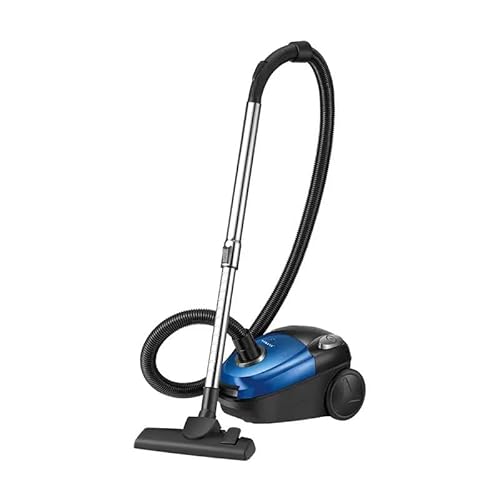
Hiedmeil Bagless Cylinder Vacuum 2000W — Best True Cylinder Pick
The Hiedmeil is for the buyer who typed cylinder vacuum and wants exactly that, without translation. Its 1.8-litre capacity is generous for the format, the corded design never runs flat mid-room, and the multi-surface brief suits flats and houses that mix tile, wood and rug in every room. It is the straightforward, specification-forward option.
Strengths
- Explicit cylinder design with 1.8L bagless capacity
- Corded power, no battery anxiety
- Multi-surface brief suits varied homes
Trade-offs
- 2000W is an input rating, not a suction guarantee
- Lesser-known brand for long-term parts and support
- Larger bin means a slightly larger body to store
Key details: Bagless cylinder vacuum; corded; 1.8-litre capacity; multi-surface; low-noise positioning.
Use this model to learn the category’s most useful lesson: watts measure electricity consumed, not dirt collected, and airflow and floor-head design do the actual work. Judged on what matters, the Hiedmeil’s appeal is capacity and simplicity. A 1.8-litre bin empties less often, which bagless critics rightly value, and the corded format suits longer cleans in bigger homes. Check the included heads against your floors before ordering, because a cylinder is only ever as good as the head between it and the carpet.
Best for: Value buyers wanting a named cylinder design / Not suited for: Brand-conscious buyers wanting dealer support
Check the current price on Amazon
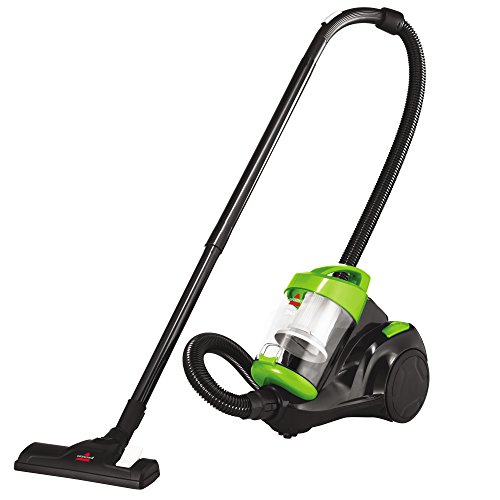
Bissell Zing Bagless Canister Vacuum 2156A — Best Lightweight Budget
Small homes and second vacuums are the Zing’s natural habitat. It carries like a shopping bag, stores in a cupboard corner, and handles the hard floors, rugs and stairs of a flat without the ceremony of a full-size machine. Students, renters and anyone whose main vacuum lives a floor away from the mess will understand it instantly.
Strengths
- Very lightweight and easy to carry on stairs
- Compact storage for flats and small cupboards
- Bagless bin keeps costs minimal
Trade-offs
- Small bin fills quickly in larger homes
- Not the tool for deep-pile carpet homes
- Shorter reach than full-size cylinders
Key details: Bagless canister; compact lightweight design; Bissell Zing 2156A.
Every vacuum line-up needs the honest small one, and the Zing’s honesty is its size. It will not pretend to deep-clean a house of thick carpet, but for hard floors with rugs, for stairs, for the car footwells and for the flat where storage is the scarcest resource, its portability is the performance. Bissell’s name also means filters and parts are findable, which is where no-name compacts quietly fail their owners in year two. Buy it for the jobs it names and it will never disappoint you.
Best for: Flats, stairs, cars and second-vacuum duties / Not suited for: Large homes with extensive thick carpet
Check the current price on Amazon

Dyson Big Ball Multi Floor Canister Vacuum — Best Self-Righting Design
Anyone who has dragged a cylinder around a chair leg knows the tip-over: the body rolls, the clean stops, the swearing starts. The Big Ball’s answer is geometry, a low centre of gravity inside a ball that rights itself and keeps rolling. It suits obstacle-rich homes, furniture forests and cleaners who move fast and tug hard.
Strengths
- Self-righting ball design ends tip-over stops
- Ball steering follows smoothly around furniture
- Multi-floor brief for mixed homes
Trade-offs
- Premium positioning within this line-up
- Bagless bin and filters need their routine
- Distinctive design divides opinion at storage time
Key details: Bagless canister; Big Ball self-righting design; multi-floor; yellow.
Dyson’s contribution to the cylinder is not suction mythology; it is manners. A body that recovers from its own accidents and steers around furniture without a wrestle changes how a whole clean feels, particularly in rooms where the vacuum must thread between chair legs, table pedestals and the dog. The multi-floor head brief keeps it honest across surfaces. It asks the usual bagless discipline, empty below the line, wash filters on schedule, and repays it with the least interrupted cleaning rhythm in this guide.
Best for: Furniture-filled homes and fast, tuggy cleaners / Not suited for: Buyers wanting the simplest, cheapest cylinder
Check the current price on Amazon
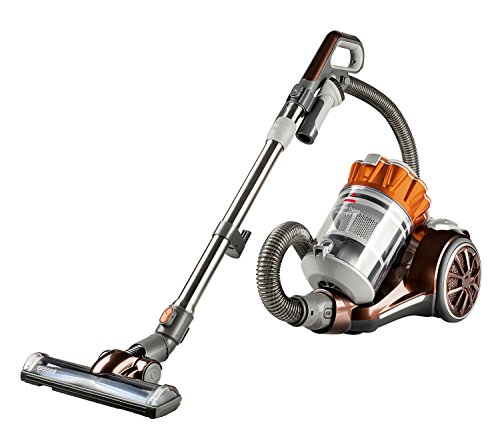
Bissell Hard Floor Expert Multi-Cyclonic Canister 1547 — Best for Hard Floors
Hard floors punish the wrong vacuum: brush rolls scatter grit, stiff heads skate over crumbs, and wheels mark delicate finishes. The Hard Floor Expert is specified for that world, with multi-cyclonic separation keeping suction steady as the bin fills and a floor brief centred on wood, tile and stone. Homes that are mostly hard floor with area rugs should start here.
Strengths
- Multi-cyclonic system sustains suction as bin fills
- Hard-floor-focused head and glide
- Bagless corded design, no runtime limit
Trade-offs
- Hard-floor bias means deep carpet is not its stage
- Cyclonic bins need filter maintenance to stay sweet
- Corded only, like every true cylinder here
Key details: Bagless canister; multi-cyclonic; hard floor focus; corded; model 1547.
Cyclonic separation is the bagless technology that actually matters, because it spins dust out of the airflow and keeps the filter, and therefore the suction, cleaner for longer between empties. On hard floors that steadiness shows up as consistency from the first room to the last. Pair it with slow passes on gritty areas, where a rushed head rides over particles instead of swallowing them, and the Expert does the job its name promises. Rug owners should check the head’s behaviour on their pile depth; this machine’s heart is on the hard stuff.
Best for: Homes dominated by wood, tile and stone / Not suited for: Deep-pile carpet households
Check the current price on Amazon

Miele Classic C1 Pure Suction Canister Vacuum — Best Bagged Premium
The C1 suits buyers who keep appliances for a decade and prefer emptying a sealed bag every couple of months to washing bins and filters. Pure Suction means no powered brush roll; this model is aimed squarely at hard floors and low-pile rugs, where suction and a good floor head do all the work and a brush would only scatter and scratch.
Strengths
- Miele build quality and long service life
- Sealed bagged system is the hygienic emptying option
- Ideal head brief for hard floors and low-pile carpet
Trade-offs
- Bags are an ongoing, if infrequent, purchase
- No powered brush for deep-pile carpet
- Premium price of entry within this guide
Key details: Bagged canister; pure suction; hard floors and low-pile carpet; Miele Classic C1.
Bagged versus bagless is not a moral question, and the C1 is the bagged case at its strongest. A modern dust bag is also a filter, holding fine dust in a sealed package you remove without a cloud, and Miele’s canister engineering, the follow, the wand, the sound level, is the reference the rest of this guide is quietly compared against. The Pure Suction specification is honest: buy this for hard floors and low pile and it will serve beautifully for years; buy it for deep carpet and you have chosen the wrong Miele, because the range’s brush-roll models exist for that.
Best for: Hard-floor homes wanting premium, hygienic bagged cleaning / Not suited for: Deep-pile carpet or buyers avoiding bag costs
Check the current price on Amazon
Comparison Table
| Pick | Badge | Key spec | Best for |
|---|---|---|---|
| Eureka WhirlWind Bagless Canister Vacuum NEN180 | Best Overall | Bagless cylinder, HEPA, cord rewind | Mixed-floor homes wanting low running costs |
| Hiedmeil Bagless Cylinder Vacuum 2000W | Best True Cylinder Pick | Bagless cylinder, 1.8L bin | Value buyers wanting a named cylinder design |
| Bissell Zing Bagless Canister Vacuum 2156A | Best Lightweight Budget | Compact bagless canister | Flats, stairs, cars and second-vacuum duties |
| Dyson Big Ball Multi Floor Canister Vacuum | Best Self-Righting Design | Bagless ball canister, self-righting | Furniture-filled homes and fast, tuggy cleaners |
| Bissell Hard Floor Expert Multi-Cyclonic Canister 1547 | Best for Hard Floors | Bagless cyclonic, hard floor focus | Homes dominated by wood, tile and stone |
| Miele Classic C1 Pure Suction Canister Vacuum | Best Bagged Premium | Bagged canister, pure suction | Hard-floor homes wanting premium, hygienic bagged cleaning |
How to Choose the Best Cylinder Vacuums
Cylinder, or canister, vacuums reward buyers who think in systems: body, hose, wand and head, each doing a job. Four decisions decide whether yours serves for a decade or annoys for a year.
Bagged or bagless: choose your maintenance religion
Bagless machines like the Eureka, Hiedmeil, Zing, Dyson and Bissell here cost nothing in consumables and ask instead for bin emptying and filter washing, done below the max line and on schedule. Bagged machines like the Miele ask for a bag every month or two and repay you with sealed, dust-free emptying and consistently strong filtration. Neither is superior in the abstract. Allergy-conscious households often prefer sealed bags; cost-conscious households prefer bins. The wrong choice is the one whose maintenance you will skip, because a neglected vacuum of either kind cleans badly.
The floor head decides carpet performance
Motors do not clean carpets; heads do. Hard floors want a suction head that seals and glides without scattering, as on the Bissell Hard Floor Expert and the Miele Pure Suction. Low-pile carpet is served by combination heads. Deep-pile carpet wants a rotating brush, ideally powered, and notably none of this guide’s picks pretends otherwise; if your home is wall-to-wall deep pile, look at brush-roll canisters specifically. Match the head to your dominant floor and let the minority floor compromise, not the reverse.
Reach, cord and the follow test
A cylinder’s working radius, cord plus hose plus wand, decides how many socket changes a room costs. Automatic cord rewind, as on the Eureka, removes a daily friction. The follow, how the body tracks behind a hose tug without tipping or snagging, is the quality you cannot read off a specification sheet; self-righting designs like the Dyson Big Ball insure against bad follows, and caster quality matters more than body styling. On stairs, weight and a good handle, the Zing’s virtues, beat every other specification.
Filtration and honest power figures
HEPA filtration, as on the Eureka, matters most for the air leaving the machine, and it only works if the system is sealed well enough that air cannot bypass the filter. Treat wattage as electricity consumption, not cleaning power: the Hiedmeil’s 2000W input and the Eureka’s 1000W say almost nothing about which picks up more grit, because airflow, head design and seal decide that. Buy filtration and format with confidence, and let demonstration, reviews of technique and your floors arbitrate power claims.
Why the Cylinder Format Refuses to Die
Every decade announces a vacuum revolution, and every decade the cylinder quietly continues cleaning the world’s mixed-floor homes. Its survival is ergonomic logic. By putting the motor’s weight on the floor and only a wand in the hand, it lets the user clean for an hour without carrying the machine, reach under furniture that defeats uprights, and work stairs without balancing a motor on a tread. Stick vacuums won the quick-crumb contest; the deep weekly clean of a furnished house still belongs to the format with a hose.
The format also ages gracefully because its parts are separable. A worn floor head can be replaced without replacing the motor. A hose can be unblocked with a broom handle and patience. Bags and filters are consumables by design rather than by failure. Compare that with sealed battery devices whose runtime fades as a single component, and the cylinder’s old-fashioned serviceability becomes a modern argument, economic and environmental at once.
Manufacturers have refined rather than reinvented it. Cyclonic separation, as in the Bissell and Eureka picks here, keeps bagless suction steadier. Self-righting geometry, as in the Dyson Big Ball, fixes the tip-over that annoyed two generations. Miele’s end of the market demonstrates how quiet, sealed and long-lived the format becomes when money is spent on engineering instead of novelty. The through-line is a design that assumes a furnished home and a user who cleans it properly, weekly, for years.
For the buyer, the conclusion is liberating. You do not need the newest format; you need the right head for your floors, the maintenance religion you will keep, and a body that follows you politely. Those three decisions, made honestly, matter more than any launch event, and they are exactly the decisions this guide’s six picks were assembled to make easy across the budget and premium ends of a very durable idea.
Filtration, Sealed Systems and the Air That Leaves the Machine
A vacuum’s least visible job is not polluting the room it just cleaned. Fine dust that passes through a poor filter or leaks from an unsealed body settles again within the hour, and the owner concludes the house is dusty rather than the machine leaky. This is why filtration specifications deserve reading as a system: the filter medium matters, and so does whether the machine’s airflow is genuinely forced through it, which is the unglamorous engineering behind the better names in this category.
Bagged designs hold a structural advantage here that surprises bagless devotees. A modern dust bag is a large, fine filter in its own right, and emptying it means removing a sealed package rather than shaking a bin’s contents into the kitchen air. That is the core of the Miele C1’s case in this guide, and why bagged cylinders remain the default recommendation for households that care about the emptying moment as much as the cleaning one.
Bagless systems answer with cyclones. By spinning the airstream so debris falls out before the filter, multi-cyclonic designs like the Bissell Hard Floor Expert keep the filter cleaner for longer, which keeps suction steadier and exhaust air cleaner between filter washes. The system works when maintained: a bin past its line or a filter past its wash date quietly converts a good design into an ordinary one, which is why this guide repeats the maintenance rhythm in nearly every review.
The buyer’s rule is therefore behavioural. If your household will wash filters on schedule and empty bins early, bagless filtration will serve you well and cost nothing in consumables. If your household will reliably do neither, a sealed bag that forgives a month of neglect is the cleaner-air choice in practice, whatever the laboratory figures say. Filtration is a habit wearing a specification, and the honest match between machine and owner beats the theoretical best every time.
Cylinder Vacuums for Pet Owners and Allergy-Conscious Homes
Pet hair is the stress test that reveals a cylinder’s true design. Hair loads bins and bags faster than ordinary dust, wraps around brush bars that this category mostly avoids, and hides at skirting lines where suction heads either seal and lift it or skate over it. The picks in this guide handle the pet brief in their different ways: cyclonic bagless models keep suction steady as hair accumulates, provided the bin is emptied at the line rather than at the brim, and the Miele’s sealed bag swallows a month of hair and leaves the house in a package, without the dust cloud that bin-emptying over a kitchen bin can produce.
Technique matters as much as machine. Hair lifts best on slow pulls with the head flat, and it collects in predictable drifts: along skirting, under the edges of rugs, in the lee of furniture legs. A cylinder’s low, flat wand is built for exactly those territories, reaching under sofas where shed hair migrates and uprights cannot follow. Upholstery, the other pet frontier, is hand-tool work, and the crevice and brush tools bundled with these machines earn their storage space in a pet home weekly.
For allergy-conscious households, the discipline is about what leaves the machine and what leaves the house. A sealed system with effective filtration keeps the exhaust clean, and a bagged design keeps the disposal clean; this guide states that as household practice, not as a medical promise. Empty bagless bins outdoors or into a bag held closed around the bin, wash filters on the maker’s schedule, and wipe the machine’s own exterior, because a vacuum that lives in a coat of its own dust is working against its owner.
The honest summary is that no vacuum removes a pet’s shedding from a home’s future, only from its present, and the cylinder format’s virtues, sustained suction, under-furniture reach, serviceable parts, suit that endless present well. Pet owners who match the format to a realistic emptying rhythm find, as generations of owners have, that the trailing body and the long hose are not an old design surviving by habit. They are the right shape for the job, still.
Accessories, Attachments and Getting More from a Cylinder
The tools in a cylinder’s onboard clip are not decoration; they are the difference between a floor vacuum and a whole-home system. The crevice tool is the most used and least celebrated, reaching the skirting lines, stair edges, car footwells and radiator gaps where grit actually accumulates. The dusting brush, used with patience on shelves, blinds and lampshades, does in minutes what a cloth does in an hour of redistributing dust into the air. The upholstery tool, worked slowly in overlapping passes, is how sofas and car seats surrender their crumb and hair archives.
Extension and technique multiply those tools’ value. A cylinder’s wand telescopes for ceilings and cobwebs as readily as it shortens for stairs, and the hose’s length means the body can stay on the landing while the tools tour the bedrooms. Owners who learn to park the body once and work a whole floor from its radius clean faster and with less re-plugging than owners who drag the machine room to room, which is why this guide’s buying advice weighted working radius and cord rewind so heavily.
Aftermarket and replacement heads deserve a mention, because the cylinder’s standardised fittings at the better end of the market let owners upgrade the part that touches the floor without replacing the machine. A specialised hard-floor head on a general canister, or a fresh brush roll where the design uses one, can transform an ageing vacuum’s manners for a fraction of a new machine’s cost. Check fitting diameters before ordering, because standards vary, and keep the original head; specialised tools complement rather than replace the general one.
Storage of the kit is the final, practical art. A cylinder stored with its hose kinked, its wand extended and its tools scattered is a vacuum that gets avoided. Coiled loosely, parked in its cupboard footprint with tools clipped on, it starts every clean in seconds. The format’s longevity, the theme of this whole guide, is built from such small fidelities: a machine that is easy to start, pleasant to follow and simple to put away will be used weekly for a decade, and a decade of weekly use is what clean floors are actually made of.
When a Cylinder Is the Wrong Choice: Honest Limits
A guide that only praises its category is a brochure, so here are the cylinder’s genuine limits. If your cleaning life is ninety per cent quick crumbs and muddy paw prints on hard floors, a cordless stick kept by the kitchen will serve you more often than a cylinder in a cupboard, because the best vacuum is the one that is already in your hand. The cylinder wins the weekly deep clean; it loses the twenty-second emergency, and households should buy for the pattern of their messes, not for an idealised version of their diligence.
Wall-to-wall deep-pile carpet is the second limit, and this guide has flagged it in every relevant review. Suction-only heads cannot agitate deep pile, and while brush-roll canisters exist in the wider market, none of this batch’s verified picks is one. A household carpeted deeply throughout should shop that specific subcategory deliberately rather than expecting any amount of motor to compensate for a head that never touches the carpet’s base. Format loyalty is no substitute for fit.
The third limit is storage geometry. A cylinder, its hose and its wand occupy a cupboard’s floor and a measure of its air, and in a small flat that space may be worth more than the format’s virtues. The compact Zing in this guide exists for exactly that pressure, but even it asks for a home. None of these limits diminishes the picks here for the homes they suit: mixed floors, real furniture, stairs, and owners who clean properly once a week. It simply marks the border of the category’s kingdom, which is what an honest guide owes its readers before they spend money inside it.
Cylinder Vacuum Buying Checklist
- Name your dominant floor honestly and choose the floor head for it, not for the minority room.
- Decide bagged or bagless by the maintenance you will actually perform, then commit to its rhythm.
- Ignore wattage as a power claim; prioritise head design, seal quality and filtration.
- Measure the working radius, cord plus hose, against your largest room and socket positions.
- Weigh the machine and test the handle mentally against your stairs and storage route.
- Check consumable availability: bags, filters and replacement heads for your chosen brand.
- Look for automatic cord rewind and onboard tools if daily friction decides whether you vacuum at all.
- Plan storage for body, hose and wand as a set; a cylinder stored in pieces gets used in pieces.
How to Vacuum a Room Properly with a Cylinder Vacuum
A cylinder rewards a method: set the room up once, work it in a pattern, and let the trailing body do what it was designed to do.
- Clear and stage the room. Lift small obstacles, move light chairs, and decide your socket. A cylinder clean flows when the hose never has to be untangled from furniture you could have moved in twenty seconds.
- Start at the far corner, work towards the door. Position the body behind you and clean in overlapping lanes, pulling the head towards you slowly. Suction heads pick up on the pull; rushing the push scatters more than it gathers.
- Slow down on grit and edges. Hard floors hide grit at skirting lines and under cabinet kicks. Use the crevice tool there, and give entrance mats and high-traffic lanes a second slow pass rather than three fast ones.
- Do stairs from the middle out. Rest the body securely on a middle step or the landing, clean up then down with the hose and a hand tool, and never balance a cylinder on a step it overhangs. Light models like the Zing can be carried; heavy ones stay put while the hose works.
- Under furniture is the cylinder’s party trick. Lay the wand flatter and use the low head to reach under sofas and beds, the dust territory uprights and sticks surrender. Check the head’s height setting so it glides rather than drags.
- Empty and check before storing. Bagless bins empty best straight after the clean, below the max line as a habit, and bags should be checked monthly. Rewind the cord fully, coil the hose without kinks, and your next clean starts in seconds, not in a wrestling match.
Ten minutes of technique doubles what any of these machines achieve. The cylinder format assumes a user who works a room deliberately; meet it halfway and even the budget picks perform like far pricier vacuums.
Common Buying Mistakes
Worshipping wattage. Watts measure power consumed, not dirt lifted. A well-sealed 1000W machine with the right head will out-clean a sloppy 2000W one on real floors. Judge airflow design, head fit and filtration instead.
Buying pure suction for deep carpet. A suction-only head, however premium, cannot agitate deep pile the way a brush roll does. Match the head to your deepest carpet honestly, or accept a surface clean and call it what it is.
Letting a bagless bin overfill. Past the max line, cyclones choke, filters blind and suction fades, and owners blame the machine. Empty early and often, wash filters on schedule, and a bagless cylinder holds its performance.
Dragging the body by the hose around corners. Hoses kink, cuffs split and bodies tip when they are winched around furniture. Move the body with your hand on repositioning, let the Dyson-style self-righting be insurance rather than technique, and your machine will age gracefully.
Ignoring the stairs test. A cylinder that is miserable on stairs will be avoided on stairs, and stairs collect grit like a hobby. Weigh the machine, check its handle, and picture carrying it before you buy, especially in three-storey homes.
Final Recommendation
For most mixed-floor homes the Eureka WhirlWind NEN180 is the cylinder to buy: light, bagless, filtered and easy to live with. The Hiedmeil serves value buyers wanting the classic cylinder format with a big bin, the Zing owns flats and stairs, and the Dyson Big Ball ends tip-over frustration in furniture-filled rooms. Hard-floor homes should choose between the Bissell Hard Floor Expert and, for a premium decade-long buy, the bagged Miele Classic C1. Match the head to your floors and the maintenance to your habits, and a cylinder will out-serve trendier formats for years.
Eureka WhirlWind Bagless Canister Vacuum NEN180 · Hiedmeil Bagless Cylinder Vacuum 2000W · Bissell Zing Bagless Canister Vacuum 2156A
Best Vacuums Best Canister Vacuums Best Vacuums For Hardwood Floors Best Vacuums For Pet Hair Best Bagless Vacuums Best Miele Vacuums
Frequently Asked Questions
Is a cylinder vacuum the same as a canister vacuum?
Yes. Cylinder is the British term and canister the American one for the same format: a wheeled body containing the motor and dust container, connected by a hose to a wand and floor head. Listings in this guide use canister in their titles, which is why each review confirms the format explicitly. When shopping, search both words, because some brands file the identical machine under either name.
Are cylinder vacuums good for stairs?
They are among the best formats for stairs, because the cleaning head and hose are light while the motor’s weight rests on a step or landing. Compact models like the Bissell Zing can even be carried as you work. The rules are simple: never balance the body where it can topple, work from a secure middle position, and use hand tools rather than the full floor head on treads.
Should I choose bagged or bagless?
Choose the maintenance you will actually do. Bagless saves consumable cost and asks for regular bin emptying and filter washing. Bagged, as in the Miele C1, costs a bag every month or two and gives sealed, dust-free disposal with very consistent filtration. Households sensitive to dust clouds when emptying often prefer bags; households that hate buying consumables prefer bins. Both clean equally well when maintained.
Can a cylinder vacuum handle pet hair?
On hard floors and low-pile rugs, yes, the picks here will lift hair well, especially with slow passes and an emptied bin. On deep carpet, hair removal wants a rotating brush head, which is a specification to seek deliberately. Whatever the format, hair loads bins and bags faster than ordinary dust, so the emptying rhythm, not the machine’s badge, is what keeps pet homes ahead of the fur.
Why does my bagless cylinder lose suction?
Almost always maintenance, in a predictable order: a bin filled past its line, a clogged or overdue filter, or a blockage in the hose or head. Empty the bin, wash or replace filters as the manual directs, and check the hose against the light. Cyclonic systems like the Bissell and Eureka hold suction well precisely because they keep debris away from the filter, but they cannot defeat a bin that is never emptied.
How long should a good cylinder vacuum last?
A well-kept cylinder from an established maker is a long-life appliance; Miele’s reputation rests on exactly that expectation, and the simpler bagless designs here should serve for years with filter care and sane hose handling. Longevity killers are universal: overfilled bins, ignored filters, hoses used as tow ropes and bodies dragged down stairs. Treat the machine as this guide’s how-to describes and the format’s durability advantage over battery devices becomes very real.
Are cylinder vacuums good for allergy-conscious households?
They can be, with the right specification and habits. A sealed system with effective filtration, and especially a bagged model whose dust leaves the house in a sealed bag, minimises the dust cloud at emptying time, which is when exposure peaks. This guide makes no medical claims, but as a matter of household practice, sealed bagged designs and well-maintained HEPA-filtered bagless models are the two sensible routes, and neglected examples of either are the wrong answer.
How do I unblock a cylinder vacuum hose?
Detach the hose and check both ends first, because most blockages lodge at the cuffs. A broom handle pushed gently through a straightened hose clears the majority of the rest. Check the floor head’s neck and the bin or bag inlet as well, since a blockage at any point mimics motor failure. If suction is still weak with a clear path, the filter or a full bag or bin is the next suspect, in that order.
How often should cylinder vacuum filters be washed or changed?
Follow the maker’s schedule for your model, and let your floors arbitrate the rest. Bagless filters in pet homes and dusty houses earn a rinse or check roughly monthly, because hair and fine dust load them faster than the manual’s average household assumes. Bagged models ask only for a bag change when the bag is full, which the machine usually announces with fading suction. The universal rule is diagnostic: a clean machine that loses suction is asking for consumable attention, bin, bag or filter, long before it is asking for a repair.


