Disclosure: airfryerkitchensupply.com is reader-supported. When you buy through links on our site, we may earn an affiliate commission at no extra cost to you.
Where to buy
If you are comparing the best composting toilets for a home, the fastest way to buy any pick in this guide is Amazon, where listings carry the current configuration, delivery options, and returns handling for bulky fixtures. Start with our top recommendations:
- Separett Villa Urine-Separating Toilet (Best Overall for Most Homes) — check price on Amazon
- Nature’s Head Self-Contained Composting Toilet — Close Quarters Spider Handle (Best True Composting) — check price on Amazon
- Compo Closet Cuddy Composting Toilet (Best Modern Filtered Design) — check price on Amazon
Toilets and composting units are heavy, awkward freight: order when you can be present for delivery, inspect the box before signing, and keep all packaging until the unit is installed and the first week of use confirms it suits your household.
Best composting toilets for a home: What Actually Matters
The best composting toilets for a home share one job: replace or extend a flush toilet without asking the household to become hobbyists. Home buyers are not shopping for an experiment — they want a bathroom that works for family and guests, uses no flush water, survives a power cut, and fits a real house with real codes and real routines. The category has matured into two proven families, true composters that process solids in the unit and separators that keep urine and solids apart for the simplest possible routine, and a good home shortlist includes both.
This roundup leads with the Separett Villa because most homes value routine simplicity over in-unit composting, then covers the Nature’s Head as the benchmark true composter, the Cuddy’s filtered venting for interior rooms, and the compact and non-electric options for small bathrooms and backup duty. Every pick is verified against current listing data before it earns a link. Your decision comes down to three honest answers: how many people, what vent route, and where the finished material goes.
In this guide
Quick Picks
Six picks, six different problems solved. Badges are used consistently here and in the detailed reviews below, so you can scan by the job you need done:
- Best Overall for Most Homes: Separett Villa Urine-Separating Toilet — check price on Amazon. No crank and no medium mixing: separation alone does the odor work, so the daily routine is the simplest here.
- Best True Composting: Nature’s Head Self-Contained Composting Toilet — Close Quarters Spider Handle — check price on Amazon. The benchmark full-time composting toilet: urine diversion plus a crank-agitated solids chamber is the proven formula.
- Best Modern Filtered Design: Compo Closet Cuddy Composting Toilet — check price on Amazon. 12V fan plus carbon filter gives flexible venting options in vehicles and tiny homes.
- Best for Small Home Bathrooms: Separett Tiny Self-Contained Urine-Separating Toilet — check price on Amazon. Built-in urine container with an emptying sensor removes the guesswork of bottle management.
- Best Tight-Fit Composter: Nature’s Head Self-Contained Composting Toilet — Foot-Spider Handle — check price on Amazon. Same proven Nature’s Head composting system with an alternative handle geometry for awkward clearances.
- Best Non-Electric Home Backup: Separett Weekend Prime Urine-Separating Toilet — check price on Amazon. Fully non-electric: the only pick here that asks for no fan power at all.
How These Picks Were Chosen
Every product in this guide was verified against Amazon listing data before it earned a link: we searched by brand and model, matched the returned listing title to the product we intended to recommend, and took the ASIN from the listing response. Products without a confident API match are never given invented links. Beyond verification, picks were screened for the things that decide ownership satisfaction in this category — honest fit for the stated use case, a routine a real household can sustain, parts and consumables that can actually be sourced, and a track record appropriate to the duty the search implies. Premium and budget tiers are both represented, but no pick is here because of its price: each one is the answer to a specific version of the problem in the title.
Two standing rules shape this guide. We publish no static product prices, because fixture pricing shifts constantly — every pick says check price on Amazon instead, so the number you see is the number that is true today. And we publish no fixed star ratings or review counts, for the same reason: they change daily and would mislead you within weeks. What does not change is fit, routine, and build — which is what the reviews below concentrate on.
The 6 Best composting toilets for a home — Detailed Reviews

Separett Villa Urine-Separating Toilet — Best Overall for Most Homes
The Separett Villa takes the other proven road: instead of composting inside the unit with a crank and medium, it simply separates urine from solids at the bowl and collects solids in a bag-lined chamber. Because the two never mix, odor stays low without additives or agitation, and the user routine is the lightest in this roundup — sit, close, and empty on a capacity-driven schedule. The honest framing is that the Villa is a separating dry toilet: decomposition finishes in your compost system or disposal route, not inside the fixture. For homesteads, cottages, and skoolies with a sensible solids plan, that simplicity is exactly the point, and the high-capacity design stretches intervals for households.
For most homes the Villa is the recommendation to beat: high capacity, no crank to teach, and a routine a family can sustain for years.
Villa ownership is the lightest daily load in this guide, and households feel the difference in the first week: no crank, no medium to manage, nothing to teach a guest beyond sitting down. The system’s work happens at emptying time — the solids bag or chamber comes out on a capacity schedule, the urine side follows its drain or container rhythm, and a child-seat insert, where the household uses one, clicks in and out for family life. The consumables file is short: liners or bags, stocked ahead, and an occasional wipe of the diverter with a gentle cleaner. Because nothing composts inside the unit, the honest planning point is the output route — an outdoor finishing setup or bagged disposal per local rules — decided once and then forgotten. The fan-vented housing keeps the bathroom itself neutral, and the high-capacity design stretches intervals to suit family cadence rather than testing it. For homes that tried to love a crank composter and failed on routine, the Villa is usually where the story turns: same waterless independence, fraction of the daily involvement.
Strengths
- No crank and no medium mixing: separation alone does the odor work, so the daily routine is the simplest here
- High-capacity solids collection suits households and longer intervals between emptying
- A child seat insert tradition in the Separett line makes it family-practical
Trade-offs
- It separates rather than actively composts in-unit — finishing happens after collection
- Urine needs a drain path or container management plan
- Bag/liner consumables are an ongoing ownership cost
| Specification | Detail |
|---|---|
| Type | Urine-separating dry toilet, no mixing |
| Capacity | High-capacity design (per Amazon title) |
| Use | Homestead, skoolie, cottage (per Amazon title) |
Best for: households and homesteads wanting the simplest daily routine / Not suited for: users who want finished compost out of the unit itself
Check on Amazon — check price on Amazon for the current configuration and delivery terms.
Nature’s Head Self-Contained Composting Toilet — Close Quarters Spider Handle — Best True Composting
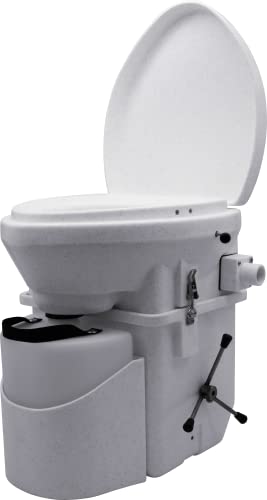
Nature’s Head is the name most full-timers land on after their first cheap experiment disappoints, and the design explains why: urine is diverted at the bowl so the solids chamber stays dry enough to compost rather than ferment, a crank agitates the medium so each use gets buried, and a small vent fan keeps negative pressure pulling air out through the vent hose. The close-quarters spider handle variant exists for installs where a standard crank would foul a wall or cabinet — the handle geometry hugs the unit. Ownership is a routine: add medium, crank after use, empty the urine bottle on a short cycle, and empty the solids chamber on a much longer one. Done consistently, it is genuinely low-odor; neglected, no composting toilet can save you.
Homes that want genuine in-unit composting — and the longest solids intervals — choose the Nature’s Head and accept its slightly richer routine as the price.
Long-term Nature’s Head ownership is a rhythm, and owners who learn it tend to become the category’s evangelists. The urine bottle sets the short cycle — a rinse and a splash of water with a little sugar or vinegar keeps scale and odor away. The solids chamber asks for medium kept at that wrung-out-sponge moisture, a crank after each solids use, and an emptying on a calendar measured in weeks for a couple, longer for a solo user. The fan runs constantly and silently enough to forget, which is why a spare fan belongs in the parts drawer: it is the one component whose failure you would notice within a day. Finished chamber contents, given time, are genuinely compost-like — dry, earthy, unremarkable — and most owners finish them further in an outdoor system. The learning curve is real for the first month: medium amounts, crank discipline, and bottle habits all calibrate with experience. After that, the system runs on habit rather than attention, and the water and dump-station independence it buys becomes simply how the bathroom works.
Strengths
- The benchmark full-time composting toilet: urine diversion plus a crank-agitated solids chamber is the proven formula
- Close-quarters spider handle folds the crank profile down for tight installs
- Vented design with a small fan keeps odor moving out, not into the room
Trade-offs
- Premium tier pricing within the composting category
- Needs a vent run and a 12V or mains fan connection — not a zero-install unit
- Solids chamber emptying is a learned routine, not a flush-and-forget experience
| Specification | Detail |
|---|---|
| Type | Self-contained composting, urine-diverting |
| Handle | Close-quarters spider crank handle |
| Use | Full-time capable, vented |
Best for: full-time users who want the proven, most-supported composting design / Not suited for: anyone wanting a no-vent, no-power, drop-in-anywhere unit
Check on Amazon — check price on Amazon for the current configuration and delivery terms.

Compo Closet Cuddy Composting Toilet — Best Modern Filtered Design
The Cuddy from Compo Closet is engineered directly at the mobile and tiny-home brief: self-contained, waterless, no chemicals, a 3.9-gallon class chamber, and a 12V fan working through a carbon filter. That fan-and-filter pairing is its practical edge — in a van or tiny home where a long vent run is awkward, filtered extraction gives you placement flexibility the hose-only designs lack, as long as you treat the filter as the scheduled consumable it is. The composting routine follows the category pattern of urine separation and medium management. For buyers comparing newer challengers against the established names, the Cuddy’s spec sheet is the argument: it was designed for exactly the spaces the older units were adapted into.
A home bathroom in the middle of the floor plan is the Cuddy’s case: fan-and-filter venting where a direct exterior run is impractical.
Cuddy ownership revolves around its venting system, and the calendar item that matters is the carbon filter. The 12V fan runs the negative pressure that keeps the bathroom neutral; the filter scrubs the exhaust where a long outside run is impractical — and a filter past its life quietly returns odors the system was bought to prevent. Put filter changes on the same calendar as chamber emptying and the Cuddy simply works. The rest of the routine follows the composting pattern: urine separation discipline, medium management in the chamber, container rinsing on the short cycle. In vehicles and tiny homes, the fan’s 12V draw belongs in the power budget spreadsheet — small, but honest builds count everything. Compo Closet is a newer name than the category’s founders, so owners should register the product, keep the documentation, and stock the first spare filter at purchase rather than at first need. Do those few deliberate things and the Cuddy delivers the flexible, filtered, self-contained service its spec sheet promises, in the placements its rivals cannot serve.
Strengths
- 12V fan plus carbon filter gives flexible venting options in vehicles and tiny homes
- Self-contained and waterless with no chemicals — a clean off-grid formula
- Sized and specced directly at the RV/van/tiny-home brief
Trade-offs
- Carbon filters are a consumable to replace on schedule
- 3.9-gallon class capacity is mid-pack — plan emptying cadence honestly
- Newer brand than the category leaders, so long-term parts history is shorter
| Specification | Detail |
|---|---|
| Capacity | 3.9 gal (per Amazon title) |
| Vent | 12V fan with carbon filter (per Amazon title) |
| Use | RVs, vans, boats, tiny homes, off-grid (per Amazon title) |
Best for: van, RV, and tiny-home builds wanting fan-and-filter venting flexibility / Not suited for: buyers who prefer the longest-established brand track record
Check on Amazon — check price on Amazon for the current configuration and delivery terms.

Separett Tiny Self-Contained Urine-Separating Toilet — Best for Small Home Bathrooms
The Tiny is Separett’s separation concept shrunk for mobile life: a self-contained unit with the urine container built in and a sensor that tells you when it needs emptying, aimed squarely at vans, RVs, cabins, and boats. That built-in container is the key difference from the Villa — there is no urine hose to route and no drain to find, which simplifies installs enormously in a vehicle, at the cost of capacity. For a solo traveler or a couple on weekend patterns it is a tidy, honest system; for a family living full-time in a rig, the emptying cadence will feel busy and a higher-capacity model earns its footprint. As with all separators, solids are collected, not finished-composted in the unit.
Small home bathrooms, pool houses, and studio apartments fit the Tiny’s self-contained format without giving up the separation system.
The Tiny’s ownership rhythm is set by its built-in urine container, and the emptying sensor is the feature owners praise most — no guessing, no overflow lesson, just a signal and a two-minute task. That container cycle is frequent by design: this is a compact unit, and solo travelers or couples in vans and small cabins plan around a rhythm of days, not weeks. Solids follow the separator pattern — bag out on capacity, no medium, no crank — so the consumables shelf holds bags and little else. Cleaning is a rinse of the container, a wipe of the diverter, and attention to the sensor contacts so the signal stays honest. In a vehicle, secure mounting and a pre-drive empty become part of the travel checklist, the same way grey tanks once were. The Tiny rewards the user it was designed for — mobile, space-poor, routine-tolerant — and its ownership file stays small precisely because the unit refuses to pretend it is a household fixture. Judge it as mobile equipment and it is excellent; judge it as a family toilet and the calendar will argue back.
Strengths
- Built-in urine container with an emptying sensor removes the guesswork of bottle management
- Self-contained format sized for vans and small RVs — no external urine drain needed
- No additives or mixing: separation-only routine in the smallest footprint here
Trade-offs
- Small capacity means frequent emptying under full-time or multi-person use
- Sensor and container add parts to keep clean versus a simple diverter-and-hose setup
- Premium pricing for its size class
| Specification | Detail |
|---|---|
| Type | Self-contained urine-separating, built-in urine container |
| Sensor | Urine emptying sensor (per Amazon title) |
| Use | Vans, RVs, cabins, boats (per Amazon title) |
Best for: vanlifers and small-RV owners wanting a self-contained separator / Not suited for: families or full-timers who need maximum capacity between emptying
Check on Amazon — check price on Amazon for the current configuration and delivery terms.

Nature’s Head Self-Contained Composting Toilet — Foot-Spider Handle — Best Tight-Fit Composter
This variant of the Nature’s Head answers a fit question rather than a performance one: in some installs — a curved RV wet bath, a boat head compartment, a tiny-home bathroom with a pocket door — the standard crank arc simply does not clear. The foot-spider handle changes the agitation geometry so the system works in that tighter envelope while keeping the same urine-diverting bowl, solids chamber, and vented fan arrangement as the benchmark model. Everything said about the composting routine applies identically: medium management, crank discipline, bottle emptying, and vent maintenance decide your experience far more than the handle does. Choose this version when your tape measure, not your preferences, makes the call.
The foot-spider variant covers the home bathrooms — under-stair, ensuite, converted closet — where a standard crank cannot swing.
Everything about living with the foot-spider Nature’s Head mirrors its standard sibling — same chamber rhythm, same urine cycle, same fan discipline — with one daily difference: the agitation motion happens in a geometry your specific room allows. Owners of tight installs describe the first week as recalibration, learning the new handle motion the way you learn any tool, and then never thinking about it again. That is precisely the point of the variant: it converts a daily clearance fight into a non-event. The ownership details worth planning are identical to the standard model — a spare fan on the shelf, medium stored dry and close, the urine bottle rinsed on its short cycle, and a calendar note for chamber emptying rather than a guess. Where this variant quietly wins is resale and reconfiguration: because it fits the awkward corners other units cannot, it tends to stay with the boat, RV, or tiny home it was fitted into. Choose it by tape measure, keep it by routine, and it delivers the full Nature’s Head ownership experience in rooms that would otherwise be excluded from it.
Strengths
- Same proven Nature’s Head composting system with an alternative handle geometry for awkward clearances
- Urine diversion keeps the solids chamber dry and the composting process honest
- Strong owner community and parts support for a niche product category
Trade-offs
- Handle variant choice is about your specific clearance — measure before picking between versions
- Still needs venting and fan power like the standard model
- Premium tier cost before any vent or install extras
| Specification | Detail |
|---|---|
| Type | Self-contained composting, urine-diverting |
| Handle | Foot-spider handle variant |
| Use | Full-time capable, vented |
Best for: tight installs where the standard crank handle cannot swing clear / Not suited for: roomy installs, where the standard handle version is simpler to source
Check on Amazon — check price on Amazon for the current configuration and delivery terms.
Separett Weekend Prime Urine-Separating Toilet — Best Non-Electric Home Backup
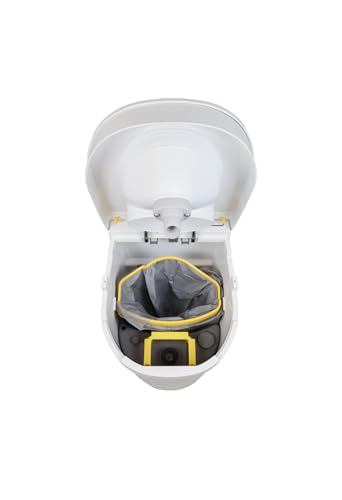
The Weekend Prime is the resilience pick: a non-electric, self-contained separating toilet built for off-grid living and emergency use, where the absence of a power requirement is not a nice-to-have but the entire point. Without a fan, odor control rests on the separation itself, sensible placement, and a basic vent path — which works well at cabin and weekend cadence, and is why Separett positions it for exactly that pattern rather than full-time family duty. It is also the unit to own before you need it: stored dry, it deploys instantly when a well pump, septic issue, or storm takes a flush toilet out of service. Judge it as dependable backup and part-time infrastructure, and it is excellent at its job.
As the home’s insurance policy, the Weekend Prime waits in a closet or utility room for the outage, the septic repair, or the renovation week.
The Weekend Prime’s ownership virtue is that most of the time it asks for nothing at all. Stored dry in a cabin closet or a home utility room, it waits — no fan to feed, no power to maintain, no medium slowly drying out — until the weekend, the outage, or the renovation calls it into service. In use, its routine is the separator basics: seated use, bag out on capacity, urine side emptied on its short cycle, everything rinsed and dried before it goes back to storage. That dry-storage discipline is the one ownership rule that matters: a unit put away damp is a unit that smells when reopened, while a unit put away clean is simply ready. Cabins that host rotating guests should pair it with the framed one-line instruction and a stocked bag supply at the site, because the toilet’s simplicity only works when the consumables are actually there. As emergency infrastructure it has no rival in this guide — it is the only pick whose readiness does not depend on a battery, a fan, or a supply chain at the moment you need it most.
Strengths
- Fully non-electric: the only pick here that asks for no fan power at all
- Self-contained format suits cabins, emergency kits, and off-grid sites without wiring
- Separation design keeps odor low without chemicals or medium
Trade-offs
- No fan means venting discipline and placement matter more for odor control
- Capacity is weekend-pattern, not full-time household scale
- Solids collection still needs a disposal or compost-finishing plan
| Specification | Detail |
|---|---|
| Type | Non-electric, self-contained urine-separating |
| Use | Off-grid, emergency, cabins (per Amazon title) |
| Power | None required |
Best for: off-grid cabins, emergency preparedness, and part-time use with no power / Not suited for: full-time households wanting fan-vented, high-capacity service
Check on Amazon — check price on Amazon for the current configuration and delivery terms.
Comparison Table
| Pick | Badge | Key spec | Best for |
|---|---|---|---|
| Separett Villa Urine-Separating Toilet | Best Overall for Most Homes | Urine-separating dry toilet, no mixing | households and homesteads wanting the simplest daily routine |
| Nature’s Head Self-Contained Composting Toilet — Close Quarters Spider Handle | Best True Composting | Self-contained composting, urine-diverting | full-time users who want the proven, most-supported composting design |
| Compo Closet Cuddy Composting Toilet | Best Modern Filtered Design | 3.9 gal (per Amazon title) | van, RV, and tiny-home builds wanting fan-and-filter venting flexibility |
| Separett Tiny Self-Contained Urine-Separating Toilet | Best for Small Home Bathrooms | Self-contained urine-separating, built-in urine container | vanlifers and small-RV owners wanting a self-contained separator |
| Nature’s Head Self-Contained Composting Toilet — Foot-Spider Handle | Best Tight-Fit Composter | Self-contained composting, urine-diverting | tight installs where the standard crank handle cannot swing clear |
| Separett Weekend Prime Urine-Separating Toilet | Best Non-Electric Home Backup | Non-electric, self-contained urine-separating | off-grid cabins, emergency preparedness, and part-time use with no power |
Shortlist by Need: Which Pick, In One Line Each
- Best Overall for Most Homes — Separett Villa Urine-Separating Toilet: check price on Amazon
- Best True Composting — Nature’s Head Self-Contained Composting Toilet — Close Quarters Spider Handle: check price on Amazon
- Best Modern Filtered Design — Compo Closet Cuddy Composting Toilet: check price on Amazon
- Best for Small Home Bathrooms — Separett Tiny Self-Contained Urine-Separating Toilet: check price on Amazon
- Best Tight-Fit Composter — Nature’s Head Self-Contained Composting Toilet — Foot-Spider Handle: check price on Amazon
- Best Non-Electric Home Backup — Separett Weekend Prime Urine-Separating Toilet: check price on Amazon
Read the badge first and the brand second — in this category the badge is the buying decision, and the detailed reviews above exist to confirm or overturn it against your measurements and your household.
How to Choose a Composting Toilet for a Home
Composting in-unit vs separating: the real home trade-off
True composters (Nature’s Head, OGO, Cuddy) keep solids in a medium chamber where decomposition begins, stretching emptying intervals and producing a more finished output. Separators (the Separett line) collect solids dry in a bag or chamber — nothing composts in the unit, the daily routine is lighter, and finishing or disposal happens outside. Homes with keen composters and garden systems often prefer in-unit composting; homes optimizing for the least daily involvement usually land on separation. Neither is wrong; they are different chores on different schedules.
Sizing for family life and guest load
Rate your household at its busiest, not its average: school holidays and guest weekends are when systems overflow and opinions form. Family homes should start at the high-capacity end — the Villa for separation, the Nature’s Head class for composting — and treat compact units as second-bathroom or small-household tools. Also count the urine cycle honestly: it is the shortest interval in every design and the one that sets your calendar.
Placement, venting, and the rest of the house
A home install lives beside bedrooms and kitchens, so vent quality is quality of life. Fan-vented units exhaust outside on a short, straight run; filtered units give placement freedom at a consumable cost; non-electric units need thoughtful placement and separation discipline. Decide the finished-material route at the same time — garden compost system, municipal green waste where accepted, or household disposal per local rules — and the installation plan is complete.
How to Live With a Home Composting Toilet: The Weekly Routine
- Daily: use seated (all users, all uses) so separation works; crank composters after solids use where fitted; close the lid — the routine is seconds long.
- Every few days: check and empty the urine container or confirm the drain is flowing; rinse the container and add a splash of water and a little sugar or vinegar per maker guidance to control scale and odor.
- Weekly: check medium moisture in composters — it should resemble a wrung-out sponge — and top up medium as the chamber level and maker guidance dictate.
- On schedule: empty the solids chamber or change the separator bag before it is full to the brim; sealed, calm, and calendared beats urgent every time.
- Monthly: inspect the vent and fan, wipe the diverter and bowl with a non-chemical cleaner, and check filters on filtered models against their replacement schedule.
- Seasonally: review consumable stock — medium, bags, filters — and reorder before the shelf is empty.
Common Buying Mistakes
Choosing by footprint instead of household size
A compact unit in a family bathroom is a schedule failure waiting to happen. Capacity is the home spec that matters most.
Using chemical cleaners in the bowl
Chemicals kill the composting biology in true composters and are unnecessary in separators. Use the maker’s approved cleaning approach.
Letting the urine container overflow ‘once’
Once is enough to flood a solids chamber or sour a bathroom. The shortest cycle sets the calendar.
No finishing plan for the output
Every system produces material that goes somewhere. Decide the route before installation day.
Assuming guests will figure it out
They will not, and they should not have to. Frame the one-line instructions.
A Note From Real-World Use
One home reality deserves its own paragraph: the long middle. Every composting toilet is interesting in its first month and judged in its third year, and what carries a household through the long middle is not enthusiasm but systems — the calendar reminder that fires before the chamber is full, the consumables that reorder themselves because someone wrote the list on the utility-room wall, the framed instruction that trains guests without a conversation, and the seasonal vent check folded into the same weekend as the furnace filter. Homes that build those tiny systems report the toilet the way they report the water heater: it works, it is maintained, it is not discussed. Homes that rely on memory and goodwill report a slow drift — a missed cycle here, an empty medium shelf there — until the fixture gets blamed for the absence of a checklist. This guide has repeated the routine advice in every section deliberately, because in this category the routine is not the fine print. It is the product, and the households who treat it that way are the ones still saving every flush of water, years in, without thinking about it.
What About the Alternatives: Chemical, Cassette, and Dry-Flush Toilets?
Every waterless buyer eventually cross-shops the neighboring technologies, and the honest comparison clarifies why composting and separating systems win their niches. Chemical portable toilets are cheap to buy and expensive to live with: they need chemical supplies, they smell of exactly what they are when the seal ages, and their contents belong at a dump point that not every journey provides. Cassette toilets improve the fixture but keep the dump-station dependency and the mixed-waste chemistry that makes emptying the worst job in camping. Dry-flush systems wrap each use in a foil liner — genuinely odor-free and effortless per use — at a per-flush consumable cost that quietly becomes the highest in the category over a season, with landfill-bound waste as the trade. Composting and separating toilets ask more of the owner in routine and repay it in independence: no chemicals, no dump stations, no per-use consumable spiral, and contents that can finish as compost where rules allow. The right choice is genuinely situational — a festival weekend rental favors whatever is simplest to hand back, and a boat with a pump-out routine already established may keep its marine head. But for the homes, rigs, cabins, and camps this guide serves, the systems above are the ones owners still praise in year three, and year-three praise is the metric that matters.
Final Recommendation
If you only read one section, make it this one. For most readers, the Best Overall for Most Homes pick — the Separett Villa Urine-Separating Toilet — is the safest answer to best composting toilets for a home: it solves the central problem of the category without asking you to accept an unusual routine or a specialty fit. Check price on Amazon and confirm the fit measurements in this guide against your space before ordering.
Choose the Best True Composting pick (Nature’s Head Self-Contained Composting Toilet — Close Quarters Spider Handle, check price on Amazon) when its specific strength matches your situation, and work down the badge list in the Quick Picks the same way — every pick here is the right answer to a stated version of the problem, and the wrong answer to the others. That is deliberate: honest fit beats a single forced winner. Related guides in this series: Best Compost Toilets For A House, Best Composting Toilets 2 Story Home, Best Compost Toilets For Off Grid.
Troubleshooting: When a Composting Toilet Disappoints
Problem: odor in the room. Work the checklist in order — is the fan running and the vent unobstructed, is urine reaching the solids chamber through a mis-seated diverter or an overfilled container, and has a guest used the unit standing? Nine times in ten, one of those three is the whole story, and all three are five-minute fixes. Problem: the solids chamber smells or looks wet. That is a moisture problem, not a product failure: add dry medium, confirm urine separation is actually happening, and give the chamber time to rebalance rather than emptying in a panic. Problem: fruit flies appear. They arrive on over-wet medium and leave when it dries and the vent screen is intact; a sticky trap near the unit ends the colony while the moisture fix removes the cause. Problem: the urine container scales up and smells despite rinsing. A water-and-vinegar soak on a rotation, with a spare container in service, is the standard owner’s answer. Problem: the system worked for months and then did not. Something changed — a new user, a fuller household, a skipped month of routine, a fan quietly dead. Find the change and you have found the problem; these systems are honest machines that report their inputs faithfully.
Before You Buy: The Waterless Fit and Routine Checklist
Run this checklist before ordering any composting or separating toilet, because in this category the routine is the product. First, the users: count the people who will use the unit at its busiest — guests included — and size the chamber or separator capacity for that number, not the quiet-week average, because overflow weekends are what owners remember. Second, the vent: walk the actual route from the toilet’s position to outside air, count the bends, find the power for the fan if the model has one, and solve any impossible run now by switching to a filtered or non-electric pick rather than after delivery. Third, the output: decide where solids finish — an outdoor compost system, bagged disposal under local rules, or a municipal route where one exists — and set that system up before the first chamber fills. Fourth, the consumables shelf: medium for composters, bags for separators, filters for filtered vents, a spare fan for fan models, all stocked at install, because a waterless toilet without its supplies is furniture. Fifth, the briefing: write the one-line user instruction you will frame or tape at the unit, and accept that you, the owner, are the training program.
Two softer checks close the list. Be honest about temperament: the best system in this guide is the one whose emptying calendar you will keep in February, with gloves on, without resentment — and different households keep different calendars happily, which is why true composters, separators, and non-electric backups all earn places here. And be honest about guests: if the unit will serve untrained users regularly, favor the designs that forgive a weekend of imperfect use, and plan your own check of the urine container during stays rather than a discovery afterward. A composting toilet bought against this checklist becomes invisible infrastructure within a month. One bought on enthusiasm alone becomes the story visitors tell. The difference is entirely in these ten minutes of planning.
Ownership, Running Costs, and Long-Term Care
No toilet in this guide carries a static price in print, and ownership cost deserves the same honesty: what you actually spend over the years is consumables, water, and the occasional wear part. Flush models spend on water at your local rate and on standard fill valves and seals that any hardware store stocks. Composting and separating models spend on medium, bags or liners, vent filters where fitted, and a spare fan for fan-dependent designs — modest, predictable items that reward buying ahead rather than in a hurry. The expensive outcomes in this category are never consumables; they are the wrong fit bought twice, the unplanned vent, and the unit whose routine the household quietly abandoned. Every section of this guide — the measurements, the capacity math, the routine walk-throughs — exists to keep you out of those three traps.
Long-term care is equally unglamorous and equally decisive. Keep the paperwork and model numbers with your house documents. Inspect supply connections, vents, and fans on a seasonal rhythm rather than after a symptom. Stock the one spare your specific system depends on. And revisit the fit honestly if the household changes — a toilet that suited a solo owner may be the wrong tool for a family of five, and the second-hand market for well-kept units in this category is healthy. Buy for the household you have, maintain on a calendar, and any pick in this guide will pay back its cost in the only currency that matters here: a bathroom that never becomes a problem.
Warranty, Support, and Buying With Confidence
Fixtures in this category are long-service purchases, so buy them like appliances rather than accessories. Order from the listing linked in this guide so the model, configuration, and seller of record are exactly the ones verified here; photograph the delivered box and the unit’s labels before installation; and register the product where the maker offers registration, because in niche categories the registered owner gets the parts diagram, the consumables list, and the support line that a second-hand buyer has to hunt for. Keep the first month deliberately observant — fit, routine, vent or flush behavior — while returns are still simple, and raise any concern with the seller in that window rather than after the season turns. Every pick in this guide was chosen partly because its maker supports the product as a system, with documentation and parts, and that support is part of what your money buys.
Frequently Asked Questions
What is the best composting toilet for a family home?
The Separett Villa for routine simplicity at household capacity, or the Nature’s Head for true in-unit composting — both are proven full-time home fixtures.
Do home composting toilets need plumbing?
No water supply or drain is needed for the toilet itself. Some owners route urine to a drain or soakaway where rules allow; self-contained models need nothing at all.
How much maintenance does a home composting toilet need?
Minutes a week: urine emptying on a short cycle, medium checks on composters, solids on a longer calendar, and a monthly vent and fan glance.
Can a composting toilet replace the only toilet in a home?
In many homes and jurisdictions, yes — with a full-time-rated model sized for the household. Confirm local code if it will be the sole fixture.
What does the finished compost get used for?
Ornamental gardens and landscaping where local rules allow, after proper finishing time. Separator solids are commonly bagged for disposal or finished in an outdoor system.
Are composting toilets a good idea for rental properties?
They can work in eco-rentals with clear instructions and a host-managed routine; for conventional rentals, the guest learning curve is the main consideration.
Still comparing? These companion guides cover the neighboring decisions: Best Compost Toilets Tiny Homes, Best Waterless Toilets For Home.


