Disclosure: airfryerkitchensupply.com is reader-supported. When you buy through links on our site, we may earn an affiliate commission at no extra cost to you.
Where to buy
If you are comparing the best compost toilets tiny homes, the fastest way to buy any pick in this guide is Amazon, where listings carry the current configuration, delivery options, and returns handling for bulky fixtures. Start with our top recommendations:
- OGO Origin Compact Composting Toilet (Best Overall for Tiny Homes) — check price on Amazon
- Compo Closet Cuddy Composting Toilet (Best Fan-and-Filter) — check price on Amazon
- Separett Tiny Self-Contained Urine-Separating Toilet (Best Self-Contained) — check price on Amazon
Toilets and composting units are heavy, awkward freight: order when you can be present for delivery, inspect the box before signing, and keep all packaging until the unit is installed and the first week of use confirms it suits your household.
Best compost toilets tiny homes: What Actually Matters
The search for the best compost toilets tiny homes can actually fit is a game of inches and routines. A tiny home bathroom might be thirty inches wide, share a wall with the kitchen, and sit in a structure that moves — or at least flexes — more than a foundation house. A flush toilet demands water, a holding or sewer solution, and freeze protection; a composting or separating toilet asks only for a vent, a routine, and a footprint small enough to leave room for the shower. That trade is why this category owns the tiny-home bathroom.
The six picks here are the tiny-home shortlist in honest order: the 15-inch-footprint OGO leads on fit, the Cuddy adds fan-and-filter venting flexibility, the Separett Tiny keeps everything self-contained, and the Nature’s Head models serve full-timers who will not compromise on capacity. The portable WandaGO covers lofts and movable setups. All are verified against current listing data. Measure your bathroom’s tightest dimension, decide the vent path, and match the routine to how many people live in the home full-time.
In this guide
Quick Picks
Six picks, six different problems solved. Badges are used consistently here and in the detailed reviews below, so you can scan by the job you need done:
- Best Overall for Tiny Homes: OGO Origin Compact Composting Toilet — check price on Amazon. 15-inch footprint is genuinely small — fits van and boat head spaces that reject full-size units.
- Best Fan-and-Filter: Compo Closet Cuddy Composting Toilet — check price on Amazon. 12V fan plus carbon filter gives flexible venting options in vehicles and tiny homes.
- Best Self-Contained: Separett Tiny Self-Contained Urine-Separating Toilet — check price on Amazon. Built-in urine container with an emptying sensor removes the guesswork of bottle management.
- Best Full-Time Living: Nature’s Head Self-Contained Composting Toilet — Close Quarters Spider Handle — check price on Amazon. The benchmark full-time composting toilet: urine diversion plus a crank-agitated solids chamber is the proven formula.
- Best Movable / Loft-Friendly: TROBOLO WandaGO Composting Toilet — check price on Amazon. Truly portable: the pick that travels to camp, the job site, or the festival rather than bolting down.
- Best Awkward Corner Fit: Nature’s Head Self-Contained Composting Toilet — Foot-Spider Handle — check price on Amazon. Same proven Nature’s Head composting system with an alternative handle geometry for awkward clearances.
How These Picks Were Chosen
Every product in this guide was verified against Amazon listing data before it earned a link: we searched by brand and model, matched the returned listing title to the product we intended to recommend, and took the ASIN from the listing response. Products without a confident API match are never given invented links. Beyond verification, picks were screened for the things that decide ownership satisfaction in this category — honest fit for the stated use case, a routine a real household can sustain, parts and consumables that can actually be sourced, and a track record appropriate to the duty the search implies. Premium and budget tiers are both represented, but no pick is here because of its price: each one is the answer to a specific version of the problem in the title.
Two standing rules shape this guide. We publish no static product prices, because fixture pricing shifts constantly — every pick says check price on Amazon instead, so the number you see is the number that is true today. And we publish no fixed star ratings or review counts, for the same reason: they change daily and would mislead you within weeks. What does not change is fit, routine, and build — which is what the reviews below concentrate on.
The 6 Best compost toilets tiny homes — Detailed Reviews
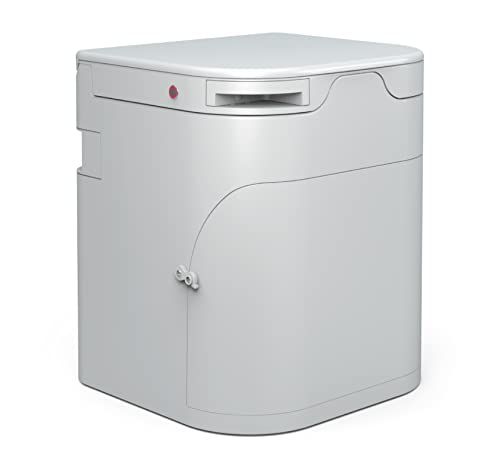
OGO Origin Compact Composting Toilet — Best Overall for Tiny Homes
The OGO Origin competes on one honest metric: a 15-inch footprint, small enough for the van conversions, small RV wet baths, and boat heads where a Nature’s Head simply will not fit. Inside that envelope it runs the same proven formula — urine diverted away from a medium-filled solids chamber — in a purpose-built compact shell rather than a cut-down version of a bigger toilet. The physics of small capacity are unavoidable: fewer uses between solids emptying, and less margin for skipping the routine. For a solo traveler or a couple in a small rig, that trade is usually worth the space saved; measure your compartment, check the seat height against your knees, and the Origin makes a strong case.
Tiny homes are the OGO’s design brief made real: a 15-inch footprint that fits the micro-bathroom while keeping the proven urine-diverting composting formula.
OGO ownership is the composting routine in miniature, and miniature changes the margins. The chamber fills on the same per-use basis as its bigger rivals but holds less, so the emptying calendar runs shorter — solo van and tiny-home users describe a comfortable rhythm, couples describe a committed one. Medium moisture matters more in a small chamber: too dry and composting stalls, too wet and the urine diverter’s discipline is tested, so the wrung-out-sponge check becomes a genuine weekly habit rather than a slogan. The payoff arrives daily, in space: a working, vented, true composting toilet in a footprint that leaves the rest of a small bathroom usable. Parts and consumables follow the category pattern — medium stocked ahead, fan checked monthly, container rinsed on its cycle. Owners who thrive with the OGO are the ones who chose it for fit with open eyes about cadence. It is not a smaller Nature’s Head; it is a different balance of the same physics, tuned for the rooms and rigs where 15 inches is the whole negotiation.
Strengths
- 15-inch footprint is genuinely small — fits van and boat head spaces that reject full-size units
- Purpose-built compact composting rather than a shrunken afterthought
- Urine diversion follows the proven dry-solids formula
Trade-offs
- Compact chamber means shorter emptying intervals than full-size composters
- Small units magnify routine lapses — medium and crank discipline matter more
- Check seat height against your comfort; compact can mean low
| Specification | Detail |
|---|---|
| Footprint | 15 in footprint (per Amazon title) |
| Type | Compact composting, urine-diverting |
| Use | Van, RV, boat (per Amazon title) |
Best for: vans, small RVs, and boats where footprint is the deciding constraint / Not suited for: high-use households that would empty a compact chamber constantly
Check on Amazon — check price on Amazon for the current configuration and delivery terms.

Compo Closet Cuddy Composting Toilet — Best Fan-and-Filter
The Cuddy from Compo Closet is engineered directly at the mobile and tiny-home brief: self-contained, waterless, no chemicals, a 3.9-gallon class chamber, and a 12V fan working through a carbon filter. That fan-and-filter pairing is its practical edge — in a van or tiny home where a long vent run is awkward, filtered extraction gives you placement flexibility the hose-only designs lack, as long as you treat the filter as the scheduled consumable it is. The composting routine follows the category pattern of urine separation and medium management. For buyers comparing newer challengers against the established names, the Cuddy’s spec sheet is the argument: it was designed for exactly the spaces the older units were adapted into.
Where a tiny home’s vent must exit through a floor or a short wall run, the Cuddy’s 12V fan and carbon filter give the placement freedom the layout demands.
Cuddy ownership revolves around its venting system, and the calendar item that matters is the carbon filter. The 12V fan runs the negative pressure that keeps the bathroom neutral; the filter scrubs the exhaust where a long outside run is impractical — and a filter past its life quietly returns odors the system was bought to prevent. Put filter changes on the same calendar as chamber emptying and the Cuddy simply works. The rest of the routine follows the composting pattern: urine separation discipline, medium management in the chamber, container rinsing on the short cycle. In vehicles and tiny homes, the fan’s 12V draw belongs in the power budget spreadsheet — small, but honest builds count everything. Compo Closet is a newer name than the category’s founders, so owners should register the product, keep the documentation, and stock the first spare filter at purchase rather than at first need. Do those few deliberate things and the Cuddy delivers the flexible, filtered, self-contained service its spec sheet promises, in the placements its rivals cannot serve.
Strengths
- 12V fan plus carbon filter gives flexible venting options in vehicles and tiny homes
- Self-contained and waterless with no chemicals — a clean off-grid formula
- Sized and specced directly at the RV/van/tiny-home brief
Trade-offs
- Carbon filters are a consumable to replace on schedule
- 3.9-gallon class capacity is mid-pack — plan emptying cadence honestly
- Newer brand than the category leaders, so long-term parts history is shorter
| Specification | Detail |
|---|---|
| Capacity | 3.9 gal (per Amazon title) |
| Vent | 12V fan with carbon filter (per Amazon title) |
| Use | RVs, vans, boats, tiny homes, off-grid (per Amazon title) |
Best for: van, RV, and tiny-home builds wanting fan-and-filter venting flexibility / Not suited for: buyers who prefer the longest-established brand track record
Check on Amazon — check price on Amazon for the current configuration and delivery terms.

Separett Tiny Self-Contained Urine-Separating Toilet — Best Self-Contained
The Tiny is Separett’s separation concept shrunk for mobile life: a self-contained unit with the urine container built in and a sensor that tells you when it needs emptying, aimed squarely at vans, RVs, cabins, and boats. That built-in container is the key difference from the Villa — there is no urine hose to route and no drain to find, which simplifies installs enormously in a vehicle, at the cost of capacity. For a solo traveler or a couple on weekend patterns it is a tidy, honest system; for a family living full-time in a rig, the emptying cadence will feel busy and a higher-capacity model earns its footprint. As with all separators, solids are collected, not finished-composted in the unit.
Named for the application: the Tiny’s self-contained urine container suits tiny homes where no drain routing exists and every system must live inside its own box.
The Tiny’s ownership rhythm is set by its built-in urine container, and the emptying sensor is the feature owners praise most — no guessing, no overflow lesson, just a signal and a two-minute task. That container cycle is frequent by design: this is a compact unit, and solo travelers or couples in vans and small cabins plan around a rhythm of days, not weeks. Solids follow the separator pattern — bag out on capacity, no medium, no crank — so the consumables shelf holds bags and little else. Cleaning is a rinse of the container, a wipe of the diverter, and attention to the sensor contacts so the signal stays honest. In a vehicle, secure mounting and a pre-drive empty become part of the travel checklist, the same way grey tanks once were. The Tiny rewards the user it was designed for — mobile, space-poor, routine-tolerant — and its ownership file stays small precisely because the unit refuses to pretend it is a household fixture. Judge it as mobile equipment and it is excellent; judge it as a family toilet and the calendar will argue back.
Strengths
- Built-in urine container with an emptying sensor removes the guesswork of bottle management
- Self-contained format sized for vans and small RVs — no external urine drain needed
- No additives or mixing: separation-only routine in the smallest footprint here
Trade-offs
- Small capacity means frequent emptying under full-time or multi-person use
- Sensor and container add parts to keep clean versus a simple diverter-and-hose setup
- Premium pricing for its size class
| Specification | Detail |
|---|---|
| Type | Self-contained urine-separating, built-in urine container |
| Sensor | Urine emptying sensor (per Amazon title) |
| Use | Vans, RVs, cabins, boats (per Amazon title) |
Best for: vanlifers and small-RV owners wanting a self-contained separator / Not suited for: families or full-timers who need maximum capacity between emptying
Check on Amazon — check price on Amazon for the current configuration and delivery terms.
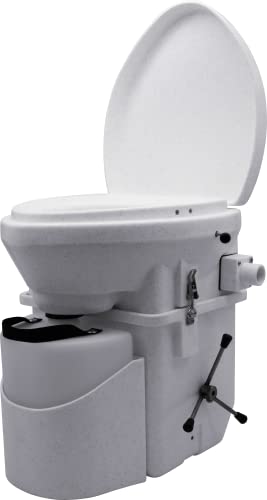
Nature’s Head Self-Contained Composting Toilet — Close Quarters Spider Handle — Best Full-Time Living
Nature’s Head is the name most full-timers land on after their first cheap experiment disappoints, and the design explains why: urine is diverted at the bowl so the solids chamber stays dry enough to compost rather than ferment, a crank agitates the medium so each use gets buried, and a small vent fan keeps negative pressure pulling air out through the vent hose. The close-quarters spider handle variant exists for installs where a standard crank would foul a wall or cabinet — the handle geometry hugs the unit. Ownership is a routine: add medium, crank after use, empty the urine bottle on a short cycle, and empty the solids chamber on a much longer one. Done consistently, it is genuinely low-odor; neglected, no composting toilet can save you.
Full-time tiny-home couples who compost seriously still choose the Nature’s Head when the bathroom can spare its footprint — capacity is quality of life at this scale.
Long-term Nature’s Head ownership is a rhythm, and owners who learn it tend to become the category’s evangelists. The urine bottle sets the short cycle — a rinse and a splash of water with a little sugar or vinegar keeps scale and odor away. The solids chamber asks for medium kept at that wrung-out-sponge moisture, a crank after each solids use, and an emptying on a calendar measured in weeks for a couple, longer for a solo user. The fan runs constantly and silently enough to forget, which is why a spare fan belongs in the parts drawer: it is the one component whose failure you would notice within a day. Finished chamber contents, given time, are genuinely compost-like — dry, earthy, unremarkable — and most owners finish them further in an outdoor system. The learning curve is real for the first month: medium amounts, crank discipline, and bottle habits all calibrate with experience. After that, the system runs on habit rather than attention, and the water and dump-station independence it buys becomes simply how the bathroom works.
Strengths
- The benchmark full-time composting toilet: urine diversion plus a crank-agitated solids chamber is the proven formula
- Close-quarters spider handle folds the crank profile down for tight installs
- Vented design with a small fan keeps odor moving out, not into the room
Trade-offs
- Premium tier pricing within the composting category
- Needs a vent run and a 12V or mains fan connection — not a zero-install unit
- Solids chamber emptying is a learned routine, not a flush-and-forget experience
| Specification | Detail |
|---|---|
| Type | Self-contained composting, urine-diverting |
| Handle | Close-quarters spider crank handle |
| Use | Full-time capable, vented |
Best for: full-time users who want the proven, most-supported composting design / Not suited for: anyone wanting a no-vent, no-power, drop-in-anywhere unit
Check on Amazon — check price on Amazon for the current configuration and delivery terms.

TROBOLO WandaGO Composting Toilet — Best Movable / Loft-Friendly
The WandaGO is the portable end of the composting spectrum: a urine-diverting dry toilet with height adjustment, designed to travel — camping, overlanding, outdoor events, work sites, and as a movable second toilet for a property. Height adjustment is a smarter feature than it sounds, because one unit serving both adults and children at a campsite avoids the unstable booster arrangements that make kids dread the camp toilet. Like the Separett approach, it separates rather than composts in-unit, so your solids plan — bag, bury where legal, or carry out — is part of the system. Judged as a permanent home fixture it is out of its brief; judged as the toilet that goes where no plumbing exists, it is purpose-built.
A loft bathroom, a movable tiny home, or a part-time tiny retreat can use the WandaGO’s portability instead of a fixed install — and stow it when the space must convert.
WandaGO ownership is closer to owning good camp equipment than a fixture: it stores compactly, travels in the vehicle kit, sets up in minutes, and goes home to be cleaned and restocked. The height adjustment gets constant use in family camps — set low for a child at dusk, raised for an adult at dawn — and the urine-diverting design keeps the unit civilized across a long weekend without water or chemicals. The routine is the separator basics at portable scale: bags changed on capacity, the urine side emptied on its short cycle, everything rinsed and dried before storage so the next trip starts clean. Because it composts nothing in-unit, the home end of the system matters — a finishing compost setup or bagged disposal per local rules, decided once. It will not replace a plumbed bathroom and does not pretend to; its job is to be the toilet that exists where no toilet exists, from a festival field to a job site to the far corner of a rural property. Kept clean and stocked, it is ready every single time it is lifted out of the vehicle.
Strengths
- Truly portable: the pick that travels to camp, the job site, or the festival rather than bolting down
- Height adjustment makes one unit work for adults and kids
- Urine diversion keeps the dry-toilet formula odor-manageable without water or chemicals
Trade-offs
- Portable format means modest capacity and a carry-it routine
- No fan or powered venting at this portability level
- Not a full-time residential fixture — it is built for mobility
| Specification | Detail |
|---|---|
| Type | Portable urine-diverting dry toilet |
| Seat | Height adjustment (per Amazon title) |
| Use | Camping and portable outdoor use (per Amazon title) |
Best for: camping, overlanding, and portable outdoor sanitation / Not suited for: permanent full-time home installation
Check on Amazon — check price on Amazon for the current configuration and delivery terms.

Nature’s Head Self-Contained Composting Toilet — Foot-Spider Handle — Best Awkward Corner Fit
This variant of the Nature’s Head answers a fit question rather than a performance one: in some installs — a curved RV wet bath, a boat head compartment, a tiny-home bathroom with a pocket door — the standard crank arc simply does not clear. The foot-spider handle changes the agitation geometry so the system works in that tighter envelope while keeping the same urine-diverting bowl, solids chamber, and vented fan arrangement as the benchmark model. Everything said about the composting routine applies identically: medium management, crank discipline, bottle emptying, and vent maintenance decide your experience far more than the handle does. Choose this version when your tape measure, not your preferences, makes the call.
Tiny-home bathrooms have the worst crank clearances in housing; the foot-spider variant exists for the corner where the standard handle hits the shower wall.
Everything about living with the foot-spider Nature’s Head mirrors its standard sibling — same chamber rhythm, same urine cycle, same fan discipline — with one daily difference: the agitation motion happens in a geometry your specific room allows. Owners of tight installs describe the first week as recalibration, learning the new handle motion the way you learn any tool, and then never thinking about it again. That is precisely the point of the variant: it converts a daily clearance fight into a non-event. The ownership details worth planning are identical to the standard model — a spare fan on the shelf, medium stored dry and close, the urine bottle rinsed on its short cycle, and a calendar note for chamber emptying rather than a guess. Where this variant quietly wins is resale and reconfiguration: because it fits the awkward corners other units cannot, it tends to stay with the boat, RV, or tiny home it was fitted into. Choose it by tape measure, keep it by routine, and it delivers the full Nature’s Head ownership experience in rooms that would otherwise be excluded from it.
Strengths
- Same proven Nature’s Head composting system with an alternative handle geometry for awkward clearances
- Urine diversion keeps the solids chamber dry and the composting process honest
- Strong owner community and parts support for a niche product category
Trade-offs
- Handle variant choice is about your specific clearance — measure before picking between versions
- Still needs venting and fan power like the standard model
- Premium tier cost before any vent or install extras
| Specification | Detail |
|---|---|
| Type | Self-contained composting, urine-diverting |
| Handle | Foot-spider handle variant |
| Use | Full-time capable, vented |
Best for: tight installs where the standard crank handle cannot swing clear / Not suited for: roomy installs, where the standard handle version is simpler to source
Check on Amazon — check price on Amazon for the current configuration and delivery terms.
Comparison Table
| Pick | Badge | Key spec | Best for |
|---|---|---|---|
| OGO Origin Compact Composting Toilet | Best Overall for Tiny Homes | 15 in footprint (per Amazon title) | vans, small RVs, and boats where footprint is the deciding constraint |
| Compo Closet Cuddy Composting Toilet | Best Fan-and-Filter | 3.9 gal (per Amazon title) | van, RV, and tiny-home builds wanting fan-and-filter venting flexibility |
| Separett Tiny Self-Contained Urine-Separating Toilet | Best Self-Contained | Self-contained urine-separating, built-in urine container | vanlifers and small-RV owners wanting a self-contained separator |
| Nature’s Head Self-Contained Composting Toilet — Close Quarters Spider Handle | Best Full-Time Living | Self-contained composting, urine-diverting | full-time users who want the proven, most-supported composting design |
| TROBOLO WandaGO Composting Toilet | Best Movable / Loft-Friendly | Portable urine-diverting dry toilet | camping, overlanding, and portable outdoor sanitation |
| Nature’s Head Self-Contained Composting Toilet — Foot-Spider Handle | Best Awkward Corner Fit | Self-contained composting, urine-diverting | tight installs where the standard crank handle cannot swing clear |
Shortlist by Need: Which Pick, In One Line Each
- Best Overall for Tiny Homes — OGO Origin Compact Composting Toilet: check price on Amazon
- Best Fan-and-Filter — Compo Closet Cuddy Composting Toilet: check price on Amazon
- Best Self-Contained — Separett Tiny Self-Contained Urine-Separating Toilet: check price on Amazon
- Best Full-Time Living — Nature’s Head Self-Contained Composting Toilet — Close Quarters Spider Handle: check price on Amazon
- Best Movable / Loft-Friendly — TROBOLO WandaGO Composting Toilet: check price on Amazon
- Best Awkward Corner Fit — Nature’s Head Self-Contained Composting Toilet — Foot-Spider Handle: check price on Amazon
Read the badge first and the brand second — in this category the badge is the buying decision, and the detailed reviews above exist to confirm or overturn it against your measurements and your household.
How to Choose a Compost Toilet for a Tiny Home
Measure the room you have, including the crank
Tiny-home fit is three-dimensional: footprint on the floor, seat height against your knees, and — on crank-agitated composters — the full swing of the handle. Tape all three before ordering. A unit that fits the floor plan but whose crank fouls the vanity will annoy you twice a day for years. Where the swing fails, the foot-spider Nature’s Head or a crank-free separator removes the problem by design rather than by habit.
Venting in a small, tight structure
Tiny homes are well sealed, which makes the vent fan’s negative pressure more effective — and makes a missing vent more obvious. Route the vent as directly outside as the structure allows; filtered-vent models relax the routing when the bathroom sits mid-plan. Remember that a tiny home on wheels also travels: secure the unit for the road, cap or seal the vent for transit per the maker’s guidance, and empty the urine container before a move.
One person, two people, and the capacity cliff
Tiny-home occupancy is usually one or two, which suits compact composters — until a guest week doubles the load. Compact chambers fill on uses, not days, so a couple living full-time should expect meaningfully shorter intervals than a solo owner, and should size up to the Nature’s Head class if the bathroom allows. The capacity cliff is the category’s main disappointment curve; buying one size up is the cheapest happiness in this entire guide.
How to Install a Composting Toilet in a Tiny Home
- Confirm the floor structure under the bathroom can take the unit plus user weight at a single point, and reinforce if the build is lightweight.
- Dry-fit the unit and test the full user routine — sit, crank swing, container removal — before drilling anything.
- Fit the vent through the nearest exterior surface with the shortest run, sealing for both weather and road vibration if the home travels.
- Connect 12V fan power from the home’s DC system with a labeled switch; tiny homes reward labeled everything.
- Secure the unit for travel where applicable, charge the medium, and run a one-week shakedown before the first long trip or guest stay.
- Keep the consumables kit in the home: medium, liners or filters as applicable, and the spare parts the maker lists.
Common Buying Mistakes
Measuring the floor but not the crank swing
The most common tiny-home return reason. The routine needs space, not just the box.
Undersizing for a full-time couple
Solo ratings do not describe two-person life. Size for the household that actually lives there.
Forgetting travel securement
A tiny home on wheels shakes its bathroom. Mount and vent for the road, not just the site.
No guest plan
Guests double the load and halve the discipline. Brief them, and keep spare capacity in the schedule.
Ignoring seat height in a compact pick
Compact can mean low. Check the seat height against the household’s knees before committing.
A Note From Real-World Use
One tiny-home reality deserves its own paragraph: humidity. A tiny home concentrates everything — cooking steam, shower moisture, and several hundred square feet of breathing — into a small, well-sealed box, and the bathroom sits at the center of it. A vented composting toilet is actually an ally here, because its fan moves a small, constant stream of bathroom air outside, but the alliance only holds when the vent is genuinely clear and the fan genuinely runs. Tiny-home owners should treat the vent check as part of the same monthly rhythm as the moisture checks the structure already demands, and should watch the solids chamber’s moisture balance more closely than a house owner would: a steamy tiny bathroom pushes medium toward wet, and the fix — a handful of dry medium and a fan check — takes two minutes when it is a habit and a weekend when it is a discovery. Build that habit and the smallest bathroom in the housing stock stays as neutral as any other room in the home.
What About the Alternatives: Chemical, Cassette, and Dry-Flush Toilets?
Every waterless buyer eventually cross-shops the neighboring technologies, and the honest comparison clarifies why composting and separating systems win their niches. Chemical portable toilets are cheap to buy and expensive to live with: they need chemical supplies, they smell of exactly what they are when the seal ages, and their contents belong at a dump point that not every journey provides. Cassette toilets improve the fixture but keep the dump-station dependency and the mixed-waste chemistry that makes emptying the worst job in camping. Dry-flush systems wrap each use in a foil liner — genuinely odor-free and effortless per use — at a per-flush consumable cost that quietly becomes the highest in the category over a season, with landfill-bound waste as the trade. Composting and separating toilets ask more of the owner in routine and repay it in independence: no chemicals, no dump stations, no per-use consumable spiral, and contents that can finish as compost where rules allow. The right choice is genuinely situational — a festival weekend rental favors whatever is simplest to hand back, and a boat with a pump-out routine already established may keep its marine head. But for the homes, rigs, cabins, and camps this guide serves, the systems above are the ones owners still praise in year three, and year-three praise is the metric that matters.
Final Recommendation
If you only read one section, make it this one. For most readers, the Best Overall for Tiny Homes pick — the OGO Origin Compact Composting Toilet — is the safest answer to best compost toilets tiny homes: it solves the central problem of the category without asking you to accept an unusual routine or a specialty fit. Check price on Amazon and confirm the fit measurements in this guide against your space before ordering.
Choose the Best Fan-and-Filter pick (Compo Closet Cuddy Composting Toilet, check price on Amazon) when its specific strength matches your situation, and work down the badge list in the Quick Picks the same way — every pick here is the right answer to a stated version of the problem, and the wrong answer to the others. That is deliberate: honest fit beats a single forced winner. Related guides in this series: Best Compost Rv Toilets, Best Compost Toilets For Off Grid, Best Compost Toilets For A House.
Troubleshooting: When a Composting Toilet Disappoints
Problem: odor in the room. Work the checklist in order — is the fan running and the vent unobstructed, is urine reaching the solids chamber through a mis-seated diverter or an overfilled container, and has a guest used the unit standing? Nine times in ten, one of those three is the whole story, and all three are five-minute fixes. Problem: the solids chamber smells or looks wet. That is a moisture problem, not a product failure: add dry medium, confirm urine separation is actually happening, and give the chamber time to rebalance rather than emptying in a panic. Problem: fruit flies appear. They arrive on over-wet medium and leave when it dries and the vent screen is intact; a sticky trap near the unit ends the colony while the moisture fix removes the cause. Problem: the urine container scales up and smells despite rinsing. A water-and-vinegar soak on a rotation, with a spare container in service, is the standard owner’s answer. Problem: the system worked for months and then did not. Something changed — a new user, a fuller household, a skipped month of routine, a fan quietly dead. Find the change and you have found the problem; these systems are honest machines that report their inputs faithfully.
Before You Buy: The Waterless Fit and Routine Checklist
Run this checklist before ordering any composting or separating toilet, because in this category the routine is the product. First, the users: count the people who will use the unit at its busiest — guests included — and size the chamber or separator capacity for that number, not the quiet-week average, because overflow weekends are what owners remember. Second, the vent: walk the actual route from the toilet’s position to outside air, count the bends, find the power for the fan if the model has one, and solve any impossible run now by switching to a filtered or non-electric pick rather than after delivery. Third, the output: decide where solids finish — an outdoor compost system, bagged disposal under local rules, or a municipal route where one exists — and set that system up before the first chamber fills. Fourth, the consumables shelf: medium for composters, bags for separators, filters for filtered vents, a spare fan for fan models, all stocked at install, because a waterless toilet without its supplies is furniture. Fifth, the briefing: write the one-line user instruction you will frame or tape at the unit, and accept that you, the owner, are the training program.
Two softer checks close the list. Be honest about temperament: the best system in this guide is the one whose emptying calendar you will keep in February, with gloves on, without resentment — and different households keep different calendars happily, which is why true composters, separators, and non-electric backups all earn places here. And be honest about guests: if the unit will serve untrained users regularly, favor the designs that forgive a weekend of imperfect use, and plan your own check of the urine container during stays rather than a discovery afterward. A composting toilet bought against this checklist becomes invisible infrastructure within a month. One bought on enthusiasm alone becomes the story visitors tell. The difference is entirely in these ten minutes of planning.
Ownership, Running Costs, and Long-Term Care
No toilet in this guide carries a static price in print, and ownership cost deserves the same honesty: what you actually spend over the years is consumables, water, and the occasional wear part. Flush models spend on water at your local rate and on standard fill valves and seals that any hardware store stocks. Composting and separating models spend on medium, bags or liners, vent filters where fitted, and a spare fan for fan-dependent designs — modest, predictable items that reward buying ahead rather than in a hurry. The expensive outcomes in this category are never consumables; they are the wrong fit bought twice, the unplanned vent, and the unit whose routine the household quietly abandoned. Every section of this guide — the measurements, the capacity math, the routine walk-throughs — exists to keep you out of those three traps.
Long-term care is equally unglamorous and equally decisive. Keep the paperwork and model numbers with your house documents. Inspect supply connections, vents, and fans on a seasonal rhythm rather than after a symptom. Stock the one spare your specific system depends on. And revisit the fit honestly if the household changes — a toilet that suited a solo owner may be the wrong tool for a family of five, and the second-hand market for well-kept units in this category is healthy. Buy for the household you have, maintain on a calendar, and any pick in this guide will pay back its cost in the only currency that matters here: a bathroom that never becomes a problem.
Warranty, Support, and Buying With Confidence
Fixtures in this category are long-service purchases, so buy them like appliances rather than accessories. Order from the listing linked in this guide so the model, configuration, and seller of record are exactly the ones verified here; photograph the delivered box and the unit’s labels before installation; and register the product where the maker offers registration, because in niche categories the registered owner gets the parts diagram, the consumables list, and the support line that a second-hand buyer has to hunt for. Keep the first month deliberately observant — fit, routine, vent or flush behavior — while returns are still simple, and raise any concern with the seller in that window rather than after the season turns. Every pick in this guide was chosen partly because its maker supports the product as a system, with documentation and parts, and that support is part of what your money buys.
Frequently Asked Questions
What is the smallest composting toilet for a tiny home?
The OGO Origin’s 15-inch footprint is the smallest full composting format in this roundup; the Separett Tiny is the smallest self-contained separator.
Can a tiny home use a compost toilet full-time?
Yes — that is the standard tiny-home solution. Full-time couples should favor the higher-capacity models and keep the emptying routine on schedule.
How do you vent a compost toilet in a tiny home?
Through the nearest wall, floor, or roof with the unit’s fan, or via a filtered vent on models like the Cuddy. Short, direct runs work best in small structures.
Will a compost toilet freeze in a tiny home?
In an unheated home in deep winter, contents can freeze and pause the process; the toilet remains usable as a collector and composting resumes with warmth. Separators are least affected.
Do tiny homes on wheels need special toilet mounting?
Yes — secure the unit and vent for road vibration, and empty liquids before travel. All six picks have mobile-use pedigrees.
How often does a tiny-home compost toilet need emptying?
Urine every few days per person; solids from weeks for a solo user to noticeably sooner for couples in compact units. Your calendar, not the brochure, is the truth.
Still comparing? These companion guides cover the neighboring decisions: Best Composting Toilets For Camping, Best Portable Toilets For Tiny Homes.


