Disclosure: airfryerkitchensupply.com is reader-supported. When you buy through links on our site, we may earn an affiliate commission at no extra cost to you.
Where to buy
Shopping for best commercial restaurant smokers usually starts on Amazon, where the linked models below can be ordered with delivery to a business address. Start with the HAKKA Commercial Electric Smoker DSH-S50B if you want the headline recommendation first, and check price on Amazon for each linked pick before you commit, because commercial buying should always be done against a live listing rather than a printed number.
Verified listings in this guide: HAKKA Commercial Electric Smoker DSH-S50B; Pit Boss 1600 Navigator Series Pellet Grill & Smoker; recteq Flagship 1600 Pellet Smoker Grill; Pit Boss Navigator 3-Series Pellet Vertical Smoker; Masterbuilt 40-inch ThermoTemp Propane Smoker MB20051316.
Choosing the best commercial restaurant smokers is a different job from choosing a backyard smoker with ambitions. A restaurant pit must repeat the same result on a wet Tuesday and a packed Saturday, fit a cleaning rota, satisfy an inspector and survive staff who did not choose it and will not baby it. This guide ranks smokers by those restaurant tests first and by romance a distant second.
The list deliberately mixes the three technologies restaurants actually run: electric cabinets for cured and batch work, pellet pits for connected, low-labour volume, and a propane cabinet for oven-like gas control. True certified commercial lines are represented honestly too, written unlinked where they are sold direct rather than through Amazon.
Read the guide sections before the picks if you are fitting out a kitchen. In restaurant buying, the right category chosen well beats the best product in the wrong category every single time.
In this guide
Quick Picks
Best Overall: HAKKA Commercial Electric Smoker DSH-S50B — Eight-rack electric smoke oven for sausage, bacon and batch production.
Best for High Volume: Pit Boss 1600 Navigator Series Pellet Grill & Smoker — 1,593 sq in of connected pellet capacity for big services.
Best Premium Pellet: recteq Flagship 1600 Pellet Smoker Grill — The premium 1,667 sq in pellet pit with a 40 lb hopper.
Best Cabinet Capacity: Pit Boss Navigator 3-Series Pellet Vertical Smoker — Five-rack cabinet with a 50 lb hopper for overnight production.
Best Certified-Line Upgrade: Cookshack Commercial Electric Smoker (commercial line) — The certified commercial electric destination, sold direct; unlinked here.
Best Gas Cabinet: Masterbuilt 40-inch ThermoTemp Propane Smoker MB20051316 — 960 sq in gas cabinet with oven-like thermostat control.
How These Picks Were Chosen
Restaurant picks were judged on repeatability, capacity per square foot of kitchen, cleaning effort, staff trainability and supply practicality. Every Amazon-linked model was matched against Amazon listing data cache by its listed title before a link was earned. The Cookshack commercial line is not linked because its commercial models are sold direct and through dealers, with no verified Amazon cooker listing to link.
We excluded competition carts, novelty pits and anything whose capacity collapses the moment you load it the way a restaurant loads, edge to edge, on a deadline.
The 6 Best Options for Commercial Restaurant Smokers

HAKKA Commercial Electric Smoker DSH-S50B — Best Overall
The HAKKA DSH-S50B is the closest thing on Amazon to a true commercial smoke oven: a vertical cabinet with eight racks built for repeatable batches of sausage, bacon, pastrami and smoked poultry. For a small operation the appeal is workflow, not romance. You load the cabinet, set the heat, and the batch runs without a pitmaster standing over a firebox for ten hours.
Treat it as a production cabinet rather than a brisket pit. It excels where the product is cured, hung or laid in uniform pieces and where consistency across batches matters more than bark theatre. Plan your rack map before the first commercial run, because eight racks reward planning and punish improvisation.
In a restaurant the HAKKA is the quiet shift: loaded by prep, running through service without a person’s attention, unloaded into the next day’s mise en place. Its eight racks map naturally onto a cured and batch menu, and its cabinet discipline is what inspectors and head chefs both recognise as professional.
Strengths
- Eight racks give genuine batch capacity for sausage, bacon and pastrami runs in a single load
- Cabinet format suits indoor-adjacent and commissary workflows better than an open backyard pit
- Electric heat removes fire-tending labour during long low-temperature cures
Trade-offs
- Electric smoke flavour is milder than a live-fire offset, which purists notice on brisket bark
- Cabinet needs a dedicated circuit and a dry, ventilated home in the kitchen
- Rack spacing limits very tall cuts unless you re-plan the load
Key specs: Vertical cabinet; 8 racks; electric smoke oven format.
Best for: high-volume sausage, bacon, pastrami and poultry batches in a small commercial kitchen / Not suited for: buyers who want live-fire offset bark as the headline flavour.
Check the current price on Amazon for the HAKKA Commercial Electric Smoker DSH-S50B.
Pit Boss 1600 Navigator Series Pellet Grill & Smoker — Best for High Volume
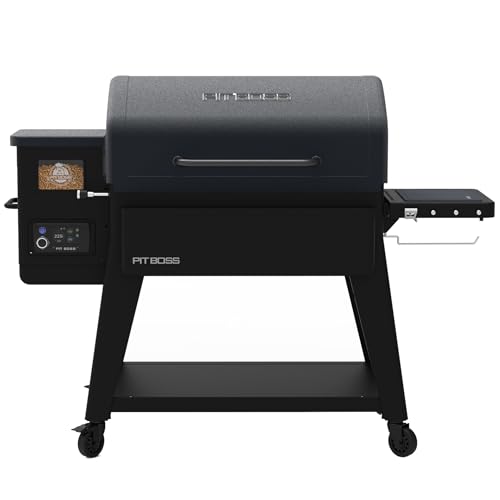
The Pit Boss 1600 Navigator is the pellet answer to commercial volume: 1,593 square inches, a 30 lb hopper and app-connected control in a single unit a small restaurant or large caterer can actually buy on Amazon. For brisket service it offers the combination that matters, namely space for multiple packers plus enough pellet capacity to run overnight without a 3 a.m. refill visit.
Run the numbers before you commit. At commercial volume, pellets are a consumable cost per cover, and the auger and fan are wear parts. Operations that log cooks, clean the burn pot on schedule and keep a spare igniter on the shelf get years from these units; operations that treat them like a gas oven do not.
The Navigator fits the restaurant whose patio or yard is part of the dining room: big connected capacity that also grills, supervised from the pass by phone. It is the volume answer for taprooms and BBQ-led pubs where one pit must smoke the briskets and still turn out grilled items at service.
Strengths
- 1,593 square inches is genuine event and restaurant-patio capacity
- 30 lb hopper supports long unattended brisket cooks
- Flame broiler adds a searing station, so one unit covers smoke and grill menus
Trade-offs
- Pellet cost per cook is a real line item at commercial volume
- Large footprint needs a planned home, not a spare corner
- Moving parts (auger, fan, igniter) mean a maintenance schedule, not set-and-forget ownership
Key specs: 1,593 sq in cook space (per Amazon title); 30 lb hopper; 180–500°F range; WiFi and Bluetooth.
Best for: restaurants, taprooms and caterers needing pellet capacity at scale / Not suited for: tiny kitchens where footprint and pellet storage do not fit.
Check the current price on Amazon for the Pit Boss 1600 Navigator Series Pellet Grill & Smoker.
recteq Flagship 1600 Pellet Smoker Grill — Best Premium Pellet
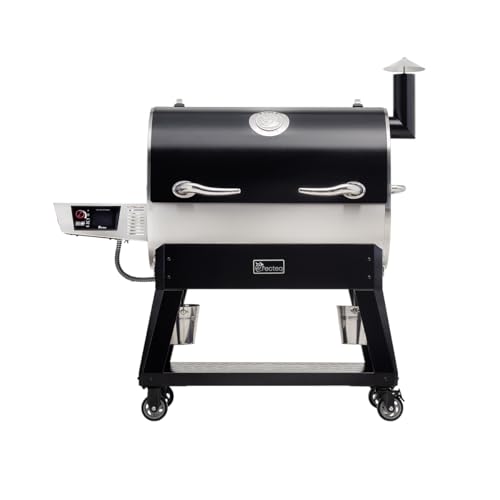
The recteq Flagship 1600 is what pellet smoking looks like when it is aimed at serious volume: 1,667 square inches of cook space and a 40 lb hopper that treats an overnight brisket cook as a normal shift rather than an endurance event. Expert users rate recteq’s temperature stability highly, and stability is the whole game when the same brisket has to come out right forty weekends a year.
For a restaurant, the Flagship’s argument is labour. One connected pit that holds temperature, reports to a phone and carries a full load replaces hours of fire management. The smoke profile is cleaner than an offset’s, so menu writers should sell tenderness and consistency rather than old-school bark.
The Flagship fits the restaurant standardising on pellet quality: one large, stable, connected pit whose results a head chef can specify and any trained cook can reproduce. Its hopper size is a staffing decision as much as a specification, because overnight cooks stop needing a night person.
Strengths
- 1,667 square inches is the biggest cooking area in this roundup
- 40 lb hopper is built for overnight commercial brisket runs
- Wi-Fi monitoring suits a pitmaster who is also running the rest of the kitchen
Trade-offs
- Premium-tier pellet unit, so the business case must rest on volume
- Pellet flavour is clean and mild compared with offset wood smoke
- Size and weight make it a semi-permanent installation
Key specs: 1,667 sq in cook space (per Amazon title); 40 lb hopper; Wi-Fi control.
Best for: high-volume pellet operations and restaurants standardising on one big pit / Not suited for: buyers chasing deep offset-style bark as the signature flavour.
Check the current price on Amazon for the recteq Flagship 1600 Pellet Smoker Grill.

Pit Boss Navigator 3-Series Pellet Vertical Smoker — Best Cabinet Capacity
If a small operation wants one pellet unit to do almost everything, this Navigator vertical is the strongest cabinet argument here: 1,118 square inches over five racks, a 50 lb hopper that laughs at overnight cooks, and a temperature range starting low enough for jerky. WiFi and Bluetooth control let one person supervise the smoke while working the rest of the kitchen.
Its natural commercial role is the production cabinet: ribs in batches, pork shoulders overnight, jerky programmes in the quiet hours. Pair it with any live-fire pit for bark-led specials and you have the two-unit system this guide recommends to almost every small operation.
The Navigator vertical fits the restaurant kitchen that thinks in trays: five racks of ribs, shoulders or jerky on a footprint a line can spare. It is the production cabinet of the pellet world, and its low starting temperature gives a restaurant a jerky and fish programme almost for free.
Strengths
- 50 lb hopper is the largest pellet capacity in this roundup
- Five racks and 1,118 square inches give true batch volume in cabinet form
- Low 130°F starting range opens jerky and fish programmes
Trade-offs
- Cabinet format limits the length of whole cuts you can lay flat
- Pellet consumption at full commercial loads is a weekly cost to budget
- Needs dry pellet storage close to the pit
Key specs: 1,118 sq in, 5 racks (per Amazon title); 50 lb hopper; 130–420°F range; WiFi and Bluetooth.
Best for: small operations wanting one high-capacity connected pellet cabinet / Not suited for: purists who cook only over live wood fire.
Check the current price on Amazon for the Pit Boss Navigator 3-Series Pellet Vertical Smoker.
Cookshack Commercial Electric Smoker (commercial line) — Best Certified-Line Upgrade
Cookshack’s commercial electric line is the reference point the consumer cabinets in this guide are quietly measured against: purpose-built smoke ovens for restaurants, delis and processors who need repeatable batches and low-temperature control. If your business case is built on sausage, bacon and cured products at steady weekly volume, this is the class of machine to spec.
It is written unlinked because the commercial line does not come through a verified Amazon listing. The HAKKA and CLIVIA cabinets in this guide are the Amazon-available stepping stones; Cookshack commercial is the destination many growing smokehouses plan toward.
Cookshack’s commercial line fits the restaurant whose inspector, insurer or volume has outgrown consumer cabinets: a specified, installed, dealer-supported smoke oven. It is the grown-up purchase this guide points to without pretending it can be clicked into a basket.
Strengths
- Commercial electric cabinets built for restaurant and deli duty
- Precise low-temperature control suits sausage and cured programmes
- Long-established name in commercial electric smoking
Trade-offs
- Commercial line is sold direct and via dealers, not through a verified Amazon cooker listing
- Investment tier is commercial, well above consumer cabinets
- Spec and install should be planned with the dealer for your premises
Key specs: Commercial electric cabinet line; sold direct and through dealers.
Best for: delis and smokehouses planning a certified commercial electric installation / Not suited for: buyers who need to order today on Amazon.
The Cookshack Commercial Electric Smoker (commercial line) is sold direct by its maker rather than through Amazon, so there is no Amazon listing to link here; it sits in the premium commercial tier and is quoted per specification.

Masterbuilt 40-inch ThermoTemp Propane Smoker MB20051316 — Best Gas Cabinet
The ThermoTemp is the gas cabinet that behaves most like an oven: set the dial and the burner cycles to hold temperature, which is why restaurants and caterers who cannot staff a fire keep choosing propane cabinets. At 960 square inches it carries real loads, and propane’s independence from the electrical supply suits outdoor catering and market work.
Be clear-eyed about smoke. A chip tray over a gas burner gives a lighter smoke than a wood firebox, so this cabinet suits ribs, poultry and pork where a gentle smoke is a feature. For the rotating-gas question specifically, see the honest discussion in the guide: true rotating gas pits are direct-sale commercial machines, and this Masterbuilt is the closest Amazon-available gas cabinet alternative.
The ThermoTemp fits the restaurant that wants an oven’s manners with a smoker’s output: set the dial, load the chips, and let a gas cabinet carry ribs and poultry while the line does everything else. It is also the natural catering unit, independent of the site’s electrical supply.
Strengths
- Propane heat is steady, cheap to run and independent of electrical supply
- ThermoTemp control holds a set temperature like an oven, easing staff training
- 960 square inches is full cabinet capacity for ribs and shoulders
Trade-offs
- Gas smoke flavour depends entirely on the chip tray, so smoke is lighter than wood fire
- Propane storage and connection checks become part of the safety rota
- Not a rotating or rotisserie unit; racks are static
Key specs: 960 sq in (per Amazon title); propane fuel; thermostat-style analog control.
Best for: caterers and restaurants wanting oven-like gas cabinet control / Not suited for: buyers who specifically need a rotating rack system.
Check the current price on Amazon for the Masterbuilt 40-inch ThermoTemp Propane Smoker MB20051316.
Comparison Table
| Pick | Badge | Key spec | Best for |
|---|---|---|---|
| HAKKA Commercial Electric Smoker DSH-S50B | Best Overall | Vertical cabinet; 8 racks; electric smoke oven format | high-volume sausage, bacon, pastrami and poultry batches in a small commercial kitchen |
| Pit Boss 1600 Navigator Series Pellet Grill & Smoker | Best for High Volume | 1,593 sq in cook space (per Amazon title); 30 lb hopper; 180–500°F range; WiFi and Bluetooth | restaurants, taprooms and caterers needing pellet capacity at scale |
| recteq Flagship 1600 Pellet Smoker Grill | Best Premium Pellet | 1,667 sq in cook space (per Amazon title); 40 lb hopper; Wi-Fi control | high-volume pellet operations and restaurants standardising on one big pit |
| Pit Boss Navigator 3-Series Pellet Vertical Smoker | Best Cabinet Capacity | 1,118 sq in, 5 racks (per Amazon title); 50 lb hopper; 130–420°F range; WiFi and Bluetooth | small operations wanting one high-capacity connected pellet cabinet |
| Cookshack Commercial Electric Smoker (commercial line) | Best Certified-Line Upgrade | Commercial electric cabinet line; sold direct and through dealers | delis and smokehouses planning a certified commercial electric installation |
| Masterbuilt 40-inch ThermoTemp Propane Smoker MB20051316 | Best Gas Cabinet | 960 sq in (per Amazon title); propane fuel; thermostat-style analog control | caterers and restaurants wanting oven-like gas cabinet control |
How to Choose the Best Commercial Restaurant Smokers for a Working Kitchen?
Begin with the menu, item by item, and write the smoked load per service beside each one. Restaurants do not need a smoker; they need a number of briskets, racks, shoulders or kilos of sausage, ready at a set time, every service. That load sheet, not a catalogue, sizes your pit.
Next, walk the space the pit will live in and plan its services: power or gas supply, water for cleaning, pellet or wood storage, ventilation and the route a cook carrying a hot tray will walk. A smoker that fails on any of those practicalities is the wrong smoker however well it cooks.
Electric, Pellet or Gas: Which Fuel Runs a Restaurant Best?
Electric cabinets win on precision and cured products: sausage, bacon, pastrami, fish and jerky programmes where low, steady temperatures and repeatable batches are the product. Pellet pits win on labour: connected control and long hopper runs let one cook supervise smoke alongside other work. Gas cabinets win on oven-like simplicity and independence from electrical capacity, with a lighter smoke as the accepted trade.
Many sound restaurants run two fuels on purpose, a cabinet for production and a pellet or fire pit for the headline barbecue items. Splitting the roles is usually cheaper and more resilient than forcing one machine to be everything.
What Should a Restaurant Check Before Any Smoker Arrives?
Certification and local code come first. Some premises and insurers require listed commercial equipment; if yours does, the unlinked commercial line in this guide is your starting conversation, and consumer cabinets, however capable, are not a shortcut around an inspector.
Then check the unglamorous logistics: door widths on the delivery route, floor loading, drainage for wash-down, and where the ash, grease and pellets actually go. Restaurants are killed by logistics far more often than by smoke flavour.
How Do Restaurants Make a Smoker Pay?
Throughput maths decides it. Cost a cook honestly: protein, fuel, labour hours at the pit and expected yield after trimming and resting. Smoked meats shrink; the yield number, not the raw weight, is what your menu price must carry. Restaurants that log yield per cut quickly learn which smoked items are profit and which are decoration.
Batch rhythm is the second lever. A cabinet that runs a cured programme overnight, unloaded by the morning prep team, earns money while the kitchen sleeps. Scheduling smokers like ovens, on a written weekly rhythm, is what separates a production asset from a hobby with a health permit.
Waste control is the third. Even chamber temperatures, logged cooks and a rest-and-hold routine protect sellable yield. Every burnt brisket corner and dried-out shoulder is margin burned in the pit, which is why evenness features throughout this guide.
Staff systems are the fourth. A one-page cook card per product, times, temperatures, wrap and rest rules, means the smoker produces the restaurant’s brisket, not whichever cook’s brisket. Consistency is what brings a restaurant customer back.
Finally, maintenance is scheduled like prep: burn pots cleaned, cabinets wiped, seals checked, probes calibrated. A smoker that fails on a Saturday service costs more in one night than a year of rota cleaning.
How to Set Up a Restaurant Smoker Station That Passes Inspection and Service
Position the smoker where its heat, smoke and cleaning water are all planned, not improvised: ventilation considered, clearances respected, and a clear, short route for hot trays that does not cross the dish pit or the pass at service height.
Create the station kit before the first cook: probe thermometers with a calibration routine, heat-safe trays and gloves, a metal ash container, cleaning chemicals approved for food premises, and the log book or tablet that will hold every cook record.
Write the cook cards next, one per product, with load size, temperature, timing checks, wrap and rest rules and the safe holding temperature for service. Train two people per card, minimum, so holidays and sickness never orphan the pit.
Run rehearsal services. Cook the full menu load twice without customers, log everything, cost the yield, and adjust the cards. The first time a new station meets a full ticket rail should not be the first time it has cooked a full load.
Close the loop weekly: review logs, yields and any temperature excursions with the team, and put the smoker’s cleaning and seal checks on the same rota as the ovens. A restaurant smoker is production equipment; run it like production equipment.
Add a documentation habit to the station from day one: photograph each new product’s correct load arrangement and keep the picture with its cook card. Restaurants train visually, turnover is real, and a photograph of the right rack layout prevents the crowded, uneven batch that a paragraph of text might not.
And build the failure drill: what the team does if the smoker faults mid-cook, which oven takes the load, who calls the service contact. A written two-line drill turns a Saturday emergency into a story the team tells calmly afterwards.
After the first month of service, hold a station review with the whole team: what the logs say, what the customers said, what the cleaning rota missed. Adjust one thing, a timing, a load size, a card’s wording, and write the change on the card itself so the station’s paper matches its practice.
Keep the supplier and service contacts on the station card, with the model numbers. The middle of a fault is the worst moment to hunt for a serial plate, and restaurants that prepare the card in calm weeks solve their emergencies in minutes.
Common Buying Mistakes
Buying for the grand opening menu instead of the Tuesday menu is the classic restaurant error. Size for repeatable weekly load, and let specials rent capacity from a second unit later.
Ignoring certification is the expensive error. If your inspector or insurer requires listed commercial equipment, a consumer cabinet is not a saving; it is a removal order waiting to happen. The third error is staffing: a smoker with no trained owner on the rota becomes the most expensive shelf in the kitchen.
Finally, restaurants underestimate cleaning. Smoke cabinets build grease and creosote; without a rota they become a hygiene finding and a fire risk. Budget the cleaning labour when you budget the pit.
How Do Restaurants Schedule Smokers Across a Week?
The weekly smoker schedule is written like an oven schedule, because that is what a restaurant smoker is. Cured and long products take the overnight and early slots, loaded by one shift and unloaded by another, with the handover written in the log rather than shouted across a pass. Service-day items are timed backwards from the first ticket, with the hold built in.
Batch days cluster by product family: sausage and bacon together, fish on its own day for flavour discipline, brisket on the days its service justifies. Clustering protects flavour, simplifies cleaning between unlike products, and lets purchasing order in smoker-sized quantities instead of daily dribbles.
Cleaning sits inside the schedule, not after it: cabinets wiped and seals checked on the quiet morning, pellet burn pots on their fixed day, ash and grease routes before the weekend load. A schedule that omits cleaning is a schedule for a breakdown.
The schedule also protects the team. Smokers fail socially before they fail mechanically, when one person becomes the only human who knows the pit. Two trained names per product, rotated through the schedule, is the restaurant version of a spare part.
Review the schedule monthly against the sales mix. Menus drift, and the smoker plan should drift with them: the pit that was bought for brisket may be earning its keep on jerky by spring, and the schedule should say so honestly.
What Does a Restaurant Smoker Cost to Run Per Service?
Fuel is the visible cost and rarely the largest. Pellet restaurants feel it most directly, bag by bag, which is why the big-hopper models in this guide matter: fewer mid-cook interventions and steadier consumption. Electric cabinets convert their cost into the electricity bill, where it hides, so log the hours if you want the truth.
Labour is the real number. A cabinet that runs unattended costs minutes per batch; a fire pit costs a person’s shift. Restaurants that price smoked items without the pit labour are donating margin, and the donation is largest exactly on the most popular items.
Yield is the third cost, hiding inside the first two. Every point of yield protected by even heat, a defended rest and a disciplined hold is margin recovered. This is why this guide repeats evenness until it bores: in restaurant maths, evenness is money wearing an apron.
Maintenance and downtime complete the picture. A spare probe, a spare igniter, a seal kit and a cleaning rota cost little across a year; one failed Saturday costs a service. Restaurants buy smokers the way they buy ovens, on total cost across years, and this guide’s picks are framed for that arithmetic.
Finally, waste disposal and cleaning chemicals belong in the costing, small but real. A smoker programme costed whole, fuel, labour, yield, care, can be priced with confidence, and confidence at the till is what the equipment was bought to produce.
How Do Restaurants Train Staff on a New Smoker?
Training starts with the why before the how: what the product should look, smell and slice like when it is right, tasted together from a reference cook. Staff who have tasted the standard can judge a batch; staff who have only read temperatures can only report numbers, and numbers without judgement fail at the first unusual load.
The cook card is the training document: load arrangement with a photograph, temperatures, check times, the wrap and rest rules, and the fault drill, all on one page at the station. New staff cook from the card beside a trained cook twice, then alone once under supervision, then join the rota. The sequence is short, and skipping it is how inconsistency gets hired.
Tasting is scheduled, not spontaneous: the team tastes the smoked range together monthly, including the items each person did not cook. Palates drift individually; the monthly tasting re-centres the room on the house standard and catches a drifting product before a customer does.
Cleaning is trained as cooking’s second half, with the same seriousness and the same names on the rota. A restaurant smoker’s hygiene state is a training outcome, and inspectors can tell the difference between a trained routine and a hopeful one within a minute of opening the door.
Finally, the log is trained as a habit of respect: entries made at the time, in the same format, by whoever cooked. Restaurants discover that the log is where training actually lives, because it is where the house’s knowledge survives its staff turnover.
What Menu Engineering Should Sit Behind a Restaurant Smoker?
Every smoked item should know its job: the traffic builder that brings customers in, the margin carrier that pays for the traffic builder, the retail line that sells beyond the table. A smoker menu engineered with those roles stated can be pruned and priced rationally; a menu of undifferentiated smoked things cannot.
Portion and yield discipline connect the smoker to the till: sliced weights specified, trim destinations priced, the day’s smoked specials sized to the batch rather than the batch stretched to the specials board. The smoker schedule and the menu should be written by the same person in the same sitting.
Seasonality belongs in the plan: game and rich cuts in the cold months, fish and poultry-forward smoking in the warm ones, festival and event batches where the local calendar rewards them. The pit’s year, planned once, prevents the monthly scramble that burns out small teams.
Price smoked items from the batch costing this guide described, reviewed quarterly, and resist discounting the items whose labour is highest. Restaurants that discount their most expensive-to-produce items train customers to bankrupt them politely.
And keep one experimental slot: a rotating special through which new products earn a permanent place or are honourably dropped. The smoker as a test kitchen keeps a restaurant’s menu alive at trivial cost, which is one of the best returns the equipment ever gives.
How Should a Restaurant Handle Smoker Breakdowns and Service Cover?
The breakdown plan is written in the same calm weeks as everything else in this guide, because the middle of a Saturday is the worst moment to invent one. It names the fault drill’s first steps, the service contact with the model numbers, the menu the kitchen can honestly serve with the smoker down, and the person authorised to decide between a repair call and a menu change. Two printed copies, one at the station and one with the duty manager, turn a crisis into a procedure.
Spares are the plan’s hardware: probes, an igniter for pellet and electric units, a seal kit, a chip tray, the small parts whose failure actually stops production. Restaurants discover that smoker breakdowns are rarely dramatic; they are a fifteen-dollar part and a missing spare, repeated across the industry every weekend, and the shelf that prevents them costs less than one lost service’s first hour.
The second unit is the plan’s backbone, which is why this guide’s two-role system matters beyond convenience. A restaurant with a cabinet and a pit can degrade gracefully, serving a reduced smoked menu while the fault is fixed; a restaurant with one heroic machine serves an apology. Redundancy is a menu decision as much as an equipment one.
Communication completes the plan: the team knows within minutes what is not available, the menu board and the booking notes are corrected before customers are promised what the pit cannot produce, and the incident goes in the log with its cause. Restaurants that handle a breakdown this way often lose nothing but a dish; restaurants that improvise lose the room’s trust, which is the expensive part.
Afterwards, the review asks the useful question: was this failure preventable by the rota, the spares shelf or an earlier replacement? Most are, and the plan improves by one line each time, which is how a restaurant’s smoker system becomes quietly, boringly reliable across years.
What Should a Restaurant Smoker Buyer Ask Before Signing Anything?
Ask for the total working price, not the machine price: delivery, placement, any gas or electrical work, commissioning and the first set of consumables, written as one figure. Restaurant equipment budgets bleed in the gap between the catalogue number and the cooking number, and the discipline of one figure protects the rest of the fit-out budget from the smoker’s surprises.
Ask what the first year of ownership consumes: seals, probes, elements or igniters, cleaning materials and service visits, with the maker’s or dealer’s honest list. A smoker whose first year is understood can be costed into the menu from day one; a smoker whose consumables arrive as surprises will be resented by the very team asked to love it.
Ask who answers the phone in month thirteen, and what a call-out costs, and how long parts take for your model. The answer distinguishes equipment bought as a relationship from equipment bought as a parcel, and a restaurant, which cannot pause its Saturdays, should know which it owns before it needs the call.
Ask for the cleaning schedule in writing and time it against your rota. If the honest cleaning labour does not fit the team’s week, the smoker does not fit the restaurant, whatever its cooking area says, because an uncleaned commercial smoker becomes a hygiene and fire problem on a predictable schedule.
And ask the question this guide has asked throughout: which menu, which load, which staff, which inspector does this machine serve in our building? A buyer who can answer those four can sign with confidence; a buyer who cannot should take another week, because the smoker will wait and the wrong one will not forgive.
A Final Word on Buying for a Room Full of Strangers
A restaurant smoker cooks for people the team will never meet, whose only evidence is the plate, and that distance is what makes restaurant buying different from every other kind. The home cook can explain a tough brisket; the restaurant’s brisket explains itself, and it will be believed. Every choice in this guide, the emphasis on repeatability, on evenness, on logs and cards and cleaning rotas, exists because the plate must speak well of a kitchen it cannot introduce.
That is also why the unglamorous questions dominate the expert ones in a restaurant purchase: who cleans it, who else can run it, what happens when it faults, what the inspector will think of it. A restaurant that answers those four honestly can buy almost any well-chosen machine in this list and make it succeed, because the machine will be operated by a system rather than by hope.
Buy the system first in your planning, then let the machine take its place inside it. The restaurants whose smokers earn for a decade are rarely the ones that bought the most impressive pit; they are the ones whose pit, whatever it is, is loaded, logged, cleaned and costed by people who treat it as production equipment with a delicious output.
Final Recommendation
For most small restaurants the HAKKA cabinet is the production backbone to start with, the Pit Boss 1600 or recteq Flagship carries pellet volume, and the Cookshack commercial line is the certified step when code or scale demands it. If your restaurant is deliberately compact, compare Best Commercial Small Smokers and Best Commercial Smokers For Small Operation before you buy floor space you do not have.
Offset flavour has its own dedicated guide at Best Commercial Offset Smokers, brisket programmes are covered in Best Commercial Smokers To Cook Brisket, and rotating equipment is weighed honestly in Best Commercial Rotisserie Smokers.
Shortlist for a final check before you order: HAKKA Commercial Electric Smoker DSH-S50B; Pit Boss 1600 Navigator Series Pellet Grill & Smoker; recteq Flagship 1600 Pellet Smoker Grill; Pit Boss Navigator 3-Series Pellet Vertical Smoker; Masterbuilt 40-inch ThermoTemp Propane Smoker MB20051316. Open each listing, confirm the model name matches the pick above, and check price on Amazon at the moment you buy.
Frequently Asked Questions
Do restaurants need a certified commercial smoker?
It depends on your local code, premises and insurer. Some require listed commercial equipment; others accept consumer units in defined settings. Ask your inspector and insurer before buying, because the answer decides which half of this guide applies to you.
Which smoker type is easiest for restaurant staff to run?
Electric and pellet cabinets are the easiest to train, because temperature is set digitally and cooks can be logged and repeated. Gas cabinets are a close second. Live-fire offsets need a dedicated, skilled fire tender.
How many smokers does a small restaurant need?
Usually two roles rather than two identical units: a production cabinet for batch and cured work, and a pellet or fire pit for headline barbecue. That pairing covers most menus with a built-in backup.
Can a pellet grill really handle restaurant volume?
The largest models here, with over 1,500 square inches and 30 to 40 lb hoppers, handle genuine small-restaurant and taproom volume, provided pellet costs and auger maintenance are budgeted as running costs.
How do restaurants keep smoked quality consistent across staff?
Written cook cards, logged temperatures and yields, and two trained people per product. Consistency is a system, not a talented individual.
What is the most common restaurant smoker failure?
Neglected cleaning and seals, followed by a pit bought too small for the menu it must serve. Both are planning failures, not equipment failures.
Can a restaurant smoker also handle vegetables and sides?
Yes, and many do: smoked vegetables, beans and sides share the cabinet at compatible temperatures and add margin to the same fuel. Keep flavour families sensible, fish away from desserts is the classic rule, and log the additions so the schedule stays honest.
How long should a restaurant expect a smoker to last?
Cabinets and pellet pits in daily service are multi-year equipment when cleaned and maintained on a rota; burn pots, seals, elements and igniters are consumables within that life. Fabricator and certified commercial lines are the decade-scale purchases.
Can one smoker serve both a restaurant and its catering arm?
Yes, if the schedule is written as one system: restaurant production on its days, catering batches timed around it, and the log showing both. The strain appears when catering grows silently inside restaurant capacity, so review the schedule monthly and let catering’s success argue for the second unit it has earned.
Do restaurant smokers need a water pan or added humidity?
Many cabinet and bullet designs use water pans to stabilise temperature and add humidity, and restaurants use them as designed. What matters commercially is consistency: whatever humidity method the house chooses is written on the card and repeated, rather than improvised per cook.
How smoky will a restaurant smoker make the neighbourhood?
Managed clean fires and cabinets produce modest, pleasant smoke; dirty fires produce complaints. Siting, stack direction, firing times and clean-burning discipline are the controls, and a short conversation with neighbours before opening is worth more than any filter afterwards.

