Disclosure: airfryerkitchensupply.com is reader-supported. When you buy through links on our site, we may earn an affiliate commission at no extra cost to you.
Where to buy
Flavor is a claim any brand can print on a box, so this list was built differently: every machine below was verified against Amazon’s catalog data, and every one earns its place through brewing fundamentals — temperature, saturation, control — rather than marketing. Check the listing for the current price and confirm the carafe configuration, since several of these brewers sell in glass and thermal versions.
- Fellow Aiden Precision Coffee Maker — Best Overall for Flavor: check price on Amazon
- Technivorm Moccamaster KBGV Select — Best Classic Brewer: check price on Amazon
- Bonavita Enthusiast 8-Cup Coffee Brewer (Thermal) — Best Thermal Carafe: check price on Amazon
- Breville Precision Brewer BDC400 — Best for Custom Control: check price on Amazon
- Café Specialty Drip Coffee Maker — Best Smart Pick for Flavor: check price on Amazon
- Chemex Ottomatic Coffee Maker Set — Best Pour-Over Character: check price on Amazon
The best coffee makers for flavor are not the ones with the most buttons. Flavor in drip coffee comes from a short list of physical things done right: water delivered at the proper temperature and held there, grounds saturated evenly instead of tunneled through, a bloom pause for fresh beans, and a carafe that does not cook the finished pot while you drink it. The six machines in this guide are the ones that treat those fundamentals as the product — from a smart precision brewer that lets you program the extraction itself, to an automatic pour-over that makes one thing beautifully.
This guide assumes you already buy decent beans, or are ready to. No machine rescues stale coffee, and we will say so plainly where it matters. What a flavor-first brewer does is stop being the bottleneck: it gets out of the way of good coffee and lets differences between roasts, origins and grinds actually show up in the cup. If you have ever wondered why the same beans taste better at a good café than at home, the answer is almost always in the list of fundamentals above — and in these machines.
Expect to pay more than the supermarket tier. Precision heaters, real shower heads and thermal carafes cost money, and the honest floor for genuinely better drip coffee sits in the mid tier. What you get for it is repeatability: the same sweet cup on a Tuesday as on a slow Sunday, and the ability to taste what you paid for when you buy a special bag of beans.
In this guide
Quick Picks
Best Overall for Flavor — Fellow Aiden Precision Coffee Maker: a precision smart brewer with programmable brew profiles, guided recipes, a cold brew preset and app scheduling — the most control over extraction in this guide.
Best Classic Brewer — Technivorm Moccamaster KBGV Select: the decades-proven benchmark: a copper element holding exact temperature, a nine-hole shower arm, and zero electronics between you and a perfect pot.
Best Thermal Carafe — Bonavita Enthusiast 8-Cup Coffee Brewer (Thermal): an SCA-certified 8-cup brewer with pour-over style delivery and a thermal carafe that keeps the pot tasting fresh through a long morning.
Best for Custom Control — Breville Precision Brewer BDC400: a brewer with six modes — Gold, Fast, Strong, Iced, Cold Brew and a fully custom My Brew — plus pour-over adapter compatibility for total extraction control.
Best Smart Pick for Flavor — Café Specialty Drip Coffee Maker: SCA-certified brewing with 185–205°F temperature control, four strength modes and Wi-Fi scheduling — flavor control that fits a connected kitchen.
Best Pour-Over Character — Chemex Ottomatic Coffee Maker Set: an automatic brewer built around the classic Chemex — staged pour-over delivery into the iconic glass carafe, for the cleanest, most delicate cup in this guide.
How These Picks Were Chosen
Selection started from brewing science, not brand lists. Each candidate had to demonstrate — through SCA certification, published temperature performance, or a design with a documented track record — that it holds water in the proper extraction window and distributes it evenly. Machines were then verified one by one against Amazon’s catalog data so that the model, capacity and carafe in this guide match a listing you can actually buy; unverifiable variants were dropped, however famous.
We weighted control where control changes flavor: brew temperature adjustment, bloom/pre-infusion, strength-by-flow settings, and small-batch competence. We discounted control that does not: cosmetic brew modes, colored lights, and apps that merely mirror a timer. Carafe strategy mattered too — thermal carafes scored ahead of warming plates for any machine aimed at people who drink a pot over an hour.
The result deliberately spans philosophies: full automation with programmable recipes (Fellow Aiden), set-and-forget excellence (Moccamaster, Bonavita), deep manual-style control in an automatic body (Breville Precision Brewer), connected convenience on a certified base (Café), and single-method purity (Chemex Ottomatic). Flavor has more than one road; these are the six best-paved ones.
It is worth stating what this process rejected, because flavor marketing is the loudest in coffee. Machines whose ‘flavor’ claim rested on a proprietary pod, a flavor-shot feature or a ‘bold’ button attached to a weak heater were excluded, however popular. So were several handsome machines whose shower heads wet only the center of the basket — a flaw no amount of temperature stability can redeem, because half the grounds never join the brew. The six survivors are not the six most advertised flavor machines; they are the six whose physics we could verify and defend.
The 6 Best Coffee Makers for Flavor

Fellow Aiden Precision Coffee Maker — Best Overall for Flavor
The Aiden is built for the drip drinker who thinks in variables. It lets you program the parameters that actually govern flavor — bloom time, water temperature, pulse pattern — save them as profiles for different coffees, and schedule the whole thing from the app. Batch size flexes from a single cup to a full 10-cup thermal carafe without the usual small-batch penalty, because the brewer adjusts its delivery to the volume. For flavor chasers, it is the first drip machine that behaves like a programmable instrument rather than an appliance with presets.
Strengths
- Programmable profiles control bloom, temperature and pulses per coffee
- Single-cup to 10-cup range without weak small batches
- Thermal carafe and a genuine cold brew preset extend its range
Trade-offs
- Premium pricing — the most expensive route to a great cup here
- App-and-menu depth is overkill for set-and-forget drinkers
- Newer platform with a shorter long-term track record than Technivorm or Bonavita
| Capacity | 1–10 cups |
| Carafe | Thermal |
| Controls | Programmable profiles, app-enabled scheduling |
| Presets | Includes cold brew preset |
What profiles buy you in practice: a dense Ethiopian light roast gets a longer bloom and hotter water; a chocolatey Brazilian gets a gentler curve; the machine remembers both. That is the workflow specialty cafés use, translated to a countertop. Guided mode walks beginners through dialing in a new bag, which quietly teaches the fundamentals while it brews.
The Aiden earns Best Overall here because it has the highest flavor ceiling in the guide and the scheduling to make that ceiling a weekday reality. If you will never program anything, its talents are wasted and the Bonavita below is the smarter buy — but for the coffee-curious, this is the machine that grows with your palate.
Aiden’s guided mode deserves emphasis for flavor learners: it interviews you about the coffee — roast level, how it tasted last time — and adjusts the recipe, which is effectively a patient barista encoded in menus. Over a few bags, the machine teaches the relationships between bloom, temperature and taste that this guide describes in words. Few appliances make their owners better at the underlying craft; the Aiden is designed to, and that may be its most durable advantage over rivals that merely perform.
Best for: coffee enthusiasts who want café-style control over every extraction variable / Not suited for: anyone who wants one button and no menus, forever
Check on Amazon — check the current price on Amazon before you decide.

Technivorm Moccamaster KBGV Select — Best Classic Brewer
If the Aiden is flavor through control, the Moccamaster is flavor through discipline. Its copper heating element brings water to a stable, proper brewing temperature and keeps it there; its nine-hole shower arm soaks the bed evenly; its manual basket lever lets you bloom and adjust flow by hand. There is nothing to program because there is nothing to fix — the machine simply performs the fundamentals at a level most brewers never reach, and it has done so, in essentially this form, for decades.
Strengths
- Temperature stability that makes every roast taste like itself
- Manual drip-stop enables bloom and half-pot control by hand
- Repairable, parts-supported design built for a decade-plus of service
Trade-offs
- No timer, no profiles, no app — your routine is the program
- Premium tier price
- Glass carafe on a hot plate; drink the pot reasonably promptly
| Capacity | 10 cups / 40 oz (1.25 L) |
| Model | 53941 KBGV Select |
| Finish | Polished Silver |
| Heating | Copper element |
The KBGV Select’s party trick is invisible: repeatability. Because temperature and distribution never wander, changes you taste are changes you made — a new bean, a finer grind — which makes it the best learning machine in this guide as well as one of the best tasting. Home baristas calibrate their palates on Moccamasters for a reason.
Buy it when you want the flavor question settled permanently and do not need scheduling. It will not wake up before you, but it will also never push a firmware update, discontinue its app, or surprise you. In a category full of churn, that permanence is a flavor feature of its own.
The Moccamaster’s flavor case deepens with bean quality in a way cheaper machines cannot follow. Put a genuinely special coffee through it — a fresh, high-grown lot with distinct character — and the machine’s stability lets the coffee speak in full sentences: the fruit note arrives where it should, the finish stays clean. Lesser brewers blur those distinctions into generic pleasantness. If your bean budget is growing, this is the machine that keeps pace the longest, which is why so many coffee professionals keep one at home.
Best for: purists who want benchmark drip flavor with zero digital fuss / Not suited for: households that need coffee brewed before they wake
Check on Amazon — check the current price on Amazon before you decide.

Bonavita Enthusiast 8-Cup Coffee Brewer (Thermal) — Best Thermal Carafe
Bonavita’s Enthusiast line takes the brand’s certified brewing core and wraps it in a friendlier, more finished machine — and in this thermal version, pairs it with the carafe flavor drinkers should default to. The brewer is SCA certified, delivers water with pour-over intent (a proper bloom-friendly shower over a flat bed), and the insulated carafe then protects the result: no hot plate, no slow stewing, just a pot that tastes at 9:30 the way it did at 8:00.
Strengths
- SCA-certified extraction with pour-over style water delivery
- Thermal carafe preserves flavor for slow-drinking households
- Refined design and stainless panel suit visible counters
Trade-offs
- 8-cup capacity caps entertaining
- Fewer programmable variables than the Aiden or Breville
- Thermal carafe costs more than the glass version of the same brewer
| Capacity | 8 cups |
| Carafe | Thermal |
| Certification | SCA Certified |
| Panel | Stainless steel |
The Enthusiast is the answer for a specific, common person: the one who has graduated from a basic brewer, buys good beans, drinks a pot across a morning, and wants the upgrade to be simple. There is little to configure and nothing to fight; the machine’s opinions about temperature and saturation are correct, and the carafe’s opinion about holding heat without cooking is correct too.
Against the classic BV1900TS it offers a more polished daily experience; against the Aiden it offers peace. In a flavor guide, that combination — certified extraction plus flavor-preserving service — earns it the thermal carafe crown.
The Enthusiast’s thermal carafe changes household behavior in a subtle, valuable way: because the coffee keeps, the household slows down. The second cup is poured when it is wanted, not raced before the plate ruins it, and the pot’s flavor arc stays nearly flat from first cup to last. Tasters consistently underestimate how much of ‘the coffee went downhill’ is actually ‘the holding method went downhill.’ Bonavita simply removed the downhill — and for flavor-focused households that drink across a morning, that removal is the upgrade.
Best for: two-person households that drink one excellent pot slowly / Not suited for: large households or variable-tinkerers
Check on Amazon — check the current price on Amazon before you decide.
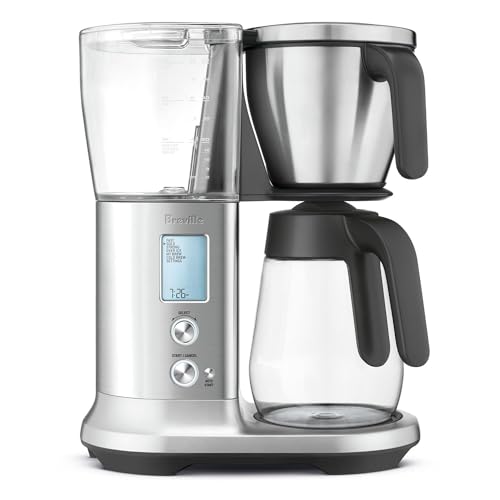
Breville Precision Brewer BDC400 — Best for Custom Control
Breville’s Precision Brewer is the machine for people who read the Aiden’s profile idea and want it with physical presets and pour-over flexibility. Its Gold mode brews to specialty standards automatically; Strong, Fast, Iced and Cold Brew cover the practical range; and My Brew lets you set bloom, temperature and flow yourself. Uniquely here, it also accepts pour-over dripper adapters, so the same machine can drive a dripper-style extraction when you want that character instead.
Strengths
- Six brew modes including a genuinely useful custom setting
- Temperature and flow control rival machines well above its tier
- Pour-over adapter support bridges drip and manual styles
Trade-offs
- Large footprint and a lot of machine for simple routines
- Glass carafe version here; thermal variant costs more
- Menu depth means a learning curve before it disappears into routine
| Capacity | 12 cups (60 oz class) |
| Carafe | Glass |
| Modes | Gold, Fast, Strong, Iced, Cold Brew, My Brew |
| Body | Brushed stainless steel |
The Precision Brewer’s flavor case is range: no other machine here moves from a standards-certified Gold cup to a cold brew batch to a tweaked custom profile without breaking stride. If your household’s coffee habits are plural — drip on weekdays, cold brew in summer, a careful light roast on weekends — it consolidates three appliances into one footprint.
The honest cost is complexity. Every added mode is a decision, and some owners use Gold forever — in which case the Bonavita would have served them as well for less. Buy the Breville when the range will genuinely be used; it is a flavor toolbox, and toolboxes earn their keep through use.
The Precision Brewer’s pour-over compatibility is more than a party trick. A dripper extraction emphasizes clarity and sweetness differently from the machine’s own basket, and being able to run both through one heating system turns a single purchase into a small methods library. Owners who alternate — basket on weekdays, dripper on Sundays — report that the comparison itself sharpens their palate faster than any single method does. It is the flavor hobbyist’s argument for this machine, and it is a good one.
Best for: households with varied coffee habits who love dialing in / Not suited for: one-button drinkers or small counters
Check on Amazon — check the current price on Amazon before you decide.

Café Specialty Drip Coffee Maker — Best Smart Pick for Flavor
The Café Specialty makes the flavor argument in a smart-home accent. Under the connected features sits a certified brewer with two levers that genuinely matter: precise temperature selection across 185–205°F, and four strength profiles. That temperature dial is a real flavor tool — dark roasts smooth out a few degrees cooler, dense light roasts open up at the top of the range — and the Wi-Fi scheduling means the precisely-tuned pot can be waiting when you wake.
Strengths
- True temperature control lets you match extraction to the roast
- Four strength modes cover light to bold preferences
- SCA-certified base with app scheduling on top
Trade-offs
- You pay for design and connectivity as well as brewing
- Glass carafe with warming plate rather than thermal
- App features are only as durable as the platform behind them
| Capacity | 10 cups (1–10 cup settings) |
| Carafe | Glass |
| Temperature range | 185–205°F |
| Connectivity | Wi-Fi, SmartHQ app |
Where the Café wins is the weekday: program the temperature and strength that flatter your house beans, schedule it, and a genuinely tuned pot becomes the default instead of a weekend project. Most ‘smart’ brewers automate a mediocre cup; this one automates a good one, which is the entire difference.
Choose it over the Aiden if your tinkering style is ‘set my preferences once’ rather than ‘build profiles per bag,’ and over the Moccamaster if scheduling is non-negotiable. It is the connected pick that respects the coffee.
Café’s four strength modes repay a closer look, because they are implemented as extraction changes — flow and contact — rather than as a suggestion to add more coffee. That means the ‘light’ mode genuinely produces a gentler extraction of the same dose, useful for a dark roast that turns harsh when pushed, while ‘bold’ coaxes more from a mild bean without doubling the dose. Paired with the temperature dial, the modes give the Café a legitimate claim to being the thinking drinker’s connected machine.
Best for: connected households that want tuned flavor on a schedule / Not suited for: off-grid minimalists or thermal-carafe loyalists
Check on Amazon — check the current price on Amazon before you decide.

Chemex Ottomatic Coffee Maker Set — Best Pour-Over Character
The Ottomatic automates a specific, beloved manual method: the Chemex pour-over, famous for producing an exceptionally clean, sweet, tea-like cup through its thick filters and staged pouring. The machine heats water properly and distributes it in pulses over the Chemex cone, then keeps the finished coffee warm on its plate. If your taste runs toward clarity — light roasts, floral and fruit notes, zero sediment — this is not a compromise machine; it is your method, automated.
Strengths
- Chemex character: unmatched clarity and sweetness in the cup
- Staged spray delivery mimics a careful hand pour
- Includes the 6-cup Chemex carafe; a design icon in its own right
Trade-offs
- Thick Chemex filters are a proprietary, ongoing purchase
- Delicate, lighter-bodied style is not for drinkers who want heavy, oily coffee
- Glass carafe and hot plate demand prompt drinking
| Capacity | 40 oz set |
| Included | 6-cup Chemex carafe |
| Styles | Hot and iced coffee |
| Method | Automatic pour-over |
Every method trades something. Chemex trades body for clarity: the thick filter removes oils and fines that other brewers pass, so what remains is definition — you taste the difference between two Ethiopian lots, not just ‘coffee.’ The Ottomatic’s staged delivery protects that clarity by avoiding the channeling that ruins hand pours on rushed mornings.
It is the specialist of this guide and proud of it. If your palate leans delicate, no amount of Moccamaster consistency substitutes for the Chemex cup. If you love heavy, diner-style richness, look anywhere else on this list — this machine will politely refuse to make that coffee.
The Ottomatic also makes a quietly excellent iced coffee, because the Chemex method’s clarity survives chilling beautifully: brew at double strength over ice in the carafe and the result is bright and defined where cold-steeped coffee can taste muted. It is a second talent that suits the machine’s identity — delicate, precise, a little ceremonial. Owners tend to become evangelists, and while no machine deserves worship, the Chemex cup has converted more tea drinkers to coffee than any other method we know.
Best for: light-roast lovers who prize clarity and sweetness above body / Not suited for: drinkers who want bold, heavy, old-school drip
Check on Amazon — check the current price on Amazon before you decide.
Comparison Table
| Pick | Badge | Key spec | Best for |
|---|---|---|---|
| Fellow Aiden Precision Coffee Maker | Best Overall for Flavor | 1–10 cups, programmable brew profiles, thermal carafe | coffee enthusiasts who want café-style control over every extraction variable |
| Technivorm Moccamaster KBGV Select | Best Classic Brewer | 10-cup / 40 oz, copper element, nine-hole shower arm | purists who want benchmark drip flavor with zero digital fuss |
| Bonavita Enthusiast 8-Cup Coffee Brewer (Thermal) | Best Thermal Carafe | 8-cup thermal, SCA Certified | two-person households that drink one excellent pot slowly |
| Breville Precision Brewer BDC400 | Best for Custom Control | 6 brew modes with custom My Brew, glass carafe | households with varied coffee habits who love dialing in |
| Café Specialty Drip Coffee Maker | Best Smart Pick for Flavor | 185–205°F control, 4 strength modes, Wi-Fi | connected households that want tuned flavor on a schedule |
| Chemex Ottomatic Coffee Maker Set | Best Pour-Over Character | 40 oz automatic pour-over, includes Chemex carafe | light-roast lovers who prize clarity and sweetness above body |
How to Choose a Coffee Maker for Flavor
Flavor shopping starts with a refusal: refuse to compare features before comparing physics. Ask three questions of any brewer. Does its water reach and hold roughly 195–205°F at the grounds? Does its shower head wet the whole bed evenly? Does it give fresh coffee a moment to bloom? A machine that answers yes three times will make good coffee with almost no settings; a machine that answers no will make mediocre coffee with fifty. SCA certification exists precisely to verify the first two answers independently — treat it as the strongest single signal in this category.
Then decide your relationship with control. Some drinkers want the machine to disappear (Moccamaster, Bonavita). Some want to steer (Breville, Aiden). Neither is more ‘serious’ — the serious thing is knowing which you are, because a control-rich machine used on default is just an expensive simple machine, and a simple machine in a tinker’s hands becomes a source of itch. Buy the interface you will actually use on a tired Tuesday.
Last, protect the brewed coffee. Flavor is won or lost after brewing too: a thermal carafe preserves it, a hot plate erodes it, and time defeats both. Match the carafe to your drinking pace and the machine to your beans, in that order.
- Temperature stability and even saturation outrank every feature
- SCA certification is independent proof of the fundamentals
- Buy the control style you will actually use — profiles or one button
- Thermal carafes preserve flavor; hot plates spend it
- Your beans set the ceiling; the brewer only decides how close you get
The Four Variables That Decide Drip Flavor
Temperature is the master variable. Too cool and acids dominate — the cup tastes sour and thin because the sugars and deeper compounds never extracted. Too hot and bitter, ashy notes flood in. The ideal window is narrow, which is why machines with stable heaters or explicit temperature control dominate this guide, and why descaling matters: scale on an element is a slow temperature cut you never asked for.
Saturation is the second variable. Water finds the easiest path through grounds; a poor shower head carves one channel and leaves the rest of the bed dry, so a single cup contains over- and under-extracted coffee at once — bitter and sour simultaneously, the signature of bad drip. Wide shower heads, pulse pouring and bloom pauses all exist to defeat channeling.
Time and ratio complete the picture. Contact time is set by grind size and flow; ratio — roughly 1:16 coffee to water by weight as a starting point — sets strength without touching extraction quality. Flavor-first brewing is mostly the discipline of changing one of these four at a time and tasting honestly.
Matching a Brewer to Your Roast
Light roasts are dense and reluctant to extract; they reward the hottest stable water, a bloom, and machines like the Moccamaster or Aiden that hold temperature through the whole cycle. Their flavors — fruit, florals, bright sweetness — are exactly what even saturation protects. Medium roasts are the forgiving middle: every machine in this guide flatters them, and choice can be made on convenience. Dark roasts extract eagerly and tip into ash and bitterness when bullied; a few degrees cooler (Café, Breville, Aiden), a slightly coarser grind, and prompt drinking off the hot plate keep them smooth and chocolatey.
If your household drinks across the roast spectrum, a temperature-adjustable machine is not a luxury — it is the one feature that keeps every bag tasting like its best self.
Water: The Ingredient Flavor Guides Bury
Coffee is roughly ninety-eight percent water, and yet most flavor discussions spend ninety-eight percent of their time on beans and machines. If your tap water tastes strongly of chlorine, your finest light roast will too. If it is extremely hard, it will mute delicate flavors while scaling your brewer into sourness. The practical middle path for most homes is a carbon filter — pitcher, faucet or fridge — which removes chlorine and off-flavors while keeping the moderate mineral content that extraction actually needs. Every machine in this guide tastes better on filtered water; the difference is largest with the delicate roasts flavor drinkers buy.
Temperature of a different kind also hides here: the serving vessel. A cold, heavy ceramic mug can drop a small serving’s temperature enough to dull it — aromatics are temperature-sensitive, and the cup that smells flat may simply be five degrees cooler than it should be. Pre-warming the mug with hot water while the pot brews is a ten-second ritual that flavor-focused households swear by, and unlike most rituals in coffee, this one is free.
Grind: The Flavor Variable Your Brewer Cannot Fix
Every machine in this guide assumes a partner it cannot control: the grind. Inconsistent particles are flavor chaos — the fines over-extract into bitterness while the boulders under-extract into sourness, in the same cup, and no temperature profile can separate them afterward. This is why flavor households eventually buy a burr grinder, and why the jump from a blade grinder to even an entry burr mill is the single largest flavor upgrade available at any price — larger than any machine swap in this guide.
If a grinder is not in the budget yet, buy coffee from a roaster who grinds to order and use it within two weeks; a fresh, professionally ground bag beats stale home-ground beans from a poor grinder. But plan the grinder. The brewers here — especially the bloom-equipped Bonavita, the manual Moccamaster and the programmable Aiden — are built to reveal grind quality, and they will keep revealing more of it as your grinder improves.
How to Dial In a New Bag of Coffee, Step by Step
A flavor-first brewer rewards a small ritual each time you open a new bag. This dialing-in routine takes three pots at most and turns ‘good machine, random results’ into repeatable excellence.
Step 1: Brew pot one at the standard recipe. Use a 1:16 ratio, a medium grind, and your machine’s default or Gold-style setting. Taste it black and write three words on the bag — for example ‘bright, thin, sweet.’ This baseline pot tells you which direction to move, and the note means you will remember.
Step 2: Read the cup like a diagnostic. Sour, salty or thin means under-extraction: the water did not get enough from the grounds. Bitter, ashy or drying means over-extraction. Balanced but weak means the extraction is fine and the ratio is low — a dosing issue, not a brewing issue. Each fault has a different fix, and confusing them is why home coffee stays random.
Step 3: Change exactly one variable. Under-extracted: grind finer, or raise temperature a few degrees if your machine allows it. Over-extracted: grind coarser or drop the temperature. Weak but balanced: add coffee, keep everything else. One change per pot — two changes and you have learned nothing.
Step 4: Use the bloom for fresh beans. If the bag was roasted within the last two weeks, enable pre-infusion or bloom modes. Fresh grounds release gas that repels water; the pause lets the bed wet evenly. With month-old beans the effect shrinks — one more reason freshness is a flavor feature no machine can add.
Step 5: Lock it in and write it down. When the cup sings, record the winning settings on the bag: grind setting, temperature, mode, ratio. The next bag starts from the baseline again, but your notes accumulate into a personal recipe library — the real difference between coffee hobbyists and coffee drinkers.
Step 6: Keep the machine worthy of the beans. Rinse the carafe and basket daily, wipe the shower head weekly, descale on schedule. Old coffee oils go rancid and scale steals temperature; either one will quietly undo all the dialing-in above.
Three pots of attention per bag is the whole tuition. After a few bags, your hands will know what your palate wants before the first sip — and that, more than any machine in this guide, is what ‘coffee for flavor’ actually means.
Dialing in is a skill disguised as a chore. After a month of small notes and single changes, you will pour a cup, taste it, and know exactly what to adjust — and at that moment the machine stops being the story, which is the highest compliment a flavor brewer can earn.
Common Buying Mistakes
Buying a precision brewer and supermarket beans. The machine is not the ceiling — the beans are. A flavor-first brewer fed stale, low-grade coffee produces precisely extracted stale, low-grade coffee. Budget for fresh beans first; they are the cheapest flavor upgrade in this guide.
Chasing features instead of fundamentals. Shoppers compare screens and modes because they are countable, then drink sour coffee from a weak heater for years. Temperature, saturation, bloom: judge those, and let the feature list break ties.
Changing everything at once. New grind, new ratio, new temperature, new beans — then no idea what fixed or ruined the cup. Dial in one variable at a time, with notes, or accept randomness as your house style.
Leaving the pot on the hot plate. The most common way good brewing gets wasted. An hour on a warming plate will flatten a beautiful pot into diner coffee. Choose thermal, or pour the finished pot into a thermal carafe.
Never cleaning the shower head and basket. Rancid coffee oil is a flavor — a bad one that coats every subsequent pot. The machines here are precision instruments; treat the brew path like one.
Final Recommendation
If flavor is the mission and budget allows one machine, the Fellow Aiden has the highest ceiling in this guide and the scheduling to reach it daily. If you want the flavor question answered permanently with zero digital surface, the Moccamaster remains the benchmark for a reason. Slow-morning households should take the Bonavita Enthusiast’s thermal carafe, tinkerers the Breville’s toolbox, connected kitchens the Café, and clarity lovers the Chemex Ottomatic — a specialist that knows exactly what it is.
Then spend what remains on the input: fresh beans from a roaster whose dates you can read. These six machines share one trait — none of them will be the reason a great bag tastes ordinary. From there, flavor is in your hands, which is where it belonged all along.
One final calibration of expectations, offered in the spirit of the whole guide: no machine here will make coffee taste like a competition pour-over every single morning, because home brewing is a system — beans, water, grind, machine, hands — and the machine is one component among five. What these six brewers guarantee is that the machine will not be the component holding the system back. That is a rarer and more valuable promise than it sounds; most home coffee is limited by exactly that component, silently, for years. Remove the limit, keep the other four components honest, and flavor stops being something you chase and becomes something your kitchen simply does.
Short on time? Start with these three: Fellow Aiden Precision Coffee Maker · Technivorm Moccamaster KBGV Select · Bonavita Enthusiast 8-Cup Coffee Brewer (Thermal).
Best Coffee Makers For Drip Brewing
Best Coffee Makers For Coffee Lovers
Best Coffee Makers For Coffee Snobs
Best Coffee Makers For Home Ground Beans
Best Coffee Makers For Hard Water
Best Coffee Makers For Fewer Cups
Frequently Asked Questions
What actually makes drip coffee taste better — the machine or the beans?
The beans set the ceiling and the machine decides how close you get. Fresh, well-roasted beans in a basic brewer beat stale beans in a precision machine. But once the beans are good, the brewer’s temperature stability and saturation become the limit — which is why this guide exists for people who have already fixed the bean side.
Is SCA certification worth paying for?
It is the most trustworthy shortcut in the category. SCA (Specialty Coffee Association) certification means the brewer was independently tested for temperature, extraction and consistency standards. Several picks here carry it. It does not guarantee you will love the cup — taste is personal — but it guarantees the machine is performing the fundamentals correctly.
Does brew temperature really change flavor that much?
Yes, and it is the easiest variable to taste. A few degrees too cool and coffee turns sour and thin; a few too hot and dark roasts turn ashy. Machines with temperature control (Café, Breville, Aiden in this guide) let you match the roast instead of accepting one fixed point — a genuine flavor tool, not a gimmick.
Why does my coffee taste both bitter and sour at once?
That combination is the signature of uneven extraction — usually channeling, where water carves one path through the grounds and over-extracts it while the rest of the bed stays dry and under-extracted. Fixes: a brewer with a wide shower head, a level grounds bed, a bloom pause for fresh beans, and a grind that is not wildly inconsistent.
Thermal carafe or glass for the best-tasting second cup?
Thermal, decisively, if the second cup comes more than twenty minutes after brewing. A warming plate keeps adding heat and slowly cooks the coffee; a thermal carafe simply holds temperature. Glass is fine for households that finish the pot quickly, and it is cheaper — but for flavor over time, thermal wins.
Can an automatic machine really match pour-over flavor?
The best ones come close, and the Chemex Ottomatic in this guide automates pour-over itself. Automatics now replicate the key pour-over moves — bloom, pulsed delivery, proper temperature — with more consistency than a rushed human. A skilled hand pour still wins on its best day; the machine wins on every weekday morning, which is most of the coffee you will ever drink.
Does a more expensive coffee maker always taste better?
No — price buys control, consistency and build, and only the first two affect the cup, and only when the fundamentals are already right. A certified mid-price brewer like the Bonavita will out-taste an expensive machine with a weak heater every time. Spend first on certification and fundamentals, then on the control features you will genuinely use, and put whatever remains into beans.
How much difference does a bloom phase really make?
With fresh beans, a visible one: the grounds swell, gas escapes, and the subsequent extraction is measurably more even — the cup tastes sweeter and less sharp. With month-old beans there is little gas left to release and the bloom matters far less. The bloom is a freshness amplifier, which is why flavor guides pair it with fresh, home-ground coffee.
Should I rinse paper filters before brewing?
If you are sensitive to papery notes, yes: a ten-second hot-water rinse of the empty filter washes out loose fibers and pre-warms the basket, and flavor-focused drinkers with light roasts do notice the difference. It matters most with unbleached filters and delicate coffees, and least with dark roasts. It costs nothing but a habit — try it for a week and let your palate vote.
Does the carafe material change the taste of coffee?
Fresh coffee tastes the same from glass or steel in the first minutes. The difference is time: glass on a hot plate slowly cooks the pot, adding bitterness by the half hour, while an insulated steel carafe simply holds temperature and leaves the flavor alone. Steel can retain odors if neglected — a weekly soak with coffee cleaner keeps it neutral — and glass wins on visibility. For flavor over a morning, the material matters less than the heat source beneath it: none is best.


