Disclosure: airfryerkitchensupply.com is reader-supported. When you buy through links on our site, we may earn an affiliate commission at no extra cost to you.
Where to buy
All six chairs below were confirmed through our product verification pass and link to their Amazon listings. They are single theater seats and recliners — the building blocks of a home cinema row — spanning budget PU rows, classic living-room recliners, compact and swivel formats, and a fabric option. Check the current price on Amazon for the chair that fits your room, and price your row as a row: the per-chair number times four is the real budget line.
- Homall Recliner Chair, PU Leather — Check the current price on Amazon
- CANMOV Leather Recliner Chair, Nut Brown — Check the current price on Amazon
- Yaheetech Recliner Chair with 3 Adjustable Angles — Check the current price on Amazon
- MCombo Manual Swivel Recliner with Ottoman (9019) — Check the current price on Amazon
- GAOHAPY Swivel Rocker Recliner with Cup Holders — Check the current price on Amazon
- Roundhill Furniture Ardello Manual Recliner, Corduroy — Check the current price on Amazon
The best chairs for a home movie theater are not simply the best recliners. A cinema seat has a specific job: hold an adult comfortably through two or three hours of near-stillness, at a recline angle that matches a screen placed at cinema height, in a finish that survives popcorn, drinks and darkness — and do it as one of a matching set, because a theater is a row, not a chair. This guide’s six picks are the single seats that do that job at every realistic budget and room size, from the purpose-sold theater recliner to the fabric chair for rooms that refuse to look like a cinema.
An honest note about the category’s shape: dedicated theater seating — the connected rows with consoles, power recline and tray tables sold by specialist brands — exists at a substantially higher price tier, and most households building a first theater are better served by matched single recliners like these, arranged in a row with side tables. That is what this guide covers, deliberately. If your project is a dedicated room with a five-figure seating budget, these picks are your value benchmark rather than your shortlist; for everyone else, they are the shortlist.
Before the picks, the one measurement that matters more than any feature: your viewing distance and screen size decide where the row goes, and the chairs’ reclined depth decides how much room the row needs behind that line. Every review below touches its chair’s footprint honestly, and the buying guide gives you the layout math. A theater that fits is a theater that gets used; a grander one that does not fit is a storage problem with a screen.
In this guide
Quick Picks
Six single seats that build a theater — ranked from the purpose-built budget row chair to the fabric anchor, with compact and swivel options for real rooms.
- Homall Recliner Chair, PU Leather — Best Overall. The category’s default answer, and its confirmed listing says why in plain words: it is sold as home theater seating, with lumbar support, in the black PU leather that has become the uniform of the home cinema. — check price on Amazon
- CANMOV Leather Recliner Chair, Nut Brown — Best Classic Look. For the theater room that is also a living room: a classic, traditional recliner in nut brown that looks like furniture by day and reclines into cinema duty by night. — check price on Amazon
- Yaheetech Recliner Chair with 3 Adjustable Angles — Best for Small Rooms. The compact option: a smaller-footprint recliner with three set angles, pocket-spring seating and a black faux-leather finish — theater seating for the spare room, the bedroom cinema and the RV. — check price on Amazon
- MCombo Manual Swivel Recliner with Ottoman (9019) — Best Swivel + Ottoman. A different theater philosophy: a 360-degree swivel recliner on a wooden base with a separate ottoman, so the seat turns to the conversation, the window or the screen as the evening demands. — check price on Amazon
- GAOHAPY Swivel Rocker Recliner with Cup Holders — Best With Cup Holders. Cup holders in the arms and side pockets for the remotes — the small features that separate a chair used for movies from a chair that happens to recline — on a swivel-rocker base. — check price on Amazon
- Roundhill Furniture Ardello Manual Recliner, Corduroy — Best Fabric Finish. The fabric alternative: wide-wale corduroy in black, from a furniture maker rather than a theater brand — for rooms where PU leather’s sheen is the wrong note and a soft, matte seat is the point. — check price on Amazon
How These Picks Were Chosen
Picks were chosen on theater criteria, not recliner criteria alone. Sustained-sitting comfort came first: back height, lumbar support and padding that survives the second hour. Recline geometry second — the chair must lean back enough for a screen at proper height without its occupant sliding or craning. Finish third, judged for a dark room with food: wipe-clean surfaces scored for family rooms, fabric scored for atmosphere and breathability, with the trade stated in each review rather than hidden.
Row practicality ran through every decision: per-chair pricing that keeps a matching set sane, footprints that let real rooms fit real rows, and model longevity — a chair line that will still be sold when you extend the row in two years is worth more than a marginally better orphan. Every product was confirmed through our verification pass against catalog data before being linked, and quoted specifications come from that confirmed data.
Formats were diversified deliberately: the classic row chair, the classic-look living-room recliner, the compact chair for small rooms and RVs, the swivel-and-ottoman for multi-use spaces, the cup-holder chair for accessory sanity, and the corduroy chair for fabric rooms. Excluded: gaming chairs (a neighboring category with an upright posture wrong for cinema), loveseats and sofas (this guide is per-seat theater chairs), and any recliner whose back height could not support a head through a full film.
The 6 Best Chairs for Home Movie Theater
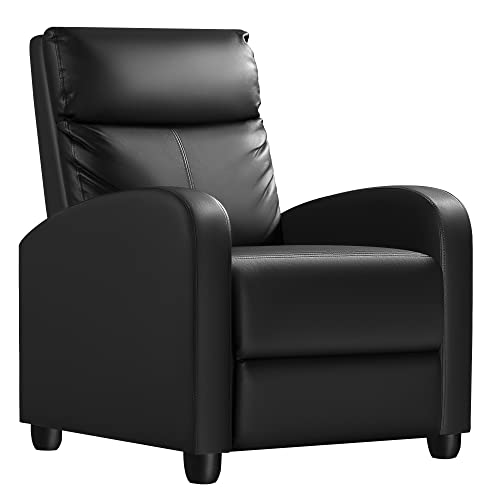
Homall Recliner Chair, PU Leather — Best Overall
Every category has a chair that defines the entry point, and for home movie theater seating it is this Homall. Its confirmed listing positions it directly as home theater seating — not a living-room recliner borrowing the label — and the formula explains the sales: a high back with lumbar support for two-hour sittings, thick padding through the seat and arms, a recline that goes back far enough for a screen mounted at proper height, and PU leather in black, which is what a cinema seat is supposed to look like in a darkened room and which wipes clean after popcorn duty in a way fabric never will.
The honest framing is value engineering. This is a budget-tier chair (check the current price on Amazon) built to deliver the theater experience — posture, recline, look, wipe-clean surface — at a price that lets a normal household buy a row of them, which is the actual home-theater problem: nobody needs one cinema seat, they need four that match. The Homall’s ubiquity is its own feature here; buying a fifth chair in two years to extend the row is a realistic plan with this model in a way it is not with boutique seating.
Strengths
- Purpose-sold as home theater seating, with the high back and lumbar support long sittings require
- PU leather wipes clean after snacks and drinks — the upholstery a cinema room actually needs
- Budget-tier pricing makes a matching row of four or six financially sane
Trade-offs
- PU leather is not leather: it breathes less in summer and its lifespan is years, not decades
- Padding is generous but the frame and mechanism are built to the price — treat the recline lever with respect
- One chair is one seat: no cupholder console or shared armrest ecosystem like dedicated theater rows
| Upholstery | PU leather, black (Amazon title) |
| Positioning | Home theater seating with lumbar support (Amazon title) |
| Type | Manual recliner chair (Amazon title) |
Set up as a row, these chairs want two decisions made well. First, spacing: leave a hand’s width between chairs so the recline mechanisms and arms never argue, and set the row’s distance from the screen by the screen’s size, not by the room’s leftover space — the classic home-theater error is a beautiful row parked at the wrong distance. Second, the floor: recliners on hard floors creep backward over a month of movie nights; a low-pile rug under the row both anchors them and improves the room’s acoustics, a genuine two-for-one in a cinema room.
For the sitting itself, the lumbar support earns its mention in the second hour. Most recliner discomfort in long films arrives as a slumped lower back around the ninety-minute mark; a chair that fills the lumbar curve lets the audience notice the film instead. Pair it with a small side table per pair of chairs — the one accessory this budget format omits — and the row is complete.
Best for: first home-theater rooms, matching rows on a sane budget, and snack-heavy family movie nights / Not suited for: buyers wanting a decade-long leather investment piece or a powered recline
Check on Amazon — check the current price on Amazon, and confirm the size, color and configuration on the listing match what this review describes before ordering.
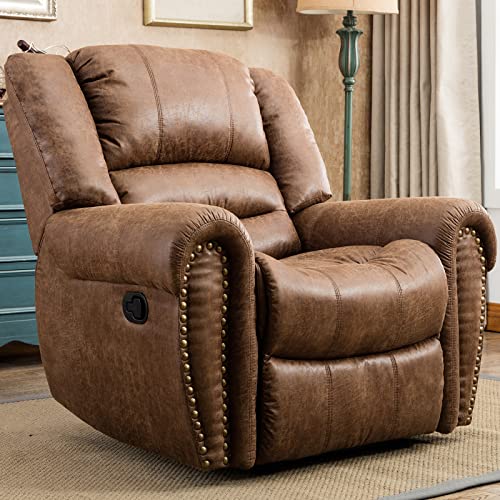
CANMOV Leather Recliner Chair, Nut Brown — Best Classic Look
Not every home movie theater is a dedicated black room. In most houses the cinema is the living room after dark, and the seating has to survive daylight judgment from everyone who uses the room for anything else. The CANMOV is the pick for that double life: a classic, traditional recliner silhouette — rolled, comfortable arms, a proper sofa-chair back — in a nut brown finish that reads as a deliberate furniture choice rather than a piece of cinema equipment that wandered in.
The theater credentials are in the sitting, not the styling: a manual recline with a back and footrest that support the long, leaned-back posture a film demands, and padding through the arms and back sized for adults settling in for two hours. It will not disappear into a black row like the Homall — it is not meant to. It is meant to anchor a room that hosts Sunday football, Tuesday reading and Friday cinema with equal plausibility, and to be the chair everyone quietly prefers.
Strengths
- Traditional styling survives daylight: a living-room chair first, a theater seat on demand
- Nut brown finish warms rooms where a black row would look like a rental cinema
- Full manual recline with padded arms and back built for long sittings
Trade-offs
- Brown leather-look upholstery shows popcorn grease and drink rings more than black PU — coasters are not optional
- A single chair’s classic bulk takes more floor than the theater-format picks; measure the row math carefully
- Manual mechanism only — no power recline or USB-era extras
| Style | Classic and traditional (Amazon title) |
| Color | Nut Brown (Amazon title) |
| Type | Manual recliner, single sofa chair (Amazon title) |
In a dual-purpose room, placement is the compromise that decides everything. Set the CANMOV as the room’s primary seat — centered on the screen, at the distance the screen size dictates — and let the rest of the living room arrange itself around it, rather than the reverse. A theater seat parked off-axis to preserve a conversational layout serves neither conversation nor cinema; the centered chair with a side table and a reading lamp serves both, on different evenings.
Buyers furnishing a row from this pick should know its strength is as a pair of feature seats — the two middle chairs, the ones the owners sit in — flanked by simpler seating for guests. That is how real dual-purpose rooms evolve, and it spends the furniture budget where the household actually sits.
Best for: living rooms that become theaters at night, and buyers who want furniture looks with cinema posture / Not suited for: dedicated blacked-out theater rooms building a uniform row
Check on Amazon — check the current price on Amazon, and confirm the size, color and configuration on the listing match what this review describes before ordering.

Yaheetech Recliner Chair with 3 Adjustable Angles — Best for Small Rooms
Room size is the silent killer of home theater plans, and this Yaheetech is the pick that respects it. Its confirmed listing describes a compact reclining chair — sized for bedrooms, reading rooms and even RVs — with three adjustable backrest angles that cover the postures a small-room cinema actually uses: upright for gaming and conversation, mid for films, and back for the full lean. Pocket springs in the seat give it a more structured, supportive sit than the foam-only budget chairs, which matters in a compact chair where the padding depth is necessarily thinner.
The black faux leather keeps it visually compatible with the Homall row if your theater grows, and the smaller footprint changes the room math everywhere: a pair of these fits the wall that fits one traditional recliner, which in a spare-room cinema is the difference between a two-seat theater and a one-seat compromise. Small rooms also sit closer to the screen, and a compact chair’s shallower depth buys back viewing distance inch by inch.
Strengths
- Compact footprint fits spare-room, bedroom and RV cinemas the full-size picks cannot
- Three set recline angles cover gaming, film and full-lean postures without a fussy mechanism
- Pocket-spring seat sits more supportively than foam-only chairs at this size
Trade-offs
- Compact means compact: tall and broad adults should test the fit mentally against the dimensions before ordering
- Three angles is a menu, not a continuum — your perfect angle may live between settings
- Faux leather at this tier needs the same wipe-clean care and carries the same lifespan expectations as the Homall
| Recline | 3 adjustable angles (Amazon title) |
| Seat | Pocket springs (Amazon title) |
| Upholstery | Faux leather, black (Amazon title) |
| Sizing | Compact — bedroom, reading room, RV (Amazon title) |
Small-room theater is a discipline of inches, and this chair rewards it: mount the screen or place the projector for the chair’s mid-angle eye line, keep the pair’s shared side table narrow, and use the wall behind for a shelf rather than a console the room cannot spare. Done that way, a ten-by-eleven spare room becomes a genuinely good two-seat cinema — the screen size that suits that distance is modest, and modest screens at the right distance beat grand screens at the wrong one every time.
For RV and cabin use, check the door width and the chair’s packed dimensions before falling in love; compact recliners travel through most RV doors, but ‘most’ has ended more than one project. The payoff for the effort is real — a proper reclining seat transforms an RV’s evening hours from dinette endurance into cinema comfort.
Best for: spare-room and bedroom cinemas, RVs, and smaller adults wanting a true recliner that fits / Not suited for: large or tall viewers needing full-size seating, or dedicated rooms with space for a flagship row
Check on Amazon — check the current price on Amazon, and confirm the size, color and configuration on the listing match what this review describes before ordering.

MCombo Manual Swivel Recliner with Ottoman (9019) — Best Swivel + Ottoman
The MCombo challenges the assumption that a theater chair must be a fixed row seat. Its 360-degree swivel on a wooden base means the chair serves the room in every direction — turned to the screen for the film, to the sofa for conversation, to the window for the morning coffee — and the separate ottoman gives the full legs-up recline without a mechanical footrest dictating the chair’s footprint. In a one-chair theater corner, a den or a small living room, that versatility is worth more than row compatibility.
The details in its confirmed listing suit the role: an adjustable backrest, a stated 330 lb capacity that covers most adults with margin, and faux leather in black over a wooden base that looks deliberately designed rather than upholstered-over. The ottoman deserves its own sentence — a separate ottoman can be shared, moved, used as a footstool by the sofa, or banished when the room needs floor space, and that flexibility is exactly what small multi-use rooms run on.
Strengths
- 360° swivel makes one chair serve screen, conversation and window — the multi-use room’s theater seat
- Separate ottoman gives a true legs-up recline and doubles as flexible furniture elsewhere
- Stated 330 lb capacity and an adjustable backrest cover a wide range of adults
Trade-offs
- A swivel chair in a fixed row is a fidget risk — this format suits solo seats and pairs, not disciplined rows
- The ottoman is a separate piece to place, store and keep aligned; minimalists may prefer an integrated footrest
- Wooden swivel base wants a rug or floor protection on delicate hardwood
| Base | 360° swivel, wooden (Amazon title) |
| Capacity | 330 lbs (Amazon title) |
| Configuration | Recliner + ottoman, faux leather (Amazon title) |
The setup that makes this chair sing is the theater corner: screen or projector on the diagonal, the swivel chair at the focal point, the ottoman parked at recline distance, and a small table within arm’s reach. In that arrangement the swivel stops being a novelty and becomes the room’s operating system — every activity rotates through the best seat in the house.
One caution from the format itself: swivel bases and enthusiastic viewers are a known combination, and during action films the chair will drift a few degrees off-axis without the viewer noticing. A rug under the base both protects the floor and adds the friction that keeps the drift honest. Check the base’s bolts after the first month — swivel hardware settles, and a two-minute tighten is the whole maintenance schedule.
Best for: solo theater corners, dens and multi-use rooms where the seat must face more than the screen / Not suited for: fixed cinema rows, or households wanting integrated footrests and zero separate pieces
Check on Amazon — check the current price on Amazon, and confirm the size, color and configuration on the listing match what this review describes before ordering.

GAOHAPY Swivel Rocker Recliner with Cup Holders — Best With Cup Holders
Ask home-theater owners what their seats are missing and the answer is never more recline. It is somewhere to put the drink, the remote, the phone and the glasses case. The GAOHAPY is in this guide because its confirmed listing answers that list directly: cup holders, side pockets, and an explicit home theater positioning, in a black upholstered single seat that also swivels and rocks. The rocking is not a cinema feature — it is the chair’s second life as the household’s comfort seat, and like the MCombo it earns its floor space across the whole day, not just movie night.
The cup holders deserve respect as engineering rather than garnish. A drink on the floor beside a recliner in a dark room is a spill with a countdown timer; a drink in an arm holder is a solved problem. Size-check your cups against the holder diameter if you are a large-tumbler household, and note the side pockets solve the remote archaeology that otherwise opens every movie night — remotes live in the chair, in the dark, findable by touch.
Strengths
- Cup holders and side pockets answer the real accessory list of movie night — drinks and remotes, solved
- Swivel-rocker base gives the chair a daytime life as the house’s comfort seat
- Listing positions it for home theater use, in the black finish a cinema room wants
Trade-offs
- Rocking and swiveling in a row can nudge neighbors — best as end seats or a standalone pair
- Cup holder diameter is fixed; oversized tumblers and bottles may not fit
- Upholstered fabric-style finish needs more spill care than wipe-clean PU
| Extras | Cup holders, side pockets (Amazon title) |
| Base | Swivel rocker (Amazon title) |
| Positioning | Home theater, living room, apartment (Amazon title) |
Place this chair where its features compound: the end of a row, where the swivel lets its occupant turn out for the kitchen run without disturbing the line, and the cup holder serves the seat most likely to host the drink-fetcher. In a pair arrangement, two of these with a shared table between them make the most self-sufficient two-seat cinema in this guide.
The rocker base asks for the same floor sense as the MCombo’s swivel — a rug beneath, both for protection and to keep the chair’s geography stable in the dark. And establish the pocket discipline early: remotes in the pockets, always, or the pockets become archaeology of a different kind by the second month.
Best for: end-of-row seats, pairs, and anyone whose movie night runs on drinks and three remotes / Not suited for: the middle of a disciplined row, or spill-prone households wanting wipe-clean PU
Check on Amazon — check the current price on Amazon, and confirm the size, color and configuration on the listing match what this review describes before ordering.

Roundhill Furniture Ardello Manual Recliner, Corduroy — Best Fabric Finish
Every other pick here wears some form of leather-look finish, and there are rooms — and viewers — for whom that is the wrong answer. Corduroy is the Ardello’s whole argument: a wide-wale cord with a soft, matte, light-absorbing surface that suits a cozy media room’s atmosphere better than shiny PU, breathes against the skin on warm evenings in a way vinyl never will, and comes from Roundhill, a furniture house, with the proportions and finish of a living-room piece rather than cinema equipment. In a dark room, matte fabric also reflects less stray light — a small but real image-quality point that projector owners will appreciate.
The trade is the ancient one between fabric and film nights: corduroy does not wipe clean. Popcorn butter, soda and the mystery stickiness of children’s hands all require actual cleaning rather than a damp cloth, and the guide states that plainly rather than letting the atmosphere argument hide it. Households with young children and open drinks should take the Homall and its conscience-free surface; households of adults, or with a no-drinks-at-the-seats rule that is actually kept, get the better-feeling chair.
Strengths
- Corduroy’s matte, soft surface suits cozy media rooms and absorbs stray light better than PU sheen
- Fabric breathes against skin — the comfortable choice for warm rooms and long summer film nights
- Furniture-maker proportions look at home in a living room, not just a cinema
Trade-offs
- Fabric does not wipe clean — spills are a cleaning event, not a cloth wipe
- Corduroy pile shows wear patterns over years in the seat and arms
- Manual recline only, and no cupholder or pocket extras — bring your own side table
| Upholstery | Wide-wale corduroy, black (Amazon title) |
| Type | Manual recliner (Amazon title) |
| Maker | Roundhill Furniture (Amazon title) |
Style this chair as the room’s anchor rather than a row unit: a pair of Ardellos with a low table between them, a lamp behind for the intermission light, and the screen at the distance their recline dictates. Corduroy rewards texture around it — a wool throw, a matte wall — and the whole arrangement reads as a listening room that shows films, which for many households is a more honest description of the space than ‘home theater’ ever was.
Maintenance is a vacuum with an upholstery tool on the same rhythm as the room’s cleaning, plus prompt blotting of anything spilled — cord pile releases soil better than most fabrics if it is not given a week to set. Scotch-guarding fabric protectors are a legitimate choice here; test on a hidden patch first, as with any upholstery treatment.
Best for: adult households, cozy media rooms and projector setups where matte fabric beats PU sheen / Not suited for: young children with open drinks, or anyone unwilling to clean fabric after spills
Check on Amazon — check the current price on Amazon, and confirm the size, color and configuration on the listing match what this review describes before ordering.
Comparison Table
| Pick | Badge | Key spec | Best for |
|---|---|---|---|
| Homall Recliner Chair, PU Leather | Best Overall | PU leather manual recliner, lumbar support, theater positioning | first home-theater rooms, matching rows on a sane budget, and snack-heavy family movie nights |
| CANMOV Leather Recliner Chair, Nut Brown | Best Classic Look | Classic manual recliner, nut brown, traditional styling | living rooms that become theaters at night, and buyers who want furniture looks with cinema posture |
| Yaheetech Recliner Chair with 3 Adjustable Angles | Best for Small Rooms | Compact recliner, 3 angles, pocket springs, faux leather | spare-room and bedroom cinemas, RVs, and smaller adults wanting a true recliner that fits |
| MCombo Manual Swivel Recliner with Ottoman (9019) | Best Swivel + Ottoman | Swivel recliner + ottoman, wooden base, 330 lb capacity | solo theater corners, dens and multi-use rooms where the seat must face more than the screen |
| GAOHAPY Swivel Rocker Recliner with Cup Holders | Best With Cup Holders | Swivel rocker recliner, cup holders, side pockets | end-of-row seats, pairs, and anyone whose movie night runs on drinks and three remotes |
| Roundhill Furniture Ardello Manual Recliner, Corduroy | Best Fabric Finish | Corduroy manual recliner, black, furniture-maker build | adult households, cozy media rooms and projector setups where matte fabric beats PU sheen |
How to Choose the Best Chairs for a Home Movie Theater
Layout before leather. Decide the screen size and viewing distance first — the row belongs where the image dictates, typically with eyes at a distance of roughly one to one-and-a-half times the screen’s width for modern displays — then measure the chairs’ fully reclined depth and add clearance behind for the back’s travel and in front for extended footrests. Wall-hugger mechanisms exist for tight rooms; standard recliners need their space honestly. The number of projects ruined by a row that reclines into the back wall is beyond counting, and every one of them was measurable in advance.
Then choose the row’s composition. Uniform rows look cinematic and simplify buying; mixed rows — two feature seats in the middle, simpler seats at the ends — match how households actually sit. Either way, keep the finish family consistent (all black PU, or all fabric) so the row reads as a set in the dark, where it will mostly be seen.
Seat width is the quiet third measurement. Theater-format chairs run narrower than living-room recliners, which is how a four-seat row fits a wall that holds three traditional chairs — but narrower seats are a real compromise for broad viewers and for anyone whose film posture involves a child, a dog or a sprawling blanket arrangement. Check the seat width in the listing dimensions against the household’s actual widest sitter, and if the numbers are close, promote that viewer to the wider classic pick and let the row mix widths while keeping its finish unified. Comfort is the product; the row’s symmetry is only its packaging.
Manual vs. power recline, and other feature honesty
All six picks here are manual recliners, and that is a considered position rather than a limitation of the budget. Manual mechanisms are lighter, cheaper, repairable and immune to the dead-battery, failed-motor and where-is-the-outlet problems of powered rows; they also recline in set positions or by body weight, which suits a film’s set-and-forget posture. Power recline earns its premium in two cases: viewers with mobility limitations, for whom a button replaces real physical effort, and dedicated rooms where the budget absorbs it across a full row. Buy power for a reason, not for a spec sheet.
Cup holders, pockets and USB ports follow the same rule. The GAOHAPY’s holders and pockets solve real problems in place; the other picks solve them with a side table, which also holds the popcorn bowl no armrest ever will. Price the table-inclusive version of the simple chairs before concluding the featured chair is better value.
Upholstery: PU, faux leather and fabric in a dark room with food
PU and faux leather are the cinema finishes for a reason: they wipe clean, they look right in black, and they tolerate the dark room’s snack economy. Their costs are breathability — a warm back on a summer night — and lifespan: expect years of good service, not decades, and expect the surface to age faster in the seat and arms. Fabric, like the Ardello’s corduroy, inverts the trade: breathable, matte, atmospheric, and a commitment to cleaning up after every spill like an adult. Leather proper sits above this guide’s price focus; buyers at that tier should apply the same layout math and expect the finish question to answer itself.
The Room Around the Chairs
Chairs are the biggest line in a theater budget and not the only one that decides whether the room works. Sound is the second: a rug under the row, soft furnishings, and speakers placed for the row’s actual position do more for a film than a screen upgrade at this level. Light is the third: blackout control for daytime viewing and a dim, warm intermission light that does not live in anyone’s eyes. None of this needs to arrive at once — the virtue of the single-chair row is that the room can grow seat by seat and layer by layer, starting with the two chairs the household uses nightly.
Plan the row’s growth when you buy the first chairs: same model, same finish, and a note of the exact listing, so the extension chairs match. The Homall’s longevity in the market is the extreme example of why this matters; orphan chairs are the tax on buying the exotic option first.
A word on risers, because multi-row rooms ask about them constantly: a second row needs elevation to see over the first — roughly a foot of platform for typical chair and screen geometry — and a platform changes the reclined-depth math for both rows. Build the riser as furniture, carpet it, and leave its front edge clear of the first row’s footrest travel. Single-row rooms, which are most home theaters and all of the rooms this guide’s picks serve best, can skip the entire subject with a clear conscience: one row, perfectly placed, beats two rows compromised by a ceiling that was never tall enough for the plan.
How to Set Up a Home Theater Row That Actually Works
Ninety minutes of layout work before the first film decides whether the room delights for years or nags forever. Work in this order.
- Set the screen first, permanently. Mount or place the screen at its final height — center roughly at the eye line of a reclined viewer — before any chair is positioned. Every later measurement depends on this one being fixed and honest.
- Mark the viewing distance on the floor. Tape the row’s eye line at the distance your screen size dictates. Sit in a kitchen chair on that line and watch ten minutes of anything; if your eyes tire or the image swims, adjust now, while it is still tape.
- Place chairs at full recline, then measure the clearances. Recline every chair fully in position. Check the back’s travel against the wall, the footrest’s reach against the row or screen wall in front, and the walkways at both ends. This is the step that prevents the classic collision.
- Anchor the row on a rug. A low-pile rug under the whole row stops recliner creep, protects the floor from swivel and rocker bases, and measurably calms the room’s echoes. Size it to catch every chair’s feet.
- Give every seat a surface. Side tables between pairs, or per chair: a drink, the remotes and a bowl need a home that is not the floor and not a lap. This is the accessory decision that most changes how the room feels in use.
- Set the intermission light. One dim, warm light source behind or beside the row — never in front — for pauses, arrivals and the search for dropped glasses. Test it from every seat before the first real film night.
Run one full film before declaring the room finished, with a notebook handy. Every theater has one annoyance visible only at minute seventy — a hum, a reflection, a chair that argues with a wall — and the notebook catches it while the fix is still a furniture shuffle rather than a renovation.
Common Buying Mistakes
Buying chairs before fixing the screen position. The row’s distance and the chairs’ recline are functions of the screen. Chairs bought first dictate a layout the image then has to survive.
Ignoring reclined depth. A recliner’s catalog depth is its upright depth. The chair you must fit is the reclined one, plus wall clearance — measure the real thing in position.
Mixing finishes across a row. A black PU chair beside a brown fabric one reads as accident, not eclecticism, in a dark room. Keep the row in one finish family, even across different models.
Forgetting per-seat surfaces. No cup holders and no tables means drinks on the floor in the dark. The spill is scheduled; only its date is unknown.
Spending the whole budget on chairs. A row in a bare, echoing, light-leaking room underwhelms at any price. Hold back for the rug, the blackout and the sound, in that order.
Final Recommendation
For most first theaters, the answer is a row of Homalls: purpose-sold theater seating, wipe-clean, priced so the row is possible. Living-room theaters should take the CANMOV’s classic looks; small rooms and RVs, the Yaheetech; a multi-use corner, the MCombo swivel; drink-and-remote households, the GAOHAPY; and fabric rooms, the corduroy Ardello. Measure the layout before you order any of them — in home theater, the tape measure is the highest-value tool you own.
Keep exploring the same corner of the house with these related guides from this series: Best Projectors For Home Theater Best Soundbars For Home Theater Best Blackout Curtains For Media Rooms Best Recliners For Living Room Best TV Stands For Large Screens
Related guides
Frequently Asked Questions
How many theater chairs should I buy?
Buy for the household’s nightly reality plus your regular guests — for most homes, two to four seats cover nearly every film night, and a row can grow later if the model line persists (one reason longevity features in this guide’s picks). Overflow guests forgive a sofa or a floor cushion; an empty six-seat row taxes the room every day.
How far should the chairs be from the screen?
As a working rule, eyes at roughly one to one-and-a-half times the screen’s width away for modern high-resolution displays — closer for smaller screens’ immersion, farther if anyone finds the image fatiguing. The honest method is the tape-and-test in the setup section: ten minutes in a temporary chair at the taped line tells you more than any formula.
Are manual recliners good enough for a home theater?
For most households, yes — they are lighter, cheaper, repairable and free of motors, batteries and outlet hunts, and a film’s posture is set once and held. Power recline earns its premium for viewers with mobility limitations and for dedicated rooms whose budgets absorb it across a row.
PU leather or fabric for theater seats?
PU and faux leather wipe clean after snacks and suit family rooms; they breathe less and age in years rather than decades. Fabric breathes, looks softer and absorbs stray light, but every spill is a cleaning event. Match the finish to the household’s actual snack discipline, not its aspirations.
Can I mix different chairs in one row?
Yes, if the finish family and seat height stay consistent — two feature seats in the middle flanked by simpler chairs is how many real rooms are built. What reads as a mistake is mixed colors and materials at random. Keep the row visually unified and vary the features, not the look.
What else does a home theater room need besides chairs?
In order of impact after seating: light control (blackout for daytime viewing), a rug (creep, floor protection and acoustics in one), per-seat surfaces for drinks and remotes, and sound placed for the row’s real position. The room can grow layer by layer; the chairs and the layout come first.


