Disclosure: airfryerkitchensupply.com is reader-supported. When you buy through links on our site, we may earn an affiliate commission at no extra cost to you.
Where to buy
All six beach chairs below are sold on Amazon, which is where we recommend ordering: seat heights, positions and pack options are clearly listed, and returns are easy if a chair’s sit feels wrong for your body. Most beachgoers start with our Best Overall pick, the Tommy Bahama Backpack Beach Chair — check price on Amazon. Budget shoppers should see the Coleman Utopia Breeze — check price on Amazon, and shade-seekers the Sport-Brella Beach Chair with Umbrella — check price on Amazon. We do not print fixed prices because they change with seasons and promotions — check the current price on Amazon for the exact model named in each review.
Introduction
The best chairs for beaches share a job description that ordinary folding chairs fail within a week: they must ride to the shore on your back or in one hand, sit low and stable on soft sand, recline far enough for a chapter and a nap, keep a drink and a phone within reach, and survive salt, sun and being hosed down in the driveway — season after season. A camping chair sinks, a patio chair weighs a ton, and a cheap beach chair’s fabric gives up by August. The designs in this guide are the ones beach people actually repurchase: backpack chairs from Tommy Bahama and Rio that carry hands-free, a featherweight Coleman for long walks, a full-length Ostrich chaise for serious tanning, an ultralight Neso for minimalists, and a Sport-Brella with its own umbrella for shade loyalists.
Every pick was verified before receiving a buy link, and we have been honest about the trade-offs that listings gloss over — seat height versus ease of standing up, recline positions versus packed size, featherweight frames versus the solid feel some sitters prefer. Whether your beach day is a two-hundred-metre stroll from the car park or a kilometre trek over dunes, whether you read, nap, supervise toddlers or simply watch the water, there is a chair below matched to the way you actually use a beach.
In this guide
Quick Picks
- Best Overall: Tommy Bahama 5-Position Lay-Flat Backpack Beach Chair — the complete package: pillow, cup holder, storage and hands-free carry. Check price on Amazon
- Best Classic Alternative: Rio Brands 4-Position Lace-Up Backpack Beach Chair — lace-up suspension comfort on an aluminum frame. Check price on Amazon
- Best Budget Lightweight: Coleman Utopia Breeze — just 5.3 pounds with a relaxed low sit and a mesh cup holder. Check price on Amazon
- Best for Tanning: Ostrich Original Chaise Lounge — a full-length 72-inch reclining lounger for front-and-back sun. Check price on Amazon
- Best Ultralight: Neso Beach Chair — a minimalist recliner that folds small and carries anywhere. Check price on Amazon
- Best for Shade: Sport-Brella Beach Chair — its own UPF 50+ adjustable umbrella built in. Check price on Amazon
How These Picks Were Chosen
We judged beach chairs on the full journey, not the showroom sit. Carry came first: weight, folded shape and whether the chair offers backpack straps, because a chair that is miserable to transport gets left at home by the third trip. The sit came second — seat height matched to the sitter (low seats feel beachy but punish knees on the way up), recline range, and fabric that supports rather than hammocks. Beach-specific details mattered next: cup holders that fit real bottles, storage for a phone and book, a pillow or headrest, and materials that tolerate salt water and UV without rotting or rusting in a season. Stability on sand — wide feet and a low centre of gravity — separated the genuine beach designs from camping chairs in disguise. Finally, every product and ASIN was cross-checked, so the chair you order is the chair reviewed, in the colorway named.
The 6 Best Chairs for Beaches
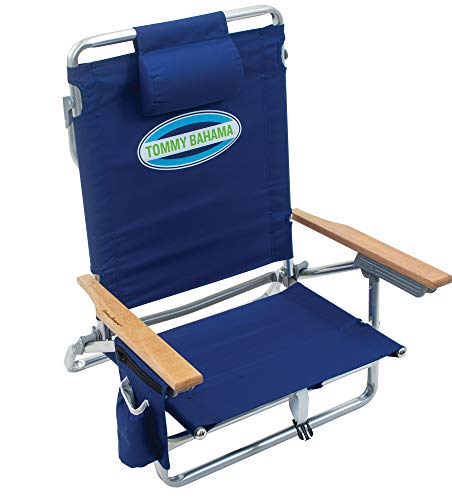
Tommy Bahama 5-Position Lay-Flat Backpack Beach Chair — Best Overall
The Tommy Bahama backpack chair is the default recommendation of experienced beach families, and one sit explains why. It reclines through five positions to fully flat for front-down tanning or a nap, carries on your back with padded straps leaving both hands free for the cooler and the toddler, and packs the details that matter into the frame: an adjustable pillow, a cup holder, and a storage pouch for the phone, book and sunscreen. The 8.5-inch seat height is classic low beach posture — legs stretched toward the water, feet in the sand. Sitters with difficult knees should note that low height and consider the higher Rio Hi-Boy style instead; everyone else will find this the most complete beach chair in the guide.
Strengths
- Five recline positions including fully lay-flat
- Backpack straps for hands-free carrying
- Pillow, cup holder and storage pouch included
Trade-offs
- Low 8.5 in seat is hard on bad knees
- Popular — the best colorways sell out in season
- More chair than a minimalist walker needs
Key specs: 5-position lay-flat recline; 8.5 in seat height; pillow; backpack straps; cup holder; storage pouch; navy.
Season after season, the Tommy Bahama earns its reputation in the unglamorous details. The fabric dries fast and shrugs off sunscreen, the frame resists the rust that kills cheaper chairs, and the backpack carry genuinely changes the logistics of a beach day — one adult can move two chairs, a bag and a board without a second trip. The lay-flat position is not a gimmick: it is how this chair doubles as a tanning lounger and a nap platform, replacing a second piece of gear. If you buy one chair for the beach and use it for a decade, this is the one the smart money buys first.
Best for: most beachgoers and family beach logistics / Not suited for: sitters who need a high seat
Check the current price on Amazon

Rio Brands 4-Position Lace-Up Backpack Beach Chair — Best Classic Alternative
Rio has made beach chairs for generations, and its lace-up backpack model shows the experience: the fabric is suspended on laced cords that flex with your body, giving a supported, slightly cradled sit that many sitters prefer to a flat sling. Four recline positions, an 11-inch seat height — a touch higher and kinder than the Tommy Bahama — a pillow, cup holder and storage pouch on an aluminum frame complete a very complete chair. It suits traditionalists, taller sitters and anyone who finds standard sling seats unsupportive. Like its rival, it carries as a backpack, because at this level that is simply how beach chairs should travel.
Strengths
- Lace-up suspension for a cradled, supportive sit
- Slightly higher 11 in seat — easier to rise from
- Aluminum frame with pillow, cup holder and pouch
Trade-offs
- Four positions rather than five, no full lay-flat
- Lacing needs an occasional tension check
- Classic styling over minimalist looks
Key specs: 4-position recline; 11 in seat height; lace-up suspension; pillow; cup holder; storage pouch; aluminum frame; backpack carry.
The lace-up design is the Rio’s quiet engineering triumph. Where a plain sling stretches into a hammock sag by midsummer, the laced suspension distributes weight and can be re-tensioned, so the chair sits in year three much as it did in week one. The slightly higher seat is a real accessibility difference for grandparents and anyone with a complaining knee — small numbers, big effect at the end of a long beach day. Choose between this and the Tommy Bahama by sit preference and seat height; you cannot go wrong with either, which is why they have shared beaches for decades.
Best for: sitters wanting support and a kinder seat height / Not suited for: devotees of fully flat tanning
Check the current price on Amazon

Coleman Utopia Breeze — Best Budget Lightweight
The Utopia Breeze is the chair for the long walk and the light budget: at just 5.3 pounds, with a low, relaxed sit, a mesh cup holder and a seatback pocket, it covers the beach-chair brief at the friendliest tier in this guide. It suits students, renters, occasional beachgoers and anyone carrying gear for a group — four of these weigh less than two premium chairs. The low design is made for stretching legs toward the water, and the whole thing folds into a slim package that lives happily in a car boot or a rental’s closet. It gives up the pillow, the backpack straps and the lay-flat range of the leaders; what it keeps is the essential sit, at a weight and tier nobody argues with.
Strengths
- Featherweight 5.3 lb carry for long walks
- Relaxed low sit with mesh cup holder
- Friendly tier for outfitting a group
Trade-offs
- No backpack straps or pillow
- Limited recline compared with the leaders
- Low seat challenges stiff knees
Key specs: 5.3 pounds; low design for leg comfort; relaxed back rest; mesh cup holder; seatback pocket.
Coleman’s genius here is knowing what to leave out. Nothing on the Utopia Breeze is luxurious, and everything on it works: the frame is honest, the fabric is tough, the cup holder holds a cup. For the beachgoer who goes six times a summer, or the host equipping a houseful of guests, that calculus beats a premium chair used rarely. It is also the chair least likely to be mourned if a season of salt and sun eventually wins — though owners report it lasting far longer than its tier suggests. Buy it for the walk, keep it for the decade.
Best for: long walks, groups and occasional beachgoers / Not suited for: luxury seekers or high-seat needs
Check the current price on Amazon

Ostrich Original Chaise Lounge — Best for Tanning
The Ostrich is not really a chair — it is a portable chaise, 72 inches long, that lets you lie fully extended facing the sun or flipped for back tanning, which is why tanning devotees treat it as essential equipment. It suits dedicated sunbathers, pool-and-beach loungers and readers who like to stretch out properly rather than perch. The reclining lounger folds for carrying and stays light for its size, and the blue colorway is the classic. It is a specialist: for upright social sitting, group circles and card games, the backpack chairs are better tools, and its length needs a little more sand real estate.
Strengths
- Full-length 72 in chaise for proper lounging
- Reclines for front and back tanning
- Lightweight and portable for its size
Trade-offs
- Less social than an upright chair
- Longer footprint on crowded beaches
- Not the choice for sitting up to supervise toddlers
Key specs: 72 x 22 in portable reclining lounger; for pool and beach tanning; lightweight; blue.
Tanning in a sitting chair is a compromise the Ostrich simply removes. Lying flat and supported, you tan evenly, read at a civilized angle in its reclined positions, and nap without the chair-shaped kink in your back. Beach regulars pair it with an upright chair — chaise for the sun hours, chair for the social hours — and consider the pair a complete beach furniture set that still carries in one trip. If your beach day is primarily horizontal, buy the tool designed for it.
Best for: tanners, loungers and serious readers / Not suited for: upright group sitting
Check the current price on Amazon

Neso Beach Chair — Best Ultralight
Neso built its name on minimalist beach gear, and its chair follows the philosophy: a lightweight, portable, foldable recliner that disappears into a small carry and reappears as a comfortable low sit wherever you land. It suits walkers, cyclists, train-to-the-beach city dwellers and anyone whose beach kit must fit a small car or a smaller closet. The recliner format keeps a proper lean-back for reading and watching the water. Ultralight design means fewer furniture comforts — this is an honest, well-made minimum rather than a padded throne — and heavy-duty sitters should confirm the fit suits them.
Strengths
- Ultralight, compact fold for any journey
- Clean minimalist design from a beach specialist
- Recliner comfort without the bulk
Trade-offs
- Fewer accessories than backpack chairs
- Minimalist padding
- Premium positioning for its simplicity
Key specs: Lightweight, portable, foldable recliner beach chair; for beach, park and camping use.
The Neso’s argument is that the best beach chair is the one that is actually at the beach. Apartment dwellers without storage, cyclists without trailers, and travelers renting small cars all face the same equation, and a chair that folds to almost nothing wins it. Owners pair it with Neso’s shade gear for a complete minimalist camp that one person carries in a single trip. If your beach life is mobile, this is the chair that keeps up.
Best for: minimalists, cyclists and small-space living / Not suited for: sitters wanting maximum padding and features
Check the current price on Amazon

Sport-Brella Beach Chair — Best for Shade
The Sport-Brella chair brings its own weather: an adjustable umbrella with UPF 50+ protection mounted to the chair, so your shade moves when you move and never requires a separate umbrella run back to the car. It suits shade-loyal sitters, parents who station themselves for hours, fair-skinned beachgoers and anyone supervising from one spot while the family roams. The umbrella adjusts as the sun travels, which is the entire battle of beach shade won in advance. It is a bigger carry than an umbrella-less chair, and in high wind any umbrella needs judgment — lower it rather than chase it.
Strengths
- Built-in UPF 50+ adjustable umbrella
- Shade that travels with the chair
- Ideal for stationary, all-day sitting
Trade-offs
- Bulkier carry than a plain chair
- Umbrella needs care in strong wind
- Less suited to constant repositioning
Key specs: Beach chair with UPF 50+ adjustable umbrella; midnight blue.
Shade is the beach amenity everyone underestimates at 10 a.m. and prays for at 2 p.m. The Sport-Brella builds it into the seat you already own, which changes behavior: instead of rationing sun exposure or retreating to the car, you sit comfortably through the whole day, adjusting the canopy as the light moves. For the designated basecamp parent — the one with the bags, the snacks and the best view — it is less a chair than a headquarters. Pair it with sunscreen discipline and it is the healthiest seat on the beach.
Best for: shade seekers, basecamp parents and all-day sitting / Not suited for: windy headlands or minimalist carriers
Check the current price on Amazon
Comparison Table
| Pick | Badge | Key spec | Best for |
|---|---|---|---|
| Tommy Bahama Backpack | Best Overall | 5-position lay-flat, backpack straps, pillow | Most beachgoers |
| Rio Lace-Up Backpack | Best Classic Alternative | Lace-up suspension, 11 in seat, aluminum | Support and easier rising |
| Coleman Utopia Breeze | Best Budget Lightweight | 5.3 lb, low sit, mesh cup holder | Long walks and groups |
| Ostrich Chaise Lounge | Best for Tanning | 72 in full-length reclining lounger | Tanning and lounging |
| Neso Beach Chair | Best Ultralight | Lightweight foldable recliner | Minimalists and travel |
| Sport-Brella with Umbrella | Best for Shade | UPF 50+ adjustable umbrella | All-day shaded sitting |
How to Choose a Chair for the Beach
Start with the carry, because it decides whether the chair gets used. Measure your real journey — car park distance, dunes, stairs, a train — and be honest about who carries what. Backpack chairs exist because hands-free carrying transforms family logistics; ultralights exist because some journeys punish every pound. Next, the sit: try to match seat height to the sitter. Low seats (around 8–9 inches) give the classic legs-out beach posture and suit the young and flexible; seats around 11 inches and above are meaningfully easier to rise from, and for grandparents that difference is the whole purchase. Recline range follows your habits — readers want a good upright-to-mid range, nappers and tanners want flat or near it.
Then audit the beach-specific details. Fabric should be quick-drying and UV-tough; frames should be aluminum or otherwise rust-resistant, because steel beach chairs die by rust from the inside out. Feet should be wide enough not to spear into soft sand. Storage should fit your real kit — a phone, a book, a bottle, sunscreen — and a pillow or headrest is worth more than it photographs, across a six-hour day. Finally, think in pairs and systems: many households end up with two backpack chairs as the core, a chaise for the tanner, and a budget lightweight for guests. Buy the core first, live a season, and let experience specify the rest.
How to Set Up Your Beach Chair for a Full Day of Comfort
Site selection is half the comfort. Pick your spot with the tide line, the wind and the sun’s path in mind — shade moves, and a chair placed for 10 a.m. comfort can be a furnace by two. Level the sand before you unfold: stamp or sweep a flat pad, a little larger than the chair, so the frame sits evenly and does not rock or list as the sand shifts. Angle the chair to the water for the view, then let the recline do the work as the day changes — upright for arrival and coffee, mid-recline for reading, flat for the post-lunch hour. Keep the essentials in the chair’s own storage so trips back to the bag are rare, plant drinks in the holder rather than the sand, and re-level once at midday when the sand has settled. At day’s end, shake the chair out over the sand — not the car park — fold it dry if you can, and the whole ritual takes less time than reading this paragraph twice.
Groups should arrange with the same care: a shallow arc facing the water keeps conversation easy and sightlines open for whoever is watching swimmers, with the shade chair at the arc’s end where its umbrella covers the snack station and the youngest children. Leave a walking gap behind the chairs — beach traffic, kite strings and other families will use it, and a camp that respects the beach’s flow gets respected in return. When the day ends, the last person up does the sweep: chairs counted, pockets emptied of shells and phones, sand shaken out where it belongs. Camps that run on these small disciplines are the ones other beachgoers describe, accurately, as having it figured out.
Care and Storage: Making a Beach Chair Last Ten Seasons
Salt and sand are the enemies, and both surrender to a hose. Rinse the chair after beach days — every time in salt water season — paying attention to joints, recline mechanisms and the underside of the frame where sand grinds. Let it dry fully before storing, because a folded damp chair mildews its fabric and freckles its frame in a single forgotten week. Store indoors or under cover, off a damp garage floor. Once a season, work the recline hinges, check lace-up tension on the Rio style, inspect fabric at the stress points where it meets the frame, and tighten anything that has loosened. Chairs cared for this way — and the leaders in this guide are built to reward it — routinely serve a decade; chairs abandoned salty in a trunk serve a summer. The five-minute rinse is the cheapest insurance in beach gear.
Matching the Chair to the Beachgoer
The family logistics officer. You carry everything, so backpack chairs are your fleet: two Tommy Bahamas or Rios move the whole family’s seating in one trip, hands free for the cooler. Add a Coleman for the guest or the teenager who has graduated to carrying their own.
The grandparent. Seat height and stability decide everything. The Rio’s 11-inch seat and supportive lace-up sit, planted on levelled sand with a companion nearby for the first rise of the day, keeps grandparents at the water’s edge where they belong.
The reader. Your chair is a reading room: a good mid-recline, a pillow that stays where you set it, a cup holder for the coffee and storage for the book and glasses. Both backpack leaders serve you; the chaise serves you horizontally.
The toddler supervisor. You sit upright, rise fast and reposition constantly. Choose the lighter upright chairs, skip the chaise, and value a chair that folds in seconds when the action moves to the waterline.
The minimalist traveler. The Neso, full stop — the chair that fits the small car, the train and the rental closet, and still gives you a real recline at the end of the journey.
Seat Height, Recline and Fabric: The Three Specs That Decide Comfort
Seat height is measured from sand to seat, and two inches is a world. Low chairs put you in the beach’s own posture — near the sand, legs long, children at eye level — and they are stable in wind because your weight sits close to the ground. Their cost is paid on standing: the lower the seat, the more the rise is a leg workout. Higher beach chairs trade a little of that grounded feel for accessibility, and for many adults they are simply the correct chair. Recline range is the second spec: count not just the positions but the endpoints — an upright position firm enough for eating and conversation, and, if you nap or tan, a flat or near-flat end of the range. Fabric is the third: sling fabrics should feel taut and supportive, dry fast and resist UV fade; lace-up suspension adds adjustability; padded fabrics add comfort and drying time in equal measure. Judge any chair by those three specs before its color, and you will judge it the way a season will.
The Beach Setup as a System: Chairs, Shade and the One-Trip Rule
Experienced beach families plan around a simple standard: everything moves from car to sand in one trip per adult. The chair is the system’s anchor because it is the bulkiest item, which is why carry design outranks almost every other feature in this guide. Build outward from it: a backpack chair leaves hands for the bag that holds towels and sunscreen; a shade solution — the Sport-Brella’s built-in umbrella, or a separate canopy for a group — decides where the chairs cluster; and the group’s chairs should share a logic, all low for a circle of conversation, or a chaise set apart for the tanner. Renters and beach-house guests inherit the opposite problem — a closet of mismatched chairs — and the fix is the same: choose the best two, level their sand properly, and let the rest stay in the closet. A beach day runs on its seating more than on any other gear; when the chairs are right, everything else is a detail.
Reading Beach Chair Listings Without Being Fooled
Listings in this category reward translation. “Positions” should mean distinct, lockable recline settings — check whether the flattest is truly flat if you tan. Weight claims deserve a glance at what is included: a chair weighed without its pillow and pouch is a chair weighed dishonestly. Capacity and frame material matter more than color names — aluminum and quality steel with real rust protection are the honest options, and any listing vague about its frame is telling you something. Dimensions decide the car boot question, so read folded size against your trunk rather than discovering the answer in the car park. Finally, treat suspiciously identical chairs at wildly different tiers with the skepticism they have earned: this category is full of copies of the leaders in this guide, and the copy’s fabric, hinges and rust protection are where the money went missing. Every pick here is the genuine branded article, verified — in a copycat category, that verification is a feature in itself.
Wind, Tide and Sun: Placing Chairs Like a Local
Locals place chairs by three clocks at once. The tide clock decides distance from the water — arrive at low tide and the sea will visit your chair legs by lunch, so site above the wet-sand line the last tide left behind. The sun clock decides orientation: face the water in the morning and you will rotate all day, so shade owners set their umbrella’s arc for the afternoon, when it matters, and let the morning take care of itself. The wind clock decides comfort and safety together — a chair angled slightly across the breeze keeps sand out of drinks, and anything with an umbrella gets lowered or anchored before the gusts that arrive, reliably, in the late afternoon. None of this requires equipment; it requires watching the beach for two minutes before unfolding, which is the cheapest expertise in this entire guide.
What the Money Buys: Reading the Tiers
Without printing prices, the tiers in this guide divide cleanly. The friendly tier — the Coleman pattern — buys an honest sit and a light carry, with simpler fabrics and fewer positions; for occasional beachgoers it is not a compromise at all, but the correct purchase. The mid tier — the Tommy Bahama and Rio leaders — buys the full system: lay-flat or lace-up comfort engineering, backpack carry, pillows and storage, frames and fabrics built for a decade of seasons. The specialist tier — the Ostrich, Neso and Sport-Brella — buys a single superpower each: full-length lounging, ultralight minimalism, built-in shade. The way to waste money in this category is to buy across purposes: a premium chair for a twice-a-year beachgoer, or a budget chair for a family that beaches forty days a season and will wear it out by the second August. Cost per beach day, like the cost-per-game logic in any seasonal gear, is the honest metric — and by that metric the mid-tier leaders are often the cheapest chairs in this guide.
Children and Beach Chairs: A Practical Note
Adult beach chairs serve children best as supervised furniture, not playground equipment. Set toddlers in low chairs only with an adult beside them — small children tip chairs by climbing, and a recline hinge is no respecter of small fingers, so teach the household rule early: chairs are for sitting, adults work the levers. Older children graduate happily to the lightweight picks, and carrying their own chair is a rite of passage that lightens the family load meaningfully by the second summer. At day’s end, the chair check — folded, shaken out, counted — is a chore children can own completely, and the one that guarantees the full set comes home.
For Beach Houses, Rentals and Guests
Outfitting a property is a different brief from outfitting a family: chairs must survive strangers, storage and seasons of indifferent care. The budget lightweight tier — the Coleman pattern — is the rental standard for good reason: inexpensive to replace, light for guests to carry, and tough enough for a season of use by people who will never rinse anything. Label them, store them dry under cover, and inspect hinges each spring. Hosts who stay in their own property can justify the backpack leaders for the family and keep the lightweights for overflow. Either way, the arithmetic favors buying decent chairs once over disposable chairs annually — the beach house closet full of broken discount chairs is a false economy every owner recognizes and most repeat exactly once.
Troubleshooting: Sinking, Tipping and Mildew
The chair sinks into soft sand. Level and compact a pad of sand first, choose wide-footed designs, and in very soft sand place the chair on a beach mat or towel layer to spread the load. A chair that starts level rarely migrates.
The chair tips when you lean. Low beach chairs are stable by design, so tipping usually means unlevelled sand or a recline hinge not fully engaged. Re-seat the frame, click the recline positively into its notch, and keep the heavy cooler off the armrest.
The fabric smells musty. It was stored damp. Wash or hose the fabric, dry it in full sun, and store it only when bone dry — one careful drying resets the chair, and a dry-storage habit prevents a repeat.
The frame is stiff or gritty at the joints. Sand is in the mechanism. Rinse thoroughly, work the joints under the hose until they run clean, dry, and repeat after every few trips rather than forcing a gritty hinge.
The fabric has sagged by midsummer. On lace-up designs, re-tension the lacing; on sling designs, check that the fabric sleeve sits correctly on the frame. Quality chairs in this guide are built to be maintained back to their first-day sit.
Accessories That Pair With a Good Beach Chair
The right extras multiply a chair’s value without multiplying the carry. A simple sand anchor or a filled sandbag keeps lightweight chairs and umbrellas honest in afternoon gusts. A clip-on side table or a wide-arm cup solution upgrades chairs whose built-in holder is small — though the leaders here mostly solve this themselves. A beach mat under the chairs creates the clean zone that keeps sand out of bags, books and sandwiches, and makes even soft sand feel level. A dry bag for phones and keys lives in the chair’s storage pouch and ends the oldest beach anxiety there is. And a bungee or carry strap that binds two chairs together turns a pair into one balanced load. None of these is essential; all of them are the difference between a chair and a camp, assembled over seasons by people who learned one small lesson per trip.
End-of-Season Storage and Spring Inspection
Give the chairs one proper closing ceremony in autumn: a full rinse, a day of drying in the last good sun, hinges worked and checked, laces tensioned, fabrics inspected for the small tears that are cheap to mend in October and fatal by June. Store them dry, indoors, standing or hung rather than stacked under weight, and the spring opening becomes a pleasure instead of a triage. In spring, unfold everything a week before the first trip: operate every recline, sit in every chair, and order the one replacement part or chair while the season’s stock is full rather than discovering the failure on the first hot Saturday. Ten minutes at each end of the year is the entire maintenance secret behind the decade-long service these chairs are capable of.
Common Buying Mistakes
Bringing a camping chair to the beach. Camp chairs sit high, sink their narrow feet into sand and corrode happily. Beach chairs are low, wide-footed and rust-resistant for a reason.
Ignoring seat height. The difference between an 8.5-inch and an 11-inch seat decides whether a grandparent enjoys the beach or dreads standing up. Match the height to the sitter.
Underestimating the carry. A wonderful chair that is miserable to transport stays home. Weigh the walk before you weigh the features.
Skipping the rinse. Salt left on a frame eats it from inside the joints. A two-minute hose-down after beach days is the difference between one season and ten.
Buying one chair for every job. Tanning, social sitting and shade-sitting are different briefs. A chaise plus an upright chair serves a couple better than two compromises.
Forgetting wind. Lightweight chairs and umbrellas need anchoring or lowering in gusts. A chair that sails down the beach entertains everyone except its owner.
Final Recommendation
A final word on timing: beach chairs are best bought before the season, when every colorway and model in this guide is in stock and the first hot weekend does not find you in a queue for whatever is left. Buy in spring, rinse all summer, store dry in autumn — that rhythm, plus the right chair, is the whole secret. And when the first trip comes, do the full rehearsal at home once: unfold, recline through every position, fold, carry it around the garden on your back. Beach gear should hold no surprises by the time it meets sand, because the beach day itself will provide plenty.
For most people, the Tommy Bahama Backpack Chair is the beach chair to buy: complete, comfortable and built to be carried. Sitters who want more support or an easier rise should take the Rio Lace-Up, walkers and groups the Coleman Utopia Breeze, and tanners the Ostrich Chaise. Minimalists will love the Neso, and all-day shade sitters the Sport-Brella. Match the chair to your carry and your sit, rinse it after every trip, and it will be waiting, season after season, for the first warm Saturday.
Related reading on this site: Best Backpack Beach Chairs · Best Beach Chairs For Seniors · Best Lightweight Beach Chairs · Best Beach Chairs With Umbrellas · Best Camping Chairs
Frequently Asked Questions
What seat height is best for a beach chair?
It depends on the sitter. Low seats around 8–9 inches give the classic relaxed beach posture; seats around 11 inches or higher are much easier to stand up from and suit older sitters or anyone with knee trouble. When buying for a group, the higher seat is the safer default. If you can, sit in the chair before the season — thirty seconds in a shop tells your knees more than any measurement can.
Are backpack beach chairs worth it?
For anyone carrying more than the chair — which is every family — yes. Backpack straps free both hands for coolers, boards and children, and turn a two-trip unload into one. It is the single feature owners praise most after a season. There is a safety dividend too: hands-free carriers can hold a child’s hand on the walk, steady themselves on dune paths and open gates and car doors without setting everything down in the sand — small things that decide whether the journey to the water feels like a holiday or a haulage job.
How do I stop my beach chair rusting?
Choose aluminum or rust-resistant frames, rinse with fresh water after beach days, dry fully before storing, and keep the chair indoors or covered. Salt left sitting in the joints is what kills beach chairs. Pay special attention to the recline mechanism and any point where fabric meets frame, because trapped salty sand works there like slow sandpaper; a chair rinsed at those points after every trip will outlast an unrinsed premium chair several times over.
Can a beach chair double as a camping chair?
On grass and firm ground, a sturdy beach chair works fine at a campsite, though its low sit is less social around a high table. The reverse — camping chairs at the beach — works poorly because of sinking feet and height. The Neso and Rio travel well in both directions. Festivals, picnics and outdoor concerts are the beach chair’s natural second career: the same low, portable, reclining design that serves the shore serves a lawn beautifully, which is one more reason the leaders in this guide earn their keep across the whole summer rather than only on beach days.
What is the best chair for tanning?
A lay-flat design. The Tommy Bahama reclines fully flat for occasional tanning, while the Ostrich Chaise is the dedicated full-length lounger for serious front-and-back sun sessions. Remember shade breaks and sunscreen regardless of the chair.
Judge any chair you are considering by the last hour of the beach day as well as the first: that is when backs are tired, sand is everywhere, the carry back to the car looms, and the difference between a well-designed chair and a cheap one stops being theoretical. The picks in this guide were chosen with that last hour firmly in mind.
How many beach chairs should a family own?
One per regular sitter, plus a lightweight spare for guests is the common pattern. Start with the core chairs your household uses weekly; add specialists — a chaise, a shade chair — after a season shows you what your beach days actually look like. Resist the bulk-buy of identical budget chairs for a whole extended family in year one: sitting preferences and seat-height needs vary more than households expect, and a mixed fleet — two leaders, a lightweight, a specialist — serves real groups better than six of anything.


