Disclosure: airfryerkitchensupply.com is reader-supported. When you buy through links on our site, we may earn an affiliate commission at no extra cost to you.
Where to buy
Shopping for the best bread machines with removable paddle is really shopping for the last five minutes of the knead cycle: the moment you lift the paddle out and let the loaf bake without it. Every pick below is sold on Amazon, each model name links to its listing so you can check price on Amazon, and the reviews distinguish the three different hardware answers to the paddle problem — removable, collapsible, and alert-assisted — because they are not the same feature wearing different names.
- Cuisinart Compact Automatic Bread Maker CBK-110 — check price on Amazon
- Breville Custom Loaf BBM800XL — check price on Amazon
- Hamilton Beach Digital Bread Maker, PFAS-Free Pan, 2 lb — check price on Amazon
- Panasonic SD-R2550 Bread Maker, 20 Presets — check price on Amazon
- Zojirushi Home Bakery Supreme BB-CEC20 — check price on Amazon
- Amazon Basics Programmable Bread Maker, 2 Pound — check price on Amazon
The best bread machines with removable paddle solve the category’s oldest cosmetic crime: the hole. Every standard bread machine kneads with a paddle fixed in the pan, and when the loaf bakes around it, the paddle tears a crater in the base as the bread is removed — a hole that ruins slices, leaks sandwiches and announces ‘machine bread’ to anyone who sees the loaf’s underside. Removing the paddle after the final knead, before the bake, eliminates the hole entirely.
It sounds like a small thing until you have baked a hundred loaves with a hole in every one. The removable-paddle ritual takes under a minute — wait for the machine’s signal or the end of the final knead, flour your fingers, lift the paddle out, gently reshape the dough’s surface, close the lid — and the reward is a loaf with an intact base that slices like bakery bread. Machines differ in how gracefully they support that ritual: some beep to tell you the moment has come, some make the paddle genuinely easy to extract, and one famous design sidesteps removal entirely with a paddle that collapses flat before the bake.
This list contains all three philosophies, labelled honestly. The removable picks let you take the paddle out. The collapsible pick folds its paddle down automatically — no hole, no ritual, no wet fingers. And every pick was also required to be a good bread machine in the ordinary senses: even baking, sensible programs, loaf sizes and crust control that serve a household, because a perfect base on a mediocre loaf is a party trick, not a purchase.
Each product was verified by brand and model against the retailer’s catalog data before receiving a link, and spec boxes quote only what those verified listings confirm. No prices and no ratings are printed here, because both change constantly; the reviews judge paddle design, timing support and loaf quality — the things that decide whether the hole survives in your kitchen.
In this guide
Quick Picks
Six machines, three philosophies of the paddle problem. Badges match the full reviews, and each quick line states the paddle mechanism first — because for this brief, that is the headline feature. Decide which philosophy fits your presence in the kitchen, and the shortlist writes itself before you read a single full review.
- Best Overall — Paddle-Removal Alert: Cuisinart Compact Automatic Bread Maker CBK-110 — a compact 2 lb machine with 12 programs and a paddle-removal alert that beeps at exactly the right moment — the ritual, made foolproof.
- Best Premium — Collapsible Paddle: Breville Custom Loaf BBM800XL — the flagship alternative: a kneading paddle that collapses flat before the bake, so there is no hole and no removal ritual at all.
- Best Budget Removable Paddle: Hamilton Beach Digital Bread Maker, PFAS-Free Pan, 2 lb — a budget-tier machine with 12 settings including gluten-free, a PFAS-free nonstick pan and a removable kneading paddle for hole-free everyday loaves.
- Best for Quiet, Even Baking: Panasonic SD-R2550 Bread Maker, 20 Presets — 20 presets, an advanced temperature sensor and a raisin-and-nut dispenser in Panasonic’s refined loaf platform — with a paddle that lifts out before the bake.
- Best for Traditional Loaf Shape: Zojirushi Home Bakery Supreme BB-CEC20 — the long-running Supreme with cake, jam and dough settings, a 13-hour timer and quick-bake mode — horizontal loaves from a removable-paddle platform.
- Best Entry-Level Pick: Amazon Basics Programmable Bread Maker, 2 Pound — 14 settings including gluten-free options and ExpressBake, an LCD display and a 2 lb nonstick pan — the simplest route into removable-paddle baking.
How These Picks Were Chosen
The first filter was the paddle mechanism itself, examined as hardware: how the paddle attaches, how it releases, whether removal mid-cycle is genuinely practical or theoretically possible, and whether the machine helps you time it. A paddle that requires tools, force or a prayer at the critical moment failed, however good the loaf around it.
The second filter was timing support. The removal window — after the final knead, before the bake — is brief, and machines that signal it with a paddle-removal alert earned a decisive advantage, because a removable paddle you forget to remove is just a standard paddle with extra marketing. Manual-timing machines were included only where the cycle structure makes the window easy to learn.
The third filter was the loaf the paddle serves: even baking, crust control, loaf-size range and program sense. This guide refused to let the tail wag the dog — a machine whose only virtue was its paddle did not make the list.
Cleaning realism was the fourth criterion. Paddles accumulate baked-on dough at the shaft, and a removable paddle’s hidden virtue is that it can be soaked and scrubbed properly — machines whose paddles and pans clean easily scored accordingly, since the ritual must survive contact with a busy Tuesday.
Finally, verification discipline: brand and model cross-checked against catalog data, purchase links only for confirmed products, and spec boxes quoting only confirmed listing titles. Where a listing does not specify paddle details, the review tells you what to confirm rather than inventing a mechanism.
The 6 Best Bread Machines with Removable Paddle
The list opens with the alert-assisted removable pick that makes the ritual foolproof, then the collapsible flagship that abolishes the ritual, then the removable designs across the value tiers. Read the paddle paragraph of each review first; the rest is about the loaf it protects. Every machine here was also required to bake a genuinely good loaf in its own right, because an intact base is a finishing touch — and finishing touches only matter on bread worth finishing.

Cuisinart Compact Automatic Bread Maker CBK-110 — Best Overall — Paddle-Removal Alert
The CBK-110 understands the removable-paddle problem better than machines costing far more, because it solves the human half of it: its paddle-removal alert tells you when the final knead has ended and the paddle should come out. Every other removable design asks you to learn the cycle’s timing and hover; this one beeps. For a feature whose entire value depends on a sixty-second window, that alert is not a garnish — it is the difference between a hole-free loaf every time and a hole-free loaf when you happened to be in the kitchen.
The ritual itself is easy: the paddle lifts out without tools, the dough settles back with a gentle pat, and the bake proceeds around nothing. The resulting loaf has the intact base that makes machine bread presentable — slices that hold a sandwich together, a bottom crust that toasts evenly, a loaf you can give away without apology.
The machine around the paddle is a well-judged compact: 12 programs covering the household repertoire, three loaf sizes and three crust shades, a 13-hour delay for the morning loaf, and a footprint that suits smaller kitchens. Its honest limits are capacity character — this is a compact 2 lb machine, happiest with everyday loaves rather than the heaviest whole-grain constructions — and a mid-range build rather than flagship heft.
Choose it if the paddle is your priority and your loaves are the weekly household kind. It is the pick this guide would hand to the baker who has complained about the hole for years: the alert ends the complaint, and the rest of the machine asks for no compromises worth mentioning.
Its compactness deserves a final word in this context: the removal ritual happens at counter height, in front of you, and a compact machine puts the pan — and the paddle — at a comfortable working angle rather than deep inside a tall appliance. Small ergonomic mercies like that decide whether a ritual survives its hundredth repetition, and this machine is full of them.
Strengths
- Paddle-removal alert times the ritual perfectly, every bake
- Compact footprint with a full household program set
- Three loaf sizes and crust shades cover daily baking
Trade-offs
- Compact build suits everyday loaves over heavy whole-grain work
- Removal still requires you to be home and listening
- Mid-range finish rather than flagship materials
| Specification | Detail |
|---|---|
| Capacity | 2 lb compact |
| Programs | 12 |
| Loaf sizes | 3 |
| Crust | 3 shades |
| Timer | 13-hour delay start |
| Paddle | Paddle-removal alert |
Best for: hole-hating bakers who want the removal ritual made automatic to time / Not suited for: bakers who are never home mid-bake and need a collapsible design instead
Check the current price on Amazon.

Breville Custom Loaf BBM800XL — Best Premium — Collapsible Paddle
The Breville answers the paddle problem by refusing the premise: instead of asking you to remove anything, its kneading paddle collapses flat against the pan before the bake begins. The loaf bakes over a folded paddle, emerges with a base that shows at most a faint outline, and the baker’s involvement in the whole affair is zero. If your life does not contain a reliable mid-bake moment — work, school runs, sleep, via the delay timer — this is not a luxury variation on the theme. It is the only version of the theme that fits your life.
That last point deserves emphasis, because it is the honest dividing line of this entire list: removable paddles only work when someone is present at the end of the final knead. The delay-timer morning loaf, the bake that runs while you are out — those loaves keep their holes in a removable-paddle machine unless you are there. The collapsible paddle protects every loaf, including the unattended ones, and for many households that protection is worth the premium on its own.
Around the paddle sits the flagship package this machine is known for: custom settings for bakers who adjust stage timing, an automatic fruit and nut dispenser that adds mix-ins at the right moment, and brushed stainless build. It is a serious machine for serious bakers, priced accordingly, with a footprint to match.
Choose it when unattended baking is your norm or your ambition, and when the custom-control side of the machine will also be used. Bakers who are always home mid-bake can save the premium and take the Cuisinart’s alert instead — the loaves’ bases will be equally intact, and honesty requires saying so.
Strengths
- Collapsible paddle protects every loaf, even unattended delay-timer bakes
- No removal ritual, wet fingers or timing to learn
- Flagship custom settings and automatic mix-in dispenser
Trade-offs
- Premium tier pricing for the privilege
- Collapsible mechanism is more complex than a simple removable paddle
- Large footprint and serious-baker feature set
| Specification | Detail |
|---|---|
| Model | BBM800XL Custom Loaf |
| Paddle | Collapsible kneading paddle |
| Dispenser | Automatic fruit & nut dispenser |
| Finish | Brushed stainless steel |
Best for: delay-timer and unattended bakers who want hole-free loaves without the ritual / Not suited for: always-home bakers, who get the same base from the alert-assisted pick for less
Check the current price on Amazon.
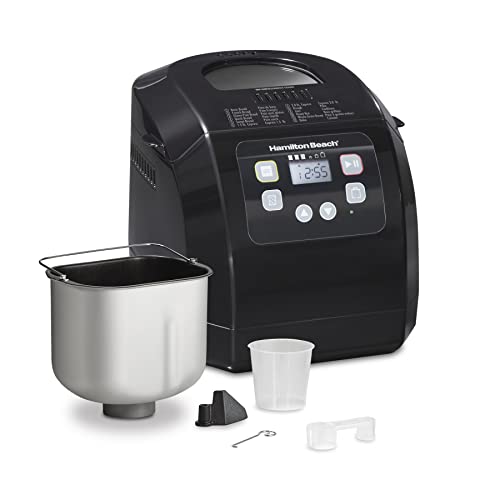
Hamilton Beach Digital Bread Maker, PFAS-Free Pan, 2 lb — Best Budget Removable Paddle
The budget route to a hole-free loaf runs through this Hamilton Beach: a straightforward removable kneading paddle in a machine whose other headline is its PFAS-free nonstick pan — a combination that speaks to the two things budget buyers most often write to guides about. Twelve settings including gluten-free cover the household map, the capacity is the standard 2 lb, and the whole package sits at a tier that makes the experiment of paddle removal cheap to try.
There is no removal alert here, so the ritual is the classic one: learn your main cycle’s shape — the machine’s kneads and rises become familiar within a few bakes — and lift the paddle out after the final knead, a minute’s work with floured fingers. Bakers who bake the same two or three loaves weekly, as most households do, will know the window by heart within a fortnight.
The PFAS-free pan deserves its sentence: bakers who avoid conventional nonstick coatings usually pay premium prices for the privilege, and finding the preference respected at this tier, in a machine that also solves the paddle problem, makes this pick easy to recommend to its audience. The trade-offs are the budget tier’s standard ones — lighter build, plainer controls, less kneading authority for the heaviest doughs.
Choose it to start the hole-free life without a flagship commitment, or as the second machine for a holiday kitchen. If the ritual becomes a religion, the alert-assisted and collapsible picks await; this one will have taught you, inexpensively, whether it does.
Gluten-free bakers should note the fit specifically: gluten-free loaves are fragile, and the paddle tear that merely annoys a wheat loaf can structurally wound a gluten-free one, which has no elastic network to hold the slice together. For that dough, paddle removal is not cosmetic at all — it is the difference between a slice and a crumble, and this is the cheapest machine here that provides it alongside a dedicated gluten-free setting.
Strengths
- Removable paddle and PFAS-free pan at a budget tier
- 12 settings including gluten-free cover the household repertoire
- Simple ritual that regular bakers learn within a few loaves
Trade-offs
- No removal alert — timing is learned, not signalled
- Budget build and kneading limits with heavy doughs
- Plain controls compared with mid-range rivals
| Specification | Detail |
|---|---|
| Capacity | 2 lb |
| Settings | 12, including gluten-free |
| Pan | PFAS-free nonstick pan |
| Paddle | Removable kneading paddle |
Best for: budget bakers wanting hole-free loaves and a PFAS-free pan / Not suited for: unattended bakers who cannot be present for the removal window
Check the current price on Amazon.
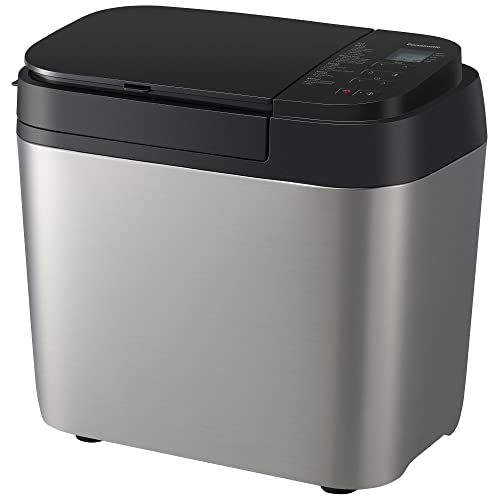
Panasonic SD-R2550 Bread Maker, 20 Presets — Best for Quiet, Even Baking
Panasonic’s bread machines have a cult following built on loaf quality — even colour, fine crumb, a crust with character — and the SD-R2550 carries that tradition with modern help: twenty presets, an advanced temperature sensor that adapts the bake to the room’s conditions, and a raisin-and-nut dispenser for the mix-in loaves. Its kneading paddle removes before the bake in the standard way, so the refined loaf it produces also emerges with its base intact.
The temperature sensor is the detail serious bakers notice: bread machines bake in kitchens that swing between winter cold and summer heat, and a machine that senses and compensates produces a consistent loaf across seasons, where fixed-timing machines drift. For a baker developing household standards — the loaf that must come out the same in January and July — that consistency is the product.
The paddle ritual here is manual-timing, without an alert, so this pick suits the attentive baker rather than the absent one; the dispenser, by contrast, automates the other mid-bake intervention, adding fruit and nuts at the right moment without opening the lid and dumping the heat. Between the two, the machine asks for exactly one attended moment per loaf — the paddle — and handles the rest itself.
Choose it when loaf quality is the obsession and you are reliably home for one brief moment mid-bake. The tier is mid-premium, the reputation is earned, and the hole-free base completes a loaf that was already the list’s most refined.
Panasonic owners tend to become Panasonic owners for life, and the paddle story illustrates why: nothing about the ritual is theatrical, everything about it is considered. The paddle releases cleanly, the pan’s surface lets the dough settle without gripping, and the loaf that results looks like the one in the photographs — which, in this category, is a rarer sentence than it should be.
Strengths
- Temperature sensor keeps loaves consistent across seasons
- Refined, even baking Panasonic is known for
- Dispenser automates mix-ins; paddle removes for an intact base
Trade-offs
- No paddle-removal alert — the moment is yours to catch
- Mid-premium tier pricing
- Twenty presets still require learning the cycle you use
| Specification | Detail |
|---|---|
| Programs | 20 presets |
| Sensor | Advanced temperature sensor |
| Dispenser | Raisin and nut dispenser |
| Modes | Bread, cake and pizza dough, gluten-free baking |
Best for: quality-focused bakers who are home for the removal moment / Not suited for: set-and-forget bakers who want zero attended moments
Check the current price on Amazon.
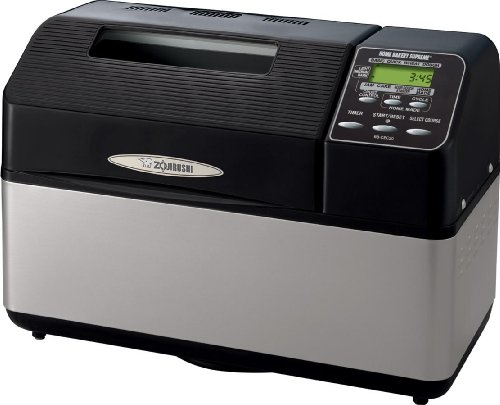
Zojirushi Home Bakery Supreme BB-CEC20 — Best for Traditional Loaf Shape
The Supreme has been the traditionalist’s bread machine for years, and its argument begins with shape: its loaves bake in the horizontal, sandwich-friendly proportions that look like bread from a bakery rather than a tower from a bucket. The kneading blade removes before the bake in the established way, so that traditional profile is completed by an intact base — the full illusion, if illusion is the word, of an oven loaf.
Its settings reflect the traditionalist’s wider kitchen: alongside the bread programs sit cake, jam and dough settings, a 13-hour timer for the scheduled loaf, and a quick-bake mode for the days the bread runs out at noon. This is a machine that expects to be used for the whole baking life of a household, not merely its sandwich loaf, and its long production run means its ways are documented in a decade of bakers’ notebooks.
The paddle ritual is manual — no alert — and the machine’s generation shows in a control style that values clarity over cleverness. Neither fact diminishes it for its audience: bakers who bake the same beloved loaves weekly, who are home for the knead’s end, and who value a platform refined over years above a novel feature list.
Choose it for the shape, the breadth and the track record. In a category that reinvents itself annually, the Supreme’s continuity is itself a feature: the loaf you perfect this year will bake identically in this machine for as long as you own it.
The jam and cake settings close the case for the traditionalist household: the same machine that produces the weekday sandwich loaf — base intact — preserves the summer’s fruit and bakes the emergency cake. Appliances earn counter space by the week, not by the single function, and few machines here work as many days of it.
Strengths
- Traditional horizontal loaf shape with an intact, hole-free base
- Cake, jam and dough settings cover the whole baking household
- Long production history and a refined, proven platform
Trade-offs
- Manual paddle timing with no alert
- Control style is classic rather than modern
- Premium-leaning tier for a previous-generation design
| Specification | Detail |
|---|---|
| Model | BB-CEC20 Home Bakery Supreme |
| Settings | Cake, jam and dough settings |
| Timer | 13-hour delay timer |
| Mode | Quick-bake mode |
Best for: traditionalists wanting bakery-shaped, hole-free loaves / Not suited for: bakers wanting alerts, apps or the newest feature set
Check the current price on Amazon.

Amazon Basics Programmable Bread Maker, 2 Pound — Best Entry-Level Pick
The Amazon Basics machine is the category’s plain-spoken entry point: fourteen settings covering breads, doughs and gluten-free options, an ExpressBake mode for the emergency loaf, an LCD display that keeps the proceedings legible, and a 2 lb nonstick pan whose kneading paddle removes before the bake like the rest of this list. Nothing about it is exotic, and that is the recommendation — the hole-free loaf does not require a flagship, and this machine proves it at an entry tier.
For a first bread machine, its virtues are the right ones: the settings map is complete enough to learn on, the display reduces the beginner’s uncertainty about what the machine is doing and when — which is also how you learn the paddle-removal window — and the price of the education is as low as this category honestly goes. A season with it teaches a baker whether the ritual, and bread machines generally, suit their kitchen.
The limits are the entry tier’s own: build lightness, kneading authority that the heaviest whole-grain doughs will test, and a feature set without alerts, dispensers or collapsible cleverness. The paddle timing is yours to learn, though the display’s stage information makes the learning faster than on dial-only machines.
Choose it as the first machine, the spare machine, or the gift that starts someone else’s baking life. Bakers who catch the obsession will upgrade with knowledge; bakers who do not will have spent the minimum learning that — and both outcomes are this machine doing its job.
As a gift it has a particular logic: it teaches the whole craft — programs, timing, the paddle ritual, the intact base — at a price that asks nothing of the recipient but curiosity. Many baking lives have started with a machine exactly this unassuming, and the loaves it makes in month one are good enough to start one.
Strengths
- Full 14-setting map at an entry tier
- LCD display makes cycle stages — and the paddle window — easy to learn
- ExpressBake covers the emergency loaf
Trade-offs
- No alert, dispenser or collapsible mechanism
- Light build and modest kneading authority
- Basic finish compared with branded mid-range rivals
| Specification | Detail |
|---|---|
| Capacity | 2 lb |
| Settings | 14, including gluten-free options |
| Mode | ExpressBake |
| Display | LCD |
Best for: first-time bread machine buyers on an entry budget / Not suited for: heavy-dough bakers or feature seekers
Check the current price on Amazon.
Comparison Table
| Pick | Badge | Key spec | Best for |
|---|---|---|---|
| Cuisinart Compact Automatic Bread Maker CBK-110 | Best Overall — Paddle-Removal Alert | 12 programs, 3 loaf sizes, 3 crust shades, 13-hour delay, paddle-removal alert | hole-hating bakers who want the removal ritual made automatic to time |
| Breville Custom Loaf BBM800XL | Best Premium — Collapsible Paddle | Collapsible kneading paddle, custom settings, automatic fruit & nut dispenser, brushed stainless | delay-timer and unattended bakers who want hole-free loaves without the ritual |
| Hamilton Beach Digital Bread Maker, PFAS-Free Pan, 2 lb | Best Budget Removable Paddle | 12 settings including gluten-free, PFAS-free nonstick pan, 2 lb capacity, black | budget bakers wanting hole-free loaves and a PFAS-free pan |
| Panasonic SD-R2550 Bread Maker, 20 Presets | Best for Quiet, Even Baking | 20 presets, advanced temperature sensor, raisin & nut dispenser, gluten-free baking | quality-focused bakers who are home for the removal moment |
| Zojirushi Home Bakery Supreme BB-CEC20 | Best for Traditional Loaf Shape | Cake, jam and dough settings, 13-hour timer, quick-bake mode | traditionalists wanting bakery-shaped, hole-free loaves |
| Amazon Basics Programmable Bread Maker, 2 Pound | Best Entry-Level Pick | 14 settings, 2 lb nonstick pan, ExpressBake, LCD display, black | first-time bread machine buyers on an entry budget |
How to Choose the Best Bread Machines with Removable Paddle
Decide whether you will actually be there
This is the whole decision, stated early: a removable paddle only leaves the pan if a person removes it, in a window of a few minutes after the final knead. If your baking life includes delay-timer loaves and out-of-the-house bakes — as most households’ does — be honest about how often you will catch that window. Bakers who mostly bake while home should buy removable with confidence. Bakers who mostly bake absent should buy the collapsible Breville and let the machine fold its own paddle, every time, without them.
Alerts beat intentions
Between removable machines, the alert is the feature that separates a system from a hope. The Cuisinart’s paddle-removal alert converts timing into a signal; on manual machines, you convert it into knowledge of your two or three regular cycles. Both work — for bakers who bake regularly. Occasional bakers forget windows and relearn cycles, and for them the alert is worth more than any program count on the box.
Judge the loaf behind the paddle
An intact base on a pale, dense loaf is no victory. Heating evenness, crust control, kneading strength and program quality decide the bread; the paddle decides its presentation. The picks here were required to be good machines first — read their loaf paragraphs with the same attention as their paddle paragraphs, because you will eat the loaf weekly and admire its base only when you slice it.
The Removal Ritual, Perfected
The technique is simple and worth doing well. When the alert sounds or the final knead ends, open the lid and work calmly: the dough is warm, soft and forgiving for several minutes. Flour or wet your fingers — dough releases from wet skin most cleanly — lift the paddle straight up with a slight twist, and let the dough settle. If the dough has climbed the shaft, ease it down gently rather than pulling, which tears the structure you just spent an hour building.
Then repair the surface: a few gentle pats redistribute the dough evenly in the pan, and a light smoothing gives the baked loaf a level base. Do not degas it with enthusiasm — the final rise has already happened or is about to, and rough handling now shows up as a dense stripe in the crumb. Close the lid promptly; every open minute is heat leaving the pan and the bake’s timing quietly shifting.
After the bake, the paddle — already out — needs only a soak and a wipe, which is the ritual’s hidden second reward: paddles baked into loaves emerge encrusted and have to be dug out of bread and then cleaned; a removed paddle is the easiest part of the machine to maintain. The hole is the headline, but the cleaning is the daily dividend.
Pans, Shafts and Seals: The Hardware Under the Paddle
The paddle turns on a shaft that passes through the pan’s base, sealed against liquid — and that seal is the machine’s long-term weak point whatever the paddle style. A removable paddle slightly extends seal life, because the paddle is not baked hard against the seal every cycle and the shaft area can be cleaned properly rather than left encrusted. When you inspect a machine in a shop or on arrival, the paddle should lift and reseat with a clean, definite motion; wobble at new is wear at a year.
Pan coatings interact with the ritual too: dough releases from a sound nonstick or ceramic surface cleanly at removal time, while a scratched, tired coating grips the dough and makes the lift-and-settle messier. Bakers committed to the ritual should treat the pan as a consumable with a multi-year life, replaced when release degrades — several picks here, notably the PFAS-free Hamilton Beach pan, speak directly to buyers who think about coatings carefully.
Finally, the shaft hole itself: with the paddle removed, a small dimple where the shaft sits is normal and invisible in the slice. Claims of a perfectly featureless base are marketing; the honest standard is a base you can slice through without tearing, and every pick here meets it.
Removable, Collapsible or Standard: The Honest Ledger
Removable paddles cost nothing in mechanism and a minute in attention; their failure mode is absence. Collapsible paddles cost a premium and nothing in attention; their failure mode is mechanical complexity over years. Standard fixed paddles cost nothing at all and leave the hole — which many bakers, it must be said, simply accept, eating around a crater that bothers them less than any ritual would.
This guide’s position is that the choice is lifestyle arithmetic, not a moral ranking. Count your unattended bakes honestly. If they are the majority, collapsible is not an indulgence but the only correct answer. If they are rare, removable gives you the same loaf for notably less. And if the hole genuinely does not bother you, the entire sibling category of standard machines opens up — several guides in this cluster cover them, and no one here will judge.
How to Remove the Paddle and Finish the Loaf, Step by Step
The sequence below assumes a removable-paddle machine and a standard loaf cycle. Practise it on an everyday loaf first — not the special one for guests — and by the third bake it will feel like part of the recipe rather than an interruption of it.
- Learn your cycle’s shape. On your first two bakes, note the clock times of the kneads and rises for the program you use most. The removal window is the quiet moment after the final knead — on alert machines, simply wait for the beep.
- Prepare before the window. A small bowl of water or a dusting of flour for your fingers, and a clear space by the machine. The window is minutes long; fumbling for supplies is how it gets missed.
- Open, lift, twist slightly. Raise the paddle straight up off its shaft with a gentle twist. If dough clings, ease it back down the paddle with wet fingers rather than tearing it free.
- Settle the dough. Pat the dough gently into an even layer, smoothing the top. Hands off after that — the structure is delicate now, and the bake will forgive a rustic surface but not a degassed one.
- Close the lid promptly. Every open minute cools the pan. Lid down, hands off, and let the bake proceed exactly as programmed.
- Turn out and inspect. When the loaf emerges, check the base: intact, evenly browned, no crater. That inspection is the ritual’s reward and its quality control in one glance.
- Soak the paddle immediately. The removed paddle, soaked while the loaf cools, wipes clean in seconds. Baked-on dough is a problem only for paddles that stayed in the loaf.
If you missed the window — it happens to everyone — do not open the machine mid-bake to dig for the paddle; a baked-in paddle removes from the cooled loaf with far less damage than a mid-bake excavation, and the loaf is still entirely edible. Mark the miss in your mental notebook and catch the next one. The ritual’s success rate rises steeply with repetition, because the window becomes part of how you hear the machine working.
For collapsible-paddle owners, the equivalent discipline is inspection: every few months, check that the paddle still folds freely and that no dough has baked into its hinge. A collapsible paddle jammed upright by old residue is just a fixed paddle with a backstory — a two-minute clean prevents the transformation.
Common Buying Mistakes
Buying removable when you bake absent. A paddle you are never there to remove is a standard paddle. If delay-timer and out-of-house bakes dominate your life, the collapsible design is the honest purchase.
Removing the paddle too early. Before the final knead ends, the paddle still has work to do — removing it early strands unmixed dough at the pan’s edges. The window is after the last knead, not during the last rise you happen to notice.
Tearing the dough off the paddle. Dough pulled roughly degasses the loaf you are trying to perfect. Wet fingers, patience, and easing the dough down the paddle preserve the structure.
Leaving the lid open while you admire your work. Heat loss during a long, proud inspection shifts the bake. Lift, settle, close — admiration is for the finished loaf.
Forgetting the paddle in the sink. A paddle soaking in the washing-up has a way of travelling to the bin with the scraps. Give it a designated spot by the machine, every time.
Judging the feature by the first bake. The first removal is clumsy for everyone. Judge the ritual at the fifth loaf, when the window, the wet fingers and the pat are all muscle memory.
Trusting printed prices or ratings in guides. Neither describes paddle mechanisms, alerts or loaf quality. Check price on Amazon when you buy, and shop the mechanism that fits your presence at home.
Final Recommendation
If you are home for your bakes and want the ritual made foolproof, the Cuisinart CBK-110 is the answer — the paddle-removal alert is the single most useful feature in this category, wrapped in a capable compact machine. If you are not home, the Breville Custom Loaf‘s collapsible paddle protects every loaf without you, and earns its premium in exactly the bakes the removable picks cannot cover.
The value routes are honest ones: the Hamilton Beach pairs a removable paddle with a PFAS-free pan at a budget tier, Panasonic’s SD-R2550 brings the finest loaf quality to the ritual, the Zojirushi Supreme adds the traditional shape, and the Amazon Basics machine starts the whole practice at entry cost. Decide by your presence at the window, and the rest of the choice is refinement.
The cluster’s other angles are covered in Best Bread Machines With Custom Programs, Best Bread Making Machines, Best 2 Lb Bread Machines, Best Affordable Bread Machines and 10 Best Bread Machines — read the custom-programs guide especially if stage timing is your next frontier after the paddle.
Frequently Asked Questions
Does removing the paddle really stop the hole?
Yes — the hole is simply the space the paddle occupied, plus the tearing as the loaf is pulled off it. Remove the paddle before the bake and the dough settles into that space as it proofs and bakes, leaving a base that is flat or shows only a small mark where the shaft sits. It is the single most visible improvement available in machine baking, and it costs a minute.
When exactly should I remove the paddle?
After the final knead ends and before the bake begins — during the final rise is the practical window. Alert machines beep at the right moment; on manual machines, learn your regular program’s timing over two or three bakes and set a kitchen timer. Removing it during an earlier knead leaves the dough unmixed; removing it after the bake starts disturbs the loaf and loses heat.
Is a collapsible paddle better than a removable one?
It is better at the specific job of guaranteeing a hole-free loaf, because it works unattended — delay-timer loaves included. A removable paddle achieves the same result when you are present, at a lower machine cost, and its simplicity means there is no hinge mechanism to maintain. The right answer is the one matched to how often you are actually in the kitchen mid-bake.
Can I remove the paddle on any bread machine?
On most machines the paddle lifts off its shaft and can be removed — but ‘can’ and ‘designed for it’ differ. Machines in this guide were chosen because removal is practical: the paddle releases cleanly, the cycle’s window is identifiable, and in one case the machine alerts you. If your current machine’s paddle requires force or tools, it was not designed for the ritual, and forcing it risks the shaft seal.
Does removing the paddle affect the loaf’s rise or texture?
Slightly, and for the better when done gently: the dough redistributes into the paddle’s space and proofs evenly. Rough handling is the risk — tearing or pressing the dough at removal degasses it and leaves a dense layer. Wet fingers, a calm lift and a gentle pat are the whole technique, and after a few loaves the loaf’s crumb shows no evidence the paddle was ever there.
What if I keep forgetting to remove it?
Then the honest options are a timer, an alert machine, or a collapsible paddle — in that order of cost. A phone timer set from the cycle’s known timing fixes most forgetting within a week, because the window becomes an appointment. If a season of timers still fails, believe the evidence about your baking life and buy the machine that folds its own paddle; features should fit lives, not scold them.


