Disclosure: airfryerkitchensupply.com is reader-supported. When you buy through links on our site, we may earn an affiliate commission at no extra cost to you.
Where to buy
For best bread machines horizontal loaves, Amazon is the practical place to buy: listings show the current configuration, included accessories, and return terms in one place, and stock on popular models turns over quickly. Our top recommendation is the Zojirushi Home Bakery Virtuoso Plus BB-PDC20BA. Also consider the West Bend Hi-Rise Bread Maker, Horizontal Pan, Dual Blades, 3 lb and the Breville Custom Loaf BBM800XL for the needs described below, the Cuisinart Convection Bread Maker CBK-210 as a strong alternative, the Panasonic SD-R2550 Bread Maker, 20 Presets for its specific strength, and the KBS 17-in-1 Bread Maker, Dual Heaters, Ceramic Pan to round out the list. Check the current price on Amazon for whichever model you choose, and confirm the exact bundle, size, and finish on the listing before ordering, because manufacturers revise bundles more often than they revise model names.
Horizontal is not a styling preference — it decides the shape of every slice you cut. A horizontal pan bakes a wide, low loaf that fits a toaster and makes a proper sandwich, while a vertical pan bakes a tall tower that slices awkwardly and often browns unevenly. Every pick below was verified as a current listing, and each one earns its place by how it handles the horizontal format: pan length, one blade or two, and how evenly a long loaf bakes end to end.
Introduction
Shoppers comparing the best bread machines horizontal loaves usually arrive here after one disappointment: a vertical-pan machine that produced tall, narrow bread nobody wanted to make sandwiches with. The horizontal format fixes the geometry. The loaf comes out shaped like bakery bread — wide, sliceable, with a crust on all sides and slices that fit lunchboxes, toasters, and panini presses. If you have never owned a bread machine, pan shape is the single decision most likely to determine whether you love the result, and this guide is built entirely around getting that decision right.
Horizontal does introduce its own engineering problems, and honest reviews should name them. A long pan needs its dough worked along its whole length, which is why the best horizontal machines use dual kneading blades or a carefully shaped single paddle; a long loaf also needs heat that reaches the center without scorching the ends. You will see those two themes — kneading coverage and baking evenness — drive the ranking below far more than program counts do. A machine with twenty programs and one weak blade in a long pan will leave dry, under-mixed corners in your loaf, and you will taste them.
One more expectation before the list: every bread machine, horizontal or not, leaves some trace of its paddle or paddles in the base of the loaf. Dual-blade machines leave two smaller holes; single-blade machines leave one. A collapsible paddle shrinks the mark dramatically. None of this is a defect, and the reviews below treat it as what it is — a trade-off to choose knowingly, alongside loaf size, heating design, and the programs you will actually use each week.
In this guide
Quick Picks
- Best Overall: Zojirushi Home Bakery Virtuoso Plus BB-PDC20BA — Dual heaters brown the top of a horizontal 2 lb loaf as evenly as the bottom — the most complete horizontal machine here.
- Best for Large Traditional Loaves: West Bend Hi-Rise Bread Maker, Horizontal Pan, Dual Blades, 3 lb — A traditionally shaped horizontal pan with dual knead blades and sizes up to 3 lb — the family-size horizontal specialist.
- Best for Custom Control: Breville Custom Loaf BBM800XL — A collapsible paddle that folds before baking, custom crust settings, and an automatic dispenser — the enthusiast horizontal machine.
- Best for Crust Lovers: Cuisinart Convection Bread Maker CBK-210 — A convection fan circulates hot air around the horizontal pan for the most oven-like crust in this guide, with 16 programs.
- Best for Preset Variety: Panasonic SD-R2550 Bread Maker, 20 Presets — 20 presets and a temperature sensor that adjusts for your kitchen, plus a raisin and nut dispenser and gluten-free baking.
- Best Mid-Range Features: KBS 17-in-1 Bread Maker, Dual Heaters, Ceramic Pan — Dual heaters, a ceramic pan, a nut dispenser, three loaf sizes, and a 15-hour timer — a feature-dense mid-range horizontal option.
How These Picks Were Chosen
We verified every candidate against Amazon product data and kept only machines that are current listings in the configuration described. We then scored the verified field on the criteria that matter for horizontal baking. First, pan geometry and loaf sizes: true horizontal pans, and a useful range from small loaves to family size. Second, kneading coverage: dual blades, a collapsible paddle, or a proven single-blade design matched to the pan length. Third, baking evenness: dual heaters, convection, or temperature sensing, because a long loaf exposes weak heating immediately. Fourth, program relevance — a real whole-wheat cycle, a genuine gluten-free cycle, and a dough cycle matter more than novelty settings. Fifth, everyday usability: delay timers, mix-in dispensers, and pans that release cleanly.
Machines were excluded if we could not verify them as current, if their pan was vertical while the marketing implied otherwise, or if a safety recall applied. The six survivors each answer a different version of the horizontal question — best overall, best control, best crust, most presets, biggest loaf, and best budget — and each review gives three strengths and three trade-offs, because a bread machine you will use for years deserves a teardown, not a brochure.
The 6 Best bread machines horizontal loaves

Zojirushi Home Bakery Virtuoso Plus BB-PDC20BA — Best Overall
The Virtuoso Plus is the horizontal machine for households that will bake several loaves a week for years. Its horizontal 2 lb pan produces a properly shaped sandwich loaf, and its defining feature is a second heating element in the lid, so the top crust browns at the same rate as the base instead of staying pale — the most visible quality gap in machine bread. Dedicated gluten-free and whole-wheat programs handle the doughs generic cycles handle badly, and the 13-hour timer makes overnight baking routine. If you bake often and broadly, this is the machine the rest are measured against.
Strengths
- Dual heaters (lid and base) give the most evenly browned horizontal loaf in this guide
- Dedicated gluten-free and whole-wheat programs adjust knead and rise for difficult doughs
- 13-hour delay timer supports reliable overnight baking
Trade-offs
- Premium tier; occasional bakers will not use enough of its capability to justify it
- Two kneading blades leave two small holes in the base of the loaf
- Substantial footprint, and the lid needs clearance under low cabinets
Key specs (verified)
- Loaf size: 2 lb, horizontal pan
- Heating: dual heaters
- Programs include: gluten-free, whole-wheat
- Timer: 13-hour delay
Consistency across dough types is the deeper story. Whole-wheat dough is stiffer and rises more slowly; the dedicated program lengthens the rise, and the lid heater finishes the dense crumb without a pale top. Gluten-free dough is a batter that over-kneading ruins; a purpose-built single-rise cycle is the difference between a sliceable loaf and a gummy brick. Most machines at lower tiers relabel a basic cycle as gluten-free — this one genuinely rethinks it, and for mixed-diet households that alone can justify the tier. Day to day, the pan releases cleanly, the machine runs quietly enough for overnight use, and replacement pans and paddles are sold as standard parts for a machine meant to be kept.
Check the current price on Amazon for the Zojirushi Home Bakery Virtuoso Plus BB-PDC20BA.
Best for: frequent bakers, whole-grain and gluten-free households, long-term owners / Not suited for: occasional bakers, tiny counters, buyers who only want the cheapest white loaf

West Bend Hi-Rise Bread Maker, Horizontal Pan, Dual Blades, 3 lb — Best for Large Traditional Loaves
The West Bend Hi-Rise exists for loaf shape and loaf size together. Its pan is horizontal and traditionally shaped, with dual knead blades working the full length of the long pan, and it offers three loaf sizes up to a full 3 lb — the largest horizontal loaf in this guide. Twelve programs include gluten-free, with a choice of crust colors. Big families, sandwich households, and anyone baking for lunches all week should start here. Solo bakers will find its capacity and counter footprint more than they need.
Strengths
- Traditionally shaped horizontal pan produces proper sandwich-size slices
- Dual knead blades mix the full length of the long pan, avoiding dry corners
- Three loaf sizes up to 3 lb scale from small bakes to a full family loaf
Trade-offs
- The long pan makes this one of the widest machines here — measure counter width
- Two blades mean two paddle holes in the base of the loaf
- A 3 lb loaf is a lot of bread to store or freeze well
Key specs (verified)
- Loaf sizes: 3 sizes, up to 3 lb
- Pan: horizontal, traditional shape, dual knead blades
- Programs: 12, including gluten-free
- Crust: multiple crust colors
The dual blades matter more at this size than at any other. A single paddle in a long pan leaves the far corners under-worked, and you taste it as dense, streaky crumb at the ends of the loaf. West Bend’s two-blade layout is the correct engineering answer, and it is why this machine holds the large-loaf slot over cheaper big-pan rivals. The ownership rhythm is simple: a 3 lb loaf covers toast and school lunches for most of a week, sliced and frozen after day two. Respect the size settings — a 3 lb recipe on a smaller setting under-bakes the center — and the machine rewards you with the most bakery-shaped loaf in this guide.
Check the current price on Amazon for the West Bend Hi-Rise Bread Maker, Horizontal Pan, Dual Blades, 3 lb.
Best for: families, sandwich and toast households, bakers who want a bakery-shaped loaf / Not suited for: one- or two-person households, narrow counters, bakers bothered by paddle holes

Breville Custom Loaf BBM800XL — Best for Custom Control
The Custom Loaf is for bakers who have opinions. Its signature collapsible kneading paddle folds flat before the bake begins, so a horizontal loaf comes out with a far smaller paddle hole than any fixed-paddle machine leaves — a visible difference in every slice. Around that trick sit manual and custom program options, custom crust settings, and an automatic fruit and nut dispenser that adds mix-ins after the violent early mixing, so seeds stay intact. If you keep notes on recipes, this is your machine; if you want one button and no decisions, the Zojirushi is the calmer choice.
Strengths
- Collapsible paddle dramatically reduces the hole in the base of the loaf
- Custom and manual settings let experienced bakers adjust knead, rise, and bake phases
- Automatic fruit and nut dispenser times mix-ins correctly for seeded and fruit loaves
Trade-offs
- The folding paddle hinge needs a proper clean after sticky doughs or it can stick
- Control set has a learning curve — early loaves involve the manual
- Premium tier, and among the largest footprints here
Key specs (verified)
- Paddle: collapsible, folds before baking
- Mix-ins: automatic fruit and nut dispenser
- Crust: custom crust settings
- Finish: brushed stainless steel
Customization pays in edge cases: a high-hydration dough that a fixed program under-kneads can be given a longer first knead; a sweet dough that browns too fast can take a lighter crust without shortening the bake and leaving the center gummy. The honest caveat is maintenance — any mechanism that folds will collect dough in its hinge if sticky bakes are only rinsed. Two minutes with a soft brush after those bakes keeps it folding for years. Treat that as the ownership contract for the most capable horizontal machine in this guide, and the slices — clean-based, evenly shaped — repay it at every breakfast.
Check the current price on Amazon for the Breville Custom Loaf BBM800XL.
Best for: experienced bakers who tweak recipes, seeded and fruit loaves, paddle-hole haters / Not suited for: set-and-forget beginners, bakers who dislike cleaning mechanisms, strict budgets

Cuisinart Convection Bread Maker CBK-210 — Best for Crust Lovers
Most bread machines bake in still air, which is why most machine loaves have a soft, pale, steamed-looking crust. The CBK-210 attacks that with a convection fan that circulates hot air around the pan, pushing the crust toward what an oven produces: deeper color and a firmer bite. It layers the fan onto a full platform — 16 programs including a sourdough starter cycle, an automatic mix-in dispenser, and 2 lb capacity. Choose it if crust is what you have always disliked about machine bread; choose the Zojirushi if set-and-forget consistency matters more.
Strengths
- Convection fan produces the most oven-like crust here — better color, crisper bite
- 16 programs include a sourdough starter cycle for managing starter and dough stages
- Automatic mix-in dispenser handles nuts, seeds, and dried fruit at the right point
Trade-offs
- The fan adds faint bake-phase noise that still-air machines do not have
- Convection browns faster, so the darkest setting can overshoot on sweet doughs
- Full-size machine — measure counter depth and cabinet clearance
Key specs (verified)
- Loaf size: 2 lb
- Programs: 16, including sourdough starter
- Baking: convection fan
- Mix-ins: automatic dispenser
One clarification the starter program deserves: this machine will not turn out a bakery sourdough loaf on its own — true sourdough needs long fermentation and fierce humid heat no countertop machine delivers. What the program does is hold starter at a controlled temperature and manage dough cycles for sourdough-style breads, which is genuinely useful if you keep a starter. Buy the CBK-210 for its convection crust and treat the starter cycle as a helpful extra, and you will be pleased. In daily use it behaves like the premium machine it is: clear controls, a pan that releases well, and crust settings with real range between them.
Check the current price on Amazon for the Cuisinart Convection Bread Maker CBK-210.
Best for: crust-first bakers, upgraders from a basic machine, starter keepers / Not suited for: buyers expecting true artisan sourdough from a preset, noise-sensitive overnight bakers
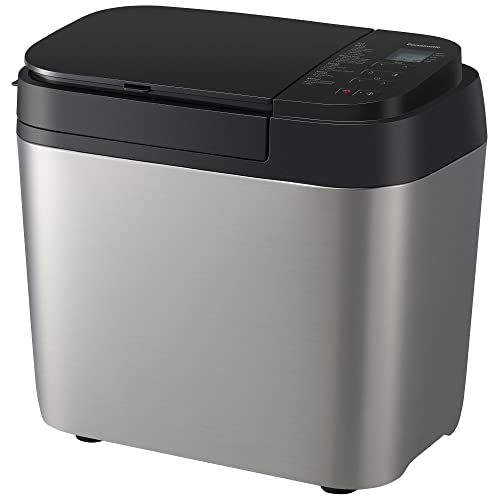
Panasonic SD-R2550 Bread Maker, 20 Presets — Best for Preset Variety
Panasonic’s angle is intelligence rather than brute features. The SD-R2550 carries 20 presets and an advanced temperature sensor that reads your kitchen’s temperature and adjusts the program — because dough rises faster in a warm summer kitchen than a cold winter one, and most machines pretend otherwise. Add a raisin and nut dispenser and programs running from bread to cake to pizza dough, and you have the broadest preset library here. It suits households that bake a bit of everything and want the machine to adapt; bakers who want phase-by-phase manual control should look at the Breville instead.
Strengths
- 20 presets cover bread, cake, and pizza dough with the widest variety here
- Temperature sensor compensates for warm or cold kitchens, reducing seasonal inconsistency
- Raisin and nut dispenser plus gluten-free program cover the common special needs
Trade-offs
- Preset-led design means less manual phase control than the Breville offers
- With 20 programs, the interface takes a few bakes to learn
- Mid-to-premium tier for what is, at heart, a convenience advantage
Key specs (verified)
- Programs: 20 presets
- Sensing: advanced temperature sensor
- Mix-ins: raisin and nut dispenser
- Includes: gluten-free baking, cake and pizza programs
The sensor is not a gimmick, and here is the scenario where it earns its keep. You set a loaf on the delay timer in a kitchen that cools overnight; a fixed-timing machine proofs for the same duration it would on a warm afternoon, and the loaf under-rises and bakes dense. The Panasonic measures ambient temperature and stretches the rise to compensate. Owners in older houses, cold climates, or hot kitchens feel this regularly; owners in climate-controlled homes may rarely notice it. Judge the feature against your kitchen, not a spec sheet — and if your kitchen swings, this is quietly one of the most useful features in the guide.
Check the current price on Amazon for the Panasonic SD-R2550 Bread Maker, 20 Presets.
Best for: varied baking households, kitchens with big temperature swings, families / Not suited for: manual-control enthusiasts, minimalists who use two programs, strict budgets

KBS 17-in-1 Bread Maker, Dual Heaters, Ceramic Pan — Best Mid-Range Features
The KBS 17-in-1 is the feature-per-tier pick: dual heaters for more even browning, a ceramic-coated pan for buyers avoiding conventional nonstick, a nut dispenser, three loaf sizes with three crust colors, and a 15-hour timer, in a stainless housing with a touch panel. On paper it rivals machines a tier above it. The honest framing is that you are trading the long refinement history of Zojirushi or Breville for a broader feature list at a mid-range tier — a trade many households will happily make, especially ceramic-pan buyers, for whom this is one of very few horizontal options.
Strengths
- Dual heaters address the pale-top problem that single-heater machines have
- Ceramic pan suits buyers actively avoiding conventional nonstick coatings
- Nut dispenser, three loaf sizes, and a 15-hour timer cover the everyday checklist
Trade-offs
- Touch panel controls are less tactile than dials and buttons with gloves or floury hands
- Brand support and replacement-part depth are thinner than the legacy brands here
- Feature breadth means a busier interface to learn
Key specs (verified)
- Capacity: 2.2 lb class, 3 loaf sizes
- Heating: dual heaters, 710W
- Pan: ceramic
- Timer: 15 hours, 3 crust colors, nut dispenser
Judge this machine on the two features that change the loaf, not the seventeen in its name. The dual heaters genuinely improve top browning versus single-element rivals at this tier, and the ceramic pan releases loaves well while answering a real concern many buyers bring to this category. The programs beyond the core set — the ones that pad the count — are pleasant extras in the same way cake settings are on every machine here: nice to have, not a reason to buy. Bought for heaters and pan, the KBS is a strong mid-range horizontal choice. Bought for a program count, any machine will eventually disappoint you, including this one.
Check the current price on Amazon for the KBS 17-in-1 Bread Maker, Dual Heaters, Ceramic Pan.
Best for: ceramic-pan buyers, feature-focused mid-range shoppers, varied households / Not suited for: buyers who prioritize decades-long brand support, dial-and-button loyalists
Comparison Table
| Pick | Badge | Key spec | Best for |
|---|---|---|---|
| Zojirushi Home Bakery Virtuoso Plus BB-PDC20BA | Best Overall | Loaf size: 2 lb, horizontal pan | frequent bakers, whole-grain and gluten-free households, long-term owners |
| West Bend Hi-Rise Bread Maker, Horizontal Pan, Dual Blades, 3 lb | Best for Large Traditional Loaves | Loaf sizes: 3 sizes, up to 3 lb | families, sandwich and toast households, bakers who want a bakery-shaped loaf |
| Breville Custom Loaf BBM800XL | Best for Custom Control | Paddle: collapsible, folds before baking | experienced bakers who tweak recipes, seeded and fruit loaves, paddle-hole haters |
| Cuisinart Convection Bread Maker CBK-210 | Best for Crust Lovers | Loaf size: 2 lb | crust-first bakers, upgraders from a basic machine, starter keepers |
| Panasonic SD-R2550 Bread Maker, 20 Presets | Best for Preset Variety | Programs: 20 presets | varied baking households, kitchens with big temperature swings, families |
| KBS 17-in-1 Bread Maker, Dual Heaters, Ceramic Pan | Best Mid-Range Features | Capacity: 2.2 lb class, 3 loaf sizes | ceramic-pan buyers, feature-focused mid-range shoppers, varied households |
How to Choose the Best Bread Machines with Horizontal Loaves
Start with loaf size, because it is the least forgiving decision. A household of one or two will waste the top of a 3 lb loaf; a family of five will run a small machine twice and resent it. Match the machine’s largest loaf to your biggest normal bake, and prefer models with smaller size settings for lighter days — most picks here offer them. Remember that loaf weight means the finished loaf, roughly the combined weight of flour, water, and extras in the recipe, and that a horizontal pan’s advantage only appears when slices are cut: wide, even slices for sandwiches and toast, instead of the tapered slices a vertical loaf gives you.
Next, inspect how the machine kneads its long pan. Dual blades work the full length and suit big or stiff doughs; a collapsible paddle buys you the cleanest loaf base; a single fixed paddle is simplest and entirely adequate for standard loaves at 2 lb and under. Then look at heating. A horizontal loaf is long, so weak heating shows up as a pale top or under-baked center. Dual heaters, convection, and temperature sensing — the three upgrades in this guide — each attack that problem differently, and any one of them is worth more than five extra programs. Buy hardware first, programs second, and you will rarely regret a bread machine.
Paddles, Holes, and the Base of Your Loaf
Every machine kneads with at least one paddle that stays in the pan during baking, and the paddle leaves a hole where it sat. Your options for minimizing it are exactly three: choose a collapsible paddle like the Breville’s, choose a machine whose design and alert let you remove the paddle before the bake phase, or accept the hole and slice around it, as most owners cheerfully do. What you cannot do is buy a fixed-paddle machine and be surprised by the hole — it is geometry, not a defect. Dual-blade machines spread the effect into two smaller holes, which some bakers prefer and some dislike; there is no consensus because there is no large cost either way.
A related point worth knowing before you buy: paddle and pan are wear parts. The coating on the pan and the fit of the paddle on its shaft determine how cleanly loaves release in year five, not just month one. Every brand in this guide sells replacement pans and paddles separately, and replacing a worn pan is far cheaper than replacing a machine. When you compare two otherwise similar horizontal machines, the one with readily available, reasonably structured replacement parts is the better long-term buy — a boring criterion that matters more than most headline features.
Budget Tiers for Horizontal Machines, Honestly Framed
Horizontal machines sort into three quality tiers. The budget tier buys the core job competently: one heater, a standard pan, a dozen programs. The mid-range tier buys evenness and convenience — dual heaters or a dispenser, better pans, quieter operation; the KBS in this guide lives at the interesting edge of that tier. The premium tier buys the last measure of consistency: lid heaters, temperature sensing, collapsible paddles, and custom programming, separating a good loaf from the same good loaf every time across whole grains and gluten-free doughs. None of the tiers buys artisan crust; for that loaf, use any of these machines on the dough cycle and bake in a hot oven or Dutch oven, which is what experienced machine owners quietly do.
Within the horizontal category specifically, be wary of two traps. The first is a cheap long-pan machine with a single small blade: the format is right and the kneading is wrong, and the ends of every loaf will tell you so. The second is paying a premium purely for program count. Programs are software; heaters, pans, and paddles are the machine. If a step up in tier buys you a second heater or a better paddle, it is usually worth it. If it buys you six more programs you will never select, it is not — keep the difference and spend it on good flour, which improves every loaf regardless of machine.
How to Bake Your First Horizontal Loaf, Step by Step
Step 1: Measure by weight if you can. Flour is the biggest variable in machine baking. A kitchen scale removes the guesswork; if you must use cups, spoon flour into the cup and level it rather than scooping, which compacts it and quietly adds more flour than the recipe intends.
Step 2: Load in order — liquids first, flour second, yeast last. Add liquids to the pan, then flour so it covers the liquid, then make a small well in the flour for the yeast, keeping yeast away from direct contact with salt and liquid until the cycle starts. This order matters most on the delay timer, where early contact can start fermentation hours too soon.
Step 3: Match recipe weight to the loaf-size setting. Select the size that matches your recipe’s total weight, choose the program for your flour type, and pick a crust setting one shade lighter than you think you want on a first bake. You can go darker next time; you cannot un-brown a loaf.
Step 4: Watch the first knead, once. Five to ten minutes into the first mix, open the lid and look — on a horizontal machine, check both ends of the pan. The dough should form a smooth, slightly tacky ball that cleans the sides and corners. A shaggy, dry mass needs water a tablespoon at a time; a slack puddle needs flour the same way.
Step 5: Remove, de-paddle, and cool before slicing. Take the loaf out promptly, shake it from the pan, and fish the paddle or paddles out of the base if they came away with the loaf. Cool on a rack for at least half an hour — slicing hot bread gums the crumb — then slice across the width for even, sandwich-ready pieces.
Step 6: Store honestly. Keep the loaf in a bread bag or box at room temperature and use it within two to three days. Do not refrigerate, which stales bread fastest. Freeze extra slices and toast them straight from the freezer for the closest thing to fresh.
That first-knead check, done on your first few bakes, teaches you more than any manual. Flour absorbs water differently by brand, season, and storage, and a horizontal pan shows you the whole dough at once — take advantage of the view. Once a recipe has worked twice in your kitchen, write down the exact weights and settings on the recipe itself. Machine baking rewards households that keep one proven basic loaf and vary it deliberately, rather than troubleshooting a new recipe every week.
Cleaning, Care, and Making a Horizontal Machine Last
A bread machine is one of the easiest appliances to maintain, and owners who get a decade from one share the same habits. The pan and paddles do almost all the work and take almost all the wear, so they get almost all the care. After each bake, let the pan cool, fill it with warm water, and soak it for ten minutes; baked-on dough softens and lifts away without scrubbing, which protects the coating far better than careful scouring does. Wash pan and paddles by hand with a soft sponge — most nonstick pans are technically dishwasher tolerant and practically dishwasher shortened — and dry fully, because the paddle shafts and the pan’s drive sockets are where moisture lingers.
Monthly, wipe the inside of the baking chamber and around the heating elements with a barely damp cloth once the machine is cool and unplugged; flour dust accumulates there and a heavy buildup can smoke faintly on a hot bake. Wiggle each paddle after every few bakes — dough works under it, and a gritty or stiff paddle needs a longer soak and a soft brush around the shaft; on the Breville, the same check keeps the collapsible hinge folding freely. Never immerse the machine body, and never run a cycle with water in the pan to steam-clean it. Keep the manual with one proven basic recipe, know your replacement pan and paddle before you need them, and the machine is a ten-year appliance, not a five-year one.
Flour, Yeast, and Water: Getting the Most From a Horizontal Pan
A horizontal machine rewards the same fundamentals as all bread baking, with one format-specific twist: the long pan exposes your dough to more surface and more viewing area, so you can see problems earlier and fix them sooner. Start with flour choice. Bread flour’s higher protein gives machine loaves their structure and chew, and it is the right default for the everyday horizontal loaf. Whole-wheat flour absorbs more water and rises more slowly, which is why the dedicated whole-wheat programs in this guide lengthen the rise — and why a whole-wheat recipe that swaps flour one-for-one without adding a little extra water or a spoon of vital wheat gluten often disappoints. All-purpose flour works, especially for enriched and softer loaves, but expect a slightly softer crumb and a loaf that stales a touch faster.
Yeast is the second fundamental, and machine baking has its own conventions. Instant yeast — also sold as bread-machine yeast — is designed to be mixed directly with dry ingredients, which is exactly the machine’s loading order, and it is the reliable choice for timer baking. Active dry yeast works too but is happier proofed in liquid first, which the machine’s order does not naturally allow; if it is what you have, use the freshest you can and expect a slightly slower start. Whichever you use, freshness is non-negotiable: yeast is a living ingredient with a shelf life, it belongs sealed in the refrigerator or freezer once opened, and a loaf that fails to rise is far more often a yeast obituary than a machine fault. When in doubt, proof a spoonful in warm water with a pinch of sugar — if it does not foam, it will not raise your loaf, and no program on any machine in this guide can change that.
Water is the variable bakers most underestimate, because flour is not a constant. The same brand absorbs differently across seasons and storage, and whole grains differ from white flour dramatically. That is why this guide insists on the first-knead check: the dough ball, five to ten minutes into the first mix, should be smooth, slightly tacky, and cleaning the pan’s sides and — in a horizontal pan — its ends. Too dry, and the loaf will be dense and tight; too wet, and it will rise enthusiastically and collapse into a crater. A tablespoon at a time, in either direction, is the correct dose of correction, and two or three bakes will teach your hands the feel permanently. The horizontal format is the best classroom for this lesson, because the whole dough is visible at once — one more reason, beyond slice shape, that we recommend it as the format to learn machine baking on.
Troubleshooting the Horizontal Loaf: Four Failures and Their Fixes
Dense loaf, first. The causes, in order of likelihood, are too little water for the flour, tired yeast, or a recipe weight mismatched to the size setting. Check the dough ball at the first knead — dry and shaggy is the early warning — verify the yeast with a foam test if loaves have failed repeatedly, and weigh the recipe against the setting. Pale top, second. On a single-heater machine this is partly the tier, but it worsens if the lid is opened during the bake, letting the top heat escape; keep the lid closed after the knead checks are done, and choose a darker crust setting once you know your machine runs light. Collapsed top, third. Usually too much liquid, too much yeast, or yeast that met salt water early on a timer cycle and over-rose before the bake; reduce liquid slightly, respect the loading order, and keep the yeast dry in its flour well until the cycle starts.
Overflow and under-baked center, fourth and fifth, are the same family: too much dough for the pan, or a size setting smaller than the recipe. A horizontal pan shows overflow early at its long edges, which is your cue on a first bake of a new recipe to watch the rise once and note the safe maximum for that recipe in your machine. An under-baked, gummy center in a large loaf usually means the recipe belonged to the next size setting up. The meta-lesson of all five failures is that they are information, not verdicts: each one names its variable — water, yeast, weight, setting, or order — and a baker who changes one variable at a time will have a proven basic loaf within three bakes. Machines in this guide are consistent enough that your notes, once written, stay true for years.
Common Buying Mistakes
Buying by program count. Twenty programs you never touch are worth less than the dough cycle you use weekly. On a horizontal machine especially, heaters, pan, and paddles decide results. Buy hardware first, programs second.
Ignoring the footprint. Horizontal machines are wide, and lids swing up. Measure counter width and the space to your cabinets before ordering any full-size model, or the machine will live in a closet — which is to say, it will not be used.
Mismatching recipe and size setting. A 3 lb recipe on a 2 lb setting overflows; a big recipe on a small setting under-bakes the center. This causes more failed horizontal loaves than any machine fault.
Skipping the first-knead corner check. A long pan can hide dry, unmixed corners at its ends. Thirty seconds of looking during the first knead — both ends, not just the middle — prevents most streaky, dense loaves.
Expecting artisan sourdough from a preset. No preset reproduces a Dutch-oven boule. Use the dough cycle and finish in the oven if that loaf is your goal; use the machine for the everyday loaf it is brilliant at.
Chasing a discontinued bargain. A famous model sold used or by a reseller at a markup is worse value than a current model with a warranty and available parts. If a listing looks too good for a discontinued name, it usually is.
Final Recommendation
For most households, the Zojirushi Virtuoso Plus is the horizontal machine to buy: it bakes the most even loaf, handles the hardest doughs, and is built for years of weekly use. Start with the Zojirushi Home Bakery Virtuoso Plus BB-PDC20BA if you want the safest all-round choice, consider the West Bend Hi-Rise Bread Maker, Horizontal Pan, Dual Blades, 3 lb for the alternative strength described above, and look at the KBS 17-in-1 Bread Maker, Dual Heaters, Ceramic Pan if your priority is value within this category. Check price on Amazon for the model that matches your routine, and re-check the included accessories on the listing on the day you order.
Related guides on this site: Best Bread Machines Best Bread Machines Under $100 Best 2 Lb Bread Machines Best Bread Machines For Sourdough Best Bread Machines For Home Use.
Frequently Asked Questions
Why choose a horizontal bread machine over a vertical one?
Slice shape. A horizontal pan bakes a wide, low loaf whose slices fit toasters and make proper sandwiches, with crust on all sides. A vertical pan bakes a tall loaf that slices unevenly and often browns less evenly. If your bread is mostly for sandwiches and toast, horizontal is the format you actually want.
Do dual kneading blades really matter?
In a long pan, yes. A single paddle can leave the far corners of a large or stiff dough under-mixed, which shows up as dense streaks at the ends of the loaf. Dual blades work the full pan length. For standard 2 lb loaves, a well-designed single paddle — or the Breville’s collapsible paddle — is entirely adequate.
Why does my loaf have holes in the bottom?
The kneading paddles sit in the pan through the bake, and the holes are where they were. It is normal on every machine. A collapsible paddle shrinks the mark, removing the paddle before baking eliminates it, and slicing from the other end hides it — but no fixed-paddle machine avoids it entirely.
What size horizontal machine should a family buy?
Match the largest loaf to your largest normal bake. Families of four or more eating bread daily usually land on 2 lb as a minimum, and households baking lunches for a week should look at the 3 lb West Bend in this guide. Smaller households do better with a 2 lb machine that offers smaller settings.
Can a horizontal machine make gluten-free bread well?
Only with a genuine gluten-free program — a single-rise cycle that mixes gently and does not punch the batter down. The Zojirushi and Panasonic picks here include dedicated gluten-free baking; check the specific program description on any other model, because a relabeled basic cycle produces a gummy loaf.
How long does homemade bread stay fresh?
Without preservatives, two to three days at room temperature in a bread bag or box is the honest window. Refrigeration stales it faster, so freeze extra slices instead and toast them from frozen. A 3 lb loaf is best sliced fully once cooled, with the second half frozen in slices the same day.


