Disclosure: airfryerkitchensupply.com is reader-supported. When you buy through links on our site, we may earn an affiliate commission at no extra cost to you.
Where to buy
Shopping for the best bread machines for home use? Every pick in this guide was verified against Amazon listings before writing, and you can check price on Amazon for each one before you decide: Zojirushi Home Bakery Supreme BB-CEC20 · Cuisinart Compact Automatic Bread Maker CBK-110 · Hamilton Beach Digital Bread Maker (PFAS-free pan, 2 lb, black) · Amazon Basics Programmable Bread Maker 2 Pound (black) · West Bend Hi-Rise Bread Maker · Panasonic SD-RD250. Prices and stock move often, so the live listing — not any number printed in a guide — is the figure to trust on the day you buy.
The best bread machines for home use are the ones that quietly earn a permanent place in a household routine: load the pan in the evening, wake to fresh bread; press one program on a busy Tuesday and have a sandwich loaf by dinner; hand the machine a dough cycle and let it do the sticky work of pizza night. Home use is not about chasing bakery perfection — it is about reliable, good bread with almost no effort, week after week, in a real kitchen with a real schedule. This guide ranks six verified machines for exactly that life, weighting ease, consistency, size options and cleanup over specialist features most households will never touch.
A word about expectations: a home bread machine will not reproduce a bakery boule, and it does not need to. Its job is the bread a household actually eats — toast, sandwiches, dinner rolls from dough, the occasional sweet loaf — made fresher and cheaper than the supermarket run, on your schedule. Judged on that job, the machines below are genuinely excellent, and the differences between them are about fit, not quality cliffs.
Size is the first fit question. A compact 1 to 1.5 lb machine suits singles and couples and stores easily; a 2 lb machine feeds a family and justifies its counter space daily. We flag sizes and footprints plainly, because the best machine for home use is the one that fits your kitchen and your appetite at the same time.
In this guide
Quick Picks
Zojirushi Home Bakery Supreme BB-CEC20 — Best Overall. A long-loved home bread maker with cake, jam and dough settings, a quick-bake mode for impatient days and a 13-hour timer — the dependable all-rounder for household baking. Check the current price on Amazon
Cuisinart Compact Automatic Bread Maker CBK-110 — Best Compact. A compact bread maker that still offers 12 programs, three loaf sizes and three crust shades with a 13-hour delay start — full home baking in a smaller footprint. Check the current price on Amazon
Hamilton Beach Digital Bread Maker (PFAS-free pan, 2 lb, black) — Best Budget Everyday. A digital 2 lb bread maker with 12 settings including gluten-free and a PFAS-free nonstick pan, at a budget tier — the sensible family workhorse. Check the current price on Amazon
Amazon Basics Programmable Bread Maker 2 Pound (black) — Best Simple Starter. A straightforward 2 lb programmable bread maker with 14 settings including gluten-free options and an ExpressBake fast cycle, with a clear LCD — the easiest first machine to live with. Check the current price on Amazon
West Bend Hi-Rise Bread Maker — Best for Large Loaves. A bread maker with a traditionally shaped horizontal pan up to 3 lb, dual knead blades and 12 programs including gluten-free — sandwich loaves the size a big family actually eats. Check the current price on Amazon
Panasonic SD-RD250 — Best Quiet Classic. A classic Panasonic bread maker with an automatic fruit and nut dispenser that adds ingredients at the right moment — dependable, proven home baking with no babysitting. Check the current price on Amazon
How These Picks Were Chosen
Verification through Amazon listing came first, confirming loaf sizes, program lists and timers as actually sold. The home-use filter then asked household questions rather than baker questions. How many decisions does a normal loaf require? Does the machine forgive imperfect measuring? Does the delay timer cover a workday or a night’s sleep? Does the pan clean without a fight, and will the machine still be pleasant to use in month six?
Specialist machines were not excluded — one flagship appears, because some households simply want the best loaf with the least thought — but program-count bragging earned nothing here. What earned places: dependable basic and whole-wheat cycles, sensible loaf sizes, honest timers, and designs that suit kitchens where the bread machine shares the counter with everything else in family life.
The 6 Best Bread Machines for Home Use
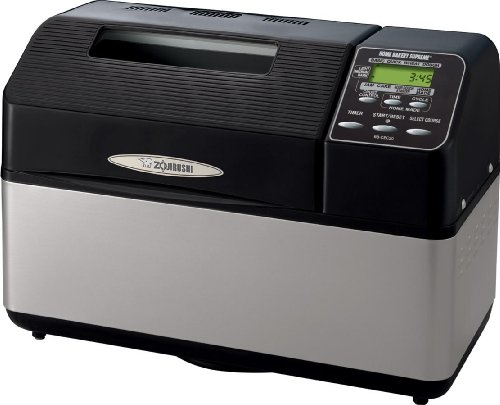
Zojirushi Home Bakery Supreme BB-CEC20 — Best Overall
The Zojirushi Home Bakery Supreme has been the household benchmark for years for a simple reason: it does everything a home asks, consistently, without drama. Bread, dough, cake and jam settings, a quick-bake mode when the schedule collapses, and a 13-hour timer that covers both overnight loaves and workday baking.
Strengths
- Broad settings cover bread, dough, cake and jam in one machine
- Quick-bake mode rescues days when planning failed
- Consistent results that forgive ordinary home measuring
Trade-offs
- Premium tier pricing for a home appliance
- Traditional horizontal loaf shape takes counter room
- More machine than a single-person household needs
| Settings | Bread, dough, cake and jam |
| Timer | 13-hour delay |
| Special | Quick-bake mode |
Household baking is a rhythm, not a project, and the Supreme fits rhythm better than any rival here. The timer loaf for weekday breakfasts, the dough cycle for Friday pizza, the jam setting when the garden or the market delivers a glut of fruit — the machine keeps finding jobs, which is how an appliance earns permanent counter space instead of cupboard exile. Results are steady enough that family members can run it, not just the household’s designated baker.
The quick-bake mode is the honest feature nobody brags about and everybody uses: the day the bread box is empty at 4 p.m. A fast loaf is never the machine’s finest work, but it is hot, fresh and on the table by dinner, and that rescue capability is worth real money across a year of family life. If your household will use a bread machine in five different ways, start here.
Best for: families wanting one dependable machine for bread and beyond / Not suited for: tiny kitchens with no spare counter space
Check the current price on Amazon

Cuisinart Compact Automatic Bread Maker CBK-110 — Best Compact
Counter space is the scarcest resource in most kitchens, and the Cuisinart Compact answers it directly: a smaller machine that refuses to be a lesser one. Twelve programs, three loaf sizes, three crust shades, a 13-hour delay start and even a paddle-removal alert — the full home-use checklist, compressed.
Strengths
- Compact footprint suits apartments and crowded counters
- Three loaf sizes let small households bake right-sized loaves
- Paddle-removal alert helps avoid the baked-in paddle hole
Trade-offs
- Vertical loaf shape differs from traditional sandwich loaves
- Compact pan means no oversized family loaves
- Fewer luxury features than the flagship picks
| Capacity | Up to 2 lb in a compact design |
| Programs | 12 |
| Loaf sizes | 3 |
| Crust shades | 3 |
| Timer | 13-hour delay start |
Right-sizing is this machine’s quiet genius. A couple does not need a 2 lb loaf going stale; a 1 lb loaf baked fresh twice a week beats a giant loaf aging in the bread box. Three size options let the household match the bake to the week — small for everyday, full-size for guests — and the compact body stores in a cupboard if the counter truly has no room, which keeps it in the home instead of in a donation box.
The paddle-removal alert is a thoughtful home touch: the machine tells you when to slip the paddle out before baking if you want a hole-free loaf bottom, a small dignity that occasional bakers appreciate. Programs cover the household standards — basic, whole wheat, dough, sweet, quick — without menu overload. For small kitchens that bake seriously, this is the natural first choice.
Best for: couples, singles and small kitchens baking regularly / Not suited for: large families needing maximum loaf size every bake
Check the current price on Amazon
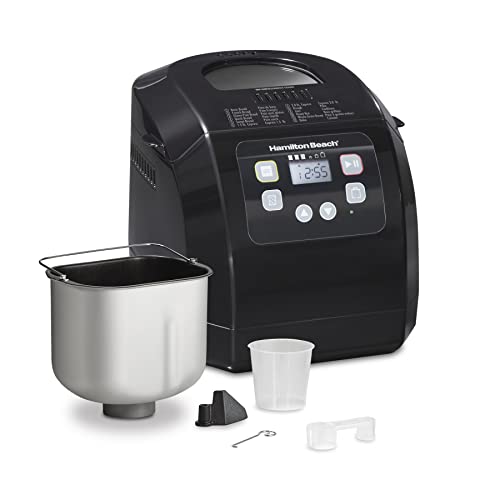
Hamilton Beach Digital Bread Maker (PFAS-free pan, 2 lb, black) — Best Budget Everyday
The Hamilton Beach Digital Bread Maker is the household value pick: a full 2 lb capacity, 12 settings including gluten-free, digital controls a family can share, and a PFAS-free nonstick pan and kneading paddle — the features home use actually touches, at a budget-friendly tier.
Strengths
- Full family 2 lb size at a budget tier
- Gluten-free setting covers mixed-diet households
- PFAS-free pan appeals to coating-conscious buyers
Trade-offs
- Crust finesse trails the premium machines
- Basic control set — no custom cycles
- Design is functional rather than handsome
| Capacity | 2 lb |
| Settings | 12 plus gluten-free |
| Pan | PFAS-free nonstick pan and paddle |
Most home baking is three programs deep: basic or whole wheat for the weekly loaf, dough for pizza and rolls, and quick when life intervenes. The Hamilton Beach does those jobs reliably at a price that pays for itself in saved supermarket loaves within a season. The gluten-free setting is the inclusion that matters most at this tier — households with one gluten-free member usually face premium prices for the privilege, and here it is standard.
Set expectations the way this guide does for every budget pick: the crust will be good rather than great, the controls simple rather than deep. For a first bread machine, or a family machine that children and grandparents will also operate, that simplicity is a feature. If the habit takes root and ambitions grow, the flagship picks above are the upgrade path; many households will find this machine simply becomes the routine.
Best for: families wanting reliable everyday bread on a budget / Not suited for: crust perfectionists and custom-cycle experimenters
Check the current price on Amazon

Amazon Basics Programmable Bread Maker 2 Pound (black) — Best Simple Starter
First bread machines should be encouraging, and the Amazon Basics Programmable Bread Maker is built to encourage: 14 settings for breads, doughs and gluten-free options, an ExpressBake cycle for fast loaves, and an LCD display that makes the state of your loaf legible at a glance.
Strengths
- Clear LCD and simple controls lower the learning curve to near zero
- ExpressBake covers the forgotten-bread emergency
- 14 settings include gluten-free for household flexibility
Trade-offs
- Fast cycles trade texture for speed, as all express modes do
- Build and finish are basic-tier
- No dispenser or premium crust features
| Capacity | 2 lb |
| Settings | 14, including gluten-free options |
| Special | ExpressBake |
| Display | LCD |
The first month decides whether a bread machine becomes a habit, and habit-forming machines are the ones whose controls never make you fetch the manual. Load, choose the setting that matches the recipe’s name, choose size and crust, press start: the Amazon Basics keeps that promise, and its loaves are good enough to make a household feel the purchase was smart — which is the emotional foundation of every long-running kitchen routine.
ExpressBake deserves its balanced note: a fast loaf is denser and less developed than a full cycle, in this machine and every rival. Used as an emergency option it is delightful; used as the default it undersells what the machine can do. Let the full cycles carry the weekly baking, keep ExpressBake for rescues, and this starter machine will serve a household happily for a long time.
Best for: first-time bread machine households wanting simplicity / Not suited for: bakers seeking dispensers, custom cycles or premium crust
Check the current price on Amazon

West Bend Hi-Rise Bread Maker — Best for Large Loaves
Big households run through bread at a rate that makes standard loaves feel like snacks. The West Bend Hi-Rise answers with capacity: a traditionally shaped horizontal pan up to 3 lb, dual knead blades to work the larger dough mass, and 12 programs including gluten-free across three loaf sizes and crust colours.
Strengths
- Up to 3 lb loaves feed large families in one bake
- Horizontal pan gives a familiar sandwich-loaf shape
- Dual blades knead large, heavy doughs evenly
Trade-offs
- Largest footprint in this guide — measure your counter
- Big loaves stale if the household cannot finish them
- Fewer refined features than the flagship picks
| Capacity | Up to 3 lb |
| Pan | Traditionally shaped horizontal pan |
| Blades | Dual knead blades |
| Programs | 12, including gluten-free |
Loaf shape is not vanity: a horizontal loaf slices into sandwich-shaped slices that fit lunchboxes and toasters the way families expect, and at 3 lb the West Bend produces the week’s toast in a single bake. Dual knead blades matter at this scale — a single paddle can leave the far end of a big dough mass underworked, and the crumb shows it. For a household of five or six, the arithmetic of one bake instead of two is a genuine weekly time saving.
The discipline this machine asks is honesty about appetite. A 3 lb loaf is a commitment; households that bake big and eat slowly will meet staleness by Thursday. Use the smaller size settings for ordinary weeks and the full capacity for gatherings, holidays and freezer stocking — sliced and frozen, a big loaf is a convenience, not a race. Sized to the right household, the Hi-Rise is the capacity champion of home use.
Best for: large families and sandwich-heavy households / Not suited for: small households that cannot finish big loaves
Check the current price on Amazon

Panasonic SD-RD250 — Best Quiet Classic
The Panasonic SD-RD250 represents the proven-classic school of home baking: a dependable program set, and an automatic fruit and nut dispenser that drops add-ins at the point in the cycle where they will distribute instead of shred. For households that love raisin bread, seeded loaves and nutty whole wheats, that dispenser quietly changes everything.
Strengths
- Dispenser adds fruit and nuts at the correct kneading stage
- Proven, dependable design with a long track record
- Consistent everyday loaves without supervision
Trade-offs
- Program set is classic rather than expansive
- No headline crust technology like the premium picks
- Design shows its classic roots
| Dispenser | Automatic fruit & nut dispenser |
| Style | Classic home bread maker |
| Programs | Core bread and dough programs |
Add-in timing is the detail home bakers learn the hard way: raisins added at the start get torn apart and grey the crumb; added too late, they sit in pockets. A dispenser removes the problem and the need to hover for a beep — load everything in the evening, and the machine sequences the bake like a competent assistant. For timer users especially, the dispenser is the difference between plain loaves only and the full flavoured repertoire overnight.
Beyond the dispenser, this is a study in enough: enough programs for the household repertoire, enough consistency to trust the timer, enough simplicity that the machine never feels like homework. Households that bake the same beloved rotation — white, whole wheat, raisin, pizza dough — will find the Panasonic the lowest-friction route to it. Variety seekers should look at its 20-preset sibling in our home bakers guide; routine lovers, your machine is here.
Best for: routine households that love fruit, nut and seeded loaves / Not suited for: experimenters wanting dozens of programs
Check the current price on Amazon
Comparison Table
| Pick | Badge | Key spec | Best for |
|---|---|---|---|
| Zojirushi Home Bakery Supreme BB-CEC20 | Best Overall | Cake, jam and dough settings, 13-hour timer, quick-bake mode | families wanting one dependable machine for bread and beyond |
| Cuisinart Compact Automatic Bread Maker CBK-110 | Best Compact | Compact 2 lb, 12 programs, 3 loaf sizes, 3 crust shades, 13-hour delay | couples, singles and small kitchens baking regularly |
| Hamilton Beach Digital Bread Maker (PFAS-free pan, 2 lb, black) | Best Budget Everyday | 2 lb, 12 settings plus gluten-free, PFAS-free nonstick pan | families wanting reliable everyday bread on a budget |
| Amazon Basics Programmable Bread Maker 2 Pound (black) | Best Simple Starter | 2 lb, 14 settings, ExpressBake, LCD display | first-time bread machine households wanting simplicity |
| West Bend Hi-Rise Bread Maker | Best for Large Loaves | Up to 3 lb, horizontal pan, dual knead blades, 12 programs | large families and sandwich-heavy households |
| Panasonic SD-RD250 | Best Quiet Classic | Automatic fruit & nut dispenser, classic Panasonic programs | routine households that love fruit, nut and seeded loaves |
Fit decides this category. Small kitchens point to the Cuisinart Compact; big families to the West Bend; budget families to the Hamilton Beach; beginners to the Amazon Basics; variety households to the Zojirushi Supreme; and routine bakers who love add-ins to the Panasonic. All six make good bread — the right one is the one whose size, timer and controls match your week.
How to Choose a Bread Machine for Home Use
Begin with your household’s bread arithmetic. How many slices disappear in a day? A 1 lb loaf is roughly a day for a couple; a 2 lb loaf covers a family’s toast and sandwiches for two to three days; 3 lb machines serve crowds or freezer stocking. Baking the size you finish fresh is the single biggest quality decision in home machine baking, because yesterday’s fresh loaf beats a giant loaf’s fourth day every time.
Next, audit your schedule against the timer. Overnight and workday baking are where machines transform from gadget to infrastructure, so confirm the delay window covers your real gaps — a full night’s sleep plus margin, or a workday plus commute. If you plan to use the timer with flavoured loaves, a fruit and nut dispenser stops being a luxury and becomes the feature that makes timer baking work for anything beyond plain bread.
Finally, think about who else will use it. The best home machine is operable by the whole household: clear controls, a display that shows what is happening, a pan that removes and cleans easily. A machine only one person dares touch produces bread only when that person feels like it — and home use is precisely about bread that happens regardless.
Keeping Home Machine Baking Cheap, Fresh and Routine
The economics of home baking reward routine. A household loaf from a machine costs a fraction of a comparable bakery or premium supermarket loaf, and the saving compounds across a year of school lunches and toast. Buy flour in the largest bag your storage keeps fresh, store it airtight and cool, and keep yeast refrigerated in a sealed jar — stale yeast is the number one cause of the dense loaf that makes beginners blame the machine.
Freshness management is a rhythm: bake on the days the household eats most, slice and freeze surplus immediately rather than letting it stale on the counter, and refresh frozen slices straight in the toaster. A loaf frozen at its peak is better on day ten than a counter loaf on day three. The dough cycle extends the economics further — one dough batch becomes tonight’s pizza and tomorrow’s rolls with minutes of shaping.
Keep the routine light-touch. Wipe the pan after each bake, dry the paddle fully, and leave the lid open a while after baking so the interior dries. Five unglamorous minutes of care is what separates a machine that serves for years from one that develops odours and sticking pans by its second winter.
Beyond the Loaf: What Else a Home Bread Machine Earns Its Keep Doing
Households that only bake loaves in a bread machine are using half the appliance. The dough cycle is usually the most valuable program in the house: it produces pizza bases on Friday, soft dinner rolls for Sunday, flatbread dough for weeknight wraps, cinnamon roll dough for a birthday morning — all with the sticky, time-consuming kneading removed and the warm first rise handled. Families routinely report that the dough cycle, not the loaf, is what turned their machine from a novelty into infrastructure, because it plugs into meals they were already making rather than asking them to adopt new ones.
Jam and cake settings, where fitted, follow the same logic of quiet usefulness. A jam cycle turns a glut of summer fruit into jars with almost no stirring duty — the machine manages the long, spluttering simmer that makes stovetop jam a chore — and it handles marmalade and fruit butters the same way. Cake cycles will not rival a baker’s oven layer cake, but for a Tuesday tea loaf or a banana bread made from the fruit bowl’s casualties, they are press-button simple and reliably pleasant. Several picks in this guide include these settings, and households that entertain or garden will feel their value within a season.
There is a budgeting dimension too. Every dough-cycle pizza replaces a takeaway; every jam batch replaces shop jars at a fraction of the cost with fruit that might otherwise have been wasted. Tracked across a year, a well-used home bread machine is one of the few kitchen appliances that can plausibly pay for itself in cash, not just convenience — provided it is used in this wider way. When choosing among the six picks, count the extra programs your household will genuinely touch; a machine whose jam setting runs twice each summer is earning money a loaf-only rival is not.
Storing, Slicing and Freezing: Keeping Home-Baked Bread at Its Best
More home loaves are ruined after baking than during it. The first rule is cooling: a loaf sliced warm steams its own crumb gummy, so patience — an hour for a large loaf, on a rack where air circulates — is a genuine ingredient. Slice with a long serrated knife in a sawing motion rather than pressing down, which compresses the crumb the machine worked to aerate. If your household eats slowly, slice the whole loaf once cooled and freeze the slices; frozen slices go straight into the toaster and taste freshly baked in a way a three-day-old counter loaf never will.
Counter storage is a short game: a bread box or a cloth bag keeps a crust pleasant for a day or two, while plastic bags soften crust and invite mould in warm kitchens. Never refrigerate bread — the fridge is where crumb goes to stale fastest, a quirk of starch chemistry that surprises everyone the first time. Freezing, by contrast, is bread’s friend: whole loaves wrapped well keep for weeks, and dough itself freezes after its first rise, ready to thaw, shape and bake on a future weekend.
Build the household rhythm around these facts and waste disappears. Bake the big loaf when the family is home to eat it, freeze in slices as a matter of routine, and let the timer produce small fresh loaves for ordinary days. The machines in this guide all support that rhythm with their size options and timers; the household’s part is simply to treat storage as part of the recipe. Fresh bread at home is not a baking achievement — it is a logistics achievement, and it is well within any household’s reach.
Bread Machines for Different Households: A Fit Guide
The single-person household has the clearest brief: small loaves, baked often, from a machine that stores easily and cleans in a minute. Compact picks with 1 to 1.5 lb options fit that life, and the delay timer turns them into a personal bakery that produces a fresh small loaf for the weekend without a week’s worth of staling surplus. For singles, the dough cycle’s value is different but real — one small batch of dough becomes tonight’s personal pizza and tomorrow’s roll, with no kneading at all.
Couples sit in the flexible middle: a 2 lb machine with smaller size options covers both the daily small loaf and the weekend full-size bake, and households at this scale feel the supermarket savings fastest, because two people’s toast and sandwich habit is exactly the volume where shop bread is most overpriced relative to flour. Families with children should weight capacity, timer reliability and sheer forgiveness — controls a tired parent can operate at midnight for the morning’s loaf — and the bigger picks in this guide, including the 3 lb West Bend, exist for the lunchbox arithmetic of that life.
Multigenerational and shared households add one more variable: multiple operators. A machine that grandparents, teenagers and the weekday cook can all run without a manual is worth more than a marginally better loaf that only one person can produce. Clear displays, named programs and forgiving cycles — the virtues of the simpler picks here — are household features, not compromises. Choose for the whole roster of bakers, and the machine will be used by all of them.
The True Cost of a Loaf: Home Baking Economics
The arithmetic that justifies a home bread machine is simple enough to do honestly. A basic home loaf uses flour, water, yeast, salt and a little energy; even with good flour, its ingredient cost is a small fraction of a comparable bakery or premium supermarket loaf, and the gap widens further against specialty loaves — seeded, whole grain, gluten-free — where shop prices climb steeply and machine costs barely move. A household eating a loaf every two days recovers a mid-range machine’s price within a season or two, and a budget machine’s within weeks of regular use.
The honest ledger includes the costs advocates skip. Failed loaves happen, especially in the first month, and they are tuition, not waste — most become breadcrumbs, croutons or bread pudding in a resourceful kitchen. Electricity for a bake cycle is real but small. The machine itself is a capital cost that only amortises with use, which returns the argument to the theme of this whole guide: the economics work when the routine works. A machine used weekly is a saving; a machine used monthly is a cupboard ornament with a power cord.
There is also a quality dividend that resists pricing. Home loaves contain what you put in them — no preservatives you did not choose, salt at your level, the flour you prefer — and they are fresh at the hour you choose rather than the hour the delivery reached the shop. For many households that dividend, plus the smell of a baking loaf on a timer at dawn, is the actual purchase. The savings are simply what makes the decision easy to defend.
Bread Machines and Special Diets at Home
For households managing dietary needs, a bread machine is often less a convenience than a liberation, and the gluten-free case is the clearest. Shop gluten-free bread is expensive and frequently disappointing; a machine with a true gluten-free cycle — several picks in this guide include one — produces a fresh loaf at ingredient cost, on the household’s schedule, with the texture tuned by iteration until it suits the person who eats it. The discipline required is cross-contamination care: a dedicated pan or a scrupulously cleaned one, separate storage for gluten-free flours, and the same care at slicing time. Households that bake both ways usually dedicate the machine’s pan to gluten-free work and treat the rule as absolute.
Lower-salt and ingredient-controlled baking follows the same logic. A home baker decides exactly what enters the loaf — the salt level a doctor suggested, the seeds a child will tolerate, the sweetener a diabetic household prefers — without label archaeology in a shop aisle. Machines cannot fix every dietary problem, and enriched or reduced-ingredient doughs sometimes need the dough-check adjustment this guide teaches, but the control itself is the point: the loaf becomes a household decision rather than a manufacturer’s compromise.
If special diets are your household’s primary reason for buying, weight the picks accordingly: the budget Hamilton Beach and Amazon Basics models in this guide both include gluten-free settings, which means dietary liberation does not require a flagship budget. Start with the manufacturer’s gluten-free recipes, iterate with the log, and expect the third loaf to be the one that makes the household wonder why it waited.
Teaching the Household: Getting Everyone Baking
A home bread machine reaches its full value when it stops belonging to one person. The teaching curve is gentler than most appliances’: the recipe is a list, the pan loads in one order, the program has a name that matches the bread. Households that post the house loaf recipe on the fridge — quantities, program, size, crust — find that teenagers, partners and grandparents all begin producing the standard loaf, and the household’s bread supply stops depending on one person’s energy at the end of a long day.
Children deserve a specific mention, because machine baking is one of the safest ways to bring them into real cooking: the ingredients are forgiving, the hot and sharp parts are enclosed, and the transformation from flour to loaf feels like legitimate magic at age seven. Let them measure, let them choose the Friday treat loaf, and the machine becomes a small piece of family culture as well as an appliance. That cultural embedding, more than any specification in this guide, is what keeps a home bread machine in weekly use for a decade.
Your First Three Loaves: A Confidence Plan
Households new to machine baking should plan the first three loaves as a curriculum, not a test. Loaf one is the basic recipe from the machine’s own book, followed exactly, with no substitutions and no timer — its job is to prove the machine works and to give the household a baseline. Loaf two repeats it with one deliberate change the household cares about — a crust shade, a portion of wholemeal flour — teaching cause and effect in the gentlest possible way. Loaf three is the first timer loaf, loaded in the evening with shelf-stable ingredients, because waking to fresh bread is the experience that converts a household from owners of a bread machine into people who bake.
Expect loaf one to be good rather than perfect, and say so in advance; the households that abandon machines are usually those that demanded bakery results from a first attempt and read normal learning as failure. By loaf three, with the dough-check habit and one page of fridge notes, most households are producing bread they prefer to their supermarket loaf — and the routine this guide describes has quietly begun.
Where the Machine Should Live
It sounds like a small thing, and it decides everything: a bread machine that lives on the counter gets used, and one that lives in a cupboard gets used twice. Before buying, pace out the permanent home — a stretch of counter where the lid opens fully, near the outlet it will use, with the flour stored within arm’s reach. Compact households can claim a section of counter back by choosing the compact pick in this guide; larger kitchens have no excuse at all. Treat the machine’s parking spot as part of the purchase, negotiate it with the household in advance, and the weekly routine this guide describes becomes the path of least resistance rather than a project of willpower.
How to Use a Bread Machine for a Week of Home Baking
A simple weekly pattern shows how home bakers actually live with these machines — three bakes cover most households.
- Sunday evening: load a 2 lb whole wheat or sandwich loaf on the delay timer so it finishes as the household wakes. Cool it fully on a rack, slice what the week needs, and freeze the rest in slices.
- Wednesday: run the dough cycle in the late afternoon. Divide the dough for pizza bases or dinner rolls, shape in minutes, proof briefly and bake in the oven — the machine did the sticky kneading, you did the fun part.
- Friday or Saturday: bake the treat loaf — raisin, cinnamon or a sweet bread — using the dispenser if your machine has one, or adding mix-ins at the beep. This is the bake that makes the house smell like a bakery.
- After each bake, remove the loaf promptly, shake out crumbs, wipe the pan, and dry the paddle. Leave the lid ajar until the interior is fully dry.
- Keep a one-line note on the fridge for any loaf that disappointed: program, and what you would change. Home baking improves in three or four iterations once the notes exist.
Within a month this rhythm becomes invisible — bread simply exists in the house, fresh, at a fraction of shop prices. That invisibility is the true product a home bread machine sells.
Common Buying Mistakes
Buying the biggest machine for a small household. Oversized loaves stale before they are finished, and the household concludes machine bread is mediocre. Size the machine to the appetite, not the ambition.
Leaving the loaf in the pan after baking. Trapped steam softens the crust and can make the bottom soggy within the hour. Remove finished loaves to a rack promptly, every time.
Blaming the machine for old yeast. Yeast dies quietly in warm cupboards. If a reliable recipe suddenly stops rising, test the yeast in warm water with a pinch of sugar before troubleshooting anything else.
Using the timer with fresh milk and eggs for long delays. Perishables sitting warm for many hours are unsafe. Timer recipes should use shelf-stable ingredients, powdered milk, or short delays with refrigeration-safe planning.
Measuring flour by scooping from the bag. Scoops compact flour unpredictably and are the top cause of dense home loaves. Spoon flour into the cup and level it, or weigh it — consistency is the whole game in machine baking.
Final Recommendation
For most households, the Zojirushi Supreme is the home-use benchmark — versatile, consistent and timer-friendly. Small kitchens should take the Cuisinart Compact, budget families the Hamilton Beach, beginners the Amazon Basics, large families the West Bend Hi-Rise, and routine bakers who love add-ins the Panasonic SD-RD250. Bakers who want deeper control will find it in Best Bread Machines For Home Bakers, dough specialists in Best Bread Machines For Pizza Dough, and the full field in Best Bread Machines and Best Bread Machines For Beginners.
Ready to decide? Start with the top three picks and check price on Amazon for each before you buy: Zojirushi Home Bakery Supreme BB-CEC20 · Cuisinart Compact Automatic Bread Maker CBK-110 · Hamilton Beach Digital Bread Maker (PFAS-free pan, 2 lb, black).
Frequently Asked Questions
Is a bread machine worth it for home use?
For households that eat bread most days, yes — the machine pays for itself in saved shop loaves surprisingly quickly, and the timer turns it into fresh bread with almost no labour. Households that eat little bread, or only artisan styles, will use it less and should weigh that honestly before buying.
What size bread machine does a family need?
A 2 lb machine suits most families of three to five. Couples and singles are better served by compact machines with 1 to 1.5 lb options, and very large families or freezer-stockers can use a 3 lb model. Matching loaf size to consumption keeps bread fresh, which matters more than any other specification.
Can I really wake up to fresh bread?
Yes — the delay timer exists for exactly that. Load shelf-stable ingredients in the evening, keep the yeast dry on top of the flour, and set the finish time for waking. The machine kneads, rises and bakes while you sleep. Avoid long delays with fresh milk or eggs for food safety.
Why did my loaf come out dense?
The usual causes are old yeast, too much flour from scooping, too little liquid, or a kitchen so warm the dough over-proofed on a timer cycle. Check the yeast first, measure flour by spooning and levelling or weighing, and verify the dough ball looks smooth and tacky a few minutes into the first knead.
What else can a home bread machine make?
Most machines in this guide also handle pizza and roll dough, and several make jam and cake. The dough cycle is often the most-used feature in real households — it removes the kneading labour while you keep the shaping and oven finish. Jam settings turn a fruit glut into jars with almost no attention.
How do I keep the pan nonstick working well?
Remove loaves promptly, soak the pan briefly if dough sticks, clean with a soft sponge only, and dry fully before storage. Never use metal utensils in the pan. If the paddle sticks, a short soak in warm water frees it without force — forcing a stuck paddle is how drive shafts get damaged.


