Disclosure: airfryerkitchensupply.com is reader-supported. When you buy through links on our site, we may earn an affiliate commission at no extra cost to you.
Where to buy
Shopping for the best bread machines for pizza dough? Every pick in this guide was verified against Amazon listings before writing, and you can check price on Amazon for each one before you decide: Panasonic SD-R2550 · Zojirushi Home Bakery Virtuoso Plus BB-PDC20BA · Breville Custom Loaf BBM800XL · Cuisinart Convection Bread Maker CBK-210 · West Bend Hi-Rise Bread Maker · Hamilton Beach Digital Bread Maker 29987. Prices and stock move often, so the live listing — not any number printed in a guide — is the figure to trust on the day you buy.
The best bread machines for pizza dough are not necessarily the best bread machines — pizza dough is a different job. It wants thorough, elastic kneading that develops gluten without tearing, a controlled first rise that builds flavour and extensibility, and a dough cycle that hands the baker a relaxed, workable dough at a predictable time. Baking a loaf is almost irrelevant here; many pizza households never use their machine’s bake cycle at all. This guide ranks six verified machines purely as dough studios: kneading strength, dough capacity for pizza night, cycle timing, and how the dough feels when it comes out — because the proof of a pizza dough machine is on the stretching board, not in a spec list.
Honest framing first: a bread machine makes the dough, not the pizza. You will still shape, top and bake in your oven or pizza oven, ideally on a preheated stone or steel. What the machine removes is the twenty minutes of sticky kneading and the guesswork of the first rise — which, on a Friday night with hungry people circling, is precisely the part that decides whether homemade pizza happens at all.
Capacity is counted in pizzas here. A 2 lb dough batch typically yields two large or three medium pizzas; we flag which machines comfortably handle double batches for parties, and which dough cycles include a proper rise versus a quick mix-and-go, because that distinction changes your pizza-night scheduling completely.
In this guide
Quick Picks
Panasonic SD-R2550 — Best Overall for Pizza Dough. A bread machine whose 20 presets include a dedicated pizza program, with an advanced temperature sensor that keeps the dough’s rise consistent in warm or cool kitchens. Check the current price on Amazon
Zojirushi Home Bakery Virtuoso Plus BB-PDC20BA — Best Dough Consistency. The flagship Zojirushi brings its even, controlled environment to dough work: thorough kneading, a steady rise and a 13-hour timer so dough can be ready when the oven is. Check the current price on Amazon
Breville Custom Loaf BBM800XL — Best for Dough Control. Breville’s control-first design lets pizza makers tune knead and rise behaviour, and its collapsible paddle removes cleanly from finished dough without tearing a hole through it. Check the current price on Amazon
Cuisinart Convection Bread Maker CBK-210 — Best Versatility. A 16-program convection bread maker whose sourdough starter program opens the door to levain pizza doughs, alongside dependable standard dough cycles. Check the current price on Amazon
West Bend Hi-Rise Bread Maker — Best for Big Dough Batches. A large-capacity machine with dual knead blades and a horizontal pan up to 3 lb — one cycle produces dough for a party’s worth of pizzas. Check the current price on Amazon
Hamilton Beach Digital Bread Maker 29987 — Best Budget Dough. A budget-friendly 2 lb bread maker with 14 programmable settings including artisan and gluten-free, plus delay start — honest pizza dough without the premium outlay. Check the current price on Amazon
How These Picks Were Chosen
Every pick was verified through Amazon listing, confirming dough and pizza programs, loaf capacities and kneading designs as actually sold. Evaluation then ignored loaf-baking glamour and scored four dough factors: kneading power and paddle design, because gluten development is the crust; dough cycle structure, including whether a real rise is built in; batch capacity against a realistic pizza night; and timing flexibility, because dough that is ready when you are is the entire point.
Machines with weak kneading actions fell away — pizza dough is leaner and stiffer than sandwich dough, and under-kneaded dough tears at stretching and bakes up bready rather than chewy. Equally, machines whose dough cycles were an afterthought with no rise phase lost marks to those with dedicated pizza programs. The six survivors each bring a distinct dough strength, from a pizza-named preset to dual-blade batch power.
The 6 Best Bread Machines for Pizza Dough
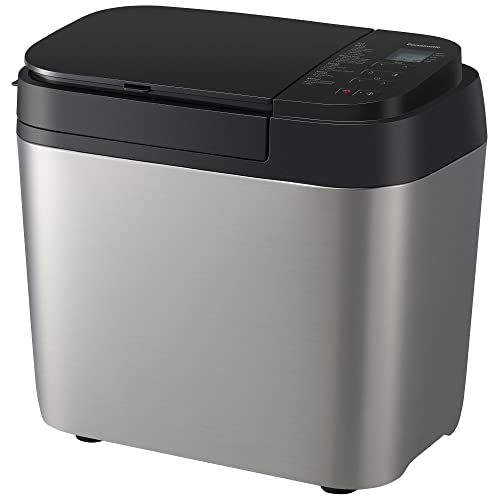
Panasonic SD-R2550 — Best Overall for Pizza Dough
The Panasonic SD-R2550 takes the top spot for the most literal reason in this guide: its 20 presets include a dedicated pizza program, and its advanced temperature sensor manages the variable home bakers forget — the room itself. Pizza dough risen at a steady, known pace stretches better and schedules better.
Strengths
- Dedicated pizza preset tuned for dough, not a renamed basic cycle
- Temperature sensor adapts the rise to your kitchen’s conditions
- Full bread and cake programs cover the rest of the week
Trade-offs
- Premium-mid tier pricing
- Dispenser is irrelevant for pizza — you pay for it anyway
- Preset menu takes a little learning
| Presets | 20, including pizza |
| Sensor | Advanced temperature sensor |
| Dispenser | Raisin nut dispenser |
| Programs | Bread, cake, pizza, gluten-free |
Rise consistency is the invisible ingredient in pizza dough. Dough that proofed in a warm afternoon kitchen stretches thin and blisters beautifully; the same dough in a cold evening kitchen fights back, tears, and bakes thick. A machine that senses temperature and adjusts its cycle narrows that gap, giving the home pizza maker week-to-week repeatability — the quality that turns pizza night from an experiment into a tradition.
The pizza preset’s kneading profile suits lean dough: thorough development without the machine working the dough to exhaustion. Take the dough out at the cycle’s end, rest it covered for twenty minutes, and it relaxes into an easy stretch. Households that also bake bread get the full Panasonic repertoire as a bonus, but make no mistake — this pick is ranked on its dough, and its dough is the most considered in the guide.
Best for: pizza households wanting consistent, scheduled dough / Not suited for: bakers who only ever make one small pizza at a time
Check the current price on Amazon

Zojirushi Home Bakery Virtuoso Plus BB-PDC20BA — Best Dough Consistency
Premium machines earn their keep in dough through control, and the Zojirushi Virtuoso Plus is all control: a well-sealed, evenly heated chamber where dough rises at a steady pace, strong kneading for full gluten development, and a 13-hour timer that lets dough fit your evening instead of the other way round.
Strengths
- Stable rising environment produces predictable, extensible dough
- Strong kneading develops the chew pizza crust needs
- Timer lets dough finish as you walk in the door
Trade-offs
- Premium pricing for a feature set pizza-only users may not exploit
- 2 lb dough batches cap party quantities per cycle
- Dual heaters matter less when you never bake in the machine
| Loaf size | 2 lb |
| Heating | Dual heaters |
| Timer | 13-hour delay |
| Programs | Including gluten-free and whole-wheat |
Extensibility — dough that stretches thin without tearing or snapping back — is built during kneading and the first rise, and it is where the Zojirushi’s dough shines. The kneading action is thorough enough for stiff, low-hydration doughs, and the chamber’s even warmth (that lid heater again, gently stabilising the environment) means the rise completes on schedule. Dough comes out smooth, elastic and calm: the three adjectives every pizza maker wants to say.
The timer deserves a pizza-specific mention. Load the pan before work, set the dough cycle to finish at six, and pizza night starts with shaping, not with a floury hour of preparation. That scheduling magic is how homemade pizza survives busy weeks. If you also bake loaves, the flagship case is overwhelming; if you truly only make dough, weigh the Panasonic above, which aims its talents more narrowly at the same job.
Best for: households wanting the most reliable dough plus flagship bread baking / Not suited for: pizza-only buyers on a strict budget
Check the current price on Amazon

Breville Custom Loaf BBM800XL — Best for Dough Control
Pizza makers who treat dough as a craft will appreciate the Breville Custom Loaf: control over the cycle’s details, and a collapsible kneading paddle with an unexpected dough benefit — when the cycle ends, the paddle folds away instead of ripping a hole through your dough ball as you lift it out.
Strengths
- Custom settings let you tune cycles for different dough styles
- Collapsible paddle leaves finished dough intact on removal
- Precise control rewards Neapolitan, thin and pan dough variations
Trade-offs
- Control depth is wasted on press-and-go users
- Premium tier pricing
- Dispenser is a bread feature, not a pizza one
| Design | Brushed stainless steel |
| Paddle | Collapsible kneading paddle |
| Dispenser | Automatic fruit & nut dispenser |
| Settings | Custom crust and loaf settings |
Different pizzas want different doughs: a Neapolitan-style base wants gentle handling after a long ferment, a pan pizza wants a supple, well-risen dough, a thin cracker crust wants thorough development. A machine with genuine cycle control lets one kitchen explore all three without fighting presets designed for sandwich loaves. The learning curve is real — keep notes on what you changed — but the ceiling it opens is the highest in this guide for dough experimentation.
The paddle point sounds small until you have torn a perfect dough ball on a fixed paddle at the exact moment guests arrive. Dough that leaves the pan whole, relaxed and un-stressed shapes measurably better. For the pizza maker who also bakes the household’s loaves, the Breville’s bread talents are well documented in our home bakers guide; here it earns its place as the control freak’s dough studio.
Best for: pizza experimenters who tune dough styles deliberately / Not suited for: press-one-button pizza nights with no interest in tweaking
Check the current price on Amazon

Cuisinart Convection Bread Maker CBK-210 — Best Versatility
Sourdough pizza is a commitment — and the Cuisinart CBK-210 is the machine for the committed. Its 16 programs include a sourdough starter cycle that maintains a levain at a steady temperature, the unglamorous foundation on which great naturally leavened pizza dough is built.
Strengths
- Sourdough starter program supports levain pizza projects
- 16 programs cover dough styles from standard to enriched
- Convection baking covers the household’s loaf needs too
Trade-offs
- Sourdough timelines still demand planning — the machine cannot hurry a levain
- Fan noise during bake phases
- Mid-premium tier pricing
| Loaf size | 2 lb |
| Programs | 16, including sourdough starter |
| Heating | Convection fan |
| Dispenser | Automatic mix-in dispenser |
A starter kept at a stable temperature is a starter that behaves, and behaviour is flavour: predictable rises, balanced acidity, dough that stretches instead of tearing. Kitchens that swing between cold mornings and warm afternoons make starter care a chore; a dedicated program turns it into a setting. For the pizza maker graduating from yeast doughs to sourdough weekends, that support is the difference between a phase and a practice.
For ordinary yeast doughs, the Cuisinart’s standard cycles are thoroughly competent — well-kneaded, properly risen, ready on time. The machine’s versatility is its broader argument: the same counter space serves pizza Fridays, sandwich loaves and the starter jar. If your pizza ambitions include the words naturally leavened, this is the pick; if they top out at a reliable Friday yeast dough, the Panasonic and Zojirushi contest your money above.
Best for: sourdough pizza makers and versatile households / Not suited for: strictly same-day yeast-dough pizza nights
Check the current price on Amazon

West Bend Hi-Rise Bread Maker — Best for Big Dough Batches
Pizza parties break standard machines: two cycles, dough at different stages, timing chaos. The West Bend Hi-Rise solves it with scale — a horizontal pan up to 3 lb and dual knead blades that develop a large, stiff dough mass evenly in a single cycle.
Strengths
- One cycle yields dough for several large pizzas
- Dual blades knead big lean doughs without underworked pockets
- Three size settings scale down for ordinary family nights
Trade-offs
- Largest footprint here — check your counter first
- Big dough batches still need dividing and resting by hand
- Bread-baking refinement trails the flagship picks
| Capacity | Up to 3 lb |
| Pan | Traditionally shaped horizontal pan |
| Blades | Dual knead blades |
| Programs | 12, including gluten-free |
Kneading a kilo and a half of lean pizza dough is real work, and a single small paddle can ride up and leave the mass half-developed. Dual blades attack the dough from two points, folding the whole batch through the knead — the resulting dough stretches evenly, without the weak, tearing patches that betray underworked gluten. For a household whose pizza night regularly means six pizzas, that single-cycle capacity restructures the evening.
Divide the finished dough immediately into balls, rest them covered, and they will hold happily while the oven heats and toppings are prepped — big-batch dough is forgiving dough when it is properly developed. On ordinary nights the smaller size settings keep the machine sensible. Capacity is a specialism, and this is the specialist: buy it for the parties and gatherings, enjoy it the rest of the year.
Best for: pizza parties, big families and gathering-heavy households / Not suited for: solo cooks making one personal pizza
Check the current price on Amazon

Hamilton Beach Digital Bread Maker 29987 — Best Budget Dough
Great pizza dough does not require a flagship machine, and the Hamilton Beach 29987 is the proof at a budget tier: 14 programmable settings including artisan and gluten-free cycles, a full 2 lb capacity for a family pizza night, and delay start so the dough can be ready when you are.
Strengths
- Artisan setting suits dough-focused households at a budget tier
- 2 lb batches cover a standard family pizza night
- Delay start fits dough around work and school schedules
Trade-offs
- Kneading refinement trails the premium machines on very stiff doughs
- No temperature sensing or custom cycles
- Functional design and controls
| Capacity | 2 lb |
| Settings | 14 programmable, including artisan and gluten-free |
| Timer | Delay start |
| Finish | White and stainless steel |
The artisan setting is the tell that this machine was designed with dough in mind, not just loaves. Its kneading produces a workable, elastic pizza dough that shapes without a fight and bakes into a chewy, blistered crust on a hot stone or steel — which is to say, it passes the only test that matters at the table. Very stiff, low-hydration doughs will make it work harder than the flagships, so add water in the recipe’s proper order and let the machine take its time.
Gluten-free pizza is the quiet second talent: households managing gluten-free diets know how dismal shop GF bases can be, and a machine that handles GF dough cycles at this price changes pizza night for the whole family. As a first dough machine — or a dedicated dough machine while a flagship handles loaves — the Hamilton Beach is the value answer in this guide.
Best for: budget pizza households and gluten-free dough needs / Not suited for: dough perfectionists chasing competition-level refinement
Check the current price on Amazon
Comparison Table
| Pick | Badge | Key spec | Best for |
|---|---|---|---|
| Panasonic SD-R2550 | Best Overall for Pizza Dough | 20 presets including pizza, advanced temperature sensor, raisin nut dispenser | pizza households wanting consistent, scheduled dough |
| Zojirushi Home Bakery Virtuoso Plus BB-PDC20BA | Best Dough Consistency | 2 lb, dual heaters, 13-hour timer, dedicated dough handling | households wanting the most reliable dough plus flagship bread baking |
| Breville Custom Loaf BBM800XL | Best for Dough Control | Custom settings, collapsible paddle, automatic dispenser | pizza experimenters who tune dough styles deliberately |
| Cuisinart Convection Bread Maker CBK-210 | Best Versatility | 2 lb, convection, 16 programs including sourdough starter | sourdough pizza makers and versatile households |
| West Bend Hi-Rise Bread Maker | Best for Big Dough Batches | Up to 3 lb, horizontal pan, dual knead blades, 12 programs | pizza parties, big families and gathering-heavy households |
| Hamilton Beach Digital Bread Maker 29987 | Best Budget Dough | 2 lb, 14 settings including artisan and gluten-free, delay start | budget pizza households and gluten-free dough needs |
For pizza dough specifically: Panasonic’s dedicated preset and temperature sense make it the most pizza-literate machine; Zojirushi offers the most controlled environment; Breville the most tuning; Cuisinart the sourdough path; West Bend the party capacity; Hamilton Beach the budget route. All six knead competently — the differences are consistency, capacity and control.
How to Choose a Bread Machine for Pizza Dough
Prioritise the dough cycle over the bake. Read program lists looking for a dedicated pizza or dough program with a genuine rise phase, and treat loaf-baking features — crust colours, dispensers, jam settings — as bonuses that should not sway a pizza-first decision. The machine is a kneading and proofing studio; your oven makes the pizza.
Match capacity to your pizza night. Count pizzas, not people: two large pizzas need roughly a 2 lb dough batch. If your gatherings run to five or six pizzas, either choose a 3 lb machine or accept two staggered cycles — which, done deliberately, is actually a scheduling feature, giving you dough at two stages across the evening. What does not work is overloading a small pan and hoping; under-kneaded dough is worse than two batches.
Value timing features as pizza features. A delay start that finishes dough as you get home, or a cycle whose length you know to the minute, is worth more to a pizza household than a dozen loaf programs. Pizza night succeeds on schedule: dough ready, oven preheating, toppings prepped. Choose the machine whose timing you can build an evening around.
From Machine Dough to Great Pizza: The Steps That Matter
Weigh the flour and water. Hydration — the water-to-flour ratio — is the personality of pizza dough: lower hydration stretches easily and bakes crisp-chewy; higher hydration is delicate, airy and harder to handle. Machines knead any of them, but only consistent measuring makes the result repeatable. Change one variable at a time when you experiment, and write down what worked.
Rest the dough after the cycle. Twenty to thirty minutes covered at room temperature relaxes the gluten so the base stretches instead of snapping back. Cold fermentation is the flavour upgrade: ball the dough, refrigerate it for one to three days, and let time build the tang and chew that same-day dough cannot. Bring it back to room temperature before shaping.
Heat is the final ingredient. Preheat your oven at its highest temperature with a stone or steel inside for at least forty-five minutes. Shape the base on a floured surface, top lightly — excess moisture is the enemy of crisp bases — and launch confidently. The machine gave you great dough; a properly hot oven is what turns it into great pizza.
Dough Styles Compared: What Your Machine Needs to Do for Each
Neapolitan-style dough is the minimalist: flour, water, salt, a little yeast, high hydration relative to its simplicity, and a long, slow fermentation. The machine’s job is a gentle, complete knead and then to get out of the way — the flavour is made in the fridge over one to three days, not in the pan. Machines with custom control, like the Breville in this guide, suit the style’s devotees, but honestly any pick here can mix a Neapolitan dough; the style forgives the machine and interrogates the baker’s patience instead.
New York-style dough adds a touch of oil and sugar and wants a thorough, confident knead for its characteristic chew and foldable slice. This is the style where kneading strength shows: underdeveloped dough tears and bakes bready, properly developed dough stretches thin, blisters at the rim and folds without cracking. The dual-blade West Bend and the strong flagship machines earn their reputations here, especially at family quantities where the dough mass is large enough to expose a weak paddle.
Pan pizza and focaccia-style doughs are the forgiving end of the family — enriched, supple, pressed into an oiled pan rather than stretched — and they are the best starting point for a household new to machine dough, because shaping is trivial and the results are generous. Thin and cracker styles sit at the opposite pole: low hydration, stiff dough that works a machine hardest of all. If cracker crust is your goal, favour the strongest kneaders in this guide and check the dough ball early; stiff doughs are where the five-minute check earns its keep most often.
Troubleshooting Machine Pizza Dough
Dough that snaps back when stretched is the most common frustration, and it is almost always a resting problem, not a recipe problem. Gluten tightens during kneading and shaping; a dough ball stretched immediately fights like a rubber band, while the same ball after thirty covered minutes relaxes into an easy, even base. Cold dough from the fridge needs longer — up to two hours in a cool kitchen. If snapping persists after a proper rest, the dough was likely under-kneaded or under-hydrated; note it, adjust next batch, and rescue today’s by resting it longer rather than forcing it thin and tearing it.
Dough that tears has the opposite biography: under-developed gluten, dough stretched too cold, or a base rolled aggressively instead of stretched gently. Work from the centre outward with fingertips, let gravity help by draping the round over your knuckles, and patch small tears by pinching rather than re-balling the whole base — re-balling restarts the resting clock entirely. A dough that tears repeatedly across batches is telling you about kneading: check that the dough ball formed cleanly in the first minutes of the cycle, because a load that never came together never developed.
Flavour problems have their own short list. Bland dough usually means too little salt or too short a fermentation — the fridge day is not a delay, it is the ingredient. Dough that tastes yeasty and puffs wildly was proofed too warm or too long, a risk on timer cycles in hot kitchens; use cooler water and let the machine’s environment stay moderate. Sour, slack dough has simply gone too far — feed it to the bin and shorten the next ferment. Machine dough is wonderfully repeatable, which means every problem is diagnosable: change one thing, write it down, and the next pizza night inherits the knowledge.
Pizza Night Logistics: Running Dough Like a System
The households that keep pizza night alive for years treat it as a small system, and the bread machine is the system’s engine. The weekly rhythm that works in most homes runs like this: dough made or cold-fermenting by midweek, toppings bought with the regular shop, oven and stone heating while the dough rests, and an assembly line — one person stretching, one topping, one watching the oven — that turns production into part of the evening’s fun. The machine’s contribution is removing the only step that felt like work, which is why pizza night survives busy seasons in machine households and quietly dies in hand-kneading ones.
Freezing is the system’s buffer. Dough balls freeze beautifully after their first rise; a freezer holding four balls converts any future Friday into pizza night with a morning’s foresight to thaw. Sauce freezes in portions too, and a household that keeps dough, sauce and cheese in reserve has effectively built a pizza restaurant with a thirty-minute opening time. The larger-capacity picks in this guide serve this system directly — one big cycle stocks the freezer — while smaller households achieve the same with two staggered cycles across a weekend afternoon.
Guest nights scale the system rather than replacing it. Dough quantity is the only real variable: count pizzas at roughly one per adult appetite plus a spare, work backwards to batches using the capacity guidance in this guide, and stagger cycle finish times so fresh dough is always resting while earlier pizzas bake. The machine, unlike the host, never gets flustered — which is precisely the quality you are buying for entertaining.
Choosing Toppings and Bake Setup to Honour Machine Dough
Good dough can be betrayed at the topping stage, and the betrayals are consistent enough to list. Wet toppings are the first: fresh mozzarella that weeps, watery vegetables, sauce applied like soup. The defences are simple — drain or pre-cook wet vegetables, tear mozzarella and let it sit on paper for a few minutes, and sauce with a lighter hand than instinct suggests, because the base crisps in proportion to how little it must swim. Cheese goes on in a thinner layer than takeaway habits teach; the oven’s heat needs to reach the base, not just melt a blanket.
The bake setup is the second half of the honour system. A stone or steel preheated for at least forty-five minutes at the oven’s maximum temperature is the closest home equivalent of a pizza oven floor, and it transforms machine dough from good to blistered. Launch the pizza on parchment if a peel makes you nervous — the paper can be pulled out partway through the bake — and resist opening the door to admire progress; every look costs the heat the crust is counting on.
Finally, finish like you mean it: a rest of two minutes before cutting lets the cheese set and the base firm, and a drizzle of good olive oil or a scatter of fresh herbs after the bake adds the freshness the oven would have destroyed. The machine gave you dough with real structure and flavour; these small disciplines are how the finished pizza proves it.
Flour Choices for Machine Pizza Dough
Flour is pizza dough’s personality, and machine bakers have the same shelf to explore as hand bakers. Standard bread flour is the reliable all-rounder — enough protein for chew and structure, forgiving in the machine, right for New York and pan styles. The finely milled Italian-style flours beloved for Neapolitan pizza produce a tender, extensible dough with a delicate crust; they hydrate a little differently, so the five-minute dough check matters on the first batch with a new flour, and the reward is a base that stretches like cloth. Strong high-protein flours push chew to the maximum and suit bakers who like a substantial, foldable slice.
Whole wheat flour enters pizza dough best as a partner rather than a soloist — a quarter to a third of the flour replaced gives nutty depth and a sturdier crumb while keeping the stretch that makes pizza pleasurable. Whole grains drink more water, so expect to add a spoon or two, judged at the dough check. Semolina earns its place outside the dough as much as inside it: a dusting on the peel or parchment gives the base its classic slight crunch and guarantees the launch into the oven.
Whatever the flour, consistency is the method: one brand at a time, weighed, logged, adjusted once. Pizza dough has few ingredients, which means flour changes announce themselves clearly in the finished base — a clarity that makes machine pizza baking one of the most satisfying corners of home cooking to learn. The machine standardises the knead and the rise; the flour shelf is where your pizza becomes yours.
Sauce and Cheese: Brief Notes From the Dough Side
Dough may be this guide’s subject, but a word on its partners completes the pizza. Sauce rewards restraint in both quantity and cooking: many of the best home pizza sauces are uncooked — crushed tomatoes, salt, a little olive oil — because the oven cooks them on the pizza, concentrating flavour without the dulled note of a long-simmered sauce under high heat. Apply it thinly, leaving a clean border for the crust to blister, and season the pizza, not just the sauce: a pinch of salt and dried oregano over the assembled base wakes the whole thing up in the oven.
Cheese is a moisture decision disguised as a flavour decision. Low-moisture mozzarella is the workhorse because it melts without flooding; fresh mozzarella brings delicacy and water in equal measure, best used torn, drained and in smaller proportion, often blended with the low-moisture kind. Hard cheeses are seasoning, not coverage — a snowfall of finely grated parmesan-style cheese over the finished pizza adds more perceived flavour than another handful of mozzarella in the mix. Match these habits to the dough your machine made, and the whole pizza rises to the dough’s level.
One Dough, Many Dinners: Beyond Pizza
A household that masters machine pizza dough owns a skill with a long tail of dinners attached. The same dough, divided differently, becomes flatbreads for wraps and curries, garlic knots from the trimmings, calzones from the leftovers, and a simple focaccia when the dough balls outnumber the pizza appetite. Pita-style breads puff from the same formula rolled thinner; a sweetened, enriched cousin of the dough becomes cinnamon rolls on a slow morning. None of these require new equipment or new knowledge — they are portioning and shaping decisions applied to a dough the machine already makes reliably.
This is the quiet economic argument underneath the pizza-specific one: a dough machine is not a single-recipe appliance but a foundation skill with a motor. Households that see it that way use it weekly for years, long after the first pizza-night enthusiasm has settled into routine — which is, as this guide has argued throughout, exactly where a kitchen tool’s real value lives.
A Note on Dough Quantity and Freezer Rotation
A practical system deserves a practical note on rotation. Label frozen dough balls with the date and the style — a strip of tape and a marker — because three-month-old dough and three-day-old dough look identical in a freezer bag and behave very differently on the board. Use the oldest first, keep the stock small enough to turn over within a couple of months, and let the machine’s next big batch refill the reserve rather than deepen it. Households that run this tiny discipline find that pizza night never again waits on a dough decision; the freezer always has an answer, and the machine’s job shrinks to keeping the answer stocked.
One Last Scheduling Tip
Work backwards from the table, not forwards from the machine. Decide the hour the first pizza should land, subtract the bake and preheat time, subtract the resting time for the dough balls, and the moment the dough cycle must finish reveals itself — set the machine, or its delay start, to that moment and let the evening organise itself around a fixed point. Pizza nights fail on drift, not on dough; a single anchored time turns the rest of the preparation into a relaxed sequence, and it is the last small discipline this guide asks of you.
How to Make Pizza Dough in a Bread Machine, Step by Step
Quantities make roughly a 2 lb batch — two large pizzas. Adjust proportionally for your machine’s dough capacity.
- Add the liquid first: lukewarm water, then olive oil. Follow with the flour, then salt in one corner and sugar in another, with the yeast in a shallow well in the centre of the flour, kept dry.
- Select the pizza or dough program and start the cycle. Five minutes in, check the dough ball: it should be smooth, firm and slightly tacky. Pizza dough is stiffer than bread dough — add water a teaspoon at a time only if it cracks and thuds, flour a spoon at a time if it smears wetly.
- Let the cycle complete its knead and rise. Resist lifting the lid during the rise; the warm, sealed environment is doing flavour work.
- Turn the dough onto a lightly floured surface. Divide into portions — about half the batch per large pizza — and shape each into a tight, smooth ball.
- Rest the balls covered for 20 to 30 minutes to relax, or refrigerate them in oiled containers for one to three days for cold-fermented flavour. Cold dough needs about an hour back at room temperature before shaping.
- Shape each ball into a base, top lightly, and bake in the hottest oven your setup allows, on a preheated stone or steel, until the crust is blistered and the base is crisp.
Freeze surplus dough balls after their first rise, thaw overnight in the fridge, and pizza night becomes a thirty-minute decision instead of a production.
Common Buying Mistakes
Judging pizza machines by their loaf programs. Crust colour settings and jam cycles do nothing for dough. Kneading strength, dough cycle structure and capacity are the pizza specifications.
Stretching dough straight from the machine. Unrested dough snaps back and tears. A covered rest of twenty minutes relaxes the gluten and makes shaping easy — skipping it is fighting physics.
Overloading the pan for a party. An overfilled pan under-kneads, and under-kneaded dough tears and bakes bready. Two proper cycles beat one overloaded one.
Skipping the dough check. Flour and humidity vary. One look at the dough ball five minutes into kneading, and a teaspoon adjustment, prevents an entire disappointing batch.
Topping too heavily. Even perfect dough sogs under a lake of sauce and wet toppings. Light topping, hot oven, crisp base — the machine did its part; the topping discipline is yours.
Final Recommendation
The Panasonic SD-R2550 is the pizza-first choice — a dedicated pizza program with temperature sense. The Zojirushi is the premium all-rounder whose dough consistency justifies it for mixed households, the Breville the tuner’s pick, the Cuisinart the sourdough path, the West Bend the party machine, and the Hamilton Beach the budget dough answer. For the loaf side of these machines, see Best Bread Machines For Home Bakers and Best Bread Machines For Home Use; the full category sits at Best Bread Machines, and once the dough is ready, Best Pizza Ovens covers the bake.
Ready to decide? Start with the top three picks and check price on Amazon for each before you buy: Panasonic SD-R2550 · Zojirushi Home Bakery Virtuoso Plus BB-PDC20BA · Breville Custom Loaf BBM800XL.
Frequently Asked Questions
Can a bread machine really make good pizza dough?
Yes — kneading and the first rise are exactly what machines do most consistently. A good dough cycle produces elastic, well-developed dough that stretches thin and bakes chewy and blistered. The machine does not bake the pizza; your hot oven, stone or steel finishes the job.
What is the difference between a dough cycle and a pizza program?
A dough cycle kneads and rises dough for any use — rolls, loaves shaped by hand, pizza. A dedicated pizza program tunes the knead and rise profile specifically for pizza dough’s leaner, stiffer formula. Both work; the pizza preset simply aims the timing and handling at this dough.
How much pizza does a 2 lb dough batch make?
Roughly two large pizzas, three medium, or four personal pizzas, depending on how thin you stretch. For parties of five or six pizzas, use a 3 lb machine, run two cycles, or cold-ferment a double batch across the week and pull balls as needed.
Should I cold-ferment machine-made pizza dough?
It is the single biggest flavour upgrade available. After the dough cycle, ball the dough and refrigerate it in oiled, covered containers for one to three days. The slow ferment builds flavour and improves texture noticeably. Bring the dough to room temperature before shaping.
Why does my pizza dough keep tearing when I stretch it?
Usually under-developed gluten or dough that has not rested. Confirm the dough ball formed properly during kneading, let the full cycle finish, and rest the balled dough at least twenty minutes before shaping. Cold dough straight from the fridge also tears — let it warm up first.
Can these machines make gluten-free pizza dough?
Several picks include gluten-free programs, and the budget Hamilton Beach in this guide is a notable one. Gluten-free doughs are wetter and stickier than wheat doughs and behave more like a thick batter — handle them with oiled hands and shape them on parchment for the easiest pizza night.


