Disclosure: airfryerkitchensupply.com is reader-supported. When you buy through links on our site, we may earn an affiliate commission at no extra cost to you.
Where to buy
Shopping for the best blenders for indian cooking spices mix? Every pick in this guide was verified against Amazon listings before writing, and you can check price on Amazon for each one before you decide: Preethi Eco Plus Mixer Grinder, 110-Volt for USA/Canada · Vitamix 5200 Professional-Grade Blender, 64 oz, Black · AMPOIA 2000W Blender, pure copper motor, 70 oz pitcher + 28 oz grinder, 32000 RPM · Blendtec Classic 575, WildSide+ Jar · Ninja Professional Blender BL610, 1000W, 72 oz · KitchenAid K400 with Tamper KSB4028, Contour Silver. Prices and stock move often, so the live listing — not any number printed in a guide — is the figure to trust on the day you buy.
Finding the best blenders for indian cooking spices mix starts with a problem most smoothie-focused reviews ignore: a spice mix is not a drink. Garam masala, sambar powder, chaat masala and curry powder blends begin as whole, hard, dry ingredients — coriander seed, dried red chillies, cumin, black peppercorns, cardamom pods, cinnamon bark — that must be reduced to an even powder without cooking them in friction heat or leaving gritty shards behind. A blender that makes a silky mango lassi can still fail badly at this job, stalling on a small load of dry seed or spinning it uselessly around the jar walls. This guide is built only around that dry-grinding reality: small-batch powder fineness, jar geometry that keeps a handful of spices in contact with the blades, motors that tolerate short hard bursts, and the wet-grinding second act — ginger-garlic paste, coconut chutney bases and masala pastes — that most Indian kitchens ask from the same machine on the same day.
One honest point up front: the tool Indian kitchens evolved for this work is the mixer grinder, with small steel jars shaped for dry loads, and exactly one pick below is that machine in its North American voltage form. The other five are high-performance blenders that earn their place here because their jars, blade speed or included grinder cups genuinely handle spice work well — not because they are famous smoothie brands. Where a big blender needs a minimum load to grind evenly, we say so plainly, because a quarter cup of cumin is a normal spice-mix batch and a machine that cannot handle it does not belong at the top of this list.
Budget framing matters here too. Spice grinding does not require the most expensive motor on the market; it requires the right jar. A modest machine with a small grinding cup will out-grind a flagship blender using its full-size pitcher every single time. Read the picks with that in mind: the ranking below rewards jar fit and powder quality first, raw wattage second.
In this guide
Quick Picks
Preethi Eco Plus Mixer Grinder, 110-Volt for USA/Canada — Best Overall. The only machine here designed from the ground up for dry spice grinding, with small steel jars that keep a handful of whole spices on the blades and a motor wired for North American outlets. Check the current price on Amazon
Vitamix 5200 Professional-Grade Blender, 64 oz, Black — Best Premium Power. A professional-grade 64 oz blender whose sheer blade speed powders spices convincingly in larger batches and then handles every wet paste, soup and batter in an Indian kitchen without strain. Check the current price on Amazon
AMPOIA 2000W Blender, pure copper motor, 70 oz pitcher + 28 oz grinder, 32000 RPM — Best with Dedicated Grinder Jar. A 2000W high-speed blender that ships with a separate 28 oz grinder attachment — the configuration spice work actually wants — alongside a full 70 oz pitcher for family-size wet blending. Check the current price on Amazon
Blendtec Classic 575, WildSide+ Jar — Best for Large Batches. A professional-grade blender whose wide WildSide+ jar keeps big spice loads circulating without a tamper, with five speeds and preprogrammed cycles for repeatable results. Check the current price on Amazon
Ninja Professional Blender BL610, 1000W, 72 oz — Best Budget Full-Size. A 1000W, 72 oz family blender that handles spice mixes credibly at medium batch sizes for a budget-tier outlay — the sensible entry point if a dedicated grinder is not in the budget. Check the current price on Amazon
KitchenAid K400 with Tamper KSB4028, Contour Silver — Best for Wet Masalas and Chutneys. A variable-speed blender with a tamper and preset programs that excels at the wet half of Indian cooking — ginger-garlic paste, coconut chutney, masala bases — and grinds dry spices in moderate batches. Check the current price on Amazon
How These Picks Were Chosen
Each pick was verified through Amazon listing data for this site before writing, so model names, jar configurations and included attachments match what is actually sold. We then filtered the long list with four tests drawn from how spice mixes are really made at home. First, dry-load behaviour: can the machine keep a small quantity of whole spices moving across the blades instead of throwing it to the walls? Second, fineness and evenness: does it produce a powder you can rub between finger and thumb without obvious grit? Third, heat discipline: short bursts should not scorch delicate aromatics like cardamom and nutmeg. Fourth, the wet follow-up: the same machine should handle the ginger, garlic, green chilli and coconut pastes that complete an Indian cooking session.
We deliberately excluded blenders whose only small-load option is a smoothie cup with a flat blade path that leaves whole seeds unbroken, and we excluded imported 220-volt mixer grinders that are unsafe or warranty-less on North American power. One well-known exception pattern appears in the list on purpose: a genuine 110-volt mixer grinder built for the USA and Canada, which anchors the guide. Everything else had to prove it could do the dry job with the jar it actually ships with.
The 6 Best Blenders for Indian Cooking Spices Mix
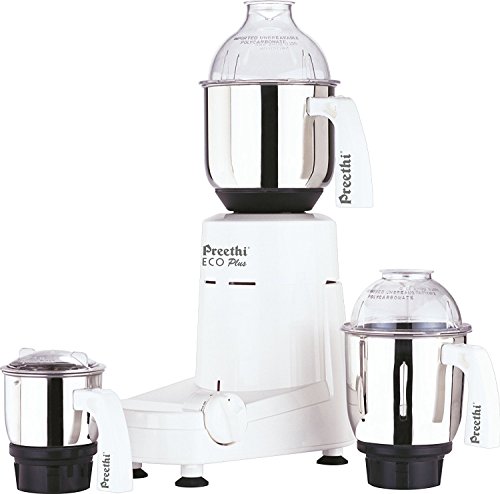
Preethi Eco Plus Mixer Grinder, 110-Volt for USA/Canada — Best Overall
If your spice mixes start from whole seed and dried chilli, this is the machine the task was invented for. The Preethi Eco Plus is a mixer grinder — the standard Indian kitchen format — in a 110-volt version made for the USA and Canada, so it plugs into a normal kitchen outlet with no converter and no warranty grey area.
Strengths
- Small steel jars sized for real spice-mix batches, from a few tablespoons upward
- Jar and blade geometry built for dry grinding, not adapted from a smoothie pitcher
- Separate jars let you keep one dedicated to pungent blends so flavours do not cross over
Trade-offs
- Countertop footprint and jar storage are more demanding than a single-pitcher blender
- Not the tool for large frozen drinks or big smoothie batches
- Aesthetics are purely functional — it looks like the workhorse it is
| Format | Mixer grinder, 110V for USA/Canada |
| Jars | Multiple stainless steel jars including small grinding jar |
| Primary use | Dry spice grinding, chutney and paste work |
Dry grinding is a geometry problem before it is a power problem. In a wide pitcher, centrifugal force pins a small load of coriander seed to the walls above the blade line and the motor just whirs. The Preethi’s small jars invert that: the load cannot escape the blade path, so whole spices are struck repeatedly until they powder. That is why a quarter cup of cumin or a small batch of garam masala comes out even, rather than half powder and half unbroken seed. For anyone who grinds a fresh mix weekly, this difference is the whole buying decision.
The multi-jar setup pays off in a second way: flavour discipline. Keep the smallest jar for your strongest blends — black cardamom, clove-heavy garam masala — and a larger one for milder sambar or rasam powders, and you stop perfuming every mild blend with last week’s strongest one. Wet work is equally native here: coconut chutney, ginger-garlic paste and soaked-dal batters are exactly what these jars do in Indian homes daily. Pulse in short bursts, let the jar cool between rounds on big dry batches, and the results stay aromatic instead of scorched.
Best for: cooks who grind spice mixes from whole spices every week / Not suited for: buyers who mainly want large frozen drinks and smoothies
Check the current price on Amazon

Vitamix 5200 Professional-Grade Blender, 64 oz, Black — Best Premium Power
The Vitamix 5200 is the premium route: a long-running professional-grade design with a 64 oz container, variable speed dial and a separate high-speed switch. For spice mixes it works best at moderate batch sizes, where its vortex keeps the load circulating through the blades until the powder is uniform.
Strengths
- Blade speed fine-grinds chillies, turmeric pieces and hard seed in larger batches
- Variable speed gives control for wet masala pastes and coconut chutneys
- Self-cleaning cycle makes switching between a pungent mix and a mild one practical
Trade-offs
- Small two-tablespoon loads rattle around the big container — batch up for best results
- Premium tier pricing within this guide’s range
- Tall container storage needs cabinet clearance
| Container | 64 oz |
| Controls | Variable speed dial plus high-speed switch |
| Blades | Stainless steel |
The honest way to use the 5200 for a spices mix is to respect its minimum effective load. Grind a cup of coriander or a full batch of curry powder and its vortex does excellent work, cycling the load down into the blades until the texture is fine and even. Try to powder two tablespoons of cumin in the empty-feeling jar and you will spend your time scraping the walls. Home cooks who batch-grind monthly and store mixes in jars — a very common pattern — will find that rhythm suits this machine perfectly.
Where the Vitamix pulls ahead of the dedicated grinder is the rest of the cooking session. The same base that powdered your spices will turn soaked rice and urad into dosa batter, silk out a tomato-onion curry base, and blend a restaurant-smooth palak puree without straining. If your Indian cooking spans grinding, batters and purees in equal measure, one premium base covering all three is a rational buy. Use short high-speed bursts for dry work and wipe the container fully dry first — any residual moisture turns fine powder into clumps.
Best for: batch grinders who also make batters, purees and soups / Not suited for: cooks who only ever grind two or three tablespoons at a time
Check the current price on Amazon

AMPOIA 2000W Blender, pure copper motor, 70 oz pitcher + 28 oz grinder, 32000 RPM — Best with Dedicated Grinder Jar
Most full-size blenders ask you to grind spices in the wrong vessel. This AMPOIA package answers the problem directly in the box: a 70 oz pitcher for drinks and purees, and a dedicated 28 oz grinder for the dry work, driven by a 2000W pure copper motor rated to 32000 RPM with a six-leaf blade.
Strengths
- Included grinder attachment sized for spice mixes and nut butters
- High blade speed powders dried chillies and hard seed quickly
- Large pitcher covers the wet side of Indian cooking for a family
Trade-offs
- Grinder jar is generous — very small loads still need scraping down
- Loud at full speed, like every high-RPM machine in this class
- Takes more storage space than a pitcher-only blender
| Motor | 2000W pure copper |
| Pitcher | 70 oz |
| Grinder | 28 oz attachment included |
| Speed | Up to 32000 RPM, multiple speeds |
Having the grinder in the box changes the daily experience. You are not decanting spices into an undersized smoothie cup or saving up an oversized batch for the big pitcher; you load the 28 oz grinder with a realistic spice-mix quantity, pulse to break the whole spices, then run short continuous bursts, shaking once between them, until the powder is even. Dried red chillies — the ingredient that defeats weak grinders, leaving leathery flakes — come down properly at this blade speed, which is the single best field test of a spice machine.
Treat the headline wattage as headroom rather than a promise: what matters is that the motor does not bog or overheat across three or four consecutive small batches, the normal rhythm when you grind a sambar powder, a garam masala and a chaat masala back to back. Let the grinder rest a minute between batches and tap the jar to settle powder before opening, unless you enjoy a small cloud of chilli dust. On the wet side, the big pitcher handles curry bases and lassi for a table of people without a second round.
Best for: cooks who want one box that includes a real spice grinder / Not suited for: minimalists with very limited cupboard space
Check the current price on Amazon

Blendtec Classic 575, WildSide+ Jar — Best for Large Batches
Blendtec’s design philosophy — a blunt safety blade and a wide, five-sided WildSide+ jar — suits the cook who grinds spice mixes in quantity: for extended family cooking, festive-season preparation, or small home businesses bottling a signature masala.
Strengths
- Wide jar circulates large dry loads without constant stopping and scraping
- Preprogrammed cycles make a favourite mix repeatable batch after batch
- Self-cleaning design speeds the turnaround between different blends
Trade-offs
- Like all big jars, it is not at its best on tiny two-spoon loads
- Square jar pours powder less precisely than a small steel grinding jar
- Premium tier cost for capacity some kitchens will not use
| Jar | WildSide+ (90 oz total capacity marking) |
| Controls | 5 speeds, preprogrammed blending cycles |
| Design | Self-cleaning |
Batch size is this machine’s argument. When the job is three cups of coriander, a bag of dried chillies and enough cumin for a season of cooking, the WildSide+ jar’s geometry keeps the mass folding back into the blade zone instead of compacting in corners. The result is an even powder across a large volume, which is harder to achieve than a fine grind in a tiny jar — under-ground pockets hide easily in big loads, and this jar design is specifically good at preventing them.
The preprogrammed cycles are more useful for spices than they first appear. Once you find the cycle length that powders your standard curry mix perfectly, you can repeat it exactly, which matters when other family members grind, or when you sell or gift the blend and consistency is your reputation. Work in a ventilated spot and let the dust settle a full minute before opening the lid after grinding chillies — the jar holds a surprising amount of airborne heat. For wet Indian work, the same jar turns out smooth coconut-based curry pastes and big lassi batches.
Best for: large-batch grinding for big families or home food ventures / Not suited for: cooks who grind small amounts fresh for each meal
Check the current price on Amazon
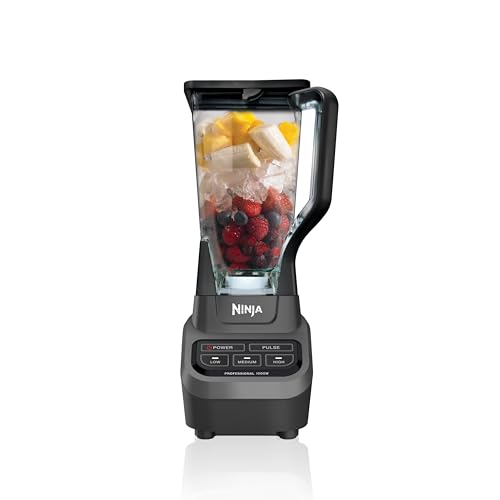
Ninja Professional Blender BL610, 1000W, 72 oz — Best Budget Full-Size
Not every kitchen can justify a premium base or a dedicated mixer grinder. The Ninja BL610 is the budget full-size route: 1000W, a 72 oz pitcher and Total Crushing blade stacks that break down ice and frozen fruit — and, used with the right technique, whole spices at medium volumes.
Strengths
- Strong crushing action breaks whole spices down at medium batch sizes
- 72 oz pitcher doubles as the family smoothie and puree machine
- Dishwasher-safe parts make post-chilli cleanup painless
Trade-offs
- No small grinding jar — tiny loads will not grind evenly in the big pitcher
- Powder fineness on the hardest seeds trails the top picks
- Plastic pitcher can hold onto strong spice aromas if not washed promptly
| Motor | 1000W |
| Pitcher | 72 oz |
| Blade system | Total Crushing stacked blades |
Technique is the price of admission here. Load at least a half to one cup of whole spices so the stacked blades have material to work on, pulse repeatedly to crack the seed, then run short bursts with a shake of the pitcher between them. Done that way, the BL610 produces a perfectly serviceable garam masala or curry powder — a little coarser than the Preethi or Vitamix output, which many home cooks actually prefer for tempering blends that get bloomed in oil anyway. Done with two tablespoons rattling in the pitcher, it will frustrate you, and no honest guide should pretend otherwise.
The stacked-blade design has one genuine spice advantage: it attacks the load at several heights at once, so chillies and bark pieces that ride up the pitcher still meet a blade. Wash the pitcher promptly after pungent grinding — plastic holds capsicum and cardamom ghosts that will perfume tomorrow’s smoothie — or dedicate an inexpensive second pitcher to spice work if you grind often. As a combined buy, a family blender that also covers weekly spice batches at a budget tier, it earns its place.
Best for: families wanting one affordable blender that can also grind medium spice batches / Not suited for: perfectionists chasing the finest possible powder on tiny loads
Check the current price on Amazon

KitchenAid K400 with Tamper KSB4028, Contour Silver — Best for Wet Masalas and Chutneys
Many Indian recipes ask for a paste, not a powder: ginger-garlic, onion-tomato masala, green chutney, coconut ground with roasted dal. The KitchenAid K400, with its variable speed dial, tamper and preset programs for ice crush, icy drinks and smoothies, is the pick tuned for that wet workload, with honest dry-grinding ability as the second skill.
Strengths
- Tamper keeps thick pastes moving without adding excess water
- Intelli-Speed motor control holds speed under heavy paste loads
- Preset programs give repeatable chutney and puree textures
Trade-offs
- Dry grinding is a moderate-batch game, like other pitcher blenders
- No dedicated small grinder jar in the box
- Heavier base than personal blenders — it earns a permanent counter spot
| Controls | 5-speed variable dial plus preset recipe programs |
| Included | Tamper |
| Motor control | Intelli-Speed |
The tamper is the feature that matters most for Indian wet work. A proper ginger-garlic paste should be nearly dry — too much water and it spits in hot oil and dilutes the dish — but thick pastes cavitate in ordinary blenders, spinning an air pocket around the blades while the bulk sits still. Pushing the load down with the tamper keeps it folding, so you get a smooth paste at the low water content the recipe actually wants. The same trick transforms coconut chutney and soaked-lentil batters.
For dry spices, treat the K400 as a competent moderate-batch grinder: a cup or so of whole spices, pulsed then run in bursts, comes out even enough for everyday curry powders and rubs. It will not match the small-jar fineness of the Preethi on a tiny garam masala batch, and this guide will not pretend it does — that is exactly why both machines are in the same list, aimed at different kitchens. If your cooking leans wet — pastes, chutneys, purees, smoothies — this is the most satisfying daily driver of the six.
Best for: cooks whose Indian cooking is paste- and chutney-led / Not suited for: dry-spice specialists who grind small batches daily
Check the current price on Amazon
Comparison Table
| Pick | Badge | Key spec | Best for |
|---|---|---|---|
| Preethi Eco Plus Mixer Grinder, 110-Volt for USA/Canada | Best Overall | 110V mixer grinder, small steel grinding jars | cooks who grind spice mixes from whole spices every week |
| Vitamix 5200 Professional-Grade Blender, 64 oz, Black | Best Premium Power | 64 oz container, variable speed, high-speed switch | batch grinders who also make batters, purees and soups |
| AMPOIA 2000W Blender, pure copper motor, 70 oz pitcher + 28 oz grinder, 32000 RPM | Best with Dedicated Grinder Jar | 2000W, 70 oz pitcher plus 28 oz grinder, 32000 RPM | cooks who want one box that includes a real spice grinder |
| Blendtec Classic 575, WildSide+ Jar | Best for Large Batches | WildSide+ jar, 5 speeds, preprogrammed cycles | large-batch grinding for big families or home food ventures |
| Ninja Professional Blender BL610, 1000W, 72 oz | Best Budget Full-Size | 1000W, 72 oz pitcher, Total Crushing technology | families wanting one affordable blender that can also grind medium spice batches |
| KitchenAid K400 with Tamper KSB4028, Contour Silver | Best for Wet Masalas and Chutneys | Variable speed dial, tamper included, preset programs | cooks whose Indian cooking is paste- and chutney-led |
Read the table through the lens of batch size. The Preethi’s small steel jars win at the tablespoon-to-cup range where spice mixes actually live; the big-pitcher machines win when you grind in cups or when wet work dominates your cooking. The AMPOIA splits the difference by putting a real grinder in the box. There is no universal winner — there is a right jar for your grinding habit.
How to Choose a Blender for Indian Spice Mixes
Start with the jar, not the motor. Dry spices are a light, low-volume load, and the machine that grinds them best is the one whose vessel keeps that load in the blade path. Small steel grinding jars do this by design. Full-size pitchers do it only when the batch is big enough to circulate. Before comparing wattage, decide honestly how you grind: a few tablespoons fresh each week, a cup or two monthly, or large seasonal batches. That single answer eliminates half of any shortlist.
Next, judge blade speed and control together. Hard seed and dried chilli need high blade tip speed to shatter rather than bounce, while delicate aromatics need short, controllable bursts so friction heat does not drive off the volatile oils you are grinding them for. A variable dial or reliable pulse matters more than a long list of drink presets. If a machine offers only one high speed and a prayer, your cardamom will taste flat no matter how fine the powder looks.
Finally, count the whole session. Indian cooking rarely stops at the dry mix: there is a paste to grind, a chutney to blend, perhaps a batter resting for tomorrow. A machine that covers dry and wet work in one base saves money and counter space, but only if neither job is a compromise too far. Kitchens that grind daily should weight the dry specialist; kitchens that grind monthly and blend daily should weight the all-rounder.
Dry Grinding Technique: Getting Fine, Even Powder
Technique can rescue a mediocre grinder and ruin a great one, so learn the sequence. Start with a bone-dry jar — a single rinse’s worth of leftover moisture turns powder into paste at the edges. Toast whole spices lightly first when the recipe allows: toasting dries surface moisture, makes seed brittle and easier to shatter, and deepens flavour. Cool the spices fully before grinding; warm spices release steam inside the jar and clump.
Grind in stages. Pulse five or six times to crack whole seed and chilli, then run short bursts of ten to twenty seconds, shaking or tapping the jar between bursts to redistribute the load. Sieve if the recipe demands a fine powder, return the coarse fraction for one more burst, and never run a small dry load continuously for minutes — friction heat is the enemy of aroma, and a hot jar is your signal to rest the machine, not push on.
Store the finished mix in a small, airtight jar away from light, filled as close to the top as practical to limit air exposure. Whole spices keep their character for many months; ground mixes are at their best in the first weeks. This is the real argument for grinding modest batches more often — and therefore for a machine whose jar size matches modest batches.
Blending for Specific Mixes: Garam Masala, Curry Powder and Chaat Masala
Different mixes stress a grinder differently, and adjusting your approach per blend is the mark of a cook who gets consistent results. Garam masala is the aromatic showcase: a small batch of expensive, volatile spices — cardamom, clove, mace, black pepper — where fineness matters less than aroma preservation. Grind it in the smallest jar you have, in the shortest bursts that achieve an even texture, and jar it immediately. This is the blend where the Preethi’s small steel jar most clearly outclasses a big pitcher, because the batch is small, the spices are precious, and heat is the enemy of everything the blend exists to deliver.
Curry powders and sambar powders are the volume blends: coriander-heavy, fortified with lentils or rice in many regional recipes, turmeric for colour and earth, and dried chillies for heat. These batches are bigger, more forgiving and more abrasive — the lentil and rice components are hard and benefit from the staged grind: pulse to crack, rest, then finish. High-speed pitcher machines come into their own here, because the batch size finally suits their jars. Sieve a curry powder if it will season a smooth sauce; leave it slightly textured if it is destined for dry rubs and roasted vegetables, where a little body is welcome.
Chaat masala and other finishing blends introduce a different problem: hygroscopic ingredients. Amchur (dried mango powder), black salt and dried mint absorb moisture eagerly, and a blend ground on a humid day can cake within the week. Grind finishing blends on the driest day available, make smaller batches, and store them with the jar filled to the brim to minimise air. If a blend does cake, a five-second regrind restores it — one more reason the machine that grinds small batches well keeps earning its place long after the first purchase thrill fades.
Care and Cleaning for Spice Grinding Equipment
Spice grinding is hard on equipment in specific ways, and a little informed care doubles the useful life of jars and blades. The first rule is dry discipline: water is for washing day, not grinding day. After wet work, dry jars completely — a wipe, then ten minutes of air — before any dry batch, because a damp jar both clumps the powder and dulls your sense of whether the spices themselves were dry. Blade assemblies should never sit soaking; wash, dry and reassemble promptly, and the steel stays bright instead of developing the tea-coloured staining that ground turmeric and chilli oils encourage.
Odour management is the second discipline. Ground spices perfume everything porous: plastic pitchers, rubber gaskets, lid seals. The hierarchy of responses runs from washing promptly (which prevents most of it), through a lemon-and-warm-water blend for stubborn ghosts, to the structural solution — a dedicated jar or pitcher for pungent work. Mixer grinder owners have this solved by design, with multiple jars to assign. Pitcher owners who grind weekly should seriously consider a second, inexpensive pitcher dedicated to spices; it costs less than the frustration of cardamom-scented smoothies.
Finally, respect the motor’s thermal limits as a care practice, not just a technique. Dry grinding is high-resistance work: short bursts, rests between batches, and never grinding through a burning smell. If a jar’s contents come out hot to the touch, your bursts were too long — the flavour cost you already know about, but the motor pays a share of that bill too. Machines treated this way grind happily for years; machines forced through marathon sessions age in months.
Whole Spices Versus Pre-Ground: What Your Grinder Changes
The case for owning a spice-capable blender rests on a flavour fact: whole spices keep their aromatic compounds sealed inside seed, bark and pod for many months, while ground spices begin losing theirs within weeks of grinding. A cook who grinds at home is therefore not performing a ritual for its own sake — they are moving the grinding moment to just before cooking, which is the single largest freshness upgrade available in Indian home cooking. The practical consequence is shopping differently: buy whole spices in modest quantities from shops with fast turnover, store them airtight and dark, and let the machine convert them to powder on your schedule.
There is also a blending freedom that pre-ground jars cannot offer. Regional mixes differ by a cardamom pod here, a stone flower flake there; family recipes carry proportions no commercial blend matches. A home grinder makes those proportions yours — a garam masala tuned to your household’s heat tolerance, a sambar powder with your family’s exact dal-to-rice ratio. The machines in this guide were ranked with that freedom in mind: the best spice blender is the one whose jar size and grinding quality make small, personal, frequent batches effortless, because frequency and freshness are the same decision.
Safety and Sensible Practice When Grinding Spices
Grinding is the most vigorous work a blender does, and a few safety habits keep it entirely uneventful. Never open a jar immediately after grinding chillies — the airborne dust is a genuine irritant to eyes and lungs, and sixty seconds of settling, with the jar opened away from your face, is the whole solution. Keep fingers and utensils out of any jar connected to its base, and treat blade assemblies as the sharp tools they are when washing: a brush under running water cleans them without a hand ever touring the blade edges. Children who cook alongside you should be taught that the grinder’s noise is the signal to watch, not to reach.
Electrical common sense completes the picture: run the machine on a dry counter, never with wet hands on the controls, and give the motor its rests on big grinding days rather than pushing through a hot smell. If a jar cracks or a blade assembly loosens, retire it — grinding loads punish damaged parts harder than any other kitchen task. None of this is meant to make the work sound hazardous; it is the ordinary respect due to a fast, powerful tool, and households that build the habits once will grind safely for the life of the machine.
How to Grind a Garam Masala From Whole Spices
This walkthrough uses any pick in this guide; the quantities make roughly a half cup of finished garam masala, a sensible batch for a month of cooking.
- Measure the whole spices: coriander seed as the base, with smaller amounts of cumin, black peppercorns, green cardamom pods, cloves, a piece of cinnamon bark and a blade or two of mace if you use it. Pick out any stones or stems.
- Dry-toast the spices in a heavy pan over medium heat, stirring constantly, until fragrant and a shade darker — two to three minutes. Coriander and cumin scorch quickly once hot, so keep them moving.
- Tip the spices onto a plate and cool completely, at least ten minutes. Grinding warm spices steams the powder and dulls it.
- Load the cooled spices into the grinding jar or blender. For pitcher machines, confirm you have at least a half-cup load; add a little extra coriander rather than grinding a tiny amount badly.
- Pulse repeatedly to crack the whole spices, then grind in short bursts, shaking the jar between bursts, until the powder rubs smooth between finger and thumb with no gritty shards.
- Rest the closed jar for a minute so the dust settles, then open away from your face. Sieve for a fine powder if you wish, regrinding the coarse bits once.
- Jar the mix airtight, label it with the date, and store it in a dark cupboard. Use it within the first month for the brightest flavour.
Clean the jar immediately with a dry brush for the next use; wash with water only when switching to a mild or sweet blend, and dry it completely before the next dry batch. A jar that smells of garam masala will scent everything it touches until it is washed — one more reason dedicated small jars, or a dedicated pitcher, are worth having.
Common Buying Mistakes
Grinding tiny loads in a huge pitcher. Two tablespoons of cumin in a 72 oz pitcher will orbit the walls and barely meet the blades. Either batch up to a workable volume, use a machine with a small grinding jar, or accept a coarse result and sieve it.
Running the motor continuously until the jar is hot. Heat is flavour leaving. Scorched spice powder tastes dusty and bitter, and no recipe adjustment fixes it. Short bursts with rests between them are not fussiness; they are the method.
Grinding right after toasting. Warm spices steam inside a closed jar, clumping the powder and fogging the jar with moisture. Ten patient minutes of cooling protects both texture and aroma.
Storing ground mixes for a year. A giant batch ground in January is a shadow of itself by winter. The convenience of a big-batch machine is real, but match batch size to a month or two of cooking, not a year.
Washing the jar and grinding immediately. Residual water turns the first spoonfuls of powder into paste and can rust neglected blade assemblies over time. Dry the jar fully — a quick wipe and a few minutes of air — before any dry work.
Final Recommendation
For most Indian kitchens, the Preethi Eco Plus is the correct answer to this exact keyword: it is the machine format built for spice mixes, in the right voltage, with jars sized to real batches — Best Blenders For Indian Recipes covers the wider recipe workflow if your cooking leans that way. Choose the Vitamix 5200 if you batch-grind and want one premium base for batters and purees too, and the AMPOIA if you want a dedicated grinder included with a full-size pitcher. The Blendtec is the large-batch specialist, the Ninja BL610 the budget family compromise, and the KitchenAid K400 the wet-paste champion. If your blending is mostly single drinks on weekdays, Best Blenders For Individual Servings is the more relevant shortlist, and for the drink side of the kitchen see Best Blenders For Smoothies. Spice specialists may also want Best Blenders For Grinding Spices for a deeper dry-grinding comparison.
Ready to decide? Start with the top three picks and check price on Amazon for each before you buy: Preethi Eco Plus Mixer Grinder, 110-Volt for USA/Canada · Vitamix 5200 Professional-Grade Blender, 64 oz, Black · AMPOIA 2000W Blender, pure copper motor, 70 oz pitcher + 28 oz grinder, 32000 RPM.
Frequently Asked Questions
Can a regular blender grind whole spices evenly?
Yes, with conditions. A high-speed blender grinds whole spices well when the batch is large enough to circulate in the jar — roughly a half cup or more in a full-size pitcher. Below that, the load escapes the blade path and results turn uneven. Small grinding jars, like those on a mixer grinder, remove the batch-size problem entirely.
Is a mixer grinder better than a blender for Indian cooking?
For dry spice mixes and small chutney batches, yes — that is the job the format was designed for, and jar geometry matters more than raw power. For large purees, soups, batters and frozen drinks, a full-size blender is the stronger tool. Many serious kitchens eventually own one of each; if you must choose one, choose by which job you do weekly.
Why did my spice powder come out clumpy?
Moisture is the usual cause: spices ground while still warm from toasting, a jar that was not fully dry, or humid whole spices. Cool toasted spices completely, dry the jar thoroughly, and if your whole spices have been stored in a steamy kitchen, a brief extra minute of toasting helps drive off surface moisture before grinding.
How fine should a spice mix be?
It depends on use. Curry powders and garam masala for sauces are best fine, so they disperse without grit. Blends destined for tempering in oil or for rubs can stay slightly coarse. When in doubt, grind fine, sieve, and regrind the coarse fraction once — that two-stage approach gives the most even result on any machine.
How do I stop spice smells lingering in a plastic pitcher?
Wash promptly after grinding, and avoid leaving ground chillies sitting in the pitcher. For stubborn aromas, blend warm water with a slice of lemon or a little baking soda, rinse and dry fully. If you grind pungent mixes weekly, dedicating one pitcher or jar to spice work is the simplest permanent fix.
Can I grind turmeric root and other very hard ingredients?
Dried turmeric pieces are among the hardest common loads and will dull weak blades and strain small motors. Break pieces small, grind in short bursts, and favour the high-speed or dedicated-grinder picks in this guide. Very hard loads are also the fastest way to overheat a motor, so rest the machine between bursts.


