Disclosure: airfryerkitchensupply.com is reader-supported. When you buy through links on our site, we may earn an affiliate commission at no extra cost to you.
Where to buy
Below are the best bbq pit smokers picks verified for this guide, each with a live Amazon link where the model is sold.
- recteq DualFire 1200 Pellet Smoker Grill — Check the current price on Amazon
- Pit Boss 1600 Navigator Series Pellet Grill — Check the current price on Amazon
- recteq Flagship 1600 Pellet Smoker Grill — Check the current price on Amazon
- Traeger Woodridge Pro Pellet Grill & Smoker — Check the current price on Amazon
- Kamado Joe Classic Joe Series II 18-inch — Check the current price on Amazon
- Masterbuilt Gravity Series 1050 Digital Charcoal Grill and Smoker — Check the current price on Amazon
A pit smoker is judged by one session: the long one. The best bbq pit smokers hold a low, even temperature for ten-plus hours, lay down clean smoke the whole time, and leave the cook free to live a life between checks. This guide’s six pits approach that session from three directions — pellet automation (recteq, Pit Boss, Traeger), ceramic insulation (Kamado Joe) and gravity-fed charcoal under digital control (Masterbuilt) — and every one was verified before earning a link.
The word ‘pit’ once meant a hole in the ground or a brick vault; today it means any cooker dedicated to low and slow. What has not changed is the physics: collagen needs time, smoke needs cleanliness, and temperature needs steadiness. The reviews below judge each pit on those three, plus the practicalities — capacity from the verified listing, fuel endurance, and how a cook actually supervises the session.
Prices and ratings are not printed; check price on Amazon and judge build and specification instead. Pit cooking is a years-long relationship with a cooker, and the right question is never ‘which is cheapest’ but ‘which one’s effort and flavour profile will I still love in year three’.
In this guide
Quick Picks
Best Overall Pit — recteq DualFire 1200 Pellet Smoker Grill: Two chambers — one for low-and-slow pit work, one for hot and fast — in a single pellet pit: brisket on one side, searing on the other, all under Wi-Fi control. Check the current price on Amazon
Best Capacity Pit — Pit Boss 1600 Navigator Series Pellet Grill: The biggest pit in this guide: 1,593 sq. in. of pellet smoking with a flame broiler for finishing — capacity for whole-event meat loads in one chamber. Check the current price on Amazon
Best Premium Pit — recteq Flagship 1600 Pellet Smoker Grill: recteq’s flagship: the largest cook space here, a 40 lb hopper for marathon cooks, and the brand’s top-tier build — a pit bought once, deliberately. Check the current price on Amazon
Best Connected Pit — Traeger Woodridge Pro Pellet Grill & Smoker: Traeger’s connected pit: 970 sq. in., a Super Smoke mode for the low-temperature hours when meat drinks in flavour, and full app control of the cook. Check the current price on Amazon
Best Ceramic Pit — Kamado Joe Classic Joe Series II 18-inch: A ceramic pit that holds low smoking heat for extraordinary stretches on little charcoal, then climbs to steakhouse searing heat — the flavour purist’s pit. Check the current price on Amazon
Best Charcoal Pit With Automation — Masterbuilt Gravity Series 1050 Digital Charcoal Grill and Smoker: The big gravity pit: 1,050 sq. in. of real-charcoal smoking run by a digital fan and app — charcoal depth, pellet manners, family-event capacity. Check the current price on Amazon
How These Picks Were Chosen
Selection covered the three credible modern pit technologies at several capacities, from the 250 sq. in. ceramic kamado — small in inches, enormous in efficiency — to the 1,667 sq. in. recteq Flagship. Within each technology we weighed verified cooking area and hopper capacity, the maturity of the temperature-control system, and whether the design serves the long cook specifically: alarms, monitoring, fuel endurance and grease management all counted.
Verification followed the rule without exception: Amazon listing data search by brand and model, title matched to the intended product, ASIN taken from the listing response, specs quoted from the listing. Products that could not be matched confidently were excluded, and no recalled product appears here.
Traditional brick pits and offset stick-burners are honoured in the buying guide, but they are not catalog products in the same sense; this guide links what can actually be bought and delivered, and says so. The six linked pits are the strongest delivered-to-your-door answer to low and slow that the current catalog offers.
The 6 Best BBQ Pit Smokers

recteq DualFire 1200 Pellet Smoker Grill — Best Overall Pit
The DualFire suits the pit cook who runs mixed menus in one session: long-smoked meats resting while sides, steaks or chicken finish hot. If every cook is a single low-and-slow cut, a single-chamber pit is simpler; if your cooks are productions, this is the production tool.
Strengths
- Separate chambers end the low-vs-hot compromise in one pit
- Pellet automation holds pit temperatures through the longest cooks
- Wi-Fi monitoring suits overnight and all-day sessions
Trade-offs
- Premium tier pricing within this guide’s pellet field
- Two chambers mean two areas to clean and learn
- Needs power and dry pellet storage like every pellet pit
Key specs: Dual-chamber design for low-and-slow plus hot-and-fast cooking (Amazon listing); wood pellet fuel; Wi-Fi control
‘Pit’ cooking is defined by time at low temperature, and the DualFire’s insight is that real cooks rarely run only one temperature. The low chamber holds brisket or butts at smoking heat for as long as they need; the hot chamber roasts, sears and crisps on its own schedule. No moving meat between cookers, no compromising the brisket’s final hours to grill lunch — the pit becomes a small kitchen organised around fire and time.
recteq’s pellet system brings the usual automation virtues — set the temperature, fill the hopper, monitor by phone — with a build reputation a step above the mass-market pellet field. Keep the disciplines: dry pellets, clean fire pot, grease managed. Do that, and the DualFire will run a full barbecue programme from one plug.
Best for: mixed-menu pit cooks and entertainers / Not suited for: single-cut minimalists
Check the current price on Amazon
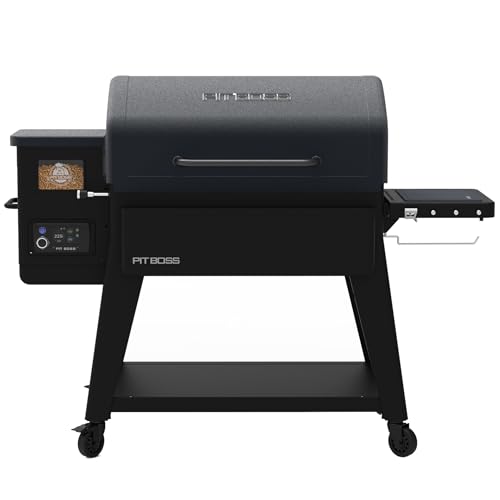
Pit Boss 1600 Navigator Series Pellet Grill — Best Capacity Pit
Choose the 1600 Navigator when your pit sessions are measured in multiple briskets and the freezer gets stocked from each cook. It is a very large appliance for a very particular cook; small households will heat a lot of empty steel and should look at the mid-size picks instead.
Strengths
- 1,593 sq. in. swallows event and batch loads no other pick here matches
- Flame broiler finishes and sears without a second cooker
- Touchscreen plus connectivity keeps a huge pit manageable on long cooks
Trade-offs
- Footprint and weight demand a permanent, generous patio spot
- Pellet use scales with the space being heated
- A chamber this big is inefficient for small everyday cooks
Key specs: 1,593 sq. in. cook space (Amazon listing); 30 lb hopper class per series listing; flame broiler; touchscreen controller; WiFi and Bluetooth
Capacity at this scale changes the economics of barbecue: one long pellet run can produce a brisket, two butts, ribs and a tray of burnt ends, portioned and frozen for weeks of meals. The Navigator’s controller and connectivity are not luxuries here — they are how one cook supervises that much meat over that many hours without living beside the pit.
The flame broiler matters at the finish: smoked steaks and chops get a direct-flame sear, chicken skin crisps, and the pit covers the whole menu. Ownership demands the big-pit routines — hopper checks on overnight cooks, fire-pot cleaning, grease discipline — performed without exception, because a pit this size forgives neglect no more than a small one.
Best for: batch cooking, events and freezer stocking / Not suited for: small households or tight patios
Check the current price on Amazon
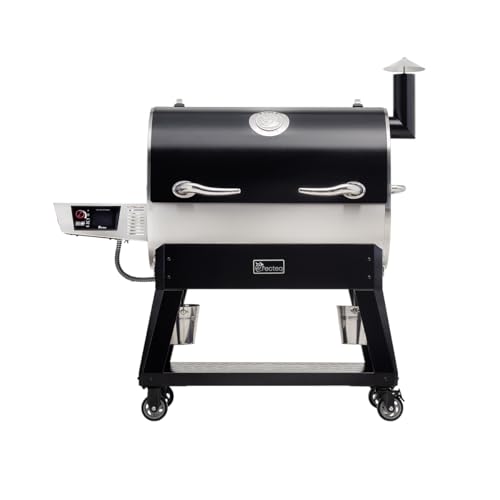
recteq Flagship 1600 Pellet Smoker Grill — Best Premium Pit
The Flagship is for the committed pit cook who has done the maths on years of weekends and wants the premium end of the pellet market: capacity, hopper endurance and construction in one purchase. It is not a first smoker for the casually curious — its tier assumes you already know this hobby is yours.
Strengths
- 1,667 sq. in. and a 40 lb hopper support the longest, largest cooks in this guide
- Top-tier construction aimed at decade-scale ownership
- Wi-Fi control and monitoring befitting overnight brisket programmes
Trade-offs
- Highest commitment in this guide by size and tier
- Heats a lot of steel for modest cooks
- Premium parts and service expectations come with the territory
Key specs: 1,667 sq. in. cook space (Amazon listing); 40 lb hopper; Wi-Fi smart control; wood pellet fuel
A flagship pit is bought on three promises: it holds temperature like a laboratory, it holds enough fuel to be trusted overnight, and it holds together for years. The 1600’s specification sheet — the cook space, the 40 lb hopper — is aimed squarely at the first two, and recteq’s market position rests on the third. For the cook running weekly volume, those promises compound into the real luxury: predictability.
Use it as intended and it disappears into the process: load the hopper, set the programme, probe the meat, and let alarms — not anxiety — govern your night. The pellet disciplines still apply, and a pit this size should be cleaned like the investment it is. Bought with eyes open, it is the last pellet pit most owners purchase.
Best for: committed high-volume pit cooks / Not suited for: first-time or occasional smokers
Check the current price on Amazon

Traeger Woodridge Pro Pellet Grill & Smoker — Best Connected Pit
Pick the Woodridge Pro if you run your pit from your phone and your menu from the Traeger ecosystem — recipes, probes and control in one app. Cooks who prefer knobs and independence from apps will find the same pellet fundamentals in simpler picks here.
Strengths
- Super Smoke mode targets maximum smoke at low pit temperatures
- 970 sq. in. covers family-plus loads comfortably
- WiFIRE app integrates control, monitoring and recipes
Trade-offs
- App-centric control is a dependency some cooks dislike
- Pellet smoke remains gentler than charcoal even in Super Smoke mode
- Ecosystem accessories add cost if you buy into them
Key specs: 970 sq. in. cooking area (Amazon listing); WiFIRE app control; Super Smoke mode; digital sensor; side shelf
Super Smoke is a meaningful feature, not a badge: at low temperatures a pellet fire smoulders more and combusts less completely, laying down more smoke compounds — and the early, low hours are precisely when meat absorbs them best. A pit that automates that mode lets a beginner produce smoke-kissed brisket that tastes like experience, while the app watches temperatures the beginner has not yet learned to feel.
The rest of the package is Traeger maturity: a sensible shelf, a digital sensor, and a chamber sized for real loads without the Navigator’s enormity. Keep pellets dry, the fire pot clean and the app updated, and the Woodridge Pro runs the modern pit programme — planned on a phone, executed by an auger, judged at the cutting board.
Best for: connected cooks wanting maximum pellet smoke / Not suited for: app-averse traditionalists
Check the current price on Amazon

Kamado Joe Classic Joe Series II 18-inch — Best Ceramic Pit
The Classic Joe II suits the cook who values flavour and fuel efficiency over raw capacity: ceramic walls sip charcoal and hold temperature like a bank vault. Its 250 sq. in. grate is the smallest here — this is a pit for quality loads, not crowd volume, and for cooks happy to manage vents by hand.
Strengths
- Ceramic insulation holds pit temperatures with minimal fuel and fuss
- Charcoal flavour at its deepest, with genuine high-heat searing range
- Cart, shelves and stainless grates make a complete cooking station
Trade-offs
- 250 sq. in. limits load size — briskets need planning or a raised tier
- Ceramic is heavy and does not forgive being dropped or knocked
- Manual vent control: no automation watches this pit for you
Key specs: 18-inch ceramic kamado; 250 sq. in. cooking area (Amazon listing); cart with side shelves; stainless steel grates; charcoal fuel
Ceramic changes pit physics. Once heat-soaked, the walls radiate stored heat back at the meat and barely sip oxygen, so a small charcoal load holds smoking temperature through cooks that would exhaust a steel pit twice over. The result is moist, deeply flavoured meat and a fire so stable that vent positions, once learned, repeat almost exactly. It is the oldest pit technology here — clay and fire — refined with modern gaskets, hinges and grates.
The same insulation makes overshooting costly: a kamado heated too far takes a long time to come back down, so approach temperature slowly and close vents early. Learn that one discipline and the Joe becomes the most trustworthy low-and-slow cooker in this guide — and the one that also sears a steak at temperatures the pellet pits cannot reach.
Best for: flavour-first cooks and efficient long smokes / Not suited for: crowd capacity or automated cooking
Check the current price on Amazon

Masterbuilt Gravity Series 1050 Digital Charcoal Grill and Smoker — Best Charcoal Pit With Automation
Choose the Gravity 1050 if charcoal is your flavour non-negotiable but your schedule is your reality: the hopper and fan hold pit temperature through long cooks while you live your life. It asks for power, cleaning discipline and grease management in return — a machine, not a kettle.
Strengths
- Real charcoal and wood smoke with automated temperature holding
- 1,050 sq. in. covers serious pit loads
- Can ramp from smoking to searing heat in one unit
Trade-offs
- Fan, controller and hopper systems need cleaning and weather protection
- Grease management is critical in a charcoal cooker that also sears
- More complex and costly than a simple drum or kettle pit
Key specs: 1,050 sq. in. cooking area (Amazon listing); GravityFed charcoal hopper; digital control with app; charcoal fuel
The Gravity design burns charcoal at the base of a sealed hopper; gravity feeds fresh fuel as ash falls, and a fan meters air to hold the set temperature with digital precision. In pit terms that means brisket cooked over real charcoal, at an unvarying temperature, overnight, with the app reporting progress — a combination no traditional pit offers and no pellet pit flavours the same way.
At 1,050 sq. in. it also simply fits the food: full packers, multiple butts, rib programmes for a crowd. The ownership contract is mechanical sympathy — keep the hopper sealing, the fan intake clear, the grease path clean — and the payoff is the deepest-flavoured automated barbecue in this guide.
Best for: charcoal devotees needing automation and capacity / Not suited for: minimalists or off-grid cooks
Check the current price on Amazon
Comparison Table
| Pick | Badge | Key spec | Best for |
|---|---|---|---|
| recteq DualFire 1200 Pellet Smoker Grill | Best Overall Pit | Dual chamber pellet, Wi-Fi | mixed-menu pit cooks and entertainers |
| Pit Boss 1600 Navigator Series Pellet Grill | Best Capacity Pit | 1,593 sq. in. pellet, flame broiler | batch cooking, events and freezer stocking |
| recteq Flagship 1600 Pellet Smoker Grill | Best Premium Pit | 1,667 sq. in., 40 lb hopper, Wi-Fi | committed high-volume pit cooks |
| Traeger Woodridge Pro Pellet Grill & Smoker | Best Connected Pit | 970 sq. in. pellet, Super Smoke, WiFIRE | connected cooks wanting maximum pellet smoke |
| Kamado Joe Classic Joe Series II 18-inch | Best Ceramic Pit | 18 in. ceramic kamado, charcoal | flavour-first cooks and efficient long smokes |
| Masterbuilt Gravity Series 1050 Digital Charcoal Grill and Smoker | Best Charcoal Pit With Automation | 1,050 sq. in. gravity charcoal, app | charcoal devotees needing automation and capacity |
How to Choose a Pit Smoker
Choose your pit technology by flavour and lifestyle together. Pellet pits give the easiest long cooks and a clean, mild wood flavour; they need power, dry pellets and routine cleaning. Ceramic kamados give the deepest charcoal character per hour of effort and astonishing fuel economy; they are manual, heavy and capacity-limited. Gravity charcoal gives charcoal flavour with pellet-like automation; it is the most mechanically involved. All three produce excellent barbecue — the differences are in the cooking experience, which you will repeat for years.
Size by the long cook, not the grill session. A brisket programme needs room for the cut plus airflow around it; a household that smokes monthly for the freezer needs the big chambers; a couple smoking a butt twice a month is better served by the kamado’s efficiency than by 1,600 sq. in. of steel to heat. Hopper capacity matters as much as grate size on overnight cooks — fuel endurance is what lets you sleep.
Value supervision features honestly. Probes, alarms and app monitoring are not gimmicks on a pit; they are the difference between hosting your own party and babysitting your cooker. If your long cooks coincide with busy days — and whose do not — automation and monitoring are worth real money.
The Long Cook: Managing a Pit Session End to End
Great pit sessions are scheduled backwards from the table: serving time, minus at least an hour’s rest, minus a cook time estimated generously, equals start time — usually the night before for brisket. Fuel, probes and meat are staged before lighting; a pit lit in a scramble cooks in a scramble. The first hour is for stabilising temperature with no meat aboard; only a proven-steady pit receives the brisket.
Mid-cook, the work is mostly restraint. Smoke matters early, while surfaces are moist; bark sets mid-cook, and the wrap decision — paper for breathable bark, foil for speed, none for maximum crust — is made by looking at the bark, not the clock. Tenderness, tested by probe, ends the cook; temperature merely predicts it. Resting, wrapped and held warm, finishes what the pit started, and slicing is done at the last possible moment.
Log the session. Pit craft compounds through records: fuel used, weather, times at each stage, and the verdict at the board. Five logged cooks on any pit in this guide will make you visibly better at barbecue; fifty will make you the person neighbours consult.
Fuel for Pits: Pellets, Charcoal and Wood
Pellets are manufactured for consistency: dry, uniform hardwood that an auger can meter precisely. Their flavour is clean and blend-dependent — hickory and oak for beef, fruitwood for pork and poultry — and their weakness is moisture: pellets stored damp crumble and jam. Charcoal is the traditional pit fuel: lump for clean heat and chunks of smoking wood for flavour, with gravity hoppers and kamado insulation as two different answers to feeding it steadily.
Wood as a primary fuel — the stick-burner tradition — is not represented among these catalog pits, and honesty requires saying its flavour ceiling is the highest and its labour demand is higher still: a split every half hour, for the entire cook, with skill. Buyers who discover they love that labour graduate to offsets and fabricators. Buyers who love the food more than the fire buy exactly the pits in this guide, and eat just as well at their own tables.
Pit Care: Grease, Ash and Weather
Long cooks render pounds of fat. Every pit here has a grease path — trays, channels, buckets — and keeping it clear is both fire prevention and flavour protection, because old grease smokes bitter. Ash is the second discipline: pellet fire pots vacuumed, kamado ash raked, gravity ash pans emptied. A pit’s temperature stability degrades measurably as ash chokes its airflow, so cleaning is calibration.
Weather protection extends life more than any other habit: covers on, pellets and charcoal stored dry, electronics sheltered. Once a season, check gaskets, hinges, probes against a known temperature, and the condition of cords and fans. Pits are decade appliances when their fires burn clean and their steel stays dry — and neglected pits announce themselves in the flavour before they fail outright.
A Closer Look at the Shortlist: How the Six Compare in Real Cooks
Specifications only take a buyer so far with best bbq pit smokers; what matters is how each cooker behaves on a wet Saturday with a brisket deadline. Start at the top of the shortlist. The recteq DualFire 1200 Pellet Smoker Grill earns its Best Overall badge because it balances the things that decide real cooks — temperature steadiness, capacity that matches its footprint, and a learning curve measured in one or two sessions rather than a season. Its closest rival here, the Pit Boss 1600 Navigator Series Pellet Grill, answers a more specific brief: read its badge as a job description, and if that job is your typical cook, it may serve you better than the overall winner despite the ranking. Rankings order a guide; they do not cook your dinner, and the honest way to use this shortlist is to match badges to your own menu before you match them to anyone else’s verdict.
The middle of the list is where most buyers should actually shop. The recteq Flagship 1600 Pellet Smoker Grill and the Traeger Woodridge Pro Pellet Grill & Smoker trade strengths in opposite directions — one prioritises control and refinement, the other capacity or value — and the right choice depends on whether your cooks are limited by finesse or by volume. Think about your last five cooks, not your next imagined one: if every one of them was a single cut for the family, finesse wins; if two of them involved cooking for a crowd and freezing the surplus, volume wins. The Kamado Joe Classic Joe Series II 18-inch exists for the buyer whose constraint is different again — budget, space or a specific format — and it is chosen often enough, by buyers who name their constraint honestly, to be one of the most satisfying purchases on the list.
The final pick, the Masterbuilt Gravity Series 1050 Digital Charcoal Grill and Smoker, is the specialist. Specialists look like compromises in a comparison table and like revelations in the right backyard. If its particular strength — the thing its badge names — is the thing your cooking has been missing, it outranks everything above it for you. If it is not, it will feel like the wrong tool no matter how well it is made. That is the real lesson of a six-pick shortlist: the differences that matter are differences of fit, and fit is decided by your menu, your space, your weather and your patience, in roughly that order.
Before You Order: A Best Bbq Pit Smokers Checklist
Measure the home this cooker will live in before you measure anything else. Note the patio or deck footprint available, the distance to anything combustible, the route from the delivery point to the cooking spot — gates, steps, corners — and where fuel will be stored dry. More smoker purchases disappoint over logistics than over cooking, and every one of those disappointments was visible in advance with a tape measure and five honest minutes.
Check the fuel ecosystem you are buying into. Charcoal and wood buyers should know their local supply of lump, briquettes and smoking chunks; pellet buyers should confirm pellet availability and plan dry storage; electric buyers should confirm a suitable outdoor outlet within cord reach and think about weather protection for the connection. A cooker is a system — machine, fuel, storage, cleaning supplies — and the system is what you will actually live with.
Plan the first cook before the cooker arrives. Choose a forgiving cut, buy the probe thermometer if your pick does not include one, and schedule the seasoning or burn-in session the makers recommend. Buyers who plan the first week own a smoker they understand within a month; buyers who improvise it spend a season blaming the equipment for the learning curve. The checklist is short: space measured, fuel sourced, first cook chosen, notes ready. Everything after that is barbecue.
Ownership Over the First Year: What Changes After the Honeymoon
The first month with any smoker in this guide is calibration: you learn its vent positions, its hot spots, its fuel appetite and its voice — the sounds and smells of a fire running right. Keep the log religiously during this month even if you never keep it again, because those notes compress a season of other people’s experience into your own cooker’s dialect. By the fourth or fifth cook, temperatures stop being surprises and start being decisions.
Months two to six are where accessories sort themselves into essentials and clutter. A good probe thermometer, a chimney starter where charcoal is involved, heat-resistant gloves and a proper ash container earn their keep weekly. Most other gadgets — injector kits, exotic rubs by the dozen, novelty tools — wait safely until a specific cook demands them. Let your log, not marketing, write the shopping list: every frustration recorded twice is a purchase justified; everything else is storage.
By the end of the first year the cooker will have a season in it — literally: an interior seasoned by smoke, gaskets settled, your adjustments practised into habit. Owners consistently report that the same cooker cooks better in year two, and the improvement is mostly the cook. That is the deepest argument for buying the right category now rather than a placeholder: the skill you build is specific to the format you own, and a year of drum, offset, pellet or ceramic craft is a year you keep for life.
Weather, Wind and Seasons: Cooking Outdoors All Year
Wind is the outdoor cook’s true opponent — it steals heat from one side, feeds the fire uneven gusts, and turns a settled cooker restless. Position any smoker with its intake sheltered where you can, cook on the lee side of the house when the day demands it, and allow extra fuel and preheat time rather than fighting the needle. The sealed and insulated designs in this guide shrug off weather that would bully a thin open design, which is one of the quieter reasons they cost what they cost.
Cold weather lengthens everything: preheats, cooks and recovery after the lid opens. It does not prevent great barbecue — some of the finest cooks happen on still, cold days when a cooker, once settled, holds its temperature with unusual calm. Rain demands shelter for the cook and protection for electronics and fuel; snow demands a shovel and commitment in roughly equal measure. What no season forgives is damp fuel: charcoal and pellets that have absorbed moisture will sabotage a cook in July as surely as in January.
Summer brings the opposite discipline: direct sun on a dark cooker adds free heat that can push a low cook high, and afternoon storms arrive on their own schedule. Shade the cooker where you can, start long cooks early, and remember that a rested, properly held brisket waits patiently through almost any weather drama — one more reason the rest is built into every timeline this guide recommends.
Fuel and Wood Pairing: Matching Smoke to Meat
Smoke flavour is an ingredient, and like salt it can be measured or dumped. Strong woods — hickory, mesquite — stand up to beef and game but bully poultry and fish within an hour. Medium woods — oak, pecan — are the all-rounders, present without dominating, and the safest choice for a mixed cook. Fruitwoods — apple, cherry, peach — are gentle and slightly sweet, made for pork, poultry and anything delicate. A new cook should own one medium wood and one fruitwood and learn them thoroughly before collecting varieties; depth of knowledge beats breadth of inventory in smoke as in seasoning.
Pair by the meat’s time in smoke as much as by its species. A brisket spending twelve hours in the pit accumulates flavour from even a mild wood; a chicken spending ninety minutes can take a stronger hand. This is why experienced cooks often smoke poultry over hickory happily and would never dream of running a brisket over mesquite for its full cook. When in doubt, go milder and longer: you can add smoke flavour at the table with a smoked salt or a finishing sauce, but you cannot take bitterness out of an over-smoked shoulder.
Fuel quality is the unglamorous half of pairing. Dry, seasoned wood and fresh, dry charcoal burn clean; damp or green fuel smoulders, and smouldering is where acrid flavours are born. Store fuel off the ground, under cover, with air moving around it, and buy from suppliers whose stock turns over. The finest cooker in this guide burning wet wood will lose to the humblest one burning dry oak — a truth every pitmaster learns exactly once, the hard way, in front of guests.
A Short Glossary for New Smoker Owners
A few terms recur in every review above and are worth fixing plainly. The stall is the plateau during a long cook when evaporating moisture holds the meat’s temperature steady for hours; it is normal, expected, and ridden out or wrapped through, never a fault. Bark is the dark, seasoned crust that forms on smoked meat — a product of rub, smoke, heat and time — and its quality is judged by colour, texture and whether it is set firmly enough not to smear. The smoke ring is the pink layer just under the surface of sliced brisket or ribs; it is chemistry, not doneness, and its absence says nothing about safety or flavour. Rendering is fat turning liquid and basting the meat from within, the process that makes a tough cut tender and juicy rather than greasy.
Two more: carryover is the continued rise in internal temperature after meat leaves the heat, which is why resting is timed rather than improvised; and hot holding is keeping finished meat warm and safe — wrapped, in a dry cooler or a low oven — until serving, the technique that lets a cook finish early and host calmly. None of these ideas is complicated, but together they are the vocabulary of every conversation about the cookers in this guide, and owning the words makes the next hundred pages you read about smoking twice as useful, and it makes your own log clearer, because a cook who can name the stall, the bark and the rest can also record them, compare them across sessions, and improve them deliberately instead of by accident.
How to Use a Pit Smoker for Brisket: The Complete Session
Trim the brisket the day before: square the edges, trim the fat cap to an even layer, remove hard deckle fat, and season generously with salt and coarse pepper (plus your additions) so the surface is fully coated. Refrigerate uncovered overnight; a dry surface builds bark. Take the meat out as the pit preheats — it can go on cool, which extends its time in the smoke-absorbing zone.
Stabilise the pit at your chosen smoking temperature and confirm stability for a full half hour. Set the brisket fat-side toward the heat source, insert probes in the flat’s thickest part, and close the pit. For the first several hours your only jobs are fuel and faith: keep smoke clean and thin, keep temperature steady, and keep the lid shut.
When the bark is deep mahogany and set — it should not smear when you scratch it — decide on wrapping: butcher paper preserves bark while easing the stall; foil is faster and softer; unwrapped is crustiest and slowest. Continue until a probe slides into the flat with almost no resistance in several spots. Temperatures will be high by doneness standards — tenderness, not the number, is the verdict.
Rest the brisket wrapped, held warm, for at least an hour and ideally longer; this rest is part of the cook, not a delay. Slice the flat against the grain to pencil thickness, the point thicker or cubed for burnt ends, and serve immediately. Write the session up in your log while the memory is fresh — the next brisket starts from those notes.
Common Buying Mistakes
Starting the pit when the meat should go on. An unstabilised pit swings for its first hour; brisket loaded into swings absorbs the chaos. Preheat, prove stability, then load.
Chasing temperature with constant adjustments. Pits respond slowly; stacked corrections create the very swings cooks blame on the equipment. Small change, long wait, honest assessment.
Wrapping by the clock instead of the bark. Wrap too early and you steam off the crust you spent hours building; wrap when the bark is set and the colour is right.
Slicing without resting. A brisket cut hot bleeds its juices onto the board. The rest is where those juices redistribute — skipping it undoes the final hour of the cook.
Letting grease build up across sessions. Old grease is a fire risk and a flavour contaminant. Clean the grease path every cook; it takes minutes and protects everything.
Judging a pit by its first cook. Every pit has a learning curve of two or three sessions. Log, adjust, and judge at cook five — that is the cooker you actually bought.
Final Recommendation
For most pit buyers, the recteq DualFire 1200 is the complete answer: low-and-slow mastery plus a hot chamber for everything else, in one automated pit. For sheer capacity, the Pit Boss 1600 Navigator and recteq Flagship 1600 divide the honours by tier — the Navigator the value giant, the Flagship the premium one — and the Traeger Woodridge Pro is the connected cook’s pit, with Super Smoke for the flavour hours.
The Kamado Joe Classic II is the purist’s pit — deepest charcoal character, least fuel, smallest loads — and the Masterbuilt Gravity 1050 is the charcoal lover’s automation, with event capacity. Any of the six will cook brisket you will be proud of. Choose by flavour and effort, log your sessions, and let tenderness make the decisions.
Start with the top three if you are deciding today: recteq DualFire 1200 Pellet Smoker Grill — Check the current price on Amazon; Pit Boss 1600 Navigator Series Pellet Grill — Check the current price on Amazon; and recteq Flagship 1600 Pellet Smoker Grill — Check the current price on Amazon. Each leads to the exact verified listing named in its review, so you can confirm the model, finish and configuration before ordering.
Related guides worth reading next: Best Barrel Grill Smokers Best Bbq Barrel Smokers Best Bbq Meat Smokers.
Frequently Asked Questions
What temperature defines pit smoking?
Low and slow — the band where collagen renders over hours, well below grilling heat. Exact settings vary by cut and cooker; steadiness within the band matters far more than any single number.
Pellet or charcoal pit — which tastes better?
Charcoal tastes deeper and more traditional; pellet tastes cleaner and milder, with flavour set by the pellet blend. ‘Better’ is personal — but charcoal’s ceiling is higher and pellet’s floor (on a tired Sunday) is much higher too.
How long does a brisket take in a pit smoker?
Many hours — commonly into double figures for a full packer, varying with size, temperature and wrapping. Plan backwards from serving, include a long rest, and let tenderness, not the schedule, end the cook.
Can a kamado really smoke as well as a big pit?
For flavour and efficiency, yes — ceramic insulation is superb at low-and-slow. Its limits are capacity and automation, not quality. Many competition cooks use kamados for specific categories.
Do I need Wi-Fi on a pit smoker?
Need, no. But monitoring with alarms transforms overnight cooks from vigils into sleep, and for busy hosts it is the feature owners praise most after a year of use.
What is the most common pit-smoking failure?
Impatience: loading before the pit stabilises, wrapping before bark sets, slicing before the rest completes. Every stage of pit cooking rewards waiting — the pit does the work if you let it.
Keep exploring this category here: Best Accessories For Bbq Smokers Best Bbq Offset Smokers Trailers.


