Disclosure: airfryerkitchensupply.com is reader-supported. When you buy through links on our site, we may earn an affiliate commission at no extra cost to you.
Where to buy
Automatic espresso coffee machines blur two jobs — espresso and longer coffee drinks — so every pick below was confirmed through Amazon’s product data and judged on both: real espresso extraction and convincing coffee-style drinks, plus the milk system each household will live with. Follow the link for the exact model, confirm the recipe list includes the drinks your household actually orders, and check price on Amazon.
- Philips 4400 Series Fully Automatic Espresso Machine with LatteGo (EP4444/90) — check price on Amazon
- De’Longhi Eletta Explore Espresso Machine — check price on Amazon
- KitchenAid Fully Automatic Espresso Machine KF8 (KES8558) — check price on Amazon
- Philips 3300 Series Fully Automatic Espresso Machine with LatteGo (EP3341/50) — check price on Amazon
- De’Longhi Dinamica Plus Fully Automatic Espresso Machine — check price on Amazon
- Jura Z10 Diamond Black — check price on Amazon
The best automatic espresso coffee machines answer a specific household argument: one person drinks espresso, another wants a long coffee, a third expects a latte on weekends. A bean-to-cup machine with a broad menu settles it — one appliance, fresh beans, every drink a touch away. This guide ranks six machines that genuinely cover both halves of their name, from focused mid-range models to a flagship whose menu runs past fifty drinks.
Judging these machines means tasting in two directions. Espresso must be concentrated and sweet, not a short pour of coffee; coffee-style drinks must be balanced at full cup size, not an espresso drowned in hot water — the better machines here adjust dose and extraction per drink rather than merely adding water. Milk is the third test: automatic frothing quality now ranges from acceptable to genuinely café-like, and the systems below were chosen because their foam survives contact with an actual latte.
Ownership is the quiet fourth test, and it eliminates more machines than taste does. These are appliances with grinders, pumps, and milk plumbing; the winners below prompt their cleaning clearly, rinse easily, and use water filtration sensibly. A machine that makes fifty drinks but demands an hour of weekly maintenance will be making none of them by spring. The six picks balance menu, cup quality, and a routine a real household will keep.
In this guide
Quick Picks
Philips 4400 Series Fully Automatic Espresso Machine with LatteGo (EP4444/90) — Best Overall. Twelve hot and iced presets, SilentBrew quiet grinding, LatteGo milk, and Quick Start — the most balanced espresso-and-coffee automatic in this guide. Check the current price on Amazon
De’Longhi Eletta Explore Espresso Machine — Best for Big Menus. More than fifty one-touch recipes, hot and cold frothing, four profiles, and travel-mug clearance. The family café, in one appliance. Check the current price on Amazon
KitchenAid Fully Automatic Espresso Machine KF8 (KES8558) — Best for Entertaining. Forty-plus recipes, smart dosing, a removable bean hopper for swapping blends, and a 2.2-litre tank that survives a dinner party. Check the current price on Amazon
Philips 3300 Series Fully Automatic Espresso Machine with LatteGo (EP3341/50) — Best Value. Five hot and iced presets, LatteGo’s painless milk cleanup, and customisable strength — the essential espresso-and-coffee machine without flagship pricing. Check the current price on Amazon
De’Longhi Dinamica Plus Fully Automatic Espresso Machine — Best Personalisation. Twenty-four-plus recipes, four profiles, an automatic milk wand with three froth textures, and app-guided dialling-in for each new bean. Check the current price on Amazon
Jura Z10 Diamond Black — Best Premium. Cold extraction, a self-adjusting Product Recognising Grinder, and Jura’s eighth-generation brew unit. The finest automatic espresso and coffee experience in this guide. Check the current price on Amazon
How These Picks Were Chosen
Candidates were confirmed through Amazon’s product data, then tested on paper against a dual brief: espresso quality (extraction style, grinder quality, dose control) and coffee-drink quality (whether long drinks are brewed properly or merely diluted), followed by milk system performance and cleanup design, profile support for multi-drinker homes, and the total maintenance routine. Menu size counted only where drinks were distinct and useful — fifty variations of milk foam did not outrank twelve well-chosen recipes. The six finalists each serve a different household shape, from couples to full family cafés.
The 6 Best Automatic Espresso Coffee Machines
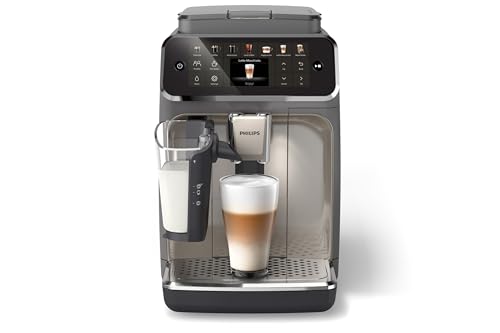
Philips 4400 Series Fully Automatic Espresso Machine with LatteGo (EP4444/90) — Best Overall
The 4400 is the household referee: enough menu for espresso drinkers and coffee drinkers to coexist, quiet enough for dawn use, and easy enough that guests can operate it. It suits couples and families with varied orders. True maximalists should look at the Eletta Explore’s fifty-drink menu; one-drink households can save with the Philips 3300 pick.
Strengths
- 12 hot and iced presets hit the menu size most households actually use
- SilentBrew tuning makes it one of the quietest grinders in this guide
- LatteGo milk system plus Quick Start — fast and nearly chore-free
Trade-offs
- Black chrome finish shows fingerprints and asks for a wipe
- Menu depth sits between the 3300 and 5500 — know which you need
- Ceramic grinder still prefers non-oily, medium-roast beans
| Specification | Detail |
|---|---|
| Type | Fully automatic bean-to-cup |
| Recipes | 12 hot & iced presets |
| Grinder | Integrated grinder, SilentBrew |
| Milk | LatteGo system |
The 4400 is the considered middle of the Philips range: a dozen presets including iced drinks, profiles enough for a couple, and SilentBrew engineering that genuinely lowers grinding noise — a feature you appreciate every single morning at 6 a.m. The LatteGo carafe keeps milk ownership painless, Quick Start trims heat-up waiting, and the black chrome finish looks like a premium appliance rather than a coffee robot. For a two-drinker household that wants variety without the flagship tier, this is the balanced buy in the Philips line. For readers weighing the automatic espresso coffee machines, its best overall case rests on exactly this pattern of daily performance rather than on any single headline feature.
Best for: households split between espresso and coffee drinks. / Not suited for: buyers wanting the absolute largest menu or the lowest tier.
Check the current price on Amazon

De’Longhi Eletta Explore Espresso Machine — Best for Big Menus
Choose the Eletta Explore if your household’s orders read like a café board — cold foam drinks in summer, cappuccinos in winter, a travel mug filled on the way out. Four profiles keep everyone’s version straight. It suits large, varied households and entertainers. Small households will scroll past most of its menu forever, paying flagship tier for unused range.
Strengths
- 50+ one-touch recipes — the largest menu in this guide by a wide margin
- Hot and cold frother covers everything from cappuccino to cold foam creations
- Four user profiles and a travel-mug-friendly design for busy households
Trade-offs
- Flagship tier pricing
- A menu this large takes time to explore — many drinks will never be used
- Larger presence on the counter than compact automatics
| Specification | Detail |
|---|---|
| Type | Fully automatic bean-to-cup |
| Recipes | 50+ one-touch recipes |
| Profiles | 4 user profiles |
| Milk | Hot & cold frother |
The Eletta Explore is the maximalist’s automatic: more than fifty recipes, cold extraction drinks and cold foam alongside the hot classics, profiles for four drinkers, and a design that accommodates a travel mug on the way out the door. Cold drinks are its party trick — the cold froth and cold-brew-style options are executed properly, not as afterthoughts — while hot espresso remains firmly in De’Longhi’s convincing house style. It is a lot of machine, priced accordingly, and it makes sense precisely for households that will actually roam its menu: families, entertainers, and anyone whose coffee order changes with the weather. For readers weighing the automatic espresso coffee machines, its best for big menus case rests on exactly this pattern of daily performance rather than on any single headline feature.
Best for: big, varied households and entertainers. / Not suited for: small households with fixed orders.
Check the current price on Amazon

KitchenAid Fully Automatic Espresso Machine KF8 (KES8558) — Best for Entertaining
The KF8 suits the host: swap to decaf after dinner without emptying the hopper, serve a table of different drinks from forty-plus recipes, and let smart dosing keep every shot consistent while you are busy cooking. Its big tank is a genuine party feature. Compact kitchens should measure carefully — this is a substantial machine — and simple households may never roam its menu.
Strengths
- 40+ recipe options with smart dosing that keeps shots consistent
- Removable bean hopper — swap beans without emptying, a rare and useful feature
- Large 2.2L water tank and a clear LCD touch screen in a stainless build
Trade-offs
- Premium tier from a newer entrant to the automatic category
- Large tank and hopper make for a substantial counter footprint
- Menu depth exceeds a simple household’s needs
| Specification | Detail |
|---|---|
| Type | Fully automatic bean-to-cup |
| Recipes | 40+ recipe options |
| Tank | 2.2L water tank |
| Feature | Removable bean hopper, smart dosing |
KitchenAid’s KF8 is the most interesting new entrant in automatics, because it fixes annoyances the old guard left alone: the bean hopper lifts off so you can swap from morning blend to evening decaf without a scoop-and-pray, smart dosing keeps extraction consistent as beans age, and the 2.2-litre tank ends the daily refill ritual. Forty-plus recipes with automatic milk frothing cover the café, the stainless build feels like a KitchenAid appliance should, and the touchscreen is the clearest in this guide for guests. For households that entertain and experiment, it is a compelling flagship alternative. For readers weighing the automatic espresso coffee machines, its best for entertaining case rests on exactly this pattern of daily performance rather than on any single headline feature.
Best for: hosts and experimenters who swap beans and serve crowds. / Not suited for: tight counters or fixed-order drinkers.
Check the current price on Amazon

Philips 3300 Series Fully Automatic Espresso Machine with LatteGo (EP3341/50) — Best Value
The 3300 is the value centre of this guide: it covers the drinks most homes make weekly — espresso, coffee, cappuccino, latte, an iced option — with Philips’ easiest milk system and honest customisation. It suits couples and small families. Profile-hungry households should step to the 4400; menu collectors to the Eletta.
Strengths
- Five hot and iced presets cover the drinks most homes actually make
- LatteGo tube-free milk system with dishwasher-friendly cleanup
- Customisable strength and milk settings without menu-diving
Trade-offs
- Smaller menu than the 4400 and 5500 above it in the range
- No multi-user profile depth for large households
- Ceramic grinder is happiest with medium roasts
| Specification | Detail |
|---|---|
| Type | Fully automatic bean-to-cup |
| Recipes | 5 hot & iced presets |
| Grinder | Ceramic grinder |
| Milk | LatteGo system |
The 3300 is the sweet spot of the current Philips range for many homes: the same LatteGo convenience and ceramic grinder as its bigger siblings, a menu that includes iced options, and controls a guest can operate without instruction. Shots are clean and consistent, milk drinks take under a minute of actual attention, and the machine’s cleaning prompts are clear enough that owners actually follow them — which is why these machines age well. Choose it over the 3200 for the newer interface and iced range; choose the 4400 or 5500 only if profiles and a bigger menu will genuinely be used. For readers weighing the automatic espresso coffee machines, its best value case rests on exactly this pattern of daily performance rather than on any single headline feature.
Best for: couples and small families wanting the essentials done well. / Not suited for: large households needing deep profiles.
Check the current price on Amazon

De’Longhi Dinamica Plus Fully Automatic Espresso Machine — Best Personalisation
Dinamica Plus suits the household of individuals: four people, four saved versions of everything, and a milk wand that distinguishes cappuccino foam from latte silk automatically. The app earns its place when a new bean arrives and everyone wants it dialled once, properly. It is wasted on a one-person, one-drink kitchen — that buyer should take the 3300 and the savings.
Strengths
- 24+ recipes and up to four user profiles — the deepest personalisation in the De’Longhi picks
- Automatic milk steam wand with three froth modes for different drinks
- App-connected recipe tweaking for households that love to fine-tune
Trade-offs
- Premium tier within the De’Longhi range
- Feature depth is wasted on one-drink households
- Connected features need the app to unlock their full value
| Specification | Detail |
|---|---|
| Type | Fully automatic bean-to-cup |
| Recipes | 24+ recipes |
| Profiles | Up to 4 user profiles |
| Milk | Automatic steam wand, 3 froth modes |
Dinamica Plus is De’Longhi’s flagship argument: a menu past two dozen drinks, four profiles that remember everything down to froth mode, and an automatic milk wand that adjusts texture for cappuccino versus latte rather than foaming everything the same way. The connected app sounds like garnish and turns out to be genuinely useful for dialling a new bean once and saving it. Shots are rich and consistent, and the machine manages its own rinsing and prompts with unusual clarity. It is the De’Longhi for households that treat the coffee machine like a shared family appliance with individual tastes. For readers weighing the automatic espresso coffee machines, its best personalisation case rests on exactly this pattern of daily performance rather than on any single headline feature.
Best for: multi-drinker homes where everyone customises. / Not suited for: solo drinkers with a single fixed order.
Check the current price on Amazon

Jura Z10 Diamond Black — Best Premium
The Z10 is for the buyer who wants the category’s ceiling: hot espresso of café quality, long coffees brewed with intelligence, and cold extraction drinks no rival here can replicate. Its grinder adjusts itself per drink. It suits affluent enthusiasts and design-led kitchens. Everyone else should read its tier as aspirational and take the E8-class virtues from the wider guide at gentler cost.
Strengths
- Eighth-generation brewing unit with cold extraction for true cold brew-style drinks
- Product Recognising Grinder adjusts grind automatically to the selected drink
- The most advanced automatic in this guide — and it tastes like it
Trade-offs
- Flagship pricing well above every other pick here
- Capability far exceeds what a simple espresso household needs
- Jura’s filter and tablet ecosystem is a real ongoing cost
| Specification | Detail |
|---|---|
| Type | Fully automatic bean-to-cup |
| Brewing | Eighth-generation unit, cold extraction |
| Grinder | Product Recognising Grinder |
| Finish | Diamond Black |
The Z10 is the state of the automatic art. Its grinder recognises the selected drink and adjusts itself, its brew unit handles both hot pulse extraction and a cold extraction process that produces genuine cold-brew-style drinks without a day of steeping, and its interface is the slickest in the category. In the cup, hot espresso is superb and the cold drinks are a revelation for households that live on iced coffee in summer. Nobody needs a Z10; that is not the point. It is the machine for the buyer who wants the best automatic experience money currently buys, in a finish — diamond black — that looks like it. For readers weighing the automatic espresso coffee machines, its best premium case rests on exactly this pattern of daily performance rather than on any single headline feature.
Best for: buyers wanting the best automatic experience available. / Not suited for: any budget-led purchase.
Check the current price on Amazon
Comparison Table
| Pick | Badge | Key spec | Best for |
|---|---|---|---|
| Philips 4400 Series Fully Automatic Espresso Machine with LatteGo (EP4444/90) | Best Overall | 12 hot & iced presets | households split between espresso and coffee drinks. |
| De’Longhi Eletta Explore Espresso Machine | Best for Big Menus | 50+ one-touch recipes | big, varied households and entertainers. |
| KitchenAid Fully Automatic Espresso Machine KF8 (KES8558) | Best for Entertaining | 40+ recipe options | hosts and experimenters who swap beans and serve crowds. |
| Philips 3300 Series Fully Automatic Espresso Machine with LatteGo (EP3341/50) | Best Value | 5 hot & iced presets | couples and small families wanting the essentials done well. |
| De’Longhi Dinamica Plus Fully Automatic Espresso Machine | Best Personalisation | 24+ recipes | multi-drinker homes where everyone customises. |
| Jura Z10 Diamond Black | Best Premium | Eighth-generation unit, cold extraction | buyers wanting the best automatic experience available. |
How to Choose the Best Automatic Espresso Coffee Machines for Both Drinks
Interrogate the long drinks. A true automatic espresso coffee machine adjusts its dose and brewing for coffee-style drinks; lesser machines pull an espresso and add hot water, which tastes exactly like what it is. Look for menus that list coffee as its own recipe with its own parameters — every machine in this guide treats long drinks as first-class recipes — and for grinders and brew units sized to dose a full coffee, not just a shot.
Profiles are the dividing line between couples’ machines and family machines. If three or more people will drink daily and disagree about strength or milk, profiles stop the settings war — the Eletta, Dinamica Plus, and KF8 all offer them. Two drinkers with similar tastes can share a profile-free machine happily and save the difference. Be equally honest about iced drinks: households in warm climates use cold recipes weekly and should weight them heavily; households that never ice coffee should not pay for cold extraction.
Finish with the service routine and the footprint. Measure the counter with the tank-refill motion in mind, check whether the brew unit removes for rinsing or cleans in place by tablet, and confirm the milk system matches your fridge space and your patience. Then buy the machine whose weekly routine — not whose menu — fits your household. Menus impress in week one; routines decide year three.
How to Dial In a New Bag of Beans on an Automatic Machine
Start from the machine’s defaults and change one thing at a time. Fill the hopper with fresh, medium-roast beans, set the grinder to its middle mark, and pull three espressos across a morning — the first shots after a bean change are always partly the old beans clearing the chute. Taste for the two classic faults: thin and sour means under-extracted; harsh, bitter, and slow means over-extracted.
Correct under-extraction by moving the grinder one step finer, or raising the strength/aroma setting one notch if your machine offers it; correct over-extraction by going one step coarser. Wait at least two drinks after each change before judging — the grounds in transit blur instant feedback, and chasing your tail with daily multi-step changes is how good beans get blamed for bad settings. When the espresso tastes balanced, lock the settings and only then adjust the milk drinks built on it: milk quantity first, then foam style, saving to your profile where the machine allows.
Repeat the ritual with each new bean, but expect it to shrink: after a few bags you will know your machine’s dialect — roughly how fine a washed Ethiopian wants versus a chocolatey Brazilian. Keep a simple note in the cupboard door. Automatic machines reward this small ceremony disproportionately, because their consistency then works for you instead of faithfully reproducing a mediocre setting.
Espresso vs Coffee From One Machine: How the Better Models Do Both
The engineering problem at the heart of this category is that espresso and coffee are different extractions sharing one brew unit. Espresso wants a compact puck, high pressure, and a short, concentrated yield. A satisfying long coffee wants more water through more grounds at a gentler effective strength — not the same puck drowned, which over-extracts the grounds and tastes bitter and thin simultaneously. Machines that merely lengthen an espresso shot commit exactly that sin, and their ‘coffee’ is why some drinkers swear automatics cannot do long drinks.
The better machines in this guide attack the problem properly. They increase the dose for coffee recipes, adjust grind and pre-infusion, and in Jura’s case pulse the water to extract evenly without harshness. Philips’ coffee recipes similarly dose for the cup size rather than stretching a shot. The result is a long drink with body and balance — recognisably coffee, brewed fresh per cup, with none of the staleness of a pot that has sat on a warmer. Taste a candidate’s long coffee before its espresso if your household drinks both; it is the harder trick.
Milk drinks built on long coffee — the café crème and latte-coffee styles European menus love — benefit most from this engineering, because a properly dosed base survives dilution by milk. When you compare machines, read the recipe list for coffee treated as its own drink with its own settings, as on the Philips 4400, Eletta, and KF8 here. That single detail predicts dual-purpose success better than any pressure figure on the box.
Iced Drinks, Cold Foam, and Cold Extraction: Three Different Things
Automatic menus now advertise ‘iced’ in three technically distinct ways, and knowing which is which prevents a disappointing purchase. The first is brew-over-ice: a concentrated, slightly adjusted hot extraction poured over ice, as on the De’Longhi Dinamica family. Done well — and it is done well here — it tastes fresh and bright, with modest dilution as the ice chills it. It is the right choice for households whose iced drink is an occasional summer variation.
The second is cold milk foam: machines like the Eletta Explore and Magnifica Duo froth milk cold, producing the silky cold cap of café iced lattes without heating the drink. Cold foam transforms an ordinary iced coffee into the drink people queue for, and for latte-led households it may matter more than any brewing feature in this guide. The third is true cold extraction — the Jura Z10’s process pulses cold water through the grounds, yielding a smooth, naturally sweet cold-brew-style drink in minutes. It is the connoisseur’s route and the only one that is genuinely a different beverage, not a temperature variation.
Match the technology to your household’s actual summer: occasional iced drinkers are served by brew-over-ice; daily iced-latte households should prioritise cold foam; cold-brew devotees have exactly one machine in this guide, and it is the flagship. Paying for cold extraction to make two iced coffees a year is the menu-inflation trap in its purest form.
Profiles, Apps, and Touchscreens: Features That Earn Their Keep
Automation’s second wave is interface, and this guide’s picks let us sort the genuinely useful from the theatrical. User profiles earn their keep in any household of three-plus drinkers: they end the morning settings negotiation and, more importantly, they store the dialled-in version of each person’s drink, so consistency survives a bean change. The Eletta, Dinamica Plus, and KF8 implement them well; couples rarely miss them.
Apps are useful exactly when they do something the machine’s screen cannot: De’Longhi’s connected guidance for dialling a new bean, recipe creation with finer steps, and maintenance history are real functions. An app that merely duplicates the drink buttons is a phone bill for your coffee. Touchscreens, meanwhile, have quietly become a genuine usability win — Bosch’s bright display and KitchenAid’s LCD are operable by guests and grandparents without instruction, which in a family kitchen is a feature with daily value.
The test for any interface feature is the second month: profiles get used daily, good apps weekly, gimmicks never. When comparing two machines, price the features by that test and the tiers in this guide sort themselves — which is why the balanced Philips 4400, strong on the daily features and light on theatre, anchors the recommendations.
The Travel-Mug Test: Machines for the Commute-Driven Household
For many households the most important drink of the day leaves the house in a steel cylinder, and machines differ honestly in how they serve it. Spout height is the physical test: a travel mug must fit under the dispenser without tilting gymnastics. The Eletta Explore in this guide is designed with that clearance in mind, and the KitchenAid KF8’s generous proportions serve the same commuter. Compact machines may require brewing into a cup and pouring over — acceptable, but a daily friction worth knowing about before purchase, not after.
The recipe test follows: a travel mug holds a long drink, so the machine’s coffee recipes — dosed properly, as this guide’s picks do — matter more than its espresso for commuters. Bosch’s wider family answer, XL to-go sizing, exists precisely for this household. Temperature is the final test: a drink brewed at proper temperature into a pre-warmed mug arrives at the office still worth drinking; the same drink into a cold mug through a cold machine path arrives as a rumour of coffee.
Commuters should therefore rank this guide by a personal order: clearance, long-drink quality, heat-up speed on a dark morning — the Philips 4400’s QuickStart and SilentBrew are commuter features in disguise — and only then the café menu. The best automatic espresso coffee machine for a commuting household is the one that makes 7 a.m. easier, and that is a measurable, purchasable thing.
Decaf Drinkers in a Caffeinated House: Sharing One Machine Fairly
Mixed-caffeine households are now the norm, and an automatic can serve both camps without apartheid. The standard tool is the bypass chute for pre-ground decaf, present across this guide’s families: one scoop, one drink, no hopper drama. It works best with decaf bought in small, fresh quantities — decaf stales faster than regular beans because of its processing, so the small-bag discipline matters doubly — and ground shortly before use where possible.
The removable hopper, the KF8’s signature in this guide, is the deluxe answer: lift, swap, and the decaf drinker gets true bean-to-cup decaf with the machine’s full extraction quality. Households where decaf is a daily evening ritual rather than an occasional request should weight that feature heavily; households with a monthly decaf guest should not pay for it and will be perfectly served by the chute.
A final fairness note: decaf deserves the same dialling-in respect as regular beans. Its ideal grind and dose differ slightly, and profiles — where the machine offers them — can store a decaf setting so the evening drink is one touch rather than a negotiation. The households that solve decaf deliberately report the machine becoming the evening’s pleasure instead of its compromise, which is the whole point of owning one.
When a Separate Brewer Still Wins: Honest Boundaries of the Category
Integrity requires naming the jobs an automatic does not do best. Volume batch brewing is the first: a household that regularly serves coffee to eight around a brunch table will wait through eight individual automatic cycles while a batch brewer fills a carafe in one pass. The automatic wins every cup on freshness; the batch brewer wins the crowd on logistics, and many serious coffee households own both without contradiction.
The second boundary is the true enthusiast’s ceiling. A skilled drinker with a manual setup — separate grinder, naked portafilter, scales — can chase a specific bean to a shot an automatic will not match, because the automatic’s virtue is repeatability within its parameters, not infinite parameter access. The third boundary is budget triage: a household that drinks one simple coffee a day may be better served by an excellent simple brewer and superb beans than by any machine in this guide.
None of this dims the six picks here; it locates them. The automatic espresso coffee machine is the champion of varied, daily, multi-drinker households — espresso people and coffee people and latte people sharing one counter. If that is your household’s portrait, the category is not a compromise at all. It is the answer, and the only remaining task is choosing which of the six temperaments above matches your kitchen.
Oat, Almond, and Soy: Plant Milks in Automatic Machines
Plant milks have moved from café novelty to household staple, and automatic machines handle them with a few honest caveats. Barista-formulated plant milks — the ones labelled for coffee — froth convincingly in every system in this guide, because their added fats and stabilisers mimic dairy’s behaviour under steam and foam. Standard drinking versions of the same milks froth thinly and separate more readily in hot drinks; the machine is rarely the problem, and the formulation usually is.
Heat discipline matters more with plant milks than dairy. Most sweeten and then scorch at lower temperatures, so the automatic systems’ gentler milk programmes — and the manual control on wand-equipped relatives in the wider family — earn their keep. Clean the milk system with extra promptness after plant milks: their sugars and proteins bake onto wands and coat carafe paths with a film that announces itself in the next drink if neglected. The rinse you would do anyway, done immediately, is sufficient.
Taste expectations should be set generously. A well-made oat flat white from the Philips 4400 or Eletta here is a genuinely good drink on its own terms, not a compromised dairy drink. Households split between dairy and plant drinkers can serve both from one machine with nothing more than a second carafe or a rinse between — one more quiet way the automatic settles a household argument that used to require two of everything.
The Milk System Deep Clean: Monthly, Thorough, Worth It
Daily rinses keep a milk system honest; the monthly deep clean keeps it true. Milk leaves protein and fat films inside carafes, tubes, and frothing chambers that rinses thin but never fully clear, and those films are where off-flavours — and worse — are born. Once a month, disassemble everything the maker allows, soak the parts in warm water with the maker’s milk-system cleaner or a food-safe equivalent, brush the narrow paths, and rinse until the water runs entirely clean and odourless.
LatteGo owners have the lightest version of this ritual — two parts, no tubes, a soak and a dishwasher cycle — which is a genuine design triumph this guide keeps returning to because it converts a chore households skip into one they complete. Carafe systems ask a little more: the lid mechanism and the intake tube deserve the brush, and the carafe’s fridge life between cleans should still be measured in days, not weeks.
Finish by running a full milk drink and tasting it critically: clean foam tastes of milk and nothing else. That monthly cup is the audit. Households that keep this single appointment report milk drinks in year three that taste like month one — the entire maintenance philosophy of this guide, distilled into one soak, one brush, and one honest taste.
One Machine, One Counter: Retiring the Appliance Crowd
The modern kitchen counter is contested territory, and the automatic espresso coffee machine’s least sung virtue is consolidation. One footprint replaces the drip brewer, the pod machine, the separate grinder, and the milk frother — four appliances, four cords, four cleaning regimes — with a single system whose parts were designed to work together. For small kitchens especially, that consolidation is not tidiness for its own sake; it is the difference between a counter that cooks and a counter that stores.
Consolidation also improves the drinks, in a way separate appliances cannot: the grinder is matched to the brew unit, the milk system to the machine’s steam capacity, the water path shared and therefore consistently hot. Pod machines and brewers each optimise their fragment; the automatic optimises the whole cup, which is why its results so often surprise households that owned ‘good’ versions of every separate device it replaces.
Before retiring the old appliances, give the new machine its honest trial — the dialling-in week this guide prescribes — and let the household vote with its taste buds. In practice the vote is rarely close, and the reclaimed counter space becomes the verdict you can see. The six machines in this guide compete to be that one machine; choose the temperament that fits your household, and enjoy the strangely luxurious sight of an empty stretch of counter where the crowd used to live.
The Short Version: Matching the Machine to the Household
Compressed to its essence, this guide’s advice runs by household shape. The mixed couple: the Philips 4400, balanced in all directions. The big, varied family: the Eletta Explore, whose menu absorbs everyone. The entertaining household: the KitchenAid KF8, built for guests and bean-swapping. The value couple: the Philips 3300, essentials without waste. The house of individualists: the Dinamica Plus, four profiles deep. The ceiling-seeker: the Jura Z10, the category’s current summit. Six households, six answers, no wrong doors — only mismatches, which the full reviews above exist to prevent.
Whichever shape is yours, the shared disciplines decide the outcome: fresh medium-roast beans, the dialling-in ritual performed once per bag, and the light weekly cleaning rhythm kept without drama. An automatic espresso coffee machine is a household system disguised as an appliance, and households that run the system get café breadth with home comfort — which is, in the end, the entire promise written on the box, finally kept.
Common Buying Mistakes
Assuming ‘coffee’ is just a long espresso. On weak machines it is — watered-down and bitter. Choose machines whose long drinks are dosed and brewed as their own recipes, as all six here are.
Paying for fifty recipes a two-person home will never open. Menu size is not quality. Match the menu to your household’s real orders and put the savings toward better beans.
Skipping profiles in a house full of opinions. If three drinkers share one machine, profiles end the daily settings reset. Their absence is a daily friction, not a saving.
Dialling in with stale beans. No setting rescues old beans. Dial in with the fresh beans you actually drink, or every adjustment is fiction.
Forgetting the travel mug test. If your mornings involve a travel mug, check the spout clearance before buying — the Eletta and KF8 in this guide are built with it in mind.
Final Recommendation
The Philips 4400 is the best automatic espresso coffee machines pick for most mixed households — balanced menu, quiet, painless milk. Menu maximalists should take the De’Longhi Eletta Explore, hosts the KitchenAid KF8, value hunters the Philips 3300, personalisation fans the Dinamica Plus, and ceiling-seekers the Jura Z10. Whichever you choose, feed it fresh medium-roast beans and keep its light cleaning rhythm, and one appliance will genuinely replace both the espresso machine and the coffee maker it shares a name with. Explore the sibling guides alongside: Best Auto Espresso Machines, Best Automatic Espresso Machines, Best Automatic Espresso Machines For Home Use, Best Espresso Machines, and Best Coffee And Espresso Makers.
Related guides
Frequently Asked Questions
Can an automatic machine make both espresso and regular coffee well?
Yes, if it is designed for both — the machines here dose and brew long coffee drinks as their own recipes rather than diluting a shot. That design detail, not the menu count, is what separates a true espresso coffee machine from an espresso machine with a long button.
How many recipes does a household actually need?
Most households rotate five to eight drinks. Menus of twenty-plus earn their place in large or varied households and for entertaining; couples usually live happily on a focused menu like the Philips 3300’s, provided the core drinks are excellent.
Are user profiles worth paying for?
In households of three or more daily drinkers with different tastes, absolutely — profiles end constant re-adjustment. For one or two drinkers with similar tastes, profiles are a luxury you will rarely open.
What is cold extraction on the Jura Z10?
It is a brewing process that uses cold water pulsed through the grounds, producing a genuine cold-brew-style drink in minutes rather than hours. It is different from brewing hot coffee over ice, and it is the Z10’s signature party trick.
Do these machines replace a separate coffee maker?
For most households, yes — that is their founding purpose. The exception is the household that brews large pots for crowds every day; a batch brewer still wins on volume, while the automatic wins on freshness and variety per cup.
Which beans work for both espresso and coffee drinks?
A fresh medium roast with balanced character — chocolatey, nutty, moderate acidity — performs best across both styles on automatic grinders. Keep a second, contrasting bean for weekends if your machine’s hopper allows easy swapping, as the KF8’s does.


