Disclosure: airfryerkitchensupply.com is reader-supported. When you buy through links on our site, we may earn an affiliate commission at no extra cost to you.
Where to buy
Autofeed smokers — the word is one word in half the listings and two in the rest — meter their own fuel so a set temperature holds for hours without tending. The best autofeed smokers match three things: a feed system that does not jam, a controller that thinks in small adjustments, and a hopper proportioned to the cabinet. The six verified picks below span the full scale, from a 40 lb-hopper flagship to a compact kettle, plus the charcoal gravity machine that autofeeds without pellets at all. Sizes and features are quoted from the live listings; check price on Amazon for the scale your household cooks at.
- recteq Flagship 1600 Pellet Smoker Grill — check price on Amazon; choose the listing sold or shipped by Amazon or the brand’s own store, and confirm hopper capacity and model name before you order
- Z GRILLS 2026 Pellet Smoker & Grill (PID 3.0) — check price on Amazon; choose the listing sold or shipped by Amazon or the brand’s own store, and confirm hopper capacity and model name before you order
- Pit Boss 850 Navigator Series Pellet Grill — check price on Amazon; choose the listing sold or shipped by Amazon or the brand’s own store, and confirm hopper capacity and model name before you order
- recteq RT-B380 Bullseye Pellet Smoker Grill — check price on Amazon; choose the listing sold or shipped by Amazon or the brand’s own store, and confirm hopper capacity and model name before you order
- Masterbuilt Gravity Series 600 Charcoal Grill Smoker — check price on Amazon; choose the listing sold or shipped by Amazon or the brand’s own store, and confirm hopper capacity and model name before you order
- Z GRILLS ZPG 550B2 Pellet Smoker — check price on Amazon; choose the listing sold or shipped by Amazon or the brand’s own store, and confirm hopper capacity and model name before you order
However you spell it, autofeed is the feature that changed home smoking: a hopper of fuel, a feed mechanism, and a controller that holds temperature while the cook is elsewhere. The best autofeed smokers are not the ones with the longest feature lists — they are the ones where feed, control and capacity were sized as one system, so the machine can be trusted at hour ten the way it was trusted at hour one. That trust is the product. Everything else is sheet metal around it.
This guide’s six verified picks are organized by household scale, because scale is where autofeed purchases succeed or fail: a flagship for event cooks, a forgiving PID machine for beginners, a value giant for growing families, two compacts for small patios and serious small cooks, and Masterbuilt’s gravity-fed charcoal grill for buyers who want automation to taste like charcoal. Every figure comes from the model’s live Amazon listing, verified on 2026-11-20, and prices are left where they belong — check price on Amazon — since they move faster than any guide can chase.
In this guide
Quick Picks
Scale is the story: flagship, beginner-friendly, value, two compacts and the charcoal alternative — pick your household’s size first, then its features.
- Best Overall Autofeed: recteq Flagship 1600 Pellet Smoker Grill — 1,667 square inches fed by a 40 lb hopper under Wi-Fi smart control — the largest verified autofeed system in this guide.
- Best for Beginners: Z GRILLS 2026 Pellet Smoker & Grill (PID 3.0) — PID 3.0 control, dual probes and a 28-hour hopper rating, with cover and shelf included — the forgiving first autofeed grill.
- Best Value Autofeed: Pit Boss 850 Navigator Series Pellet Grill — 932 square inches, a 30 lb hopper, WiFi and Bluetooth, and a flame broiler — the most autofeed per purchase in this guide.
- Best Compact Autofeed: recteq RT-B380 Bullseye Pellet Smoker Grill — the kettle-format autofeed: a compact pellet grill the listing aims at ribs, brisket, chicken, searing and smoking alike.
- Best Charcoal Autofeed: Masterbuilt Gravity Series 600 Charcoal Grill Smoker — charcoal that feeds itself: a GravityFed hopper, digital WiFi control and 600 square inches of charcoal-flavored automation.
- Best Small PID Autofeed: Z GRILLS ZPG 550B2 Pellet Smoker — PID autofeed in a compact 8-in-1 frame, with an LCD controller and the meat probe in the box.
How These Picks Were Chosen
Each model was verified through Amazon listing data for this site on 2026-11-20, and the reviews quote the listings themselves: cook space, hopper capacity, controller type and stated uses. A model whose autofeed claims could not be confirmed from its listing did not make the list, however strong its reputation.
Selection weighted the system over the spec sheet. Feed design first — auger quality, or the gravity mechanism that deletes the auger. Controller second — PID where listed, honest digital where not. Proportion third: hopper pounds against cooking area, the ratio that decides real unattended runtime. And buyer’s stage last: a first autofeed grill should forgive, a flagship should disappear into capacity, and a compact should control like a big grill. The six picks are the strongest verified answer at each of those stations.
The 6 Best Autofeed Smokers by Household Size
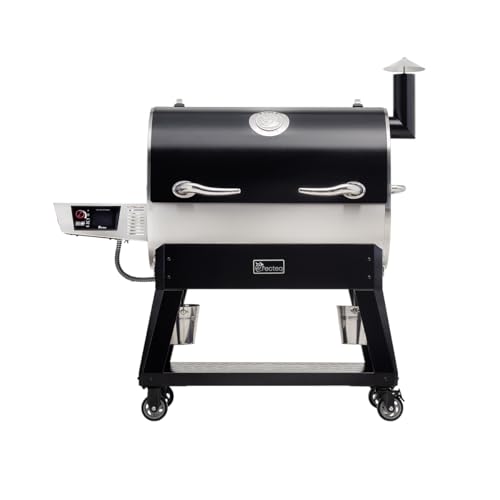
recteq Flagship 1600 Pellet Smoker Grill — Best Overall Autofeed
Start the autofeed conversation at its ceiling: recteq’s Flagship pairs 1,667 square inches of cook space with a 40 lb hopper and Wi-Fi smart control — the biggest verified fuel-and-space combination in this guide. A hopper that size turns autofeed from a convenience into a schedule: load it, and the grill is provisioned for marathon sessions and back-to-back cooks. It suits the serious host and the batch cook. It does not suit the casual griller, whose Tuesday burgers do not need a system built like this and whose patio may not forgive the footprint.
Strengths
- 40 lb hopper is the largest verified fuel capacity in this guide
- 1,667 square inches handles event-scale loads in one autofeed run
- Wi-Fi smart control supervises the whole system remotely
Trade-offs
- Flagship scale means flagship footprint, appetite and cleanup
- Most households will never use the full capacity honestly
- Premium tier commitment for a first autofeed grill
| Detail | Verified listing information |
|---|---|
| Cook space | 1,667 square inches (per Amazon listing title) |
| Hopper | 40 lb (per Amazon listing title) |
| Control | Wi-Fi smart grill (per Amazon listing title) |
Autofeed at this scale is an exercise in trust engineering. The auger must feed evenly for many hours, the controller must hold a huge cabinet’s temperature through weather, and the hopper must not bridge at hour fifteen. recteq’s reputation rests on heavy construction and tight control, and the Flagship applies both to the largest canvas in the line. The practical experience is distinctive: you stop planning cooks around the grill’s limits entirely, because for a home cook there effectively are none left.
The ownership rhythm scales too — more ash, more grease management, more pellets stored dry — and buyers at this tier generally accept that trade with open eyes. If your cooking life genuinely includes whole-event loads and freezer-filling weekends, this is the autofeed machine that treats those as ordinary Tuesdays. Everyone else should read down the list for the size that matches their calendar.
Best for: event hosts and batch cooks who need maximum autofeed capacity / Not suited for: casual grillers and small patios
Check on Amazon — check the current price on Amazon and confirm the exact model name on the listing before ordering.

Z GRILLS 2026 Pellet Smoker & Grill (PID 3.0) — Best for Beginners
A first autofeed grill should forgive, and this Z GRILLS is built to: PID 3.0 precision control that holds temperature so a beginner does not have to learn fire management and meat management simultaneously, dual meat probes that answer the two questions every cook asks, a hopper the listing rates at 28 hours, and a rain cover and shelf included. At 700 square inches it is sized for real family cooking without event-grill intimidation. It suits the new smoker owner completely. It does not suit the capacity maximizer, who should be looking at the Flagship and the Navigator class instead.
Strengths
- PID 3.0 control removes temperature babysitting for new owners
- Dual probes monitor two cuts — the beginner’s most-asked question, answered twice
- 28-hour hopper rating plus included cover and shelf reduce first-year friction
Trade-offs
- 700 square inches batches true event loads
- Long hopper ratings assume mild weather; winter shortens them
- Younger brand ecosystem than Traeger’s app world
| Detail | Verified listing information |
|---|---|
| Cooking space | 700 square inches (per Amazon listing title) |
| Control | PID 3.0, dual meat probes |
| Hopper | Rated 28-hour (per Amazon listing title); cover and shelf included |
Beginners fail at smoking for information reasons: they cannot see the temperature holding, cannot tell the meat’s state, and open the lid to compensate — breaking the very stability they needed. This grill attacks all three failures with instrumentation. The PID holds the line visibly, the probes report the meat without a door opening, and the hopper outlasts any first-year cook you will attempt. What remains to learn is seasoning and patience, which is the correct curriculum.
The included cover and shelf sound like garnish until you price the first year of ownership without them. Z GRILLS’ pattern of bundling the necessities makes the beginner’s budget go to pellets and meat instead of accessories. As an entry into autofeed — the moment a household decides smoking will be easy or will not happen — this is the guide’s recommendation.
Best for: first-time autofeed buyers who want the system to forgive / Not suited for: event cooks who need four-figure square inches
Check on Amazon — check the current price on Amazon and confirm the exact model name on the listing before ordering.

Pit Boss 850 Navigator Series Pellet Grill — Best Value Autofeed
Value in autofeed is autonomy per dollar, and the Navigator 850’s verified arithmetic leads this guide: 932 square inches of cooking area, a 30 lb hopper, WiFi and Bluetooth supervision, an LCD controller and a flame broiler for finishing. That is flagship-adjacent autonomy at a mid-market commitment. It suits the growing household whose cooks keep getting bigger and whose budget refuses to follow at flagship speed. It does not suit the tiny patio — 932 square inches of grill is a presence — nor the owner who wants the absolute tightest controller, where the PID picks argue their case.
Strengths
- 932 square inches and a 30 lb hopper are the value class’s biggest verified numbers
- WiFi plus Bluetooth gives two ways to supervise long cooks
- Flame broiler adds direct-heat finishing most autofeed grills lack
Trade-offs
- Big cabinet appetite: pellets flow faster in cold weather
- Controller is capable rather than PID-class precise
- Size demands a permanent patio position
| Detail | Verified listing information |
|---|---|
| Cooking area | 932 square inches (per Amazon listing title) |
| Hopper | 30 lb (per Amazon listing title) |
| Control | WiFi + Bluetooth, LCD controller, flame broiler |
The Navigator’s trick is refusing the usual value trade. Budget autofeed usually means a small hopper, a vague controller, or steel that flexes; this one keeps the autonomy numbers — space, fuel, supervision — at levels that change what a household cooks. A 30 lb hopper under 932 square inches is correctly proportioned, which sounds dull and is actually the entire engineering compliment: the system was sized as a system.
The flame broiler then covers autofeed’s classic gap at the end of the cook, putting direct flame under a steak or a burger without lighting a second appliance. For families whose headcount and appetites are still growing, this is the grill that grows with them longest before the flagship conversation begins. Value is not cheapness; it is this — the most honest autonomy the money buys.
Best for: growing households wanting maximum autonomy per dollar / Not suited for: tiny patios and PID-precision seekers
Check on Amazon — check the current price on Amazon and confirm the exact model name on the listing before ordering.

recteq RT-B380 Bullseye Pellet Smoker Grill — Best Compact Autofeed
The Bullseye shrinks autofeed into a kettle-shaped grill that fits the patios the big cabinets cannot. The verified listing describes a pellet smoker grill using 100% wood pellets across ribs, brisket, chicken, searing and smoking — a full job list at a compact scale, from a maker known for heavy builds. It suits the apartment-adjacent owner, the camper with a power source, and the household adding autofeed alongside an existing grill. It does not suit the brisket-for-twenty cook; compact is the point, and the point has edges.
Strengths
- Compact kettle format brings autofeed to small patios and portable setups
- recteq build quality in the size class where flimsiness usually lives
- Listed across sear and smoke duty — a genuine second-grill or only-grill range
Trade-offs
- Compact capacity batches multi-protein and event cooks
- Smaller hopper means more frequent checks on long smokes
- Kettle format gives less shelf and workspace than cabinet grills
| Detail | Verified listing information |
|---|---|
| Format | Compact kettle-style pellet grill (per Amazon listing title) |
| Fuel | 100% wood pellets (per Amazon listing title) |
| Stated uses | Ribs, brisket, chicken, sear and smoke |
Small autofeed grills are where makers cut corners, because the buyers are assumed to be beginners who will not notice. recteq’s entry reads as a refusal: the same brand seriousness in a kettle format, with a job list that includes searing — the task compact pellet grills most often fake. For a small household, the Bullseye’s proposition is completeness at scale: real smoke, real sear, automatic feeding, and a footprint that leaves the patio usable.
It also plays the second-grill role beautifully beside a big offset or gas grill, handling the unattended work while the flagship appliance does the theater. Judge it as the compact done properly: not a toy version of the big machines, but the same idea at the size most patios actually have.
Best for: small patios, campers and second-grill households / Not suited for: event cooks needing everything on at once
Check on Amazon — check the current price on Amazon and confirm the exact model name on the listing before ordering.

Masterbuilt Gravity Series 600 Charcoal Grill Smoker — Best Charcoal Autofeed
Autofeed’s most interesting machine burns no pellets at all. The Gravity 600 stacks charcoal in a GravityFed hopper that settles fuel to the fire automatically, under digital control with WiFi, across 600 square inches. For the cook who tried pellet smoke and missed charcoal’s weight, this is the reconciliation: traditional flavor, thermostat behavior, no auger. It suits the charcoal loyalist ready to automate. It does not suit the pellet devotee who prizes clean fuel handling — charcoal is ash, dust and character, and this machine keeps all three.
Strengths
- GravityFed charcoal hopper automates without an auger to jam
- Charcoal smoke depth and bark that pellets cannot replicate
- Digital WiFi control brings set-and-forget manners to charcoal
Trade-offs
- Charcoal storage and ash are messier than the pellet routine
- 600 square inches is mid-size for event cooking
- Fuel quality matters: poor charcoal makes poor automation
| Detail | Verified listing information |
|---|---|
| Cooking area | 600 square inches (per Amazon listing title) |
| Feed | GravityFed charcoal hopper (per Amazon listing title) |
| Control | Digital with WiFi technology |
Think of the gravity hopper as autofeed with the moving part removed. Fuel descends because gravity is reliable; a fan and controller meter air because air is the throttle. The failure modes shrink to the ancient ones — wet fuel, neglected ash — which charcoal cooks already know how to prevent. In exchange, the smoke is the smoke barbecue was built on, with a bark and depth that make pellet owners at the same table go quiet.
In an autofeed guide it plays the essential control case: proof that the category is about feeding a fire automatically, not about one fuel’s marketing. If flavor outranks tidiness in your household’s values, this is your autofeed grill, and the pellet picks are the compromise. The guide holds both positions respectfully and lets your palate vote.
Best for: charcoal loyalists automating for the first time / Not suited for: pellet fans who want the cleanest fuel routine
Check on Amazon — check the current price on Amazon and confirm the exact model name on the listing before ordering.

Z GRILLS ZPG 550B2 Pellet Smoker — Best Small PID Autofeed
The 550B2 closes the list where many households should start: a compact pellet smoker with PID technology behind an LCD controller, auto temperature control, a meat probe included, and 8-in-1 versatility. Compact autofeed with a flagship-grade brain is a rare combination — small grills usually get small controllers — and it makes this the precision pick for one-to-four-person cooking. It suits the small household that cooks seriously. It does not suit the crowd, and it does not pretend to; its honesty about scale is part of its design integrity.
Strengths
- PID auto temperature control in a compact format
- LCD controller and included probe cover cabinet and meat readings
- 8-in-1 versatility stretches a small footprint across the week’s cooking
Trade-offs
- Compact area and hopper batch the biggest cooks
- Serious small-grill cooking still wants a cover and dry pellet storage
- Brand support network younger than the legacy names
| Detail | Verified listing information |
|---|---|
| Control | PID with LCD controller (per Amazon listing title) |
| Probe | Meat probe included (per Amazon listing title) |
| Format | Compact 8-in-1 pellet smoker grill |
The autofeed promise scales down gracefully when the controller does not. A PID brain on a compact grill means the small household gets the same flat temperature graph as the flagship owners — the same unattended confidence, the same stall-proof steadiness — applied to two racks of ribs instead of ten. That parity is what separates a compact grill from a toy, and the included probe completes the information set a small cook needs.
Buy it as the right-sized system and its limits never feel like flaws: the hopper matches the cabinet, the cabinet matches the household, and the automation matches both. The worst autofeed purchases are mismatches of scale; this one is the matched set for small-scale cooks who refuse to accept small-scale control.
Best for: small households that cook seriously and want PID control / Not suited for: crowd and event cooking
Check on Amazon — check the current price on Amazon and confirm the exact model name on the listing before ordering.
Comparison Table
The hopper-to-area proportion is the autofeed tell: balanced systems run unattended longest, whatever their absolute size.
| Pick | Badge | Key spec | Best for |
|---|---|---|---|
| recteq Flagship 1600 Pellet Smoker Grill | Best Overall Autofeed | 1,667 sq in, 40 lb hopper, Wi-Fi | event hosts and batch cooks who need maximum autofeed capacity |
| Z GRILLS 2026 Pellet Smoker & Grill (PID 3.0) | Best for Beginners | 700 sq in, PID 3.0, dual probes | first-time autofeed buyers who want the system to forgive |
| Pit Boss 850 Navigator Series Pellet Grill | Best Value Autofeed | 932 sq in, 30 lb hopper, flame broiler | growing households wanting maximum autonomy per dollar |
| recteq RT-B380 Bullseye Pellet Smoker Grill | Best Compact Autofeed | Compact kettle, pellet autofeed | small patios, campers and second-grill households |
| Masterbuilt Gravity Series 600 Charcoal Grill Smoker | Best Charcoal Autofeed | 600 sq in, gravity charcoal feed | charcoal loyalists automating for the first time |
| Z GRILLS ZPG 550B2 Pellet Smoker | Best Small PID Autofeed | Compact, PID + LCD, probe included | small households that cook seriously and want PID control |
How to Choose an Autofeed Smoker That Fits Your Life
Begin with your calendar, not the catalog. Count your real cooks: the weekly family sessions, the monthly gatherings, the two or three annual events. Buy the autofeed system that fits the weekly and monthly truth, and rent, borrow or batch for the annual exception. Oversized systems tax every ordinary cook with preheat time, pellet appetite and cleaning; undersized ones turn gatherings into shift work. The listings in this guide state their areas and hoppers plainly — do the honest arithmetic against your calendar.
Then choose the control tier. PID control is worth its premium for smokers who run long, low cooks where a flat temperature line is the whole craft. Capable standard digital control serves mixed grilling-and-smoking households well. Connectivity is a supervision choice, not a cooking one: buy WiFi if your life takes you away from the patio during cooks, skip it if you are happily within earshot. Every tier in this guide cooks; the tiers differ in who has to pay attention.
Autofeed Maintenance: The Small Print That Keeps the Promise
Autofeed automates the fire, not the housekeeping, and the housekeeping is short: vacuum the fire pot every few cooks, keep the grease path clear, store pellets or charcoal sealed and dry, and cover the machine between sessions. That rhythm — perhaps twenty minutes a week in season — is what stands between a faithful system and the jam-and-flameout stories. Owners who keep the rhythm describe their grills as appliances; owners who skip it describe them as betrayals, about the same hardware.
Fuel quality is the other half of the small print. Pellets that have absorbed moisture swell and bridge; charcoal that has done the same lights sullenly and burns dirty. Both live best in sealed bins off the floor, bought in quantities your cooking actually turns over. Treat fuel as part of the machine — because mechanically, it is — and the autofeed promise holds for years.
How to Run Your First Autofeed Cook
Make the first cook a rehearsal, not a performance: a pork butt — the most forgiving cut in barbecue — on a day when you can watch the system learn its job. Start with a clean fire pot, a full hopper of dry fuel, and probes you have sanity-checked in ice water or against a known thermometer. Let the grill stabilize at temperature before the meat goes on, then resist the lid. Your only jobs are the hopper level and the occasional glance at the trend.
Take notes like an owner, not a critic: fuel used per hour at your temperature, any swings and their weather, when the stall arrived and left. Three cooks of such notes calibrate your expectations better than any listing, and they convert the second overnight cook from an act of faith into a routine. That conversion — from hoping the system works to knowing it — is the real deliverable of a first autofeed season.
Autofeed and the Weeknight: The Genre That Changes Households
Ask long-term autofeed owners what the machine actually changed and few mention the holiday brisket. They mention Tuesday. A system that preheats itself to a held temperature while the sides are prepped turns smoking from a weekend project into a weeknight method: ribs started after work, chicken smoked while homework happens, a salmon fillet given forty unattended minutes that taste like a Saturday. The weeknight genre is where autofeed earns its price — not in the cooks that were always going to happen, but in the hundred cooks that would never have existed without it.
The weeknight imposes its own specification, which this guide’s compact and beginner picks serve best: fast preheat from a right-sized cabinet, a controller that needs no supervision, a hopper that is simply always ready because it was sized to the household’s rhythm. The flagship systems cook weeknights too, but they heat their grandeur along with the chicken, and the friction shows in how rarely they get asked. Fit, again, is the feature — the grill that runs on Tuesdays is the best autofeed smoker in the house, whatever its square inches.
Build the weeknight repertoire deliberately in the first season: three cooks your household loves, done until they are reflexes, on the machine you bought for your scale. That repertoire — not the annual event — is what the neighbors will envy, what the family will request, and what makes the hopper’s rhythm a household heartbeat. Autofeed’s promise was never really the overnight brisket. It was dinner, on an ordinary day, tasting like someone had all day.
Autofeed Accessories: What Is Worth It and What Is Not
The accessory shelf around autofeed divides cleanly once the cooking starts. Worth it, in order of impact: a cover fitted to your exact grill, because weather is the machine’s standing enemy; a sealed fuel bin sized to your turnover, because dry fuel is half the system; a second probe when two-cut cooks become your norm; and a smoke tube for the cooks that want deeper smoke than the fire alone gives — with the apple chips from this cluster’s wood guide as its fuel. Each of those answers a need a real cook revealed, which is the test every accessory should have to pass.
Not worth it, until a cook proves otherwise: decorative add-ons that live on the grill’s outside, duplicate gadgets that restate what the controller already reports, and capacity extenders for a household whose calendar never filled the base machine. The accessory industry’s business model is the gap between the grill you bought and the grill in the brochure’s photograph; the cooking itself will tell you which gaps are real, usually within the first season, and it is a far cheaper consultant than the catalog. Buy in the order the cooks demand, and the setup grows the way the mature systems in this guide’s earlier section grew — by evidence, one honest addition at a time.
The Autofeed Glossary: Terms That Decide Purchases
A short glossary, because this category’s vocabulary is where purchases are won and lost. Auger: the screw that meters pellets into the fire; its reliability is the system’s biography. Fire pot: the small chamber where pellets actually burn, and the part your vacuum must know by name. PID: control logic that adjusts in small, predictive steps, holding the flat temperature line this guide keeps praising. Hopper: the fuel store, meaningful only in proportion to the cabinet beneath it. Flameout: the fire dying mid-cook, usually an ash or damp-fuel story rather than a mechanical one. Stall: the meat’s long evaporative pause, which good autofeed simply out-waits while you do something else.
Add two more terms the listings love. Prime and purge cycles are the machine’s way of preparing and clearing its feed path — features that sound like garnish and quietly prevent jams. And capacity figures deserve their translation: square inches describe a moment, hopper pounds describe a duration, and an autofeed purchase is mostly a duration purchase. Read any listing with those translations in hand and the honest systems identify themselves — they are the ones whose numbers still make sense after the glossary is applied.
Common Buying Mistakes
Buying the flagship for a two-person household is the most expensive autofeed mistake, and the most common aspirational one. Capacity you do not use still costs preheat time, pellets and cleaning on every cook. The compact picks in this guide exist because right-sized automation beats oversized automation for most homes.
Skipping the rehearsal cook is the second. Owners who trust a new system with a holiday brisket before watching it run a pork butt are gambling with dinner. One attended cook teaches the machine’s habits; that lesson is cheap exactly once — before it matters.
Third, treating the hopper as a storage silo. Fuel left in a hopper through humid weeks absorbs moisture in place, and the next cook fails with the machine full of fuel it cannot burn cleanly. Load for the cook and the near future; store the rest sealed.
Final Recommendation
Match the system to the household: the recteq Flagship for event scale, the Z GRILLS PID 3.0 for a forgiving start, the Pit Boss Navigator for value autonomy, the Bullseye and the 550B2 for compact patios with serious intent, and the Gravity 600 when the fuel must be charcoal. Every one of them feeds its own fire — the differences are scale, flavor and how much attention you keep. Check the current price on Amazon for the size your calendar describes.
Read the sibling guide and the rest of the cluster too: Best Auto Feed Smokers, Best And Worst Pellet Smokers, Best Affordable Pellet Smokers, Best And Worst Electric Smokers, Best Apple Wood For Smokers, Best Arc Lighter For Smokers.
Autofeed for Small Households: Why Right-Sizing Wins
The small household is autofeed’s natural home, and the industry’s habit of marketing capacity to it is a mild scandal this guide exists to correct. Two to four people eat a pork butt across days, not a brisket an hour; their grill preheats for weeknight cooks more often than it smokes for crowds; their patio is measured in feet, not yards. For that household, a compact autofeed system with a serious controller is not a compromise — it is the correctly engineered tool, heating less steel, burning less fuel, cleaning in less time, and delivering the identical unattended experience at the scale of their actual lives.
The arithmetic compounds quietly. A right-sized grill reaches temperature faster, so weeknight smoking — the genre that changes a household’s cooking life — becomes practical. Its hopper, matched to its cabinet, empties before the pellets go stale instead of after. Its parts are cheaper, its cover is cheaper, its footprint leaves the patio a patio. Over a five-year ownership, the small system’s total cost and total friction sit far below the flagship’s, while the food — cooked on the same PID logic, in the same smoke — gives up nothing at all.
None of this argues against the big systems for the households that fill them; this guide recommends those too, at the top of its list, for the cooks whose calendars justify them. The argument is narrower and more useful: in autofeed, fit is a feature, and the most common buying error is purchasing the brochure’s household instead of your own. Count your covers honestly, and let the count choose the grill.
From First Cook to House System: Growing Into Autofeed
Autofeed ownership has a natural curriculum, and households that follow it end up with a system instead of a grill. The first month is calibration: the rehearsal cooks, the fuel notes, the discovery of which temperature your particular machine’s dial means. The first season is repertoire: the household’s five cooks, done repeatedly until they are reflexes, with the grill’s steadiness making the repetition instructive instead of frustrating. By the second season the machine has a place in the household’s calendar — the Friday butt, the holiday brisket, the weeknight ribs — and its hopper level is checked the way a pantry staple is, without thought.
The system grows by small, deliberate additions rather than upgrades: a second probe when two-cut cooks become normal, a cover if the first winter taught that lesson, a fuel bin sized to the household’s real turnover, a smoke tube for the cooks that want deeper smoke. Each addition answers a need the cooking itself revealed, which is why mature setups look so individual — they were specified by use, not by a catalog.
Households that skip the curriculum chase the opposite path: a flagship bought on day one, accessories bought on speculation, and a repertoire that never deepens because the machine’s scale makes casual cooks feel like events. The picks in this guide are arranged to prevent that path — start at your scale, with control worth growing into, and let the cooking itself tell you what, if anything, comes next.
Choose your scale: Z GRILLS 2026 Pellet Smoker & Grill (PID 3.0) for the forgiving start, Pit Boss 850 Navigator Series Pellet Grill for value autonomy, and recteq Flagship 1600 Pellet Smoker Grill when the calendar truly fills a flagship. Check the price on Amazon for the size that fits. — check price on Amazon.
A final practical rhythm, offered because it predicts ownership happiness better than any feature: the Sunday ten minutes. Hopper checked and topped, fire pot vacuumed if the week was busy, grease path glanced at, cover settled. Households that keep the Sunday ten minutes describe their autofeed grills the way people describe good cars — in years, without stories. Households that skip it accumulate the stories instead. The machine automates the fire; the ten minutes automate everything else, and together they are the complete product this guide has been describing.
And one closing observation for the skimmers who scrolled to the end: every recommendation in this guide reduces to a single sentence — match the feed system, the controller and the hopper to the household that will actually use them, maintain the small rhythm that keeps the system honest, and the machine will return your time for years. The flagship and the compact obey the same law at different scales. Choose your scale truthfully, and autofeed stops being a product category and becomes what it was always supposed to be: dinner, handled.
That is the standard this guide applied to every pick, and it is the standard your own first season will quietly apply to you.
Frequently Asked Questions
What is the difference between auto feed and autofeed smokers?
Nothing but spelling. Listings, brands and buyers use both forms for the same thing: a smoker that meters its own fuel — pellets by auger, charcoal by gravity — under a controller, holding temperature without manual tending. This guide and its sibling use one spelling each so both searches land on a full answer.
How big a hopper do I actually need?
Enough for your longest regular cook plus margin. The verified range here runs from compact hoppers suited to evening cooks up to a 40 lb flagship hopper built for marathon sessions; mid-size 28 to 30 lb hoppers cover most households’ overnight smokes. Remember that grilling heat and winter weather shorten every hopper’s real hours.
Is PID control necessary in an autofeed smoker?
Not necessary, but genuinely valuable for long, low smoking, where its tighter temperature band steadies the cook. Two picks in this guide lead with PID for that reason. Households that mostly grill and occasionally smoke will feel standard digital control’s limits far less.
Can an autofeed smoker run overnight safely?
A prepared one can: clean fire pot, dry fuel, a hopper sized to the cook, stable placement away from structures, and app or probe supervision set before bed. Manufacturers’ guidance and local rules always apply, and the rehearsal-cook advice in this guide exists so the first overnight is not also the first long cook.
Do autofeed smokers work in winter?
Yes, with shorter effective hopper hours — cold air taxes the fire, so fuel consumption rises and cabinets benefit from insulation blankets where makers offer them. Keep the machine out of direct wind where possible and budget extra fuel. The controller does not care about the season; the fuel bill does.
What is the best first autofeed smoker?
The one that forgives: PID control to hold temperature, probes to answer the meat question, a hopper that outlasts your ambitions, and a size matched to your household — the profile of the beginner pick in this guide. First-year success is an information problem, and the right first grill is the one that supplies the information.
How fast does an autofeed smoker preheat?
Right-sized systems reach smoking temperatures in roughly the time sides take to prepare — one more argument for matching the cabinet to the household, since oversized steel preheats oversized slowly. Grilling temperatures take longer than smoking temperatures everywhere. The practical rule: start the grill when you start the prep, and the two finish together.
Is an autofeed smoker a good gift?
For a household that has said it wants to smoke, the beginner-profile pick in this guide — PID control, dual probes, included cover — is the rare appliance gift that gets used weekly. For a household that has not said it, a grill is a large guess; the arc lighters and apple wood elsewhere in this cluster make the safer, still-delighted gifts.


