Disclosure: airfryerkitchensupply.com is reader-supported. When you buy through links on our site, we may earn an affiliate commission at no extra cost to you.
Where to buy
Every model in this guide to the best and easiest composting toilets is a verified Amazon listing, so you can check the current price on Amazon for each: the Nature’s Head Self-Contained Composting Toilet for the proven all-rounder, the Separett Villa for the simplest no-mixing system in a cabin or home, the OGO Origin for a compact van or boat build, the Compo Closet Cuddy for easy-clean RV life, the Separett Tiny for the smallest spaces with a self-contained urine bottle, and the TROBOLO WandaGO for a portable, height-adjustable option. Composting toilets involve consumables — compost medium, liners, vent parts — so check what each listing includes in the box before comparing headline prices.
The best and easiest composting toilets are the ones whose weekly reality is simple, because a composting toilet is not a fixture you install and forget — it is a small system you operate. The good news is that the modern designs have made that operation genuinely easy: urine diversion does most of the odour control for you, a 12-volt fan handles the rest, and emptying is a monthly chore rather than a daily one. The six models in this guide split into the two honest families of the category — mixing toilets that compost in the unit (Nature’s Head, OGO, Cuddy) and urine-separating dry toilets that collect solids for composting elsewhere (Separett, TROBOLO) — and the “easiest” answer depends on which family’s routine fits your life. This guide explains both, reviews all six, and tells you plainly what ownership actually involves, because the only bad composting toilet purchase is a surprised one.
In this guide
Quick Picks
- Best Overall — Nature’s Head Self-Contained Composting Toilet (Spider Handle): the category’s benchmark — robust, urine-diverting, crank-mixed composting with a huge owner community. Check the current price on Amazon.
- Best for Cabins and Homes — Separett Villa: urine-separating, no mixing, no medium to manage — solids bag out, urine drains away. Check the current price on Amazon.
- Best Compact for Vans and Boats — OGO Origin: a 15-inch footprint mixing toilet built for tight vehicle and marine installs. Check the current price on Amazon.
- Best for Easy Cleaning — Compo Closet Cuddy: self-contained, 12V fan and carbon filter, designed around simple wipe-downs and straightforward emptying. Check the current price on Amazon.
- Best for Tiny Spaces — Separett Tiny: urine-separating with a built-in urine container and emptying sensor for vans, RVs and boats. Check the current price on Amazon.
- Best Portable — TROBOLO WandaGO: a height-adjustable, urine-diverting dry toilet that travels — camping, allotments, worksites, emergencies. Check the current price on Amazon.
How These Picks Were Chosen
All six models were verified against live Amazon listings, with designs and capacities taken from the verified listings. The search asks for “easiest”, so ease was scored on the tasks owners actually repeat: how often the solids container needs emptying, how involved that emptying is, whether the system needs compost medium and cranking or simply diverts and collects, how odour is controlled, and how forgiving the design is of guests and beginners. We deliberately included both families of the category, because “easiest” honestly splits: urine-separating toilets are easiest day-to-day (nothing to mix, nothing to crank) while mixing toilets are easiest at the disposal end (the contents leave as recognisable compost rather than as a bag to manage). Every review states which kind of easy it offers and where its particular chores live.
We also weighted installed-base reality. Composting toilets are bought for cabins, boats, RVs and off-grid homes where the nearest plumber is a rumour; designs with long production runs, available spares and large owner communities (Nature’s Head and Separett are the category’s elders) carry a real advantage over newer entrants, and the reviews say where that advantage matters. Finally, a category honesty rule: no composting toilet is odour-free when misused, and none turns waste into garden-ready compost overnight. The claims below stay inside what the designs actually do.
The 6 Best and Easiest Composting Toilets
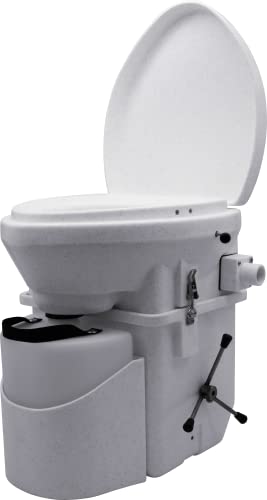
Nature’s Head Self-Contained Composting Toilet — Best Overall
Nature’s Head is the composting toilet most owners recommend to other owners, and the design explains why. It diverts urine to a front bottle, drops solids into a chamber charged with coco coir or peat medium, and uses a hand crank (this Close Quarters Spider Handle version suits tight installs where a standard handle would foul a wall) to mix and aerate the contents after use. A small 12V fan vents the chamber continuously, which — combined with urine diversion — is the entire odour strategy, and it works because odour in these systems comes overwhelmingly from urine mixing with solids and from stagnant moist air. For two full-time users, the solids chamber typically goes weeks between emptyings, and what comes out looks and smells like potting soil rather than anything worse. It is the benchmark against which the rest of this guide is measured.
Strengths
- Proven urine-diverting, crank-mixed design with the largest owner community and knowledge base in the category.
- Weeks between solids emptying for a couple; urine bottle empties in seconds into any toilet or drain.
- Built for marine and RV abuse — stainless hardware, robust mouldings, spares readily available.
Trade-offs
- Premium-tier pricing — it is the expensive end of the portable composting market.
- Requires compost medium management: too dry stalls composting, too wet invites odour and flies.
- The crank routine and the learning curve are real for the first month; guests need a one-line briefing.
The ownership rhythm settles quickly: crank a couple of turns after solids use, empty the urine bottle when it approaches full (check it daily — overfilling it is the one genuinely unpleasant accident this design allows), and keep a brick of coco coir rehydrating in a bucket so medium top-ups take a minute. The fan wants a permanent 12V feed and a vent path to outside; installations that skip proper venting are the ones that generate the category’s rare horror stories. Do those few things and the Nature’s Head disappears into the background of off-grid life, which is precisely the recommendation: it is the easiest mixing toilet to live with because thousands of owners have already found and shared every one of its quirks.
Best for: full-time RV, boat and off-grid home use where a proven system matters. Not suited for: buyers who want zero routine, or occasional-use installs where a simpler separator suffices. Check the current price on Amazon.

Separett Villa — Best for Cabins and Homes
The Separett Villa takes the opposite philosophy: no mixing, no medium, no cranking. It is a urine-separating dry toilet — urine exits through a hose to a drain, soakaway or container, while solids fall into a compostable bag inside the unit, viewed through the simple logic that separation itself prevents most odour and all of the composting-management chores. When the bag is full, you close it and remove it — to an outdoor compost system, a municipal collection where permitted, or disposal according to local rules. For a cabin, homestead or schoolie used by people who will not learn a crank routine, this is the easiest system in the guide to operate: sit, and the toilet does the rest. The high-capacity design suits family and group use better than the compact vehicle models.
Strengths
- Nothing to mix, crank or charge with medium — the simplest daily routine in the category.
- Urine drains away continuously, so there is no bottle to monitor or overfill.
- High capacity and a familiar, full-size seating position suit homes and cabins, not just vehicles.
Trade-offs
- It separates rather than composts — the bag’s contents still need a legal, sensible destination.
- Needs a urine drain route, which means basic plumbing or a soakaway at installation.
- Consumable bags are an ongoing purchase; keep spares at the cabin.
The Villa’s ease is architectural: by refusing to compost inside the unit, it deletes the entire management layer — moisture balance, medium, cranking, chamber emptying — and replaces it with a bag change. The honest cost is that the composting still has to happen somewhere, under your management, outdoors. For properties with land, that trade is excellent and it is why Separett dominates Scandinavian cabins, where this category is a mature default rather than an alternative lifestyle statement. Buy it with your disposal plan already decided and it will be the least demanding toilet you have ever owned.
Best for: cabins, homesteads, tiny homes on land and group use. Not suited for: installations with nowhere legitimate for the solids bags to go. Check the current price on Amazon.
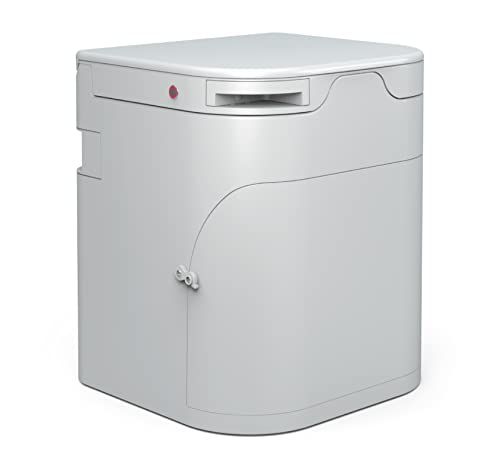
OGO Origin — Best Compact for Vans and Boats
The OGO Origin was designed for the installations where a Nature’s Head physically will not fit: a 15-inch footprint for vans, RVs and boats. It keeps the mixing-toilet formula — urine diversion plus an agitator in the solids chamber — in a smaller, modern package, with a form factor that tucks into wet-bath conversions and under-bench installs. Capacity is the honest trade: a compact chamber serves one or two travellers well but asks for more frequent attention than the full-size units, which in vehicle life is usually acceptable because the toilet is steps from the outdoors and emptying points are part of the travel rhythm anyway.
Strengths
- 15-inch footprint fits van and boat spaces that exclude full-size composting toilets.
- True mixing composting in a compact body — no bags, medium-based, self-contained.
- Design and support aimed squarely at the vehicle community that uses it.
Trade-offs
- Smaller chamber means more frequent emptying than the Nature’s Head for the same crew.
- Compact agitator mechanisms reward gentle, correct use — read the manual before the first trip.
- Premium pricing for its size class; you are paying for the footprint engineering.
The Origin’s buyers are converters and liveaboards solving a geometry problem, and judged on that problem it is the easiest answer in the guide: a real composting toilet where the alternative was a cassette or a bucket. Keep expectations calibrated to its scale — it is a two-person, travel-rhythm toilet, not a cabin workhorse — maintain the medium properly, and it delivers the same odour-managed experience as its bigger rivals in a space they cannot enter.
Best for: van conversions, small RVs and boats with tight heads. Not suited for: family cabins or high-throughput use. Check the current price on Amazon.

Compo Closet Cuddy — Best for Easy Cleaning
The Cuddy approaches the category from the cleaning end: a self-contained, waterless composting toilet for RVs, vans, boats and tiny homes with a 12V fan, a carbon filter and a 3.9-gallon capacity, designed so the unit itself wipes down and empties without the crevices and hardware forests of older designs. The carbon filter matters in vehicle installs where venting directly outside is awkward — it scrubs the exhaust air so the fan’s work does not announce itself. Compo Closet built the Cuddy with the rental-and-road-trip reality in mind: users who did not choose the toilet still have to live with it, so the surfaces are smooth, the routine is short and the instructions are written for normal people.
Strengths
- 12V fan plus carbon filter gives odour control even where external venting is imperfect.
- Smooth, self-contained design is the easiest in the guide to wipe down and keep hygienic.
- No chemicals and a straightforward emptying routine suit RV and rental use.
Trade-offs
- 3.9-gallon capacity is mid-sized — full-time couples will empty more often than with a Nature’s Head.
- Carbon filters are consumables; budget and stock them.
- A newer entrant than Separett or Nature’s Head, with a smaller (though growing) owner base.
Where the Cuddy earns its badge is the unglamorous middle of ownership: the weekly wipe, the monthly empty, the guest who has never seen a composting toilet. Its surfaces and seals were clearly designed by people who had cleaned the competition. Pair that with filter-assisted venting and it is the pragmatic pick for vehicles that move between climates and campsites, where a perfect vent installation is not always possible and a forgiving toilet is worth real money.
Best for: RVs, campervans and tiny homes prioritising hygiene and simple upkeep. Not suited for: high-capacity static installs. Check the current price on Amazon.

Separett Tiny — Best for Tiny Spaces
The Separett Tiny compresses the Villa’s urine-separating philosophy into a self-contained unit for vans, RVs, cabins and boats, with one thoughtful difference: the urine container is built in, with an emptying sensor that tells you when it needs attention. That sensor deletes the classic separator failure mode — the forgotten bottle — and makes the Tiny arguably the easiest toilet in this guide for beginners, because its one recurring chore announces itself. Solids collect in a bag in the rear chamber as with the Villa, so there is still no medium, no crank and no compost management inside the unit.
Strengths
- Built-in urine container with emptying sensor removes the main beginner mistake.
- Urine-separating simplicity — no medium, no mixing — in a genuinely compact body.
- Separett’s category experience shows in the details and the spares support.
Trade-offs
- Internal urine capacity is finite — heavy use means frequent emptying compared with a drained Villa install.
- Solids bags still need a legitimate destination, as with all separators.
- Compact seat dimensions suit its spaces but will not flatter larger users on long stays.
The Tiny is the right answer to a specific question: what is the easiest real toilet that fits in a van cupboard or a boat’s smallest head? Its answer — separation, a sensored bottle, a bag — is honest engineering for the constraint. Owners upgrading from cassette toilets consistently cite the disappearance of chemical smells and dump-point queues as the transformation; the Tiny delivers that with the least new routine to learn of any pick here.
Best for: vans, small boats and tiny cabins where space and simplicity tie for first. Not suited for: full-time family use at volume. Check the current price on Amazon.

TROBOLO WandaGO — Best Portable
The WandaGO is the portable member of the family: a urine-diverting dry toilet with height adjustment that needs no installation, no power and no plumbing, aimed at camping, allotments, construction and emergency use. Height adjustment is its quietly important feature — portable toilets are usually one low height that punishes tall users and anyone with stiff knees, and the WandaGO’s adjustable stance makes it usable by the whole group. As a separator it shares the family’s rules: urine diverts to a container, solids collect with a bag or liner, and odour stays low because the two never mix. It is the easiest toilet in the guide to start with — unbox, set the height, use it — and the one that stores in a garage between seasons.
Strengths
- Zero installation: no vent, no power, no plumbing — works anywhere immediately.
- Height adjustment makes a portable genuinely comfortable for tall and mobility-limited users.
- Urine diversion keeps a bag-based portable far fresher than chemical or bucket alternatives.
Trade-offs
- Capacities are portable-sized; groups will service it often.
- No fan or active venting — separation does all the odour work, so correct use matters.
- It is a dry toilet, not a composting system; contents need proper disposal or composting elsewhere.
Judge the WandaGO against what it replaces — the chemical porta-toilet and the bucket — and it wins both comparisons on freshness, dignity and running cost. It is also the emergency-preparedness pick of the guide: when a home’s water is off for plumbing work or a storm, a WandaGO in the garage converts a miserable situation into a manageable one. Portability is a legitimate form of easy, and this is its best current expression.
Best for: camping, allotments, worksites, events and home emergency backup. Not suited for: permanent full-time installations. Check the current price on Amazon.
Comparison Table
| Pick | Badge | Key spec | Best for |
|---|---|---|---|
| Nature’s Head Spider Handle | Best Overall | Mixing composter, urine-diverting, 12V fan vent | Full-time RV/boat/off-grid |
| Separett Villa | Best for Cabins and Homes | Urine-separating, no mixing, drained urine | Cabins and homesteads |
| OGO Origin | Best Compact | Mixing composter, 15-inch footprint | Vans and small boats |
| Compo Closet Cuddy | Best for Easy Cleaning | Self-contained, 3.9 gal, 12V fan + carbon filter | RVs and tiny homes |
| Separett Tiny | Best for Tiny Spaces | Urine-separating, built-in bottle with sensor | Vans, boats, tiny cabins |
| TROBOLO WandaGO | Best Portable | Urine-diverting dry toilet, height adjustable | Camping and emergencies |
How Composting Toilets Actually Work: The Two Families
Everything in this category runs on one principle — keep urine away from solids — because the mixture is what generates ammonia smell and turns contents into slurry. Family one, the mixing composters (Nature’s Head, OGO, Cuddy), then adds a carbon-rich medium such as coco coir and an agitator; each use buries fresh waste in aerated medium, microbes go to work, and over weeks the chamber’s contents transform toward a soil-like material that is emptied periodically. A small fan vents moisture and any trace odour outside. Family two, the separators (Separett Villa and Tiny, TROBOLO), skip in-unit composting entirely: urine leaves through a bottle or hose, solids collect in a bag, and composting — if it happens — happens later, in a heap or bin you manage. Neither family uses water or chemicals, and neither produces finished compost at the moment of emptying in the way marketing sometimes implies: mixing units produce a largely broken-down, earthy material that most owners finish in an outdoor compost system or dispose of per local rules, and separators produce raw contents that demand the same downstream honesty. Understanding which family you are buying is the single most important step in choosing, because the daily routines are completely different.
How to Use and Maintain a Composting Toilet
For a mixing toilet, the routine is: prepare the chamber with rehydrated coco coir or peat medium before first use; after solids, turn the crank two or three rotations to bury and aerate; keep the medium like a wrung-out sponge — add water if it dries and crumbles, add dry medium if it looks wet; empty the urine bottle before it is full, always; and when the chamber reaches capacity or the crank stiffens, empty it into a bag or bin for finishing compost or disposal, then recharge with fresh medium. For a separator, the routine is shorter: check the urine container (or trust the Tiny’s sensor), replace the solids bag when full, and wipe the diverter surfaces weekly, because urine scale builds exactly where the stream is directed. Both families share three rules. Venting is not optional on fan models — the fan must run and its path must exit the space. Toilet paper is fine in moderation in mixing units and usually goes in the bag in separators; follow your model’s manual. And brief your guests with one sentence — what goes where — because a composting toilet’s worst day is always a surprised visitor improvising.
How to Choose the Easiest Composting Toilet for Your Situation
Match the family to the setting first. A static cabin or home with land points to the Separett Villa: drained urine, bagged solids, an outdoor compost heap, and the least daily involvement of any system here. Full-time vehicle or boat living points to a mixing unit sized to your space — Nature’s Head if it fits, OGO Origin if it does not, Cuddy if cleaning ease and filtered venting lead your priorities. Occasional, portable or emergency use points to the WandaGO. Then check the unglamorous logistics: where will urine actually go (bottle, drain, soakaway — each has legal and practical dimensions), where will solids go (compost system, collection, disposal — decide before you buy, not after the first month), and who else will use it (a system only you understand is a system that fails socially). Finally, budget the consumables — medium, bags, filters — as part of the purchase; they are modest, but a toilet bought without its supplies is a chore deferred, not a solution installed.
Common Buying Mistakes
- Buying a separator expecting in-unit compost. Separators collect; they do not compost. If you have no downstream plan for the bags, buy a mixing unit or rethink.
- Skipping the vent on fan models. Unvented mixing toilets are the source of nearly every odour complaint in the category. The fan and its exit path are the system.
- Letting the urine bottle overfill. The one genuinely nasty accident these designs allow. Check it daily; choose the Separett Tiny’s sensor if you know you will forget.
- Wrong medium moisture. Desert-dry stalls composting; soup invites flies and smell. The wrung-out-sponge standard is the whole skill.
- Ignoring local rules. Disposal and greywater rules for urine and composted material vary by place. A minute checking your area’s guidance protects the whole project.
- Undersizing for the crew. Capacities assume a stated number of users; a family in a van needs the bigger chamber or a stricter emptying rhythm.
A Note for Boat Owners
Boats deserve their own paragraph because marine sanitation carries rules the other settings do not. A composting toilet replaces a marine head and holding tank, which removes pump-out dependence and through-hull complexity — but discharge law still governs the urine bottle and any liquid you pour, and the rules differ between inland waters, coastal zones and marinas. The owners who thrive with composting heads treat the urine bottle as they treated the holding tank: emptied at facilities, never casually overboard where it is not permitted. Solids handled as this guide describes — composted ashore or disposed of per local rules — keep the boat compliant and the harbour happy. Within those lines, the marine case for the category is the strongest of all: no tank to winterise, no hoses permeating with odour, and a head that works on a mooring exactly as it works at the dock.
Final Recommendation
If you want the proven, full-time system and it fits your space, buy the Nature’s Head. If your toilet lives on land and simplicity rules, buy the Separett Villa — or its little sibling the Separett Tiny for vehicle-sized spaces. Converters should start with the OGO Origin, cleaners with the Cuddy, and campers and prepared households with the WandaGO. Decide the family’s downstream plan — where urine and solids go — before the box arrives, stock the first season of medium or bags in the same order, and any of these six will be easy in the way that actually matters: quietly, predictably, every single week of the year, in any weather, with any crew you realistically host, in any season of the year. For the flush-toilet alternatives, see Best And Easiest Portable Toilets, Best And Easiest To Clean Toilets and Best And Most Reliable Toilets.
Installation: Venting, Mounting and Urine Routing
Installation is where easy is won or lost, and it divides by family. A mixing toilet needs three things: a secure floor mounting (these units must not slide — in vehicles, bolt or strap them as the manual directs), a 12V supply for the fan, and a vent path from the unit to outside air, through a wall, roof or existing vent stack, with the fewest bends you can manage. Route the vent before the first use, not after the first smell. A drained separator like the Villa needs its urine hose planned with equal care: a continuous gentle fall to the drain or soakaway, no low loops where liquid pools, and a connection you can disconnect for servicing. Bottle-based separators and the WandaGO need nothing but a level floor and sensible placement. Across all families, two habits pay off: photograph and label your installation choices for the next owner or the next service, and keep the manual with the unit, because the person emptying it in month six may not be the person who installed it in month one.
Cold Weather, Heat and Seasonal Use
Composting is biology, and biology has a temperature range. In freezing conditions the composting process in a mixing unit pauses — the toilet still functions as a diverter and collector, and owners in cold cabins simply empty more and compost less through winter, letting the outdoor heap do the work in spring. What must not freeze is the urine path: bottles should be emptied before a hard freeze in an unheated space, and drained hoses need their fall to be genuine so nothing stands in them to ice. At the other extreme, heat accelerates everything, including smells if the medium dries out and odour if venting is marginal; hot-climate owners check moisture more often and value the Cuddy’s carbon filter and any fan upgrade. Seasonal properties add one more ritual: at close-up, empty everything, clean the unit, and leave the chamber with fresh dry medium or fully empty per the manual — a composting toilet stored with contents is the one version of this product that will greet you badly in spring. None of this is difficult; it is the same seasonal literacy as draining a cabin’s pipes, and it belongs in the same checklist.
Composting vs Cassette, Chemical and Incinerating Toilets
The realistic alternatives clarify the choice. Cassette and chemical portable toilets — covered in our portable-toilets companion guide — are cheaper to buy and need dump points and chemical discipline forever; composting toilets cost more upfront and then run on medium and bags with no dump-point queue. Incinerating toilets are the true zero-residue option and the most expensive by a wide margin, consuming significant power or propane per cycle and suiting a narrower set of installs. Bucket systems with a diverter seat are the budget floor of this category and work on exactly the separator principle — the Separett and TROBOLO picks are, in effect, their engineered, comfortable, finished forms. The composting family’s honest claim is the middle: no water, no chemicals, no dump point, modest consumables, and a routine measured in minutes per week. For cabins, boats and full-time vehicles that is usually the winning ledger; for a twice-a-year camping trip, the portable cassette in the next guide may honestly serve you better, and this guide’s WandaGO pick exists to cover the composting side of that occasional-use case too.
The Real Costs of Ownership
Budget beyond the box. Mixing toilets consume coco coir or peat medium continuously — a modest, predictable spend — plus occasional replacement of fan, seals and agitator parts across the years; Nature’s Head’s spares ecosystem is the category’s most developed, which is part of what its premium buys. Separators consume their compostable bags at a rate set by your crew size, and the Tiny and Villa add nothing else except the discipline of keeping bags in stock. The Cuddy’s carbon filters join the consumables list. None of these costs rivals the chemical and dump-fee ledger of a cassette toilet over the same years, and all are dwarfed by the cost of the alternative most buyers are escaping — installing water and sewer where none exists. The financial mistake to avoid is the opposite one: buying the toilet and none of its consumables, then improvising with the wrong medium or no bags in the first month, which is how good systems acquire bad reputations in a household. Order the first season’s supplies with the toilet.
A Week in the Life: What Ownership Actually Feels Like
Abstract routines become clear when you walk a week with one. In a cabin running a Separett Villa, the week contains no toilet chores at all beyond normal cleaning — urine leaves by hose, solids accumulate invisibly, and the only event is a bag change every week or two depending on the crew, a five-minute job done outside at the compost area. In a van running a Nature’s Head, the rhythm is a daily glance at the urine bottle, an empty every two or three days into any convenient toilet or drain, a crank after each solids use that becomes as automatic as flushing, and a medium top-up when the level drops — total attention, perhaps ten minutes across the week, traded for never visiting a dump point. In a boat with the OGO or Cuddy, the same rhythm compresses around weekends: arrive, use, empty the bottle at the marina facilities on departure, and leave the fan running on shore power or solar between visits so the chamber stays dry and sweet. The pattern across all three is that the work is small, frequent and predictable rather than large and occasional — which is exactly why owners describe these toilets as easy once the first month has taught the rhythm, and why the first month, with its new habits, is the honest hurdle this guide keeps mentioning.
Guests, Children and Accessibility
A composting toilet succeeds socially or not at all. Guests need one sentence — “liquids and solids go in the same place; turn the handle afterwards” for a mixer, “just sit down, it handles the rest” for a separator — and a small card in the bathroom beats a speech. Children adapt faster than adults, with two practical notes: the urine diverter’s geometry is designed around adult seating positions, so young children may need a step and supervision until their aim matches the design, and separator bottles fill faster than you expect during a family visit. For accessibility, the category is mixed news: no flush handle force and no water controls help some users, the WandaGO’s adjustable height is a genuine inclusion feature, but crank-turning and bottle-carrying are physical tasks that must be honestly weighed for the specific user. Where a composting toilet is chosen for a user with limited mobility, the drained Separett Villa is usually the kindest configuration, because it removes both the bottle and the crank from the routine entirely.
Troubleshooting: Flies, Moisture and the First-Month Wobbles
Three problems account for nearly every support question in this category, and all three are curable. Fruit flies or drain flies appear when the chamber is too wet and the vent screen is compromised: dry the medium down with fresh coir, confirm the fan is actually moving air, check the vent’s insect screen is intact, and the colony collapses within days because its habitat is gone. A chamber that smells when opened is almost always a moisture or urine problem — urine entering the solids side (a seating-position issue the diverter briefing fixes) or medium that has gone soupy; the cure is dry medium, patience and the crank, not perfume or chemicals, which only mask a litre of liquid that should not be there. A crank that stiffens early means the chamber is fuller than you think or the medium was packed too densely at charging; empty earlier than the theoretical interval and recharge looser. Notice the theme: every failure is a water-balance failure, and the whole skill of owning a mixing toilet is keeping its interior like a forest floor rather than a swamp or a desert. Separators skip most of this — their troubleshooting list is shorter: urine scale on the diverter (wipe weekly, soak monthly), a hose that has developed a low spot (re-route with a continuous fall), and bags stocked before they are needed. Choose your family with your temperament in view: tinkerers thrive with mixers, minimalists with separators.
Related guides
Frequently Asked Questions
Do composting toilets smell?
A correctly installed and used one does not smell in the living space — urine diversion prevents the ammonia reaction and the fan vents the chamber. Odour complaints almost always trace to skipped venting, an overfilled urine bottle, or medium that has become too wet. All three are operational, not design, failures.
What do you do with the contents when you empty it?
From a mixing toilet, the chamber contents are a largely broken-down, earthy material; most owners finish it in an outdoor compost system reserved for the purpose or dispose of it according to local rules — never on edible gardens unless your local guidance and your composting process genuinely support that. From a separator, the bag goes to the same destinations raw, which is why the downstream plan matters before purchase.
Can you put toilet paper in a composting toilet?
In mixing units, yes, in normal amounts — it composts with everything else, though some owners keep a small bin for paper to extend chamber intervals. In separators, paper usually goes into the solids bag. Your model’s manual is the authority; the amounts a household produces surprise people less than the chamber capacity does.
Do composting toilets need power?
Mixing units use a small 12V fan — a trivial draw that vehicle and off-grid systems handle easily. Separators like the Villa and WandaGO need no power for the toilet itself; the Separett Tiny’s sensor and any fan options are the exceptions to check on the listing. None of them need water or a sewer connection, which is the point.
How often does a composting toilet need emptying?
Urine bottles need emptying every few days in full-time use — or never, where a separator drains to a hose. Solids chambers in mixing units typically run several weeks for a couple before emptying; separator bags depend on crew size and run shorter. Vehicle use compresses all of these intervals; cabin use stretches them.
Will a composting toilet work in a rental or a home I plan to sell?
Yes, and the category is kinder to reversibility than most bathroom changes: these units are self-contained, mount with modest fixings and need no water or sewer alteration, so removing one returns the room to its prior state with little trace. For rentals, choose the simplest system your tenants cannot misuse — usually a drained separator — and leave the one-page routine in the property. For resale, most owners simply take the unit with them, which is an option no plumbed fixture offers.
What medium should I use in a mixing composting toilet?
Coco coir is the modern default: it is sold in compressed bricks, rehydrates in minutes, has a clean smell of its own and resists compaction. Peat moss is the traditional alternative and works well, though many owners move to coir for sustainability and handling. Avoid garden soil, sawdust from treated wood, and cat litter — each defeats the moisture and aeration balance the chamber depends on. Whatever you choose, keep the texture like a wrung-out sponge and keep a rehydrated reserve ready so top-ups never wait.
Can a composting toilet handle full-time use by a family?
Yes, with the right sizing. Static family use suits the Separett Villa’s capacity and drained urine, or a Nature’s Head with a stricter emptying rhythm than a couple would keep. What family use punishes is undersizing — a compact vehicle unit serving five people full-time will demand constant attention and earn complaints the design does not deserve. Match chamber and bottle capacity to your largest realistic crew, including guests, not your average Tuesday.
How do composting toilets handle menstruation and medications?
Menstrual blood is not a problem for either family — it is a small volume of liquid the medium or bag absorbs like everything else, though pads and tampons themselves must never go into any composting toilet and belong in a bin. Medications are a downstream question rather than a toilet question: if the finished compost will be used anywhere sensitive, follow local guidance, and when in doubt route the material to disposal rather than composting. The toilet itself needs no special routine in either case.
Are composting toilets legal to use and empty?
The toilets themselves are widely sold and used in RVs, boats, cabins and homes. The regulated part is disposal: local rules govern where urine, compost and bagged waste may go, and they vary. Check your area’s guidance — most owners find a compliant routine (compost system, collection service or permitted disposal) without difficulty, but it must be your routine, decided in advance.


