A meat thermometer shows when food is cooked through, which matters in an air fryer where browning can hide an undercooked center. The best instant read thermometers for air fryer cooking give a quick reading, while probes and wireless models monitor food during longer cooks.
The six picks below cover instant-read, leave-in and wireless digital meat thermometers from established brands. We have not used these products ourselves, so confirm accuracy, probe length and heat limits on the current listing before buying. Check whether a probe cable is rated for use inside an air fryer, since not all are. Using a thermometer also helps you learn the right cooking times for your own machine. Food safety targets differ by food, so check guidance from a government health agency rather than relying on guesswork. Wipe the probe between raw and cooked food, and do not leave a thermometer that is not heat-rated inside a running air fryer. In small drawers, thin probes are easier to position, and a quick instant-read check at the thickest part of the food is a good habit.
As an Amazon Associate we earn from qualifying purchases. Links below are affiliate links, and they do not change the product information we give.
What to Look For
| Feature | Why it matters |
|---|---|
| Type | Instant-read for spot checks; probes for leave-in monitoring |
| Speed | Faster readings mean less time with the drawer open |
| Probe | A thin probe fits small cuts |
| Heat limit | Leave-in probes and cables must be rated for the cooking temperature |
| Wireless | Wireless models let you monitor without opening the drawer |
| Display | A backlit, easy-to-read screen helps in dim kitchens |
In this guide
Specs at a Glance
| Thermometer | Type | Use | Notes |
|---|---|---|---|
| ThermoWorks Thermapen ONE | Instant read | Spot checks | Premium price |
| Lavatools Javelin PRO Duo | Instant read | Spot checks | Value pick |
| ThermoPro TP03 | Instant read | Spot checks | Budget pick |
| MEATER Plus | Wireless probe | Leave-in | Check heat limits |
| TempPro TempSync 500FT | Dual probe, wireless | Leave-in | Check probe cable fit |
| Alpha Grillers | Instant read | Spot checks | Budget pick |
The 6 Best Air Fryer Thermometers

Top pickBest for spot checks
1. ThermoWorks Thermapen ONE
A professional-grade instant read thermometer from ThermoWorks, widely praised by cooks for speed and accuracy.
Suits: spot checks. Strengths: trusted brand. Weaknesses: higher price. Skip it if you want a leave-in probe.

Best for value spot checks
2. Lavatools Javelin PRO Duo
An instant read thermometer with a long probe and a backlit screen. A popular value alternative to premium models.
Suits: value spot checks. Strengths: fast and affordable. Weaknesses: not for leave-in use. Skip it if you need a wireless probe.
View Lavatools Javelin PRO Duo on Amazon
Best for budget buyers
3. ThermoPro TP03
A budget digital instant read thermometer from ThermoPro. It is simple and compact, with a fold-out probe.
Suits: budget buyers. Strengths: low cost. Weaknesses: basic features. Skip it if you want a premium build.
View ThermoPro TP03 Digital Instant Read Meat Thermometer on Amazon
Best for wireless monitoring
4. MEATER Plus
A wireless probe with no cable. It tracks temperature through an app, so it can be useful for monitoring larger cuts.
Suits: wireless monitoring. Strengths: no cable. Weaknesses: check that it suits air fryer heat. Skip it if you do not want an app.
View MEATER Plus Wireless Smart Meat Thermometer on Amazon

Best for two foods at once
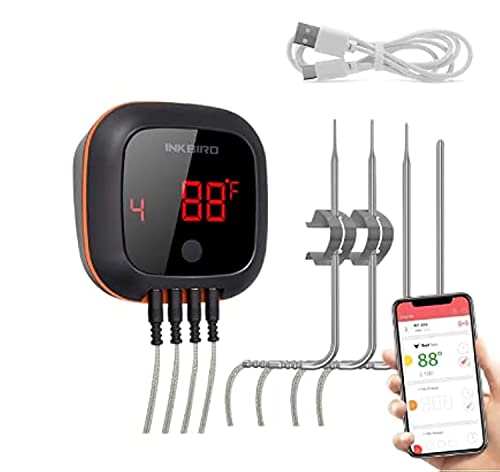
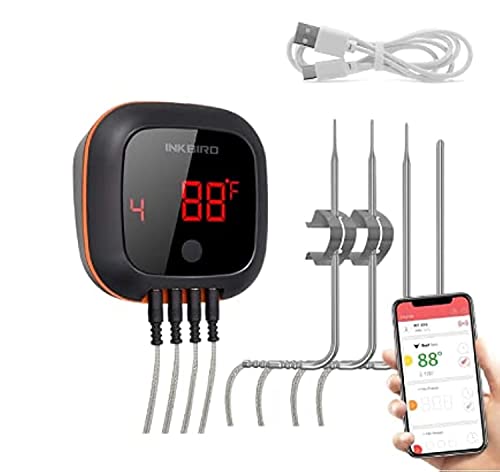
5. TempPro TempSync 500FT Wireless Meat Thermometer
A wireless meat thermometer from TempPro with two probes, alarms and a large backlit LCD display, using RF technology and listed for grilling and smoking. Check whether the probe cables suit your air fryer drawer.
Suits: two foods at once. Strengths: two probes, alarms and a readable display. Weaknesses: cables may not fit a drawer, and it is aimed at grilling and smoking. Skip it if your air fryer has a tight drawer.

View TempPro TempSync 500FT Wireless Meat Thermometer on Amazon
Best for general use
6. Alpha Grillers Instant Read Meat Thermometer
A digital instant read thermometer sold by a grilling accessory brand. A common budget choice for general cooking.
Suits: general use. Strengths: low price. Weaknesses: build may feel light. Skip it if you want professional-grade tools.
View Alpha Grillers Instant Read Meat Thermometer on Amazon
Care and Setup
- Clean the probe with warm soapy water after each use.
- Wipe the thermometer, but do not submerge unless rated for it.
- Calibrate if the maker offers a method.
- Store it in its sleeve or case.
- Replace batteries when readings lag or the display dims.
Mistakes to Avoid
- Using a leave-in probe with a cable that is not heat-rated.
- Probing near bone or the basket.
- Opening the drawer for too long.
- Ignoring the maker’s accuracy notes.
- Trusting a single reading in one spot for thick cuts.
Where to Place the Probe in an Air Fryer
An air fryer blasts hot air across the surface of food, so the outside is often much hotter than the center. That makes probe placement the single biggest factor in whether a reading means anything. The goal is to measure the coldest part of the food, which is usually the thickest point, away from bone, fat pockets and the hot basket or tray.
Practical placement tips:
- Chicken pieces: insert the tip into the thickest part of the thigh or breast, angled so the sensor sits in the middle and does not touch bone.
- Burgers and patties: slide the probe in from the side so the tip reaches the center of the patty rather than going straight down through it.
- Fish fillets: go in at the thickest section, which is usually nearest the center of the fillet.
- Thin items such as wings or nuggets: check more than one piece, since small pieces vary in size.
- Larger roasts: aim for the center of the muscle, and avoid pushing the tip through to the other side.
Pull the basket or tray out of the machine when taking an instant-read measurement, and work quickly. Holding the drawer open lets heat escape, and it also lets the display settle on a reading while the probe is in the food. If the number is still moving, wait until it stops. Take a second reading in a different spot for thick cuts, because a single reading can mislead if the probe lands in a cooler or hotter pocket. A good thermometer is only half the job, since technique decides what the number is telling you.
Accuracy, Response Time and Resolution
Three terms show up on thermometer listings and it helps to know what each means. Accuracy describes how close a reading is to the true temperature, usually stated as a range. Response time describes how quickly the reading settles. Resolution is the smallest step the display shows, such as whole degrees or tenths of a degree. All three matter, but they matter in different ways.
For small foods in an air fryer, response time is often more useful than a tiny resolution. A slow thermometer means the drawer stays open longer and the food cools while you wait. A thin probe tip also helps, because less metal has to heat up before the sensor reads correctly. Do not assume that a higher price always means better accuracy, and do not trust listing claims that give no range or no explanation. Check the maker’s stated accuracy and response information on the current product page and in the manual.
You can test a thermometer at home with an ice water bath. Fill a glass with crushed ice, add a little water, stir, and insert the probe without touching the sides. Ice water should read close to freezing, so a clearly different number tells you the unit is off. If your model supports calibration, follow the manual. If it does not and the error is large, replace it. Test again after a drop or after replacing the battery.
Resting and Carryover Heat
Food keeps cooking after it leaves the heat. The outer layers are hotter than the center, and that heat continues moving inward for a few minutes, which cooks thicker cuts a little further. This is called carryover. It is why many cooks pull larger roasts or thick chops a little before the final target and let them rest.
How much carryover you get depends on the size and shape of the food and on how hot the air fryer was. A thin piece such as a sausage or a nugget barely changes, while a large roast can climb noticeably. Do not use a single universal number. Instead, learn your own results. Take a reading when you pull the food, note it, and take another reading after a few minutes of rest. Over a few cooks you will see the pattern for your machine and your usual foods.
A few cautions apply:
- Safety targets from health agencies describe where food must end up, so check current guidance for your food and do not pull food early just to leave room for carryover without checking.
- Poultry and ground meat deserve extra care, so be conservative with them.
- Resting also lets juices settle, which improves texture in larger cuts.
An instant-read thermometer is the tool that makes this learning possible. Without one, you are guessing at doneness from color and timing alone.
Wireless Probes in a Small Cooking Space
Wireless and leave-in probes sound ideal for an air fryer, but the small, hot, metal-lined interior is a tough environment. Before buying one, confirm four things on the listing and in the manual.
- Heat rating: the probe and any cable must be rated for the air fryer cooking temperature, and the maker should say so. If the listing is aimed at ovens, grills or smokers, do not assume it suits an air fryer.
- Drawer clearance: a cable that pinches in the drawer seal can damage the cable and let heat escape. A basket-style air fryer may close around a thin cable, while a drawer may not.
- Signal and metal: metal housings can weaken wireless signals, so check what the maker says about range and about use inside metal appliances.
- Battery and base: know how long the battery lasts and whether the charging case or base unit stays outside the cooking area.
Wireless suits long cooks, such as a roast chicken, where you want to watch the temperature without opening the drawer. For shorter cooks, an instant-read thermometer is simpler and costs less. Wireless models also rely on an app or a base unit, so ask whether you are comfortable with that. If a maker’s instructions say the probe is not for use inside an enclosed air fryer, follow them. Never keep a thermometer inside a running air fryer unless the maker says it can take the heat.
Hygiene, Storage and When to Replace
A thermometer touches raw food and cooked food, so cleaning habits matter for safety. Wash the probe with hot soapy water after every use, wipe the handle, and never reuse it on cooked food right after raw meat without cleaning it. Alcohol wipes are handy when you are checking several items in a row, as long as the maker says the probe can take them.
Most digital thermometers are splash-resistant at best. Check the manual before running water over the body, and never put the unit in a dishwasher unless it is rated for that. Dry the probe fully before folding it away, and store it in its sleeve or a drawer where the tip will not bend. Moisture and bending are the two most common causes of early failure.
Signs it is time to replace a thermometer:
- The ice water test shows a clear error that calibration cannot correct.
- Readings drift, jump around or take far longer to settle than they used to.
- The display fades or flickers even with a fresh battery.
- The probe tip is bent, corroded or loose in its housing.
- A leave-in cable is cracked, melted or frayed.
When you replace one, use the lessons from the old one. If you rarely use it for long cooks, choose an instant-read model. If you keep reaching for a probe you can leave in, look for a heat rating that covers air fryer use before you buy.
A Checklist for Choosing a Thermometer for Air Frying
Air fryers cook fast in a small space, so a thermometer needs to work quickly and fit around a basket. Think through the points below before you pick one, and keep your most common foods in mind.
- Look at the probe length and thickness. A slim probe leaves a smaller hole and reaches the center of small pieces.
- Check the response time the maker states, since a faster reading means less time with the drawer open.
- Decide between an instant read model you insert at the end and a leave-in probe with a wire or wireless link.
- Look at the display, including backlight, size of the digits and whether it rotates for left or right hand use.
- Confirm the temperature range and whether it shows Fahrenheit and Celsius.
- Check the battery type, the water resistance level and the cleaning instructions.
The ThermoWorks Thermapen ONE, the Lavatools Javelin PRO Duo, the ThermoPro TP03, the MEATER Plus, the TempPro TempSync 500FT and the Alpha Grillers instant read thermometer each take a slightly different approach, so compare the exact features on each listing.
Instant Read Against Leave-In Probes
| Type | Good for | Cautions |
|---|---|---|
| Instant read | Checking wings, cutlets, burgers and small cuts at the end of cooking | You must open the drawer to check, and the tip gets hot |
| Wired leave-in | Roasts and larger pieces with a display outside the machine | The wire must clear the drawer edge without being pinched |
| Wireless probe | Cooking without any wire, with a phone or base alert | Check the maker temperature limits for use inside an air fryer |
Many cooks find an instant read thermometer is the most flexible for an air fryer, since foods are often small and cooked in a short time.
Probe Placement and Reading Tips
Insert the probe into the thickest part of the food, avoiding bone, the basket and any pooled fat, since those spots can give a misleading reading. For thin foods such as chicken tenders, slide the probe in from the side so the tip reaches the center. Wait for the number to settle before you read it. After checking, wipe the probe clean before using it on another piece or on cooked food.
Follow official food safety guidance for the temperatures that apply to the meat you are cooking. Resting time matters as well, because the temperature may rise slightly after you remove the food from the heat.
Caring for a Thermometer Over Time
Wash the probe with warm soapy water and dry it, and avoid submerging the display body unless the maker says it is waterproof. Store the thermometer in a drawer with the tip covered, and replace the batteries as the instructions say. To check accuracy, many makers describe an ice water test in the manual. If the reading seems off, follow the recalibration steps or contact the maker.
Mistakes to Skip
Do not leave a standard instant read probe inside a hot air fryer unless the maker says it is designed for that use, because heat can damage the electronics.
Common Errors That Give a Bad Reading
The biggest error is touching the basket or tray with the probe tip, since hot metal can read higher than the food. Another is checking only one spot. Pieces vary in thickness, so test the thickest one and, with larger batches, a second piece as well. A third is reading too soon, before the number has settled. Give the display a few seconds, especially with a slower, budget style probe.
It also helps to check the thermometer itself now and then. If the display flickers, the battery may be weak, and if the readings jump, the probe may be damaged.
Reading the Shortlist Like a Buyer, Not a Browser
The reviews above give you the facts on each air fryer thermometer; this section is about turning those facts into a decision. Start by writing down, honestly, how you will use your air fryer thermometer in its first month: how often, for what, and in hand at the basket, checking that food is cooked through. Most disappointing purchases happen when a buyer shops for an imagined routine — the elaborate project, the big gathering, the new hobby at full intensity — instead of the ordinary routine that will account for nearly every use. If your real routine is modest, a simpler option from the list will usually serve you better than the most feature-heavy one.
Next, separate the criteria into three groups. The first group is fit: does the air fryer thermometer suit your space, your existing equipment and the people who will use it? Fit problems cannot be worked around later, so treat them as pass-or-fail checks using the measurements and notes in the reviews above. The second group is daily handling: weight, grip, balance, controls and anything else you will touch every single time. Small annoyances in this group grow with repetition, so weight them heavily. The third group is upkeep: how it washes, how it dries, how it stores and what it needs from you each week. Upkeep is where good products quietly become burdens, and it is the group buyers most often skip while comparing.
Finally, read the limitation noted in each review as seriously as the strengths. Every air fryer thermometer in this guide involves a trade-off, and the honest limitation tells you which trade-off you are accepting. A limitation that touches something you do rarely is a bargain; a limitation that touches your most common use is a warning, even if everything else about the product looks ideal. Choosing well is mostly the discipline of matching a product’s known weaknesses to the parts of your routine where they will matter least.
It also helps to learn the vocabulary the reviews use, because the same word can hide different designs. When a review describes an air fryer thermometer as sturdy, versatile or easy-care, look for the sentence that explains why — the construction, the material or the routine it assumes — and check that the reason applies in your home. Marketing language travels from product to product unchanged; the reasoning in a good review does not. If two picks seem identical on the surface, the difference is usually in those explanatory sentences: one was designed around frequent use, the other around occasional use, and that single distinction predicts long-term satisfaction better than any feature list.
Matching an Air fryer thermometer to Real Households and Routines
Consider a few common situations. A beginner, or someone returning to the activity after a long break, benefits most from forgiveness: an air fryer thermometer that is easy to handle, easy to clean and hard to misuse, even if it gives up some refinement. Early frustration ends more hobbies and routines than poor results do, so the beginner-friendly option in the shortlist is rarely the basic choice — it is the one most likely to still be in regular use a year later.
A busy household has the opposite problem: plenty of use, very little time. Here the deciding factors are speed of setup, speed of cleaning and how well the air fryer thermometer tolerates being used by several people with different habits. Look again at the reviews with that lens and favour the options whose care notes sound like your actual evenings, not an idealised weekend. Air fryer accessories earn their keep in the rhythm of weeknight cooking: quick preheats, small batches, frequent washing and tight storage. Judge each option by how it behaves in that rhythm — whether it fits without forcing, cleans without a soak and a scrubbing session, and stores in the drawer or cupboard you actually have. The accessory you reach for without thinking is the one that was chosen with your real routine in mind.
A keen enthusiast, by contrast, will notice and value differences that a casual user never feels: finer control, more consistent results, materials that reward careful handling. If that sounds like you, the shortlist’s more specialised options deserve the closest reading, and the comparison notes in each review — who it suits, who should skip it — will point you to the right end of the range. And if you are buying as a gift, choose for the recipient’s routine rather than your own taste, and favour the option that is easiest to live with straight out of the box, since a gift that needs accessories, practice or storage space it does not have tends to stay in its packaging.
First Use, Done Properly: A Step-by-Step Start
When your air fryer thermometer arrives, resist the urge to put it straight to work. Unpack it fully, check it over for damage from shipping, and read any instructions that came with it all the way through once — not because the steps are complicated, but because the one warning that matters is usually in the middle of a paragraph most people skim. Wash or wipe it down as the maker directs before first use, since new products often carry dust or residue from manufacturing and packing.
For the first real use, keep things deliberately simple. Choose the easiest, most familiar version of the task — the recipe, project or routine you already know well — so that any difference in the result is down to the air fryer thermometer and not to unfamiliar steps. Pay attention to the basics: how it sits or is held, how much effort each stage takes, where it feels awkward, and how the result compares with what you are used to. Small adjustments made in this first session, while you are paying attention, become the habits that make later sessions effortless.
Afterwards, clean and put away the air fryer thermometer immediately, following the care notes in its review above, and notice how long that actually takes. That cleaning time is part of the product’s real cost, and knowing it now lets you plan for it honestly. If something about the first use genuinely disappoints you, note exactly what it was before the memory softens; a specific complaint can be solved with a technique change or an exchange, while a vague feeling of disappointment usually just lingers.
Care, Cleaning and Storage That Add Years of Use
Most air fryer thermometers do not wear out from use; they wear out from care that is slightly wrong, repeated for months. The pattern is familiar: residue left to dry becomes residue that needs force to remove, force damages surfaces, and damaged surfaces collect more residue. Breaking that cycle is simple — clean soon after use, with the gentlest method that works, and dry thoroughly before storage. The care section earlier in this guide covers the specifics for the picks above; the habits below are what make those specifics stick.
Heat, oil and repeated washing age air fryer accessories faster than almost any other kitchen gear. Let everything cool before washing, keep abrasive tools away from coated surfaces, dry pieces fully before they go back in a drawer, and inspect silicone, coatings and moving parts regularly for wear. Replacing a worn accessory early protects the basket itself, which is the more expensive part to replace.
Build the care into the routine rather than treating it as a separate chore. Keep whatever you clean the air fryer thermometer with within arm’s reach of where it is used, store the air fryer thermometer in one consistent place so checking its condition becomes automatic, and do a slightly deeper clean and inspection on a regular rhythm — monthly is a sensible default for anything in weekly use. Catching a loose part, a worn surface or a developing smell early is the difference between a five-minute fix and a replacement purchase.
Add a seasonal deep clean to that rhythm a few times a year. Take the air fryer thermometer out of its usual setting, clean it more thoroughly than the weekly routine allows, inspect every surface and moving part in good light, and deal with anything you find — residue in seams, early wear, a part that has worked loose — before it goes back into service. This is also the moment to wash or replace whatever it is stored with, so a clean item is not put back into a dirty home. Ten unhurried minutes, a few times a year, is the cheapest insurance a purchase like this can have.
How the Picks Above Compare When You Line Them Up
Readers often ask which of the air fryer thermometers in this guide is simply the best, but the shortlist was built the other way round: each pick earned its place by suiting a different kind of buyer. The useful comparison is therefore not a ranking but a matching exercise. Work through the picks below, in the order they appear in the guide, and test each one against the routine you described for yourself in the sections above.
ThermoWorks Thermapen ONE. Re-read its review above with your own routine in mind: the who-it-suits note tells you the household it was chosen for, and the honest limitation tells you the price of choosing it. If both fit your situation, it belongs on your final shortlist; if the limitation touches your most common use, move on without regret, because one of the other picks was almost certainly chosen with a routine like yours in mind.
Lavatools Javelin PRO Duo. Re-read its review above with your own routine in mind: the who-it-suits note tells you the household it was chosen for, and the honest limitation tells you the price of choosing it. If both fit your situation, it belongs on your final shortlist; if the limitation touches your most common use, move on without regret, because one of the other picks was almost certainly chosen with a routine like yours in mind.
ThermoPro TP03. Re-read its review above with your own routine in mind: the who-it-suits note tells you the household it was chosen for, and the honest limitation tells you the price of choosing it. If both fit your situation, it belongs on your final shortlist; if the limitation touches your most common use, move on without regret, because one of the other picks was almost certainly chosen with a routine like yours in mind.
MEATER Plus. Re-read its review above with your own routine in mind: the who-it-suits note tells you the household it was chosen for, and the honest limitation tells you the price of choosing it. If both fit your situation, it belongs on your final shortlist; if the limitation touches your most common use, move on without regret, because one of the other picks was almost certainly chosen with a routine like yours in mind.
TempPro TempSync 500FT Wireless Meat Thermometer. Re-read its review above with your own routine in mind: the who-it-suits note tells you the household it was chosen for, and the honest limitation tells you the price of choosing it. If both fit your situation, it belongs on your final shortlist; if the limitation touches your most common use, move on without regret, because one of the other picks was almost certainly chosen with a routine like yours in mind.
Alpha Grillers Instant Read Meat Thermometer. Re-read its review above with your own routine in mind: the who-it-suits note tells you the household it was chosen for, and the honest limitation tells you the price of choosing it. If both fit your situation, it belongs on your final shortlist; if the limitation touches your most common use, move on without regret, because one of the other picks was almost certainly chosen with a routine like yours in mind.
If two picks both survive that test, let upkeep decide between them: choose the one whose cleaning and storage notes fit the time and space you actually have. If none of them survives cleanly, the deciding factor is usually fit — go back to the measurements and compatibility notes in the reviews, because a compromise on handling can be learned, while a compromise on fit is re-lived at every single use.
More Mistakes That Quietly Ruin a Good Purchase
The mistakes section earlier in this guide covers the classic errors; these are the quieter ones. The first is buying for capacity or capability you will use once a year. An oversized or over-specified air fryer thermometer costs you space, cleaning time and handling effort at every ordinary use in exchange for an advantage that shows up at one annual event. The second is judging by the first use alone: many products improve as you learn them, and many disappointments in week one are technique problems, not product problems. Give a new air fryer thermometer a fair handful of uses, adjusting your approach as the reviews suggest, before concluding it was the wrong choice.
The third mistake is neglecting the unglamorous companions: the storage space, the cleaning supplies, the small accessories that make the main purchase work smoothly. Budget a little attention for those when you buy, and the air fryer thermometer will perform as the reviews describe. The fourth is ignoring the other people in the household. If others will use, wash or store the item, their habits are part of the product’s working conditions; the best choice is often the one everyone can handle correctly without instruction, not the one with the finest performance in expert hands.
A Pre-Purchase Checklist You Can Run in Five Minutes
Before you order any air fryer thermometer from the shortlist, run through this short checklist. First, confirm the fit: compare the measurements and compatibility notes in the review with your own space and equipment, measuring rather than guessing, because returns for fit are the most common and the most avoidable. Second, confirm the routine: picture the item in your busiest week, not your quietest, and check that its setup and cleaning demands still sound acceptable. Third, confirm the people: if anyone else will use or wash it, make sure its handling suits them too.
Fourth, confirm the storage: decide exactly where the air fryer thermometer will live before it arrives, not after, and check that the spot is dry, reachable and large enough without stacking things on top of it. Fifth, confirm the companions: note anything the review says the pick works with or needs — the cleaner, the accessory, the surface — and be sure you already have it or are content to manage without it. Sixth, re-read the honest limitation in the review one final time and say it out loud in terms of your own routine. If it still sounds like a small price, you have found your pick; if it suddenly sounds larger, it probably is, and the checklist has just earned its five minutes.
The First Month: Habits, Adjustments and Small Fixes
Most owners settle into a rhythm with a new air fryer thermometer within the first month, and the habits formed then tend to stick. Use the first few sessions deliberately: vary one thing at a time — your technique, the setting, the order of steps — and notice what changes. That simple discipline teaches you more about the product than a month of identical uses, and it separates problems with the product from problems with the approach, which have very different solutions.
When something goes wrong, work through the small fixes first. Results that disappoint are most often traced to preparation: something not cleaned, not dried, not fitted or not given enough time. Repeat the task once with extra care on the preparation steps described earlier in this guide before concluding anything about the air fryer thermometer itself. If the same problem repeats under careful conditions, consult the limitation notes in the review — you may have found the trade-off that pick is known for — and adjust how or when you use it accordingly.
By the end of the first month, do one honest review of your own: is the air fryer thermometer being used as often as you expected, is its cleaning routine actually happening, and is it stored where you planned? A yes to all three means the purchase has landed. A no usually points to a fixable friction — a better storage spot, a simpler routine, a small companion accessory — rather than a wrong product, and fixing that friction now is far cheaper than replacing the purchase later.
One more habit separates satisfied owners from frustrated ones: they keep the instructions and care notes that came with the product, at least for the first few months. Questions that feel urgent in week three — a cleaning method, a storage warning, a part that seems loose — are usually answered in a single paragraph of that paperwork, and having it to hand turns a worry into a two-minute check.
It also helps to buy with the seasons in mind. Many of the items in this guide work hardest at particular times of year, and purchasing just ahead of that season, while you still have time to learn the product on easy tasks, beats a rushed purchase the day before it is needed. A little lead time turns first-use mistakes into lessons instead of disappointments.
If you are choosing between two finalists and remain stuck, consider which one you would recommend to a friend whose routine matches yours. That small shift in perspective tends to cut through feature lists and focus the decision on lived experience — handling, cleaning and reliability — which is where satisfaction is actually decided.
More Questions Buyers Ask About Air fryer thermometers
How long should a good air fryer thermometer last?
That depends far more on care than on the badge on the box. An air fryer thermometer that is cleaned promptly, dried fully and stored properly will usually serve for years of regular use, while the same product left dirty, damp or knocked around in a crowded cupboard or drawer can show wear within months. The care notes in each review above are the best guide to what a particular pick needs from you.
What should a complete beginner look for first in an air fryer thermometer?
Forgiveness. Choose the option whose review stresses easy handling and straightforward cleaning, even if a more specialised pick looks more impressive. Beginners improve fastest when the equipment does not punish small errors, and confidence built on early successes is what turns a first purchase into a lasting routine.
Is it worth buying a second air fryer thermometer for a different job?
Only when the two jobs genuinely conflict — for example, when one use is rough and daily and the other needs the item at its best, or when two people regularly need it at the same time. For most households, one well-matched air fryer thermometer, properly cared for, covers far more ground than buyers expect, and a second purchase makes sense only after the first has proven exactly where its limits are.
How do I know when an air fryer thermometer needs replacing rather than cleaning or repair?
Look for changes that cleaning does not reverse: surfaces that stay rough, sticky or discoloured after a proper clean, parts that no longer fit or move as they should, and results that have declined even though your technique has not changed. Any damage that affects safety means replacement straight away; purely cosmetic wear is a judgement call you can safely take your time over.
Can I share one air fryer thermometer between different tasks or rooms?
Usually yes, provided it is cleaned between uses where hygiene matters and the fit works in both settings. The trade-off is convenience: a shared air fryer thermometer gets used and washed more often, so it will wear faster, and it is never where the second person expects it to be. Households that share successfully tend to give the item one fixed home and a simple rule about returning it there, clean, every time.
Air Fryer Thermometers FAQ
Do I need a thermometer for an air fryer?
It is not required, but it helps confirm doneness.
Can I leave a probe in during cooking?
Only if the maker says the probe and cable can handle the heat.
Which is best, instant read or wireless?
Instant read suits quick checks; wireless suits long cooks.
What temperature is chicken safe at?
Check current food safety guidance from a government source, since recommended targets are set by health agencies.
Where should I put the thermometer in chicken wings?
Wings are small, so aim for the thickest part, away from bone, and check more than one wing. If the tip reads through to the bone it can show a falsely high number, so reposition and check again.
How do I check if my thermometer is accurate?
Make an ice water bath and insert the probe without touching the glass. It should read close to freezing. If it is clearly off and the manual offers calibration, follow the steps. If not, replace it.
Can I use an oven thermometer inside an air fryer?
Only if the maker says it can handle the heat and the fit. Many oven thermometers are not designed for fast moving air or tight spaces, so read the instructions first.
Why does my food read different temperatures in different spots?
Air fryers heat unevenly, and food varies in thickness. Check the thickest part and take a second reading in another spot, especially for thick or irregular pieces.
Should I remove the basket before taking a reading?
Taking the basket out onto a heatproof surface makes it easier and safer to place the probe correctly. Work quickly so the food does not cool while you measure.
Do thermometers need batteries?
Most digital models do, and weak batteries can slow or distort readings. Replace the battery when the display dims or readings lag, and check the manual for the type.
Can I leave a probe in during preheating?
Not unless the maker says it is rated for the temperature. Insert the probe once the food is in, and keep cables away from the heating element and the drawer seal.
The Short Version
For top-tier speed, the Thermapen ONE. For value, the Javelin PRO Duo or the TP03. For wireless, the MEATER Plus. For two probes, the TP20. For a budget pick, the Alpha Grillers.