Disclosure: airfryerkitchensupply.com is reader-supported. When you buy through links on our site, we may earn an affiliate commission at no extra cost to you.
If you searched for the best add on budets for toilets — bidets, in the usual spelling — you are looking at the cheapest genuine upgrade in the bathroom. An add-on bidet is a spray system that fits under your existing toilet seat or replaces the seat entirely, taps into the toilet’s own water supply line, and washes with a directed jet of water instead of relying on paper alone. No new toilet, no plumber in most cases, and no renovation: the entry models install with a wrench and a towel in well under an hour. The category splits into three honest tiers. Non-electric attachments are thin plates that sit under your current seat and run on water pressure alone. Non-electric bidet seats replace the seat and add a second nozzle and a tidier profile. Electric seats add warm water, a heated seat and air drying, and need an outlet. This guide shortlists six verified options across those tiers — every one cross-checked against Amazon listing data, so the nozzle count, water type and format in each review match the real listing rather than a marketing summary.
Where to buy
The confirmed picks in this guide are sold through Amazon, where you can check the current price on Amazon for each model, confirm whether it suits a round or elongated bowl, and see exactly what is in the box. Start with these confirmed options:
- LUXE Bidet NEO 185 Non-Electric Bidet Attachment — Best Overall: Check the current price on Amazon
- LUXE Bidet NEO 120 Non-Electric Bidet Attachment — Best Budget: Check the current price on Amazon
- TUSHY Classic 3.0 Bidet Attachment — Best Design: Check the current price on Amazon
- Bio Bidet SlimEdge Bidet Attachment — Best Slim Profile: Check the current price on Amazon
- Brondell Swash Ecoseat Non-Electric Bidet Seat, Elongated — Best Seat Replacement: Check the current price on Amazon
- TOTO WASHLET S2 Electronic Bidet Seat, Elongated — Best Electric Upgrade: Check the current price on Amazon
Two checks before ordering any add-on bidet. First, bowl shape: seat-replacement models come in round and elongated versions that do not swap, while under-seat attachments fit most bowls but sit differently on each. Second, access: every attachment tees into the toilet’s fill valve, so confirm you can reach the supply connection at the base of your tank and that your seat bolts are removable — most are, but some one-piece and skirted toilets need a moment’s thought.
In this guide
Quick Picks
- Best Overall: LUXE Bidet NEO 185 Non-Electric Bidet Attachment — Dual nozzles for rear and feminine wash, self-cleaning nozzle and adjustable pressure in the classic under-seat format — Check the current price on Amazon
- Best Budget: LUXE Bidet NEO 120 Non-Electric Bidet Attachment — The single-nozzle original: rear wash, self-cleaning nozzle and adjustable pressure at the simplest tier in the category — Check the current price on Amazon
- Best Design: TUSHY Classic 3.0 Bidet Attachment — Design-led attachment with angle control as well as pressure control, finished here in brushed nickel — Check the current price on Amazon
- Best Slim Profile: Bio Bidet SlimEdge Bidet Attachment — An extra-thin dual-nozzle attachment designed to sit under the seat without changing how the seat feels — Check the current price on Amazon
- Best Seat Replacement: Brondell Swash Ecoseat Non-Electric Bidet Seat, Elongated — A complete seat with the dual-nozzle bidet built in — no plate under an old seat, no seat tilt, tidier lines — Check the current price on Amazon
- Best Electric Upgrade: TOTO WASHLET S2 Electronic Bidet Seat, Elongated — Heated water on demand, a self-cleaning wand and TOTO’s PREMIST bowl treatment in a full electric seat — Check the current price on Amazon
How These Picks Were Chosen
The shortlist was built by tier, because comparing a simple cold-water attachment with a heated electric seat on the same scale helps nobody. Two slots went to the classic under-seat attachments that define the category, one to the slimmest pressure-only design, one to the best-known design-led attachment, one to a non-electric full seat replacement, and one to the electric upgrade for buyers who already know cold water is not for them.
Every product was verified on this site before earning a link. The Amazon title had to confirm the brand, the format — attachment versus seat — the nozzle configuration and whether the unit is electric or non-electric. Where the title distinguishes variants, such as the single-nozzle and dual-nozzle versions of the same line, the review names the exact variant the ASIN belongs to.
Practical fit guided the final ordering. An add-on bidet lives or dies on small things: whether the nozzle guards itself behind a shield when idle, whether the controls sit where a seated user can reach them without twisting, whether the seat can still lift for cleaning, and whether the water pressure in a normal home is enough — it almost always is, since these run on mains pressure, not electricity. Those are the details the reviews concentrate on.
The 6 Best Add-On Bidets for Toilets

LUXE Bidet NEO 185 Non-Electric Bidet Attachment — Best Overall
| Specification | Detail |
|---|---|
| Format | Under-seat attachment |
| Power | Non-electric, water pressure only |
| Nozzles | Dual — rear and feminine |
| Extras | Self-cleaning nozzle, adjustable pressure |
The NEO 185 is the attachment most people mean when they picture this category, and it earns Best Overall by covering the brief completely. Two nozzles handle rear and feminine washing — the feminine nozzle aims further forward and runs gentler — and a dial on the side panel sets the pressure from a rinse to a firm jet. The nozzle retracts behind a guard gate when idle and runs a self-cleaning rinse, which answers the hygiene question every first-time buyer asks. It fits under your existing seat, so the bathroom looks unchanged until the moment you turn the dial.
Strengths
- Dual nozzles cover rear and feminine washing in one unit
- Pressure adjusts at a side dial, so each user sets their own level
- Self-cleaning, retractable nozzle stays shielded between uses
Trade-offs
- Cold water only — the supply is the toilet’s cold line, which is brisk in winter
- Raises the back of the existing seat slightly, so check your seat sits flat
- The side control panel adds width beside the bowl, tight in very narrow stalls
In practice this is the bidet that converts households. The learning curve is one use: sit, turn the dial slowly the first time — the pressure range is wider than newcomers expect — and the paper habit quietly demotes itself to a drying check. Installation is the standard pattern for the category: seat off, plate on, tee fitting onto the fill valve, hose connected, seat back on. Choose the 185 over its single-nozzle sibling if more than one person will use it, because the feminine nozzle is the difference between a bidet one partner loves and one the other tolerates.
Best for: Couples and families wanting the complete non-electric attachment in one purchase / Not suited for: Anyone who already knows they need warm water — go straight to the electric pick
Check the current price on Amazon

LUXE Bidet NEO 120 Non-Electric Bidet Attachment — Best Budget
| Specification | Detail |
|---|---|
| Format | Under-seat attachment |
| Power | Non-electric, water pressure only |
| Nozzles | Single — rear wash |
| Extras | Self-cleaning nozzle, adjustable pressure |
The NEO 120 is the same idea with everything optional removed: one nozzle, rear wash only, the same self-cleaning retracting design and the same pressure dial. That simplicity is the point. It is the lowest-commitment way to find out whether a bidet suits your household, and for a single user who only wants a rear wash it gives up nothing in the wash itself — the water, the pressure range and the nozzle hygiene are the category standard. It also suits a second bathroom or a guest bath where the full dual-nozzle setup would be more than the room needs.
Strengths
- Simplest format in the category — one nozzle, one dial, nothing to learn
- Self-cleaning nozzle and pressure adjustment are kept, not cut
- Budget tier makes it the sensible first bidet and second-bathroom bidet
Trade-offs
- No feminine wash nozzle, which rules it out as the main bidet for many households
- Cold water only, like every non-electric attachment here
- White finish in this listing; colour variants are separate listings
Read this pick as the trial bidet. Households unsure about the whole concept should start here rather than with an electric seat: if the cold-water wash wins the family over — it usually does — the upgrade path is obvious, and if it does not, the experiment cost little and installs in minutes either way. It is also the honest recommendation for landlords fitting a rental bathroom and for anyone whose second toilet gets occasional use: the wash quality is real, the commitment is minimal, and there is nothing on it to break.
Best for: First-time bidet buyers, second bathrooms and single users wanting rear wash only / Not suited for: Households that need the feminine nozzle as the main family bidet
Check the current price on Amazon

TUSHY Classic 3.0 Bidet Attachment — Best Design
| Specification | Detail |
|---|---|
| Format | Under-seat attachment |
| Power | Non-electric |
| Controls | Pressure plus nozzle angle control |
| Finish | Brushed nickel (this listing) |
The TUSHY Classic 3.0 adds the control most attachments leave out: angle. Bodies differ, seat positions differ, and a fixed nozzle that lands perfectly for one person misses for another; the angle adjustment lets each user steer the jet instead of shuffling around on the seat. Pressure adjusts separately, and the self-cleaning sprayer retracts like the rest of the category. The brushed nickel finish of this listing is the other deliberate difference — TUSHY sells the bidet as a designed object with trim that matches bathroom hardware rather than appliance-white plastic, which matters in a bathroom you have actually styled.
Strengths
- Nozzle angle control solves the aim problem that fixed nozzles leave to the user
- Separate pressure control keeps the wash strength where each user wants it
- Hardware-matching finishes suit bathrooms where the appliance look is unwelcome
Trade-offs
- Sits in a higher tier than the plain white attachments with the same basic wash
- Single sprayer format — check the listing if a dedicated feminine nozzle is a must
- Cold water only; the warm-water route is a different model line
Choose the TUSHY when the bidet is going in the bathroom guests see, or when a fixed nozzle has already failed someone in the household. The angle control sounds like a small thing until you have watched a user do the seat-shuffle trying to meet a fixed jet; removing that undignified little dance is a genuine ergonomic upgrade. Installation follows the same under-seat pattern as the LUXE models, and the brand’s whole pitch — a bidet that looks intentional rather than medical — is honestly delivered in this listing’s finish.
Best for: Styled bathrooms and users who need nozzle angle adjustment for a reliable aim / Not suited for: Pure budget buyers — the wash basics cost less in plainer housings
Check the current price on Amazon
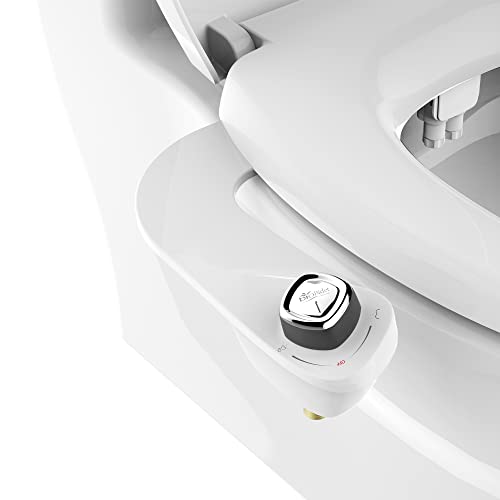
Bio Bidet SlimEdge Bidet Attachment — Best Slim Profile
| Specification | Detail |
|---|---|
| Format | Under-seat attachment, slim profile |
| Power | Non-electric |
| Nozzles | Dual — front and rear |
| Fit | Fits nearly all toilets, per the listing |
Every under-seat attachment adds a plate between the bowl and the seat, and on some seats that plate tilts the seat or stops it sitting flat. The SlimEdge exists for that problem: the plate is made as thin as the format allows, so the seat keeps its original posture and the bathroom gains a dual-nozzle bidet almost invisibly. Front and rear wash are both covered, pressure adjusts at the control, and the listing’s claim to fit nearly all toilets reflects the slim plate’s tolerance of different seat and bowl combinations.
Strengths
- Slim plate minimises the seat tilt that thicker attachments can introduce
- Dual nozzles cover front and rear wash despite the thin format
- Broad fit suits older and less standard toilets
Trade-offs
- Cold water only, as with all non-electric attachments
- Slim hardware means a compact control — large hands may prefer a bigger dial
- Still adds a side control beside the bowl, like every attachment in this guide
This is the troubleshooting pick: the one to choose when the toilet or seat is slightly unusual, when a previous attachment left the seat rocking, or when the user simply refuses to have the seat feel different. Bio Bidet is a specialist bidet brand rather than a generalist, and the SlimEdge shows it in the priorities — fit and thinness first. For a household that wants dual-nozzle washing with the least possible change to the toilet they already like, this is the most surgical option in the guide.
Best for: Unusual seats, older toilets, and anyone who wants the bidet to disappear under the seat / Not suited for: Users who want the largest, easiest-grip control dial
Check the current price on Amazon
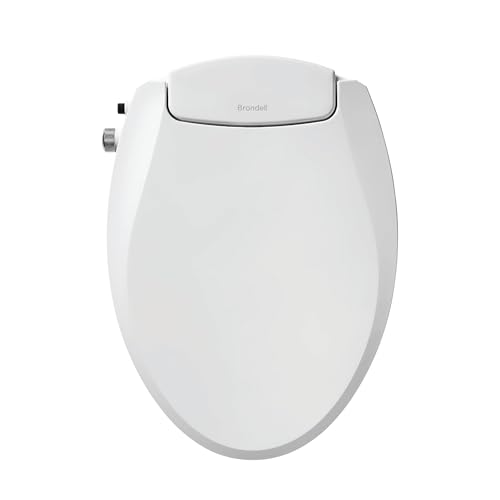
Brondell Swash Ecoseat Non-Electric Bidet Seat, Elongated — Best Seat Replacement
| Specification | Detail |
|---|---|
| Format | Full bidet toilet seat |
| Bowl fit | Elongated (this version) |
| Power | Non-electric, ambient water temperature |
| Nozzles | Dual nozzle system |
The Ecoseat answers a fair question: if the bidet is permanent, why sandwich it under a seat that was never designed for it? This is a complete replacement seat with the dual-nozzle system built into its rear, so the seat sits exactly as a seat should, the nozzles are positioned by the manufacturer rather than by a plate’s compromise, and the whole fixture reads as one designed object. It runs on ambient-temperature water with no electricity, keeping installation to the same tee-fitting job as an attachment, just with a seat swap on top.
Strengths
- Integrated design means no plate, no seat tilt and the cleanest lines in the non-electric tier
- Dual nozzle system covers rear and feminine washing
- A proper seat replacement suits a planned, permanent install
Trade-offs
- This version fits elongated bowls; round bowls need the matching variant
- Ambient temperature means cold-line water with no warming option
- Replacing the seat is a bigger commitment than a removable attachment for renters
Choose the Ecoseat when the existing seat is due for replacement anyway — the two jobs become one — or when the under-seat plate idea simply does not appeal. Brondell’s seat-first design also tends to please the person in the household who did not ask for a bidet: the bathroom looks normal, the seat feels normal, and the bidet is discovered as a control rather than confronted as an appliance. For a permanent family bathroom staying non-electric, this is the most resolved form the category offers.
Best for: Permanent installs, seat replacements and households wanting integrated looks without electricity / Not suited for: Renters or round bowls (choose the round variant)
Check the current price on Amazon

TOTO WASHLET S2 Electronic Bidet Seat, Elongated — Best Electric Upgrade
| Specification | Detail |
|---|---|
| Format | Electric bidet toilet seat |
| Bowl fit | Elongated (this version) |
| Water | Instantaneous water heating |
| Extras | PREMIST, EWATER+ wand cleaning |
The WASHLET S2 is what the attachments are a rehearsal for. Instantaneous heating means warm water for as long as the wash runs, not a small tank that fades mid-wash. PREMIST mists the bowl before use so waste rinses away more easily, and the EWATER+ system cleans the wand after each use — the hygiene engineering is the brand’s signature. The wand position and pressure adjust to the user, and the whole experience is controlled from a remote or side control rather than a plumbing dial. This is TOTO’s washlet format, the original of the entire electric category.
Strengths
- Instant warm water removes the cold-water objection completely
- Wand self-cleaning and PREMIST keep both nozzle and bowl cleaner between deep cleans
- The most refined wash control in this guide, from the category’s originator
Trade-offs
- Needs a nearby electrical outlet, which may mean an electrician before the install
- Premium tier — several times the commitment of an attachment
- Elongated version in this listing; round bowls need the matching variant
Buy this pick when the household has already decided: bidet life is better, cold water is the remaining complaint, and the bathroom is a long-term home rather than a staging post. The outlet requirement is the one real project in the category, and it is worth doing properly — a dedicated, correctly protected bathroom outlet within cord reach of the toilet. Everything after that is daily dividend: warm washes in January, a wand that cleans itself, and a bowl that resists sticking. The attachments above are excellent; this is simply the finished form of the idea.
Best for: Committed bidet households wanting warm water and the most refined wash / Not suited for: Renters, bathrooms with no path to an outlet, or first-time experimenters
Check the current price on Amazon
Comparison Table
Read the table by tier: attachments keep your seat and your budget, the Ecoseat replaces the seat without electricity, and the WASHLET changes the experience entirely with warm water. Nozzle count and water temperature separate the picks more honestly than any ranking does.
| Pick | Badge | Key spec | Best for |
|---|---|---|---|
| LUXE Bidet NEO 185 Non-Electric Bidet Attachment — Check price | Best Overall | Dual nozzle, non-electric, self-cleaning | Couples and families wanting the complete non-electric attachment in one purchase |
| LUXE Bidet NEO 120 Non-Electric Bidet Attachment — Check price | Best Budget | Single nozzle, non-electric, budget tier | First-time bidet buyers, second bathrooms and single users wanting rear wash only |
| TUSHY Classic 3.0 Bidet Attachment — Check price | Best Design | Pressure and angle control, design finish | Styled bathrooms and users who need nozzle angle adjustment for a reliable aim |
| Bio Bidet SlimEdge Bidet Attachment — Check price | Best Slim Profile | Slim dual-nozzle attachment | Unusual seats, older toilets, and anyone who wants the bidet to disappear under the seat |
| Brondell Swash Ecoseat Non-Electric Bidet Seat, Elongated — Check price | Best Seat Replacement | Integrated bidet seat, dual nozzle, elongated | Permanent installs, seat replacements and households wanting integrated looks without electricity |
| TOTO WASHLET S2 Electronic Bidet Seat, Elongated — Check price | Best Electric Upgrade | Electric seat, instant warm water, self-cleaning wand | Committed bidet households wanting warm water and the most refined wash |
How to Choose the Best Add-On Bidets for Your Toilet
Decide the water question first, because it divides the category in two. Every non-electric add-on runs on your toilet’s cold supply line. Many users adapt within a week — the wash is brief and the cleanliness wins them over — but some households, northern winters and first-thing-in-the-morning routines are real factors. If cold water is a deal-breaker, skip directly to the electric seat and budget for the outlet; if it is not, the attachments deliver the same core wash for a fraction of the commitment.
Next, count nozzles honestly. A single rear nozzle serves a single user who wants a rear wash. A dual-nozzle model adds the feminine wash, aimed forward and gentler, and for most mixed households that second nozzle decides whether the bidet becomes everyone’s habit or one person’s gadget. Then choose the format: an under-seat attachment if you like your current seat and want reversibility, a bidet seat if the install is permanent or the seat is due for replacement anyway.
Finally, check the physical fit. Bowl shape governs seat models. Seat bolts must be accessible to fit an attachment plate — most are, though some skirted and one-piece toilets hide them. The control panel needs a few inches beside the bowl, so measure a very narrow stall. And confirm the water connection at your tank is a standard flexible supply you can tee into; that five-minute check under the tank is the whole installation feasibility study.
Attachments vs Bidet Seats: Which Format Suits Your Bathroom?
Attachments win on reversibility and price tier. They keep the seat you have, install and remove in minutes, and travel with you when you move — the renter’s format and the experimenter’s format. Their compromises are physical: a plate under the seat’s rear, a control panel beside the bowl, and nozzle positioning that is good rather than designed-in.
Bidet seats win on integration. The nozzle lives where the manufacturer engineered it, the seat sits perfectly flat because it is the seat, and electric models add the heated seat and warm water that attachments cannot offer. Their compromises are commitment and, for electric models, the outlet. A useful rule: the longer you expect to live with this bathroom, the more the seat format’s integration pays; the shorter or more experimental the stay, the more the attachment’s reversibility wins.
Living with a Bidet: Pressure, Hygiene and Paper
Start every new bidet on its lowest pressure and turn up slowly — the single most common first-use mistake is opening the dial like a tap and getting a firehose surprise. The nozzle hygiene question answers itself in the designs above: nozzles retract behind shields when idle and the better models rinse themselves, so the sprayer is cleaner in service than most bathroom fixtures. Expect toilet paper use to fall to a small drying check rather than the main event, which is where the running-cost saving and the septic kindness come from. For users with limited mobility, haemorrhoid sensitivity or post-surgery care, the wash is not a luxury at all — it is the gentlest cleaning method available, which is why add-on bidets are as much an accessibility product as a comfort one.
How to Install an Add-On Bidet Attachment in Under an Hour
Gather a towel, a small bucket, an adjustable wrench and the kit from the box. Turn off the water at the toilet’s stop valve and flush to empty the tank, holding the handle down to drain as much as possible. Unscrew the supply line from the fill valve with the bucket underneath for the remaining water — there is always some — then fit the tee adapter from the kit onto the fill valve, reconnect the supply line to the tee, and connect the bidet hose to the tee’s outlet.
Remove the toilet seat, position the attachment plate over the bowl’s mounting holes, and refit the seat on top of the plate, aligning the nozzle to the centre of the bowl before tightening. The plate’s adjustment slots exist so the nozzle sits centred and clear of the bowl rim; take the extra minute here, because a nozzle clipped by the rim is the main cause of a weak or angled spray. Connect the hose to the attachment, turn the water back on slowly, and check every joint you touched with a dry hand and then a tissue — a tissue shows a weep that fingers miss.
Test with the seat occupied or with a hand shielding the jet — never run an unshielded test jet across the bathroom. Start at the lowest pressure and confirm the nozzle extends, sprays centrally and retracts cleanly. For an electric seat, the plumbing is identical and the extra step is the outlet: the seat plugs in, and the cord route should be planned so it cannot be trapped by the seat or splashed by the bowl. Recheck the tee joints the next morning; a slow weep announces itself on the tissue test long before it becomes a floor problem.
Bidet Water, Pressure and Your Home’s Plumbing
An add-on bidet borrows two things from your toilet: its cold water supply and a few inches of space. The supply side is simple — the tee fitting splits the line that fills your tank, so the bidet and the tank share one stop valve. Water pressure in a normal home is more than sufficient; indeed, the engineering problem in this category is the opposite, which is why every attachment in this guide has a pressure dial with a genuinely gentle bottom end. If your home’s pressure is unusually high, that dial is not a courtesy, it is a necessity, and the first-use rule — start at minimum — matters even more.
The cold-water question deserves a straight answer. The wash uses the same cold line that fills the tank, and in a warm house the water in the pipe run inside the wall is closer to room temperature than to the street supply — the first second is the coolest, and many users never think about it again. In a cold-climate winter, the chill is real, and it is the single legitimate reason to jump tiers to the electric seat with its heated water. Judge it by household, not by hype: plenty of northern households run attachments happily, and plenty of southern ones still prefer the WASHLET.
One plumbing note for older homes: check the condition of the stop valve and supply line while you are under the tank. A valve that has not moved in a decade sometimes weeps when first turned. Replacing a tired flexible supply line during the bidet install is a small, sensible piece of preventive maintenance — you are already there, towel in hand, and the bidet’s tee gives the new line a clean, modern connection point.
Bidets for Real Life: Guests, Kids, Rentals and Septic Systems
Guests are the bidet’s social test. A simple attachment with one obvious dial passes it: visitors work it out or ignore it, and either outcome is fine. If your household hosts often, the design-led TUSHY or the integrated Ecoseat keeps the bathroom from looking like a plumbing experiment. A tiny courtesy goes a long way — the first time a guest encounters the dial mid-flush-hunt, a household that has normalised the bidet in conversation saves everyone the surprise.
Children change the calculation in one direction only: curiosity plus a pressure dial equals a water feature. Households with small children should expect one exploratory flood, position a towel accordingly during the learning week, and treat it as the tuition fee for a genuinely useful hygiene habit older children adopt quickly. For children with sensory sensitivity to paper, the gentle end of the pressure range is often the first toileting experience they do not resist.
Renters should default to the attachment tier: it installs without altering the fixture, removes in minutes, and leaves the bathroom exactly as the lease requires. Septic households, meanwhile, are quiet winners in this category — drastically reduced paper is precisely what a septic system wants, since paper volume is a meaningful part of what a tank must process. The bidet began as a luxury story; in septic country it is simply good housekeeping.
Troubleshooting the First Week With a New Bidet
Nearly every bidet problem announces itself in the first week and yields to a simple fix. A spray that lands off-centre is almost always a plate alignment issue: loosen the seat bolts, nudge the attachment until the nozzle sits on the bowl’s centreline, and re-tighten — two minutes, no tools beyond the wrench already in your hand. A nozzle that dribbles after shut-off is usually residual water draining from the nozzle body rather than a leak; a drip that continues for minutes, however, is a valve asking for attention, and the tee connections should be checked first with the dry-tissue test.
Weak pressure in an otherwise strong house usually traces to the stop valve not being fully reopened after installation, or to a supply line kinked during the refit — both found by looking, not by replacing parts. A seat that rocks after fitting an attachment needs its bumpers checked: some seats need the small spacers supplied with many kits so the seat rests level on the plate. And the classic first-week flood — a curious child or a guest meeting the dial — is prevented socially rather than mechanically: one sentence of introduction when the bidet is new saves the towel.
If the wash feels too cold in the first days, give it the honest trial before upgrading: use it for two weeks, at the household’s real times of day, and judge the whole experience rather than the first second. Most households that still object after a fair trial are genuine electric-seat customers, and the attachment then retires gracefully to the second bathroom, where its cold water bothers nobody. Troubleshooting a bidet is refreshingly unlike troubleshooting most plumbing — the stakes are low, the fixes are visible, and the appliance forgives experimentation.
How Much Water, Paper and Money Does a Bidet Actually Save?
The honest answer is: less than the advertising implies and more than sceptics assume. A bidet wash uses a modest amount of water — a short, directed spray rather than a flush — and in most households the water ledger barely moves, because the wash replaces part of a flush’s work only in the dual sense of cleanliness, not volume. Anyone selling an add-on bidet primarily as a water-saving device is reaching; its water story is a footnote, not the headline.
The paper ledger is where the real movement happens. Households that adopt washing typically demote toilet paper to a small drying check, and paper consumption falls correspondingly — often dramatically, because paper was previously doing the entire cleaning job with an inefficient tool. That saving compounds quietly: fewer rolls bought, fewer blocked drains from over-enthusiastic paper use, and a septic tank that processes a fraction of the paper solids it once did. For a household on a septic system, that last point can be the most valuable line in the whole calculation.
The money ledger follows the paper. Against the running cost of quality toilet paper for a family across a year, even the mid-tier attachments in this guide pay their way in a timeframe that makes the purchase easy to justify, and the non-electric models then run for years at effectively zero marginal cost — no power, no consumables, no filters. The electric seat adds a small electricity cost for heating and buys comfort with it, which is a fair trade stated plainly. A bidet is not an investment product; it is a small appliance that replaces a recurring consumable with a one-off fitting, and judged on those terms the arithmetic is firmly on its side.
Common Buying Mistakes
Mistake one: cranking the pressure on first use. Bidet dials go from gentle to startling with little in between. Start at the minimum, every new user, every time — one bad first experience can retire a bidet permanently.
Mistake two: skipping the bowl-shape check on seat models. Elongated and round bidet seats do not interchange, and an elongated seat on a round bowl overhangs and rocks. Attachments are more forgiving; seats are not. Measure before ordering.
Mistake three: over-tightening the tee fitting. The connections at the fill valve seal on washers, not force. Hand-tight plus a small wrench turn is the formula; gorilla torque cracks plastic fill-valve shanks and turns a half-hour upgrade into a plumbing repair.
Mistake four: buying single-nozzle for a mixed household to save a small amount. The feminine nozzle is the difference between a bidet the whole household uses and one person’s accessory. Match the nozzle count to the household, not to the smallest budget.
Final Recommendation
Start the shortlist with the LUXE NEO 185: dual nozzles, self-cleaning, adjustable pressure — the complete attachment. On a strict budget or in a second bathroom, the NEO 120 keeps the essential wash. The TUSHY Classic 3.0 adds angle control and design, the SlimEdge disappears under difficult seats, the Brondell Ecoseat integrates the bidet into a proper seat without electricity, and the TOTO WASHLET S2 is the warm-water destination when the household is ready to commit.
If you are undecided, buy the attachment tier first. It is reversible, it is quick, and it answers the only question that matters — whether your household prefers washing to wiping — within a week.
Keep comparing within this range: Best Adult Toilets Best Adaptive Toilets Children Best Ada Toilets With Elongated Seats Home Depot Best 1.28 Gallon Toilets Best Afforable Toilets
Re-check the leading picks here: Check the current price on Amazon · Check the current price on Amazon · Check the current price on Amazon
It is worth closing the practical loop with the question every buyer asks last: what does ownership actually feel like after the novelty fades? The consistent report from households that adopt washing is that the bidet disappears into the routine within a fortnight — it becomes as unremarkable as the flush itself, noticed only when travelling forces a return to paper alone. That disappearance is the product’s real success metric. Nobody needs a bathroom appliance that stays interesting; they need one that quietly raises the standard of an everyday act, asks for nothing — no power in the attachment tier, no consumables, no servicing beyond a wiped nozzle guard — and keeps doing it for years. Judge every pick in this guide by that standard and the tier decision makes itself: attachments for the reversible trial, seats for the permanent home, warm water for the household that has already converted and wants the finished version of the idea.
Compatibility, one last time, in checklist form — because this is where returns are born. Seat bolts accessible from above or below: yes on nearly every standard toilet. Bowl shape noted, if a seat model is chosen: elongated and round are different products. A few inches of clearance beside the bowl for the control: measure the stall, not the hope. A flexible supply line at the tank that can accept a tee: look under the tank before the box is opened. An outlet within cord reach, only for the electric pick: and if there is none, that is an electrician’s small job, not a reason to abandon warm water forever. Five checks, five minutes, and the bidet that arrives is the bidet that fits — which, in a category this simple, is the whole of the art.
Keep the removed seat hardware and the old supply line in a labelled bag after installation. If the bidet ever needs to come off — a move, a deep renovation, a warranty swap — the original fittings turn removal into a ten-minute reversal instead of a parts hunt, and the bathroom returns to its exact former state with nothing missing and nothing improvised.
Frequently Asked Questions
How do you spell it — budet or bidet?
Bidet. The keyword spelling turns up in searches constantly, but the product category, the brands and the listings all use bidet — worth knowing when you compare listings or search for parts and manuals.
Do add-on bidets need electricity?
Attachments and non-electric seats do not — they run entirely on your water pressure. Electric seats do, for water heating, the heated seat and powered nozzle movement, and they need a suitable outlet near the toilet.
Will an attachment fit my toilet?
Attachments fit most standard two-piece toilets with accessible seat bolts. The awkward cases are some skirted and one-piece designer toilets with concealed fixings. Seat-replacement bidets additionally require the right bowl shape — round or elongated — so check that before ordering.
Is the water clean? It comes from the toilet supply.
It comes from the same fresh water line that fills your tank and, upstream, your taps — the bidet tees into the supply before the tank, so the wash water never contacts tank water. Nozzles also retract behind shields and better models self-rinse.
How long does installation really take?
For an attachment, most first-timers finish in twenty to forty minutes with a wrench and a towel. The tee fitting and seat refit are the whole job. Electric seats take a little longer, and adding a new outlet — if you need one — is an electrician’s visit, not part of the bidet install.
Can a bidet help with mobility or sensitivity issues?
Yes — washing with water is gentler than wiping and requires less reaching and twisting, which is why add-on bidets are widely used after surgery, during pregnancy, and by users with limited mobility or skin sensitivity. This guide makes no medical claims; it is simply the least abrasive cleaning method available.


