Disclosure: airfryerkitchensupply.com is reader-supported. When you buy through links on our site, we may earn an affiliate commission at no extra cost to you.
Where to buy
Every pick in this best 5 air fryers guide is sold through Amazon. Check the exact listing for each model named: the Cosori TurboBlaze Air Fryer 6 Qt, the Ninja DZ401 Foodi DualZone XL 10 Qt, the Ninja AF141 Air Fryer Pro 5 Qt, the Philips Premium Airfryer XXL (HD9650/96), the Chefman 4 QT Compact Air Fryer, and the Ninja Crispi Glass Air Fryer FN101. Shortlist picks move in and out of stock and variant refreshes happen mid-year, so match the model number in each review to the listing title before you order.
This is the shortlist for people who are done researching. The best 5 air fryers — the handful of machines we would name if a friend gave us sixty seconds and a credit card — are the ones reviewed below: a family single-basket that leads its class on engineering, the dual-basket flagship that ends sequencing forever, a mid-size Ninja that threads power and footprint perfectly, the premium Philips for buyers who keep appliances a decade, a budget 4-quart that makes the value argument honestly, and a glass innovator for the coating-free kitchen. Six detailed reviews for a “best 5” question? The sixth is the wildcard — the machine that belongs on the list the moment materials matter to you — and we would rather explain one extra pick than pretend the glass question does not exist. Every other machine in the category is, for most households, a variation on one of these six answers.
How the shortlist was built: every pick was verified against live Amazon catalog data through the Amazon Creators API — ASIN, exact listing title, capacity and headline specifications confirmed. Nothing here was chosen on star ratings or review counts, which swing with promotions and measure momentum rather than merit, and we print no prices because they change too often to be honest in print; each pick links to its live listing so you can check the current price on Amazon. The shortlist criteria were deliberately brutal: the machine must lead or co-lead its class, it must have a reason to exist that no other pick duplicates, and it must be the answer we would still give in a year. If your household’s needs fall outside the six — a dorm mini, a rotisserie oven, a narrow-counter stack — our size guides linked at the end cover those champions too. But for the great middle of households, the search ends on this page.
Who is this shortlist for? The decisive buyer. If you have read three comparison articles and your eyes are glazing, if you are furnishing a kitchen on a deadline, if you are buying a gift that must not miss — this is your page. Who should keep reading elsewhere? The enthusiast comparing fan specifications for pleasure (the deep guides await, and we envy you the afternoon), and the edge-case household whose constraint is absolute — a measured cabinet, a rotisserie habit, a ten-person table. For everyone else: pick your badge below, order the exact model linked, and spend the saved research time on the first week’s dinners. That is not a compromise; that is the shortlist doing its job.
In this guide
Quick Picks
- Cosori TurboBlaze 6 Qt — Best Overall. Five fan speeds, 90–450°F, PFAS-free ceramic, nine functions — the most complete single-basket family fryer made. Check the current price on Amazon.
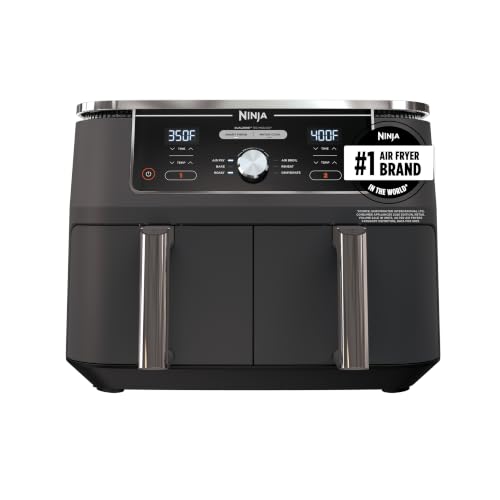
- Ninja DZ401 DualZone XL 10 Qt — Best Dual Basket. Two synchronized 5 qt zones that land dinner’s two halves at the same moment. Check the current price on Amazon.
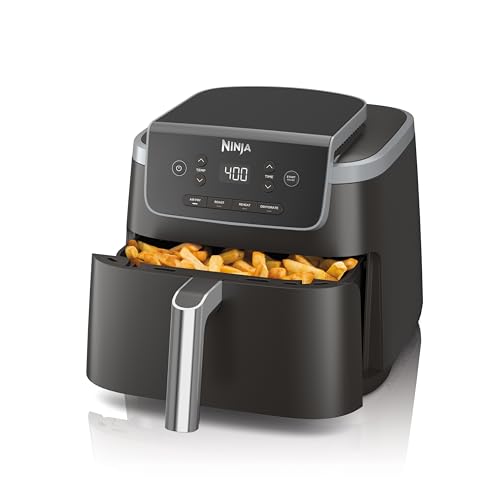
- Ninja AF141 Air Fryer Pro 5 Qt — Best Mid-Size. 1750W and four honest functions in the footprint sweet spot for households of three to four. Check the current price on Amazon.
- Philips Premium Airfryer XXL — Best Premium. Fat-removal technology and decade-grade build from the category’s inventor. Check the current price on Amazon.
- Chefman 4 QT Compact — Best Budget. Hi-Fry crisping and touchscreen presets bring the class’s core experience to its entry tier. Check the current price on Amazon.
- Ninja Crispi FN101 — Best Glass Design. PFAS-free glass containers that cook, serve and store — the shortlist’s wildcard for coating-free kitchens. Check the current price on Amazon.
How These Picks Were Chosen
We verified the full field through the Creators API — every size class, every serious brand — confirming ASINs, titles, capacities and key specifications, and excluded anything unverifiable or under an open safety recall. Then we applied the shortlist discipline: a pick must be a class leader, must not duplicate another pick’s reason to exist, and must be defensible as the single recommendation for its badge. That discipline produces deliberate omissions worth naming: superb machines like the square-basket Cosori Pro Gen 2, the Max Crisp AF161 and the glass-windowed Cuisinart AFC-4 miss this page not on quality but on overlap — each is a variation of an argument a shortlist pick already wins — and each headlines our deeper class guides instead. What remains is the irreducible set: six machines, six distinct household arguments, zero filler. If the set feels small, that is the point; a shortlist that requires its own shortlist has failed.
The Best 5 Air Fryers: The Shortlist in Depth

Cosori TurboBlaze Air Fryer 6 Qt — Best Overall
The TurboBlaze takes the shortlist’s top badge because it is the most complete single appliance here: a 6 qt ceramic-coated basket, five fan speeds, a 90–450°F range that runs from dough proofing to wing-searing, nine functions and 1725W, with dishwasher-safe cleanup. It suits families who cook in one basket and want that basket to be the best one made. It does not suit two-temperature dinners or the tightest budgets.
Strengths
- Fan-speed control delivers the most even full-layer cooking in the single-basket world.
- The widest temperature range in the shortlist — gentle and violent in one machine.
- PFAS-free ceramic surface with dishwasher-safe cleanup.
Trade-offs
- Flagship tier within its class.
- One basket means one temperature at a time.
- Its range rewards cooks who will explore it; pure fry-and-go users underuse it.
| Spec | Value (verified from listing) |
|---|---|
| Capacity | 6 qt |
| Temperature range | 90–450°F |
| Fan | 5 speeds |
| Power | 1725W |
| Functions | 9-in-1 |
| Coating | PFAS-free ceramic |
Shortlists reward the machine with the fewest apologies, and the TurboBlaze’s apology list is the shortest here. It crisps like a specialist, ranges like a project oven, cleans like a modern appliance should, and answers the materials question with ceramic instead of a shrug. The fan speeds are the soul of it: airflow you can tune is airflow that stops being the limiting factor in your cooking, whether the load is a whisper of herbs or a roaring tray of wings. Name the single-basket machine we would buy with our own money for a family kitchen, and this is the name — which is what Best Overall on a shortlist is supposed to mean.
Best for: families who want the finest single-basket machine available. / Not suited for: dual-temperature dinners or entry-tier budgets.


Ninja DZ401 Foodi DualZone XL 10 Qt — Best Dual Basket
The DZ401 is the shortlist’s answer to the two-part dinner: two independent 5 qt baskets, six functions, Match Cook for mirrored batches, Smart Finish for synchronized landings, and IQ Boost sharing power between zones. It suits households whose meals have a main and a side that refuse to share a setting. It does not suit solo cooks or counters that cannot host its width.
Strengths
- Synchronized dual cooking — the feature households reorganize dinners around.
- Two full-size zones, each equal to a family-class single basket.
- The category’s deepest ecosystem of recipes, parts and accessories.
Trade-offs
- Wide, premium and unapologetically flagship.
- No single cavity for whole birds or large roasts.
- Its choreography is wasted on one-dish households.
| Spec | Value (verified from listing) |
|---|---|
| Capacity | 10 qt — two independent 5 qt baskets |
| Functions | 6-in-1: air fry, roast, broil, bake, reheat, dehydrate |
| Sync features | Match Cook, Smart Finish, IQ Boost |
| Model | DZ401 |
Every shortlist needs the machine that changes the question, and the DZ401 is this one’s. Before it, “which air fryer” was a question about crisping; after it, the question is about orchestration — whether your dinner arrives as a sequence of compromises or as a single, synchronized event. Smart Finish is the rare feature that survives contact with real weeknights: load both zones, set each food’s program, and the machine staggers the rest. If your household’s dinners have two halves, no single-basket machine at any tier is a substitute, and the shortlist’s dual badge is not a category nicety — it is the recommendation.
Best for: two-part dinners and families who cook nightly. / Not suited for: solo cooks, narrow counters, whole-bird cooking.

Ninja AF141 Air Fryer Pro 5 Qt — Best Mid-Size
The AF141 is the shortlist’s Goldilocks: 1750W — the strongest power here relative to size — four functions, room for 4 lbs of fries, and a 5 qt basket in a body more compact than most 6-quart rivals. It suits households of three to four and upgraders who want a decisive step without a flagship’s footprint or menu. It does not suit 450°F extremists or five-person full dinners.
Strengths
- Best power-to-size ratio in the shortlist — fast, hard browning on full loads.
- Four-function discipline: the daily repertoire, nothing padded.
- Compact stance for its capacity; stores where 6-quart rivals cannot.
Trade-offs
- Standard temperature ceiling — the Max Crisp sibling owns the extreme niche.
- Conventional coated basket; no materials story.
- Five quarts is a ceiling five-person households will feel.
| Spec | Value (verified from listing) |
|---|---|
| Capacity | 5 qt (fits 4 lbs fries) |
| Power | 1750W |
| Functions | 4-in-1: air fry, roast, reheat, dehydrate |
| Basket | Nonstick, dishwasher-safe |
| Model | AF141 |
Mid-size is where shortlists earn their keep, because it is where most households actually live and where the wrong call is easiest. The AF141’s case is proportion: enough basket for a family of four’s ordinary dinner, enough wattage to brown that dinner properly, a body that still behaves in storage, and a control set a tired cook can run by memory. It lacks the TurboBlaze’s range and the DZ401’s parallelism, and for its household it needs neither — it is the shortlist’s reminder that the best machine is often the one sized exactly to your life, engineered without apology at that size.
Best for: households of three to four who want power without bulk. / Not suited for: 450°F seekers or households of five-plus.

Philips Premium Airfryer XXL (HD9650/96) — Best Premium
The Philips flagship is the shortlist’s connoisseur pick: fat-removal technology that drains and sequesters grease as food cooks, Rapid Air circulation, five presets, keep-warm, app connectivity, and a 3 lb / 7 qt family capacity, built by the company that invented the category. It suits quality-first buyers and fatty-food cooks. It does not suit bargain hunters — its tier tops this page.
Strengths
- Fat-removal basket design produces cleaner results on wings, sausages and fatty staples.
- Premium build, calm controls, decade-grade ownership feel.
- Keep-warm respects real family timing.
Trade-offs
- The shortlist’s highest tier, full stop.
- Single basket — no dual temperatures.
- Refinement over revolution; spec-sheet shoppers may underrate it.
| Spec | Value (verified from listing) |
|---|---|
| Capacity | 3 lb / 7 qt family size |
| Technology | Fat Removal, Rapid Air |
| Presets | 5, plus keep warm |
| Connectivity | HomeID app |
| Model | HD9650/96 |
A shortlist without a premium conscience is just a price list, and the Philips is this one’s conscience. Its argument is physical: food that crisps while its fat drains away tastes cleaner and feels lighter, and the effect is most obvious exactly where air fryers are judged — wings and other fatty staples. Add the build quality of the category’s founding company and controls that never shout, and the premium becomes a legible purchase for the buyer who keeps appliances for a decade and cooks daily. If that buyer is you, the shortlist’s other five are context; this is your machine.
Best for: quality-first, long-term owners and fatty-food cooks. / Not suited for: budget shoppers or dual-zone households.


Chefman 4 QT Compact Air Fryer — Best Budget
The Chefman 4 QT is the shortlist’s proof that the entry tier need not be a compromise dinner: a touchscreen compact with Hi-Fry finishing for extra-crisp results, four presets and a dishwasher-safe nonstick basket at the class’s budget position. It suits first kitchens, second fryers and firm budgets. It does not suit feature collectors or brand-infrastructure prioritizers.
Strengths
- Hi-Fry finishing closes the crisp gap that historically separated budget from premium.
- Four honest presets and a legible touchscreen.
- Compact body for a full 4-quart capacity.
Trade-offs
- Budget-tier finish and panel feel beside the shortlist’s flagships.
- No dehydrate or low-temperature range.
- Shorter support tail than the biggest brands here.
| Spec | Value (verified from listing) |
|---|---|
| Capacity | 4 qt |
| Controls | Touchscreen, 4 presets |
| Technology | Hi-Fry for extra crisp |
| Basket | Nonstick, dishwasher-safe |
Budget picks on shortlists are usually where honesty goes to die, so let us be exact about the Chefman: it will not feel like the Philips, range like the TurboBlaze, or choreograph like the DZ401. What it will do — tonight, and for a long run of nights — is crisp fries and wings properly for a couple or small household, reheat leftovers with respect, and wash up without complaint, at the tier that leaves money for groceries. The Hi-Fry finish is the detail that earns the badge: budget machines used to lose on the plate, and this one largely does not. For the buyer whose budget is the binding constraint, the shortlist’s advice is to buy this with confidence and spend the difference on food.
Best for: firm budgets, first kitchens and second fryers. / Not suited for: feature collectors or premium-feel seekers.

Ninja Crispi Glass Air Fryer (FN101) — Best Glass Design
The Crispi is the shortlist’s wildcard and its most original object: a portable power pod that cooks in PFAS-free glass containers — 4 qt and 6-cup — at up to 450°F, across max crisp, bake, air fry and recrisp functions, with the same container serving and storing the food. It suits coating-free kitchens and meal-preppers. It does not suit rough handling or drawer-basket traditionalists.
Strengths
- Glass cooking surface — the complete answer to the coating question.
- Cook-serve-store workflow deletes a transfer and a wash from every meal.
- 450°F ceiling and a recrisp mode built for leftovers.
Trade-offs
- Glass is heavy and breakable; handling is deliberate and two-handed.
- The format is unconventional — a leap for basket loyalists.
- Shaking a container is less casual than flicking a drawer.
| Spec | Value (verified from listing) |
|---|---|
| Capacity | 4 qt and 6-cup glass containers |
| Max temperature | 450°F |
| Functions | 4-in-1: max crisp, bake, air fry, recrisp |
| Material | PFAS-free glass |
| Model | FN101GY |
Why does a wildcard make a five-slot shortlist? Because for a growing class of buyers, the first question is not size or power but surface — and for them the other five picks are all equally wrong, however excellent. The Crispi answers that question without asking for a performance sacrifice: it crisps at 450°F, watches its food through glass, and then becomes the serving dish and the storage container, a workflow so sensible it makes conventional baskets look like a draft. It will not suit every hand or every kitchen, and the shortlist says so plainly — but a list of the market’s essential machines that omitted the glass idea would be describing last year’s category, not this one.
Best for: coating-free kitchens, meal-preppers and leftover devotees. / Not suited for: traditionalists or breakage-prone households.
Comparison Table
| Pick | Badge | Key spec | Best for | Link |
|---|---|---|---|---|
| Cosori TurboBlaze 6 Qt | Best Overall | 90–450°F, 5 fan speeds, ceramic | One-basket families | Check on Amazon |
| Ninja DZ401 | Best Dual Basket | 2× 5 qt zones, Smart Finish | Two-part dinners | Check on Amazon |
| Ninja AF141 5 Qt | Best Mid-Size | 1750W, 4-in-1 | Households of 3–4 | Check on Amazon |
| Philips Premium XXL | Best Premium | Fat removal, 7 qt class, keep warm | Quality-first buyers | Check on Amazon |
| Chefman 4 QT | Best Budget | Hi-Fry, touchscreen, 4 presets | Firm budgets | Check on Amazon |
| Ninja Crispi FN101 | Best Glass Design | PFAS-free glass, 450°F | Coating-free kitchens | Check on Amazon |
How to Choose From the Shortlist: Five Questions
One: does your dinner have two parts that cook differently? Yes ends the quiz — DZ401. Two: are you exiting coated cookware? Yes ends it too — Crispi. Three: is the budget the binding constraint? Yes — Chefman, confidently. Four: do you keep appliances for a decade and cook fatty staples weekly? Yes — Philips. Five: everyone left — how many mouths? Three to four with storage pressure takes the AF141; a family that cooks one-dish dinners and values range takes the TurboBlaze. Notice what the quiz never asks: which machine has the most functions, the longest preset list, or the loudest marketing. Shortlists exist to protect you from those questions. If none of the five questions describes you — your constraint is a dorm desk, a rotisserie habit, a measured 30-centimeter shelf — the honest move is to leave the shortlist and enter the size guide that matches your constraint, linked below; a shortlist that pretends to cover edge cases covers nothing well.
How to Use Your Shortlist Fryer: The First Two Weeks
Whichever badge you chose, the onboarding is the same and it decides everything. Day one: placement with exhaust clearance, first-use burn-off, and a batch of frozen fries — the calibration cook that teaches you your machine’s pace. Week one: rotate the staples — a protein, a vegetable, a reheat, a frozen staple — preheating every time, drying food before it goes in, oiling in a bowl, keeping the single layer sacred, shaking or flipping at the halfway point, and noting every proven setting on your phone. Dual owners add one synchronized two-part dinner by day three, while the choreography is still a novelty worth learning deliberately. Glass owners practice the two-handed lift until it is muscle memory. By the end of week two, judge the machine — not before — because every fryer in this shortlist cooks its best once its cook has a routine, and the routine, once built, transfers to any machine you will ever own. The shortlist chose your hardware in five questions; these two weeks make it yours.
Shortlist vs Full Guides: What You Are Trading
Honesty about format: a shortlist trades depth for decision speed, and you should know what was left on the table. The full class guides behind this page test each size’s whole bench — the square-basket Cosori that tiles fillets like a grid, the Max Crisp Ninja that out-sears everything for frozen food, the windowed Cuisinart that lets traditionalists watch through glass, the 2-quart minis that own the dorm and RV world, the oven-format giants with rotisseries. If your household matches one of those specialties exactly, the specialist beats the shortlist’s generalist for you, and the guides below will make that case in detail. The shortlist’s claim is narrower and stronger: for the great middle of households — the ones without a dominating specialty — these six machines are where the search should start and, most of the time, end. Read the full guides when a badge above almost fits but not quite; that “almost” is the signal that your household has a specialty worth serving.
Troubleshooting the Shortlist Experience
Problem: my pick cooks unevenly. → Before doubting the shortlist, audit the load: single layer, dry surfaces, a real preheat, a halfway shake. Every machine here is a proven class leader; uneven results at this level are routine errors wearing a hardware costume. Problem: the dual’s zones finish apart. → Density and starting temperature differ from sync’s assumptions; give the denser zone a manual head start and record your house correction. Problem: the glass container feels awkward. → Two hands, dry grip, trivet ready — the Crispi’s handling becomes invisible within a week, and the cook-store workflow pays the tuition back nightly. Problem: budget pick feels plain beside friends’ flagships. → Cook their fries and yours side by side before concluding anything; the Chefman’s Hi-Fry finish exists precisely to survive that comparison. Problem: everything is good but nothing is great. → You are in the learning fortnight; the phone note of proven settings is the difference between a good machine and a great routine, and it compounds weekly.
A Week of Dinners on the Shortlist
Monday, the TurboBlaze handles the family’s hardest ordinary test — a full tray of wings, evenly crisped edge to center, with a vegetable batch following in the same hot basket. Tuesday, the DZ401 runs its signature duet: chicken thighs in one zone, potatoes in the other, synchronized onto plates at the same minute, which is the moment dual owners stop describing the machine as an appliance and start describing it as a system. Wednesday, the AF141 does the quiet mid-size shift for a household of three — salmon, asparagus, no batching, no drama, washed and stored in minutes. Thursday, the Chefman reheats the week’s leftovers in a first apartment, the Hi-Fry finish restoring fries that a microwave would have apologized for. Friday, the Philips takes the fatty showcase — sausages and wings draining as they crisp — and holds the first batch warm while the cook joins the table between rounds. The weekend belongs to the Crispi: a meal-prep session where containers cook, cool, and go straight into the fridge as themselves, deleting the transfer step that makes Sunday prep feel like catering. Six machines, six nights, no overlap in the argument — that is what a shortlist is supposed to look like when it is working, and it is why each of these badges survives the cuts that removed dozens of worthy rivals.
Care and Longevity Across the Shortlist
The shortlist spans three surface philosophies, and caring for each is a small, learnable loyalty. The coated baskets (both Ninjas, the Chefman) ask for soft tools, oiled food rather than sprayed baskets, and prompt warm washing — habits that keep nonstick releasing for years. The ceramic TurboBlaze asks for the same gentleness with zero tolerance for abrasive pads, and rewards it with a surface that wipes clean like glazed stoneware. The Philips’ fat-removal basket wants its drainage geometry kept clear — a brush through the star-shaped base after fatty cooks keeps the technology working as designed. The Crispi’s glass wants thermal courtesy: a dry trivet under hot containers, no cold-water shock, and the reward is a surface that cannot wear out in any way that matters. Across all six: clear the vents, wipe the cavity ceiling monthly, never cook in a closed cabinet, and treat the dishwasher as the workhorse it is on the nights you cannot face the sink. None of this is burdensome, and all of it compounds — the difference between a shortlist machine at year five and a neglected one is measured entirely in these small, repeated kindnesses.
Accessories the Shortlist Actually Needs
Resist the kits. What these six machines genuinely benefit from is a short, universal kit: silicone-tipped tongs sized to your basket for coating- and glass-safe flipping; perforated parchment liners, honestly sized, for fatty cooks — weighed down with food and never preheated empty; an instant-read thermometer, because shortlist proteins range from mini chicken breasts to dual-zone thighs and doneness by color is a rumor; and a heat-safe landing surface beside the machine for hot baskets and finished batches. Dual owners add a spare crisper tray so a finished zone never waits on the wash; Crispi owners add a soft mat for setting down glass; TurboBlaze owners who dehydrate add a rack. That is the whole list, and its brevity is the point — a shortlist philosophy applied to the drawer as firmly as to the counter. Everything beyond it should have to argue its way into your kitchen the way these machines argued their way onto this page.
Energy, Noise and the Counter: Shortlist Footnotes
The six span the category’s power range, from the Chefman’s compact-class draw to the flagships’ full heating power, and the efficiency logic is uniform: fitted cavities and short cooks beat the oven for the same food, and the dual’s parallelism compresses two cooks into one cycle. Circuits deserve one sentence of respect — do not run a flagship on the same tired circuit as another heating appliance and act surprised by the breaker. Noise follows ambition: all six are fan appliances in the microwave family of sound, brief by the standards of a dinner hour, and none has ever been the reason a satisfied owner returned a machine. The counter is the real negotiation: the DZ401 and Philips claim flagship territory permanently, the TurboBlaze and AF141 live at the large end of storable, the Chefman stores like a kettle’s bigger sibling, and the Crispi packs away most completely of all — pod and containers nesting into a cupboard. Tape the footprint before you order, live with the outline for a day, and the machine that arrives will feel inevitable rather than intrusive.
Three Buyers, Three Shortlist Stories
The gift buyer arrives at this page with the highest stakes and the least information, so here is the gift logic plainly: for a couple or family whose kitchen you have seen, the AF141 is the gift that cannot miss — right size, right power, no learning cliff, no materials controversy. For new parents or big households, the DZ401 is the generous flagship that reorganizes their evenings. For the recipient who talks about coatings, the Crispi is the thoughtful, conversation-starting choice. Never gift the Philips unless you know the recipient values premium objects; a premium price attached to someone else’s priorities is how flagships end up exchanged. The first-kitchen buyer should read the badges as a budget ladder and stop at the first rung that fits: the Chefman furnishes a working kitchen today, the AF141 furnishes the kitchen you are growing into, and the difference between them is a legitimate life-stage question, not a quality verdict. The upgrader — owner of a tired 4-quart or a first-generation mini — should diagnose what the old machine actually failed at: sequencing (DZ401), evenness at scale (TurboBlaze), size (AF141 or TurboBlaze), materials (Crispi), or nothing at all, in which case the honest upgrade is a thermometer and a new routine, and this page gives you permission to spend nothing. Shortlists are often accused of existing to make people buy; this one’s proudest use is the reader it talks out of the wrong purchase, including, occasionally, any purchase at all.
Common Buying Mistakes
Mistake one: treating the shortlist as a ranking to climb rather than a set of badges to match — the “best” machine here is the one whose badge describes your household, not the one listed first. Mistake two: buying the flagship dual for one-dish dinners, or the single basket for two-part ones; the format question outranks every other on this page. Mistake three: skipping verification at checkout — shortlist models have near-identical siblings (AF141 versus AF142, standard versus smart variants), and the listing title is the contract; read it. Mistake four: judging any pick by its first cook, before the routine exists. Mistake five: assuming the shortlist’s omissions are verdicts — the specialists named in the section above are excellent machines serving narrower briefs, and your household may be exactly their brief. Mistake six: buying for the household you host twice a year instead of the one you feed two hundred nights; size for the ordinary week and let the holidays improvise, as they always have.
Final Recommendation
The shortlist, distilled to sentences: most families should buy the Cosori TurboBlaze; two-part-dinner households should buy the Ninja DZ401; households of three to four should buy the Ninja AF141; decade-keepers should buy the Philips Premium XXL; firm budgets should buy the Chefman 4 QT; and coating-free kitchens should buy the Ninja Crispi. If none of those sentences is yours, the class guides — Best 10 Air Fryers for the full ranking, Best 4 Qt Air Fryers, Best 5 6 Qt Air Fryers and Best 10 Quart Air Fryers — will find your sentence, because somewhere in the verified field there is a machine whose badge was written for your exact household, your exact counter, and your exact way of cooking dinner on an ordinary weeknight.
A final shortlist courtesy: if you arrived here torn between two badges, the tiebreaker is almost always the dinner count from the FAQ below — format first, then size, then tier. Readers who run that count honestly choose correctly at a rate that no amount of additional specification-reading improves on, because the specifications were never the hard part. The hard part is knowing your own kitchen, and you are the world’s leading expert on it. Trust the count, pick the badge, verify the model number, and let this be the last air fryer article you read until the machine has earned its place — at which point the only reading left is recipes. Your future self, standing in a kitchen where dinner simply works, will not remember the research either way; they will only remember that it ended with the right machine.
Frequently Asked Questions
Why are there six picks in a “best 5” guide?
Five badges cover the classic decisions — overall, dual, mid-size, premium, budget — and the sixth is the wildcard for the materials question, which a growing share of buyers asks first. We would rather explain one extra machine than pretend glass does not belong in the conversation. Readers who have no materials concern can simply ignore the wildcard and treat the page as the classic five; readers who do have the concern would have found a five-pick list useless at exactly the decision that matters most to them. A shortlist’s job is to cover the real decision space, and the real decision space, this year, has six doors. Consider the wildcard a standing invitation, too: materials are the fastest-moving front in this category, and the household that buys glass today is buying into the direction the whole market is traveling. Next year’s shortlist will likely treat the materials door as a classic badge rather than a wildcard — this year’s already treats it as indispensable for a complete picture of the market as it stands today in kitchens everywhere and in every kind of home imaginable, whether large or small, old or new.
Which shortlist pick is best for a family of four?
The TurboBlaze for one-dish dinners, the DZ401 for two-part dinners, and the AF141 if storage is tight and appetites are moderate. Family-of-four is the shortlist’s home turf; the format question, not the size, is the decision. One refinement worth the extra sentence: consider where your family is heading. Four with small children becomes four with teenagers, whose appetites argue for the larger formats now rather than a replacement in three years; four adults cooking together argues for the dual’s parallelism, because two cooks with two dishes is a social pattern as much as a culinary one. The shortlist’s family picks were chosen to survive those trajectories — buy the one pointed at the family you are becoming, and the machine will still be right when you get there.
Is the budget pick really good enough?
For the core repertoire — fries, wings, reheats, vegetables for a small household — yes, genuinely. What the Chefman gives up is refinement, range and ecosystem, not dinner. If your budget is the constraint, it is not a compromise pick; it is the correct one. The test we apply to budget machines is the Tuesday test: can it, on an ordinary weeknight, with a tired cook and frozen ingredients, produce a dinner nobody apologizes for? The Chefman passes that test the way the shortlist’s flagships do, and the machines that fail it — however long their feature lists — were cut from this page in the first round. Buy it, learn it, and if the class wins you over, your upgrade path through this same shortlist will be there in a few years, informed by real experience instead of speculation. That sequence — honest budget machine first, informed flagship later — is how many of the happiest long-term owners in this category actually arrived at their forever fryer, and it beats guessing at flagship money on day one.
Dual basket or single basket — how do I decide quickly?
Count last week’s dinners that had two components wanting different settings. Three or more, buy dual. One or none, buy the best single basket your budget reaches. The count takes a minute and settles the format question more reliably than any specification. If the count lands at two, break the tie with trajectory and temperament: households whose cooking is growing more ambitious should buy the dual and grow into its choreography, while households streamlining toward simplicity should buy the finest single basket — the TurboBlaze — and enjoy the discipline of one perfect zone. Either tiebreak is defensible; what is not defensible is letting a salesperson, a promotion, or a podium order make the format decision for you, because you will live with the format every night and the discount only once.
What if my kitchen is really small?
Then the shortlist’s honest answer is to leave it: the compact classes — 2-quart minis and the 3.2-quart compacts — serve small kitchens better than any machine here, and our compact guides name their champions. The AF141 is the smallest-footprint pick on this page if you want to stay in the shortlist family. Small kitchens punish the wrong footprint daily and reward the right one just as often, which is why this guide refuses to stretch a flagship into a space it will resent. Measure the cabinet or counter honestly, include the open-basket travel and the exhaust clearance, and let the measurement — not the badge you fell for — have the final vote. A compact that fits is a better machine than a flagship that fights your kitchen, every single night it cooks.
How do I know I am ordering the exact model reviewed?
Match the model number in the review’s spec box to the listing title — AF141, DZ401, FN101, HD9650/96 — and be wary of near-identical variants offered on the same page. Every pick here was verified by ASIN through the live catalog, and the links in this guide point at those exact listings. This caution is not pedantry: manufacturers sell sibling models that share a silhouette and differ in a function, a coating or a control style, and marketplace pages cheerfully cross-link them. Thirty seconds spent matching the model number is the cheapest insurance in the entire purchase — cheaper than a return, cheaper than a year of owning the almost-right machine, and the final step that turns a good shortlist into the right box on your doorstep. If the listing you land on shows a different capacity or a different function count than the spec box above, you are not looking at the reviewed machine, whatever the page’s headline suggests; back out and use the exact link from this guide.
Want the wider view before deciding? Best 10 Air Fryers ranks the full field, and Best 5 Hot Air Fryers re-ranks the market purely on crisping heat. And if you take one sentence from this page into your purchase, let it be the shortlist’s whole philosophy: the best air fryer is not the one with the most of anything — it is the one whose badge matches your household so exactly that, a month from now, you will have stopped thinking of it as a purchase and started thinking of it as the way dinner gets made. All six machines above have earned that status in somebody’s kitchen. Choose the one that will earn it in yours.