Disclosure: airfryerkitchensupply.com is reader-supported. When you buy through links on our site, we may earn an affiliate commission at no extra cost to you.
Where to buy
Every candidate for the best 40 channel digital mixers for live outdoor sound below was checked against live Amazon listings on the day this guide was written, and all six picks carry confirmed listings so you can check the current price on Amazon from each review. Consoles in this class are also sold through professional audio dealers, and at this level it is normal to compare both channels, including any bundle with a stage box, flight case or digital snake, before committing.
- Midas M32 LIVE (Best Overall): Check the current price on Amazon
- Behringer X32 (Best Value): Check the current price on Amazon
- Soundcraft Si Impact (Best for Houses of Worship and Installs): Check the current price on Amazon
- Allen & Heath SQ-6 (Best Premium): Check the current price on Amazon
- Behringer WING (Best Modern Workflow): Check the current price on Amazon
- Midas M32C (Best Rackmount): Check the current price on Amazon
Shopping for the best 40 channel digital mixers for live outdoor sound means shopping for two things at once: a mixing system with enough inputs for a full band, a festival changeover or a large worship team, and a piece of equipment that can survive being run outdoors — in heat, dust, glare, humidity and the occasional weather surprise — by engineers who may be mixing on a scaffold platform instead of in a booth.
The honest shape of this market needs stating up front. True 40-input-class digital consoles are a small club. Some picks here are exactly 40-input systems, one is a 40-channel install favorite, and two are 48-channel flagships included because outdoor engineers cross-shop them constantly and their extra capacity is often the point. Every review states its input count plainly, taken from the verified listing, so the comparison is honest rather than headline-driven.
All six consoles were verified. The guide then reads them through an outdoor lens that indoor reviews skip: screen visibility in daylight, stage-box and digital-snake strategy for long outdoor cable runs, dust and moisture discipline, power planning, and how fast a system can be struck when weather turns. No static prices are printed — consoles at this level are bundled and negotiated constantly — so each pick links to its live listing.
One boundary for this guide: these are live production consoles, not studio desks and not DJ mixers, and the criteria reflect that. If your outdoor need is a small act with a handful of inputs, the compact mixer guides in this cluster will serve you better and cheaper; this list begins where those guides end, at the scale of full bands, big teams and multi-act days.
In this guide
Quick Picks
Midas M32 LIVE — Best Overall. The outdoor engineer favorite at this tier: a true 40-input console with 32 Midas PRO preamps, 25 mix buses and live multitrack recording, in a surface freelancers already know. Check price on Amazon.
Behringer X32 — Best Value. The console that democratized this class: a 40-input, 25-bus digital system with motorized faders and a vast stage-box ecosystem, at the tier that put festival-grade mixing within reach of regional engineers. Check price on Amazon.
Soundcraft Si Impact — Best for Houses of Worship and Installs. A 40-channel digital mixer with an deliberately analog-feeling surface: one control per function, designed so volunteer engineers and visiting operators can mix confidently with minimal training. Check price on Amazon.
Allen & Heath SQ-6 — Best Premium. The premium step beyond 40: a 48-channel, 36-bus console with 25 faders and high-resolution audio, for outdoor productions whose input list outgrew the 40-channel class. Check price on Amazon.
Behringer WING — Best Modern Workflow. The modernist flagship: a 48-channel console built around a large touchscreen, deep personalization and source-based channel thinking, for engineers who want the newest workflow in this class. Check price on Amazon.
Midas M32C — Best Rackmount. The 40-input platform without the surface: a rackmount Midas brain with 40 input channels and 25 mix buses, controlled from a tablet or laptop, for installs and compact outdoor rigs. Check price on Amazon.
How These Picks Were Chosen
We shortlisted digital consoles whose verified listings place them in the 40-input class or its immediate flagship neighborhood, from the four ecosystems outdoor engineers actually encounter: Behringer and Midas, whose X32 and M32 families dominate this tier; Allen & Heath with the SQ series; and Soundcraft with the Si Impact. Each product was verified by brand and model, and the input and bus counts quoted in the spec boxes come from those verified listing titles, not from marketing memory.
Scoring weighted outdoor fitness alongside mixing capability. Input count and preamp quality came first, then the ecosystem around the console — stage boxes, digital snakes, personal monitoring — because outdoor shows are won or lost on infrastructure. Screen and surface usability in bright conditions, scene recall speed for festival changeovers, multitrack recording for virtual soundchecks, and transport weight all counted heavily.
We also weighted the engineer ecosystem. A console that every freelance engineer in your region already knows is worth real money at a festival, where the person mixing the third band may have met your system an hour earlier. That familiarity factor is why two related console families appear in this list, and the reviews are explicit about where each system sits in the freelance world.
Outdoor weighting changed the order of this list versus a purely studio-driven ranking. Consoles were credited for the size and clarity of their displays, the maturity of their tablet and remote workflows for engineers who walk the field, and the depth of their scene management, because those are the features an engineer touches when the wind picks up and the schedule slips — the normal condition of outdoor work, not the exception.
The 6 Best 40-Channel Digital Mixers for Live Outdoor Sound
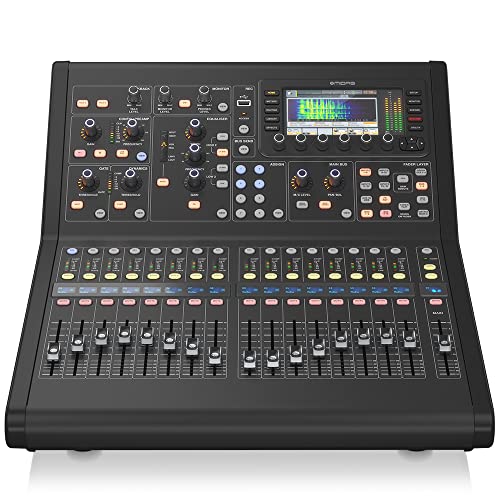
Midas M32 LIVE — Best Overall
The M32 LIVE is what happens when a beloved console platform is specified the way engineers would spec it themselves. Forty input channels built around 32 Midas PRO microphone preamplifiers, 25 mix buses for monitors and effects, and live multitrack recording for the virtual soundchecks that outdoor festival schedules depend on. It is the premium expression of the most widely understood console ecosystem in this class.
It suits rental companies, festival and outdoor event engineers, and venues whose outdoor stage is a serious production. Buyers who need the same workflow for less money should look directly at its Behringer sibling below; buyers who need more than 40 inputs should look at the 48-channel flagships.
Strengths
- Midas PRO preamps give this class its reference microphone sound
- 40 inputs and 25 buses cover full bands plus complex monitor worlds
- Multitrack recording enables virtual soundcheck, the outdoor schedule superpower
Trade-offs
- Premium tier within its platform family
- Full-size surface needs proper flight-case transport and two-person lifts
- Like all outdoor consoles, it still demands shade and weather discipline
| Input channels | 40 |
| Preamps | 32 Midas PRO microphone preamplifiers |
| Mix buses | 25 |
| Verified features | Live multitrack recording (per Amazon listing title) |
Outdoors, the M32 LIVE earns its badge in the changeover. Festival days run on twenty-minute turnarounds, and a console whose scenes recall completely — gains, monitor mixes, effects — while its file format is understood by every visiting engineer is a scheduling asset, not just a mixer. The multitrack recording closes the loop: record the afternoon soundcheck, play it back at dusk, and refine the mix without the band standing in the heat.
The preamp reputation is earned rather than inherited. Midas PRO preamps handle the dynamic chaos of outdoor stages — drum kits beside quiet acoustic instruments beside loud vocalists — with headroom that keeps engineers out of trouble. Paired with a digital stage box at the stage end, the system keeps analog cable runs short and the long run to front-of-house becomes a single network cable, which is exactly how outdoor audio should be built.
Best for: Festival, rental and serious outdoor event engineers who want the reference 40-input system / Not suited for: Buyers who need more than 40 inputs or the lowest possible platform cost
Check on Amazon to see the current listing for the Midas M32 LIVE.

Behringer X32 — Best Value
The X32 is arguably the most consequential live console of its generation. Its 40-input, 25-bus architecture, motorized faders and deep effects arrived at a tier that forced the entire industry to respond, and its ecosystem of stage boxes, personal mixers and expansion cards remains the broadest in this guide. Outdoors, that ecosystem is the product as much as the console is.
It suits regional rental companies, houses of worship with outdoor events, festival B-stages and engineers building a first serious outdoor rig. Engineers who want the premium preamp set and finish should step up to the M32 LIVE on the same platform logic.
Strengths
- The broadest stage-box and personal-monitoring ecosystem in this class
- 40 inputs and 25 buses handle full productions without compromise
- Enormous freelance familiarity: most engineers can mix on it immediately
Trade-offs
- Preamps are very good rather than class-leading like its Midas sibling
- The platform age shows in screen and interface speed beside newer flagships
- Success has made it a target for worn second-hand units; buy condition carefully
| Inputs | 40 |
| Buses | 25 |
| Format | Full-size digital mixing console (per Amazon listing title) |
For outdoor work, the X32 argument is infrastructure. A digital stage box at the stage, one network cable to front-of-house, personal mixers for the band, and a console the guest engineer already knows: that system deploys faster, troubleshoots easier and survives personnel changes better than any exotic alternative. Festivals are logistics contests wearing a music costume, and the X32 is the logistics winner of this list.
Sonically it remains entirely respectable, and in outdoor conditions — wind, crowd noise, generators — the practical differences between good and great preamps narrow considerably. Engineers building an outdoor business on a budget are rational to start here and let the Midas upgrade happen when the calendar justifies it.
Best for: Regional engineers, worship outdoor events and rental fleets building on the broadest ecosystem / Not suited for: Buyers who want the newest interface generation or premium preamps first
Check on Amazon to see the current listing for the Behringer X32.

Soundcraft Si Impact — Best for Houses of Worship and Installs
The Si Impact approaches 40 channels from the opposite direction to the screen-heavy flagships: its surface behaves like the analog consoles generations of engineers learned on, with dedicated controls instead of layered menus. For churches, schools and community venues — a huge share of outdoor event sound, from Easter sunrise services to town festivals — that immediacy is the feature.
It suits houses of worship, schools, community venues and install-plus-outdoor hybrid duties where multiple operators share the desk. Festival engineers who live on scenes, snapshots and deep digital workflow should take the M32 or X32 instead.
Strengths
- Analog-style surface is the fastest in this guide for new operators to learn
- True 40-channel capacity covers large worship teams and community productions
- A install-friendly design that transitions naturally to outdoor events
Trade-offs
- Digital depth and ecosystem breadth trail the Behringer-Midas platform
- Freelance familiarity is narrower than the X32 family
- Outdoor engineers wanting extensive virtual soundcheck workflow should compare carefully
| Channels | 40 (per Amazon listing title) |
| Format | Digital mixer with analog-style control surface |
The Si Impact insight is that the best console for a volunteer-run outdoor event is the one the volunteer can actually run. Dedicated controls mean the operator watches the stage instead of a screen, and mistakes are rarer and more recoverable. Church and school outdoor productions — the backbone of community event sound — are measurably better served by that philosophy than by maximum digital depth.
Its limits appear at the professional festival end: a smaller stage-box story, a narrower pool of freelance engineers who know it deeply, and less of the recording-centric workflow the M32 family treats as standard. Within its intended world those are acceptable trades, honestly made.
Best for: Houses of worship, schools and community venues running large teams and outdoor events / Not suited for: Festival engineers who need the deepest ecosystem and freelance familiarity
Check on Amazon to see the current listing for the Soundcraft Si Impact.

Allen & Heath SQ-6 — Best Premium
The SQ-6 is in this guide because outdoor engineers outgrow 40 inputs in predictable ways: the festival with two bands sharing a backline, the worship team plus choir plus playback, the corporate show with a dozen wireless channels before the band is even counted. Its 48 channels and 36 buses absorb that growth, and its 25-fader surface keeps the extra capacity physically manageable.
It suits growing rental companies, larger outdoor productions and engineers who found the 40-input ceiling personally. Buyers whose shows genuinely fit 40 inputs will find the M32 and X32 simpler and cheaper to own; this is the pick for when they do not fit.
Strengths
- 48 channels and 36 buses remove the input ceiling for large outdoor shows
- High-resolution audio platform with a fast, modern workflow
- Deep ecosystem of stage boxes and Dante-ready expansion
Trade-offs
- Premium tier pricing and a larger transport footprint
- Capacity is wasted on productions that fit comfortably in 32 inputs
- A newer platform, so regional freelance familiarity is still building
| Channels | 48 |
| Buses | 36 |
| Faders | 25 (per Amazon listing title) |
The outdoor case for the SQ-6 is headroom as insurance. Outdoor shows accrete inputs: weather microphones for announcements become extra MC channels, the streamed feed wants its own mix, the headliner arrives with a playback rig nobody mentioned. A console with capacity in reserve converts those surprises from crises into patching exercises, and engineers who work outdoors learn to price that conversion highly.
The SQ platform also suits the modern outdoor workflow of recording everything: capture the show multitrack, mix the stream from the same session, and hand the artist a recording as part of the service. If your outdoor work is growing in both size and services, this is the console in the guide that grows with it longest.
Best for: Larger outdoor productions and engineers who have outgrown 40 inputs / Not suited for: Productions that fit 32 to 40 inputs and buyers prioritizing platform familiarity
Check on Amazon to see the current listing for the Allen & Heath SQ-6.

Behringer WING — Best Modern Workflow
The WING represents the current generation of console thinking: 48 channels, a large central touchscreen, and a workflow organized around sources and personalization rather than fixed channel strips. For outdoor engineers who mix the same acts repeatedly — touring with a band, running a season of outdoor theater — its ability to shape the surface around the show is a genuine advance.
It suits touring engineers, technically adventurous rental companies and productions that reward a personalized surface. Engineers who depend on every freelancer knowing the desk cold should weigh the X32 family familiarity honestly against the WING modern advantages.
Strengths
- 48 channels with the most modern interface philosophy in this guide
- Deep personalization suits touring and repeat-production workflows
- Large touchscreen improves daylight interaction versus small-screen designs
Trade-offs
- Newer platform means a thinner pool of freelance engineers who know it
- Personalization takes setup time that festival changeovers may not allow
- Touch-dependent workflow demands the most weather discipline outdoors
| Channels | 48 (per Amazon listing title) |
| Format | Full-size digital mixer |
Outdoors, the WING makes its case on repeatability. A touring engineer can carry the entire show — surface layout, channel processing, monitor world — in the console, and reproduce it on a festival stage in minutes. The large screen, shaded properly, is genuinely easier to work with in daylight than the small displays of older platforms, and the channel count gives the same growth insurance as the SQ-6.
The counterweight is the ecosystem of people. At a multi-band outdoor festival, the desk everyone knows beats the desk one person loves, because changeovers are collaborative. The WING is the strongest pick here for a dedicated engineer and a recurring show; it is a riskier pick as a shared festival workhorse, and the review badges it accordingly.
Best for: Touring engineers and recurring outdoor productions that reward a personalized surface / Not suited for: Shared festival desks where universal engineer familiarity matters most
Check on Amazon to see the current listing for the Behringer WING.

Midas M32C — Best Rackmount
The M32C takes the Midas 40-input platform and removes the control surface, leaving a rackmount mixer brain controlled remotely. For outdoor work that means two legitimate strategies: an installed system at an amphitheater or fairground that lives in a rack year-round, or a compact touring rig where front-of-house is an engineer with a tablet walking the field rather than a desk on a platform.
It suits installs, compact outdoor rigs, and as a monitor-world or broadcast companion to a surface console. Engineers who want physical faders under their hands for a headline set should take the M32 LIVE; this is the flexible infrastructure pick.
Strengths
- Full 40-input, 25-bus Midas platform in a transport-friendly rack format
- Tablet control lets the engineer mix from the audience position outdoors
- Ideal as an install core or as a companion to a surface console
Trade-offs
- No physical surface: fader riding depends on a screen and a network connection
- Wireless control outdoors demands a disciplined, dedicated network setup
- Guest engineers cannot simply walk up and mix without orientation
| Input channels | 40 |
| Mix buses | 25 |
| Format | Rackmount digital mixer for installed and live sound (per Amazon listing title) |
The rackmount strategy shines outdoors in one specific way: the expensive electronics live in a closed rack, protected from dust, sun and the splash zone, while the engineer works from wherever the audience actually hears the show. For fairgrounds, amphitheaters and recurring outdoor series, that protection-plus-mobility combination solves problems a surface console cannot.
The discipline it demands is networking. A dedicated router, a wired backup path and a tested connection routine are not accessories for this format; they are the console surface, and they must be treated with the same seriousness. Engineers who accept that discipline get the most flexible 40-input tool in this guide; engineers who do not should buy faders.
Best for: Installs, compact outdoor rigs and tablet-mixing engineers who run a disciplined network / Not suited for: Headline sets where physical faders and walk-up familiarity are required
Check on Amazon to see the current listing for the Midas M32C.
Comparison Table
Read this table as two decisions. First, capacity: true 40-input systems (M32 LIVE, X32, Si Impact, M32C) versus the 48-channel growth picks (SQ-6, WING). Second, philosophy: maximum ecosystem familiarity (X32 family), operator simplicity (Si Impact), premium capacity (SQ-6), modern personalization (WING), or rackmount flexibility (M32C).
| Pick | Badge | Key spec | Best for |
|---|---|---|---|
| Midas M32 LIVE | Best Overall | 40 input channels, 32 Midas PRO preamps, 25 mix buses, live multitrack recording | Festival, rental and serious outdoor event engineers who want the reference 40-input system |
| Behringer X32 | Best Value | 40-input, 25-bus digital console | Regional engineers, worship outdoor events and rental fleets building on the broadest ecosystem |
| Soundcraft Si Impact | Best for Houses of Worship and Installs | 40-channel digital mixer with analog-style surface | Houses of worship, schools and community venues running large teams and outdoor events |
| Allen & Heath SQ-6 | Best Premium | 48 channels, 36 buses, 25 faders | Larger outdoor productions and engineers who have outgrown 40 inputs |
| Behringer WING | Best Modern Workflow | 48-channel digital mixer with next-generation workflow | Touring engineers and recurring outdoor productions that reward a personalized surface |
| Midas M32C | Best Rackmount | 40 input channels and 25 mix buses in a rackmount format | Installs, compact outdoor rigs and tablet-mixing engineers who run a disciplined network |
How to Choose a 40-Channel Digital Mixer for Outdoor Work
Start by counting your real input list at your largest recurring show, then add the inputs outdoor shows always invent: extra MC and announcement microphones, playback for walk-in music and stream feeds, spare channels for the guest act, and the extra drum and keyboard inputs touring bands bring. If that honest count lands in the mid-thirties, a 40-input console is your home. If it kisses forty, buy the 48-channel headroom of the SQ-6 or WING now, because input ceilings are discovered mid-show, never in the office.
Next, choose your ecosystem before your console. The stage box, the digital snake protocol, the personal monitoring system and the expansion cards are a ten-year infrastructure decision, and the console is merely its most visible part. The Behringer-Midas platform offers the broadest and most affordable infrastructure in this guide; Allen & Heath offers a premium path with deep expansion; Soundcraft offers surface simplicity. Price the whole system — console, stage box, cable, case — because the console alone is often barely half the real cost.
Then weigh the human ecosystem. Festivals and rental work run on freelance engineers, and the console they already know is a feature with a dollar value: faster changeovers, fewer mistakes, no training line in the budget. A house engineer running the same show all summer can exploit a personalized platform like the WING; a festival desk passed between six engineers in a day should be the platform all six already speak.
Finally, plan the recording workflow. Multitrack capture for virtual soundcheck is the single biggest quality lever in outdoor sound, because it lets the engineer refine the mix without the band, the heat or the schedule pressure. Confirm the console you choose records the way your workflow expects, and budget the computer and drives as part of the system, not as an afterthought.
Transport belongs in the same calculation. A full-size console travels in a flight case with a stage box, a cable package and a front-of-house kit that together fill a vehicle position. Crews shopping this class should measure their transport honestly — the best console is partly the one that fits the truck, the crew size and the load-in path of the venues actually served, including the grass, gravel and stairs that outdoor sites substitute for loading docks.
Outdoor Realities: Sun, Dust, Rain and Power
Sunlight is the first outdoor enemy, and it attacks screens and engineers simultaneously. Every console in this guide is mixable in daylight with discipline: shade the front-of-house position properly, angle screens away from direct sun, and learn the surface well enough that critical moves are physical rather than visual. The larger screens of the newer platforms help, but a canopy helps more, and it costs less than any console upgrade ever will.
Dust and moisture are the slow enemies. Outdoor consoles should live in their cases until setup, travel with covers on, and be struck first when weather threatens. Connectors suffer most: keep stage-box connections clean, cap unused sockets, and treat a can of compressed air and a soft brush as standard kit. The rackmount M32C strategy — electronics sealed in a rack, engineer mobile — is popular at dusty fairgrounds for exactly these reasons.
Power is the invisible enemy. Outdoor shows run on generators and long distro runs, and digital consoles are computers that reboot when power sags. A proper UPS at front-of-house is not optional at this level: it rides out the generator hiccups that would otherwise silence a console mid-song and cost it its boot-up time in front of an audience. Budget the UPS, the distro and the cable ramps with the console, because outdoors, power is part of the mixing system.
Stage Boxes and Digital Snakes: The Outdoor Infrastructure Decision
The defining infrastructure choice in modern outdoor sound is where the preamps live. A digital stage box at the stage end converts microphone signals once, then sends everything to front-of-house over a single network cable — replacing a heavy, failure-prone analog snake with something one person can run in minutes. For outdoor work, where the front-of-house position may be a hundred meters from the stage across grass, gravel or a crowd, that difference is transformative.
Each ecosystem in this guide sells that stage box, and compatibility is absolute: the box must match the console family. This is the practical reason ecosystem choice precedes console choice. It also shapes redundancy planning: a spare network cable run alongside the main one costs little and converts the most catastrophic outdoor cable failure into a thirty-second swap.
Personal monitoring completes the infrastructure picture. Outdoor stages are acoustically chaotic — wind, open air, no wall reflections to help — and giving musicians their own monitor control reduces both volume wars and engineer workload. The X32 and M32 ecosystems are particularly strong here, and for worship and festival work with large teams, the monitoring system can matter as much as the console itself.
Scenes, Virtual Soundcheck and the Festival Changeover
Outdoor festival engineering is a discipline of preparation. Each act gets a scene or show file: input patch, gains, monitor mixes, effects and mutes, recalled completely at changeover. The consoles in this guide all do this, but the working difference is ecosystem fluency — how fast an engineer can build, store and modify those files under pressure, and whether the visiting engineer’s file from another desk in the same family loads without drama.
Virtual soundcheck is the preparation multiplier. Record the band multitrack during the afternoon check, then, after they leave for dinner, play the recording back through the system and mix it properly — in the evening air, at show volume, with the site full of the sounds that change everything. Outdoor acoustics shift dramatically between an empty field at noon and a crowd at dusk, and virtual soundcheck is how professionals adapt without burning out the band.
The changeover itself should be rehearsed like a pit stop: who patches, who line-checks, who recalls the scene, who talks to the stage manager. The console is the center of that choreography, and the best outdoor engineers choose the platform their whole crew can choreograph around — which loops the decision back to familiarity, the theme that runs through every section of this guide.
Renting vs Buying at the 40-Channel Level: The Working Math
Consoles in this class sit at the price point where renting deserves a serious hearing. A production company running four outdoor shows a year, each needing a different capacity, may rationally rent the flagship for the big weekend and own the workhorse for the rest. Rental also outsources the two ownership burdens this class carries: firmware and ecosystem currency, and the flight-case, stage-box and cable infrastructure that must travel with the console to be useful.
Ownership wins when the calendar is dense and the show is consistent. A worship organization running weekly services plus an outdoor calendar, a fairground with a summer series, or a regional company booked every weekend will amortize a console and its stage box quickly, and will gain the fluency that only living on one platform builds. The file compatibility inside a family — X32 and M32 files, scenes and infrastructure — also means an owned workhorse and a rented flagship can cooperate rather than collide.
The hybrid strategy is what most growing outdoor operations actually run: own the platform your crew knows, in the capacity your median show needs, and rent capacity or a second desk for the exceptional weekends. That is another reason the ecosystem decision outweighs the console decision — the owned and rented halves of the strategy must speak the same language, or the exceptional weekend becomes the hardest one of the year.
How to Set Up a 40-Channel Digital Mixer for an Outdoor Show
A field-proven sequence for a full-band outdoor show: stage box at the stage, digital snake to front-of-house, console under shade, and a virtual soundcheck before gates. Adapt the details to your ecosystem; the order of operations is the lesson.
Step 1: Position front-of-house and shade it before any gear lands
Place the mix position centered on the PA at a realistic audience distance, then erect the canopy or shade first. Every later decision — screen visibility, engineer endurance, console temperature — depends on this one. Run power to the position early and put the console on a UPS from the first power-up, not as an afterthought.
Step 2: Deploy the stage box and digital snake
Set the stage box at the stage, patch all stage microphones and DIs into it with short analog runs, and run the digital snake to front-of-house, with a spare cable alongside it if the route crosses traffic or weather exposure. Protect crossings with cable ramps wherever people or vehicles pass. Confirm the console sees the stage box and every input before a single microphone is placed.
Step 3: Build the show file and patch before the band arrives
Load or build the show file: input patch matching the stage plot, channel names, monitor mixes roughed in, effects assigned, and scenes for each act if the day has several. Outdoor schedules punish improvisation; the hour spent building the file in the shade is the hour that saves the show at changeover.
Step 4: Line-check every input with a single microphone and a checklist
Walk one test microphone through every stage input, confirming signal, correct channel and correct monitor sends, and tick each off the stage plot. Line-checking is tedious and absolutely non-negotiable outdoors, where a mis-patched channel discovered during the first song costs the song.
Step 5: Soundcheck, then record it for virtual soundcheck
Run the band soundcheck at show volume, set monitor mixes from the stage outward, and record the multitrack capture throughout. After the band leaves, play the recording back and refine the front-of-house mix in the real evening conditions. Save the show file in two places — console and laptop or USB — before gates open.
Step 6: Run the show on scenes, and strike on weather discipline
During the show, work from scenes for each act and keep a weather eye: covers within reach, case lids staged, and a strike order agreed in advance. If weather turns, the console and stage box are protected or struck first — they are the system brain and the hardest components to replace. Gear is insured or replaceable on a schedule; a soaked console ends the event either way.
After the show, export and archive the show files with the date and act names. Outdoor series recur, and last season’s file is next season’s head start — the difference between a two-hour setup and a four-hour one.
Debrief while the strike happens: note which inputs were missing, which were wasted, and which cable run worried you. Outdoor shows repeat with variations, and the crew that writes down its lessons is the crew whose second show starts where the first one finished.
Common Buying Mistakes
Counting only the band and forgetting the show around it
Announcement mics, playback, stream feeds, spare channels and guest acts routinely add six to ten inputs to an outdoor production. Buyers who size a console to the band alone discover the ceiling during the event. Count the whole show, then add headroom.
Choosing a console without choosing its stage box
The console is half a system. A buyer who falls for a surface and then discovers the stage box, snake and monitoring costs has not saved money — they have deferred a surprise. Price the complete signal chain before committing to any ecosystem.
Skipping the UPS at front-of-house
Generator power sags, distro gets kicked, breakers trip. A digital console reboots like a computer, in silence, for minutes. The UPS that prevents that costs a fraction of the console and is the highest-value accessory in outdoor sound.
Mixing all day in direct sun because setup forgot shade
Screen glare, console heat and engineer fatigue are all shade problems before they are equipment problems. The canopy goes up first. Engineers who treat shade as comfort rather than infrastructure learn the difference during the third act of a festival day.
Assuming any engineer can run any desk at a festival
Freelance familiarity is a real specification. Staffing a festival around a platform your engineers do not know converts every changeover into training. Match the desk to the crew you can actually hire, or budget the training as honestly as the hardware.
Leaving show files only on the console
A console that fails, gets struck in a storm or is swapped by the rental company takes its files with it. Back up the show to a laptop or USB after soundcheck, every time. The two minutes this takes are the cheapest insurance in the entire production.
Final Recommendation
For most outdoor engineers, the answer is the platform play: the Midas M32 LIVE if the budget reaches the reference preamps and finish, the Behringer X32 if it does not — same 40-input, 25-bus working logic, the broadest ecosystem in the business. Choose the Soundcraft Si Impact when volunteer operators and surface simplicity rule the day, and step to the SQ-6 or WING when your honest input count or your touring workflow outgrows forty.
The M32C covers the rackmount and install world with the same platform depth. Whichever console you choose, buy the system around it in the same decision — stage box, snake, UPS, case and shade — because outdoors, the console is only ever as good as the infrastructure carrying it.
A closing word for first-time buyers at this level: hire or borrow an experienced engineer for your first two shows on any new platform, and treat their fee as part of the console price. The fastest way to learn a 40-channel system is to watch it run a real outdoor day, and the most expensive way is to learn it alone, at showtime, in front of an audience.
Keep exploring the cluster: Best 4 Channel Dj Mixers Best 5 Pro Sound Tablet Mixers Best 4 Channel Mixers For Djing Best 5 Channel Mixers Best 4 Channel Mixers
Frequently Asked Questions
How many inputs does an outdoor band show really need?
A typical full band uses 16 to 24 inputs. Add monitor-heavy arrangements, extra vocalists, playback rigs, MC and announcement microphones, stream feeds and spares, and real productions regularly land between 30 and 40 — which is why this console class exists. Count your largest show honestly and keep headroom above it.
What is a digital stage box and why does it matter outdoors?
A stage box places the microphone preamps at the stage and sends audio to the console over a single network cable instead of a heavy analog snake. Outdoors, where front-of-house can be far from the stage across difficult ground, that means faster setup, fewer failure points and a spare cable run as cheap redundancy.
Can digital consoles handle rain and dust?
They can handle outdoor work with discipline, not exposure. Consoles live under shade, in cases until setup, and are struck or covered first when weather turns. Dust is managed with covers and cleaning; direct rain on a console is never an acceptable operating condition at this level.
What is virtual soundcheck?
The band is recorded multitrack during soundcheck; later, the recording is played back through the system so the engineer can refine the mix without the band present. Outdoors it is especially valuable because conditions change between an empty afternoon field and a full evening crowd.
Should I buy 40 channels or step up to 48?
Buy for your honest largest show plus headroom. If your count sits in the low thirties, 40-input consoles serve for years. If you already touch the high thirties or run multi-act festivals with shared backlines, the 48-channel picks remove a ceiling you would otherwise meet mid-season.
Why do so many outdoor engineers use the X32 and M32 platform?
Familiarity and infrastructure. The platform is everywhere, so freelance engineers know it, stage boxes and personal mixers are plentiful, and show files travel between desks. At an outdoor festival, that shared fluency is worth as much as any specification.


