Disclosure: airfryerkitchensupply.com is reader-supported. When you buy through links on our site, we may earn an affiliate commission at no extra cost to you.
Where to buy
For the best 12 volt vacuum boat owners can run from a DC system, start with the RoadPro RPSC-807: it is a true plug-in 12 volt wet/dry canister, which is the combination a boat actually needs. The budget alternative with wet pickup is the ACNTENY corded handheld, and the flashlight-equipped handheld earns its place in dark lockers. Every linked model here was confirmed against a live Amazon listing; configurations change, so check price on Amazon for the exact model before ordering.
The best 12 volt vacuum boat owners can buy is not simply a car vacuum that happens to be aboard. A boat is a wet, salty, enclosed environment with a battery system you depend on for starting the engine and running navigation gear, and those facts reorder every priority. Wet pickup comes first, because the messes that damage a boat interior — spilled drinks soaking into cabin carpet, damp sand ground into the sole, water tracked below after a swim — are liquid messes. Corrosion resistance and rinse-and-dry discipline come second, because salt air punishes tools stored in lockers. Honest labelling of power source comes third: a plug-in 12 volt vacuum runs from the boat’s DC system whenever you need it, while a cordless model is only as ready as its last charge, which on a boat that sits unused for weeks is a real liability.
One safety boundary belongs at the front of this guide. A vacuum is for water, sand, grit and ordinary spills. It is not for fuel, oil, solvents or bilge water with a fuel sheen: flammable liquids and vacuum motors do not mix, and contaminated bilge water is a disposal problem, not a cleaning shortcut. Absorbent pads and proper disposal handle those jobs. Everything recommended below is chosen for the legitimate work — keeping cabins, cockpits and lockers clean and dry — and within that work, a small plug-in wet/dry vacuum is one of the highest-value tools a boat can carry.
The six picks below are the realistic marine shortlist from the current 12 volt market: a wet/dry canister as the primary boat vacuum, two budget wet/dry handhelds with different strengths, a dry-detail handheld for cabins and cockpit upholstery, a higher-suction detailing model for boats kept on trailers or at docks with vehicle access, and one cordless model included with clear labelling for owners who understand its charging trade-offs. The general vehicle version of this comparison lives in the guide linked at the end; this one is written for the water.
In this guide
Quick Picks
Six picks judged by marine priorities: wet pickup first, then salt discipline, reach in cabins and lockers, and honesty about power source. If you read nothing else, read the power-source line of each spec box: on a boat, that line decides whether the vacuum works on the day you actually need it.
- RoadPro RPSC-807 12-Volt Wet/Dry Canister Vacuum — Best Overall for Boats: A plug-in 12 volt canister with wet and dry pickup and a hose — the format that can work a cabin sole, pick up spilled drinks and reach into lockers while the motor unit stays put. — Check the current price on Amazon
- ACNTENY Car Vacuum Cleaner 12V Corded 120W Wet Dry — Best Budget for Boats: A budget corded handheld with genuine wet and dry pickup and a 120W rating — the low-cost way to get spill capability aboard a small boat. — Check the current price on Amazon
- 12V Car Vacuum Cleaner Wet Dry with Flashlight — Best for Lockers and Night Work: A corded wet/dry handheld with a built-in flashlight that points where the nozzle points — built for lockers, bilge-adjacent dry spaces and cabins after dark. — Check the current price on Amazon
- ThisWorx Handheld Car Vacuum — Best for Dry Cabin Detailing: A corded 12 volt handheld with a 16 ft cord, three attachments and a storage bag — the tidy kit for dry detailing of cabins, cockpits and the tow vehicle in one bag. — Check the current price on Amazon
- Shop-Vac 12V Car Vacuum Cleaner — Best for Dockside Deep Cleans: A 12 volt detailing handheld listing 7000 Pa suction with a 16 ft cord and multiple nozzles — for trailer boats and dockside sessions where the tow vehicle’s socket powers a thorough clean. — Check the current price on Amazon
- BLACK+DECKER dustbuster Handheld Vacuum HHVI320JR02 — Best Cordless (Battery Powered): A cordless dustbuster on a 12V battery platform with a rotating, extendable nozzle — labelled clearly: it does not run from the boat’s 12 volt system, and it is only as ready as its last charge. — Check the current price on Amazon
How These Picks Were Chosen
Picks were screened first on power-source honesty: every listing was checked for whether the machine truly runs from a 12 volt socket, and the one battery model is labelled as such in its heading context, spec box, strengths and trade-offs. In a category where sellers use 12 volt loosely, that verification is the difference between a guide and a trap, especially for boats that sit unused between trips.
Marine screening came next: wet pickup for spill and damp-debris duty, format and reach for cabins and lockers, chamber practicality for post-weekend cleans, and storage footprint. Models that were mains powered with a car charger accessory, models with no verifiable current listing, and dry-only models pretending to the full boat role were excluded or explicitly reassigned to dry detailing, as the ThisWorx and Shop-Vac picks are here.
A note on what is not here: there is no large marine-specific vacuum category hiding elsewhere. Chandlery own-brand 12 volt vacuums exist, but without a verifiable current listing for the exact model we do not link or rank them; the picks above are the models we could confirm. If your local chandlery stocks a wet/dry plug-in canister, compare it against the RoadPro on format, pickup type and hose reach — the criteria in this guide transfer directly.
Finally, safety shaped the guide’s boundaries. No vacuum in this roundup is recommended for fuel, oil, solvents or contaminated bilge water, and that exclusion is stated wherever bilge-adjacent cleaning is discussed. Suction figures are reported only as listing claims, because brands measure them incompatibly; format, pickup type and reach decided the ranking instead.
The 6 Best 12 Volt Vacuum Boat

RoadPro RPSC-807 12-Volt Wet/Dry Canister Vacuum — Best Overall for Boats
The canister format is the marine advantage. Aboard a boat, the mess is rarely where the socket is: it is under the cabin table, along the sole edges, inside a locker, or in the cockpit footwell. With the RPSC-807 the canister sits on the sole or deck while the hose and nozzle travel, which is how cleaning actually happens in a confined cabin. A one-piece handheld forces you to bring the whole machine, dust chamber and all, into every awkward angle, and its small chamber fills before a post-weekend cabin is done.
Wet pickup is the second half of the case. This machine can lift spilled drinks, tracked-in water and damp sand directly, instead of pushing them around or soaking them up with the boat’s towels. Dealing with liquid the day it spills is what prevents the mildew smell that older boats carry; a dry-only vacuum leaves that job undone no matter how good its suction is.
Strengths
- Wet and dry pickup handles the liquid messes that actually threaten a boat interior
- Hose and canister format reaches lockers, sole edges and under-table spaces
- Plug-in 12 volt power: ready after weeks in a locker, nothing to recharge
Trade-offs
- Needs a locker or storage spot of its own aboard
- Draws from the boat battery system, so long sessions need battery awareness
- Not for fuel, oil or contaminated bilge water — no vacuum is
| Power source | Boat/vehicle 12 volt outlet (plug-in, corded) |
| Pickup type | Wet and dry |
| Format | Portable canister with hose |
Build the habit that makes this tool pay: ten minutes after each trip, before the boat is closed up. Sand and grit are abrasive underfoot and grind cabin sole finishes and carpet fibres; water left in seams and carpet edges is tomorrow’s mildew. A quick canister pass while the boat is still open and ventilated prevents both, and because the machine lives aboard, the habit actually forms.
After any session involving salt water, rinse the chamber and hose ends with fresh water and let the machine dry open before it goes back into a locker. Salt residue in a sealed, warm locker corrodes the machine and everything stored near it. That two-minute discipline is the difference between a tool that lasts seasons and one that smells and seizes by midsummer.
Best for: Boat owners who want one primary vacuum for cabins, cockpits and lockers, wet or dry / Not suited for: Open boats with no storage, or anyone expecting it to handle fuel or oily bilge water
Check on Amazon — check price on Amazon before you buy, because vehicle and appliance listings change configurations often.

ACNTENY Car Vacuum Cleaner 12V Corded 120W Wet Dry — Best Budget for Boats
Small boats have small budgets and smaller lockers, and the ACNTENY fits both constraints. It is a corded handheld — no canister to store — with wet and dry pickup, which at this tier is the feature that matters and the one many cheap rivals quietly omit. A spilled cooler’s meltwater, a wet dog shake, damp sand from a beach stop: this machine can pick them up the same day instead of leaving them to the towels.
The 120W rating sits near the sensible ceiling of a 12 volt socket circuit, so on paper it uses most of what the boat’s DC system can give a vacuum. The listed suction figure should be read as a claim rather than a measurement you can compare across brands, but in use the class of machine is adequate for the grit-and-spill workload of a trailer boat or small cruiser, provided the filter stays clean.
Strengths
- Wet pickup at a budget tier, in a handheld that stores almost anywhere
- Plug-in power means it works after the boat has sat unused
- Cheap enough to be the dedicated boat tool rather than a borrowed car tool
Trade-offs
- Handheld chamber fills fast on a full cabin clean
- Budget build and thin brand support compared with established names
- No hose, so locker corners and under-sole spaces are harder to reach
| Power source | 12 volt outlet (plug-in, corded) |
| Power | 120W |
| Pickup type | Wet and dry |
| Listed suction | 3600mbar (per listing) |
Treat this as the trailer-boat and day-boat pick: it lives in the tow vehicle or the boat’s driest locker, comes out at the ramp or the dock, and handles the end-of-day reset. Rinse and dry it after wet work — budget seals and filters forgive neglect less than premium ones — and coil its cord loosely to protect the wiring.
If your boat is a larger cruiser with a real cabin, consider this the second vacuum rather than the only one: the canister above does the weekly work, and this handheld covers quick cockpit and heads-compartment touch-ups where dragging the canister out is overkill.
Best for: Day boats, trailer boats and small cruisers needing cheap, genuine wet pickup / Not suited for: Large cabins where a handheld chamber and no hose make the job slow
Check on Amazon — check price on Amazon before you buy, because vehicle and appliance listings change configurations often.

12V Car Vacuum Cleaner Wet Dry with Flashlight — Best for Lockers and Night Work
Boats concentrate their dirt in dark places: inside lockers, under berths, behind the heads compartment, in the corners of a cabin where the ceiling lights never reach. This handheld’s built-in flashlight is aimed exactly at that problem. The light travels with the nozzle, so you can see the grit line, the spilled sugar, the damp patch — and verify it is gone — without juggling a separate torch in a space that barely fits one hand.
The rest of the specification suits boat duty: corded 12 volt plug-in power for readiness, wet and dry pickup for the spills that happen in those same lockers (a leaking freshwater fitting’s drips, a tipped bottle), and a bright red ABS body that is easy to find in a cluttered locker and shrugs off the knocks of boat life.
Strengths
- Built-in light transforms locker and under-berth cleaning
- Wet pickup for the drips and spills that hide in storage spaces
- Plug-in readiness suits boats used irregularly
Trade-offs
- Unbranded, so spares and support are uncertain
- Handheld chamber is small for whole-cabin sessions
- Light is a convenience, not a substitute for the canister on big jobs
| Power source | 12 volt outlet (plug-in, corded) |
| Pickup type | Wet and dry |
| Extra | Built-in flashlight |
| Body | ABS and PP construction (per listing) |
The natural role for this machine is as the boat’s inspection vacuum: the tool you grab when checking lockers at the start of the season, cleaning out a damp storage bay, or doing the evening tidy in a cabin lit by one dome light. Paired with a canister for the main work, it covers the spaces the canister’s hose reaches awkwardly.
One caution specific to boats: a light makes it tempting to vacuum every dark space you can see into, including around the bilge. Keep the boundary firm — dry debris and clean water only, never fuel, oil or sheened bilge water, and never around open fuel system fittings.
Best for: Owners who clean lockers, under-berth spaces and cabins in poor light / Not suited for: Anyone wanting a single premium vacuum with full brand support
Check on Amazon — check price on Amazon before you buy, because vehicle and appliance listings change configurations often.
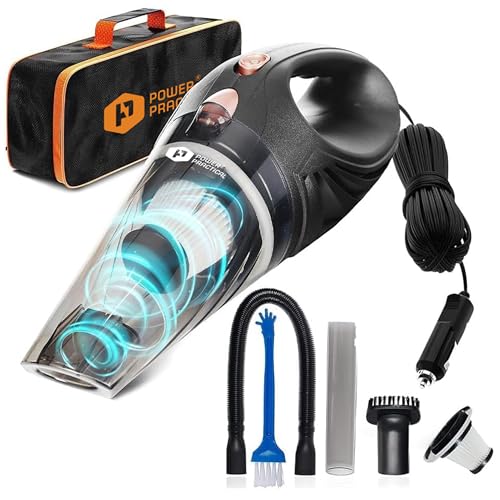
ThisWorx Handheld Car Vacuum — Best for Dry Cabin Detailing
Not every boat mess is wet. Cockpit upholstery collects crumbs and sand, cabin carpets collect grit, and the tow vehicle that got everyone to the marina collects all of it twice. The ThisWorx kit is the dry-detailing specialist in this lineup: a 16 ft cord that spans a cockpit or a car interior from one socket, a crevice tool for the seams of upholstery, a brush for instrument panels and vents, and a bag that keeps the whole kit together in a locker or the vehicle’s cargo area.
The bag deserves its emphasis aboard a boat, where loose small parts do not stay lost politely — they migrate into bilges and under sole boards. A kit that zips shut keeps its attachments, and a vacuum that is one grab from its locker is a vacuum that gets used for the five-minute jobs that keep a boat feeling cared for.
Strengths
- Complete, self-contained kit with bag — nothing loose to lose aboard
- 16 ft cord spans cockpits and tow vehicles from a single socket
- Attachments suit upholstery seams, panels and vents
Trade-offs
- Dry pickup only: spills and damp debris are outside its role
- Handheld chamber needs emptying during bigger sessions
- On a boat it complements rather than replaces a wet/dry machine
| Power source | 12 volt outlet (plug-in, corded) |
| Cord | 16 ft |
| Included | 3 attachments, storage bag |
Buy this as the detailing half of a two-tool boat kit, or as the single vacuum for an open boat whose interior is vinyl and whose messes are overwhelmingly dry sand and crumbs that a quick shake and vacuum handles. For cuddy and cruiser cabins with carpet and fabric, pair it with one of the wet/dry picks.
The same kit moonlights in the tow vehicle without modification, which for trailer boaters may be its most-used role of all: the boat gets the ramp-side pass, the truck gets the full interior session on the drive home.
Best for: Dry detailing of cockpits, upholstery and tow vehicles with one tidy kit / Not suited for: Wet messes, damp cabins or mildew prevention duty
Check on Amazon — check price on Amazon before you buy, because vehicle and appliance listings change configurations often.

Shop-Vac 12V Car Vacuum Cleaner — Best for Dockside Deep Cleans
Many boats are cleaned most thoroughly not afloat but on the trailer — at home, at the storage yard, or at the dock car park — and that is this Shop-Vac’s natural habitat. Plugged into the tow vehicle, its listed 7000 Pa suction and nozzle set make it the detailing choice for a seasonal deep clean: grit out of cockpit carpet, sand out of storage compartments, crumbs and hair out of every upholstery seam before the cover goes on.
As with every suction figure in this category, treat the number as the maker’s claim rather than a cross-brand measurement. The practical proposition is the combination: strong-for-class suction, whole-vehicle cord reach, and nozzles matched to seams, brushes and flat surfaces, from a brand whose home ground is wet/dry vacuum design.
Strengths
- Highest listed suction in this lineup for carpet and upholstery grit
- Nozzle variety suits methodical seasonal deep cleans
- 16 ft cord covers boat cockpit and tow vehicle from one socket
Trade-offs
- Best used where a vehicle socket is handy; less natural afloat mid-season
- Confirm wet capability before assuming spill duty; this guide assigns it dry detailing
- Long sessions draw on the tow vehicle battery — run the engine for big jobs
| Power source | 12 volt outlet (cigarette lighter plug) |
| Listed suction | 7000 Pa (per listing) |
| Cord | 16 ft |
| Included | Multiple nozzles |
The seasonal rhythm this tool supports is the one that keeps boats young: a deep clean at launch, another at haul-out, and quick passes between. Grit left in carpet and seams all winter works on fibres and gelcoat-adjacent finishes the whole season; removing it is maintenance, not vanity.
If your boat lives in a slip and you clean afloat, the canister and the wet/dry handhelds above fit better. If your boat lives on a trailer, this may be the most-used pick of the six.
Best for: Trailer boaters doing thorough dockside and driveway deep cleans / Not suited for: Slip-kept boats cleaned afloat, or buyers needing confirmed wet pickup
Check on Amazon — check price on Amazon before you buy, because vehicle and appliance listings change configurations often.

BLACK+DECKER dustbuster Handheld Vacuum HHVI320JR02 — Best Cordless (Battery Powered)
This pick comes with the guide’s most important label. The HHVI320JR02 is a cordless handheld whose battery platform is rated 12V; it appears in 12 volt searches, but it neither plugs into nor charges itself from your boat while you clean. Aboard a boat that sits for weeks between uses, that distinction is decisive: a plug-in vacuum is ready on the worst day, while a battery vacuum may be flat exactly when you open the cabin to a mess.
With that understood, there is a real case for it. Liveaboards, marina-based owners who are aboard weekly, and anyone whose boat is effectively an extension of home life can keep it charged, and in return they get the best nozzle design here — rotating and extendable, reaching under berths and into cabin corners — plus the freedom to clean a dinghy, a dock box or a cockpit with no cord at all. Short, frequent, dry clean-ups are its home ground.
Strengths
- Cordless freedom for dinghies, cockpits and dock boxes
- Rotating, extendable nozzle is excellent in cabin corners
- Established brand support and replacement filters
Trade-offs
- Battery powered: useless if uncharged after weeks aboard an unused boat
- Dry, short-session tool; not a wet/dry boat vacuum
- Battery capacity fades over seasons in hot lockers
| Power source | Cordless — 12V battery pack (does NOT run from the boat DC system) |
| Nozzle | Rotating and extendable |
If you choose it, store it at home on its charger and bring it aboard charged, rather than leaving it in a hot locker to self-discharge and cook its pack. Treated that way it is a pleasant tool. Left aboard and forgotten, it is the pick most likely to disappoint, through no fault of its cleaning ability.
For the primary boat vacuum role — ready always, wet or dry — the plug-in picks above remain the recommendation. This one is a convenience addition for owners whose boating rhythm keeps batteries honest.
Best for: Liveaboards and frequent users who will keep it charged and want cordless convenience / Not suited for: Boats used irregularly, wet messes, or as the only vacuum aboard
Check on Amazon — check price on Amazon before you buy, because vehicle and appliance listings change configurations often.
Comparison Table
| Pick | Badge | Key spec | Best for |
|---|---|---|---|
| RoadPro RPSC-807 12-Volt Wet/Dry Canister Vacuum | Best Overall for Boats | 12V plug-in canister; wet and dry pickup; hose reach | Boat owners who want one primary vacuum for cabins, cockpits and lockers, wet or dry |
| ACNTENY Car Vacuum Cleaner 12V Corded 120W Wet Dry | Best Budget for Boats | 12V corded; 120W; wet and dry pickup | Day boats, trailer boats and small cruisers needing cheap, genuine wet pickup |
| 12V Car Vacuum Cleaner Wet Dry with Flashlight | Best for Lockers and Night Work | 12V corded; wet and dry pickup; built-in flashlight | Owners who clean lockers, under-berth spaces and cabins in poor light |
| ThisWorx Handheld Car Vacuum | Best for Dry Cabin Detailing | 12V corded; 16 ft cord; 3 attachments and storage bag | Dry detailing of cockpits, upholstery and tow vehicles with one tidy kit |
| Shop-Vac 12V Car Vacuum Cleaner | Best for Dockside Deep Cleans | 12V plug-in; 7000 Pa listed suction; 16 ft cord; multiple nozzles | Trailer boaters doing thorough dockside and driveway deep cleans |
| BLACK+DECKER dustbuster Handheld Vacuum HHVI320JR02 | Best Cordless (Battery Powered) | Cordless; 12V battery platform; rotating and extendable nozzle | Liveaboards and frequent users who will keep it charged and want cordless convenience |
How to Choose the Best 12 Volt Vacuum for a Boat
Begin with where the boat lives and how it is used, because that decides the format. A slip-kept cruiser cleaned afloat wants the canister: hose reach, wet pickup, and a machine that lives in a locker and runs from the cabin sockets. A trailer boat cleaned on the driveway wants reach from the tow vehicle and detailing nozzles. An open day boat wants the smallest wet/dry handheld that can live in a tote. Choosing by habitat first prevents the common error of buying a car interior tool for a cabin job.
Wet pickup is the second decision, and for most boats it should not be a decision at all. Water is the medium of boating; it comes aboard on feet, gear, dogs and weather, and it carries sand and grit with it. A vacuum that can lift liquid deals with the mess while it is a puddle; a dry-only vacuum watches it become a stain and a smell. The only boats that can honestly skip wet capability are open, vinyl-interior boats whose every surface can be hosed and drained — and even they meet the occasional spilled drink in the tow vehicle.
Know your boat’s sockets and batteries
Find your 12 volt sockets and learn which battery feeds them. Cabin sockets on the house bank are ideal for cleaning sessions. A helm socket wired to the starter battery demands restraint: short sessions, or run the engine. Check whether sockets are live with the battery switch off — many boats kill them with the switch, which is good storage practice and means your cleaning session starts with a deliberate switch-on, not a surprise. If your boat has no cabin socket, that fact alone may push you toward the tow-vehicle detailing model or toward adding a socket as part of the boat’s next electrical job.
Salt discipline
Whatever you buy, plan its care before its first use. Salt water sessions end with a fresh-water rinse of the chamber and hose ends and an open-air dry before locker storage. Filters get brushed or rinsed on the same schedule as the boat’s own washdowns. A vacuum stored damp and salty in a sealed locker will corrode, smell, and eventually fail — and it will make the locker smell with it. The discipline is two minutes; the alternative is a new vacuum every season or two.
Freshwater boats versus saltwater boats
Freshwater trailer boats can be more relaxed: corrosion pressure is lower, and a budget handheld stored in the tow vehicle may serve for years. Saltwater boats should weight durability and rinse-ability higher, and should treat the fresh-water rinse after wet sessions as part of the purchase price in effort. The same model can be a five-year tool on a lake and a two-season tool on the coast; the difference is not the badge on the machine but the salt discipline of the owner, which is why this guide repeats the rinse-and-dry routine in nearly every pick.
Storage footprint
Measure the locker before you fall for a format. Canisters need a home; handheld kits in bags tuck into seat bases and hanging lockers. On small boats the best vacuum is the one that fits without displacing safety gear — a point worth stating plainly, because a vacuum that costs you locker room meant for flares, lines or a first-aid kit is a bad trade no matter how well it cleans.
Moisture, Mildew and Why Wet Pickup Matters Aboard
The enemy inside a boat cabin is not dirt; it is moisture held in soft materials. Carpet, upholstery foam and locker linings that stay damp grow mildew, and mildew is what gives older boats their permanent smell — a smell that no air freshener has ever defeated, because its source keeps living in the fabric. Prevention is unglamorous: remove liquid promptly, remove damp grit with it, and ventilate. A wet/dry 12 volt vacuum is the tool that makes the first two steps take minutes instead of a towel-and-bucket production.
This is also why the guide insists on rinse-and-dry care for the vacuum itself. A machine that picks up damp, salty debris and is then sealed in a locker becomes a mildew farm of its own, perfuming the space it was meant to freshen. The routine — empty, rinse if salt was involved, dry open, then store — mirrors the discipline good owners already apply to lines, sails and canvas, and for the same reason: boats reward owners who put things away dry.
Where moisture is chronic — a locker that always weeps condensation, a cabin sole edge that is always damp — treat the vacuum as a diagnostic as much as a cleaner. Regular cleaning forces regular looking, and the owner who vacuums lockers monthly is the owner who finds the weeping fitting, the chafed hose and the early mildew while they are still cheap problems.
It is worth being precise about what wet pickup can and cannot reverse. A wet/dry vacuum removes liquid and damp debris from surfaces and shallow carpet pile today; it does not extract moisture already deep in foam cushions, and it does not kill established mildew inside upholstery. Those jobs need removal, thorough drying ashore and, for mildewed foam, replacement. The vacuum’s role is prevention — keeping the interior from ever reaching that state — and on that role it is exceptionally cost-effective, because prevention aboard a boat is always cheaper than cure.
12 Volt Power Aboard: Sockets, Switches and House Banks
A boat’s DC system is not a car’s. Most cruising boats separate a starter battery, reserved for the engine, from a house bank that runs lights, instruments, pumps and sockets. A vacuum session belongs on the house bank, and the first job for a new owner of any pick in this guide is confirming that the cabin sockets are indeed wired there. If your only socket is at the helm and wired to the starter side, keep sessions to a few minutes or run the engine; a clean cabin is not worth a no-start at anchor.
Battery switches add a second wrinkle. Many boats disconnect their sockets entirely when the main switch is off, which is correct storage practice — it also means a vacuum stored aboard cannot be used for a quick pass until the system is deliberately powered, and that any cordless alternative left aboard is sitting in a boat whose charging sources are also switched off. Solar maintainers change the picture for boats so equipped: a panel keeping the house bank topped up makes both plug-in sessions and general readiness easier, but it does not rescue a cordless vacuum whose own pack has aged in a hot locker.
Finally, respect the socket itself. Marine sockets live in damp air and corrode; a vacuum plug that runs warm, a socket that crackles, or intermittent power during a session are all messages to clean contacts and check the circuit rather than to push on. Draw figures for these vacuums sit near what the circuit was fused for, so there is little headroom for a corroded connection’s resistance. Ten minutes with contact cleaner at the start of the season is cheap insurance for every 12 volt appliance aboard, the vacuum included.
Owners adding a socket for cleaning duty should wire it to the house bank, fuse it correctly, and place it where a cord or hose can reach the cabin sole and the cockpit without crossing the companionway traffic path. That small electrical job, done once, is what turns a good vacuum into an effortless habit.
How to Vacuum a Boat Cabin and Cockpit, Step by Step
A consistent order turns a small vacuum into an effective boat tool:
- Open the boat up first: hatches and ports open, cushions lifted or removed, locker doors ajar so everything can dry as you work.
- Confirm your power plan: which battery the socket draws from, and whether the session is short enough for it.
- Start with dry debris high and low: brush and crevice tools across upholstery seams, cabin sole edges, and locker floors.
- Pick up any liquid with the wet/dry machine as you find it — spills, meltwater, damp patches — before moving on.
- Work the cockpit last: footwells, scupper corners (dry debris only), under the helm seat, and the boarding area where grit enters.
- Empty the chamber ashore, rinse with fresh water if salt was picked up, and leave the machine open to dry before it returns to its locker.
- Leave the boat ventilated after cleaning whenever security allows; dry air finishes what the vacuum started.
Two hard boundaries apply to every step. Never vacuum fuel, oil, solvents, or bilge water showing a fuel sheen — use absorbent pads and dispose of them properly. And never vacuum around open fuel-system work or while fuelling; a vacuum motor is an ignition source in the wrong place. Within those boundaries, the routine above, done briefly and often, is most of what separates a fresh-smelling boat from a musty one.
Common Buying Mistakes
- Buying a dry-only car handheld for a cabin boat, then discovering spills are the main event.
- Assuming a cordless 12V model runs from the boat system — it runs from its own battery, which will be flat when you need it most.
- Storing the vacuum damp and salty in a sealed locker, then blaming the tool for corrosion and smell.
- Ignoring which battery the cabin socket feeds, and learning via a starter battery that will not start.
- Vacuuming fuel-sheened bilge water — a safety and pollution error no cleaning benefit justifies.
- Choosing a format with no locker to live in, so the vacuum migrates ashore and is never aboard.
- Skipping the filter: salt-damp filters clog fast and strangle a small motor’s suction.
Final Recommendation
For most boats, the RoadPro RPSC-807 is the buy: plug-in readiness, wet and dry pickup, and hose reach for cabins and lockers. Small and trailer boats can start with the ACNTENY and add the flashlight handheld if locker work is a regular chore; dry detailing belongs to the ThisWorx kit, seasonal deep cleans to the Shop-Vac, and the BLACK+DECKER is a fair cordless extra for owners aboard often enough to keep it charged.
This guide is the marine cut of a wider comparison: the general vehicle version is Best 12 Volt Vacuum, the same machines judged purely as cleaners are in Best 12 Volt Vacuum Cleaner, and workshop-grade duty is covered by Best 12 Volt Shop Vac. Keeping the boat’s drinks cold on the same DC system is a separate problem, solved in Best 12 Volt Small Cooler and, for longer trips, Best 12 Volt Rv Refrigerator.
The shortlist, one more time:
- RoadPro RPSC-807 12-Volt Wet/Dry Canister Vacuum — Best Overall for Boats: Boat owners who want one primary vacuum for cabins, cockpits and lockers, wet or dry
- ACNTENY Car Vacuum Cleaner 12V Corded 120W Wet Dry — Best Budget for Boats: Day boats, trailer boats and small cruisers needing cheap, genuine wet pickup
- 12V Car Vacuum Cleaner Wet Dry with Flashlight — Best for Lockers and Night Work: Owners who clean lockers, under-berth spaces and cabins in poor light
- ThisWorx Handheld Car Vacuum — Best for Dry Cabin Detailing: Dry detailing of cockpits, upholstery and tow vehicles with one tidy kit
- Shop-Vac 12V Car Vacuum Cleaner — Best for Dockside Deep Cleans: Trailer boaters doing thorough dockside and driveway deep cleans
- BLACK+DECKER dustbuster Handheld Vacuum HHVI320JR02 — Best Cordless (Battery Powered): Liveaboards and frequent users who will keep it charged and want cordless convenience
Frequently Asked Questions
Can I use a boat vacuum on bilge water?
Only on clean water, and even then with care. Never vacuum bilge water showing a fuel or oil sheen, and never vacuum fuel, oil or solvents at all: vacuum motors can ignite flammable vapours, and contaminated water must be handled with absorbent pads and disposed of properly. A wet/dry vacuum is for spills of clean water, drinks and meltwater, plus damp debris — not for pollution duty.
Will a 12 volt vacuum drain my boat battery?
A short session on a healthy house battery is nothing to worry about. Long sessions deserve the same respect as any DC load: know which bank your socket draws from, avoid deep sessions on the starter battery with the engine off, and remember that a vacuum drawing around 100 watts is comparable to leaving several cabin lights and instruments on at once.
Why does this guide push plug-in models over cordless for boats?
Because boats sit unused. A plug-in vacuum works after six weeks in a locker; a cordless vacuum works only if its battery held charge and was healthy. For liveaboards and weekly users the cordless pick here is genuinely useful, but as the only vacuum on an irregularly used boat, battery power is the wrong foundation.
How do I stop a boat vacuum going mouldy itself?
Empty it after every trip, rinse the chamber and hose ends with fresh water after any salt-water pickup, clean the filter, and let the machine dry fully — open, in moving air — before it goes back into a locker. Stored dry, these machines last seasons; stored damp, they become part of the smell problem they were bought to solve.
Is a canister or a handheld better on a boat?
A canister with a hose is better for cabins: it reaches lockers and sole edges while the body stays put, and its chamber survives a full post-weekend clean. A handheld is better for small open boats, quick cockpit passes and tight storage. Larger boats often end up with both, using each where it is strong.
Can the same vacuum serve the boat and the tow vehicle?
Yes, and for trailer boaters that is often the smartest pattern: one corded kit that cleans the cockpit at the ramp and the vehicle interior at home. The ThisWorx and Shop-Vac picks are shaped for exactly that double duty. Slip-kept boats, by contrast, usually justify a dedicated machine that lives aboard, because the vacuum that goes home in the car is never there for the midweek check or the quick pass after an evening sail — and on a boat, the quick passes are the ones that prevent the mildew and grit damage that matter.


