A large rice cooker handles ten cups of uncooked rice or more, which is enough for a big family dinner, a potluck or a week of meal prep. These models trade counter space for capacity and often keep rice warm for hours.
The six cookers below include ten-cup Japanese models, two large digital cookers and a multicooker. We have not used these products ourselves, so the descriptions are general. Confirm the capacity in both uncooked and cooked cups on the current listing, as sellers sometimes mix the two.
As an Amazon Associate we earn from qualifying purchases. Links below are affiliate links, and they do not change the product information we give.
What to Look For
| Feature | Why it matters |
|---|---|
| Capacity | Check uncooked versus cooked cups; listings sometimes list the larger number |
| Footprint | Large pots need deep counters and storage space |
| Warming | Strong keep-warm keeps rice ready but check for dry edges |
| Pot material | Thick, non-stick pots clean up faster |
| Steam tray | A steamer tray lets you cook side dishes at once |
In this guide
Specs at a Glance
| Rice cooker | Type | Size | Notes |
|---|---|---|---|
| Zojirushi NS-ZCC18 Neuro Fuzzy Rice Cooker | Micom rice cooker | 10 cup class | Brown, white and mixed menus |
| Tiger JNP-1800 Rice Cooker | Rice cooker and warmer | 10 cup class | Simple controls |
| Cuckoo CR-1020F Rice Cooker | Micom rice cooker | 10 cup class | Multiple menus |
| Aroma 20-Cup Digital Rice Cooker | Digital rice cooker | 20 cup cooked class | Steamer function |
| Hamilton Beach 20 Cup Rice Cooker and Food Steamer | Rice cooker and steamer | 20 cup cooked class | Steamer basket included |
| Instant Pot Duo 8 Quart | Multicooker | 8 quart class | Pressure cooker with a rice setting |
The 6 Best Rice Cookers for Large Families
Top pickBest for big households
1. Zojirushi NS-ZCC18 Neuro Fuzzy Rice Cooker
A large Zojirushi with fuzzy logic and several rice menus. It brings the brand’s reputation for texture to bigger batches, and it suits families that eat rice at most meals.
Suits: big households. Strengths: a trusted brand and large pot. Weaknesses: it is bulky and heavy. Skip it if you cook small amounts.
View Zojirushi NS-ZCC18 Neuro Fuzzy Rice Cooker on Amazon
Best for everyday big batches
2. Tiger JNP-1800 Rice Cooker
A traditional Tiger rice cooker and warmer with a large pot and a simple design. It focuses on reliable rice rather than a big menu of options, which many busy families prefer.
Suits: everyday big batches. Strengths: a dependable brand and simple use. Weaknesses: few advanced settings. Skip it if you want smart menus.
View Tiger JNP-1800 Rice Cooker on Amazon

Best for rice-heavy meals
3. Cuckoo CR-1020F Rice Cooker
A Korean ten-cup micom rice cooker with several menus and a large pot. It targets families that cook rice most days, and the larger pot leaves room for guests and leftovers.
Suits: rice-heavy meals. Strengths: a feature-rich design. Weaknesses: the display may take learning. Skip it if you only need basic rice.

Best for events and parties
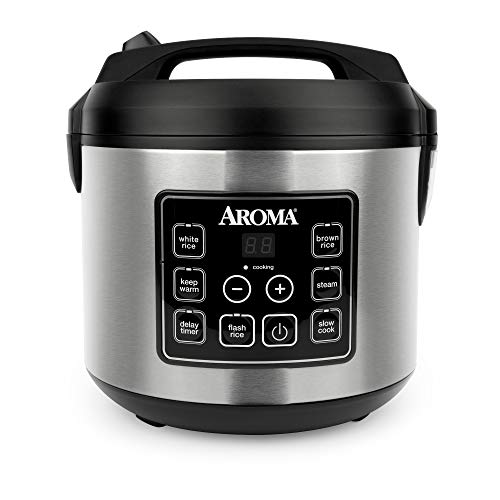
4. Aroma 20-Cup Digital Rice Cooker
A very large Aroma cooker that handles parties, potlucks and meal prep without needing a second batch. Check whether the listing states uncooked or cooked cups.
Suits: events and parties. Strengths: big capacity. Weaknesses: cooked cup rating inflates the number. Skip it if you cook small meals.


Best for family meal prep
5. Hamilton Beach 20 Cup Rice Cooker and Food Steamer
A large Hamilton Beach cooker with a steaming tray that lets you cook vegetables or fish above the rice. It suits big families who like one-pot meals.
Suits: family meal prep. Strengths: steaming for a full dinner. Weaknesses: basic rice texture. Skip it if you want a fuzzy-logic cooker.

View Hamilton Beach 20 Cup Rice Cooker and Food Steamer on Amazon
Best for flexible cooking
6. Instant Pot Duo 8 Quart
A large multicooker that cooks rice among many other dishes. It is a space-saving choice for a family that wants a single machine.
Suits: flexible cooking. Strengths: many functions in one pot. Weaknesses: not a dedicated rice cooker. Skip it if you want a pure rice machine.
View Instant Pot Duo 8 Quart on Amazon
Care and Setup
- Rinse rice in a separate bowl so the large pot stays clean, and drain it well before adding water.
- Use the right water line for your rice type.
- Fluff rice after cooking to release steam, using the paddle that comes with the cooker.
- Wash the inner pot gently and dry it before storing.
Mistakes to Avoid
- Overfilling the pot beyond the max line.
- Assuming cooked cups equal uncooked cups.
- Leaving rice on warm for too long.
- Not measuring the storage shelf first, since large cookers are tall and heavy.
Uncooked Versus Cooked Capacity Explained
Capacity labels on large rice cookers are the easiest place to be misled. A ten-cup cooker is normally rated for ten rice cooker cups of uncooked rice, and because rice roughly doubles in volume when cooked, that is a lot of food. Some makers instead state the cooked yield, which gives a larger number for a similar machine. A twenty-cup label may mean a cooker that handles about half that in uncooked rice. Always check which figure the listing uses.
Remember also that the rice cooker cup is smaller than a standard measuring cup, so the numbers do not translate directly to your kitchen cups. The manual or the inner pot will show the maximum fill level and the minimum amount the cooker is designed to cook. Exceeding the maximum line can cause boil-over and uneven cooking, and falling far below the minimum can also affect the result.
To work out the size you need, think about how much rice your family eats at a typical meal and how often you cook. A family that serves rice at most meals and likes leftovers for another day needs a bigger pot than one that eats it a few times a week. Consider peak demand, such as gatherings or meal prep. If you only host occasionally, you can cook a second batch, or use a larger machine for those times. Choose capacity based on regular use, and treat extra volume as a flexible bonus.
Making the Most of Counter and Storage Space
Large cookers are bulky and heavy, so plan for them in advance. Measure the width, depth and height, including the lid when open and any steam vent that releases upward. Check for clearance under cabinets, since steam can damage wood and finishes if the cooker sits under a low shelf. Leave space around the cooker for air and for the cord, and keep it away from the edge of the counter.
Think about where it will live. If you use it daily, a permanent spot on the counter near an outlet is convenient. If you cook rice occasionally, you may store it in a cabinet or pantry, and you will need a shelf that can handle the weight and height. Lifting a heavy cooker with a full pot is awkward, so consider storing it at a comfortable height rather than overhead.
Look at the cord length and plug position. A short cord can restrict placement, and a long cord is a hazard if it hangs over the counter edge. Avoid using extension cords unless the maker approves them, and plug the cooker into a suitable outlet. Check if the cord is detachable or retractable, which can make storage easier. Some large cookers have carry handles, which help when you move them. Finally, consider the cleaning routine and where you will wash the inner pot, which can be large and heavy.
Keep-Warm Performance for Busy Households
In a big family, rice often sits for hours between the first plate and the last. A good keep-warm function keeps the rice at an eating temperature without drying it out, but there are limits. Rice at the edges can harden or yellow over time, and food safety guidance advises against holding cooked rice at warm temperatures for very long periods. Check the manual for the recommended maximum warm time.
Some cookers have features that help, such as a thick inner pot that holds heat, an extended keep-warm mode or a setting that reduces the warm temperature. Others have a timer or an alert. A tight-fitting lid helps retain moisture, and a condensation collector prevents water from dripping back onto the rice. Fluff the rice after cooking, and stir gently during long warm periods if the manual allows.
Plan to serve rice promptly and store leftovers properly. Cool extra rice quickly by spreading it in a shallow container, refrigerate it and reheat it until it is steaming hot. Do not leave rice at room temperature for long periods. If your household eats at different times, consider a thermal server or a second smaller warmer, or cook in two batches. If you rely on the warm function every day, choose a model with a solid reputation for keeping rice moist, and read the listing for details on the warm settings.
Cooking Small and Large Batches Well
A large cooker is built for big batches, and it can struggle with small ones. When there is only a small amount of rice in a big pot, the heat sensor may misjudge the cooking, and the rice can end up unevenly cooked or scorched. Check the manual for the minimum recommended amount and follow it, rather than guessing. If you often cook small amounts, consider a second, smaller cooker for everyday use.
At the other end, avoid overfilling. Rice swells, and the pot needs space for steam and foam. Stay below the maximum line, and use the correct water line for the rice type and quantity. For brown rice and other grains, water lines and times differ, so follow the cooker’s guidance. Level the rice before starting, so it cooks at the same rate across the pot.
For very large meals, think about workflow. Rinse the rice in batches, drain it well and keep an eye on the clock. If the cooker has a delay timer, you can set it so the rice is done when dinner starts. After cooking, let the rice rest with the lid closed for a few minutes, then fluff it from the edges to the center. Keep the lid and vent clean so steam can escape properly. These small habits matter more with big batches than with small ones.
Upkeep for a Heavily Used Cooker
A cooker used daily needs routine care to stay reliable. After each use, let the pot cool and wash it with a soft sponge and mild detergent, because abrasive pads and metal utensils scratch the coating. Rinse and dry the pot completely before returning it to the base, and wipe any rice or water from the outside of the pot, since moisture on the exterior can affect heating and cause noises.
Clean the lid, the inner lid, the steam vent and the condensation tray according to the manual. These parts collect starch and moisture, and a blocked vent can cause boil-over. Wipe the heating plate and the rim of the base with a damp cloth when the unit is cool and unplugged. Keep the base dry, and never immerse it in water. Check the cord for damage, and make sure the plug fits snugly.
Inspect the inner pot regularly. A coating that peels, a pot with deep scratches or a bent pot that does not sit flat will cook poorly and may be a reason to replace it. Many makers sell replacement pots and lids, so check availability for your model. Other signs that it is time to replace the cooker include uneven cooking that persists after cleaning, a malfunctioning control panel, a cracked lid or a strong burning smell. Consider how repair costs compare with replacement before deciding.
Understanding Cup Measurements on Large Rice Cookers
Rice cooker capacity is usually printed in cups, and the unit is not the same as an American measuring cup. Many cookers use a small cup supplied in the box, which holds roughly three quarters of a standard cup of uncooked rice, and the capacity refers to uncooked rice. A cooker described as ten cups may therefore produce around twenty cups of cooked rice, depending on the grain. Check the listing and the manual for how the maker defines a cup, and use the cup that comes with the machine when you follow the water lines inside the pot. For a large family, that conversion decides whether one batch feeds everyone or you must cook twice.
- Uncooked versus cooked capacity: Check which number is stated and how the cup is defined.
- Minimum batch size: Large cookers often cook small amounts poorly, so check the lowest recommended quantity.
- Different rice types: White, brown and sushi rice take different water levels and times.
- Water lines: The inner pot is marked for each type of rice.
- Spare cup and paddle: Usually included, and worth keeping with the cooker.
Beyond Plain Rice: Multi-Function Settings for Busy Households
Many large cookers do more than rice. Settings for porridge, steaming, slow cooking and quick cook modes can save time on busy evenings, especially when you feed many people. Look at the listing to see which programs exist and how they are controlled. Steaming trays let you cook vegetables or dumplings while the rice cooks beneath, and a keep-warm function holds food at serving temperature until everyone is ready. Follow food safety guidance on how long cooked rice may sit warm, since it should not be held for long periods.
| Function | Handy for | Check |
|---|---|---|
| White and brown rice | Everyday meals | Does it have separate programs? |
| Quick cook | Last-minute dinners | Often trades texture for speed |
| Porridge or congee | Breakfast for a crowd | Note the fill limit |
| Steam tray | Vegetables, fish, buns | Is the tray included? |
| Keep warm | Staggered meal times | Follow safety advice on holding times |
Space, Weight and Cleaning With a Big Pot
Large cookers take space and weigh more when filled. Measure your counter and the cabinet height, since steam vents need clearance above. The inner pot is usually removable and may have a nonstick coating, so use the paddle provided rather than metal utensils. Wash the pot, lid and steam vent parts after use, and wipe the exterior with a damp cloth. Let everything dry before storing.
- Rinse the rice until the water is clearer, as the instructions suggest.
- Add water to the correct line for your rice type.
- Close the lid and select the program.
- Let the rice rest after cooking, then fluff it with the paddle.
- Clean the pot and lid, and dry the parts before storing.
Serving Many People Without Waste
Plan portions and store leftovers promptly in the refrigerator, following food safety guidance.
Getting Fluffy Rice From a Large Cooker Every Time
Large cookers reward a few good habits. Measure the rice with the supplied cup, level it off and rinse until the water is mostly clear, which removes surface powder and helps the grains separate. Use the water lines inside the pot or the ratio given in the manual, and adjust slightly if you prefer softer or firmer rice. After the cooker finishes, let the rice rest with the lid closed for a few minutes, then fluff gently from the edges with the paddle. Rushing this step can leave rice wet on top and firm at the bottom.
- Rinse well: Several changes of water for white rice.
- Level the pot: Make sure the inner pot is seated flat and dry on the outside.
- Use proper amounts: Stay within the minimum and maximum marks.
- Do not lift the lid mid-cycle: It disrupts steam and temperature.
- Stir in flavorings after cooking: Oils and sauces can affect the cooking if added early.
- Clean the steam vent: Residue buildup there can cause spitting.
Feeding a Crowd: Big Batches Without the Stress
Cooking rice for a large family is a logistics problem with a delicious answer. The batch must be big enough that nobody is rationed, timed so it lands with the rest of the meal, and held safely and well until the last person is served. A large cooker solves the middle of that problem completely and the rest with planning: rice cooked in one full batch rests and holds together as a single pot, instead of three saucepans at three stages of doneness competing for your attention.
Big pots behave a little differently and reward respect for their limits. Fill to the line and no further, because a large batch foams and expands more than a small one; rinse in a big bowl rather than the pot to protect its coating; and give the finished rice a proper rest and a thorough fluff from the bottom, since the bottom layer of a deep pot cooks in more moisture than the top and the fluff is what evens the whole batch out.
Leftovers at family scale are a feature to plan, not an accident to regret. A big batch deliberately cooked with tomorrow in mind gives you fried rice, lunch boxes, and a soup base with the cooking already done. Cool and refrigerate what you will not eat promptly, freeze portions flat, and the large cooker quietly becomes the household’s meal preparation engine as well as its rice maker.
How the Six Picks in This Guide Compare
With six picks on the table, the useful comparison is not which one is best in the abstract but which differences actually reach your daily life. Read the six descriptions above as a set: the Zojirushi NS-ZCC18 Neuro Fuzzy Rice Cooker and the Tiger JNP-1800 Rice Cooker represent one end of this guide’s thinking, the Cuckoo CR-1020F Rice Cooker and the Aroma 20-Cup Digital Rice Cooker sit in the middle ground where most households land, and the Hamilton Beach 20 Cup Rice Cooker and Food Steamer and the Instant Pot Duo 8 Quart answer more specific needs. The descriptions already tell you who each one suits and where each one asks you to compromise, so the work here is matching those profiles to your household rather than hunting for a single winner.
Start the comparison with the fixed facts of your situation, because they eliminate picks faster than any preference can. The space available, the route it must travel to get there, the size of your household, and the way you actually shop, cook, and store food are not opinions, and a pick that fails one of them is out however much you like its looks. Only when two or three picks survive those fixed facts do the softer questions, styling, controls, and extra features, deserve your attention, and by then the choice is usually between good options rather than between right and wrong.
Then compare the survivors on the cost of being wrong. If you are torn between the Zojirushi NS-ZCC18 Neuro Fuzzy Rice Cooker and the Instant Pot Duo 8 Quart, ask which mistake you would rather live with: the capability you might occasionally miss, or the size, complexity, or upkeep you will deal with every day. Everyday consequences should outweigh occasional ones in almost every purchase like this, which is why this guide keeps returning to your ordinary week as the test. Your biggest shop, your busiest cooking day, and your laziest Sunday are the three scenes to run each finalist through before you decide.
Finally, use the short version at the end of this guide as the tie breaker it was written to be. It compresses each pick into the household it serves best, in one line each. If one of those lines describes your home so exactly that it could have been written about you, that is your answer, and the remaining differences between the picks are details you will adapt to within a week of ownership and never think about again.
Water Ratios, Rinsing and the Habits That Decide Texture
Most disappointing rice is a water problem before it is a machine problem. Too much water gives a soft, porridge-like result no matter how good the cooker is, and too little leaves hard centers that no amount of resting fully fixes. Use the measuring cup and the water lines that belong to your cooker together, since the cup supplied with rice cookers is a specific size, and treat the marks inside the pot as the starting point for the type of rice you cook most often.
Rinsing is worth the minute it takes for most table rice. Swishing the grains in water and draining until the water runs much clearer removes loose surface starch, which is what makes cooked rice gummy and clumped. A few rinses are enough; you are washing the surface, not polishing the grain. Brown rice and other whole grains need less concern about surface starch, but a quick rinse still removes dust and any stray debris from the bag.
Resting after the cooking cycle is the step home cooks most often skip and most often need. When the cooker switches to warm, leave the lid closed for a while so the moisture evens out through the pot and the surface grains finish steaming. Then fluff gently with a paddle, lifting and turning rather than stirring hard, which breaks grains and releases starch that makes the texture heavy. Serve from the fluffed pot and close the lid again between servings.
Cooking More Than Plain Rice in the Same Pot
A rice cooker is a steady, sealed steaming environment, and it handles far more than plain rice once you understand that. Grains such as quinoa, barley, and steel cut oats cook well with adjusted water and time, mixed grain bowls come out evenly, and a steamer basket above the rice can cook vegetables, dumplings, eggs, or pieces of fish in the same cycle so a simple meal finishes together without extra pans to wash.
Seasoning works best when it respects the machine. Broth instead of water, a knob of ginger, a pandan leaf, or whole spices added to the pot flavor the rice as it cooks, and these additions cost nothing in effort. Be more careful with thick sauces, dairy, and sugary additions, which can scorch on the bottom or foam through the steam vent; add those after cooking, or choose recipes written for rice cookers that account for how the machine behaves.
Porridge, congee, and slow simmered dishes suit the cooker’s gentle heat, and many models include settings for them. Follow the water guidance for those settings rather than improvising from the plain rice marks, because porridge needs far more water and room to move. Never fill the pot as full for porridge or steaming as you would for plain rice, since bubbling and foaming need headroom to stay inside the pot.
Care of the Inner Pot, Lid and Steam Parts
The inner pot’s coating is what keeps rice releasing cleanly, and it lasts as long as you treat it gently. Wash rice in a separate bowl rather than in the pot, use the paddle supplied or wooden and silicone tools rather than metal, and wash the pot with a soft sponge. If rice has dried onto the surface, soak the pot in warm water and let time do the work instead of scrubbing, which slowly wears the coating and makes future sticking worse.
The parts above the rice need attention too. The inner lid, steam vent, and any removable condensation collector collect starchy water every cook, and left unwashed they develop stale smells that transfer to the next batch. Most of these parts lift off easily and wash in the sink; make it a habit to rinse them when you wash the pot, and let everything dry before reassembling so moisture is not sealed inside.
The exterior and the heating plate matter for even cooking. Keep the outside of the inner pot dry before it goes back in, because water droplets on the base can spit and mark the plate, and check that no stray grains are trapped between the pot and the heating surface, since a single grain can tilt the pot and cook one side less evenly. Wipe the plate only when the machine is unplugged and fully cool.
Storing Cooked Rice and Using Leftovers Well
Cooked rice is at its best fresh, but leftovers handled well are genuinely useful. Cool leftover rice promptly, refrigerate it in a sealed container, and plan to use it within a few days. Rice that sits warm for hours is a food safety risk, and the warm setting on a cooker is designed for holding freshly cooked rice for a meal, not for storing it indefinitely; follow food safety guidance and your own judgment about anything that has sat too long.
Leftover cold rice is the secret to good fried rice, because chilled, separated grains fry instead of steaming in the pan. Spread leftover rice on a tray to cool before refrigerating if you plan to fry it, break up clumps gently with your hands, and you will get the distinct grains that fresh, warm rice cannot give you. The same cold rice works well in rice salads, stuffed vegetables, and soups added near the end of cooking.
Freezing cooked rice in flat portions is a quiet convenience. Portion it while it is still slightly warm, seal it well, and freeze it flat so it stacks and thaws quickly. A sprinkle of water and a covered reheat in the microwave or steamer brings it back close to fresh, which makes weeknight meals and lunch boxes much easier than cooking a small amount from scratch each time.
Choosing Rice and Storing It at Home
The cooker can only work with the rice you give it, and rice varies more than the bags suggest. Varieties differ in how much water they absorb and how they behave when rested, and even the same variety changes slightly as it ages after harvest. When a familiar recipe suddenly cooks differently, a new bag is a likelier explanation than a failing machine, and a small water adjustment, noted on the bag or in the kitchen notebook, restores the result you expect.
Store rice dry, sealed, and away from strong smells, which grains absorb readily. A closed container keeps out pantry pests and moisture better than a folded bag, and buying in quantities your household will use within a reasonable period keeps the grain at its best. Whole grain rice, with its oily bran, is the most perishable of the family and rewards smaller bags and cooler storage, one more reason brown rice sometimes tastes tired before it is cooked at all.
Breakfast, Lunch Boxes and the Cooker’s Second Life
A rice cooker’s day need not start at dinner. Porridge and oatmeal set the night before or started first thing, eggs steamed in the basket, and congee for someone feeling fragile are the quiet second career of a good cooker. Households that discover this use the machine twice as often, and a machine used twice as often justifies a better pot, better controls, and its permanent place on the counter in a way a dinner only appliance never quite does.
For lunch boxes, the cooker solves the morning problem the night before. Rice cooked in the evening, cooled and refrigerated properly, becomes the base of the next day’s box with a topping made in minutes, and grains hold their quality through this cycle better than most cooked foods. Food safety is the discipline that makes the system work: cool promptly, refrigerate in clean containers, and reheat thoroughly or serve in dishes designed to be eaten cold.
A Step-by-Step Way to Make the Final Decision
A disciplined way to finish this decision is to work through it in a fixed order, because the order stops the exciting details from outranking the important ones. First, settle the fixed facts about rice cookers for large families: the space, the access route, the household it must serve, and the jobs it must do in an ordinary week. Write those down. Any pick that fails a fixed fact is out, and removing it early protects you from falling for a feature list attached to something that will not fit your home or your life.
Second, read the surviving listings the way a skeptic reads them. Check exactly what is included, what is sold separately, what the model name and version actually are, and whether the photograph matches the version described, because ranges like this often sell near identical variants that differ in the one detail you care about. Confirm the dimensions from the specification rather than the headline, and if a detail you need is not stated, treat it as absent rather than assuming the best, since assumptions are where most disappointing purchases begin.
Third, think through delivery, installation, and the first week before you pay. Who brings it in, what must be moved or disconnected, where the old one goes, and what you will check in the first days while returning or exchanging is still simple: these questions cost nothing now and real money later. A purchase of this size should arrive to a plan, not to a surprise, and the households that enjoy their choice longest are usually the ones that planned the boring parts as carefully as they chose the exciting one.
Finally, give the decision a night’s distance if it still feels uncertain. The right pick tends to look right again in the morning, for reasons you can state plainly: it fits, it serves the household’s real habits, and its compromises are the ones you mind least. If you cannot state why a pick is right in two sentences, the hesitation is information, and the comparison sections above will usually show you which of the six answers your situation best.
Practical Notes for Everyday Owners
Calibrate your cooker once with your usual rice and your usual water, and write the result down. Every brand of rice absorbs slightly differently, and two or three noted cooks will dial in the exact water level for the texture your household likes, after which the machine becomes almost automatic and guesswork disappears.
Keep the measuring cup that came with the cooker with the machine itself. Kitchen cups and the cooker’s cup are different sizes, and mixing them up is one of the most common reasons a reliable recipe suddenly produces wet or hard rice in a new home or after a tidy up.
If your household eats rice most days, think in terms of rhythm rather than recipes: rinse, cook, rest, fluff, serve, refrigerate the rest properly. That small routine, repeated, is what makes a modest cooker produce consistently good rice and makes an advanced cooker worth what you paid for it.
For mixed meals, put the rice on first and build the rest of the meal around its timing. The cooker’s predictable cycle and warm holding make it the anchor of the meal, and everything else, from steamed vegetables in the basket to a quick stir fry, can be timed to land when the rice has rested and been fluffed.
Keep a small notebook or a note on the phone for rice: the brand, the water level, and the result, three lines per cook. Within a month you will have a personal chart more accurate for your kitchen than any printed table, because it describes your rice, your water, and your machine rather than an average of everyone’s.
If rice is a daily food, buy the pot care items with the machine: a spare paddle, a soft sponge reserved for the pot, and a bowl for rinsing that lives beside it. Systems survive on having their tools at hand, and a rice routine with everything in reach takes five unhurried minutes from start to steaming.
Teach the household the rest and fluff routine. Most disappointing servings come from rice served the second the cycle ends, and one person who knows to wait, fluff, and close the lid again lifts the quality of every meal the cooker produces, whoever pressed the button.
Large Rice Cooker FAQ
How much rice does a ten-cup cooker make?
It usually handles about ten uncooked cups, which yields roughly twice that cooked. Check the manual for the real limits.
Is a twenty-cup cooker too big?
It can be fine for parties, but small amounts may cook unevenly. Many families choose ten cups for daily use.
Should I buy a multicooker instead?
A multicooker is flexible but may not match a rice cooker’s texture. Pick based on how often you cook rice.
Can large cookers cook small batches?
Some can, but results are better at or near the minimum line, so check the lowest recommended amount in the manual.
How do I know if a listing means cooked or uncooked cups?
Check the product description and the manual details on the listing. If the listing is unclear, ask the seller or choose a model that states it plainly.
Can I cook less rice than the minimum line?
It is not recommended, since results may be uneven. Check the manual for the lowest amount the cooker is designed to cook.
Is a larger cooker slower?
Cooking time depends on the model and the amount of rice. Larger quantities generally take longer, so follow the manual.
Should I choose a micom cooker for a large family?
It is optional. Micom models offer more control and extra programs, but a simple cooker can work well if you mostly make white rice.
How do I prevent rice from sticking to the sides?
Rinse the rice well, use the correct water line and fluff it once cooking is done. A well-maintained coating also helps.
Can a large rice cooker double as a steamer?
Some models include a steam tray or basket, and others do not. Check the listing and the manual for approved use.
How long can cooked rice stay in the cooker?
Follow the manual's warm-time limit, and refrigerate leftovers promptly. Do not leave cooked rice sitting for long periods.
Why does rice stick to the bottom of the pot?
A thin layer of sticking can be normal, especially with starchy rice, but heavy sticking usually means too little water, a worn or scratched pot coating, or rice left sitting long after cooking finished. Check your water level first, rest the rice before fluffing so it releases, and look at the pot surface; if the coating is damaged, replacement pots are available for many models.
Can I open the lid during cooking to check the rice?
It is best not to. Opening the lid releases the steam the cooker is counting on and drops the temperature, which can leave the top layer undercooked. Trust the cycle, let the rice rest with the lid closed after it finishes, and judge the result when you fluff it; adjust the water slightly on the next cook rather than peeking at this one.
How do I stop the cooker boiling over?
Boil overs usually come from cooking too much rice for the pot, too much water, or very starchy rice that has not been rinsed. Stay within the maximum line for your model, rinse the rice, and make sure the steam vent and inner lid are clean, since a partially blocked vent makes foaming worse. A tiny knob of butter or a few drops of oil in the pot also calms foaming for many grains.
Is the warm setting safe for keeping rice all day?
The warm setting holds rice at serving temperature for a meal and a reasonable stretch around it, but texture steadily dries and yellows the longer rice sits. For safety and quality, serve within a sensible window, refrigerate what is left, and do not use the cooker as overnight storage for cooked rice.
Why does my rice smell stale even in a clean pot?
The smell usually lives in the parts above the rice: the inner lid, the steam vent, and the condensation collector hold starchy water that turns stale between cooks. Wash and dry those parts, wipe the rim and the area under the lid, and run a cycle with plain water if the manual suggests it. If the smell survives a full clean, check for old grains trapped near the heating plate.
Can I cook a very small amount in a large cooker?
Very small amounts in a big pot can cook unevenly because the water spreads thin and the sensor reads the pot differently. Most models state a minimum amount in the manual; staying at or above it gives the best texture. If you regularly cook small portions, a compact cooker as a second machine often serves better than forcing a large one to work below its range.
Why does the cooker sometimes click, steam, or smell hot?
Clicks are usually the thermostat and controls doing their work, steam at the vent is the cooking process itself, and a faint warm smell is common in a new machine’s first uses as manufacturing residues burn off. What is not normal is smoke, a strong electrical smell, or steam pouring from around the lid seal, which means the lid or its parts are not seated or not clean, and the machine should be stopped and checked.
Can I cook flavored or packet rice mixes in the cooker?
Generally yes, using the water the packet directs and the plain rice setting, though mixes with butter, oils, or small pasta pieces can foam more than plain rice, so stay well within the pot’s capacity. Rinse only plain rice; mixes carry their seasoning on the grains and rinsing washes it away. Stir once when the cycle finishes to distribute the seasoning evenly through the pot.
How do I adapt when cooking at someone else’s house or with a different cooker?
Expect one learning cook. Different models run their cycles differently, measure their cups the same way but heat differently, and the rice itself may be a different brand. Cook a plain batch first if the meal allows, judge it, and adjust the water for the batch that matters. This humble approach is why experienced cooks ask about the machine before promising perfect rice.
Should I unplug the cooker between uses?
Follow the manual, but as a general habit, a cooker left on warm with the pot empty or with old rice in it is the thing to avoid. Switch off after serving, deal with the leftovers, wash the pot, and leave the machine clean and ready. A cooker treated this way is always ready to start, and never the source of the stale smell that greets you when the lid of a neglected one is lifted.
The Short Version
For top-tier big batches, the Zojirushi NS-ZCC18. For simple use, the Tiger JNP-1800. For feature-rich cooking, the Cuckoo CR-1020F. For party size, the Aroma 20-Cup. For steaming, the Hamilton Beach. For flexibility, the Instant Pot Duo 8 Quart.