A quality toaster oven toasts evenly, holds a steady temperature and has a door and racks that feel solid. The best ones can replace a full oven for small meals, so heating elements, interior size and controls matter more than the feature list on the box. A unit that preheats quickly, toasts bread evenly edge to edge and is easy to wipe clean will earn its counter space every single morning.
The six toaster ovens below include smart-heating models, air fry combinations and a compact design. We have not used these products ourselves, so confirm the interior size, rack count and footprint on the current listing before you buy, and check that your counter has the clearance the maker asks for. Hot surfaces need breathing room, and an oven tucked under a cabinet can scorch it over time.
As an Amazon Associate we earn from qualifying purchases. Links below are affiliate links, and they do not change the product information we give.
What to Look For
| Feature | Why it matters |
|---|---|
| Interior size | Check it against the pans and pizzas you really use |
| Heating | Multiple elements and convection fans promote even results |
| Controls | Clear dials or screens save effort every day |
| Cleanup | A removable crumb tray and a nonstick interior help |
In this guide
Specs at a Glance
| Toaster oven | Type | Size | Notes |
|---|---|---|---|
| Breville BOV845 | Smart countertop oven | Large class | Element IQ heating |
| Cuisinart TOB-260N1 | Convection toaster oven | Large class | Dial controls |
| Panasonic FlashXpress | Compact toaster oven | Small class | Quick-heating design |
| Ninja SP101 | Flip-up air fry oven | Compact-footprint class | Stores upright |
| Toshiba AC25CEW | Air fry combination oven | Large class | Digital controls |
| Oster Digital Convection | Convection toaster oven | Large class | French doors in some models |
The 6 Best Quality Toaster Ovens
Top pickBest for a main countertop oven
1. Breville Smart Oven Pro BOV845
A well-known smart toaster oven with a heating system that adjusts power across multiple elements. It handles toast, bagels, pizza and small roasts, and its interior is roomy enough for a family-size pizza.
Suits: a main countertop oven. Strengths: a refined heating system. Weaknesses: a larger counter footprint. Skip it if you want the smallest oven.
View Breville Smart Oven Pro BOV845 on Amazon
Best for dial lovers
2. Cuisinart TOB-260N1 Custom Classic
A large convection toaster oven and broiler from Cuisinart, with simple dial controls and enough space for a pizza or a small roast. It appeals to cooks who prefer knobs to menus.
Suits: dial lovers. Strengths: straightforward controls. Weaknesses: fewer smart features. Skip it if you want a screen.
View Cuisinart TOB-260N1 Custom Classic on Amazon
Best for quick toasting
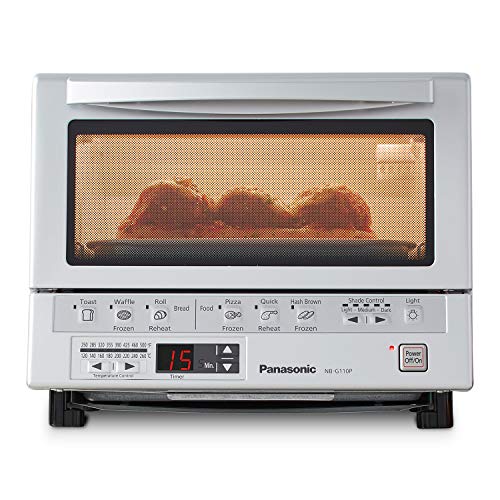
3. Panasonic FlashXpress Toaster Oven
A compact toaster oven that uses quick-heating elements to toast in short order. It suits small kitchens and everyday toast, and its size makes it easy to find a spot on the counter.
Suits: quick toasting. Strengths: a compact build and fast heat. Weaknesses: less room inside. Skip it if you bake large dishes.
Best for small counters
4. Ninja Flip Oven SP101
A digital air fry oven that flips up to stand on its side, saving counter space when not in use. It combines toasting, baking and air frying in a design that suits tight kitchens.
Suits: small counters. Strengths: a flip-up storage design. Weaknesses: a smaller capacity than a full oven. Skip it if you need a wide tray.
View Ninja Flip Oven SP101 on Amazon
Best for air fry fans
5. Toshiba Air Fry Toaster Oven AC25CEW
A large combination oven with digital controls, air frying and preset functions, from a brand with a long history in electronics. Check the listing for the exact size and accessories.
Suits: air fry fans. Strengths: presets and a big cavity. Weaknesses: the digital interface takes learning. Skip it if you prefer manual dials.
View Toshiba Air Fry Toaster Oven AC25CEW on Amazon

Best for family cooking
6. Oster Digital Convection Toaster Oven
A convection toaster oven with digital controls, offered in several variants including French door styles. It is a practical choice for people who want a larger cavity without a premium brand.
Suits: family cooking. Strengths: a large cavity and easy access. Weaknesses: variants differ by listing. Skip it if you want a very small unit.

Care and Setup
- Empty the crumb tray often to avoid smoke and odors.
- Wipe the interior after it cools.
- Leave clearance around the oven while it runs.
- Do not line the tray in a way that blocks the elements or the airflow.
Mistakes to Avoid
- Using foil that touches the heating elements.
- Ignoring the manual on pan sizes.
- Placing the oven under low cabinets.
- Cleaning with harsh abrasives.
Heating Elements and Even Toasting
Toasting bread is the hardest test of a toaster oven, because it exposes uneven heat immediately. A quality oven has elements above and below the rack, and often more than one element on each side, so heat reaches the food from several angles. Cheaper designs may have fewer elements or sit them closer to the food, which can leave pale patches and dark edges on a slice.
Look at how the listing describes the heating. Some ovens adjust power between elements during the cycle, while others rely on simple on-off control. Quartz elements heat up quickly, which suits quick toasting, but they may cycle on and off differently from metal tube elements. Neither approach is automatically better, so check owner comments for details about toasting consistency across the whole rack, not only the center.
Rack position matters as much as the elements. Middle positions give the most even results for bread, bagels and baked goods, while top positions suit broiling and browning. A deeper oven with several rack positions gives you flexibility. Preheat before baking, and give an oven a minute or two to settle if you have been cooking at a different temperature. If you notice consistent hot spots, rotating the pan halfway through a bake often evens things out. When a unit toasts unevenly out of the box, check the manual and the return period rather than assuming you can fix it by technique.
- Look for elements above and below the rack.
- Use middle rack positions for even toasting.
- Rotate pans halfway through baking.
- Check owner comments about uneven results.
Convection and Air Fry Settings Explained
Convection means a fan circulates hot air inside the cavity. It tends to shorten cooking time and promote browning, so recipes may call for a lower temperature or shorter time than a conventional oven. Many ovens let you switch the fan off for delicate baking such as cakes and custards, where moving air can dry out the surface or cause uneven rising.
Air fry modes use a stronger fan and usually a perforated basket or tray, so hot air can reach all sides of the food. The results depend on the oven’s interior size, fan strength and how much food you spread across the tray. Overloading blocks airflow and leaves food soft, so cook in single layers and in batches. A modest toaster oven air fry mode works well for fries, wings and vegetables, but it will not behave exactly like a dedicated air fryer basket.
Think about whether you will actually use these functions. If you mostly toast and reheat, a simpler oven is easier to run and clean. If you want to roast, bake small batches and air fry, convection is worth the extra control. Read the manual for guidance on pan placement, preheating and how to convert conventional recipes. Also note the noise: a convection fan produces some sound, and some people find it noticeable in a quiet kitchen.
Cookware Sizes and What Fits Inside
Interior size claims can be misleading until you compare them with the pans you own. Start by measuring your most-used baking sheet, loaf pan, casserole dish and pizza, then check the interior width, depth and height on the listing and in the manual. A “fits a 12-inch pizza” claim only helps if you also leave room for the heating elements and the door to close.
Height matters too. Tall items such as a whole chicken, a roasting pan with a lid or a tall casserole may touch the upper elements. Maker guidance usually states how far food should sit from the elements, and it is a safety point, not just a cooking one. Check the clearance between the top rack position and the elements, and avoid putting foil or parchment where it can touch them.
Compare the accessories included. A baking pan, wire rack, air fry basket and crumb tray are common, but not all ovens include all of them. Ask whether the pans are standard sizes or proprietary, since replacements and extra pans are easier to find if they follow common dimensions. Choose oven-safe cookware made of metal, glass or ceramic as the maker permits, and avoid plastic or anything not rated for the temperatures you plan to use. If you cook for a family, consider whether a larger cavity or a second appliance suits you better.
Counter Space, Clearance and Safety
A toaster oven is a heat source, and where it sits matters. Measure the counter area, including the depth for the door to open and for the cord. Many makers specify clearance at the back, sides and top, and the outer surfaces can get hot enough to damage cabinets or discolor walls. Do not push it flush against a wall, and avoid placing it below low cabinets or near curtains and paper products.
Plug the oven directly into a wall outlet rather than an extension cord or power strip, since these appliances draw significant power. Check that the circuit can handle it alongside other kitchen devices, especially if you also run a kettle or microwave on the same line. Place the oven on a stable, heat-resistant surface, and keep the cord away from hot surfaces and water.
Handle hot items carefully. Use oven mitts, pull racks out with the tool the maker provides or a sturdy utensil, and keep children away from the door, which gets hot. Never leave the oven unattended while broiling, and do not store items on top while in use. Foil should be used as the manual directs, if at all. If you notice smoke from burnt-on crumbs, a smell of burning plastic or sparking, unplug the oven and stop using it until it is checked.
Cleaning Habits and When to Replace
Cleaning determines how an oven ages. Empty the crumb tray often, wipe the interior once it has cooled, and clean the door glass with a non-abrasive cleaner. Burnt-on grease can smoke and affect flavor, so tackle spills early. Nonstick or coated interiors need soft cloths and gentle cleaners, because abrasive pads can scratch the coating. Check the manual before using any oven cleaner, since many are not safe for countertop appliances.
Wash removable pans and racks as the maker directs, and dry them thoroughly. Wipe the exterior with a damp cloth, and avoid spraying liquid directly onto controls or vents. For stubborn residue, a paste of baking soda and water on the cool interior can help. Keep the elements free of debris and never scrub them harshly.
Signs that it may be time to replace include uneven heating that cleaning cannot fix, an inaccurate temperature (check with an oven thermometer), a door that no longer closes tightly, cracked glass, frayed cords, or controls that stick or fail. If a single part such as a rack or tray is lost, check whether the maker sells replacements before buying a new oven. Consider the warranty and ease of service when choosing a replacement, and recycle the old unit where local rules require it.
Toaster Oven Terms Explained
Countertop ovens come with settings and features that are worth understanding.
- Convection fan: a fan that moves hot air around the cavity for more even cooking.
- Quartz or calrod elements: two common heating element types, described differently by makers.
- Air fry mode: a setting that combines high heat and fast air movement, as the maker describes it.
- Crumb tray: a removable tray at the bottom that catches debris.
- Rack positions: the slots where racks sit at different heights.
- Interior light: a lamp inside that lets you check food without opening the door.
- Preheat indicator: a signal that tells you the oven has reached temperature.
- Footprint: the counter space the unit occupies.
Settings and names differ across brands, so read the manual of any model you are considering.
Choosing by How You Cook
| Your cooking | What to consider | Planning note |
|---|---|---|
| Toast, bagels and reheating | Compact unit with simple controls | Check slot or rack layout |
| Small dinners and sheet-pan meals | Interior size that fits your pans | Measure pans first |
| Crispy foods without deep frying | Convection or air fry mode | Read the maker’s guidance |
| Baking small batches | Even heat and a reliable thermostat | Use an oven thermometer |
| Cooking for a family | Large capacity unit | Check counter and cabinet clearance |
Many people buy a toaster oven to avoid heating a full oven. Think about the jobs you do most and choose a size that handles them comfortably.
A Pre-Purchase Space and Pan Checklist
- Measure the counter space, including the height under cabinets.
- Check the clearance the maker requires on the sides, back and top.
- Measure your favorite baking pans and compare them with the interior size.
- Look at the door swing, and check there is room to open it fully.
- Check the cord length and outlet location.
- Consider the weight and where you will store accessories.
- Read about the warranty and support.
A few minutes with a tape measure prevents the frustration of an oven that will not fit or that cannot take your pans.
Reading a Listing Closely
Look at the interior dimensions and rack arrangements, and check what the maker says about the size of pizza or tray the unit takes. See the list of functions, and read how the controls work, whether knobs or a digital display. Check which accessories come in the box.
Read about the exterior finish, since stainless surfaces get hot. Look for details on the crumb tray, door glass and cleaning access. Check the maker’s wattage and make sure your outlet can handle it.
Heat, Placement and Safety
Toaster ovens get hot on the outside. Place the unit on a stable, heat-resistant surface with clearance on all sides, away from curtains, paper and cabinets. Do not place items on top unless the maker allows it. Plug the oven directly into a wall outlet and avoid extension cords.
Never leave the oven unattended while cooking, and keep the crumb tray clean to reduce the chance of burning crumbs. Use oven mitts and take care when opening the door. If the cord is damaged, the unit sparks or smells of burning, unplug it and contact the maker.
Getting the Most From a Small Oven
A compact oven heats quickly, but its small size means food sits close to the elements. Use the middle rack for most jobs, and rotate trays partway through for even browning. Choose pans that leave a gap of space around them, and use shallow dishes for faster cooking.
Reduce temperatures or times slightly if a recipe was written for a full-size oven, and check progress early. Use the oven’s interior light to watch food rather than opening the door. For crisp foods, spread items in a single layer with room for hot air to circulate.
Keep a thermometer inside the oven for a few cooks to see how closely the dial matches reality, since small ovens can vary. Write down the time and temperature that give the best result for your favorite foods, so you can repeat them. Treat the first week as a learning period.
More on Cleaning Habits and When to Replace
Unplug and let the oven cool before cleaning. Empty the crumb tray often, wipe the interior with a soft cloth and follow the maker’s care instructions for racks and trays. Avoid harsh abrasives that could damage coatings. Replace the oven if heating becomes uneven, the door no longer closes properly or the controls fail.
Choosing a quality toaster oven With Your Eyes Open
The shortlist above gives you six starting points, but the right quality toaster oven is the one that fits your space, your routine and your patience for upkeep. This section slows the decision down and works through it in the order experienced buyers use: how you will actually use the appliance, whether it fits where it has to live, what it asks of you week to week, and how to tell a well-matched model from a merely impressive listing. None of that requires insider knowledge. It requires being honest about your own habits before you spend anything.
Start with the week you actually live
Write down, in plain words, what an ordinary week looks like for this appliance. How many people are you serving, how often will it run, and what is the biggest, most demanding job you will ask of it in a normal month rather than on a holiday? A quality toaster oven that is perfect for the biggest job of the year can be clumsy, slow to set up or expensive to run for the small jobs that make up most of the year. The picks above are described honestly in terms of who they suit, so match those descriptions to your ordinary week first and let the special occasions come second.
It also helps to name the frustration you are trying to escape. If your current setup is too small, too slow, too loud, too fiddly to clean or too unreliable, that frustration is your best buying criterion, because it tells you exactly what the replacement must fix. Buyers who shop from a clear frustration usually end up satisfied. Buyers who shop from a feature list often end up with an appliance that does many things they never asked for and still leaves the original problem untouched.
Fit, placement and the unglamorous measurements
Measure the space twice and write the numbers down, including the awkward ones: doorways the appliance must pass through, the depth once doors or handles are counted, and the clearance around it that the manual will ask for. Check the supply it needs as well, whether that is an outlet within reach, a fuel connection, ventilation or simply a level, heat-safe surface. Most returns and most installation headaches trace back to a measurement nobody took. Ten minutes with a tape measure is the cheapest insurance in the whole purchase.
Then stand in the space and act out using it. Where will you stand, where will hot or heavy things be set down, and who else needs to move through the room while it is running? A quality toaster oven lives in a working room, not in a photograph, and the layout questions are far easier to answer before delivery than after. If the honest answer is that the space fights the appliance, a smaller or differently shaped pick from the list above will serve you better than the largest one forced into place.
Running costs and upkeep are part of the price
The purchase is the beginning of the spending, not the end of it. Fuel, filters, replacement parts, accessories and the cleaning products a surface prefers all add up across years of ownership, and they differ more between models than most listings admit. As you compare the picks above, ask what each one will need from you every month and every year, and whether those needs are easy to meet where you live. An appliance whose consumables are simple to find locally is a calmer thing to own than one that depends on a part you have to hunt for.
Upkeep is also time. Some designs wipe clean in a minute and forgive neglect; others reward careful cleaning and punish shortcuts with stains, smells or worn finishes. Neither approach is wrong, but they suit different people. Be honest about which owner you are on a tired weekday evening, because the quality toaster oven you will still be happy with in its third year is the one whose care routine you never started resenting.
Build quality shows itself in the parts you touch every day: hinges that close without a wobble, dials and buttons that respond the same way every time, handles fixed firmly enough that they never work loose, and surfaces that clean without special products or ceremony. When you compare the picks above, give weight to those everyday details in the descriptions. They are a better guide to living with an appliance for years than any single headline feature.
Support matters as much as construction. Before you buy, check that the brand publishes a real manual you can download, that spare parts and accessories for the model are easy to find, and that warranty terms are written plainly enough to understand without a lawyer. An appliance you can maintain and repair is a different long-term proposition from one that has to be replaced the first time a small part fails, and that difference rarely appears in a product title.
It also helps to buy for the household you actually have. The largest, most feature-heavy model in a category is often the one that fits worst, costs the most to run and spends its life half empty or half used. The descriptions above note honestly who each pick suits and who should skip it; take those notes seriously, because matching the appliance to your routine is most of what satisfaction means a year later.
The Six Picks, Compared Side by Side in Words
Tables are good at specifications and poor at judgement, so here is the same shortlist talked through the way a knowledgeable friend would. Each pick below is summarised using only what this guide already says about it, and each summary ends with the buyer it fits best. Read the whole set before you decide, because the differences between these six are mostly about fit and emphasis rather than a simple ladder from worst to best.
Breville Smart Oven Pro BOV845
A well-known smart toaster oven with a heating system that adjusts power across multiple elements. It handles toast, bagels, pizza and small roasts, and its interior is roomy enough for a family-size pizza. As this guide puts it, it suits a main countertop oven. In practical terms, that makes this pick the natural candidate for the buyer who wants the most rounded starting point and would rather decide by fit than by novelty. If that description sounds like you, this is where to spend your closest reading; if it does not, the honest weaknesses noted above are doing you a favour, and one of the neighbouring picks will almost certainly match your routine better.
Cuisinart TOB-260N1 Custom Classic
A large convection toaster oven and broiler from Cuisinart, with simple dial controls and enough space for a pizza or a small roast. It appeals to cooks who prefer knobs to menus. As this guide puts it, it suits dial lovers. In practical terms, that makes this pick the natural candidate for the buyer who values a familiar, straightforward design and an easy setup over extra features. If that description sounds like you, this is where to spend your closest reading; if it does not, the honest weaknesses noted above are doing you a favour, and one of the neighbouring picks will almost certainly match your routine better.
Panasonic FlashXpress Toaster Oven
A compact toaster oven that uses quick-heating elements to toast in short order. It suits small kitchens and everyday toast, and its size makes it easy to find a spot on the counter. As this guide puts it, it suits quick toasting. In practical terms, that makes this pick the natural candidate for the buyer whose needs are narrower and who benefits most from a focused, simpler option. If that description sounds like you, this is where to spend your closest reading; if it does not, the honest weaknesses noted above are doing you a favour, and one of the neighbouring picks will almost certainly match your routine better.
Ninja Flip Oven SP101
A digital air fry oven that flips up to stand on its side, saving counter space when not in use. It combines toasting, baking and air frying in a design that suits tight kitchens. As this guide puts it, it suits small counters. In practical terms, that makes this pick the natural candidate for the buyer who wants a balance of size, control and everyday convenience in the middle of the range. If that description sounds like you, this is where to spend your closest reading; if it does not, the honest weaknesses noted above are doing you a favour, and one of the neighbouring picks will almost certainly match your routine better.
Toshiba Air Fry Toaster Oven AC25CEW
A large combination oven with digital controls, air frying and preset functions, from a brand with a long history in electronics. Check the listing for the exact size and accessories. As this guide puts it, it suits air fry fans. In practical terms, that makes this pick the natural candidate for the buyer who prefers a traditional approach and proven simplicity to the newest design ideas. If that description sounds like you, this is where to spend your closest reading; if it does not, the honest weaknesses noted above are doing you a favour, and one of the neighbouring picks will almost certainly match your routine better.
Oster Digital Convection Toaster Oven
A convection toaster oven with digital controls, offered in several variants including French door styles. It is a practical choice for people who want a larger cavity without a premium brand. As this guide puts it, it suits family cooking. In practical terms, that makes this pick the natural candidate for the buyer with the heaviest or most specialised job on the list, who needs the option built for it. If that description sounds like you, this is where to spend your closest reading; if it does not, the honest weaknesses noted above are doing you a favour, and one of the neighbouring picks will almost certainly match your routine better.
Notice what this comparison does not do: it does not crown a single winner for everyone. That is deliberate. The six picks were chosen because they serve six slightly different households well, and the most useful thing a guide can do is help you recognise which household is yours. If two picks still feel tied after this read-through, decide on the practical grounds covered earlier: fit in your space, ease of cleaning, and how simply each one can be maintained and supported where you live.
Getting the Most From It, Day to Day
The first week sets the pattern
Read the manual before the first use, not after the first problem. Manuals for appliances like a quality toaster oven are short on entertainment and long on the few warnings that genuinely matter, and ten minutes with one will tell you the clearances, the cleaning products to avoid and the small checks to make before each use. Keep the manual somewhere you can find it again, along with a note of the model name exactly as it appears on the appliance itself, because that is the information every spare part, accessory and support conversation will start with.
Start with simple jobs while you learn the appliance’s character. Every quality toaster oven has its own habits: how quickly it responds, where its hot or cold spots are, which settings you will actually use and which you will ignore. A few easy, low-stakes sessions teach you those habits without an audience or a deadline. By the time you attempt the ambitious job, you will be adjusting from experience rather than guessing, and the results will show it.
Cleaning little and often beats cleaning rarely and hard
Almost every care problem with an appliance like this begins as a small one that was left alone. Wipe spills while they are fresh and the surface is safe to touch, empty and wash the removable parts before residue has a chance to harden or sour, and let everything dry fully before it is put away or closed up. Stored damp, parts and interiors develop smells that are far harder to remove than the original mess was. Stored clean and dry, the same appliance greets you ready for work.
Match your cleaning products to the surfaces you actually have, and be suspicious of anything abrasive near coated, enamelled or polished finishes. Warm water, a soft cloth and ordinary washing-up liquid handle the great majority of everyday cleaning, and they never strip a finish or leave a residue that affects the next use. Save stronger products for the specific problems the manual names, used exactly as it describes, and never mix cleaning chemicals together in search of a stronger effect.
Storing it so it stays ready
Where a quality toaster oven waits between uses shapes how long it lasts. It wants a dry place, out of direct sun and away from anything that can fall on it, leak onto it or be stacked on top of it. Cords should be looped loosely rather than wound tightly or left dangling where they can be caught. If the appliance will sit unused for a long stretch, clean it thoroughly first, check it over before you put it away, and check it again before you rely on it when it comes back out. Appliances rarely fail in storage; they fail from being stored dirty, damp or damaged and then trusted without a look.
When Something Seems Wrong
Most problems announce themselves early and quietly: a new sound, a smell that was not there before, a result that is suddenly worse than it was last month, or a control that feels different under your hand. Treat those changes as information rather than annoyances. Stop, let the appliance cool or settle as its design requires, and work through the simple causes first: supply, placement, cleanliness and whether anything has been reassembled slightly wrong after cleaning. A remarkable share of faults are one of those four wearing a disguise.
Know where your competence ends. Anything involving gas fittings, internal electrical work, sealed systems or safety devices belongs to a qualified professional, and the manual will usually say so in plain language. There is no saving in a repair that leaves an appliance unsafe, and no embarrassment in calling for help with the parts of a machine that were never meant to be opened at home. Keep receipts and a note of any work done; a simple record makes warranty conversations and future servicing far easier.
One more habit separates satisfied owners from frustrated ones: keep a few honest notes. After the first several uses of your quality toaster oven, jot down what worked, what took longer than expected and what you would do differently. Appliances reward familiarity, and familiarity fades between uses that are weeks apart. A short note on the inside of a cupboard door or in a phone turns your own experience into a manual written for exactly your kitchen, your ingredients and your schedule, which no manufacturer can write for you.
Think, too, about who else will use this appliance. A quality toaster oven that only one person in the household understands is a fragile arrangement. Show anyone who will use it the basic routine: how it starts, what never to do, how it should be left when finished and where the manual lives. Five minutes of showing beats a season of small misunderstandings, and it protects the appliance from the well-meant mistakes that cause a surprising share of damage and disappointing results.
Quality Toaster Oven FAQ
Can a toaster oven replace a full oven?
For small meals, yes. For big roasts or several dishes at once, a full oven still wins.
What does convection do?
A fan moves hot air, which helps food cook faster and more evenly.
Do air fry ovens work like air fryers?
They use a similar fan, but results depend on the tray, the cavity size and the food.
How big should the interior be?
If you cook pizzas, confirm that the listing mentions a pizza size that matches yours, and check how many racks and pan sizes the maker includes in the box.
How do I check if my toaster oven temperature is accurate?
Place an oven thermometer on the rack, set a temperature, and compare readings after preheating. Small differences are common, so adjust your settings or timing to match what the thermometer shows.
Can I put foil in a toaster oven?
Some makers allow it if it does not touch the elements or block airflow. Read the manual first, and never let foil contact heating elements.
Why does my toaster oven smoke?
Burnt crumbs, grease buildup or food too close to the elements are common causes. Unplug it, let it cool and clean the interior and crumb tray before the next use.
Is a digital or dial toaster oven better?
Dials are simple and quick, while digital controls offer more precise settings and presets. Choose based on whether you value simplicity or detailed control.
Can I bake a cake in a toaster oven?
Often yes, if the pan fits and you follow the maker's guidance on rack position and temperature. Turn off convection if the recipe is delicate, and rotate the pan if the top browns unevenly.
How long should I preheat?
Follow the manual or the preheat signal on the oven. Some ovens heat quickly, but a full preheat helps with baking and consistent results.
Is it safe to leave the toaster oven plugged in?
Many people do, but you can unplug it when not in use as a precaution. Make sure it is off and cool, and keep the cord clear of heat.
How long should a quality toaster oven last?
There is no honest single answer, because lifespan follows use and care far more than it follows the badge on the front. An appliance that is cleaned regularly, stored properly, used within the limits its manual describes and repaired promptly when small faults appear will outlast a neglected one by years. When you compare picks, treat build quality, available spare parts and clear support as lifespan features, because in practice that is exactly what they are.
What should I check before I order?
Confirm the measurements of your space against the listing, the supply the appliance needs, what is and is not included in the box, and the returns process if it arrives unsuitable. Photograph your space and keep the listing details until the appliance is installed and working. Most disappointment in this category is not about performance at all; it is about a size, a connection or an included accessory that was assumed rather than checked.
Is the most expensive pick always the best one?
No. Higher prices usually buy size, extra features, heavier construction or a quieter, more refined experience, and only some of those will matter to you. The best value in this list is the pick whose strengths line up with your ordinary week. Spending more on capacity or features you will rarely use is not buying quality; it is buying unused potential, and the guides above note plainly where a simpler pick serves just as well.
What should I do on the first day it arrives?
Unpack it where you have room, check it over for damage before anything is thrown away, and keep the packaging until you are sure it is staying. Read the manual, wash or wipe the parts the manual tells you to prepare, and run the simplest possible first job to learn how it behaves. Note the model name and keep the receipt with the manual. That unglamorous first hour prevents most of the problems owners meet later.
How often does a quality toaster oven need cleaning?
Light cleaning belongs after every use, while residues are fresh and easy to remove; deeper cleaning belongs whenever results, smells or sounds start to change, and before any long period in storage. Exact intervals in the manual outrank any general advice, including this. The pattern that works for most owners is simple: little and often, with stronger cleaning reserved for the specific problems the manual describes.
Can I buy accessories later, or do I need them now?
Start with what the appliance includes and live with it briefly before adding anything. A short period of real use tells you which accessories would solve an actual problem and which would only fill a drawer or a shelf. When you do buy, match accessories to the exact model name, because near-enough fits are a common source of disappointment, and keep the same rule as with the appliance itself: buy for your routine, not for an imaginary one.
When is it worth repairing rather than replacing?
Repair makes sense when the fault is specific, the rest of the appliance is sound, parts are available and the work can be done safely by you or at sensible cost by a professional. Replacement makes sense when faults multiply, when a safety-related part is involved and cannot be put right, or when the appliance no longer fits how you live. Anything involving gas, sealed systems or internal electrics belongs to a professional either way.
Where should I keep the manual and receipts?
Together, in one predictable place, ideally with a photograph of the model label stored on your phone as a backup. That small habit turns every future question about parts, accessories, warranty or servicing from an excavation into a two-minute job. It also helps the next owner if the appliance is ever passed on, which is a kindness that costs you nothing.
The Short Version
For a main oven, the Breville BOV845. For dial controls, the Cuisinart TOB-260N1. For quick toast, the Panasonic FlashXpress. For tight counters, the Ninja SP101. For air fry and presets, the Toshiba AC25CEW. For a roomy cavity, the Oster Digital Convection.