When people search for propane gas cooktops, many want something portable: a tabletop or freestanding burner that runs on propane cylinders and can cook anywhere. These stoves serve camp kitchens, tailgates, outdoor parties, backyard canning, big-batch boils and emergency cooking when the power is out. They differ from built-in cooktops in that they connect to a propane cylinder and need no installation.
The six stoves below cover single-burner, two-burner and three-burner designs from camping and outdoor cooking brands. We have not used these products ourselves. Burner output, wind guards, regulators, hose lengths and cylinder compatibility vary by listing, so confirm each detail on the current listing before buying. Use outdoor stoves only in open, well-ventilated areas.
As an Amazon Associate we earn from qualifying purchases. Links below are affiliate links, and they do not change the product information we give.
What to Look For
| Feature | Why it matters |
|---|---|
| Burner count | One suits boils and canning; two or three suit full camp meals |
| Wind protection | Wind panels keep the flame steady outdoors |
| Fuel source | Small cylinders are portable; larger tanks need a hose and regulator |
| Stand or tabletop | Freestanding legs avoid bending; tabletop models pack smaller |
| Control | Adjustable valves help you simmer, not only boil |
In this guide
Specs at a Glance
| Stove | Burners | Fuel | Notes |
|---|---|---|---|
| Camp Chef Everest 2X | Two | Propane cylinder | Regulated, with a wind panel feature |
| Coleman Triton+ | Two | Propane cylinder | Foldable design with wind guards |
| Gas One GS-3400P | One | Propane or butane | Dual-fuel portable stove |
| Eureka Ignite Plus | Two | Propane cylinder | Compact two-burner design |
| Coleman Classic Propane Stove | Two | Propane cylinder | Classic suitcase style |
| Bayou Classic outdoor cooker | One | Propane tank | High-output cooker for pots |
The 6 Best Propane Gas Cooktops

Top pickBest for camp and tailgate cooking
1. Camp Chef Everest 2X Two-Burner Stove
A two-burner portable stove with regulated burners for steadier flames in changing conditions. It is a favorite for camp kitchens and tailgates.
Suits: camp and tailgate cooking. Strengths: regulated, even output. Weaknesses: bulky to pack. Skip it if you only need a tiny stove.

Best for car campers
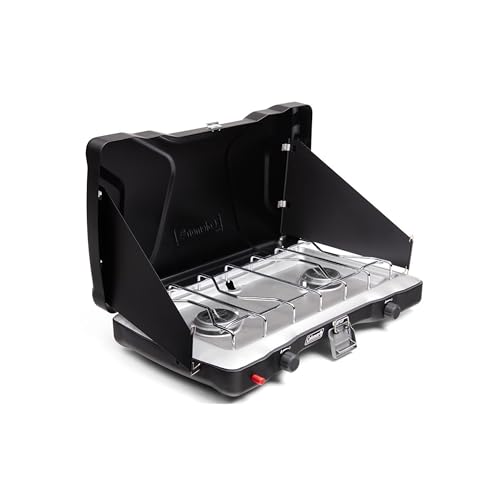
2. Coleman Triton+ Propane Stove
A two-burner stove from a classic outdoor brand, with a foldable design and wind guards. It aims for easy setup and quick packing.
Suits: car campers. Strengths: a familiar brand and simple setup. Weaknesses: wind can still affect the flame. Skip it if you need high-output burners.

Best for flexible fuel choices
3. Gas One GS-3400P Dual Fuel Portable Stove
A single-burner portable stove that accepts propane or butane, so you can use whichever fuel you can find. A flexible backup for emergencies or small trips.
Suits: flexible fuel choices. Strengths: compact and dual fuel. Weaknesses: one burner only. Skip it if you cook for crowds.
View Gas One GS-3400P on Amazon
Best for small camp groups
4. Eureka Ignite Plus Two-Burner Stove
A compact two-burner stove with independent controls and a carry-friendly shape. It appeals to campers who value balanced size and simmering control.
Suits: small camp groups. Strengths: a compact two-burner layout. Weaknesses: a smaller cooking area. Skip it if you use very large pots.
View Eureka Ignite Plus on Amazon

Best for traditional camping
5. Coleman Classic Propane Camp Stove
The suitcase-style two-burner stove that many people remember from family camping trips. It folds into a case and runs on small propane cylinders.
Suits: traditional camping. Strengths: a simple, well-known design. Weaknesses: basic wind protection. Skip it if you want modern regulated burners.


Best for boils, fry pots and canning
6. Bayou Classic Outdoor Propane Cooker
A single high-output burner on a stand, intended for large pots such as stockpots, boiling kettles and canning pots. It is meant for outdoor cooking where indoor heat or smoke would be a problem.
Suits: boils, fry pots and canning. Strengths: serious heat for big pots. Weaknesses: not a portable backpack-style stove. Skip it if you need fine simmering.

Care and Setup
- Check hoses and connections for leaks with soapy water before each trip.
- Let burners cool, then wipe away spills and grease.
- Store cylinders upright, outdoors and away from heat.
- Use a stable, level surface that is clear of anything flammable.
- Test the stove at home before a trip so you know how it behaves.
Mistakes to Avoid
- Cooking inside a tent, vehicle or enclosed space.
- Using an oversized pot on a small burner.
- Ignoring wind, which can waste fuel.
- Connecting hoses without checking for damage.
How Burner Output Affects Real Cooking
Propane stoves are often compared by how hot they can run, usually listed in BTU per hour. A higher number means the burner can deliver more heat, which helps with boiling a large pot of water, heating a big skillet or holding a stockpot at a vigorous boil. It does not automatically mean the stove is better. A very powerful burner can scorch food at low settings if it cannot turn down to a gentle flame.
When you compare models, look at both ends of the range. A burner for camp breakfasts needs fine control for eggs, pancakes and simmering sauces. A burner for boils, fry pots and canning needs steady heat for a heavy load. Two-burner camp stoves usually aim for a middle ground, while single high-output cookers lean toward large pots and are less suited to delicate food.
Regulated burners, which some listings describe, keep output steadier as the cylinder empties or the weather cools. That tends to give more predictable simmering. Without regulation, flame strength can drop as pressure falls, so you may notice weaker heat late in a cylinder.
- Check each burner’s stated output on the product listing.
- Look for an adjustable valve with a smooth low setting.
- Match the burner size to the pots you plan to use.
- Remember that output claims are maximums, not everyday performance.
If you cook for a group, do the math on how many pots you need at once. Two burners cover a pot and a pan, while a single burner will make you cook in stages.
Propane Cylinders, Hoses and Regulators
The fuel system is the part of a propane stove that most deserves your attention. Small disposable cylinders thread directly onto many camp stoves and are easy to carry. Larger refillable tanks last longer and cost less per hour of cooking, but they need a hose and regulator and are heavier to move. Some stoves are designed for one approach and some accept both, so check the product listing and manual before assuming a cylinder or hose will fit.
The regulator controls the pressure that reaches the burner, and it must match the stove. A hose that fits is not necessarily the right hose. Use only parts approved by the stove maker, and avoid improvising connections. Look at hoses and fittings before each trip for cracks, stiffness or damage, and replace them if anything looks worn.
Some points to keep in mind:
- Know how your stove connects: direct thread, adapter hose or high-pressure line.
- Learn how to shut off the cylinder valve first and burn off the remaining gas before disconnecting.
- Store cylinders upright, outdoors, in a ventilated spot away from heat sources and out of vehicles that become hot.
- Do not leave a cylinder connected to a stove during long transport.
Refilling, exchanging and traveling with propane have local and carrier rules, so check them before your trip. If you are unsure about a connection, ask the retailer or a qualified person.
Wind Protection and Fuel Efficiency
Wind is the quiet enemy of outdoor cooking. A breeze can push the flame sideways, cool the pot and make meals take longer, which burns more fuel for the same result. Stoves with built-in wind panels or lids that form a three-sided shield help considerably, but they do not solve every situation.
You can improve efficiency in simple ways. Choose a pot with a lid and a base that matches the burner size. A wide pot over a small flame wastes heat, and a tiny pot on a big burner loses flame around the edges. Heat-exchanger pots, if you own one, can make boiling more efficient, but they are not required. Put the stove in the lee of a vehicle or a natural windbreak, but keep it clear of anything that can catch fire and never use it inside a tent or enclosed space.
Take care with improvised wind blocks. Do not wrap foil tightly around a burner or a cylinder, since trapped heat can be dangerous. If the stove maker sells approved windscreens, use those. Otherwise rely on the stove’s own panels and a sensible location.
Planning your menu around the stove helps too. One-pot meals, pre-chopped ingredients and lids on every pot reduce cooking time and fuel use. If you often cook in cold weather, bring extra fuel, since cold cylinders deliver less pressure and cook more slowly.
Matching the Stove to the Trip
The right stove depends less on the label and more on how you will use it. A car camper who cooks full meals for several people has different needs from someone who wants a backup stove for power outages. Start with the number of people, the kind of meals and how far you will carry the stove.
For family camp trips, a two-burner suitcase or tabletop style works well, because it lets you cook a main dish and a side together. It needs a stable table or a sturdy stand and enough packing room. For small groups or quick trips, a compact two-burner can save space. For single-pot work such as boils, large batches or canning, a high-output single burner on legs is usually a better match than a camping stove.
Consider flexibility. Stoves that accept different fuels or cylinder types may help in a pinch, but fuel choices vary in availability and performance, so verify what the stove supports. If you plan to use a griddle or a large pan, check that the grate and burner spacing allow it.
- Car camping: prioritize burner count, wind panels and a stable base.
- Tailgating: look for a quick setup and a sturdy carry case.
- Emergency use: plan fuel storage and a safe outdoor spot in advance.
- Canning and boils: pick a stand rated for heavy pots.
Always confirm the maximum pot weight and size from the maker.
Outdoor Safety Checks Before Every Cook
A propane stove is simple, but the consequences of carelessness are serious, so build a short checklist you follow each time. Before lighting, set the stove on a flat, stable surface, clear away paper, dry grass, cloth and other flammables, and make sure the burners are clean. Connect the fuel according to the manual and check the connections for leaks with soapy water, watching for bubbles rather than relying on smell.
When lighting, open the valve slowly and ignite promptly, with the lid open if the stove has one. If the flame does not light, shut off the valve, wait for the gas to clear and try again. If you smell gas, turn off the supply and move away from ignition sources. Keep children and pets away from the cooking area and never leave a lit stove unattended.
Outdoor stoves must stay outdoors. Carbon monoxide is odorless, and cooking in a tent, a vehicle or a garage with the door shut can be deadly. Keep ventilation open even in covered outdoor spaces such as porches or awnings, and follow every warning in the manual.
After cooking, shut off the valve, let the stove cool and clean spills and grease so they do not cause flare-ups next time. Keep a fire extinguisher or a bucket of water handy where it is appropriate, and learn the right type for grease fires. If any part of the stove or hose looks damaged, stop using it until it is replaced.
A Packing Checklist for Cooking on a Propane Stove
Having the right extras on hand matters as much as the stove itself. Before an outing or a backyard cook, run through this list.
- A spare cylinder or a way to check how much fuel is left in the one you have.
- A windscreen or a sheltered spot, since gusts can pull heat away from a pot.
- A stable, level surface that suits the weight of the stove and a full pot.
- Pots with flat bases that match the burner size.
- A lighter or matches, in case the built-in igniter fails.
- The maker’s manual, or a photo of the safety page on your phone.
Treat this as a baseline, then add anything specific to your trip or recipe.
Two-Burner Compared With Single-Burner Setups
People often ask whether the second burner is worth the space. The table below shows how the two layouts differ in practice.
| Question | Single burner | Two burners |
|---|---|---|
| Carrying | Lighter and smaller | Bulkier but more capable |
| Cooking style | One pot at a time | Main dish plus a side |
| Group size | One or two people | Families and groups |
| Fuel use | Lower overall | Higher when both are lit |
| Storage | Fits in a small bin | Needs a dedicated spot |
Decide based on the meals you plan, not on the number of burners alone.
Reading a Stove Listing Carefully
Look for the burner output, usually listed in British thermal units per hour, and compare it across models rather than treating one figure in isolation. Check the dimensions folded and open, the weight and the type of regulator or hose supplied. Note which cylinder connection the stove uses, as sizes and fittings differ between products and regions. Scan the list of included parts for a regulator, a carry case or a grate. If the listing says nothing about wind protection or ignition type, look at the manual on the maker’s website before you buy.
Decision Guide by Outing Type
- Car camping with a family: a larger two-burner stove with sturdy legs or a table fit.
- Tailgating: look for a stove that packs flat and sets up quickly.
- Backyard cooking: a heavy-duty cooker handles large pots and stands firmly.
- Emergency kit: pick a simple model and store fuel according to official guidance.
Terms Worth Knowing
- Regulator: the part that controls the pressure of gas reaching the burner.
- Piezo igniter: a push-button spark device that lights the burner.
- Windscreen: a panel that shields the flame from drafts.
- Simmer control: a valve range that allows low, steady heat.
- Cylinder fitting: the connection point between the fuel container and the stove.
Fuel Handling and When to Seek Professional Help
Propane is a pressurized fuel, so follow the maker’s instructions and local official guidance on storing, transporting and connecting cylinders. Use these stoves outdoors in open air only, unless the maker states otherwise. If you notice a leak, a damaged hose or a regulator that behaves oddly, stop using the stove at once and contact the maker or a licensed gas professional. Never attempt to repair gas components yourself, and keep cylinders away from heat and open flames.
Cooking Habits That Suit a Portable Stove
A portable stove rewards simple, one-pot meals. Plan menus around pasta, rice, stews, eggs and griddle dishes, and prepare ingredients at home so you chop less outdoors. Use a lid to hold heat and save fuel, and choose pans that sit flat and stay within the burner footprint. Keep wind in mind when you place the stove, turning it so the flame is sheltered but never boxed in. Let the cooker cool before packing it away, wipe any spills while they are fresh, and store fuel as the maker and local guidance direct. A tidy routine makes every outing easier and keeps the equipment working for years.
Choosing a propane gas cooktop With Your Eyes Open
The shortlist above gives you six starting points, but the right propane gas cooktop is the one that fits your space, your routine and your patience for upkeep. This section slows the decision down and works through it in the order experienced buyers use: how you will actually use the appliance, whether it fits where it has to live, what it asks of you week to week, and how to tell a well-matched model from a merely impressive listing. None of that requires insider knowledge. It requires being honest about your own habits before you spend anything.
Start with the week you actually live
Write down, in plain words, what an ordinary week looks like for this appliance. How many people are you serving, how often will it run, and what is the biggest, most demanding job you will ask of it in a normal month rather than on a holiday? A propane gas cooktop that is perfect for the biggest job of the year can be clumsy, slow to set up or expensive to run for the small jobs that make up most of the year. The picks above are described honestly in terms of who they suit, so match those descriptions to your ordinary week first and let the special occasions come second.
It also helps to name the frustration you are trying to escape. If your current setup is too small, too slow, too loud, too fiddly to clean or too unreliable, that frustration is your best buying criterion, because it tells you exactly what the replacement must fix. Buyers who shop from a clear frustration usually end up satisfied. Buyers who shop from a feature list often end up with an appliance that does many things they never asked for and still leaves the original problem untouched.
Fit, placement and the unglamorous measurements
Measure the space twice and write the numbers down, including the awkward ones: doorways the appliance must pass through, the depth once doors or handles are counted, and the clearance around it that the manual will ask for. Check the supply it needs as well, whether that is an outlet within reach, a fuel connection, ventilation or simply a level, heat-safe surface. Most returns and most installation headaches trace back to a measurement nobody took. Ten minutes with a tape measure is the cheapest insurance in the whole purchase.
Then stand in the space and act out using it. Where will you stand, where will hot or heavy things be set down, and who else needs to move through the room while it is running? A propane gas cooktop lives in a working room, not in a photograph, and the layout questions are far easier to answer before delivery than after. If the honest answer is that the space fights the appliance, a smaller or differently shaped pick from the list above will serve you better than the largest one forced into place.
Running costs and upkeep are part of the price
The purchase is the beginning of the spending, not the end of it. Fuel, filters, replacement parts, accessories and the cleaning products a surface prefers all add up across years of ownership, and they differ more between models than most listings admit. As you compare the picks above, ask what each one will need from you every month and every year, and whether those needs are easy to meet where you live. An appliance whose consumables are simple to find locally is a calmer thing to own than one that depends on a part you have to hunt for.
Upkeep is also time. Some designs wipe clean in a minute and forgive neglect; others reward careful cleaning and punish shortcuts with stains, smells or worn finishes. Neither approach is wrong, but they suit different people. Be honest about which owner you are on a tired weekday evening, because the propane gas cooktop you will still be happy with in its third year is the one whose care routine you never started resenting.
Because this is fuel-burning equipment, the ownership habits that matter most are the unglamorous ones: checking connections before every use, keeping the area around the appliance clear, and never leaving it running unattended. Build those habits from the first outing and they quickly become automatic. A quick look over hoses, seals and fittings before you start takes moments, and it is far easier to spot a worn part at home, in daylight, than at a campsite or in a dark garden when you are ready to cook.
Fuel planning deserves a place in your decision too. Think about where you will buy fuel locally, how you will carry it safely in a vehicle, and where full and empty containers will live at home. Containers belong upright, outdoors or in a well-ventilated space away from living areas and heat sources, exactly as the guidance printed on them describes. If that storage picture does not work for your home, solve it before you buy the appliance, not after it arrives.
Weather shapes real-world performance more than any listing photograph suggests. Wind steals heat, cold slows fuel flow, and rain changes how and where you can set up. When you read the descriptions above, weigh the wind protection, shelter and placement notes heavily if you mostly cook in exposed places, and treat calm-evening performance claims with a little caution. A setup that works beautifully on a still day can feel very different on a breezy one.
The Six Picks, Compared Side by Side in Words
Tables are good at specifications and poor at judgement, so here is the same shortlist talked through the way a knowledgeable friend would. Each pick below is summarised using only what this guide already says about it, and each summary ends with the buyer it fits best. Read the whole set before you decide, because the differences between these six are mostly about fit and emphasis rather than a simple ladder from worst to best.
Camp Chef Everest 2X Two-Burner Stove
A two-burner portable stove with regulated burners for steadier flames in changing conditions. It is a favorite for camp kitchens and tailgates. As this guide puts it, it suits camp and tailgate cooking. In practical terms, that makes this pick the natural candidate for the buyer who wants the most rounded starting point and would rather decide by fit than by novelty. If that description sounds like you, this is where to spend your closest reading; if it does not, the honest weaknesses noted above are doing you a favour, and one of the neighbouring picks will almost certainly match your routine better.
Coleman Triton+ Propane Stove
A two-burner stove from a classic outdoor brand, with a foldable design and wind guards. It aims for easy setup and quick packing. As this guide puts it, it suits car campers. In practical terms, that makes this pick the natural candidate for the buyer who values a familiar, straightforward design and an easy setup over extra features. If that description sounds like you, this is where to spend your closest reading; if it does not, the honest weaknesses noted above are doing you a favour, and one of the neighbouring picks will almost certainly match your routine better.
Gas One GS-3400P Dual Fuel Portable Stove
A single-burner portable stove that accepts propane or butane, so you can use whichever fuel you can find. A flexible backup for emergencies or small trips. As this guide puts it, it suits flexible fuel choices. In practical terms, that makes this pick the natural candidate for the buyer whose needs are narrower and who benefits most from a focused, simpler option. If that description sounds like you, this is where to spend your closest reading; if it does not, the honest weaknesses noted above are doing you a favour, and one of the neighbouring picks will almost certainly match your routine better.
Eureka Ignite Plus Two-Burner Stove
A compact two-burner stove with independent controls and a carry-friendly shape. It appeals to campers who value balanced size and simmering control. As this guide puts it, it suits small camp groups. In practical terms, that makes this pick the natural candidate for the buyer who wants a balance of size, control and everyday convenience in the middle of the range. If that description sounds like you, this is where to spend your closest reading; if it does not, the honest weaknesses noted above are doing you a favour, and one of the neighbouring picks will almost certainly match your routine better.
Coleman Classic Propane Camp Stove
The suitcase-style two-burner stove that many people remember from family camping trips. It folds into a case and runs on small propane cylinders. As this guide puts it, it suits traditional camping. In practical terms, that makes this pick the natural candidate for the buyer who prefers a traditional approach and proven simplicity to the newest design ideas. If that description sounds like you, this is where to spend your closest reading; if it does not, the honest weaknesses noted above are doing you a favour, and one of the neighbouring picks will almost certainly match your routine better.
Bayou Classic Outdoor Propane Cooker
A single high-output burner on a stand, intended for large pots such as stockpots, boiling kettles and canning pots. It is meant for outdoor cooking where indoor heat or smoke would be a problem. As this guide puts it, it suits boils, fry pots and canning. In practical terms, that makes this pick the natural candidate for the buyer with the heaviest or most specialised job on the list, who needs the option built for it. If that description sounds like you, this is where to spend your closest reading; if it does not, the honest weaknesses noted above are doing you a favour, and one of the neighbouring picks will almost certainly match your routine better.
Notice what this comparison does not do: it does not crown a single winner for everyone. That is deliberate. The six picks were chosen because they serve six slightly different households well, and the most useful thing a guide can do is help you recognise which household is yours. If two picks still feel tied after this read-through, decide on the practical grounds covered earlier: fit in your space, ease of cleaning, and how simply each one can be maintained and supported where you live.
Getting the Most From It, Day to Day
The first week sets the pattern
Read the manual before the first use, not after the first problem. Manuals for appliances like a propane gas cooktop are short on entertainment and long on the few warnings that genuinely matter, and ten minutes with one will tell you the clearances, the cleaning products to avoid and the small checks to make before each use. Keep the manual somewhere you can find it again, along with a note of the model name exactly as it appears on the appliance itself, because that is the information every spare part, accessory and support conversation will start with.
Start with simple jobs while you learn the appliance’s character. Every propane gas cooktop has its own habits: how quickly it responds, where its hot or cold spots are, which settings you will actually use and which you will ignore. A few easy, low-stakes sessions teach you those habits without an audience or a deadline. By the time you attempt the ambitious job, you will be adjusting from experience rather than guessing, and the results will show it.
Cleaning little and often beats cleaning rarely and hard
Almost every care problem with an appliance like this begins as a small one that was left alone. Wipe spills while they are fresh and the surface is safe to touch, empty and wash the removable parts before residue has a chance to harden or sour, and let everything dry fully before it is put away or closed up. Stored damp, parts and interiors develop smells that are far harder to remove than the original mess was. Stored clean and dry, the same appliance greets you ready for work.
Match your cleaning products to the surfaces you actually have, and be suspicious of anything abrasive near coated, enamelled or polished finishes. Warm water, a soft cloth and ordinary washing-up liquid handle the great majority of everyday cleaning, and they never strip a finish or leave a residue that affects the next use. Save stronger products for the specific problems the manual names, used exactly as it describes, and never mix cleaning chemicals together in search of a stronger effect.
Storing it so it stays ready
Where a propane gas cooktop waits between uses shapes how long it lasts. It wants a dry place, out of direct sun and away from anything that can fall on it, leak onto it or be stacked on top of it. Cords should be looped loosely rather than wound tightly or left dangling where they can be caught. If the appliance will sit unused for a long stretch, clean it thoroughly first, check it over before you put it away, and check it again before you rely on it when it comes back out. Appliances rarely fail in storage; they fail from being stored dirty, damp or damaged and then trusted without a look.
When Something Seems Wrong
Most problems announce themselves early and quietly: a new sound, a smell that was not there before, a result that is suddenly worse than it was last month, or a control that feels different under your hand. Treat those changes as information rather than annoyances. Stop, let the appliance cool or settle as its design requires, and work through the simple causes first: supply, placement, cleanliness and whether anything has been reassembled slightly wrong after cleaning. A remarkable share of faults are one of those four wearing a disguise.
Know where your competence ends. Anything involving gas fittings, internal electrical work, sealed systems or safety devices belongs to a qualified professional, and the manual will usually say so in plain language. There is no saving in a repair that leaves an appliance unsafe, and no embarrassment in calling for help with the parts of a machine that were never meant to be opened at home. Keep receipts and a note of any work done; a simple record makes warranty conversations and future servicing far easier.
One more habit separates satisfied owners from frustrated ones: keep a few honest notes. After the first several uses of your propane gas cooktop, jot down what worked, what took longer than expected and what you would do differently. Appliances reward familiarity, and familiarity fades between uses that are weeks apart. A short note on the inside of a cupboard door or in a phone turns your own experience into a manual written for exactly your kitchen, your ingredients and your schedule, which no manufacturer can write for you.
Think, too, about who else will use this appliance. A propane gas cooktop that only one person in the household understands is a fragile arrangement. Show anyone who will use it the basic routine: how it starts, what never to do, how it should be left when finished and where the manual lives. Five minutes of showing beats a season of small misunderstandings, and it protects the appliance from the well-meant mistakes that cause a surprising share of damage and disappointing results.
Finally, give a new appliance a fair trial before you judge it. The first uses of any propane gas cooktop are partly the appliance learning nothing and you learning everything: timing, quantities, settings and the order of small tasks. Results usually improve noticeably across the first several sessions without anything about the machine changing at all. Judge it on the fifth use rather than the first, and you will be judging the appliance instead of your own learning curve.
Propane Gas Cooktop FAQ
Can I use these stoves indoors?
Outdoor stoves are intended for open-air use. Follow the maker’s warnings about ventilation and carbon monoxide.
How long do cylinders last?
It depends on burner output and cooking time, so carry a spare for longer trips.
Can I use a larger propane tank?
Many stoves accept an adapter hose and regulator, but check the listing for compatibility.
What is the best size for a family?
A two-burner stove covers most camp meals, and a single high-output burner is handy for boils. Cooks who also can or fry outdoors often keep one of each.
What does BTU mean on a stove listing?
BTU per hour measures how much heat a burner can produce. Higher numbers mean more heating power, but you also need a burner that turns down low enough for simmering.
Are disposable cylinders or refillable tanks better?
Disposable cylinders are compact and easy for short trips. Refillable tanks last longer for extended cooking but need a hose and regulator, so check which your stove supports.
How do I check for a propane leak?
Apply soapy water to the connections and open the valve briefly. Bubbles indicate a leak, and you should shut off the gas and replace the faulty part before cooking.
Can I cook with cast iron on a camp stove?
Many stoves handle cast iron, but heavy pans may exceed the grate's weight rating. Check the maker's limits and use a stable stand.
Why is my flame weak when it is cold?
Propane loses pressure in low temperatures, which weakens the flame. A regulated burner, a fresh cylinder and a sheltered spot help, and carrying spare fuel is wise.
Is it safe to run a stove under a canopy?
Only if the area is open and well ventilated and the canopy material is kept well clear of the flame. Never use one in an enclosed space.
How should I store an unused cylinder?
Keep it upright, outdoors or in a ventilated space, away from heat and out of living areas. Follow local rules and the cylinder's labeling.
How long should a propane gas cooktop last?
There is no honest single answer, because lifespan follows use and care far more than it follows the badge on the front. An appliance that is cleaned regularly, stored properly, used within the limits its manual describes and repaired promptly when small faults appear will outlast a neglected one by years. When you compare picks, treat build quality, available spare parts and clear support as lifespan features, because in practice that is exactly what they are.
What should I check before I order?
Confirm the measurements of your space against the listing, the supply the appliance needs, what is and is not included in the box, and the returns process if it arrives unsuitable. Photograph your space and keep the listing details until the appliance is installed and working. Most disappointment in this category is not about performance at all; it is about a size, a connection or an included accessory that was assumed rather than checked.
Is the most expensive pick always the best one?
No. Higher prices usually buy size, extra features, heavier construction or a quieter, more refined experience, and only some of those will matter to you. The best value in this list is the pick whose strengths line up with your ordinary week. Spending more on capacity or features you will rarely use is not buying quality; it is buying unused potential, and the guides above note plainly where a simpler pick serves just as well.
What should I do on the first day it arrives?
Unpack it where you have room, check it over for damage before anything is thrown away, and keep the packaging until you are sure it is staying. Read the manual, wash or wipe the parts the manual tells you to prepare, and run the simplest possible first job to learn how it behaves. Note the model name and keep the receipt with the manual. That unglamorous first hour prevents most of the problems owners meet later.
How often does a propane gas cooktop need cleaning?
Light cleaning belongs after every use, while residues are fresh and easy to remove; deeper cleaning belongs whenever results, smells or sounds start to change, and before any long period in storage. Exact intervals in the manual outrank any general advice, including this. The pattern that works for most owners is simple: little and often, with stronger cleaning reserved for the specific problems the manual describes.
Can I buy accessories later, or do I need them now?
Start with what the appliance includes and live with it briefly before adding anything. A short period of real use tells you which accessories would solve an actual problem and which would only fill a drawer or a shelf. When you do buy, match accessories to the exact model name, because near-enough fits are a common source of disappointment, and keep the same rule as with the appliance itself: buy for your routine, not for an imaginary one.
When is it worth repairing rather than replacing?
Repair makes sense when the fault is specific, the rest of the appliance is sound, parts are available and the work can be done safely by you or at sensible cost by a professional. Replacement makes sense when faults multiply, when a safety-related part is involved and cannot be put right, or when the appliance no longer fits how you live. Anything involving gas, sealed systems or internal electrics belongs to a professional either way.
Where should I keep the manual and receipts?
Together, in one predictable place, ideally with a photograph of the model label stored on your phone as a backup. That small habit turns every future question about parts, accessories, warranty or servicing from an excavation into a two-minute job. It also helps the next owner if the appliance is ever passed on, which is a kindness that costs you nothing.
The Short Version
For regulated camp cooking, the Camp Chef Everest 2X. For easy setup, the Coleman Triton+. For dual fuel, the Gas One. For a compact pair of burners, the Eureka Ignite Plus. For a classic design, the Coleman Classic. For big pots, the Bayou Classic.