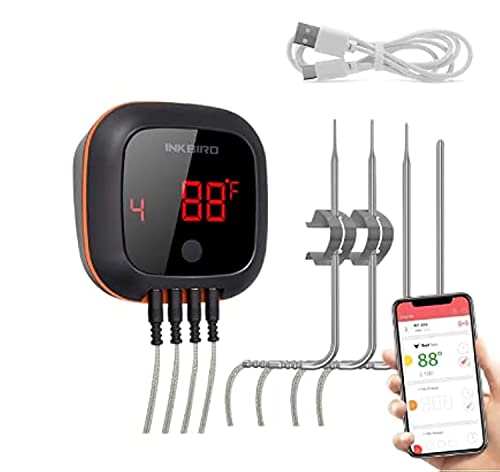
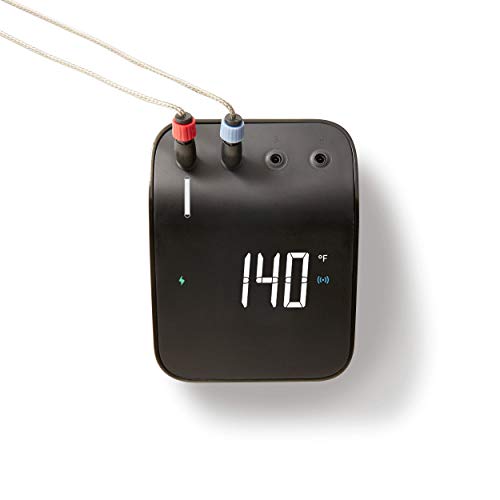
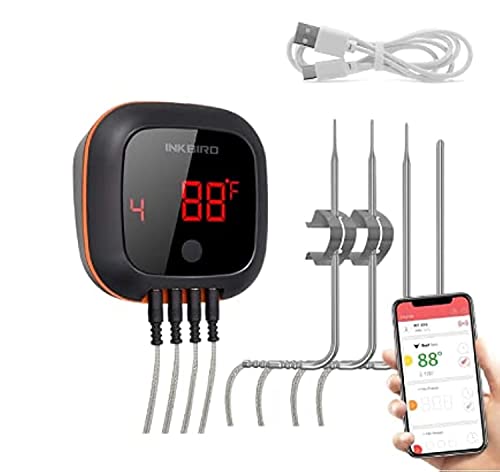
An instant read thermometer gives a temperature in seconds, which matters at the grill where food changes quickly and a lid cannot stay open long. A fast, accurate reading helps you pull steaks and chicken at the right moment.
The six models below are digital probes made for quick checks, with a mix of premium and budget-friendly options. Look for a thin probe, a clear display and water resistance, because grill use is hot, messy and often dim. We have not used these products ourselves, so please confirm details on the current listing before buying.
As an Amazon Associate we earn from qualifying purchases. Links below are affiliate links, and they do not change the product information we give.
What to Look For
| Feature | Why it matters |
|---|---|
| Speed | A faster reading reduces time with the grill lid open |
| Accuracy | Look for a stated accuracy range on the listing |
| Display | A large, backlit or rotating display helps in low light |
| Probe length | A longer probe keeps your hand away from heat |
| Water resistance | Splash resistance helps with cleanup |
In this guide
Specs at a Glance
| Thermometer | Type | Standout feature | Notes |
|---|---|---|---|
| ThermoWorks Thermapen ONE | Folding probe | Speed | Rotating display |
| ThermoWorks ThermoPop | Folding probe | Value | Rotating display |
| Lavatools Javelin PRO Duo | Folding probe | Bright display | Long probe |
| ThermoPro TP19H | Folding probe | Rotating display | Backlight |
| ThermoPro TP03 | Folding probe | Basic | Magnet back |
| Alpha Grillers | Folding probe | Long probe | Grill focus |
The 6 Best Instant Read Thermometers for Grilling

Top pickBest for serious grillers
1. ThermoWorks Thermapen ONE
A fast, high-end instant read thermometer from a respected maker, with a rotating display and a durable body. Check the listing for the stated speed and accuracy, since these are the main selling points.
Suits: serious grillers. Strengths: speed and a respected build. Weaknesses: a higher level of purchase. Skip it if you want a simple tool.

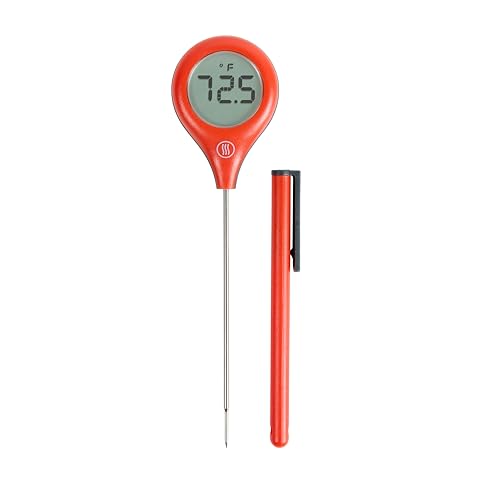
Best for most home grillers
2. ThermoWorks ThermoPop 2
A simpler thermometer from the same maker, with a rotating display and a fast reading at a lower class of purchase. Check the listing for the colors available and how the display rotates.
Suits: most home grillers. Strengths: a trusted brand with simple use. Weaknesses: slower than the Thermapen. Skip it if you want top-tier speed.

Best for cooks who want a lower class of purchase
3. Lavatools Javelin PRO Duo
A digital thermometer with a long folding probe and a bright display, popular as a Thermapen alternative. Check the listing for the stated reading time, battery life and water resistance rating.
Suits: cooks who want a lower class of purchase. Strengths: fast reading and bright display. Weaknesses: less brand recognition. Skip it if you want the most proven option.
View Lavatools Javelin PRO Duo on Amazon
Best for budget-minded grillers
4. ThermoPro TP19H Digital Meat Thermometer
A budget-friendly instant read thermometer with a rotating display and a backlight. Check the listing for the stated speed and accuracy before relying on it for steaks.
Suits: budget-minded grillers. Strengths: good features for the class. Weaknesses: less premium build. Skip it if you want pro-level speed.
View ThermoPro TP19H Digital Meat Thermometer on Amazon
Best for casual use
5. ThermoPro TP03 Digital Instant Read Thermometer
A basic digital instant read thermometer with a fold-away probe, a hanging hole and a magnet for easy storage. Check the listing for the exact features, since this budget-friendly model is sold in several versions.
Suits: casual use. Strengths: simplicity and a magnetic back. Weaknesses: a smaller display. Skip it if you want a rotating screen.
View ThermoPro TP03 Digital Instant Read Thermometer on Amazon
Best for gift buyers
6. Alpha Grillers Instant Read Meat Thermometer
A digital thermometer with a long probe and a simple display, sold by a brand focused on grilling accessories. Check the listing for the box contents and the stated accuracy range.
Suits: gift buyers. Strengths: a long probe and simple use. Weaknesses: less proven than the big names. Skip it if you want a premium maker.
View Alpha Grillers Instant Read Meat Thermometer on Amazon
Care and Setup
- Wipe the probe after each use.
- Keep the body away from open flame.
- Replace the battery when readings slow.
- Store in a dry place.
Mistakes to Avoid
- Poking the probe into bone.
- Leaving the thermometer in direct flame.
- Not checking calibration.
- Reading before the number settles.
Reading Speed and Accuracy in Practice
Two numbers sell most instant read thermometers: how fast they read and how closely they match the true temperature. Both are stated by the maker, and neither is guaranteed to hold in every kitchen or at every grill. When you compare listings, look for a stated accuracy range, such as a number of degrees either side of the reading, and a stated response time. Be cautious if a product claims speed without saying how it was measured or what the starting conditions were.
Speed matters most at the grill because every second the lid is open lets heat escape, and a slow thermometer tempts you to guess. A fast tool also lets you check several pieces of food in a row without letting steaks overcook while you wait. Speed has limits, though. The probe has to equalize with the food, and a thick cut or a cold center can take a moment to settle, so wait until the number stops moving before you trust it.
Accuracy shows up in a different way. A thermometer that reads a few degrees off can make the difference between juicy chicken and dry chicken, or between a safe and unsafe center. Because ranges vary across the temperature scale, check that the stated accuracy covers the range you cook in. Tools with a thin tip tend to read quicker and leave smaller holes, but the specific claims should come from the listing and the manual, not from assumptions about price or brand.
Probe Design, Display and Build Choices
Look closely at the probe. A longer probe keeps your hand and wrist away from hot grates and rising heat, which is a real safety benefit when you check meat at the back of a large grill. A thin tip slides into food with little resistance and leaves a small hole, so juices stay inside. A folding probe protects the tip in a drawer or pocket, while a fixed probe may need a sleeve.
Displays matter more at the grill than in a kitchen. Evening cooks need a backlight or a bright screen, and bright sun can wash out a dim display. A rotating or auto-flipping screen helps when you hold the thermometer at different angles, and larger digits help if your eyesight is not sharp. Read the listing for details on the backlight and any auto-off timer.
Build quality shows up in water resistance, seals and the way the body feels in a greasy hand. Look for a stated water resistance rating, and read what the maker says about submerging, rinsing and washing, since rules differ. A magnet, a hanging hole or a case helps with storage. Buttons should be easy to press with gloves or slippery fingers. Choose features you will actually use, and be wary of paying for extras that add weight or complexity without solving a problem you have.
Correct Probe Placement for Common Foods
Where you put the tip matters as much as the thermometer itself. In general, aim for the thickest part of the food and keep the tip away from bone, gristle, fat pockets and the cooking surface. Bone conducts heat differently and can show a reading higher than the meat, while fat can mislead on the low side. For steaks and chops, insert the probe from the side so the tip ends in the center of the thickest part rather than pushing down from the top.
For chicken pieces, aim for the thickest part of the thigh or breast without touching bone, and check more than one piece if you are cooking a batch. For a whole bird, the usual advice is to check the innermost part of the thigh and the thickest part of the breast. Burgers and sausages are thin, so slide the probe in from the side toward the center, and take care not to go through the other side.
For larger roasts, check in more than one spot and wait for readings to settle. Remove the thermometer from the food and wipe it between checks, particularly after raw meat, to avoid cross-contamination. Always follow current food safety guidance from official sources for the doneness temperatures you aim for, and remember that resting time can add a few degrees after you take the food off the heat.
Testing and Calibrating Your Thermometer
Even a good thermometer can drift, so a quick check now and then is sensible. The simplest method is an ice water test. Fill a glass with plenty of crushed ice, add cold water, stir and wait a minute. Put the probe in the middle of the glass, away from the sides and bottom, and wait for the reading to settle. In properly prepared ice water, the reading should be close to the freezing point of water. Compare the result with the stated accuracy range on the listing.
Some thermometers can be adjusted, and the manual will explain whether yours has a calibration function and how to use it. Many cannot be adjusted, in which case a consistent offset can be noted and allowed for, or the unit can be replaced if it falls outside its claimed accuracy. A boiling water check can add another reference point, but the boiling temperature changes with altitude and weather, so use it with care.
Do tests whenever the thermometer has been dropped, left in the sun or dunked, or when readings seem odd compared with how the food looks and feels. A weak battery can also create slow or erratic readings before the display fades, so replace the battery before assuming the probe has failed. Keep a spare battery with your grill tools so a fading display does not interrupt a cook.
Storage, Cleaning and When to Replace
Clean the probe after each use, wiping it with a damp cloth and mild soap, especially after raw meat. Follow the maker’s guidance on water exposure, because some units tolerate rinsing and others should only be wiped. Dry the probe, the hinge and the seams before you fold it away. Keep the body clear of open flame and hot grates, since plastic housings can warp or melt and heat can damage the electronics.
Store the thermometer somewhere dry and shaded, not on a sun-baked side shelf. A case, magnet or drawer slot protects the tip, which is the most delicate part. If the tip is bent or dented, the response can slow down and the readings can drift. Avoid prying at frozen food with the probe, and avoid twisting it against bone.
Signs that it is time to replace the thermometer include readings that stay off after a fresh battery and an ice water test, a display that flickers or loses segments, a probe that no longer folds smoothly or a cracked housing that lets moisture in. If it is slow to settle compared with how it used to be, or the tip is damaged, consider a new one rather than trusting your dinner to doubtful numbers. Many cooks keep a simple backup for those occasions, so one failing tool does not stop a cookout.
A Pre-Cook Checklist for Grill Night
Most thermometer frustration comes from small oversights made before the food ever touches the grates. Run through this short list while the grill is heating and the habit will soon feel automatic.
- Check the battery before you light the grill, not when a steak is already resting and you need an answer.
- Wipe the probe clean, since leftover grease from the last cook can smear and make the first reading hard to trust.
- Confirm the display unit setting matches the temperatures in your recipe or the maker’s guide.
- Keep a clean plate and a pair of tongs nearby so you are not hunting for tools with the lid open.
- Decide in advance which cut you will probe first, so you can check the thickest part quickly and move on.
- Read the maker’s instructions for the recommended insertion depth, because some probes sense heat near the tip and others along a short stretch of the shaft.
None of this takes more than a minute, yet it removes most of the guesswork that makes people distrust their thermometer in the first place. A tool that is ready, clean and set to the right units simply gets used more often, and that is where the real value shows up.
Fast Probes Versus Basic Probes: What Actually Changes
The six models listed above sit at different points on the speed and feature scale. This comparison shows the trade-offs in general terms, so you can match a tool to the way you cook.
| Feature | Fast, premium style | Basic, everyday style |
|---|---|---|
| Reading time | Often settles within a few seconds | May need longer to settle |
| Display | Usually rotates or lights up for dim patios | Fixed display, sometimes no backlight |
| Water resistance | Commonly built for wet, messy use | Varies, so check the maker’s notes |
| Probe length | Slim and long for reaching center cuts | Shorter, better for thin foods |
| Best fit | Frequent grillers who cook thick cuts | Occasional use and simple weeknight meals |
If you grill most weekends, a quicker probe saves time with the lid open and heat escaping. If you only cook outside a few times a season, a simpler tool does the same basic job without extra features you may never touch.
Reading Temperatures Around Carryover and Rest Time
Meat keeps cooking for a short while after it leaves the heat, because the outer layers are hotter than the center. That is why many cooks pull food slightly before the final target and let it rest. How much carryover you get depends on thickness, the cut and how hot the grill was, so a thick roast behaves differently from a thin chop.
Use your thermometer twice: once to decide when to pull the food, and again after resting to confirm where it settled. Over a few cooks you will learn how your own grill behaves. For final safe temperatures, always follow the guidance from your food safety authority or the instructions that came with your recipe, rather than relying on color or feel.
Matching a Thermometer to Your Grilling Habits
The right tool depends less on specifications than on what lands on your grill most often. Thin burgers and sausages need a probe that reads quickly and sits well in a small target, while large roasts and whole birds give you more time and reward a longer shaft. Think through a typical month of cooking before you decide which feature deserves your attention.
If you cook for guests, speed matters because you are juggling several items and cannot hover over one steak. If you cook alone on weekends, a simpler model with a clear display may be all you need. Left-handed cooks and anyone grilling in the evening should also pay attention to display orientation and backlight, since a screen that is hard to read after dark quickly becomes a source of annoyance.
Finally, consider where the thermometer will live. A tool that hangs on the grill, sits in a drawer or clips to an apron gets used differently. Pick one that fits the spot where you will actually reach for it, because a thermometer that stays in a cupboard is not helping anyone cook better.
Choosing Instant read thermometers for grilling: The Criteria That Matter Most in Daily Use
Listings for instant read thermometers for grilling tend to lead with headline features, but the details that decide whether you stay happy with a purchase are usually quieter ones. Start with fit. Measure the space where the product will live, including the room needed to open doors, lift lids, pull out parts, or stand in front of it comfortably, and compare those measurements with the dimensions on the listing before anything else. A model that looks perfect on a product page can become a daily irritation if it crowds a walkway, blocks a cabinet, or leaves no sensible place for the accessories you use with it.
Next, think honestly about capacity and workload. Households tend to buy for the biggest gathering they can imagine rather than the meals and routines they repeat every week, and that mismatch cuts both ways. Too small, and you end up working in batches, reheating, or improvising workarounds that erase the convenience you paid for. Too large, and you give up storage, counter room, or yard space to a product that runs half empty most of the time and takes longer to clean. The right size for instant read thermometers for grilling is the one that handles your ordinary week with a little headroom, not the one built for a once-a-year event.
Materials and construction deserve a slower look than they usually get. Where listings describe the body, finish, hinges, handles, seals, or cooking and contact surfaces, read those notes as clues about cleaning and longevity rather than as decoration. Surfaces you touch every day should wipe down easily and tolerate the cleaners you already own. Parts that move, fold, latch, or bear weight should feel like the maker’s priority, because those are the points that loosen, stain, or wear first. If a listing is vague about a part you know you will handle constantly, treat that vagueness as information and compare it with a listing that explains the same part clearly.
Controls and everyday ergonomics matter just as much. Ask yourself how the product behaves in imperfect real conditions: wet or greasy hands, low light, a crowded room, a rushed weeknight. Controls you can understand at a glance, markings you can read without leaning in, and parts that go back together in only one obvious way all reduce small mistakes. For instant read thermometers for grilling, the best choice is rarely the one with the longest feature list. It is the one whose way of working matches your habits so closely that using it correctly feels like the path of least resistance.
Instant read thermometers for grilling in Real Life: Four Situations Worth Picturing Before You Buy
Picture an ordinary weeknight first. You are tired, time is short, and the product has to earn its place without a long setup ritual or a complicated cleanup afterward. In that moment, the qualities that matter are fast readiness, predictable results, and parts that can be dealt with in a few minutes at the sink or with a cloth. When you compare the picks in this guide, ask which one you would still choose on your most tired evening, because that answer usually predicts long-term satisfaction better than any feature comparison made in a relaxed weekend mood.
Now picture the bigger occasion: guests, a family gathering, or a weekend project where the product runs longer, gets used back to back, or has to handle more than usual. This is where headroom, stability, and heat or airflow management show their value. A model that is perfectly adequate for two people can feel stretched when the pace picks up and there is no pause between rounds. You do not need to buy purely for this scenario, but it is worth knowing which pick in the list gives you the most graceful step up when the workload grows, and which one is really a smaller-scale specialist.
A third situation is the small or shared space: a compact kitchen, a narrow patio, an apartment balcony, or a room that has to serve several purposes. Here, footprint, storage, noise, and how the product behaves around other people matter as much as raw performance. Think about where it will sit when it is not in use, whether it can be moved by one person, and how much clearance it needs around it to work safely and comfortably. Many returns and regrets with instant read thermometers for grilling come not from poor quality but from a product that never had a natural home in the space it was bought for.
Finally, picture the routine a few months from now, when the novelty has worn off. The filters, seals, trays, grates, baskets, or surfaces that needed attention will have needed it several times. The storage spot you chose will have been used dozens of times. The shortcut you discovered will have become your habit. Buying well means choosing the model whose maintenance rhythm and everyday handling you can live with on that ordinary future day, not just the one that excites you on delivery day. A product that stays pleasant to live with is the one that keeps getting used, and regular use is what turns a purchase into value.
Setup and First Use: Getting Instant read thermometers for grilling Off to a Good Start
When your choice arrives, resist the urge to put it straight to work. Unpack it where you have room to lay everything out, check each part against the maker’s parts list, and look over seams, edges, and fittings before anything gets hot, wet, plugged in, or filled. Small shipping damage and missing accessories are far easier to sort out before first use than after. Keep the packaging until you have run the product once and confirmed that everything works as described, and photograph the unboxing if anything looks questionable, so you have a clear record if you need to contact the seller.
Placement is the next decision, and it deserves more care than it usually gets. Follow the maker’s guidance on clearance, ventilation, level surfaces, and distance from walls, curtains, cabinets, or other heat and moisture sources, because those instructions are written around how the product actually behaves. Check that cords, hoses, vents, or doors can move the way they need to without being pinched or forced. If the product will live somewhere different from where it is used, walk that route once with your hands full in mind, and make sure the move is realistic rather than a chore you will start avoiding.
Most instant read thermometers for grilling benefit from a gentle first run before you rely on them for an important meal or occasion. Read the manual’s first-use steps, wash or wipe the parts the maker says to prepare, and run the product through a simple, low-stakes task so you can learn its sounds, smells, timing, and handling without pressure. This is also the moment to note the small things: how the display or markings read in your light, how parts align when you reassemble them, and where drips, steam, crumbs, or ash tend to collect in your particular setup. Ten unhurried minutes now prevent most first-week frustrations.
Keep a simple note of what works during your first few uses: settings you chose, quantities, timing, and the result. It sounds old-fashioned, but a short record on your phone turns guesswork into a pattern surprisingly quickly, especially with products where small adjustments change the outcome. Within a few sessions you will know your own defaults instead of relearning them each time. You will also have a useful baseline if performance ever changes later, because you can compare what the product does now with what it did when it was new and working exactly as expected.
Cleaning, Care and Storage for Instant read thermometers for grilling
Regular light cleaning beats occasional heroic cleaning with almost every product in this category. After each use, once things have cooled or settled as the maker directs, remove loose residue, wipe the surfaces that collected splashes or dust, and let parts dry fully before you close, cover, or put anything away. Trapped moisture is a quiet cause of odors, staining, and corrosion, and it usually comes from storing a product that looked dry on the outside while seams, seals, and undersides were still damp. A few extra minutes of air drying protects both hygiene and finish.
Schedule a deeper clean around how often you actually use the product rather than by the calendar alone. Heavy users may need to descale, degrease, empty, brush out, or wash removable parts far more often than occasional users, and the maker’s manual is the right guide for which cleaners and tools are safe. Avoid abrasive pads, harsh chemicals, or soaking any part the maker does not clearly describe as washable, and never use water around electrical parts beyond what the instructions allow. When in doubt, a soft cloth, warm water, and patience will handle most jobs without risking the finish or the seals.
Storage is part of care, not an afterthought. Keep instant read thermometers for grilling in a dry place where air can circulate, with cords loosely coiled rather than tightly wound, small accessories kept together so they are not lost, and covers or cases used only on a clean, fully dry product. If the product lives outdoors or in a garage, check it after long gaps: look for pests, dust buildup, stiff or cracked seals, and anything that has shifted since you last used it. A quick inspection before a busy cooking day is far better than discovering a problem with guests already on their way.
Learn the early signs that something needs attention. New noises, slower performance, uneven results, lingering odors, loose fittings, or controls that feel different from before are all messages, and they are cheapest to act on early. Start with the simple checks the manual lists: correct assembly, clean filters or vents where fitted, clear passages, and parts seated properly. Many apparent faults are really maintenance asking to be done. If a problem persists after those checks, contact the maker with your notes about when it started and what changed, because that detail helps support teams help you faster.
How the Picks Above Compare When You Live With Them
The picks in this guide are not ranked by a single score, because the differences that matter most only appear in use. Take ThermoWorks Thermapen ONE and ThermoWorks ThermoPop 2, the first two options above. On paper they may look close, but the descriptions point to different priorities: one leans toward buyers who want the most established or fully featured route, while the other suits people who prefer a simpler or more focused tool for the same job. Neither reading is wrong. The useful question is which set of strengths you will actually exercise every week, and which weaknesses you are genuinely willing to live with rather than hoping you will not notice.
Move down the list and the pattern continues. Lavatools Javelin PRO Duo makes its case in the guide through a particular strength described in its section above, and that strength matters most if your cooking or routine regularly creates the situation it is built for. ThermoPro TP19H Digital Meat Thermometer, by contrast, is the kind of pick whose appeal grows on buyers who value straightforward day-to-day handling over standout features. When two descriptions sound similar, reread the suits and skip-it notes in each section: those short lines are the most honest summary in the whole guide of who each product is really for.
If your shortlist includes ThermoPro TP03 Digital Instant Read Thermometer or Alpha Grillers Instant Read Meat Thermometer, compare them on ownership rather than on first impressions. Think about the size of load each will usually carry in your home, the space each needs, and how much cleaning each design implies after a typical session. A pick that looks like the exciting option today can become the one you avoid if its upkeep does not fit your routine, while a plainer pick that is quick to clean and easy to store quietly becomes the household favorite. The guide’s per-product notes on strengths and limitations are written to help exactly this comparison, so weigh them more heavily than the order the products happen to appear in.
A practical way to decide is to score your own priorities before you look at the list again. Write down your top three: perhaps capacity, easy cleaning, compact storage, simple controls, or suitability for a particular kind of cooking. Then read only the sections of the two or three picks that match those priorities and see which description sounds most like your household. Buyers who decide this way rarely regret the choice, because the product was selected against their real life rather than against an abstract idea of the best. If two picks still tie, choose the one whose everyday handling you prefer, since you will repeat that handling hundreds of times.
Buying Mistakes That Lead to Returns and Regrets
The most common mistake with instant read thermometers for grilling is measuring once, casually, or not at all. Doorways, counter depth, cabinet height, patio gates, and storage cupboards all have a say in whether a product works in your home, and listings cannot know any of them. Measure the space, measure the route the product takes to reach it, and leave honest clearance rather than planning for a perfect squeeze. The second most common mistake is buying for features instead of habits: paying for capacity, programs, or accessories that sound appealing in a listing and then go untouched for the life of the product.
A third mistake is ignoring the unglamorous requirements. Some products in this category need ventilation, a particular kind of outlet or fuel, a level surface, drainage, headroom, or a safe distance from things that heat, steam, or splashes can damage. These requirements are in the manual and usually hinted at in the listing, but they are easy to skim past when you are focused on the headline features. Check them before you order, not while the box is open on your floor. Discovering a basic mismatch after delivery turns a good product into a bad purchase through no fault of its own.
- Skipping the manual’s setup and first-use steps, then judging the product on a poor first result.
- Choosing by headline features alone instead of by cleaning, storage, and daily handling.
- Forgetting to check what is included in the box, and assuming accessories from photos are standard.
- Placing the product somewhere convenient rather than somewhere that meets its clearance and ventilation needs.
- Waiting until a special occasion to use a new product for the first time.
None of these mistakes is about intelligence; they are about pace. Listings are designed to move you quickly, while good ownership decisions are made slowly, with a tape measure, the manual, and an honest picture of your own routine. Give this purchase that slower half hour. With instant read thermometers for grilling, the difference between a product you recommend to friends and one you quietly stop using is almost always decided before the order is placed, in the fit between the product and the life it is about to join.
Living With Instant read thermometers for grilling Over the Long Term
Ownership changes character after the first few months. Routines settle, shortcuts appear, and you learn which of the product’s qualities you lean on and which you barely touch. That knowledge is useful beyond this one purchase: it tells you what to prioritize if you ever replace or add to what you own, and it helps you advise friends honestly instead of repeating listing language. If a feature you paid for has gone unused all season, note it without regret and let it sharpen the next decision rather than souring this one.
Seasons also change what you ask of instant read thermometers for grilling. Heavy-use periods reward the preparation habits described earlier in this guide: a clean, inspected, correctly placed product at the start of a busy stretch prevents most mid-season problems. Quieter periods are the right time for the deeper clean, the accessory sort-out, and the honest check of seals, fittings, and surfaces while there is no pressure to use the product that day. Treating the off-season as maintenance time, rather than forgetting the product entirely, is one of the simplest ways owners extend useful life without spending anything.
Finally, keep the paperwork and your own notes together: the manual, proof of purchase, and the short record of settings and routines that worked for you. If you ever contact the maker, sell the product on, or hand it to someone else in the household, that small bundle answers most questions immediately. Good ownership of instant read thermometers for grilling is mostly this kind of quiet administration: nothing dramatic, just a product that is ready when you reach for it, season after season, because someone paid attention at the unglamorous moments.
Instant Read Thermometer FAQ
How do I use an instant read thermometer?
Insert the tip into the thickest part of the meat, avoiding bone, and wait for the number to settle.
Can it stay in the food?
No. Most are made for quick checks only, so use a leave-in probe for long cooks.
How can I test accuracy?
Check it in ice water and compare with the maker’s guide.
Do I need a backlight?
It is useful for evening grilling, but not essential.
What temperature should I cook to?
Follow the food safety guidance for each meat. Government food safety pages list recommended internal temperatures.
Where do I place the probe?
Insert it into the thickest part of the food, away from bone and fat, and wait for the number to settle before you read it.
How often should I replace the battery?
Replace it when the display dims or readings slow down. Keep a spare near the grill.
Is an instant read thermometer the same as a leave-in probe?
No. An instant read tool is for quick checks and should not stay in the food or the grill. A leave-in probe is made for long cooks and often connects to a separate display.
How long should I wait for a stable reading?
Wait until the number stops changing. The time depends on the thermometer and the food, so check the manual for guidance.
Can I use it to check grill temperature?
Some makers allow brief air readings, but many do not, and the tip can be damaged by direct flame. Follow the instructions for your model.
Why do I get different readings in different parts of the same steak?
Heat is uneven, especially near bone, fat and the surface. Check the thickest part and, for large cuts, test in more than one spot.
Should I wash the probe in the dishwasher?
Usually not. Most makers advise hand wiping or a quick rinse, and the water resistance rating on the listing tells you what is allowed.
Does altitude affect an instant read thermometer?
The thermometer measures the temperature directly, but a boiling point check will read lower at high altitude. Use ice water for a more stable test.
Are the cheaper models good enough?
Many are fine for casual cooking if the listing states an accuracy range and you test it. Faster or sturdier models mainly suit people who cook often and want extra durability.
More Questions About Instant read thermometers for grilling
How long should instant read thermometers for grilling last with normal home use?
Longevity depends far more on care and frequency of use than on any single feature. Products in this category that are cleaned regularly, stored dry, and used within the maker’s guidance generally serve a household for many seasons, while neglected seals, vents, and surfaces shorten that life considerably. Follow the manual’s maintenance schedule, deal with small issues early, and check the listing and maker’s pages for the current warranty terms, since those details can change and are the authoritative source if you ever need support.
What should I check first if results are disappointing?
Start with setup rather than assuming the product is at fault. Confirm that everything is assembled and seated as the manual describes, that vents, filters, or passages are clean, and that placement gives the product the clearance it needs. Then repeat a simple task you know well, changing only one variable at a time, and note the result. Many disappointing first results trace back to a rushed first use, an overloaded load, or a skipped preparation step, and they improve quickly once the routine settles.
Are accessories and replacement parts easy to get?
It varies by maker, so check before you buy if accessories matter to you. Established brands usually list compatible accessories and common replacement parts on their own pages, while lesser-known models may rely on generic alternatives. Look at what is included in the box as described on the listing, note which extras the photos show that are sold separately, and factor the accessories you genuinely need into your comparison rather than discovering the extra purchases after delivery.
Can I use instant read thermometers for grilling in a small home or apartment?
Often yes, provided you choose with the space in mind. Measure carefully, consider where the product will be stored as well as where it will be used, and pay attention to noise, steam, heat, or odors if you share walls or live in an open-plan layout. Smaller or simpler picks in this guide may suit compact homes better than the largest options. Also check any building or lease rules that apply to the kind of product you are considering, since those rules, not the product itself, occasionally decide the question.
What is the best way to clean instant read thermometers for grilling after a messy session?
Let everything cool or settle as the maker directs, remove loose residue first, then wash or wipe parts in the order the manual recommends, working from the least soiled areas to the dirtiest. Use only cleaners and tools the maker approves for the surfaces involved, rinse or wipe away cleaner residue, and dry every part fully before reassembly or storage. If a stain or odor survives a normal clean, repeat a gentle clean rather than reaching for something abrasive that could damage the finish and make the next mess stick harder.
How do I decide between two very similar picks in this guide?
Reread the two sections and list the differences that would still matter after a month of ownership: size in your space, how each is cleaned, how each is stored, and the specific strength each description claims. Ignore differences you would only notice on the first day. Then choose based on your most common routine rather than your most ambitious one. If the tie persists, the pick whose handling, controls, or upkeep sounds simpler in its description is usually the one that gets used more, and used more is what makes it the better buy.
The Short Version
For the premium reference, the ThermoWorks Thermapen ONE. For a popular value pick, the ThermoWorks ThermoPop. For a fast, well-liked alternative, the Lavatools Javelin PRO Duo. For a rotating display budget-friendly pick, the ThermoPro TP19H. For a basic, simple tool, the ThermoPro TP03. For a well-known grill brand, the Alpha Grillers.
Related Guides
- 6 Best Meat Thermometers for Grilling: Instant-Read Picks
- 6 Best Air Fryer Thermometers: Instant Read and Probe (2026)
- 6 Best Meat Thermometers: Instant-Read Probes Compared (2026)
- 6 Best Meat Thermometers for Grilling: MEATER and Alternatives
- 6 Best Smart Grilling Hubs and Wireless Thermometers (2026)