A grill cart gives a portable grill a stable base and often adds space for prep. Some carts fold flat for storage, while others are rolling prep tables that sit beside a larger grill. The right choice depends on the grill you own and how much counter space you want outdoors.
The six products below cover carts made for compact gas grills and standalone prep tables. We have not used these products ourselves, so confirm the fit with your specific grill, the weight limit and the finish on the current listing before buying a grill cart.
As an Amazon Associate we earn from qualifying purchases. Links below are affiliate links, and they do not change the product information we give.
What to Look For
| Feature | Why it matters |
|---|---|
| Grill fit | A cart must match your grill’s base, so check compatibility |
| Work surface | Side shelves or a table top give room for plates and tools |
| Wheels | Locking casters keep the cart steady while you cook |
| Weight limit | A strong frame holds a grill and a loaded tray |
In this guide
Specs at a Glance
| Cart | Material | Style | Notes |
|---|---|---|---|
| Weber Q Portable Cart | Steel and plastic | Folding stand | Made for Weber Q grills |
| Camp Chef Sherpa Table and Organizer | Steel and fabric | Folding table | Fits many camp stoves |
| Cuisinart Outdoor Prep Table | Steel | Folding table | Stand with a prep area |
| Royal Gourmet Prep and Cooking Table | Steel | Folding table | Check the listing for size |
| Nexgrill Outdoor Prep Cart | Steel | Rolling cart | Shelves and wheels |
| Blackstone Griddle Prep Cart | Steel | Rolling cart | Made to sit beside a flat top |
The 6 Best Grill Carts

Top pickBest for owners of a Weber Q grill
1. Weber Q Portable Cart
A folding cart made to hold a Weber Q portable gas grill, with side tables and a storage area. It turns a small grill into a standing setup, then folds away between cookouts. It stays out of the way in a closet or a garage.
Suits: owners of a Weber Q grill. Strengths: a made-for-purpose fit and a folding design. Weaknesses: only suits compatible grills. Skip it if you own another brand.

Best for camping and tailgating
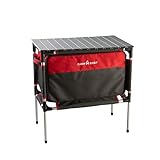
2. Camp Chef Sherpa Table and Organizer
A folding table with a fabric organizer for tools, built for camp stoves. It gives you a place to stage food, and it folds for travel. It is a good fit for a campsite or a tailgate.
Suits: camping and tailgating. Strengths: a portable design and storage pockets. Weaknesses: not a rolling cart. Skip it if you want wheels.

Best for small patios and balconies
3. Cuisinart Outdoor Prep Table
A folding prep table with a stand for a portable grill. The extra work surface is useful for plates, sauces and tools beside a small gas cooker. It folds flat when you want to store it.
Suits: small patios and balconies. Strengths: a prep surface that folds. Weaknesses: not a heavy-duty frame. Skip it if you need a large worktop.

Best for a general-purpose side table
4. Royal Gourmet Portable Prep Table
A steel prep and cooking table from a brand focused on outdoor products. Details vary by model, so check the size and the accessories included before buying. Look for weight limits too.
Suits: a general-purpose side table. Strengths: a sturdy feel and a work surface. Weaknesses: sizes vary. Skip it if you need a specific footprint.
View Royal Gourmet Portable Prep Table on Amazon
Best for a patio cook who wants storage
5. Nexgrill Outdoor Prep Cart
A rolling cart with shelves for tools and plates, made for a cook who wants storage beside a grill. The wheels make it easy to move around a patio. Once assembled it can hold tools, sauces and a cutting board.
Suits: a patio cook who wants storage. Strengths: wheels and shelf space. Weaknesses: assembly takes time. Skip it if you want a folding design.
View Nexgrill Outdoor Prep Cart on Amazon

Best for flat top griddle owners
6. Blackstone Griddle Prep Cart
A steel cart sized to sit beside a flat top griddle. It adds room for ingredients and plates, and it helps when you cook for several people. Shelf height lines up with the plate for smooth work.
Suits: flat top griddle owners. Strengths: a worktop near the cooking area. Weaknesses: aimed at griddles more than grills. Skip it if you only own a small grill.

Care and Setup
- Lock the casters before you start cooking.
- Keep grease and sauce off the finish.
- Cover the cart in the off season.
- Tighten bolts after the first few uses.
Mistakes to Avoid
- Putting a heavy grill on a cart that is not rated for it.
- Leaving wheels unlocked on a slope.
- Ignoring the fit notes for your grill.
- Parking a cart where it traps heat against a wall.
Cart Types and What Each One Is For
The phrase grill cart covers several different products, and picking the wrong category is the most common mistake. A grill stand or cart is a base that holds a portable grill at a comfortable height, often with side shelves and wheels. A prep table is a flat work surface that sits next to the grill and offers room for plates, sauces and tools, and it may or may not support a cooking appliance. A rolling storage cart adds shelves or cabinets for tools, propane and accessories.
Folding carts suit people who move their equipment, such as campers, tailgaters and anyone with limited storage. They trade some rigidity for portability, and many are sized for particular grills. Fixed rolling carts suit patios where the setup stays in place. They are sturdier and often offer more storage, but they take more space and need assembly.
Before browsing, write down what you want to do. Do you need to raise a tabletop grill to standing height? Do you need an extra surface for food prep? Do you want to store a propane cylinder out of sight? Do you move the setup between a garage and a patio? The answers point to the right type. If you already have a full-size grill with built-in side tables, you may only need a small prep cart, and the cost of a bigger one would be wasted.
Checking Grill Compatibility and Fit
Compatibility is the question that decides whether a cart is useful. Cart makers often design a product around a specific grill model or series, with locating features that hold the grill in place. A cart made for one grill may not hold another safely. Always check the listing for a list of compatible models, and compare it with your exact grill name and size.
For generic carts, measure the footprint of your grill, including handles, knobs and any fuel connection. Compare it with the usable top surface of the cart. The grill should sit fully supported, with no overhang that could tip it. Check the height as well. A tall grill on a tall cart can put the lid at an awkward level, and a short cart may put the grill too low for comfortable cooking.
Check how the grill is secured. Some carts have a lip, a locking mechanism or straps, while others rely on friction, which is less reassuring. Consider the propane cylinder if your grill uses one. It should be accessible and sit upright where it is safe. Also check the hose length. Never place a grill on a cart that obstructs ventilation. If the listing is unclear about fit, contact the seller or the maker before buying, and keep the packaging in case you need to return it.
Frame Strength, Materials and Weather
A cart supports both the grill and the load of tools and food, so the frame deserves attention. Look for a stated weight limit and read what it covers: the total, per shelf, or only the tabletop. Do not exceed it, and remember that weight limits assume an even load on a level surface. Thin, folding frames flex more than welded or bolted steel ones. A stable cart shouldn’t wobble when you lean on it or when you flip heavy food.
Materials affect weather resistance. Powder-coated or painted steel is common and resists rust when the coating is intact, but chips expose bare metal. Stainless steel resists corrosion well but often costs more. Aluminum is light and does not rust, though it may be less rigid. Plastic or composite shelves do not rust but can warp under heat, and wood or bamboo tops need sealing against moisture. Fabric organizers are convenient but can hold moisture and fade in sun.
Consider heat. The cart surface near a hot grill can get hot, and some materials should not be in contact with a hot cooking surface. Check that the grill’s base is designed to sit on the cart. Look at how the joints are assembled and whether hardware is included in full. Keep a cover on the cart when it is not in use, store it in a dry place in winter, and wipe off salt, sauce and grease, which can corrode finishes. Plan to tighten bolts periodically, as vibration and moving loosen them.
Wheels, Mobility and Stability on Uneven Ground
Wheels add convenience and risk. A rolling cart is easy to move across a patio, but it can also roll away when you do not want it to. Look for locking casters on at least two wheels, ideally all four. Always lock them before lighting the grill or cooking. Larger wheels roll more easily over seams, door thresholds and gravel than small ones, and rubber or soft wheels are quieter and gentler on decking.
Think about where the cart sits. A sloped patio or uneven pavers can make a cart rock or roll, and a heavy grill on a tilted cart is a hazard. Check that the legs or casters let you adjust for level ground. If the cart does not have adjustable feet, shims placed carefully may help, but a stable surface is better.
Moving a loaded cart takes care. Remove hot items and loose tools, close the lid and make sure the grill is cool and the gas is off before moving. Do not drag a cart over rough ground, and avoid stairs unless you empty it first. If you intend to move the setup often, a lighter folding stand may be more practical than a heavy rolling cart. Keep walkways clear so nobody trips over a handle or a wheel. For households with children or pets, locked wheels and a stable base matter even more.
Organizing the Workspace Around the Grill
A cart is worth buying only if it makes cooking smoother. A good layout puts raw food, tools and finished plates in separate zones. Keep a clean area for cooked food away from the area where raw meat sits. Place tools such as tongs, a spatula and a brush on a hook or a rail within arm’s reach. A cutting board on a flat shelf lets you slice without carrying food indoors.
Think about heat and flames. Do not place flammable items, such as paper towels, aprons or oil-soaked rags, near a hot grill. Keep sauces and oils away from direct heat, since they can heat up and spoil. A towel hook and a trash bag clip keep the space tidy. If your cart has a lower shelf, use it for heavier items so the center of gravity stays low.
Consider lighting if you grill after dark, a small clip-on light can help. If you grill with a propane cylinder, store spare cylinders upright, outside and away from heat, not on a cart under the grill. Also consider how the cart looks with your patio. Keep the manual for assembly details and the weight rating. Replace the cart if the frame is bent, welds are cracked, wheels no longer lock or the top is warped. A damaged cart is not safe to hold a hot grill.
A Quick Checklist Before You Choose a Cart
Grill carts look simple, yet small details decide whether one becomes a daily helper or an annoyance that lives in the garage. Run through this list before you commit to any model, and write down your answers so you can compare options calmly.
- Measure the footprint of your grill, including side handles, the lid hinge and any fold-out shelves.
- Measure the space where the cart will live, plus the doorway or gate it must pass through.
- Decide whether you need a cart to hold the grill itself or only a prep table that sits beside it.
- Check the stated weight limit and compare it with the weight of your grill, fuel and cooking tools.
- Look at how the legs lock. A cart that folds should click firmly into place on both sides.
- Note whether the wheels are on every leg or only two, and whether any of them lock.
- Think about where you will store the cart in winter and whether it collapses small enough.
If you can answer every item with confidence, the shopping becomes much easier. If two or three are still unknown, go back to the maker’s dimension drawing before you buy anything.
Folding Cart or Fixed Cart: A Direct Comparison
Most buyers end up choosing between a folding design and a rigid one. Neither is better in every case. The table lays out how they usually differ so you can match the style to your yard.
| Factor | Folding cart | Fixed cart |
|---|---|---|
| Storage | Collapses flat for a shed or closet | Takes the same room all year |
| Setup each use | Unfold and lock the legs | Roll into position |
| Rigidity | Depends on the locking hinges | Usually stiffer under load |
| Assembly | Often almost ready out of the box | Often needs tools and patience |
| Best for | Patios, camping, small spaces | Permanent outdoor kitchens |
If you grill only now and then, folding makes sense because it keeps the patio clear. If you cook outside several times a week, a fixed frame saves the effort of setting up every time.
How to Read a Cart Listing Closely
Product pages pack a lot of information into a few lines, and the useful parts are easy to miss. Begin with the dimensions of the work surface rather than the overall size, since a wide frame can still offer a narrow top. Next, find the weight limit and see whether it applies to the whole cart or to each shelf. Many listings give a single figure that only makes sense for evenly spread loads.
Pay attention to the material description. Powder coated steel, stainless steel and aluminum all behave differently outdoors, and a listing that never names the material deserves a question to the seller. Look at the photos for hinge and bracket details, because thin brackets are often where a frame flexes first.
Finally, scan the questions and answers section. Other owners tend to mention things that a listing leaves out, such as whether a particular grill really fits or how tall the cart stands when its shelves are in use.
Assembly, Storage and Seasonal Habits
Follow the maker’s assembly sequence exactly and leave bolts slightly loose until the whole frame is built. Once everything is aligned, tighten each fastener in turn. A frame assembled this way sits square, and the wheels all touch the ground at once.
Keep a small habit list for the season. Wipe the surfaces after cooking, dry the hinges, and check the fasteners every few weeks because vibration from rolling can loosen them. At the end of the season, clean the cart, let it dry fully, fold it if it folds, and store it somewhere sheltered. A breathable cover works better than plastic sheeting, which can trap moisture against the metal.
Always follow the grill maker’s instructions about fuel storage and placement, and keep the cart on level ground away from walls and anything that could burn.
One last habit pays off over time: keep a short note of the model code and the assembly manual somewhere easy to find. When a bolt goes missing or a wheel needs replacing, having the exact part information saves a lot of searching, and the maker can usually advise on compatible replacements.
Grill Cart FAQ
Will any cart fit my grill?
No. Check the listing for compatible models and the weight limit.
Do carts fold?
Many portable ones do. Rolling prep carts are often fixed frames.
Should I buy a cart with wheels?
Wheels help if you move the grill. Look for locking casters.
What material lasts longest outdoors?
Powder-coated or stainless steel resists weather best.
Can I put a grill on any cart?
No. The cart must support the grill's weight and footprint safely, and many carts are made for specific grill models. Check the compatibility list in the listing.
What is the difference between a cart and a prep table?
A cart usually holds a grill and offers storage, while a prep table gives a work surface beside the grill. Some products do both.
Should I lock the wheels while cooking?
Yes. Lock the casters before lighting the grill and keep them locked until it has cooled and you need to move it.
How do I know the weight limit?
The listing or manual states it, and you should check whether it applies to the whole cart or each shelf. Stay below it.
Where should I keep a propane cylinder?
Outdoors, upright and away from heat and ignition sources. Follow the grill maker's instructions for connecting it.
Do folding carts last as long as fixed ones?
It depends on the build quality and use. Folding hinges are wear points, so inspect them regularly.
How do I protect a cart from rust?
Wipe off grease and sauce, keep it covered, store it dry in winter and touch up chips in the coating with paint made for metal.
Choosing Grill Carts With More Care: The Details That Decide
The picks above give you the shortlist. This section slows the decision down and looks at the details that separate grill carts you will enjoy for years from the ones that quietly end up at the back of the cupboard. None of these points require specialist knowledge; they ask you to match the product to your grill, your food and your habits, which is where good purchases are actually made. Work through them with your own cooking in mind, especially everything from weeknight burgers to full barbecue spreads, and the right pick usually identifies itself.
Compatibility With Your Grill’s Feet and Base
Carts and grills meet at specific points: leg spacing, base shape and where the weight actually travels. A cart that almost fits invites wobble and improvisation. Measure the grill’s footprint and mounting points, and prefer carts designed or sized for that pattern over hopeful universality. To judge it on a listing, look past the headline claim and find the detail that proves it: a stated dimension, a named material, or a clear photo of the part you will actually handle. If the page stays vague on this point, treat that as information in itself and weigh the grill carts that explain it clearly more heavily.
Frame Strength Where It Matters
Strength lives at the joints and the shelf supports, not in the thickness of the top alone. Look for cross-bracing, sensible welds and a stated load capacity. A cart that will carry a ceramic grill needs a different standard from one carrying a light portable. In daily use this matters most on the third or fourth cook, not the first. The first session with new grill carts almost always goes well; it is the repeated heating, washing and storing that reveals whether this detail was designed properly or just described well. Buy for the routine you will repeat all season, not for the unboxing.
Mobility Versus Stability
Every cart trades rolling ease against parked firmness. Big wheels and light weight travel well; low, wide and lockable stays put. Decide honestly which state your cart lives in most, because optimising for the wrong one irritates daily. A practical way to test the claim before you commit is to compare it against the grill carts you already own or have used. Note what frustrated you there, then check whether this option genuinely fixes that frustration or simply moves it somewhere else. Improvements you can point to concretely are worth more than long feature lists.
Shelf Layout and Tool Storage
A lower shelf for charcoal or a gas bottle, hooks for tools and a side surface for trays turn a stand into a workstation. Check that stored items cannot foul the wheels or the grill’s vents, and that shelves are reachable without crouching under a hot grill. There is usually a trade-off hiding inside this point, and honest listings make it visible. More of one quality tends to mean less of another, whether that is weight, space, speed or simplicity. Decide which side of the trade-off suits your cooking before you shop, so the comparison between grill carts stays anchored to your priorities.
Materials for Outdoor Life
Steel, stainless, aluminium and resin age differently through rain, heat and ultraviolet light. In coastal or very wet climates, corrosion resistance moves from nice to essential. Whatever the material, drainage matters: shelves that pool water age everything stored on them. Match this criterion to the foods you cook most, which here means everything from weeknight burgers to full barbecue spreads. A feature that shines with one kind of food can be irrelevant, or even a nuisance, with another. The strongest choice is rarely the one with the longest specification list; it is the one whose strengths line up with your regular menu.
Grill Carts in Real Life: Four Situations Worth Planning For
Product pages describe features; households live in situations. Here is how grill carts behave in the situations that actually come up around a patio, deck or campsite, and what to do in each so the equipment helps rather than hinders.
Camping and Tailgating With a Portable Grill
A folding cart that travels flat and sets up level on rough ground turns a portable grill into a proper station. Practise the setup at home, mark the leg positions, and keep the tools that belong with it stored in the cart so packing is one motion. The routine that makes this work is preparation: have everything cut, seasoned and within reach before the heat is on, because once cooking starts there is rarely a spare moment to go back inside. A small tray or board beside the grill turns a scramble into a sequence you can repeat.
Balcony and Small Patio Cooking
Where every centimetre counts, a cart that folds against the wall or doubles as storage between cooks earns its footprint. Measure the stored size as carefully as the working size, and choose wheels that roll quietly for neighbours below. Timing is the skill to practise here. Foods finish at different speeds, so start the slowest items first and add the quicker ones in stages rather than loading everything at once. That single habit does more for the result than any accessory, and it is free.
A Permanent Station for a Kettle or Kamado
For a grill that lives in one place, the cart is really furniture: weatherproof, level and with enough surface for two trays and a board. Stability and shelves outrank wheels here; you may roll it twice a year. Keep notes the first few times, even if only mentally: what the heat felt like, how long each item took, and what you would move earlier or later next time. Grill Carts reward cooks who adjust in small steps instead of changing everything at once.
Market, Events and Cooking for Groups
When the grill travels to cook for many, the cart becomes logistics: fuel below, tools hooked, trays stacked. A cart that organises the cook speeds service more than a bigger grill does, because the bottleneck is handling, not heat. For serving, plan the landing zone before you start: a clean platter, resting space and somewhere safe for hot tools. Good results are often lost in the last two minutes, when cooked food waits around getting cold or overcooks in its own residual heat because nothing was ready for it.
Using, Cleaning and Storing Your Grill Carts: A Working Routine
Long life from grill carts is mostly routine, not luck. The steps below follow the order of a real cook, from before the heat goes on to the moment everything goes away, and they apply whichever pick from the list above you choose. Adapt the details to your model’s manual where the two differ, since the maker’s instructions always win on safety and warranty questions.
Assemble on the Level and Square It Up
Build the cart on a flat surface, leave fasteners finger-tight until the frame is square, then tighten in sequence. A cart assembled twisted on a slope will rock forever, and no adjustment later fully cures it. Make it a habit rather than a project: two minutes of attention straight after cooking replaces an hour of soaking and scrubbing later, and it keeps every part working the way it did on day one.
Tighten and Inspect Each Season
Rolling works hardware loose. At season’s start, tighten everything, spin each wheel, test the locks and look for rust starting at joints and scratches. Fifteen minutes here prevents the mid-cook wobble that is much harder to fix with food on the grill. Always let hot parts cool enough to handle safely before you start, and keep water away from anything electrical or still holding serious heat. A cracked surface or a warped part often traces back to one impatient cleaning session.
Keep It Clean Under the Grill
Ash, grease and spilled marinade collect on the lower shelf and around the feet. Brush and wipe the cart when you clean the grill, and never let ash sit wet on metal, which is a corrosion recipe. A clean cart also keeps stored fuel dry and tools pleasant. Dry everything fully before it goes away. Trapped moisture is the quiet cause of rust, odours and sticking, and it does its damage in storage where nobody notices until the next cook.
Look After Wheels and Locks
Pick debris out of casters, check that swivel wheels swivel and locks bite, and replace a damaged wheel before it starts dragging and twisting the frame. Wheels are wear parts; treating them that way keeps the whole cart young. Use the mildest tool that does the job first, and step up only if residue survives. Aggressive scrubbing solves today’s mess by creating tomorrow’s sticking problem, especially on coated or seasoned surfaces.
Cover or Shelter the Whole Setup
If the grill wears a cover, let it cover the cart too, or store the cart under shelter in winter. Water standing in shelf corners and joints does the damage; airflow and dryness prevent nearly all of it. Store the piece where air can move around it and where it will not be knocked, stacked under heavy pans or left at the damp end of a cupboard or garage. Storage conditions decide lifespan as much as build quality does.
How the Picks Above Compare When You Cook Side by Side
Read as a group, the six picks in this guide are not six attempts at the same product; they are six answers to six slightly different questions. The comparison that matters is therefore not which one is best in the abstract, but which one’s strengths land on the cooking you do most. The guide’s own summary positions them as follows, and it is worth translating those positions into everyday terms before you decide.
The Weber cart is the pick put forward for a Weber Q. In practice that makes it the natural shortlist-topper if that description sounds like your household, and the one to pass over if it clearly does not, however strong its other qualities are.
The Camp Chef Sherpa is recommended for camping. Treat that as a statement about fit rather than rank: it will feel like the best product on this page to the cook it was chosen for, and like an odd compromise to anyone else.
The Cuisinart covers the case for a folding stand. If that case is your default weeknight rather than an occasional event, weight this pick heavily; if it happens twice a year, let one of the more general picks win instead.
The Royal Gourmet is the answer for a general table. Notice that this is a different promise from the picks around it, which is exactly why the guide keeps all six: most households recognise one of these descriptions immediately as their own situation.
The Nexgrill is positioned for storage with wheels. The honest way to use that is as a filter: say yes to it if the description matches your grill, your space and your menu, and do not let a feature you will never use argue you out of the match.
The Blackstone prep cart rounds out the list for a griddle. For the right buyer it is not a consolation choice at all but the most sensible one here, because buying capacity, size or toughness you never use is its own kind of waste.
When two picks still tie, decide with three questions. Which one fits the equipment you already own without adapters, workarounds or wishful thinking? Which one will you clean without resentment on an ordinary evening? And which one’s main strength addresses the frustration that sent you shopping in the first place? The pick that answers all three is the right one, and it is rarely decided by a single headline feature.
More Mistakes That Trip Up Owners of Grill Carts
The mistakes section earlier in this guide covers the classics. These four are the quieter ones, the habits that do not ruin a single meal but steadily shorten the life of grill carts or make them less pleasant to use.
Guessing the Fit From Photos
Carts and grills photographed alone give no scale. Buy from measurements, yours and theirs, or accept a return journey. The tape measure is the cheapest accessory in this entire category. The fix costs nothing: slow down at this one step and check before the heat, the guests or the hunger make the decision for you. Most equipment problems that get blamed on build quality turn out to be this exact moment, repeated.
Loading Shelves Beyond Sense
The top may be rated for the grill while the lower shelf is rated for a bag of charcoal, not three. Distribute weight as the maker intends and keep heavy fuel low and central. Overloaded shelves bow, then crack. If you recognise your own habit here, change the routine rather than the product. A written or mental checklist at the grill sounds excessive until the first time it saves a meal; after that it just becomes how you cook.
Rolling a Cart With a Hot Grill Unsecured
If the grill is not fixed to the cart, do not roll it hot. Let it cool, or cook where it parks. A sliding grill on a moving cart is an accident rehearsing. Plan the park spot before lighting, every time. This mistake also compounds. One rushed session leaves residue, damage or bad seasoning behind, and the next session starts from a worse position, which makes the same shortcut tempting again. Breaking the cycle once, with a proper reset, is usually enough.
Parking on Soft Ground
Wheels sink, legs tilt and a top-heavy grill on a tilted cart is a fall waiting for a nudge. Use a board or pavers under wheels on grass, and check level before loading food, not after. It is worth saying out loud to anyone you share the equipment with, too. Shared grill carts suffer most from inconsistent habits, where one careful owner undoes another person’s shortcut, or the other way round.
More Grill Carts Questions, Answered
Buyers ask a second round of questions once the first cook is done and the equipment has to earn its place week after week. Here are the ones that come up most often for grill carts, answered in the same spirit as the rest of this guide: practical, and honest about what depends on your model.
Will a cart make a small grill feel bigger?
In use, yes. The grill’s cooking area stays the same, but shelves, hooks and a stable working height remove the juggling that makes small grills feel limiting. Many owners find a good cart delays the bigger grill purchase by years.
Can I build a grill into a cart not designed for it?
Only with real caution about heat clearance, load paths and stability. Purpose-made fits exist for most popular grills. Improvised mounts under hot, heavy equipment are a false economy; if you adapt, keep clearances generous and test cold and unloaded first.
Folding or fixed: which lasts longer?
Fixed frames usually outlast folding ones because they have fewer moving joints, but a well-made folder used within its limits serves for years. The honest question is how often you will actually fold it; buy the mechanism only if the answer is often.
How do I stop my cart rusting outdoors?
Keep it dry, touch up coating chips, clean ash and grease promptly, and cover it with airflow rather than sealed plastic. Stainless and aluminium resist better, but even they benefit from the same routine in salty or wet air.
What weight capacity should I look for?
Add the grill, fuel, food and anything stored on the cart, then choose a capacity comfortably above that total. The margin is not wasted; it is what keeps the frame rigid and the wheels rolling under real, uneven loads.
Can a cart hold a gas bottle safely?
Many are designed with a bottle ring or shelf; use it as intended, keep the bottle upright and secured, and route the hose without kinks or contact with hot parts. If the cart has no provision, store the bottle as the grill maker directs instead.
Ownership Notes: Getting More From Your Grill Carts
One underrated step before buying any of the grill carts above is to measure the space it has to live in, not just the space it cooks on. Check the working area, the storage spot and the path between them, because equipment that is awkward to reach for gets used less, whatever its merits on paper. A tape measure and five honest minutes prevent the most common return reason of all: it simply did not fit the way the household actually works.
Read the manual that comes with your pick, even if you have owned similar grill carts before. Makers differ on seasoning, maximum heat, dishwasher safety and which parts can be immersed, and the warranty usually assumes you followed their version. Ten minutes with the booklet protects both the equipment and your claim if something fails early, and it often reveals a small feature or warning that the product page never mentioned.
Plan a low-stakes first cook with your new purchase. Choose forgiving foods, keep the group small and treat the session as calibration: learning how this piece behaves with heat, timing and cleanup in your own a patio, deck or campsite. A relaxed trial run teaches more than any guide, and it means the first important meal, the one with guests and expectations, is cooked with knowledge instead of hope.
Think about the season as a whole when you judge value. Grill Carts that get used weekly for months should be chosen for durability and easy cleaning above almost everything else, while a piece bought for one annual event can reasonably trade some toughness for price or compact storage. Matching the purchase to the real frequency of use is the simplest way to spend the right amount in the right place.
Keep a simple ownership routine on the calendar: a quick inspection at the start of the season, a proper clean before storage, and a mid-season check of the parts that wear, loosen or corrode. Small checks catch small problems while they are still cheap and easy, and they mean the equipment is ready on the first warm weekend instead of needing rescue work.
Safety deserves a line of its own. Work on a stable, level surface, keep handles and cords where nobody brushes past them, and give hot equipment a clear landing zone away from children, pets and paper or cloth clutter. None of this is complicated, but it has to be arranged before the cooking starts, because mid-cook is the worst moment to improvise it.
If you are choosing between two finalists among the grill carts above and going in circles, decide by cleanup. When cooking performance is close, the piece you will happily wash on a tired weeknight is the one that gets used, and used equipment is always better value than excellent equipment that lives in a cupboard. Honest self-knowledge about your own habits is a legitimate buying criterion.
Before you buy, check that replacement parts and accessories for the model are easy to find: the wear items specific to grill carts, such as the parts that heat, move, seal or take the scrubbing. A product whose consumables are unavailable becomes disposable the first time a small part fails, however solid the rest of it is. Five minutes checking parts availability has saved more good equipment than any warranty.
Read the warranty terms with the same care as the feature list, because the two describe different products: the features describe the best day, the warranty describes the worst one. Note what is covered, for how long, and what care the maker requires from you to keep the cover valid. File the details with the manual so a problem in year two starts with information, not archaeology.
Share the care routine with everyone who uses the equipment, in plain terms, at the grill rather than by message. Shared grill carts fail early when each user assumes someone else cleaned, dried or checked them. A two-minute demonstration, plus the checklist kept with the tools, aligns the whole household’s habits and quietly doubles the equipment’s life.
Keep a short note of what works with your setup: the settings, timings and arrangements that produced your best results with everything from weeknight burgers to full barbecue spreads. Memory edits itself kindly over a season; a note does not. Three lines after a good cook, kept on a phone or a card in the drawer, turn next season’s first cook into a repeat of your best rather than a fresh experiment.
The Short Version
For a Weber Q, the Weber cart. For camping, the Camp Chef Sherpa. For a folding stand, the Cuisinart. For a general table, the Royal Gourmet. For storage with wheels, the Nexgrill. For a griddle, the Blackstone prep cart.


