A pizza oven runs very hot, and the surface under it matters as much as the oven. A good stand holds the weight safely, sits at a comfortable working height and gives you space for a peel, dough and toppings. A flimsy plastic table is not the place for a hot oven.
The six options below include a purpose-made oven table, a camp-style prep station, folding work tables and a stand sold by an oven maker. We have not used these products ourselves, so please confirm the weight limit, the size of the top and the heat rating on the current listing before you buy.
As an Amazon Associate we earn from qualifying purchases. Links below are affiliate links, and they do not change the product information we give.
What to Look For
| Feature | Why it matters |
|---|---|
| Weight rating | The stand must carry the oven plus peels, stones and fuel |
| Heat resistance | Steel and stone tops cope with oven warmth better than plastic |
| Height | A stand around waist height is easier on your back |
| Stability | Locking legs or wheels keep the oven from shifting |
In this guide
Specs at a Glance
| Stand | Type | Material | Notes |
|---|---|---|---|
| Ooni Modular Table | Dedicated oven table | Stainless steel | Made for Ooni ovens; check fit |
| Camp Chef Sherpa Table and Organizer | Folding table | Steel frame | Includes an organizer rack |
| Lifetime Folding Utility Table | Folding table | Plastic top, steel legs | Not for direct oven heat |
| Gozney Roccbox Stand | Oven stand | Metal | Matched to the Roccbox oven |
| Coleman Pack-Away Camp Kitchen | Camp kitchen | Aluminum and steel | Packs down for storage |
| Flash Furniture Bi-Fold Folding Table | Folding table | Plastic top | Light-duty; use as a prep surface |
The 6 Best Outdoor Pizza Oven Stands

Top pickBest for ooni oven owners
1. Ooni Modular Table
A stainless steel table made for Ooni ovens, with a lower shelf for storage and a stable surface for the oven on top. It is designed to match the brand’s smaller ovens, so check compatibility.
Suits: Ooni oven owners. Strengths: a purpose-made fit and a storage shelf. Weaknesses: only suits certain ovens. Skip it if you own a different brand.

Best for prep and serving space
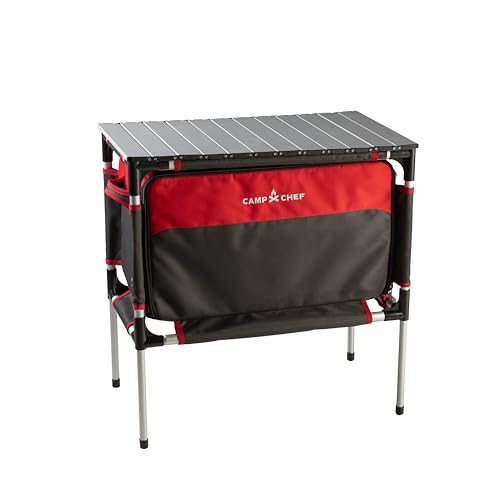
2. Camp Chef Sherpa Table and Organizer
A folding table with a steel frame and an attached organizer rack for tools. It is built for camp cooking, which makes it a good prep station beside your oven.
Suits: prep and serving space. Strengths: sturdy frame and tool storage. Weaknesses: check the heat limits before placing an oven on it. Skip it if you need a surface for hot ovens.

Best for party prep space
3. Lifetime Folding Utility Table
A familiar blow-molded folding table with steel legs. It is useful as a prep or serving surface next to your oven, though not as a base under a hot oven.
Suits: party prep space. Strengths: folds flat and carries easily. Weaknesses: a plastic top can melt under a hot oven. Skip it if you plan to set an oven on it.

Best for roccbox owners
4. Gozney Roccbox Stand
A stand made by the oven maker to carry the Roccbox at a comfortable height. Match the model to your oven and check the listing for current details.
Suits: Roccbox owners. Strengths: made to fit the oven. Weaknesses: only suits that oven. Skip it if you own another oven.
View Gozney Roccbox Stand on Amazon
Best for camping or small yards
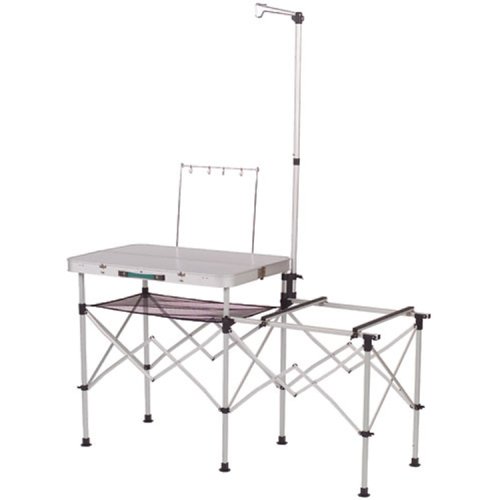
5. Coleman Pack-Away Camp Kitchen
A camp kitchen with a folding frame and several work surfaces. It is useful as a prep area near an oven, and it packs into a carry bag.
Suits: camping or small yards. Strengths: a lot of work surface in one pack. Weaknesses: not meant for hot ovens. Skip it if you want a base for the oven.

Best for temporary prep space
6. Flash Furniture Bi-Fold Folding Table
A bi-fold plastic table that is easy to store and carry. It works as a simple prep surface for dough and toppings next to a pizza oven.
Suits: temporary prep space. Strengths: easy storage and a wide top. Weaknesses: light-duty construction. Skip it if you want a heavy-duty stand.

Care and Setup
- Place a heat-safe board or stone slab under any oven that sits on a table.
- Check the legs and locks before every use.
- Wipe stainless tops with a damp cloth once cool.
- Fold and store tables dry to prevent rust or warping.
Mistakes to Avoid
- Placing an oven on a plastic table not rated for heat.
- Ignoring the weight limit for the oven and fuel.
- Using a table on soft or uneven ground.
- Putting the oven too close to a wall or fence.
Oven Weight and the Stand Load Rating
The first number to find is the weight of your oven, because every other decision follows from it. Pizza ovens vary widely, from light portable models to heavy insulated domes, and the listing or manual states the weight. Add what else will sit on the stand: a baking stone or peel if they are stored there, fuel such as wood, charcoal or a gas cylinder, and the occasional tray of food. That total is the load the stand must carry.
Then look at how the stand’s rating is stated. Some listings give a total weight capacity for the table, while others give a figure per shelf, or none at all. A rating that is vague is a reason for caution. A folding table made for light prep work may collapse under a heavy oven, even if the top looks sturdy. Also consider that weight is not evenly spread. A concentrated load on the center of a thin tabletop is harder on it than the same load spread over the surface.
- Choose a stand with a clear rating comfortably above your total load.
- Check the leg design, the cross bracing and the locking mechanism of any folding model.
- Put the heaviest items on the lowest shelf, if there is one, to keep the stand stable.
- If the listing does not state a rating, ask the seller or choose another model.
Heat Clearance and Surface Materials
Oven weight is only half of the story. The base of a pizza oven gets hot, and the heat travels into whatever sits underneath. Stainless steel and stone handle this better than plastic, which can soften, warp or melt. Even a steel top can transmit heat and scorch what lies beneath it, or discolor from repeated use. For that reason, makers often specify a minimum clearance between the oven and the surface, and some require a heat-resistant board or a stone slab as a barrier.
Read the oven manual before you decide on a stand. It may list the surfaces that are safe and the distance needed from the sides and rear to walls, fences or other objects. Stands made by the oven maker are designed around these requirements, but even then you should follow the instructions about placement and any shield or insulating layer.
- Never place a hot oven on a plastic tabletop, even a thick one.
- Use a heat-resistant board where the manual recommends one.
- Keep fuel and flammable items away from the sides and back of the oven.
- Allow the oven and stand to cool fully before folding, covering or moving them.
Prep tables should sit beside the oven, not under or against it, so dough and toppings stay cool and manageable.
Working Height and Layout
A stand that is too low or too high makes pizza harder. When the oven opening sits near waist height, you can see the pizza, turn it with a peel and slide it in without bending or reaching. For most cooks, that means the top surface of the stand puts the oven floor somewhere around waist level, but this depends on your height and on how tall the oven is. Check the stand height on the listing, then add the height of the oven to see where the opening will be.
Layout matters too. You need a place to stretch dough, add toppings, rest finished pizzas and put down a hot peel. A single small table forces you to juggle. A two-surface setup, such as an oven stand with a separate prep table beside it, makes the flow simpler. A lower shelf is handy for wood, tools or a cover, though items stored there should be kept clear of heat and gas lines.
- Stand at the table, pretend to hold a peel, and check that you can reach the oven opening comfortably.
- Leave room to walk around the oven so you can feed wood or adjust a gas line.
- Keep a clear path from the prep table to the oven.
- Think about lighting if you cook in the evening.
Portability, Wheels and Storage
How you plan to use and store the stand will shape the best type. A rolling cart makes it easy to move the oven away from weather, but wheels add a risk if they are not locked. Choose a model with locking casters, and apply the locks whenever the oven is in use. A folding table takes up little room in the garage, though a table that folds is also a table with hinges, and each hinge or lock is a point to check before every use.
Think about the surface you plan to place it on. Soft ground, grass and sloped patios can make a stand wobble, and uneven legs can let it tilt. A level patio or pavers are best. If the ground is uneven, look for adjustable feet, or use a solid base underneath the stand.
- Check the folded size to see if it fits in your car, garage or shed.
- Look for rust-resistant finishes if you leave the stand outdoors.
- Wipe it dry and store it under cover when not in use.
- Do not roll a hot oven. Wait until the stand and the oven are cool.
If you travel with the oven, make sure the stand packs flat and is light enough to carry comfortably.
Matched Stands Versus General-Purpose Tables
The list includes tables made for specific ovens and others that are general-purpose. A matched stand is built around one oven’s footprint and weight, so the fit is better and the maker can specify the heat clearances. That reassurance comes with a catch: it works only for that oven, and you should confirm the exact model on the listing, because makers change designs.
A general-purpose steel table or camp station can be a good value if it has a clear weight rating and a heat-resistant top. Many people use such tables for prep and keep the oven on its own stand, which keeps hot and cool zones separate. Light plastic folding tables are fine for dough and toppings but are not designed to hold a hot oven.
- Match the stand to the oven model by name, and check the dimensions of the top against the oven’s footprint.
- Look at whether the oven’s feet sit securely on the top without overhanging the edges.
- Ask what accessories or shelves come in the box.
- Use the oven maker’s guidance as the final word on what surface is safe.
When in doubt, choose the sturdier option and use lighter tables for support tasks.
Stand Buying Checklist for a Pizza Oven Owner
A good stand puts the oven at a comfortable height and keeps it steady while you launch and turn pizzas. Before you choose, check these points against your oven and your patio.
- Footprint match. Compare the oven’s base dimensions with the top surface of the stand. The oven should sit fully on the surface with margin for its feet.
- Working height. Stand beside your kitchen counter and note where your hands feel natural. The oven opening should land near elbow level to avoid stooping.
- Work space. Look for side shelves or an adjacent surface where you can rest a peel, dough and toppings.
- Stability on your ground. Check whether the legs have adjustable feet or locking casters, and whether your surface is level.
- Storage. A lower shelf is handy for fuel, tools or a cover.
- Portability. Folding designs pack away but may trade some rigidity for convenience.
Always read the maker’s guidance for both the oven and the stand. They state the surfaces that suit the oven and any minimum distance from walls and other objects.
Mistakes People Make with Stands
Most problems come from mismatched expectations rather than faulty products. Avoid these common slips.
- Placing the oven on a surface not meant for heat. Check the stand’s description for the materials it is made from and follow the oven maker’s directions on what may sit beneath it.
- Ignoring wind. Light folding stands can shift in a gust when the oven is on top. Choose a sheltered spot and use any locking features supplied.
- Using it on soft or sloping ground. A wobbly base is the first sign of an uneven surface. Move to firm, level ground.
- Skipping assembly steps. Tighten all fasteners and recheck them after the first few uses, as hardware can settle.
- Treating a side table as a work bench. Heavy kneading or chopping on a light shelf can strain it. Use a proper counter for tough tasks.
Taking five minutes to set the stand level before every session is a simple habit that prevents most trouble.
Which Stand Style Suits Which Backyard
The right form depends on how and where you cook. Use this guide to match style to situation.
| Situation | Style to consider | Reason |
|---|---|---|
| Permanent patio spot | Fixed table with shelves | Solid feel and generous prep room |
| Cooking at different places | Folding or collapsible table | Easy to carry and store |
| Small balcony or deck | Compact stand | Smaller footprint |
| Regular entertaining | Wide table with side space | Room for toppings and tools |
| Moving around the yard | Cart with wheels | Easy repositioning |
If you host guests often, favor generous surface area over compactness. If you travel with the oven, favor low weight and a quick fold. If you are unsure, ask yourself where the oven will spend most of its time and choose for that spot, because convenience in daily use matters more than the occasional trip.
Care and Storage Through the Seasons
Outdoor furniture ages with sun, rain and temperature swings, so a little upkeep goes a long way. Wipe the stand down after it has cooled, clearing flour dust, ash and food splatter before they harden. Dry metal frames with a cloth, since lingering moisture invites rust on exposed edges, and check any bolts or hinges for looseness.
When the cooking season ends, move the stand to a dry shed, garage or covered corner if you can. If it stays outside, use a fitted cover and keep the legs off standing water. Follow the maker’s cleaning guidance for the finish on your stand, whether it is coated steel, aluminum or wood, because each material reacts differently to cleaners.
Before each session, give the stand a quick shake test with the oven off and cool. If the table rocks, adjust the feet or move it to firmer ground. Never place a hot oven on a stand you have not checked, and keep children and pets clear of the cooking area while the oven is in use.
Finally, think about how you will move the oven on and off the stand. Two people lifting is far easier on the back and the equipment than one person struggling alone, so plan for a helper on set-up day.
Before You Decide: The Ownership View
A stand is the least glamorous part of a pizza oven setup and the part most likely to be blamed when the whole arrangement feels awkward, so this extra section looks at the stand as a workstation in its own right: how it carries the oven, how you move around it, and how it copes with a full season of outdoor cooking.
How the Picks Above Compare When You Line Them Up
With six options on the table, the fastest way to a good decision is to compare the picks above in pairs rather than as a crowd. Start with the two that caught your eye and read their reviews back to back, asking the same three questions of each: what is it best at, what is its honest limitation, and whose home does it suit? The reviews above answer those questions in the same pattern for every pick, which makes the comparison fair. Cross off the one that loses on the question you care about most, then bring the next pick into the ring against the survivor.
The opening pair sets the tone for the list. The Ooni Modular Table and the Camp Chef Sherpa Table and Organizer represent two of the clearest approaches in this category, and the difference between them — in style, in priorities and in the kind of owner they suit — is the difference that matters for most buyers. If one of them feels immediately right, that instinct is worth noting, because it usually reflects your real habits rather than the headline features. If neither appeals, the middle of the list is where your answer probably lives.
The Lifetime Folding Utility Table and the Gozney Roccbox Stand occupy that middle ground, and they reward close reading. Picks in the middle of a list like this tend to balance competing virtues rather than maximise one, which makes them the safest choice for households whose needs are mixed: two cooks with different priorities, a space that must serve several jobs, or a buyer who simply wants no drama. Compare their stated strengths against your own week and see which set of compromises you would rather live with daily.
At the end of the list, the Coleman Pack-Away Camp Kitchen and the Flash Furniture Bi-Fold Folding Table are the specialists and the reminders that there is more than one way to solve the same problem. A specialist pick is the wrong choice for most people and the perfect choice for a few, and only an honest account of your own situation tells you which group you are in. Do not dismiss them for being different, and do not choose them for being interesting; choose them if their particular strength is the exact thing your current setup lacks.
Finish the comparison with a short written exercise. On paper, list your three non-negotiables — the size limit, the job it must do brilliantly, the habit you refuse to change — and score each surviving pick against them in a sentence each. The exercise takes ten minutes and it converts a fog of impressions into a decision you can explain. Owners who choose this way rarely look back, because the choice was made against their own criteria rather than against a stranger’s enthusiasm.
Ground, Slope and the Surface Under the Stand
Patios and decks are rarely as flat as they look. A slight slope that a garden chair hides will make a loaded stand lean, a peel slide and an oven sit at an angle its maker did not intend. Before the oven goes on, set the stand where it will live and check it from several sides, rocking each corner gently to find any wobble. Adjustable feet, shims on a solid base or a different spot on the patio usually cure the problem, and curing it before a hot oven is involved is the only sensible order of work.
Consider what the ground does in bad weather too. A stand on grass or soil can sink a leg after rain and change its level overnight, while a stand on pale paving will show every ash spill and grease mark. A suitable mat or a paved pad under the working area keeps the setup tidy and makes sweeping up flour, ash and toppings a quick job instead of a stain-removal project. Leave drainage alone: never park the stand where water pools, because standing water is hard on feet, frames and fasteners alike.
Moving a Loaded Stand Without Regretting It
Sooner or later the stand has to move: for cleaning behind it, for winter storage or because the sun has shifted and the cook is roasting instead of the pizza. Plan the move while everything is cold. Take the oven off if the design allows it, empty shelves and hooks, and lift with two people using the frame, not the top edge or a shelf. Wheels help on smooth paving and hinder on gravel or lawn, so if your route crosses rough ground, carrying the unloaded stand is often easier than dragging it.
After any move, repeat the short version of setup day: level check, wobble check, and a look at the clearances around the oven position before the next firing. Fasteners can loosen a fraction when a stand is carried, and a thirty-second check with the right tool keeps a small looseness from becoming a wobble that only shows up under a full load of oven, stone and fuel. Treat the stand kindly during moves and it will repay you by feeling solid for years.
Hooks, Shelves and the Small Storage That Matters
The difference between a calm pizza night and a chaotic one is often a hook. Peels, brushes, cutters, towels and a spray bottle all need a home within arm’s reach of the oven, and stands with thoughtful rails, hooks or a lower shelf quietly provide it. When you compare the picks above, look at where each tool would actually hang or rest, and whether the storage sits where heat, ash or weather will reach it. A lower shelf is ideal for fuel and heavy items kept low and stable; it is a poor place for the towel you need mid-bake.
If the stand you choose is plain, add storage beside it rather than on it: a small weatherproof box or a wall hook near the cooking spot keeps the kit together without crowding the hot zone. Keep the set minimal and consistent, so anyone helping knows where things live. The goal is a setup where the cook’s hands are free for dough and peel, not a stand festooned with everything the household owns.
Sharing the Stand With Other Garden Jobs
In many gardens the stand earns its keep beyond pizza night, holding a portable grill, a drinks station or a potting tray at other times. Sharing is sensible, but set the rules early: the surface that hosts a hot oven must be clean and clear before the oven goes on, and anything stored on or under the stand between pizza nights should be quick to move. Residue from other jobs, especially oils and garden chemicals, has no place near a cooking surface, so give the top a proper wipe and a moment to dry before the oven is placed.
If the stand doubles up often, keep a simple reset routine: clear, clean, check for wobble, check clearances, cook. Written on a card kept with the pizza kit, that routine protects both the oven and the stand from the slow drift into a cluttered corner where nothing is quite ready. A stand with one clear job, even if it moonlights, will always outperform a surface that belongs to everything and nothing.
The Stand as a Workstation, Not Just a Table
Think of the stand as the centre of a small workstation with three zones: the hot zone where the oven sits, the working zone where dough is stretched and topped, and the landing zone where finished pizzas rest before slicing. When all three zones compete for the same small top, cooking feels frantic even in a good oven. Lay the zones out before you buy, using a garden table or a taped outline on the patio, and walk through a pretend bake: where does the peel rest, where do toppings sit within reach, and where does a hot pizza go the second it leaves the oven? The stand that answers those questions calmly is the right size, whatever the catalogue calls it.
Height deserves the same rehearsal. Stand at the surface you are considering and mime launching a pizza: your forearms should work comfortably without shrugging your shoulders or bending double. A stand that is a little low can sometimes be helped by where you stand and how you arrange the prep, but a stand that forces a stoop will punish you through every long session. If more than one person cooks, judge the height for the person who launches most often, and give the other a sensible spot for prep rather than trying to make one surface perfect for two different bodies.
When Something Seems Wrong: A Calm Troubleshooting Order
When an outdoor pizza oven stand stops behaving as it should, work through the boring causes before you assume the worst. Confirm the basics first: power or fuel connected and switched on where relevant, doors, lids or covers fully closed, settings where you think you left them, and nothing blocking vents, intakes, burners, sensors or moving parts. Many faults that feel like breakdowns are a tripped safety feature, a blocked path or a control left in an odd state after cleaning. The manual for most products has a troubleshooting table written for exactly this moment, and it is worth following in order rather than skipping to the expensive conclusion.
Change one thing at a time and note what you changed, so you can tell the maker or a repairer a clear story if you need help. If the product involves gas, mains electricity, refrigerant or anything the manual reserves for qualified service, stop at the checks the manual allows an owner to do and call a professional for the rest. Keep a simple log of the symptom, the date and what fixed it. Patterns in that log are gold: a fault that follows a particular weather spell, a heavy load or a long gap between uses is telling you something about how the product wants to be run, and the next occurrence becomes a five-minute fix instead of a ruined evening.
Getting More Years Out of What You Buy
Longevity with an outdoor pizza oven stand is mostly decided by small, unglamorous choices. Protect the product from the conditions it was not built for: standing water, relentless weather, corrosive cleaners, knocks during moves and long neglect between seasons. Where the maker offers a cover, a storage position or a winter routine, use it; those recommendations are written from warranty claims, not from theory. Handle the parts that move, seal or bear weight with a little care, because those are the parts that wear first and are often the hardest to replace once a model is discontinued.
Keep a small kit for the product: the cleaner the maker approves, any specialist tool it shipped with, and the spare consumables you know you will need, stored together rather than scattered around the house. When you move house or rearrange the space, treat the product like the appliance it is: empty it, secure moving parts, lift with help and re-check it sits level in the new spot. Owners who think of an outdoor pizza oven stand as equipment to be kept, rather than a purchase to be consumed, routinely get years more service from the same product, and they spend the money they save on better ingredients, better gatherings and better weekends.
Delivery Day, Unboxing and the First Hour
When an outdoor pizza oven stand arrives, slow down for the first hour even if you are keen to use it. Check the box and the product for transit damage before you sign anything you cannot unsign, and photograph anything that looks wrong while the packaging is still around it. Keep every bag of small parts together in one labelled container until the setup is finished, because the screw or bracket you set down casually is the one that vanishes. Read the first pages of the manual before you remove protective film or packing from working surfaces, since some products have transport locks, shipping braces or first-use steps that are easy to miss.
Set the product in place, check it sits level and stable, and run whatever first-use step the manual describes before you rely on it for real cooking, cooling or storage. This is also the moment to register the warranty if the maker offers registration, and to store the manual, the receipt and a photo of the model label somewhere you can find them in a year. Owners who do this dull admin on day one are the ones who get quick help later; everyone else ends up hunting for a model number on their knees with a torch. Finish by putting the packaging somewhere dry for a short while, in case a fault shows up in the first days and the product has to travel back.
Repair or Replace: Judging the End of a Product’s Run
Every outdoor pizza oven stand eventually reaches the point where money spent keeping it going would be better spent on its replacement, and the honest signals are usually clear if you look for them. Performance that no longer recovers after a proper clean and the maker’s own troubleshooting steps is one signal. Repeated faults in the same system, parts that the maker no longer lists, and damage to the main body, frame or cooking or cooling chamber are others. Cosmetic wear, by contrast, is a poor reason to replace a product that still does its job safely and well; a faded finish or a scuffed handle costs nothing to live with.
When you do judge a product finished, use what it taught you. Your notes about what annoyed you, what you cleaned most and which feature you never touched are a better buying guide than any advertisement, because they describe your household rather than an average one. Carry those lessons back to the picks above: the right replacement is usually the one that fixes your old product’s specific weakness, not the one with the longest feature list. Dispose of the old product through the route your area provides for appliances or metal goods, remove anything the maker says to remove first, and keep the manual until the replacement is settled in, since measurements and habits often transfer.
More Questions Before You Buy
Where should the stand go in a small garden?
Against a wall or fence with the clearances the oven maker requires, on level ground, and with room to stand and work the peel without backing into plants or furniture. Try the spot with a taped outline before you commit to it.
How often should I tighten the stand’s fixings?
Check them at the start of the season, after any move and whenever you notice a wobble. A short check with the right tool keeps joints snug; do not overtighten into soft materials, and replace any fixing that has corroded rather than forcing it.
Can I leave the stand outside all year?
That depends on its materials and your climate. Many owners cover the stand or move it under shelter for the wettest months, dry it after storms and check fasteners at the start of the season. Follow the maker’s guidance for the specific stand, and never leave an oven sitting on a stand that has started to corrode or wobble.
What should I put between the oven and the stand top?
Only what the oven maker allows. Some ovens sit directly on a suitable surface, while others need their own feet or a specified mat. Check the oven manual rather than improvising with boards or cloth, which can trap heat or moisture in the wrong place.
How do I stop the stand marking my patio?
Furniture pads or a suitable outdoor mat under the feet spread the load and catch drips. Choose something that tolerates heat nearby and does not hold water against the feet, and lift rather than drag the stand when you move it.
Is a folding stand strong enough for a pizza oven?
Some are, many are not, and the answer lives in the stated load limit and the heat guidance for that exact model. The reviews above flag which picks suit oven duty and which are better kept as prep surfaces, so match the stand’s stated limits to your oven’s weight before deciding.
Final Practical Notes Before You Decide
Finally, buy for the household you have, not the one in the advertisement. The right outdoor pizza oven stand is the one sized for your real gatherings, suited to your real space and matched to the maintenance you will honestly do. The picks above differ precisely because households differ, and the most satisfied owners are the ones who chose against their own habits and rooms rather than against a headline. Choose honestly, set it up carefully, keep the simple routines, and the product will repay you quietly for years.
Accessories deserve a cooler head than they usually get. Live with the outdoor pizza oven stand for a while before adding extras, and let real use tell you what is missing: the tool you reach for and do not have is a genuine need, while the gadget bought in the first flush of enthusiasm usually ends up in a drawer. When you do add something, choose the version made or approved for your model where the maker offers one, and keep the same discipline as the main purchase — it should solve a problem you actually have.
Seasonal changes are a useful prompt for a walk-around check of any outdoor pizza oven stand. At the turn of the year, look over the product and its surroundings: clearances still respected, surfaces clean, moving parts free, supplies stocked and nothing stored where it should not be. Households drift, and objects migrate into the spaces around appliances. A short seasonal reset keeps the setup you planned from quietly becoming the setup you would never have chosen.
One more habit separates satisfied owners from frustrated ones: keep the paperwork. The manual, the receipt and a note of the model details belong together, whether that means a folder, a drawer or a photograph stored with your other house documents. When a question arises in a year — a part, a setting, a warranty query — the answer is usually in those pages, and finding them in two minutes instead of twenty changes a small problem back into a small problem.
It is also worth setting a simple review date. A few months after an outdoor pizza oven stand arrives, once the novelty has worn off, look at it with fresh eyes: is it positioned where it works best, are the accessories you actually use the ones within reach, and is there one small change — a moved shelf, a different routine, a better storage spot — that would make daily use smoother? Products settle into a household over time, and a short review catches the improvements that were invisible on day one.
If you share the outdoor pizza oven stand with other people, share the knowledge too. The person who read the manual should not be the only person who knows the quirks: which setting behaves how, what the warning signs of a problem look like, and where the shut-off or the spare supplies live. Five minutes of showing beats a season of each person learning the same lessons separately, and it prevents the well-meant mistake made by someone who was never told.
Budget a little patience for the learning curve, whatever you choose from the list above. Almost every product in this category rewards its owner more in the third month than in the first week, because technique, placement and routine have had time to settle. Judging a purchase too early — or abandoning a sound product for a different one before learning it — is the most expensive habit in any kitchen. Give the choice a fair season before you grade it.
Pizza Oven Stand FAQ
Can I put any pizza oven on any table?
No. Check the weight, heat rating and the clearance the maker requires under and around the oven. Some makers offer matched stands.
What height is best?
A top near waist height is comfortable for most cooks, since you can see the pie and use a peel without bending.
Do I need a stand with wheels?
Wheels help you move the oven out of the weather, but make sure they lock before you cook.
Can I use a folding table for prep?
Yes, folding tables are fine for dough and toppings, as long as they sit away from the hot oven.
How do I know if a table can hold my oven?
Find the oven's weight in its manual, add fuel and accessories, and compare the total with the table's stated load rating. If no rating is given, choose a different table.
Can I put a pizza oven on a wooden table?
Check the oven manual. Wood is combustible, so many makers require a non-combustible, heat-resistant surface or a protective barrier. Do not assume a wooden table is safe.
Is stainless steel better than aluminum for a stand?
Both can work. What matters is the stated load rating, heat tolerance and construction. Read the listing for material details and the weight limit.
What height should the oven opening be?
Around waist height suits most cooks, but it depends on your height and the oven. Add the oven height to the stand height to see where the opening will be.
Do I need a heat shield under the oven?
Some makers recommend one. The oven manual will say what barrier or clearance is required, and a heat-resistant board or stone slab is a common solution.
Can I use a stand with wheels?
Yes, if the wheels lock firmly and the surface is level. Lock them before lighting the oven and never move the stand while the oven is hot.
How do I stop a folding table from wobbling?
Put it on level ground, check the locks and legs and add a shim or adjustable feet if needed. If it still wobbles, do not place a hot oven on it.
The Short Version
For a matched table, the Ooni Modular Table. For a prep station, the Camp Chef Sherpa. For a classic folding table, the Lifetime. For Roccbox owners, the Gozney stand. For camp setups, the Coleman Pack-Away. For light prep, the Flash Furniture bi-fold.