An electric pressure cooker speeds up stews, rice, beans and roasts with sealed steam pressure, and many also slow cook, saute and steam. For a household of four or more, capacity and safety features matter most. The best electric pressure cooker for a family is big enough, easy to clean and simple to use.
The six models below cover mainstream brands and sizes. We have not used these products ourselves, so confirm the capacity, included accessories and functions on the current listing before buying. Many brands sell several sizes, so choose the size that fits your usual meals.
As an Amazon Associate we earn from qualifying purchases. Links below are affiliate links, and they do not change the product information we give.
What to Look For
| Feature | Why it matters |
|---|---|
| Capacity | Six quarts suits most families; eight quarts suits big batches and roasts |
| Functions | Pressure cook, saute, steam, slow cook and yogurt are common |
| Safety | Look for a locking lid and pressure release controls |
| Inner pot | Stainless steel is durable; non-stick coatings are easier to clean |
| Footprint | Measure the counter and the cabinet where you store it |
| Accessories | A steamer rack, spare ring and lid holder add value |
In this guide
Specs at a Glance
| Cooker | Style | Size note | Functions |
|---|---|---|---|
| Instant Pot Duo | Multi-cooker | 6-quart class | Pressure and slow cook |
| Instant Pot Duo Plus | Multi-cooker | 6 or 8-quart class | Extra programs |
| Ninja Foodi 8-Quart | Pressure and air fry | 8-quart class | Crisping lid |
| Crock-Pot Express Crock | Multi-cooker | 6 or 8-quart class | Pressure and slow cook |
| Cosori 6-Quart | Multi-cooker | 6-quart class | Guided programs |
| Breville Fast Slow Pro | Multi-cooker | 6-quart class | Pressure and slow cook |
The 6 Best Electric Pressure Cookers for Family

Top pickBest for families new to pressure cooking
1. Instant Pot Duo 7-in-1 Electric Pressure Cooker
The best-known multi-cooker, with pressure cooking, slow cooking, rice cooking, steaming and more in a stainless inner pot. It is sold in several sizes, with a six quart class common for families.
Suits: families new to pressure cooking. Strengths: a huge recipe community. Weaknesses: several buttons to learn. Skip it if you want an air fryer lid.

View Instant Pot Duo 7-in-1 Electric Pressure Cooker on Amazon

Best for more recipe variety
2. Instant Pot Duo Plus 9-in-1
A step up from the Duo with additional cooking programs, such as sous vide and cake, and a built-in steam release feature on some versions.
Suits: more recipe variety. Strengths: extra programs. Weaknesses: more menus to learn. Skip it if you want the simplest model.

Best for large families who love crisp finishes
3. Ninja Foodi 8-Quart Pressure Cooker
A large pressure cooker from Ninja that adds a crisping lid for air frying and finishing dishes. It is built for big meals with a crispy topping.
Suits: large families who love crisp finishes. Strengths: an air-crisp lid. Weaknesses: a big, heavy unit. Skip it if you need a small body.
View Ninja Foodi 8-Quart Pressure Cooker on Amazon
Best for those who also like slow cooking
4. Crock-Pot Express Crock Multi-Cooker
A pressure cooker and slow cooker from Crock-Pot with preset programs for soups, rice and meat. It brings a famous slow cooking brand to the pressure category.
Suits: those who also like slow cooking. Strengths: a familiar brand and presets. Weaknesses: fewer recipe resources than rivals. Skip it if you want a stainless pot.
View Crock-Pot Express Crock Multi-Cooker on Amazon
Best for those wanting a clear interface
5. Cosori Electric Pressure Cooker
A well-reviewed multi-cooker from Cosori with a stainless pot, a clear display and guided programs. Check the listing for the current specs.
Suits: those wanting a clear interface. Strengths: a clean display. Weaknesses: a smaller brand history. Skip it if you prefer a long-running name.
View Cosori Electric Pressure Cooker on Amazon

Best for home cooks who like fine control
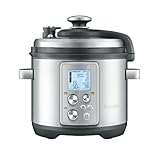
6. Breville Fast Slow Pro
A premium multi-cooker from Breville with pressure and slow cook modes, an LCD display and automatic pressure release options.
Suits: home cooks who like fine control. Strengths: polished design. Weaknesses: a higher spend. Skip it if you want a basic model.
Care and Setup
- Check the sealing ring is seated before every cook.
- Wash the lid, ring and inner pot after use, and air out the ring.
- Clean the steam release valve so it stays free of food bits.
- Store the lid inverted or loose to prevent odors.
- Replace the sealing ring when it stretches, cracks or holds smells.
Mistakes to Avoid
- Filling the pot past the maximum line.
- Skipping the minimum amount of liquid.
- Forcing the lid open before pressure is gone.
- Using the quick release on foamy or starchy foods.
- Using a pot that is dented or warped.
How Pressure Cooking Actually Saves Time
An electric pressure cooker seals the pot so steam cannot escape. Trapped steam raises the pressure, which raises the boiling point of water, so food cooks at a higher temperature than in an open pot. That is why tough cuts of meat, dried beans and whole grains cook far faster than on the stovetop.
The time on a recipe is only part of the process. The cooker needs time to come up to pressure, and the pressure has to release afterward. Added together, these steps can take a good while, especially with a full pot of cold liquid. Compare your total time against a stovetop or slow cooker method before assuming you will save much, and recognize that the big gains are with long-cooking foods.
Pressure cooking also suits hands-off cooking. Once the lid is locked and the program is running, the machine regulates itself, which lets you do something else. That is a benefit for busy families who want a dinner without watching a pot.
The method has limits. Quick-cooking foods such as delicate fish or thin vegetables can overcook in seconds, and crisp textures do not come from a sealed pot. Some cookers add lids for air frying, sauteing or searing, which broadens what you can do. Check the product listing to see which functions are included and which need a separate lid or accessory.
Pressure Release Methods and When to Use Them
When cooking ends, you can let the pressure fall on its own or release it manually. Natural release means leaving the cooker alone until the pressure drops. It is gentler, and it suits meats, soups and beans because liquid stays calm and meat stays tender. Quick release means opening the vent to let steam out. It stops the cooking quickly, which suits vegetables, pasta and anything that overcooks.
Foamy or starchy foods such as beans, oatmeal and pasta can sputter through the vent during a quick release. Use natural release or a pulsed release for these, and keep your hands and face away from the steam. Follow the manual for the proper method.
Never force the lid open. The lid is designed to lock while the pot is under pressure, and attempting to override it is dangerous. Wait until the pressure indicator drops and the lid releases easily. If the lid will not turn, the pot is still pressurized.
Many recipes will specify which release method to use, and following it matters to the result. If a recipe does not specify, a short natural release followed by a quick release is a common middle path, but check your cooker’s manual.
- Use natural release for meat, soups and foamy foods.
- Use quick release for vegetables and delicate items.
- Keep the vent away from your face and from cabinets.
- Do not move the cooker while it is pressurized.
Liquid, Fill Lines and Safe Loading
A pressure cooker needs a minimum amount of liquid to build steam. The manual or the inner pot will state a minimum, and a recipe written for your size of cooker will respect it. Cooking without enough liquid can trigger a burn warning or fail to build pressure. Thick sauces, such as tomato or cream, can sit on the bottom and scorch, so layer them on top without stirring, or add them after pressure cooking.
The maximum fill line is equally important. Most pots mark a maximum fill, and cooks generally fill foods that expand, like beans and rice, only to a lower point than the max. Overfilling can block the vent and cause sputtering or unsafe pressure behavior. Follow the markings and the manual.
Check the sealing ring and the vent before every use. The silicone ring should be seated in the lid and free of cracks. The steam release valve should be clean and set to the sealing position. A blocked valve is a real hazard, so look at it and clean it regularly.
Foods that foam, such as some grains and beans, call for care. Do not fill them beyond the point the manual suggests. Avoid cooking foods the manual warns against in the pot, as different makers have different advice.
Be careful when lifting the lid, since steam and hot condensation can scald. Tilt the lid away from you and let any water drip off before setting it down.
Meal Planning and Batch Cooking for a Family
A pressure cooker is most helpful when it fits a weekly routine. Cook large batches of beans, shredded chicken, pulled pork, rice or stock, then use them in meals through the week. Freezing portions in labeled containers lets you reheat dinner on short notice.
One-pot meals are a natural fit: stews, chili, curries, soups and pasta dishes. For a variety of meals, learn a handful of reliable base recipes and adjust seasonings. Cooking proteins and sides together in a stacked pan or with a trivet can create full meals in a single pot, though timing needs thought, as foods must have similar cooking times.
If your family has different tastes or dietary needs, cook components separately: plain protein, plain rice, and sauces that people add to their own bowls. Cooking a base for a few meals saves time and keeps leftovers varied.
Check how the cooker handles keep-warm. Leaving food on warm for a long time dries it out and can pose a food safety concern if it falls below safe holding temperatures, so follow the manual and food safety guidance. Cool leftovers promptly and refrigerate or freeze them in shallow containers.
Also consider your batch size. A cooker that is only half full still works, but a full pot can take longer to reach pressure. Choose recipes that fit your pot’s capacity as stated by the maker, and scale carefully.
Cleaning, Seals and Long-Term Care
Take the inner pot, lid and sealing ring apart after each use. The inner pot is usually dishwasher safe, but check the manual and the pot material. Wash the lid by hand and clean the area around the steam valve, because food residue there can block the release. Do not immerse the heating base in water, and wipe it with a damp cloth.
Silicone sealing rings absorb odors from strong foods like curry or garlic. Some people keep a spare ring for savory dishes and another for sweet ones, which is a practical idea if you cook a mix. Washing the ring and airing it out helps reduce smells. Replace rings that look cracked, stretched or loose, since a worn ring can leak steam and prevent pressure from building.
Check the condensation collector at the back or side, if the model has one, and empty it. Wipe the heating plate under the pot to remove debris, so the pot sits flat and heats evenly. A dented inner pot may not sit right, and a scratched nonstick coating, if there is one, can flake.
Signs of trouble include steam leaking from the lid edge, failure to reach pressure, error messages that repeat, damage to the cord and unusual smells. Stop using the cooker and contact the maker or consult the manual. Lower-priced models usually have fewer programs and simpler pots, while higher-priced ones often add more functions or sturdier parts, but check the listing. Ask about replacement parts, and read the warranty.
A Checklist for Picking a Family Pressure Cooker
A pressure cooker for a family needs room, simple controls and sturdy parts. Use this list while comparing the six models above, and think about your usual mealtime.
- Choose a capacity that matches the number of people you cook for, with room for batch cooking.
- Check which functions are included, such as pan-brown, slow cook, steam and rice.
- Look at the control panel and whether presets are clear and easy to follow.
- See what the lid locking and release system looks like.
- Read about accessories in the box, such as a steam rack and spoon.
- Check the footprint on your counter and the cupboard height for storage.
Larger capacity sounds appealing, but remember that pressure cookers have maximum fill lines, and a bigger pot takes longer to come to pressure with small portions. Balance the size against typical meals.
Pressure Cooker, Slow Cooker and Stovetop Pot Compared
Where does a pressure cooker fit among the usual pots? The table gives an overview.
| Appliance | Strengths | Trade-offs |
|---|---|---|
| Electric pressure cooker | Fast for stews, beans, grains and tougher cuts | Needs a learning curve and sealing parts |
| Slow cooker | Hands-off all day cooking | Takes hours and does not brown |
| Stovetop pot | Full control and no special parts | Needs attention |
| Multi-cooker | Several functions in one | Bulkier than a single-purpose pot |
A pressure cooker shines for soups, chili, rice, beans and braised meat, where time savings are most noticeable. For quick pan-fried dishes, a regular pan remains handy.
Steps for a Confident First Meal
The first use can feel intimidating, but a simple routine makes it easy. Follow the manual closely at every stage.
- Read the manual and identify the lid, sealing ring, valve and fill lines.
- Run the water test the maker recommends to see how the cooker behaves.
- Add ingredients and liquid within the stated limits.
- Close the lid, set the valve as directed and choose the program.
- When cooking finishes, release pressure by the method the recipe and manual suggest.
- Open the lid carefully, tilting it away from you.
Pressure cooking involves steam and hot liquid, so follow the manufacturer safety instructions at each step. Never force a lid open, and keep your face and hands away from steam vents. If the cooker behaves unexpectedly, stop and consult the manual or the maker support.
Cooking Ideas for Busy Family Weeks
Batch cooking is where a family cooker pays off. Make a big pot of chili or soup on a calm day and portion it for later, cook a large batch of rice or beans to use in several meals, or prepare shredded chicken for tacos, salads and sandwiches. One pot meals reduce washing up, which tired households appreciate.
Plan the week with two or three base recipes that you can adapt with different sides and sauces. Follow trusted food safety guidance on cooling and storing leftovers, and label containers with dates. Keep the sealing ring clean and replace it according to the maker advice, so the cooker stays dependable through busy seasons.
Caring for Seals, Valves and the Inner Pot
The parts that hold pressure deserve regular attention. After each use, remove the sealing ring and wash it with warm soapy water, and check that it sits snugly when replaced. Rinse the valve and vent according to the manual, and look for blockages caused by food residue. Wash the inner pot by hand or in the dishwasher as the maker allows.
Sealing rings can absorb strong smells, so some households keep a spare for sweet dishes and another for savory ones. Replace worn or cracked parts with versions made for your model, and avoid using damaged equipment. A few minutes of care after each meal keeps the cooker safe, tidy and ready for the next recipe.
Choosing a Electric pressure cooker Around How You Really Cook
Choosing a electric pressure cooker means deciding which jobs you want one appliance to absorb for family meals. Pressure cookers trade time for attention at the start: once the lid is sealed, they largely look after themselves. Slow cookers trade speed for complete hands-off gentleness. Multi-cookers try to cover both, plus rice, steaming, and more, in a single pot. Be honest about your week. A household that needs dinner fast on weeknights lives differently from one that wants a stew waiting after work, and the picks above lean in different directions for exactly that reason.
Capacity is the decision people most often get wrong. Too small, and a family meal or a batch of soup does not fit, especially since pressure cooking needs headroom for liquid and foam. Too large, and the pot takes over the counter, small portions cook awkwardly, and washing up feels disproportionate. Think in terms of your biggest regular meal and your most common one, and compare them with the capacities described in the listings above. Remember that stated capacity is the pot size, not the sensible fill level for every cooking method.
Controls and programmes deserve a sceptical eye. A long list of preset buttons looks impressive, but most owners use a handful: pressure cook, saute, slow cook, rice, and keep warm cover the great majority of real meals. What matters more is whether the controls are clear, whether manual adjustment is easy, and whether the lid, sealing ring, and inner pot feel straightforward to handle and clean. If other people in the household will use the electric pressure cooker, choose the interface the least confident cook can manage.
Finally, consider the ecosystem around the pot: the inner pot material and whether it suits your cleaning habits, the availability of a spare sealing ring, and whether the lid design fits your storage. These unglamorous details decide whether the appliance becomes a daily tool or a cupboard resident. The descriptions above note pot types and lid styles for each pick, so use them when you compare.
Where a Electric pressure cooker Earns Its Keep
Weeknight dinners under time pressure
Pressure cooking turns dried beans, tough cuts, and frozen starts into realistic weeknight options. The pattern that works is simple: build flavour with a quick saute where the model allows it, seal the lid, and use the cooking time to make the sides and clear the counter. For busy households this rhythm, more than any single recipe, is what a electric pressure cooker is really selling.
Set-and-forget meals for workdays
Slow cooking suits the opposite schedule: ten minutes of preparation in the morning for a meal that waits patiently. It is forgiving of cheaper cuts and deep flavours, and it asks only that you respect fill levels and food safety, keeping perishable ingredients refrigerated until cooking starts rather than sitting in the pot for hours beforehand.
Batch cooking and feeding a crowd
A larger pot earns its space when you cook once and eat several times: soups, curries, pulled meats, and grains all scale well. Cool leftovers promptly, refrigerate them in shallow containers, and label them with the date. Batch cooking also spreads the washing up, which is part of why owners of a good-sized electric pressure cooker tend to use it more, not less.
Small households and simple meals
A compact model is not a compromise if your meals are modest: rice for two, a small stew, or steamed vegetables alongside something else. Smaller pots heat and pressurise quickly and wash easily. The trick is choosing the small size deliberately, for the meals you actually cook, rather than discovering it cannot handle the one big dish you make every month.
Setup, Placement and Safety Basics
Unbox your electric pressure cooker and wash the inner pot, lid components, and accessories as the manual directs before the first meal. Every design has its own arrangement of valves, rings, and condensation collectors, and ten minutes spent learning where they sit and how they come apart will save confusion later. Do the water test if the manufacturer recommends one: it proves the pot seals and pressurises, teaches you the sounds and steam behaviour that are normal, and means your first real meal is not also your first experiment.
Set the appliance up on a stable, heat-resistant surface with room above it, because steam releases from the valve and should not fire directly into the underside of cabinets. Keep the cord short and tidy, away from the sink and the hob. Decide where the lid will rest during serving before you start cooking; a lid dripping condensation across the counter is a small annoyance that a planned landing spot eliminates.
Read the safety guidance in the manual properly, once, even if you have used a similar appliance before. Modern electric pressure cookers have layered safety systems, but they rely on the user keeping valves clear, rings seated, and fill levels sensible. Knowing what normal steam release looks and sounds like is what keeps you calm and competent the first time you use the quick release on a pot of soup.
Getting the Best From It Day to Day
Good results come from respecting how these appliances cook. In a pressure cooker, liquid is not optional: steam is the medium, so recipes need enough thin liquid, and thick sauces should be thinned or layered so they do not scorch on the base. Build thickness at the end of cooking rather than the beginning. In a slow cooker, resist lifting the lid, because each peek dumps the accumulated heat and adds noticeably to the cooking time.
Layer ingredients thoughtfully. Dense vegetables that need the most cooking go near the heat, delicate items go in later or on top, and dairy and fresh herbs generally join at the end in both methods. Use the saute function, where fitted, to brown meat and soften onions before the main cook; it is the single easiest way to deepen flavour, and it happens in the same pot, so the washing up does not grow.
Learn the release methods if you pressure cook. Natural release suits foamy foods, large cuts, and anything where a sudden boil would spray starch through the valve. Quick release suits vegetables and delicate foods that overcook in minutes. The manual for your model explains which release it expects for which foods, and following that guidance is the difference between a clean counter and a starchy fountain. Whatever the method, keep hands and face away from the steam path.
Cleaning, Care and Storage
Cleaning a electric pressure cooker well is mostly about the lid and the ring. Wash the inner pot after every use, and clean the lid components as the manual directs, paying attention to the valve area and any anti-block shield, because trapped food there affects the next cook. Sealing rings absorb odours from strongly spiced meals; many owners keep a spare ring and rotate between a savoury and a neutral one, which is a cheap fix for cheesecake that tastes faintly of curry.
Let everything dry fully before reassembly, especially the ring and the lid recesses, so moisture does not sit against metal or in seals. Check the ring regularly for cracks, stretching, or a persistent looseness, and replace it when it no longer seals reliably rather than compensating with extra water and hope. Wipe the exterior and the rim of the housing where condensation and drips collect, and empty the condensation collector if your model has one.
For the inner pot, avoid harsh scouring that damages coatings or finishes, and deal with stuck-on food by soaking rather than force. If a pot has cooked something that scorched, a soak and a gentle paste of bicarbonate of soda, where the manufacturer allows it, usually lifts the residue. Store the appliance with the lid resting as the manual suggests, which helps the ring keep its shape and lets any residual moisture escape.
How the Picks in This Guide Compare
The six picks above are not six versions of the same idea, and comparing them well means comparing them against your own routine rather than against each other in the abstract. Work through them in the order presented, and for each one ask the same three questions: does its style and size fit my space, does the way it works fit the food I cook most, and would its cleaning and storage routine fit my patience? A electric pressure cooker that scores well on all three for your household is a better buy than one that wins on a single headline feature.
Consider the Instant Pot Duo 7-in-1 Electric Pressure Cooker. Its description above sets out who it suits and where its limits lie, so measure it against your biggest regular cooking occasion and your smallest everyday one. If it handles the big occasion comfortably but feels oversized for the everyday, decide which of those two days matters more to you, because that judgement, not the feature list, is what owners end up living with.
Consider the Instant Pot Duo Plus 9-in-1. Its description above sets out who it suits and where its limits lie, so measure it against your biggest regular cooking occasion and your smallest everyday one. If it handles the big occasion comfortably but feels oversized for the everyday, decide which of those two days matters more to you, because that judgement, not the feature list, is what owners end up living with.
Consider the Ninja Foodi 8-Quart Pressure Cooker. Its description above sets out who it suits and where its limits lie, so measure it against your biggest regular cooking occasion and your smallest everyday one. If it handles the big occasion comfortably but feels oversized for the everyday, decide which of those two days matters more to you, because that judgement, not the feature list, is what owners end up living with.
Consider the Crock-Pot Express Crock Multi-Cooker. Its description above sets out who it suits and where its limits lie, so measure it against your biggest regular cooking occasion and your smallest everyday one. If it handles the big occasion comfortably but feels oversized for the everyday, decide which of those two days matters more to you, because that judgement, not the feature list, is what owners end up living with.
Consider the Cosori Electric Pressure Cooker. Its description above sets out who it suits and where its limits lie, so measure it against your biggest regular cooking occasion and your smallest everyday one. If it handles the big occasion comfortably but feels oversized for the everyday, decide which of those two days matters more to you, because that judgement, not the feature list, is what owners end up living with.
Consider the Breville Fast Slow Pro. Its description above sets out who it suits and where its limits lie, so measure it against your biggest regular cooking occasion and your smallest everyday one. If it handles the big occasion comfortably but feels oversized for the everyday, decide which of those two days matters more to you, because that judgement, not the feature list, is what owners end up living with.
If you are torn between two of the picks, choose by the routine you will repeat most often: the setup you will do weekly, the parts you will wash, and the space the electric pressure cooker will occupy when it is not in use. Features impress on the first day; routines decide satisfaction in the sixth month.
Problems Worth Knowing About
The pot will not come to pressure
Check the simple causes first: the sealing ring seated correctly, the valve turned to the sealing position, enough thin liquid in the pot, and the lid fully closed. A ring that is old, stretched, or carrying food residue is the most frequent culprit, followed by sauces that are too thick to boil freely.
Food scorches on the base
Scorching usually means the liquid was too thick, too sugary, or too scarce, or that deglazing after sauteing was skipped. Scrape the base clean with liquid before sealing, layer thick ingredients on top of thinner ones, and stir only after cooking if the recipe allows. The pot is reporting a physics problem, not failing you.
Slow-cooked meals come out watery
Slow cookers trap moisture, so recipes written for the hob often need less liquid. Lift the lid as little as possible, and if a sauce needs thickening, reduce it briefly at the end with the lid off or finish it in a pan. Adding delicate vegetables later in the cook also keeps textures distinct.
Lingering smells in the ring or lid
Wash and air-dry the ring separately, store the lid upside down or ajar as the manual suggests, and rotate a spare ring for strongly flavoured dishes. Persistent odour in a ring that is also losing its seal is a sign to replace it.
Two Habits That Make the Biggest Difference
A spare sealing ring and a second inner pot sound like dull purchases, but together they change how the appliance fits your life. The spare ring solves odour transfer and the day a ring fails mid-week, and a second pot means tonight’s leftovers can sit in the refrigerator while tomorrow’s meal cooks. When you compare the picks above, it is worth checking which accessories each design offers, because the cost of ownership is more than the machine itself.
Keep a short list on the kitchen wall of the three or four dishes your household makes most, with the settings and times that worked in your pot. Every model behaves slightly differently, and your own notes in your own kitchen are worth more than any chart written for a different appliance. Within a month the list makes the cooker genuinely thoughtless to use, which is the real promise of this category.
A Slower, More Careful Way to Decide
There is a slower way to choose a electric pressure cooker that works better than comparing feature lists, and it starts with a week of honest observation. Notice what you cook, how many people you cook for, and where the friction appears: the pan that never fits, the breakfast that takes three batches, the cleanup that puts you off starting. Write those moments down, because they are the specification that matters. A electric pressure cooker chosen against your real friction points will satisfy you in a way that one chosen against an idealised version of your cooking never will, and the picks above can then be read as answers to specific problems rather than as a league table.
Next, walk the physical reality of your space with a tape measure and your phone camera. Record the dimensions, the position of sockets, the clearance above and around the counter, and anything that would complicate delivery or installation. Photograph the area where the sealing ring, lid and inner pot will need attention, because that is where ownership is won or lost: the part you must clean, fill, empty, or store decides whether the appliance stays pleasant. Compare those photographs and measurements against the descriptions in this guide before you order, and most of the classic disappointments in this category simply never happen.
Then think about the second year, not the first week. In the second year the novelty has gone, and what remains is the routine: how long setup takes when you are tired, whether spare parts and replacement pieces for the sealing ring, lid and inner pot are easy to obtain, and whether the appliance still suits a household that may have changed around it. Designs that age well share a pattern: few parts, obvious controls, cleaning that does not need special products, and a manual that answers questions plainly. When two picks above look equal, the one with the calmer second year is usually the right choice.
Making the First Sessions Count
For your first sessions, keep the stakes deliberately low and cook a pot of soup or stew rather than the most ambitious dish you know. The first outings teach you the appliance’s temperament: how it heats, how it responds when you adjust it, and what its normal sounds and smells are. Treat anything unexpected as information, check it against the manual, and adjust one thing at a time on the next attempt. Cooks who rush to a celebration meal on day one often blame the appliance for what is really unfamiliarity, while a couple of low-pressure practice runs turn the same appliance into a trusted tool.
Finally, build the small routine that keeps the appliance ready: a fixed home for it and its accessories, a two-minute tidy after each use rather than a monthly excavation, and a note of the settings and timings that worked for your regular dishes. Readiness is the hidden feature in this whole category. A electric pressure cooker that is clean, complete, and where you expect it to be gets used on ordinary Tuesdays, and ordinary Tuesdays are where good kitchen equipment quietly earns back its cost many times over.
Electric Pressure Cooker FAQ
What size should a family buy?
A six quart class works for most households of four. An eight quart class gives more room for roasts and batch cooking.
Are electric pressure cookers safe?
They have locking lids and safety valves, but you must follow the manual and release pressure the way it directs.
Can I cook frozen meat?
Many cookers can handle it with extra time, but follow the maker’s guidance for each recipe.
Do I need extra accessories?
A steamer rack and a spare sealing ring are the most useful. Many cookers include a rack.
Can I double a recipe?
Often yes, as long as you stay below the fill line and adjust liquid and time as the recipe suggests.
Why does my pressure cooker say it is burning?
A burn warning often means food stuck to the bottom or too little thin liquid. Scrape the pot, add liquid, and layer thick sauces on top without stirring. Check the manual for the model's guidance.
Why is it taking so long to come to pressure?
A full pot, cold ingredients or a poor seal can all slow it down. Check the sealing ring, the vent position and the liquid level. Starting with warm liquid helps a little.
Can I use a recipe made for a different size cooker?
Yes, but check the liquid minimum and fill lines for your pot. Adjust amounts so you stay within them. Cooking time depends on the food and not the pot size, though time to pressure may differ.
How do I get rid of smells in the sealing ring?
Wash it with warm soapy water and let it air out fully. Some people soak it briefly in a vinegar and water mix, though you should check the maker's advice. Replace the ring if the smell remains.
Can I cook rice and meat at the same time?
It is possible with a separate container or trivet if the timing is similar, but the results depend on the recipe. Follow a recipe designed for the method, and keep liquid in the main pot.
Should I brown meat first?
Browning adds flavor, and many cookers have a saute function for this. Deglaze the pot afterward so no stuck bits remain, which prevents burn warnings.
How often should I replace the sealing ring?
Replace it when it looks cracked, loose or stretched, or when it no longer seals. Many makers suggest replacing it periodically, so check the manual for your model.
How full can I fill the pot?
Follow the fill lines and guidance in the manual for your model, and remember that pressure cooking needs more headroom than slow cooking because liquids bubble and foam. Foods that expand, such as beans and grains, need the most conservative fill of all.
Can I open the lid to check the food?
In a slow cooker you can, but each look costs heat and time, so check sparingly and late. In a pressure cooker you cannot open the lid while it is pressurised, and you should never try to force it; wait for the pressure to release fully as the design intends.
Is it safe to leave a slow cooker on while I am out?
Slow cookers are designed for unattended cooking, and many households use them that way. Set the appliance on a clear, heat-safe surface, keep the cord tidy, follow the manual’s guidance, and make sure perishable ingredients go in fresh and cold rather than sitting at room temperature first.
Why does pressure cooking take longer than the recipe time?
The stated cooking time is the time at pressure. The pot also needs time to come up to pressure at the start and to release it at the end, and both depend on how full and how cold the contents are. Build that into your schedule and the method will feel predictable rather than slow.
Can I cook frozen meat?
Pressure cookers handle many frozen items well with added time, which is one of their great conveniences, while slow cookers are a poor choice for starting from frozen because food spends too long in the temperature range where bacteria thrive. Follow the guidance for your model and reliable food safety advice.
What is the first thing I should cook in a new cooker?
Choose something forgiving and useful: a soup, a batch of beans, or a simple stew. You learn the controls, the sounds, and the release behaviour on a meal that tolerates small errors, and you finish with something worth eating.
How long should a electric pressure cooker last?
That depends far more on use and care than on the badge. Appliances in this category that are cleaned as the manual directs, used within their intended job, and stored dry and complete generally serve for years, while neglected ones fail early regardless of quality. Treat the care routine in this guide as part of the purchase, and judge any pick above by whether you will actually keep that routine.
What should I do on the first day I use my new electric pressure cooker?
Read the manual’s setup and safety pages, wash the parts it identifies, and run the simplest version of the job the appliance exists for. Keep the session short, note what surprised you, and resist judging the purchase on a single first attempt. Familiarity over the next few sessions is a fairer test, and most early frustrations turn out to be technique that a little practice fixes.
The Short Version
For a famous community, the Instant Pot Duo. For extra programs, the Instant Pot Duo Plus. For air-crisp finishes, the Ninja Foodi. For slow cooker fans, the Crock-Pot. For a clean interface, the Cosori. For fine control, the Breville Fast Slow Pro.
Related Guides
- 6 Best Large Slow Cookers for Family Meals (2026)
- 6 Best Electric Pressure Cookers for Busy Families (2026)
- 6 Best Instant Pressure Cookers: Electric and Stovetop (2026)
- 6 Best Electric Pressure Cookers: Multi-Cookers Compared (2026)
- 6 Best Pressure Cookers for Canning: Dial, Weighted, Electric (2026)

