An electric pressure cooker is a countertop pot with a built-in heating element, a sealed lid and a control panel. You add food and liquid, pick a program, and the unit builds pressure and keeps it steady on its own. Many also work as slow cookers, rice cookers and sauteing pans, which makes them popular for weeknight meals.
The six models below span the best-known brands, from classic multi-cookers to versions with extra lids for air frying or browning. We have not used these products ourselves. Capacity, program lists and included accessories vary between listings, so confirm each detail on the current listing before buying.
As an Amazon Associate we earn from qualifying purchases. Links below are affiliate links, and they do not change the product information we give.
What to Look For
| Feature | Why it matters |
|---|---|
| Inner pot | Stainless pots sear well; coated pots clean easily but wear sooner |
| Programs | Preset buttons help beginners; manual control helps experienced cooks |
| Lid design | Hands-free steam release and a clear lock indicator add safety |
| Capacity | Match the pot to your household and to the recipes you cook |
| Extras | Air-fry lids or sous vide modes expand what the unit can do |
In this guide
Specs at a Glance
| Model | Inner pot | Extra functions | Notes |
|---|---|---|---|
| Instant Pot Duo Plus | Stainless steel | Sauteing, slow cooking, rice, yogurt | Popular all-round multi-cooker |
| Instant Pot Pro | Stainless steel | Sous vide and more | Upgraded controls |
| Ninja Foodi OP302 | Ceramic-coated | Air crisping with a second lid | Pressure plus crisping |
| Breville Fast Slow Pro | Non-stick | Slow cooking and sauteing | Automatic pressure release options |
| Cosori Electric Pressure Cooker | Stainless steel | Preset programs | A less common brand for this category |
| Crock-Pot Express Crock | Non-stick | Slow cooking and browning | Familiar slow cooker brand |
The 6 Best Electric Pressure Cookers

Top pickBest for everyday cooks
1. Instant Pot Duo Plus
A multi-cooker that pressure cooks, slow cooks, makes rice and yogurt and sautes in a stainless inner pot. It is the model many first-time buyers recognize, and recipes are written for it everywhere.
Suits: everyday cooks. Strengths: plenty of recipes and accessories. Weaknesses: menus can feel busy. Skip it if you want a single-purpose pot.


Best for frequent cooks
2. Instant Pot Pro
A step-up model with refined controls, a stainless inner pot and extra modes such as sous vide. The maker positions it for people who cook often and want finer control.
Suits: frequent cooks. Strengths: expanded features and a sturdy build. Weaknesses: more to learn. Skip it if you only need the basics.
Best for pressure plus crisping
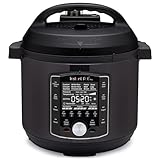
3. Ninja Foodi Pressure Cooker (OP302)
A pressure cooker that comes with a second lid for air crisping, so a roast or a tray of wings can be finished until browned. It suits cooks who want crisp results from the same pot.
Suits: pressure plus crisping. Strengths: a crisping lid. Weaknesses: a large footprint and two lids to store. Skip it if counter space is tight.
View Ninja Foodi OP302 on Amazon

Best for careful cooks
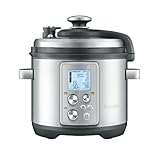
4. Breville Fast Slow Pro
A well-regarded design that offers adjustable pressure release options and a slow cook mode in a heavy countertop unit. It is aimed at buyers who value tidy, controlled results.
Suits: careful cooks. Strengths: thoughtful release options. Weaknesses: a non-stick pot and a fuller feel. Skip it if you prefer stainless inside.
Best for simple preset cooking
5. Cosori Electric Pressure Cooker
A multi-cooker with a stainless inner pot and preset programs for common foods. It is a lesser-known alternative to the big names and appeals to buyers who want a clean control layout.
Suits: simple preset cooking. Strengths: a stainless pot and a straightforward panel. Weaknesses: fewer user recipes. Skip it if you want a huge recipe community.
View Cosori Electric Pressure Cooker on Amazon
Best for slow cooker fans moving to pressure cooking
6. Crock-Pot Express Crock Multi-Cooker
A multi-cooker from the best-known slow cooker brand, with pressure, slow cook and browning functions. A natural step for owners already used to Crock-Pot products.
Suits: slow cooker fans moving to pressure cooking. Strengths: familiar controls. Weaknesses: a non-stick pot. Skip it if you want a stainless pot.
View Crock-Pot Express Crock on Amazon
Care and Setup
- Wash the sealing ring and lid after each use, and dry them well.
- Keep a spare sealing ring, since rings can hold food odors.
- Run a water test before the first meal to learn how the unit behaves.
- Wipe the heating base with a damp cloth, never in water.
Mistakes to Avoid
- Cooking without enough liquid, which stops the unit from building pressure.
- Forgetting to close the steam valve.
- Overfilling past the maximum line.
- Skipping the manual before using quick release on foamy foods.
Picking a Size by Household and Recipe Style
Electric pressure cookers are sold by quart capacity, but the usable space is smaller than the number suggests. Pressure cooking recipes call for leaving room for steam, and many makers set a maximum fill line, often lower for foods that foam or expand such as beans, rice and pasta. As a result, a pot rated for a given capacity cooks a smaller volume of food than the label implies.
Think about who you cook for. A small pot suits one or two people and fits a small kitchen, but it limits batch cooking and larger cuts of meat. A mid-size pot is the usual choice for households of three to five, and it handles a whole chicken, a pot roast or a family-size batch of soup. A larger pot suits big families, meal preppers and cooks who entertain, but it takes more counter and cabinet room and is heavier to lift and clean.
Consider the dishes you plan to make. Cooks who like large cuts, stock bones or whole poultry need height and width. Those who mostly make rice, beans and small-batch meals can use a smaller unit. Check the inner pot dimensions, not just the quart number, and compare with your largest baking dish if you want to use pot-in-pot methods.
Also think about leftovers. Pressure cookers make large portions quickly, and a larger pot can mean freezer-ready batches. Finally, check the footprint on the counter and the clearance under your cabinets, since steam release vents upward. A size that fits comfortably will be used more often.
Inner Pot Materials Compared
The inner pot is the surface your food touches, and the material influences results and cleanup. Stainless steel is durable, does not have a coating that wears off and handles searing and deglazing well. Food can stick if the pan is not preheated or if you use too little oil, so it takes a bit of technique. It is generally dishwasher friendly, and it resists scratching from metal utensils, though it may stain or discolor.
Non-stick and ceramic-coated pots release food easily and clean up fast. They suit cooks who make a lot of rice, eggs or sticky sauces. The coating can wear with time, particularly if scrubbed hard or used with metal tools, so use silicone or wooden utensils and follow the maker’s care guidance. Check whether the pot is dishwasher safe.
Aluminum cores inside the pot help spread heat. Some pots have a clad base, while others are a single layer. Look for a pot that sits flat in the housing and has clear fill markings.
Many owners buy a second inner pot so they can cook one dish while another is cooling or being stored. Check whether replacement and spare pots are sold for your model. Ask about handle design, since lifting a hot, full pot needs good grip points. Choose a material that fits your cooking style and your cleaning habits, then plan to replace the pot if the coating flakes or the base warps.
Pressure Release Methods and Lid Safety Features
How a cooker releases pressure affects both results and safety. Natural release means you let the pressure drop on its own once the cook is done, which takes time but is gentle on foods and suits meats, beans and foamy liquids. Quick release uses a valve to vent steam fast, which saves time for vegetables and delicate items, but it can spatter and should not be used with foods that foam or are very full.
Some models offer controlled or automatic release options that open the vent in bursts. These can reduce the mess and the risk of spitting, and they are popular with careful cooks. Others have a steam diverter or a cover over the vent to direct steam away. Check how the valve works and where steam exits so you can keep your hands and cabinets clear.
Look at the lid’s safety features. Common ones include a lock that prevents opening under pressure, a clear indicator showing when the unit is pressurized, a pressure sensor, and backup relief systems. The manual should explain each. Verify that the lid closes smoothly and that the sealing ring seats properly.
Never force the lid open. Wait for the pressure to drop completely and the pin or indicator to lower. Keep your face and hands away from the steam vent. Keep the valve and float clean. Read the manual before the first cook, run a water test and practice both release methods with plain water to build confidence.
Beyond Pressure Cooking: The Extra Modes
Multi-cookers advertise many functions, and it helps to know which ones are useful. Sauté is among the most valuable, because browning meat and aromatics in the same pot builds flavor and saves dishes. Check whether the sauté function has adjustable levels and whether it heats evenly.
Slow cook mode lets the unit work like a slow cooker, but with a sealed lid it may behave differently from a traditional model, so check the manual. Rice and grain settings are convenient, though results depend on the rice type. Yogurt and fermenting modes appeal to some cooks, while sous vide features require a precise temperature control and a suitable bag setup.
Air frying or crisping lids add a second lid with a fan and heating element. They can crisp and brown food after pressure cooking, but they add cost, storage needs and a second lid to clean. Keep in mind that the crisping function will not match a dedicated air fryer in capacity.
Preset buttons, such as for soup, beans or meat, are shortcuts based on average times. Many experienced cooks use manual mode to set time and pressure levels. Decide which functions you will use, rather than buying every mode. A simpler unit with the functions you need is often easier to learn. Also consider how many pressure levels are offered and whether you can adjust time on the fly.
Upkeep, Parts and When to Replace
An electric pressure cooker is fairly low maintenance, but a few parts need regular attention. The sealing ring wears, absorbs odors and can stretch over time. Wash it after use, air dry it fully, and replace it if it cracks, hardens, loosens or fails to seal. Many owners keep a spare. Check that rings are made for your exact model.
Clean the lid, the steam release valve and the float valve according to the manual. Food can clog small parts, which affects pressure. Check the anti-block shield, if there is one, and rinse it. Wipe the heating base and the control panel with a damp cloth, and never submerge the base in water. Keep the rim of the housing free of food debris so the pot sits correctly.
Look at the inner pot regularly. Scratches in non-stick coatings, a warped bottom or pitting in stainless may affect cooking. Make sure the pot sits flat and rotates smoothly.
Know when to replace the unit. Failure to reach pressure after a clean valve and fresh ring, error codes that persist, a lid that will not lock, steam leaking from places other than the vent, or a damaged power cord all call for attention. Check the warranty terms and whether replacement parts are available. Stop using the cooker if safety features seem compromised, and contact the maker.
A First-Use Checklist for an Electric Pressure Cooker
Electric pressure cookers are friendly, but they still deserve a careful first session. Use the list below with your manual open.
- Unpack every part, and remove any stickers or packaging from the inner pot, lid and sealing ring.
- Wash the removable parts as the maker directs, and dry them thoroughly.
- Check that the sealing ring sits firmly in the lid and that the pressure release valve moves freely.
- Run the maker’s recommended water test, if one is described, so you learn the sounds and steps.
- Note the minimum and maximum fill lines on the inner pot.
- Place the cooker on a flat, heat-safe surface with open space above it, since steam will release.
The water test is not a formality. It teaches you how the cooker builds pressure, how long it takes and what the release sounds like, so the first real meal is less stressful.
Choosing by Situation
The six cookers in this guide vary in size and in extra functions. The table links habits to the features that tend to matter.
| Situation | Suggested Features | Why |
|---|---|---|
| Weeknight dinners for a small household | Mid-size pot and simple presets | Fast and easy without too much leftover space |
| Batch cooking and meal prep | Larger pot and sauteing function | Cook big quantities in fewer rounds |
| Cooks who like crisp finishes | A model with an air frying or broiling lid | Adds browning after pressure cooking |
| Tight kitchens | Compact footprint and tidy cord storage | Fits a cupboard when not in use |
| Frequent slow cooking | Slow cook mode with a clear lid option | Replaces a separate appliance |
Think about how often you will really use each function. Many people lean on two or three settings and ignore the rest, so a simple model can serve you perfectly well.
A Short Glossary of Terms
- Natural release: letting pressure drop on its own after cooking ends.
- Quick release: opening the valve to let steam out, following the maker’s instructions.
- Sealing ring: the silicone ring in the lid that holds pressure in.
- Trivet: a rack that lifts food above the liquid.
- Sealing and venting positions: the valve settings that control whether steam can escape.
- Preset: a button that sets a time and pressure level for a type of food.
When to Follow the Manual Strictly
Pressure cookers use steam and heat, so the maker’s manual comes first, always. It gives the safe fill limits, the correct way to open the lid and the foods that should not be cooked under pressure. Never force a lid, and do not use a damaged ring, lid or cord. If the cooker will not seal, leaks steam from unusual places or shows an error you do not understand, stop and look up the troubleshooting section, or contact the maker. A short call to customer support is far better than guessing with a hot, pressurized appliance.
Mistakes to Avoid in the First Month
- Overfilling the pot past the maximum line, especially with foods that foam or expand, such as beans and rice.
- Forgetting the sealing ring, or putting it in crooked.
- Using too little liquid, which can trigger an error or scorch the bottom.
- Opening the lid before the pressure has fully released.
- Adding thickeners at the beginning, which can settle on the bottom and stop the cooker from reaching pressure.
- Washing the heating base in the sink or immersing it in water.
Most of these come down to reading the instructions and being patient. Keep the sealing ring clean, since it can hold on to strong odors, and wipe the rim and the valve after each use. A few minutes of upkeep helps the cooker seal reliably and last through years of weekly meals.
Electric Pressure Cooker FAQ
How is an electric model different from a stovetop one?
It controls heat and time automatically, so you do not watch the stove. Stovetop models often reach higher pressure.
Which size should I choose?
A mid-size pot suits most households. Larger families or batch cooks may want more room.
Do I need the air frying lid?
Only if you want crisp finishes from the same appliance.
Can I cook frozen meat?
Many makers allow it with extra time. Follow the instructions for your model.
Why does my cooker take so long to come to pressure?
Cold ingredients, large amounts of food and a lot of liquid all lengthen the heat-up time. Make sure the valve is sealed and the ring is seated properly.
Can I double a recipe?
Often yes for liquids and meats, but do not exceed the max fill line, and cook times may stay about the same. Check recipes written for your model.
Is it safe to leave it on while I am out?
Many people do use them for timed cooks, but follow the manual and consider your own comfort. Do not leave the unit unattended while building pressure for the first few uses.
What is the burn message?
Some models display a warning when the bottom of the pot is too hot or the food has stuck. Stop the cycle, release pressure, stir and add liquid. Deglaze after sautéing.
Can I use it as a rice cooker?
Yes. Rice cooks well under pressure or with a rice setting. Measure water as recommended for your model, and rinse rice if the recipe suggests it.
Are accessories necessary?
Basic accessories such as a trivet, a steamer basket and a spare ring cover most needs. Check sizes before ordering so they fit your pot.
How do I stop the pot from smelling?
Wash the ring and lid after each use and air them dry. Some owners use separate rings for sweet and savory dishes, as silicone can hold odors.
Going Deeper: A Step-by-Step Way to Choose a Pressure cooker electric pressure cookers
By the time you reach this point in the guide, you have seen the headline differences between the picks. What most buyers still struggle with is not finding options, it is choosing between two or three good ones without second-guessing the decision for months afterwards. The method below slows the choice down in a useful way. It works whether you end up with the Instant Pot Duo Plus, the Instant Pot Pro, or any other pick on the list, because it starts from your routine rather than from a feature list.
Start by writing down the job you actually need done, in one plain sentence. Not the job you might do one day, and not the job a salesperson describes, but the one that happens in your kitchen most weeks. A pressure cooker electric pressure cookers that is perfect for that sentence will feel right almost every time you use it, while one bought for an occasional edge case tends to gather dust or cause small daily frustrations. Be honest about frequency, too. Something used every day deserves more of your budget and attention than something pulled out a few times a year, and the other way round is equally true.
Next, look at the space the pressure cooker electric pressure cookers has to live in, work in, and be stored in. Measure the spot rather than guessing at it, and think about the path between storage and the place you will actually use it. A pick that has to be carried, dragged out, or squeezed past other items will slowly stop being used, no matter how well it performs. Allow room for doors, lids, handles, cords, vents, and your own hands. If two people use the same space, picture the busier moment of the day, not an empty kitchen at a quiet moment.
Then separate the features into three honest piles: things you will use weekly, things you will use occasionally, and things that simply sound appealing. Pay for the first pile. Be cautious about paying a lot for the third. Many disappointed buyers discover that the feature that sold them is the one they touch least, while a plain detail they barely noticed, such as how a lid sits, how a control feels, or how a surface wipes clean, shapes their opinion every single day.
Finally, read the limitation noted for each pick in the reviews above one more time, and ask a simple question: can I live with that on an ordinary, tired, busy day? Every product on this list, from the Instant Pot Duo Plus to the Ninja Foodi Pressure Cooker (OP302), involves some trade-off, because that is the nature of kitchen equipment at any level. The right choice is rarely the one with no weakness. It is the one whose weakness lands on something you genuinely do not care much about, while its strengths land exactly on the jobs you do most.
Pressure cooker electric pressure cookers in Real Life: Matching the Pick to Your Routine
Guides tend to describe products in isolation, but a pressure cooker electric pressure cookers earns its place inside a routine. Think through a normal week before you decide. On a weekday, speed and easy cleanup usually matter more than maximum capability. On a weekend, you may have more time and more people around, and the same product gets used in a completely different way. A pick that handles both rhythms comfortably is worth more than one that shines in a single scenario and feels awkward the rest of the time.
Consider who else will use it. A partner, a teenager, a parent, or a housemate may approach the same pressure cooker electric pressure cookers with different habits, different strength in their hands, and different patience for instructions. Controls and steps that are obvious to you may not be obvious to them, and a product that several people can use confidently and safely is a calmer product to own. If one person will be the only user, you can safely lean harder into personal preference. If it will be shared, lean towards the clearer, simpler option.
Think about what sits around it, too. A new pressure cooker electric pressure cookers changes small things nearby: where other items get stored, which outlet or burner gets used most, what gets moved to make room. Buyers often blame a product for frustrations that are really about the reshuffle it caused. Planning the neighbouring space at the same time, even roughly, prevents that. Keep the items you use alongside it within easy reach, and give the things it replaces an honest new home or an honest goodbye.
It also helps to picture the second month, not just the first day. Novelty hides friction at first. Ask how the pressure cooker electric pressure cookers will feel when you are using it half awake, when guests are waiting, when you are cleaning up later than planned, or when you are preparing something familiar for the hundredth time. The picks in this guide, including Instant Pot Duo Plus, Instant Pot Pro, Ninja Foodi Pressure Cooker (OP302), Breville Fast Slow Pro, Cosori Electric Pressure Cooker, and Crock-Pot Express Crock Multi-Cooker, were chosen because they hold up under that kind of ordinary repetition, which is where kitchen equipment quietly proves itself.
If you are buying as a gift, apply the same routine test to the person receiving it rather than to yourself. Their space, their habits, and their patience are what matter. A modest pick that fits their kitchen and their way of cooking will be used and appreciated far more than an ambitious one that asks them to change how they do things. When in doubt, favour the option that needs the least explanation and the least extra equipment to be useful from the first day.
Your First Week With a New Pressure cooker electric pressure cookers: Setup and Early Habits
The first week with a new pressure cooker electric pressure cookers sets patterns that tend to last for years, so it is worth treating setup as part of the purchase rather than an afterthought. Begin by reading the manual properly, even if the product looks self-explanatory. Manuals for kitchen equipment hide their most useful information in unglamorous places: the cleaning notes, the warnings about what not to do, and the small print about parts that wear out and can be replaced. Ten quiet minutes with the manual now can prevent the most common early mistakes entirely.
Unbox and set up when you are not in a hurry, and keep the packaging until you are sure the pick suits you. Check every part against the parts list, look over surfaces and fittings before first use, and wash or wipe down whatever the maker tells you to prepare before food goes near it. If anything arrives damaged, missing, or different from what the listing described, deal with it straight away rather than after weeks of use, when returns and exchanges become much harder to arrange.
For your first few uses, choose familiar jobs rather than ambitious ones. Cook or prepare things you already know well, so that any difference in the result is down to the new pressure cooker electric pressure cookers and not to an unfamiliar recipe or process. Pay attention to the small signals: how it feels to handle, how long tasks take compared with your old way, what needs wiping afterwards, and which step you keep having to think about. Those early observations tell you more about long-term fit than any single impressive first result.
Build the supporting habits in the same week. Decide where the pressure cooker electric pressure cookers lives when it is not in use, where its accessories and parts go, and what your quick clean-up routine will be straight after use. A routine that takes a couple of minutes and happens immediately is far more sustainable than a thorough one that gets postponed. If other people will use it, show them the basics once, in person, rather than assuming the manual will be read. Most early damage and most early frustration come from one person not knowing the one thing another person assumed was obvious.
Keep notes, even rough ones, during the first week. A few lines on your phone about what worked, what needed adjusting, and what you would do differently next time will save you relearning the same lessons months later. This is especially useful for anything you use in cycles or seasons, where the gap between uses is long enough for hard-won know-how to fade.
Long-Term Care: Keeping a Pressure cooker electric pressure cookers Working Well for Years
Most kitchen equipment does not fail suddenly. It drifts. Performance fades a little, small parts wear, residues build up in places that are easy to ignore, and one day the owner concludes that the product was never very good. In many cases the product was fine and the care simply thinned out over time. The good news is that the care a pressure cooker electric pressure cookers needs is rarely complicated. It is mostly about little-and-often habits rather than occasional heroic deep cleans.
Clean as you go whenever you can. Spills, splashes, crumbs, grease, and moisture are all far easier to deal with while they are fresh than after heat, time, and repeated use have baked or pressed them in. Use the cleaning method the maker recommends for each surface and part, and be wary of harsh tools and strong products on finishes that were not designed for them. When you are unsure, the gentler method, repeated, almost always beats the aggressive method used once.
Give wear parts the attention they deserve. Seals, gaskets, filters, blades, hinges, latches, cords, and moving joints, whatever your particular pressure cooker electric pressure cookers relies on, are the pieces that decide how long it stays pleasant and safe to use. Check them now and then with your eyes and fingers. Cracks, stiffness, looseness, discolouration, lingering smells, and parts that no longer sit where they should are all early warnings. Replacing a small part early is almost always cheaper and less disruptive than replacing the whole product later.
Storage matters more than most people expect. Store the pressure cooker electric pressure cookers dry, clean, and in a position that does not strain its parts. Avoid stacking heavy items on top of it, trapping its cord, or leaving it somewhere damp, dusty, or exposed to strong heat. If it will sit unused for a long stretch, follow the maker’s guidance for putting it away, and give it a quick check and clean before it goes back into service. Products that are stored well tend to come back to life instantly. Products stored badly often need coaxing, cleaning, and occasionally repair.
Keep the paperwork. The manual, the receipt, and any warranty details are worth a single folder or a photo on your phone. If something does go wrong, having the model details and proof of purchase to hand turns a frustrating search into a short conversation. And if you ever pass the pressure cooker electric pressure cookers on to someone else, the manual goes with it, which is a small kindness that also keeps the next owner using it safely.
When Something Feels Off: A Calm Troubleshooting Order
Sooner or later, every pressure cooker electric pressure cookers does something that makes its owner pause: a result that is not quite right, a sound that was not there before, a part that feels different, a job that suddenly takes longer. The order in which you check things matters. Start with the simple and the free before assuming the product is broken, because in everyday kitchens the cause is usually ordinary: something not seated properly, something that needs cleaning, a setting chosen in a hurry, or a step skipped without noticing.
First, stop and reset the basics. Switch off or set the pressure cooker electric pressure cookers down safely, let anything hot cool, and go back to the state the manual assumes. Check that parts are fitted the way they should be, that nothing is obstructing a vent, a seal, a blade, a burner, or a contact point, and that the surface or power source you are using is the one the product expects. A surprising share of problems end at exactly this step, with no tools and no cost involved.
Second, clean the areas the problem might touch. Build-up is a quiet cause of poor results, odd smells, sticking, uneven performance, and parts that no longer move or seal as they should. Clean carefully, dry thoroughly, and try again with a simple, familiar job so you can judge the result fairly. If the problem disappears, you have learned something valuable about how often that particular clean needs to happen in your kitchen, with your water, your food, and your habits.
Third, change one thing at a time. When a result disappoints, it is tempting to adjust everything at once, after which nobody knows what actually helped. Adjust a single variable, the amount, the timing, the setting, the order of steps, and observe. This slower approach feels tedious for about a day and then pays for itself for years, because you end up genuinely understanding your pressure cooker electric pressure cookers instead of collecting superstitions about it.
If the problem persists, or if anything involves damage, exposed wiring, leaking, cracking under pressure or heat, or a safety part that no longer works as described, stop using the product and contact the maker or the seller. Do not improvise repairs on safety-related parts. Photograph the issue, note when it started and what you had already tried, and have your model and purchase details ready. A clear, calm report gets a faster and better answer than a frustrated one, and it protects your warranty position as well.
Comparing the Picks in Plain Language
Specifications and feature lists only go so far, so here is a plainer way to compare the names in this guide. Read the write-up of the Instant Pot Duo Plus again and notice two things: who it is described as suiting, and the limitation the guide is honest about. Then do exactly the same for the Instant Pot Pro. In most cases the better choice for you becomes obvious at that point, not because one is simply better, but because one description sounds like your kitchen and the other sounds like someone else’s.
The Ninja Foodi Pressure Cooker (OP302) deserves the same treatment, especially if your first instinct was to skip past it. Picks that sit in the middle of a list are often the balanced ones, the ones that give up a headline feature in exchange for being easy to live with across many jobs. If your needs are broad rather than specialised, that balance is frequently the smartest place to land. Specialised picks reward specialised users. Balanced picks reward everybody else, quietly, every day.
It is also worth comparing how each pick will age in your home. Ask which one you would rather clean after a messy job, which one you would rather store in the space you actually have, and which one you would rather explain to another person in the household. Those unglamorous questions predict satisfaction surprisingly well, because daily friction, not peak performance, is what owners actually experience most of the time.
If you are torn between two, decide by imagining a return. Which one would you be more reluctant to send back after a month of normal use? Which one’s absence would you actually feel at the moment you reach for it? That small thought experiment cuts through feature comparisons and lands on attachment, and attachment, for a pressure cooker electric pressure cookers you will use for years, is a perfectly rational thing to buy.
And if, after all this, two picks still feel equal, choose the one that is simpler to own: easier to clean, easier to store, easier to get parts or support for, and easier to understand without the manual open. Equal performance plus lower effort is not a compromise. Over the life of the product, it is a genuine advantage that compounds every single week.
More Questions Buyers Ask About Pressure cooker electric pressure cookers
How long should I spend deciding between two pressure cooker electric pressure cookers picks?
Long enough to check the practical points in this guide: the space it will live in, the jobs you do most, the limitation you are being asked to accept, and how it will be cleaned and stored. For most buyers that is one careful read and a few measurements, not days of research. If two options still feel equal after that, they probably are equal for your purposes, and you can choose on simplicity and move on with confidence.
What should I check before ordering a pressure cooker electric pressure cookers?
Confirm the size against the space you measured, check that your home setup suits it, whether that means the right outlet, hob type, storage spot, or work surface, and read what is included so you know which accessories, if any, you need to add yourself. Check the returns route as well, while you are calm and before you need it. A few minutes of checking before ordering prevents the most common and most avoidable disappointments.
How do I keep a new pressure cooker electric pressure cookers clean without spending ages on it?
Attach cleaning to use rather than to a separate chore. Wipe, rinse, empty, or dry the parts the maker highlights straight after use, while residues are fresh and the job takes moments. Then give it a slightly deeper clean on a rhythm that matches how often you use it. Little and often beats rare and thorough, both for hygiene and for how the product performs, and it keeps cleaning from ever becoming the reason you stop using it.
Are extra accessories for a pressure cooker electric pressure cookers worth buying straight away?
Usually not all of them, and rarely on day one. Live with the basic setup first and notice what you genuinely reach for and miss. Then add the one accessory that solves a real, repeated annoyance. Accessories bought speculatively tend to fill drawers, while accessories bought in response to experience get used constantly. The exception is any spare or replacement part the maker treats as a consumable, which is worth having before you need it.
When should I repair a pressure cooker electric pressure cookers and when should I replace it?
Start with the maker’s support route, especially while any warranty still applies, and be guided by what has actually failed. A worn replaceable part, a tired seal, or a lost accessory points towards repair. Damage to the main body, to heating or pressure or motor systems, or to anything safety related points towards replacement, or at minimum towards professional advice before further use. Sentiment is understandable, but safety and reliability come first with kitchen equipment.
Can I use a pressure cooker electric pressure cookers in a small kitchen?
In most cases yes, provided you plan for it honestly. Measure the working space and the storage space separately, because they are different problems. Think about what it displaces, where parts and accessories will go, and whether you can clean up around it comfortably. Small kitchens reward picks that are simple to move, simple to store, and simple to clean, and they punish bulky extras. Choose for the kitchen you have, not the one you plan to have one day.
What is the most common mistake new owners of a pressure cooker electric pressure cookers make?
Judging it too quickly, in both directions. Some owners declare it a triumph after one good result and stop learning how to get the best from it. Others hit one disappointing early attempt, usually caused by an unfamiliar process or a skipped step in the manual, and quietly give up. Give it a fair run of familiar jobs, keep small notes, adjust one thing at a time, and judge it after a few weeks of ordinary use rather than a single outing.
How should I store a pressure cooker electric pressure cookers between uses?
Clean, dry, and unstrained. Make sure it is fully dry before it goes away, store it where air can circulate and dust and damp cannot settle into it, and avoid resting heavy items on it or trapping cords and flexible parts at awkward angles. If it will be stored for a long period, follow the maker’s guidance and check it over before the next use. Good storage is invisible when it works: the product simply comes out ready, every time.
The Short Version
For the widely used all-rounder, the Instant Pot Duo Plus. For refined features, the Instant Pot Pro. For crisping, the Ninja Foodi. For controlled release, the Breville. For a simple panel, the Cosori. For slow cooker fans, the Crock-Pot Express.
Related Guides
- 6 Best Cookers: Multi, Rice, Pressure and Slow (2026)
- 6 Best Pressure Cookers for Canning: Dial, Weighted, Electric (2026)
- 6 Best Quality Pressure Cookers: Stovetop and Electric (2026)
- 6 Best Small Pressure Cookers: Electric and Stovetop (2026)
- 6 Best Electric Pressure Washers: Max PSI Compared (2026)