An electric cooker is a countertop appliance that heats food on its own, so you can cook without a stovetop or a watchful eye. The category covers multi-cookers, rice cookers, slow cookers and electric skillets, each suited to different meals.
The six picks below cover the most common types. We have not used these products ourselves, so please confirm the capacity, functions and included accessories on the current listing before buying. Pick the type that matches how you actually cook, rather than the longest feature list.
As an Amazon Associate we earn from qualifying purchases. Links below are affiliate links, and they do not change the product information we give.
What to Look For
| Feature | Why it matters |
|---|---|
| Type | Multi-cookers do many jobs; rice cookers and skillets do a few jobs well |
| Capacity | Match the size to your household and your usual batch |
| Controls | Presets help beginners, while manual settings help experienced cooks |
| Inner pot | Nonstick and stainless pots differ in cleanup and long-term durability |
| Safety | Lid locks, steam release and auto shutoff add peace of mind |
In this guide
Specs at a Glance
| Cooker | Type | Size class | Notes |
|---|---|---|---|
| Instant Pot Pro | Multi-cooker | Family size | Pressure and slow cook |
| Zojirushi NS-ZCC10 | Rice cooker | Small to mid | Fuzzy logic control |
| Hamilton Beach Set and Forget | Slow cooker | Large | Probe and programming |
| Presto Foldaway Skillet | Electric skillet | Large | Folding legs |
| Aroma rice cooker | Rice cooker | Mid to large | Also steams |
| Ninja Foodi 9-in-1 | Pressure cooker | Family size | Air crisp lid |
The 6 Best Electric Cookers
Top pickBest for busy weeknight dinners
1. Instant Pot Pro Multi-Cooker
The Instant Pot Pro is a pressure cooker that also slow cooks, sautes and steams. It is a well-known all-rounder for weeknight meals, soups and stews, and it replaces several pots.
Suits: busy weeknight dinners. Strengths: versatility and a familiar brand. Weaknesses: a learning curve at first. Skip it if you want a single-task appliance.
View Instant Pot Pro Multi-Cooker on Amazon
Best for households that eat rice often
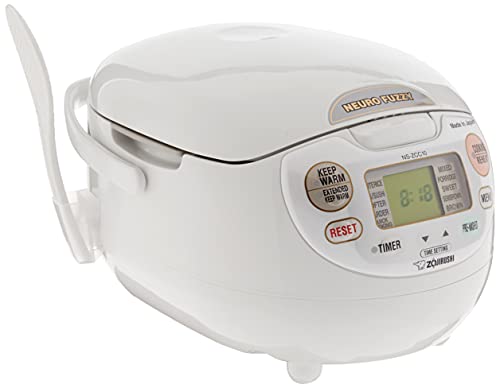
2. Zojirushi Neuro Fuzzy Rice Cooker NS-ZCC10
A well-regarded Japanese rice cooker with fuzzy logic that adjusts the cooking to the grain. Confirm the capacity on the listing, since Zojirushi sells several sizes of this style.
Suits: households that eat rice often. Strengths: consistent rice and a quality build. Weaknesses: costs more than basic models. Skip it if you rarely cook rice.

Best for all-day cooking and roasts
3. Hamilton Beach Set and Forget Slow Cooker
A programmable slow cooker with a temperature probe on many versions. It is built for hands-off cooking, so you can set a roast in the morning and come home to dinner.
Suits: all-day cooking and roasts. Strengths: a simple setup and probe use. Weaknesses: slow compared with pressure cooking. Skip it if you need dinner fast.

Best for big skillet dinners
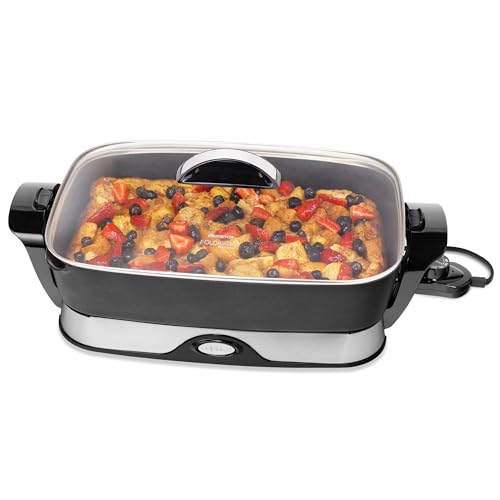
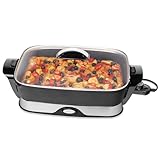
4. Presto Foldaway Electric Skillet
Presto’s large electric skillet has a nonstick surface, a tall lid and folding legs. It is useful for pancakes, stir-fry, fried chicken and one-pan dinners.
Suits: big skillet dinners. Strengths: a large surface and easy storage. Weaknesses: takes up counter space. Skip it if you cook for one.
Best for everyday rice and steaming
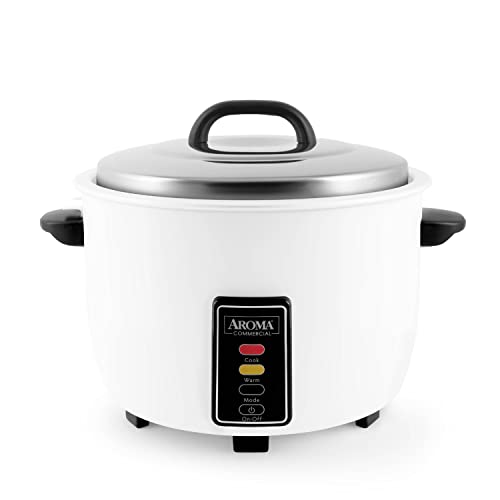
5. Aroma Housewares Rice Cooker
Aroma sells easy rice cookers that also steam vegetables and fish in a tray above the rice. Check the listing for the capacity, since sizes range widely.
Suits: everyday rice and steaming. Strengths: an easy setup. Weaknesses: basic controls. Skip it if you want fuzzy logic.
Best for cooks who want crispy finishes
6. Ninja Foodi 9-in-1 Pressure Cooker
Ninja’s Foodi combines pressure cooking with an air crisp lid. It lets you cook a dish under pressure, then crisp the top without moving it to another pan.
Suits: cooks who want crispy finishes. Strengths: pressure and air crisp in one. Weaknesses: large and heavy. Skip it if you have a small kitchen.
View Ninja Foodi 9-in-1 Pressure Cooker on Amazon
Care and Setup
- Wash the inner pot by hand to protect the nonstick surface.
- Wipe the lid gasket and dry it fully so odors do not build up.
- Never immerse the heating base in water; wipe it with a damp cloth.
- Use only the included or approved accessories to avoid damage.
Mistakes to Avoid
- Overfilling the pot past the max line.
- Using metal utensils on nonstick pots.
- Skipping the manual on pressure cookers, which have safety steps.
- Choosing a type that does not match your cooking.
Sizing a Cooker to Your Household
Capacity is the first number to check, and it is easy to get wrong in both directions. A cooker that is too small forces you to cook in two batches or leave out leftovers, while one that is far too large wastes counter space and can cook small portions unevenly. Most makers sell the same style in several sizes, so always confirm the size on the listing rather than assuming the name tells you.
For one or two people, a small or mid-size unit is usually enough, especially for rice, oatmeal and single-serving soups. A family of four or more tends to be more comfortable with a family-size multi-cooker or a large slow cooker, since a roast, a big pot of chili or a double batch of rice will fit without crowding.
Remember that the stated capacity is the total volume of the pot, not the amount you can safely cook. Pressure cookers have a maximum fill line, and foods that foam or expand, such as beans, grains and pasta, need a lower line than plain liquids. Rice cookers often list capacity in uncooked cups, which is a different measure than pot volume, so read the unit carefully.
- Think about your biggest regular meal, not your average one.
- If you batch cook for the week, lean toward the larger size.
- If you mostly cook small portions, a large pot can scorch or undercook thin layers of food.
- Check that the pot fits in your sink and dishwasher if you plan to wash it there.
Matching the Cooker Type to Your Meals
The best way to choose is to list the five meals you cook most often and see which appliance type handles most of them. A multi-cooker is the broadest tool: it can pressure cook, slow cook, saute and steam, so it suits cooks who want to replace several pots and who make soups, stews, braises and beans. It asks more of you at the start, because you need to learn the pressure release steps and the presets.
A dedicated rice cooker is the better choice if rice is a staple. It focuses on one job, and the heating pattern is tuned to the grain, which usually means less guessing about water ratios. Some also handle porridge, steaming and quinoa. A slow cooker is the simplest approach to hands-off cooking: you load it in the morning and leave it, and it is forgiving of tougher cuts of meat. It is slow by design, so it will not rescue a dinner you decided on late.
An electric skillet is different from the others because it is open and shallow. It suits pancakes, fried chicken, stir-fry and one-pan dinners where you want browning and room to turn food. A pressure cooker with an air crisp lid adds a finishing step, which helps if you like a crisp top on chicken or potatoes after a moist cook.
If you cannot decide, ask which job you would otherwise use the stove for most often, and pick the appliance that takes that job off the stove.
Inner Pot Materials and Lid Design
The inner pot touches the food and takes most of the wear, so its material matters. Nonstick pots release food easily and wipe clean, which is helpful for rice, eggs and sticky sauces, but the coating can wear if you use metal utensils or abrasive pads. Stainless steel pots tolerate metal tools and scrubbing and do not have a coating to degrade, but food can stick more, and they usually need a little oil or a deglazing step. Some pots are removable and some are fixed to the base, which makes a big difference to cleaning, so check that on the listing.
Lid design affects both safety and convenience. Pressure cookers should have a locking lid and a clear steam release mechanism, and the sealing ring should be easy to remove and replace. Slow cookers often use a glass lid so you can look in without lifting it, which matters because every lift lets heat escape. Rice cookers usually have a simple lid with a steam vent, while skillets use a tall, domed lid to fit larger items.
Ask a few questions before you buy:
- Is a spare pot or sealing ring available from the maker?
- Is the pot dishwasher-safe, or hand-wash only?
- Does the lid lift off, or is it hinged and fixed?
- Are the handles cool enough to lift safely when the pot is full?
Counter Space, Power and Placement
Electric cookers sit on your counter, so measure before you buy. Check the width, depth and height, including the height with the lid open and, for pressure models, the clearance needed above the steam vent. A cooker placed directly under a low cabinet can send steam against the underside and cause moisture damage over time.
Place the appliance on a flat, heat-tolerant, stable surface, and keep it away from the counter edge so a dangling cord cannot be pulled. Leave space around the unit for steam to disperse. Plug it into a wall outlet directly when you can, because many appliances draw significant power and the listing or manual may advise against extension cords or power strips. If you must use an extension, follow the manual on the required rating.
Think about storage as well. A large multi-cooker or pressure cooker with an air crisp lid is heavy, and if it lives in a cabinet you may stop using it. An electric skillet with folding legs stores more easily but still takes up room. If you have a small kitchen, choose the unit you will genuinely leave out on the counter or can lift easily.
Budget Tiers and When to Replace
Electric cookers span a wide range, and the price tier mainly reflects control sophistication and build. Entry-level units tend to have simple dials or a few buttons, a basic pot and fewer safety features beyond auto shutoff. They are a sensible starting point if you are not sure you will use the appliance often. Mid-range units usually add presets, better pots and a more detailed display. Higher-priced models, such as those with fuzzy logic rice control or a combined pressure and air crisp design, add refinement or extra functions that only pay off if you use them regularly.
Spend on the feature that matches your habits. A frequent rice eater gets more from better rice control than from extra pressure presets, and a weeknight cook who uses pressure cooking gets more from reliable lid safety.
Signs it is time to replace a cooker include a damaged or peeling nonstick coating, a lid that no longer seals, a cracked power cord or plug, a heating base that no longer reaches temperature, and persistent odors that cleaning does not remove. Never keep using a unit with a frayed cord or a lid that does not lock properly. Check whether the maker sells replacement pots, gaskets and lids first, since a small part can extend the life of the appliance.
A Decision Guide by Situation
The phrase electric cooker covers several different appliances, and the right one depends on what you cook and how much attention you want to give it. This table matches common situations with the type of cooker that tends to fit them. Use it to narrow the field before you compare individual models.
| Situation | Cooker type to consider | Reason |
|---|---|---|
| Rice several times a week | A dedicated rice cooker | Built around one job and usually simple to run |
| Stews and braises while you are out | A slow cooker | Long, low cooking with little supervision |
| Weeknight meals in a hurry | A multi-cooker with a pressure setting | Shortens cooking times for many dishes |
| Pan-style dishes at the table | An electric skillet | Wide surface and easy to serve from |
| Tiny kitchen or one person | A small multi-cooker or compact rice cooker | Fits a shelf and suits small portions |
Many households end up with two appliances rather than one that does everything. That is fine, provided each one earns its place on the counter.
How to Read an Electric Cooker Listing
Begin with the capacity, which is usually given in quarts, litres or cups. For rice cookers, the cup measure refers to the small cup supplied in the box, not a standard cup, so check the manual before scaling a recipe. Next, look at the list of programs. A long list is not always a better one, so ask which programs you will actually use.
Look at the lid design, the inner pot material and the type of controls. Buttons, a dial or a touchscreen each suit different people. Read what comes with the cooker: a measuring cup, a spoon, a rack, a steaming basket or a recipe booklet. Finally, check the cord length and the footprint. A cooker that steams as it works needs a clear space above and around it, and the manual states how much.
Pre-Order Checklist for Any Electric Cooker
- Confirm that the capacity suits your usual number of servings, with a little room to spare.
- Check that the inner pot can be removed for washing, and whether it is safe for the dishwasher according to the maker.
- Look at the location of the steam vent and decide whether it sits safely under your cabinets.
- Find out whether replacement parts, such as seals and lids, are available from the maker.
- Check the voltage and plug type if the item is imported.
- Read the section of the manual about safe use before you cook anything, particularly if the cooker works under pressure.
When to Follow the Manual and When to Ask for Help
For anything involving pressure, hot steam or electrical parts, the manual is the final word. Follow its instructions for filling levels, sealing the lid and releasing pressure. If a cooker shows a fault code, the manual explains what it means, and the maker support line can help beyond that. Do not try to repair the base or open the casing yourself, and have a qualified technician look at any damaged cord or plug.
Common Wording on Cooker Pages and What It Means
Product pages for electric cookers use a lot of short phrases, and a few of them are easy to misread. Here is a quick guide to the most common ones.
- Keep warm: the cooker holds food at a lower temperature after the main cycle ends. The manual states how long this is intended to run.
- Delay timer: lets you set the cooker to begin later. Check the manual for guidance about which foods suit this feature.
- Non-stick inner pot: a coated pot that releases food easily. Use the tools the maker recommends so the coating lasts.
- Stainless inner pot: a metal pot that tolerates more types of utensils, though food may cling more.
- Fuzzy logic: a control method that adjusts heat based on sensor readings during the cycle.
- Natural release: letting pressure drop on its own, as opposed to a quick release by venting steam.
When two pages describe the same feature in different words, compare them against the manual for each model. The manual is the clearest guide to how the feature behaves in daily cooking, and the best way to avoid disappointment is to read it before you buy.
Choosing a Electric cooker Around How You Really Cook
Choosing a electric cooker means deciding which jobs you want one appliance to absorb . Pressure cookers trade time for attention at the start: once the lid is sealed, they largely look after themselves. Slow cookers trade speed for complete hands-off gentleness. Multi-cookers try to cover both, plus rice, steaming, and more, in a single pot. Be honest about your week. A household that needs dinner fast on weeknights lives differently from one that wants a stew waiting after work, and the picks above lean in different directions for exactly that reason.
Capacity is the decision people most often get wrong. Too small, and a family meal or a batch of soup does not fit, especially since pressure cooking needs headroom for liquid and foam. Too large, and the pot takes over the counter, small portions cook awkwardly, and washing up feels disproportionate. Think in terms of your biggest regular meal and your most common one, and compare them with the capacities described in the listings above. Remember that stated capacity is the pot size, not the sensible fill level for every cooking method.
Controls and programmes deserve a sceptical eye. A long list of preset buttons looks impressive, but most owners use a handful: pressure cook, saute, slow cook, rice, and keep warm cover the great majority of real meals. What matters more is whether the controls are clear, whether manual adjustment is easy, and whether the lid, sealing ring, and inner pot feel straightforward to handle and clean. If other people in the household will use the electric cooker, choose the interface the least confident cook can manage.
Finally, consider the ecosystem around the pot: the inner pot material and whether it suits your cleaning habits, the availability of a spare sealing ring, and whether the lid design fits your storage. These unglamorous details decide whether the appliance becomes a daily tool or a cupboard resident. The descriptions above note pot types and lid styles for each pick, so use them when you compare.
Where a Electric cooker Earns Its Keep
Weeknight dinners under time pressure
Pressure cooking turns dried beans, tough cuts, and frozen starts into realistic weeknight options. The pattern that works is simple: build flavour with a quick saute where the model allows it, seal the lid, and use the cooking time to make the sides and clear the counter. For busy households this rhythm, more than any single recipe, is what a electric cooker is really selling.
Set-and-forget meals for workdays
Slow cooking suits the opposite schedule: ten minutes of preparation in the morning for a meal that waits patiently. It is forgiving of cheaper cuts and deep flavours, and it asks only that you respect fill levels and food safety, keeping perishable ingredients refrigerated until cooking starts rather than sitting in the pot for hours beforehand.
Batch cooking and feeding a crowd
A larger pot earns its space when you cook once and eat several times: soups, curries, pulled meats, and grains all scale well. Cool leftovers promptly, refrigerate them in shallow containers, and label them with the date. Batch cooking also spreads the washing up, which is part of why owners of a good-sized electric cooker tend to use it more, not less.
Small households and simple meals
A compact model is not a compromise if your meals are modest: rice for two, a small stew, or steamed vegetables alongside something else. Smaller pots heat and pressurise quickly and wash easily. The trick is choosing the small size deliberately, for the meals you actually cook, rather than discovering it cannot handle the one big dish you make every month.
Setup, Placement and Safety Basics
Unbox your electric cooker and wash the inner pot, lid components, and accessories as the manual directs before the first meal. Every design has its own arrangement of valves, rings, and condensation collectors, and ten minutes spent learning where they sit and how they come apart will save confusion later. Do the water test if the manufacturer recommends one: it proves the pot seals and pressurises, teaches you the sounds and steam behaviour that are normal, and means your first real meal is not also your first experiment.
Set the appliance up on a stable, heat-resistant surface with room above it, because steam releases from the valve and should not fire directly into the underside of cabinets. Keep the cord short and tidy, away from the sink and the hob. Decide where the lid will rest during serving before you start cooking; a lid dripping condensation across the counter is a small annoyance that a planned landing spot eliminates.
Read the safety guidance in the manual properly, once, even if you have used a similar appliance before. Modern electric pressure cookers have layered safety systems, but they rely on the user keeping valves clear, rings seated, and fill levels sensible. Knowing what normal steam release looks and sounds like is what keeps you calm and competent the first time you use the quick release on a pot of soup.
Getting the Best From It Day to Day
Good results come from respecting how these appliances cook. In a pressure cooker, liquid is not optional: steam is the medium, so recipes need enough thin liquid, and thick sauces should be thinned or layered so they do not scorch on the base. Build thickness at the end of cooking rather than the beginning. In a slow cooker, resist lifting the lid, because each peek dumps the accumulated heat and adds noticeably to the cooking time.
Layer ingredients thoughtfully. Dense vegetables that need the most cooking go near the heat, delicate items go in later or on top, and dairy and fresh herbs generally join at the end in both methods. Use the saute function, where fitted, to brown meat and soften onions before the main cook; it is the single easiest way to deepen flavour, and it happens in the same pot, so the washing up does not grow.
Learn the release methods if you pressure cook. Natural release suits foamy foods, large cuts, and anything where a sudden boil would spray starch through the valve. Quick release suits vegetables and delicate foods that overcook in minutes. The manual for your model explains which release it expects for which foods, and following that guidance is the difference between a clean counter and a starchy fountain. Whatever the method, keep hands and face away from the steam path.
Cleaning, Care and Storage
Cleaning a electric cooker well is mostly about the lid and the ring. Wash the inner pot after every use, and clean the lid components as the manual directs, paying attention to the valve area and any anti-block shield, because trapped food there affects the next cook. Sealing rings absorb odours from strongly spiced meals; many owners keep a spare ring and rotate between a savoury and a neutral one, which is a cheap fix for cheesecake that tastes faintly of curry.
Let everything dry fully before reassembly, especially the ring and the lid recesses, so moisture does not sit against metal or in seals. Check the ring regularly for cracks, stretching, or a persistent looseness, and replace it when it no longer seals reliably rather than compensating with extra water and hope. Wipe the exterior and the rim of the housing where condensation and drips collect, and empty the condensation collector if your model has one.
For the inner pot, avoid harsh scouring that damages coatings or finishes, and deal with stuck-on food by soaking rather than force. If a pot has cooked something that scorched, a soak and a gentle paste of bicarbonate of soda, where the manufacturer allows it, usually lifts the residue. Store the appliance with the lid resting as the manual suggests, which helps the ring keep its shape and lets any residual moisture escape.
How the Picks in This Guide Compare
The six picks above are not six versions of the same idea, and comparing them well means comparing them against your own routine rather than against each other in the abstract. Work through them in the order presented, and for each one ask the same three questions: does its style and size fit my space, does the way it works fit the food I cook most, and would its cleaning and storage routine fit my patience? A electric cooker that scores well on all three for your household is a better buy than one that wins on a single headline feature.
Consider the Instant Pot Pro Multi-Cooker. Its description above sets out who it suits and where its limits lie, so measure it against your biggest regular cooking occasion and your smallest everyday one. If it handles the big occasion comfortably but feels oversized for the everyday, decide which of those two days matters more to you, because that judgement, not the feature list, is what owners end up living with.
Consider the Zojirushi Neuro Fuzzy Rice Cooker NS-ZCC10. Its description above sets out who it suits and where its limits lie, so measure it against your biggest regular cooking occasion and your smallest everyday one. If it handles the big occasion comfortably but feels oversized for the everyday, decide which of those two days matters more to you, because that judgement, not the feature list, is what owners end up living with.
Consider the Hamilton Beach Set and Forget Slow Cooker. Its description above sets out who it suits and where its limits lie, so measure it against your biggest regular cooking occasion and your smallest everyday one. If it handles the big occasion comfortably but feels oversized for the everyday, decide which of those two days matters more to you, because that judgement, not the feature list, is what owners end up living with.
Consider the Presto Foldaway Electric Skillet. Its description above sets out who it suits and where its limits lie, so measure it against your biggest regular cooking occasion and your smallest everyday one. If it handles the big occasion comfortably but feels oversized for the everyday, decide which of those two days matters more to you, because that judgement, not the feature list, is what owners end up living with.
Consider the Aroma Housewares Rice Cooker. Its description above sets out who it suits and where its limits lie, so measure it against your biggest regular cooking occasion and your smallest everyday one. If it handles the big occasion comfortably but feels oversized for the everyday, decide which of those two days matters more to you, because that judgement, not the feature list, is what owners end up living with.
Consider the Ninja Foodi 9-in-1 Pressure Cooker. Its description above sets out who it suits and where its limits lie, so measure it against your biggest regular cooking occasion and your smallest everyday one. If it handles the big occasion comfortably but feels oversized for the everyday, decide which of those two days matters more to you, because that judgement, not the feature list, is what owners end up living with.
If you are torn between two of the picks, choose by the routine you will repeat most often: the setup you will do weekly, the parts you will wash, and the space the electric cooker will occupy when it is not in use. Features impress on the first day; routines decide satisfaction in the sixth month.
Problems Worth Knowing About
The pot will not come to pressure
Check the simple causes first: the sealing ring seated correctly, the valve turned to the sealing position, enough thin liquid in the pot, and the lid fully closed. A ring that is old, stretched, or carrying food residue is the most frequent culprit, followed by sauces that are too thick to boil freely.
Food scorches on the base
Scorching usually means the liquid was too thick, too sugary, or too scarce, or that deglazing after sauteing was skipped. Scrape the base clean with liquid before sealing, layer thick ingredients on top of thinner ones, and stir only after cooking if the recipe allows. The pot is reporting a physics problem, not failing you.
Slow-cooked meals come out watery
Slow cookers trap moisture, so recipes written for the hob often need less liquid. Lift the lid as little as possible, and if a sauce needs thickening, reduce it briefly at the end with the lid off or finish it in a pan. Adding delicate vegetables later in the cook also keeps textures distinct.
Lingering smells in the ring or lid
Wash and air-dry the ring separately, store the lid upside down or ajar as the manual suggests, and rotate a spare ring for strongly flavoured dishes. Persistent odour in a ring that is also losing its seal is a sign to replace it.
Two Habits That Make the Biggest Difference
A spare sealing ring and a second inner pot sound like dull purchases, but together they change how the appliance fits your life. The spare ring solves odour transfer and the day a ring fails mid-week, and a second pot means tonight’s leftovers can sit in the refrigerator while tomorrow’s meal cooks. When you compare the picks above, it is worth checking which accessories each design offers, because the cost of ownership is more than the machine itself.
Keep a short list on the kitchen wall of the three or four dishes your household makes most, with the settings and times that worked in your pot. Every model behaves slightly differently, and your own notes in your own kitchen are worth more than any chart written for a different appliance. Within a month the list makes the cooker genuinely thoughtless to use, which is the real promise of this category.
A Slower, More Careful Way to Decide
There is a slower way to choose a electric cooker that works better than comparing feature lists, and it starts with a week of honest observation. Notice what you cook, how many people you cook for, and where the friction appears: the pan that never fits, the breakfast that takes three batches, the cleanup that puts you off starting. Write those moments down, because they are the specification that matters. A electric cooker chosen against your real friction points will satisfy you in a way that one chosen against an idealised version of your cooking never will, and the picks above can then be read as answers to specific problems rather than as a league table.
Next, walk the physical reality of your space with a tape measure and your phone camera. Record the dimensions, the position of sockets, the clearance above and around the counter, and anything that would complicate delivery or installation. Photograph the area where the sealing ring, lid and inner pot will need attention, because that is where ownership is won or lost: the part you must clean, fill, empty, or store decides whether the appliance stays pleasant. Compare those photographs and measurements against the descriptions in this guide before you order, and most of the classic disappointments in this category simply never happen.
Then think about the second year, not the first week. In the second year the novelty has gone, and what remains is the routine: how long setup takes when you are tired, whether spare parts and replacement pieces for the sealing ring, lid and inner pot are easy to obtain, and whether the appliance still suits a household that may have changed around it. Designs that age well share a pattern: few parts, obvious controls, cleaning that does not need special products, and a manual that answers questions plainly. When two picks above look equal, the one with the calmer second year is usually the right choice.
Making the First Sessions Count
For your first sessions, keep the stakes deliberately low and cook a pot of soup or stew rather than the most ambitious dish you know. The first outings teach you the appliance’s temperament: how it heats, how it responds when you adjust it, and what its normal sounds and smells are. Treat anything unexpected as information, check it against the manual, and adjust one thing at a time on the next attempt. Cooks who rush to a celebration meal on day one often blame the appliance for what is really unfamiliarity, while a couple of low-pressure practice runs turn the same appliance into a trusted tool.
Finally, build the small routine that keeps the appliance ready: a fixed home for it and its accessories, a two-minute tidy after each use rather than a monthly excavation, and a note of the settings and timings that worked for your regular dishes. Readiness is the hidden feature in this whole category. A electric cooker that is clean, complete, and where you expect it to be gets used on ordinary Tuesdays, and ordinary Tuesdays are where good kitchen equipment quietly earns back its cost many times over.
Electric Cooker FAQ
What is the difference between a multi-cooker and a rice cooker?
A multi-cooker does many tasks, including pressure cooking, while a rice cooker is tuned for rice and grains.
Which electric cooker is best for beginners?
A simple slow cooker or rice cooker is the easiest start, though a multi-cooker with presets works well too.
Can an electric cooker replace my stove?
For many meals yes, but most kitchens still benefit from a stove for searing and boiling.
How full can I fill an electric pressure cooker?
Stay at or below the maximum line marked inside the pot, and use a lower fill level for foods that expand or foam, such as beans, rice and pasta. Overfilling can block the steam vent. Check the manual for the exact limits for your model.
Do I need to replace the sealing ring?
Sealing rings can absorb odors and wear with use, so many people keep a spare and swap them if the ring stretches, cracks or no longer seals. The manual or listing should say what replacement is available for your model.
Can I cook frozen food in a slow cooker?
Many manuals advise against it because frozen food can spend too long in the temperature range where bacteria grow. Thawing first is the cautious approach. Follow your manual's guidance for your appliance.
How do I stop rice from sticking in a rice cooker?
Rinse the grain until the water runs mostly clear, use the water ratio the manual gives, and let the rice rest briefly after the cycle ends. A pot in good nonstick condition also helps.
Is it safe to leave a slow cooker on while I am out?
Slow cookers are designed for long, unattended cooking, but place the unit on a stable surface away from the edge and clutter, and make sure the cord is clear. Read your manual for guidance on use when you are away.
Should I choose stainless steel or nonstick for the inner pot?
Nonstick is easier for rice and sticky foods and wipes clean, while stainless steel handles metal tools and scrubbing better. Choose based on what you cook most and how you prefer to clean.
Can I use my multi-cooker for canning?
Do not assume it can. Home canning requires specific equipment and tested procedures, and many multi-cooker makers say their products are not designed for it. Check the manual for the maker's guidance.
How full can I fill the pot?
Follow the fill lines and guidance in the manual for your model, and remember that pressure cooking needs more headroom than slow cooking because liquids bubble and foam. Foods that expand, such as beans and grains, need the most conservative fill of all.
Can I open the lid to check the food?
In a slow cooker you can, but each look costs heat and time, so check sparingly and late. In a pressure cooker you cannot open the lid while it is pressurised, and you should never try to force it; wait for the pressure to release fully as the design intends.
Is it safe to leave a slow cooker on while I am out?
Slow cookers are designed for unattended cooking, and many households use them that way. Set the appliance on a clear, heat-safe surface, keep the cord tidy, follow the manual’s guidance, and make sure perishable ingredients go in fresh and cold rather than sitting at room temperature first.
Why does pressure cooking take longer than the recipe time?
The stated cooking time is the time at pressure. The pot also needs time to come up to pressure at the start and to release it at the end, and both depend on how full and how cold the contents are. Build that into your schedule and the method will feel predictable rather than slow.
Can I cook frozen meat?
Pressure cookers handle many frozen items well with added time, which is one of their great conveniences, while slow cookers are a poor choice for starting from frozen because food spends too long in the temperature range where bacteria thrive. Follow the guidance for your model and reliable food safety advice.
What is the first thing I should cook in a new cooker?
Choose something forgiving and useful: a soup, a batch of beans, or a simple stew. You learn the controls, the sounds, and the release behaviour on a meal that tolerates small errors, and you finish with something worth eating.
How long should a electric cooker last?
That depends far more on use and care than on the badge. Appliances in this category that are cleaned as the manual directs, used within their intended job, and stored dry and complete generally serve for years, while neglected ones fail early regardless of quality. Treat the care routine in this guide as part of the purchase, and judge any pick above by whether you will actually keep that routine.
What should I do on the first day I use my new electric cooker?
Read the manual’s setup and safety pages, wash the parts it identifies, and run the simplest version of the job the appliance exists for. Keep the session short, note what surprised you, and resist judging the purchase on a single first attempt. Familiarity over the next few sessions is a fairer test, and most early frustrations turn out to be technique that a little practice fixes.
The Short Version
For weeknight meals, the Instant Pot Pro Multi-Cooker. For rice lovers, the Zojirushi Neuro Fuzzy Rice Cooker NS-ZCC10. For all-day cooking, the Hamilton Beach Set and Forget Slow Cooker. For skillet dinners, the Presto Foldaway Electric Skillet. For everyday rice, the Aroma Housewares Rice Cooker. For crispy finishes, the Ninja Foodi 9-in-1 Pressure Cooker.