Crock-Pot is the brand name most people think of when they hear slow cooker, and the line goes well beyond one pot. You will find large ovals for roasts, travel cookers for potlucks, multi-cookers that pressure cook and small warmers for dips. Picking one comes down to how many people you feed and where the food needs to go. Sizes and lids differ by model, so read the listing closely.
The six Crock-Pot products below cover large, travel, multi-cooker and mini styles. We have not used these products ourselves, so confirm the capacity, the controls and the dimensions on the current listing before you buy. Cooking claims are the maker’s own.
As an Amazon Associate we earn from qualifying purchases. Links below are affiliate links, and they do not change the product information we give.
What to Look For
| Feature | Why it matters |
|---|---|
| Capacity | Match the pot to the number of people you feed |
| Controls | Manual dials are simple; programmable timers keep the food warm after cooking |
| Portability | Locking lids and handles help at potlucks |
| Insert | A removable stoneware pot is easier to clean |
| Extra functions | Multi-cookers add pressure cooking and sauteing |
In this guide
Specs at a Glance
| Model | Type | Controls | Notes |
|---|---|---|---|
| Crock-Pot 7 Quart Oval Manual | Large oval | Manual dial | Fits large roasts |
| Crock-Pot Cook and Carry 6 Quart | Travel | Programmable on many versions | Lid locks for carrying |
| Crock-Pot Express Crock Multi-Cooker | Multi-cooker | Digital panel | Pressure cook and slow cook |
| Crock-Pot Lunch Crock Food Warmer | Personal warmer | Single setting | Portable for work lunches |
| Crock-Pot Little Dipper | Mini warmer | Simple switch | Sized for dips |
| Crock-Pot Triple Slow Cooker | Triple | Separate dials | Three small pots on one base |
The 6 Best Crock-Pot Cookers
Top pickBest for family dinners and roasts
1. Crock-Pot 7 Quart Oval Manual Slow Cooker
A large oval slow cooker with simple dials and a removable stoneware pot. The shape is made for roasts and bigger batches of chili, and the stoneware pot lifts out for washing.
Suits: family dinners and roasts. Strengths: a big pot and simple dials. Weaknesses: a large footprint. Skip it if you cook for one or two.

Best for potlucks and parties
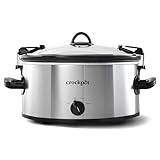
2. Crock-Pot Cook and Carry Slow Cooker, 6 Quart
A slow cooker with a locking lid and handles, designed for taking food to potlucks and gatherings without spills.
Suits: potlucks and parties. Strengths: a locking lid and easy carrying. Weaknesses: bulky to store. Skip it if you rarely travel with food.
View Crock-Pot Cook and Carry Slow Cooker, 6 Quart on Amazon
Best for a cook who wants flexibility
3. Crock-Pot Express Crock Multi-Cooker
A multi-cooker with pressure cooking, slow cooking and sauteing functions. It saves time on weeknights when you forget to start the slow cooker.
Suits: a cook who wants flexibility. Strengths: several cooking modes in one pot. Weaknesses: a digital panel to learn. Skip it if you want the simplest dial.
View Crock-Pot Express Crock Multi-Cooker on Amazon
Best for office lunches
4. Crock-Pot Lunch Crock Food Warmer
A small electric lunch warmer that heats leftovers at your desk, with a removable container and a carry handle.
Suits: office lunches. Strengths: a portable size for one. Weaknesses: slow to heat compared with a microwave. Skip it if you want to cook from raw.

Best for dips and sauces
5. Crock-Pot Little Dipper Food Warmer
A mini warmer sized for dips, sauces and melted cheese. It keeps small portions warm at a party table.
Suits: dips and sauces. Strengths: a tiny footprint and easy serving. Weaknesses: only a small capacity. Skip it if you need to cook a meal.
View Crock-Pot Little Dipper Food Warmer on Amazon

Best for buffets and entertaining
6. Crock-Pot Triple Slow Cooker
Three small pots sharing one base with separate controls, so you can serve a main, a side and a dip at once. It suits holiday buffets where one big pot would be too much.
Suits: buffets and entertaining. Strengths: three separate dishes at once. Weaknesses: each pot holds a small amount. Skip it if you cook one big batch.

Care and Setup
- Let the stoneware cool before washing.
- Do not move a hot pot onto a cold surface.
- Wash the lid by hand or follow the manual.
- Keep the power cord away from hot surfaces.
- Dry the base thoroughly before storing.
Mistakes to Avoid
- Filling the pot beyond the recommended line.
- Lifting the lid often and losing heat.
- Putting frozen meat straight into the pot.
- Cooking for too few people in a huge pot.
- Using the base in a dishwasher.
Low, High and Warm: Using the Heat Settings Well
Slow cookers work by holding food at a gentle, steady temperature for hours. The low setting takes longer to bring food up to temperature and suits tough cuts of meat, stews and dishes that benefit from long cooking. The high setting reaches cooking temperature sooner and suits recipes with shorter windows. Many recipes give times for both, and the result is similar if you follow the proportions, but not every dish works well on high.
The warm setting holds cooked food at a serving temperature but is not meant for cooking raw ingredients. Food-safety guidance generally advises not leaving cooked food on warm for very long periods, so check the manual and avoid holding food overnight. Programmable models switch to warm automatically once the timer ends, which is handy if you are late home, but do not treat it as a way to store food all day.
Because models differ, learn how yours behaves. Some run hotter than others, and older units can behave differently from newer ones. Try a recipe on a day you are home the first time, and check doneness near the end. Lifting the lid lets heat out and adds cooking time, so avoid peeking more than needed. Stir only when the recipe requires it, and add delicate ingredients like dairy, fresh herbs and quick-cooking vegetables near the end.
Size, Shape and Matching Capacity to Your Household
Capacity, in quarts, is a rough guide for how much the pot holds. A slow cooker works best when it is roughly half to two-thirds full, because a nearly empty pot cooks too fast and may scorch, and an overfull pot may not heat evenly. This is why a very large pot is not the best choice for a one- or two-person household cooking small meals.
Shape matters too. Round pots suit soups, stews and chili, while oval pots take roasts, ribs and whole chickens more easily. If you want to cook a large cut of meat, check the length of the interior, not just the quart size. Smaller pots serve dips, sauces and side dishes, and a trio of small pots on one base suits holiday tables where several dishes need keeping warm.
- One to two people: a smaller pot, or batch cook and freeze portions.
- Family of four: a mid-sized pot suits most recipes.
- Large gatherings or roasts: a large oval.
- Parties: small warmers for dips and sauces.
Think about storage too. A big oval takes cabinet space, so consider whether you have the room before buying.
Travel Features: Lids, Handles and Carrying Food Safely
Potluck and tailgate cooks care about how the pot travels. A locking lid, often with a gasket or clips, helps prevent spills when carrying a hot pot in a car. Handles should be sturdy and stay cool enough to grab with oven mitts. Check that the cord can be stored away and that the base has a stable footprint for placing on a table.
Transport introduces food-safety questions. Hot food should stay hot, and perishable food should not sit at room temperature for long. Pre-heat the cooker before you leave if possible, and keep it plugged in at the destination if there is an outlet. Check the manual for how to carry a pot with hot contents and use a flat, non-slip place in the car to prevent tipping.
Insulated carriers or bags may help, but check that they are compatible with the size of your cooker. For small portable warmers, make sure the container is sealed, because liquids easily leak during transport. After the event, cool leftovers promptly and refrigerate them in shallow containers instead of leaving them in the pot. Wash the lid gasket and clips, because food residue collects in those crevices and can smell.
Stoneware, Cleaning and Caring for the Pot
Most slow cookers include a removable stoneware or ceramic insert, which is easy to clean and sits inside a heated base. Stoneware can crack from sudden temperature changes, so do not pour cold water into a hot pot or put a hot insert on a cold or wet surface. Let it cool before washing, and do not put it in a freezer and then straight onto heat unless the manual says it is fine.
Check the manual on dishwasher use. Many inserts and lids tolerate the dishwasher, but heating bases never do. Wipe the base with a damp cloth when it is unplugged and cool. For stuck-on food, soak the insert in warm soapy water instead of scraping with metal tools, which scratch the glaze. Baking soda helps lift stains, and a non-abrasive sponge protects the surface.
Inspect the insert for cracks and crazing, which are fine lines in the glaze. Replace an insert that is cracked, chipped or leaking. Check the cord, the base and the plug for damage, and stop using the cooker if the cord is frayed. Store with the lid slightly ajar or with a paper towel between lid and pot to let air circulate. Keep the base dry and away from heat sources. Signs it is time to replace include food that no longer cooks properly, hot spots that scorch, a damaged cord or a cracked insert.
Recipe Planning and Safe Slow-Cooking Practices
Slow cooking suits some recipes more than others. Tough cuts, beans, root vegetables, soups and braises do well, while delicate fish, tender vegetables and pasta often fall apart if added early. Trim excess fat from meat, since extra fat can make dishes greasy. Because little liquid evaporates, you may need less liquid than in a stovetop recipe. Searing meat first adds flavor but is optional.
Food safety is an important part of slow cooking. Put thawed meat in the pot rather than frozen, since a large frozen block may stay in a lower temperature range too long. Dried kidney beans and some other beans need proper boiling before slow cooking, and the instructions on the package or in a trusted recipe explain how. Keep the pot at a sensible fill level, and use a thermometer to check that meat reaches a safe internal temperature according to food-safety guidance.
Plan around your day. If you leave the house, choose recipes with generous cooking windows and use a programmable model if you want it to switch to warm. Place the cooker on a heat-resistant surface with space around it, away from the counter edge and flammable materials, and keep the cord out of the way. Never immerse the base in water. Let leftovers cool and refrigerate them within a reasonable time, and reheat on the stovetop or microwave instead of in the slow cooker, which is meant for cooking rather than reheating.
Slow Cooker Selection Checklist
Slow cookers come in many sizes and styles, from small dip warmers to large oval pots for family meals. Before you compare the slow, travel and mini options above, work through the following questions.
- Decide on capacity. A small cooker suits one or two people or party dips, while a larger one lets you batch cook and have leftovers.
- Consider the shape. Oval pots hold roasts and whole cuts, while round pots suit soups and stews.
- Choose the controls. Manual dials are simple, while programmable models let you set a time and switch to warm automatically.
- Think about travel. Lid latches, strap locks and carry handles help when you take the cooker to gatherings.
- Look at the insert. Removable stoneware or metal inserts make cleaning and serving easier, and check whether the insert is dishwasher safe.
- Check the lid. Glass lids let you see inside, and a good seal keeps moisture in.
- Measure your counter and storage space, including the cord length.
It is worth picking the cooker that matches your normal batch size. A very large pot filled only halfway may not cook as the recipe expects, and manuals often recommend a minimum fill level.
Classic, Travel and Mini Models Compared
These three types serve different needs. The table summarizes how they usually differ.
| Type | Typical use | Strength | Consider |
|---|---|---|---|
| Classic | Family meals and meal prep | Large capacity, flexible | Takes counter and cabinet space |
| Travel | Potlucks and gatherings | Lid latch and handles | Heavier lid hardware |
| Mini | Dips, sauces and small portions | Compact, quick to clean | Limited capacity |
If you often bring food to events, a travel model is a sensible investment. If you want to keep a party dip warm, a mini cooker is perfect. A classic model remains the workhorse for most households.
Cooking Tips for Better Slow Cooker Meals
Follow your recipe and the manual for time and heat settings. Cut ingredients into similar sizes so they cook evenly, and place dense vegetables at the bottom where heat is most direct. Avoid lifting the lid too often, since each peek releases heat and adds time. Fill the pot within the range the maker recommends, usually between about half and three quarters full.
Thaw meat according to official food safety guidance before cooking, as the manual and food safety authorities advise. Do not use a slow cooker to reheat leftovers unless the maker says it is allowed. Follow guidance on keeping cooked food at safe temperatures, and refrigerate leftovers promptly.
Cleaning and Care
Unplug the cooker and let it cool before washing. Wash the insert and lid with warm soapy water, or place them in the dishwasher if the care sheet allows. Do not immerse the base or the cord in water. Wipe the base with a damp cloth, and dry everything before storing. Avoid sudden temperature changes, such as putting a hot insert into cold water, which can crack stoneware.
Check the cord, the plug and the lid for damage from time to time. If the cooker stops heating, trips a breaker or smells burnt, stop using it and contact the maker.
Reading a Slow Cooker Listing
Look for capacity, dimensions, wattage, the controls and the material of the insert. Check the lid type, the locking mechanism and the settings, such as low, high and warm. Read the care instructions and the warranty. Be cautious about phrases such as set it and forget it, and follow the manual for safe use.
Easy Meal Ideas to Try
- Soups and stews with root vegetables and beans.
- Pulled pork or chicken for sandwiches.
- Chili and curries for a crowd.
- Oatmeal prepared with plenty of liquid.
- Warm dips and fondue in a mini cooker.
Glossary of Slow Cooker Terms
- Stoneware insert: a ceramic pot that holds heat evenly and lifts out of the base for serving and washing.
- Warm setting: a low temperature meant for holding food after cooking, not for cooking from raw.
- Programmable: a model that lets you choose a cook time and then switches to warm by itself.
- Probe: a temperature sensor that cooks food to a set internal temperature on some models.
- Latch lid: a lid that locks to the base for safer carrying.
- Liner: a disposable bag some people use for easier cleanup. Check the maker’s guidance first.
These words appear often in listings and recipes, and they make it simpler to compare models.
Common Mistakes to Avoid
Overfilling the pot is the most common slip, since it can cause uneven cooking and spills. Lifting the lid repeatedly extends the time, while adding too little liquid can scorch food. Putting a cold insert straight from the fridge into a preheated base may cause cracking, so follow the manual. Cooking large frozen pieces is another issue, so follow official food safety guidance on thawing. Finally, forgetting to check the cord and plug for damage is an easy habit to fix.
Choosing Crock pot cookers: What Actually Matters
Size is the first decision with a slow cooker, and it should be made in portions and freezer containers, not in abstract volume. These pots cook best when they are roughly half to two-thirds full: too empty and food can overcook or dry at the edges, too full and it heats slowly and unevenly. A household of two that cooks fresh most nights needs a different pot from a family batch-cooking Sunday sauce for the freezer. Consider the shape as well as the size, since oval pots take whole chickens, roasts, and loaves more gracefully, while round pots suit soups and stews and often store more neatly.
Controls range from a simple dial to programmable timers, and the right choice depends on your day. If you are home to switch the cooker off, a basic model with low, high, and warm settings does everything essential. If your workday plus commute runs longer than most recipes, a programmable model that switches itself to warm prevents the overcooked, dried-out results that give slow cooking a bad name. Check how the warm setting behaves, because holding food safely matters as much as cooking it. A clear lid you can see through without lifting is worth having: every lift releases heat and adds noticeably to the cooking time.
The insert material shapes cleaning and serving. Stoneware inserts hold heat beautifully, go to the table gracefully, and are heavy, especially when full. Lighter metal inserts, often used on hob-compatible designs, are easier to lift and may let you sear in the same vessel, which saves washing and keeps the browned flavors in the dish. Lids, handles, and the way the insert sits in the base all matter on the day you carry a full, hot pot across the kitchen. Judge a slow cooker by the whole journey from counter to table to sink, not only by its settings.
How Crock pot cookers Fit Real Routines
Weekday set-and-forget dinners
The slow cooker’s home ground is the meal that greets you cooked. Chilis, braises, pulled meats, and bean dishes are built for the method: tough, flavorful cuts soften, sauces meld, and the house smells like someone has been cooking all day. Prepare ingredients the night before where the recipe allows, keep perishable components refrigerated until morning, and cut vegetables to sizes that will finish with the meat. Root vegetables placed near the base, where the heat is strongest, cook more evenly. Resist lifting the lid to check; slow cookers lose heat slowly gained, and patience is an ingredient.
Batch cooking and freezer filling
For batch cooking, the slow cooker is a quiet factory. A big pot of Bolognese-style sauce, a double batch of soup, or a tray’s worth of shredded chicken can be portioned, cooled promptly, labeled, and frozen flat for efficient storage. Cook once and the week changes shape: bases for pasta, fillings for pies and wraps, and soups that only need bread to become dinner. Keep a running list on the freezer door so the batches get used in rotation. Slow cooking rewards planners, and the freezer is where the planning pays out.
Gentle cooking for delicate schedules
Slow cookers also serve households whose eating times are unpredictable. A stew that finishes at five can hold warm for the family member who arrives at seven, within safe holding limits, without the drying that oven-keeping causes. Steel-cut oats started for the morning, soups that wait through a child’s practice schedule, and sauces that tolerate a delayed dinner all suit the method. The key is choosing dishes that improve or at least hold steady with time, and avoiding anything whose texture depends on precise timing, such as pasta cooked in the pot for hours.
Setup, Daily Use, and Getting the Best Results
Place the cooker on a stable, heat-safe surface with space around it, and give it a first run with a simple dish before trusting it with an expensive joint of meat. Every model’s low and high settings run a little differently, and one calibration cook, a basic stew or a pot of dried beans cooked by the book, teaches you your cooker’s pace. Read the manual’s fill guidance and food safety notes, especially about starting with thawed ingredients and keeping the lid on. Slow cooking is forgiving, but it works within rules, and the rules are mostly about temperature and time.
Technique is simple and worth learning properly. Layer by density: hard vegetables at the bottom in the heat, meat above, delicate items and dairy near the end. Use less liquid than a stove-top braise, because a sealed slow cooker loses very little, and remember that fresh herbs, cream, and quick-cooking vegetables belong in the final stretch, not the first hour. If your cooker allows searing, browning meat first builds depth; if not, a separate pan is worth it for dishes where color equals flavor. Season again at the end, because long cooking rounds flavors out.
Food safety deserves explicit habits. Start with thawed ingredients unless a recipe is specifically written and tested for frozen, refrigerate prepared ingredients rather than leaving them in the insert on the counter, and get leftovers cooled and into the fridge promptly after serving. Do not reheat leftovers in a slow cooker, because it warms too slowly; reheat by a faster method and use the cooker for cooking. These are not fussy rules; they are the difference between an appliance that makes life easier and one that makes anyone nervous, and they quickly become automatic.
Care, Cleaning, and Keeping It Working Well
Longevity is mostly about protecting the insert and the lid. A cracked stoneware insert or a chipped rim that breaks the lid’s seal should retire the part, because both affect cooking and safety. Hairline crazing in a glaze is usually cosmetic, but cracks that catch a fingernail deserve replacement. Store the insert with a cloth between it and anything stacked inside, and keep the lid where it will not be knocked. Slow cookers have few moving parts and often serve for many years; the households that replace them early usually lost an insert to a knock or a thermal shock, not a motor to age.
Most inserts and lids wash easily once soaked, and a slow cooker’s gentle temperatures rarely bake food on the way an oven does. Soak the insert in warm soapy water while you eat, and use a soft sponge or brush; stoneware dislikes thermal shock, so let a hot insert cool a little before it meets water, and never place it on a cold wet surface straight from the base. Check the lid’s rim and any gasket for trapped residue, and wipe the base’s interior well with a damp cloth once cool and unplugged, since drips there scorch quietly over time.
Common Mistakes and How to Avoid Them
Safety and texture mistakes repeat across kitchens. Filling the pot to the brim slows heating and invites spills; cooking from frozen without a tested recipe risks food lingering too long at unsafe temperatures; adding pasta, rice, or dairy at the start guarantees mush or splitting. And using the insert on a direct flame or under a grill, unless the maker explicitly rates it for that, can crack it in minutes. The slow cooker asks very little: the right fill, the lid left alone, ingredients added in the right order, and time matched to the recipe. Give it those, and it is remarkably reliable.
The most common slow cooker disappointment is watery, bland food, and it usually comes from stove-top thinking: too much liquid, the lid lifted often, and seasoning never adjusted at the end. Use less liquid, keep the lid on, and finish the dish actively, salt, acid, fresh herbs, a swirl of something rich. The second disappointment is overcooking lean meats and vegetables into softness by leaving them for a full workday on a recipe written for five hours; choose recipes that match your absence, or a model that switches to warm, and favor cuts with connective tissue that enjoy the long cook.
How the Picks in This Guide Compare
Comparison only makes sense against your own priorities, so use this section as a decision exercise rather than a ranking. The picks above were chosen to cover different needs within crock pot cookers: different sizes, styles, and strengths for different kitchens. Read across them with your space measurements, your regular recipes, and your cleaning tolerance in hand, and the shortlist usually narrows itself to one or two. What follows revisits each pick in turn and frames the question you should ask of it.
Crock-Pot 7 Quart Oval Manual Slow Cooker represents one answer to the question this guide is asking, and the other picks represent others. Compare them by the criteria that opened this article: how they fit your space, how they behave in the cooking you repeat, and how they clean and store afterwards. If you find yourself torn between this pick and another, choose by the tie-breaker of daily friction: the one that will be easier to reach for, easier to wash, and easier to live with usually wins the year, whatever wins the afternoon.
Crock-Pot Cook and Carry Slow Cooker, 6 Quart earns its place in this line-up for the role set out in its review above. When you weigh it against the neighbouring picks, compare what the reviews themselves say about what it does well, where its limits are, and the kind of cooking it suits. The right choice is rarely the most elaborate option; it is the one whose strengths match your weekly routine rather than your most ambitious day, and whose handling and care you will be happy with long after the novelty fades.
Crock-Pot Express Crock Multi-Cooker is the pick to study closely if its purpose in this guide matches the job you most need done. Read its section alongside the picks either side of it, and notice the trade-offs the guide describes: every design in this category gives something to get something. If the compromise it makes is one you would happily make too, that is a strong signal. If its strengths answer a problem you do not have, a simpler pick further down the list will probably serve you better.
With Crock-Pot Lunch Crock Food Warmer, the decision is about fit for your household rather than rank. Its review above explains the cooking it is built for; your task is to be honest about how often that cooking happens in your kitchen. A pick used three times a week at the centre of your routine is worth more than a technically broader one used monthly. Check also the practicalities the review raises, size, handling, and care, because those are the details still shaping your satisfaction a year from now.
Crock-Pot Little Dipper Food Warmer represents one answer to the question this guide is asking, and the other picks represent others. Compare them by the criteria that opened this article: how they fit your space, how they behave in the cooking you repeat, and how they clean and store afterwards. If you find yourself torn between this pick and another, choose by the tie-breaker of daily friction: the one that will be easier to reach for, easier to wash, and easier to live with usually wins the year, whatever wins the afternoon.
Crock-Pot Triple Slow Cooker earns its place in this line-up for the role set out in its review above. When you weigh it against the neighbouring picks, compare what the reviews themselves say about what it does well, where its limits are, and the kind of cooking it suits. The right choice is rarely the most elaborate option; it is the one whose strengths match your weekly routine rather than your most ambitious day, and whose handling and care you will be happy with long after the novelty fades.
More Practical Notes on Crock pot cookers
Think of a slow cooker as a schedule tool as much as a cooking tool. Its real product is not stew; it is the hour between arriving home and eating, returned to you. That framing helps purchasing decisions: the right size is the one that fits the meals your schedule needs, and the right controls are the ones that match the length of your day. Households that buy with their calendar in hand rarely regret the purchase, while a cooker bought for fantasy dinner parties tends to gather dust next to the other occasion-only appliances.
A small recipe notebook transforms results over a season. Slow cookers differ enough that published times are estimates, so note what you cooked, the setting, the hours, and the verdict. Within a dozen entries you will know exactly how long your cooker needs for your chili, your bean soup, your pulled pork, and future cooking becomes nearly automatic. Note also what froze well, because the pairing of slow cooking and batch freezing is where the appliance quietly saves the most money and the most weeknight stress.
Finally, place the cooker where its steam and aroma will not be a problem and where the full insert’s journey to the table is short and safe. A full stoneware insert is one of the heavier things you will carry in a kitchen, and it is hot. Clear the path, use both hands and proper mitts, and set it down on a trivet, not a cold counter. These small logistics sound trivial until the first time you skip them. Slow cooking is gentle food; handling the vessel gently completes the method.
Teach the whole household the appliance’s few rules and its ordinary routine. Shared appliances fail at the boundaries between users: one person’s shortcut becomes another’s mystery fault. A short conversation, or a note on the fridge door covering what goes in, what never does, and what to do when a cycle ends, aligns everyone. Children old enough to use crock pot cookers are old enough to learn their care, and guests are happier with a sentence of guidance than with anxious hovering. An appliance the whole house understands is an appliance that lasts.
Keep a small log for the first season: what you cooked or processed, the settings that worked, and the one thing you would change. Appliances have personalities, and published guidance is written for an average kitchen that is not yours. Your own notes, rack positions, timings, doses, and quantities for your regular tasks, become the real manual within a dozen uses. This is the least technological advice in this guide and the most valuable: the difference between owners who love their appliances and owners who tolerate them is usually a page of notes.
Accessories should be bought in the order your frustration dictates. Live with crock pot cookers for a month first, and let real friction, the missing rack, the awkward jug, the pan that does not fit, tell you what to buy. Each accessory should remove a named annoyance from a task you perform weekly; anything bought for an imagined task will join the drawer of good intentions. And when you do buy, measure first and buy once, because the accessory that fits properly and is used daily is cheaper at any price than the almost-right one replaced twice.
Plan for the appliance’s whole life in your home, including its end. Keep the packaging only if storage is free and returns are plausible; register the warranty; note where spare parts and consumables for your model are sold. When performance drifts, work through the simple causes in order, cleanliness, loading, settings, placement, before assuming failure, because most appliance misery is maintenance wearing a disguise. A well-kept machine, honestly assessed, will tell you clearly when it is done; until then, steady care beats anxious replacement.
Consider how crock pot cookers interact with the rest of your kitchen’s cast. The best kitchens are ensembles: each appliance covers the others’ weaknesses, and tasks flow to the tool that does them best rather than the newest one. Let the appliance in this guide take the jobs it is genuinely best at, and resist forcing it to be universal. That division of labor is what makes a kitchen feel calm at the busiest hour, and it is the real destination of every comparison and criterion in this guide: the right tool, in the right place, doing its best work.
Safety around crock pot cookers is mostly a set of small, unbroken habits. Keep the area around the appliance clear and dry, route cords and hoses where they cannot be tripped over or pinched, and let hot parts cool before cleaning or covering. Never defeat a safety feature because it slows you down, and never leave a heating appliance in a state you would not leave a hob. Teach these habits as part of the appliance’s routine rather than as warnings, and they will be followed on the tired evenings when warnings are forgotten.
Finally, judge crock pot cookers by the standard of your ordinary week. The right choice is the one that makes Tuesday easier: faster to set up, calmer to use, simpler to clean, and reliable enough to be forgotten between uses. Feature lists and first impressions fade; the weekly rhythm is the product. If you choose by fit, by your real loads and recipes, and by the care you will actually give, the appliance will repay you in the only currency that matters in a kitchen, which is good food with less friction, week after week.
Where crock pot cookers sit in the kitchen deserves the same care as the purchase itself. Appliances earn their keep when they are reachable at the moment of need, with a clear landing space beside them and a socket they do not share with a tangle of other demands. Before committing to a position, walk through the task the appliance serves, from fetching ingredients to setting down something hot, and check the route for obstacles and crossings. Five minutes of this rehearsal prevents the daily irritations, a door that opens against a wall, a cord across the sink, that quietly turn a good appliance into a resented one.
Crock-Pot FAQ
What size Crock-Pot should I buy?
Smaller pots suit one or two people. Larger ovals suit families and roasts. Check the stated capacity on each listing.
Can I leave a Crock-Pot on while I am at work?
Many people do, and programmable versions switch to warm after the cooking time. Follow the manual.
Are the stoneware pots dishwasher safe?
Many are, but check the manual for each model.
Can I use the pot in the oven?
Some stoneware can, with limits. Check the manual first.
What does the warm setting do?
It holds food at a safe serving heat after cooking finishes, so dinner stays ready when you are late. Keep an eye on how long food sits there.
How full should a slow cooker be?
Aim for roughly half to two-thirds full. Too little food can cook too fast and scorch, while an overfull pot may heat unevenly.
Can I cook frozen meat in a slow cooker?
Thawing first is the usual advice, since a large frozen block may take too long to reach a safe temperature. Check the manual and food-safety guidance.
Should I use low or high?
Low suits tough cuts and long cooks, and high suits shorter recipes. Follow the recipe times for each setting.
Why did my stoneware crack?
Sudden temperature changes are the usual cause. Avoid adding cold liquid to a hot insert or placing it on a wet or cold surface.
Can I reheat leftovers in a slow cooker?
It is not recommended, since it heats slowly. Reheat on the stovetop or in a microwave, then transfer to the slow cooker to keep warm if needed.
How do I carry a slow cooker safely?
Use a locking lid, lift with both hands or the handles, and place it on a flat non-slip surface in the car. Keep hot food hot and check the manual.
Do I need to stir while cooking?
Usually not. Opening the lid releases heat, so stir only when the recipe asks for it and add delicate ingredients near the end.
Can I cook rice or pasta in a slow cooker?
Both are possible but timing-sensitive, because they absorb liquid and soften quickly once done. They are usually best added near the end of cooking rather than at the start, with enough liquid present, and checked early. For predictable results, many households cook grains separately and use the slow cooker for the sauce or stew that goes over them.
How do I stop chicken from drying out in a slow cooker?
Choose thighs over breast meat for long cooks, since they stay moist through extended cooking. If you use breast, shorten the cooking time, keep pieces submerged in sauce, and check doneness with a thermometer rather than the clock. Overcooking, not the method itself, is what dries chicken out; slow cookers vary, so learn your model’s pace.
Is it safe to reheat leftovers in a slow cooker?
Reheating in a slow cooker is not recommended, because it warms food too slowly through the temperature range where bacteria grow. Reheat leftovers by a faster method until steaming hot throughout, and reserve the slow cooker for cooking from raw or for holding already-hot food for a limited time as the manual directs.
Can I leave a slow cooker on while I am out?
Slow cookers are designed for unattended cooking when used as the manual directs: on a stable, heat-safe surface, away from edges and anything flammable, filled correctly, and plugged directly into a sound socket. Start with thawed ingredients, keep the lid on, and choose a cooking time that matches your absence so food is not held for excessive periods after cooking finishes.
Why is my slow-cooked food watery?
A sealed slow cooker loses almost no moisture, so liquid from the recipe plus juices from meat and vegetables all stay in the pot. Reduce added liquid compared with stove-top versions, remove the lid for a short final simmer if your model allows, or thicken at the end. Also check that the lid is seating properly and has not been lifted often during cooking.
Do I need to brown meat before slow cooking?
It is not required for safety or tenderness, but browning builds flavor and color that slow cooking alone cannot create. For dishes where deep, savory flavor matters, sear the meat in a hot pan first and deglaze the pan into the pot. For weeknight simplicity, many cooks skip it for saucy, strongly spiced dishes where the difference is subtle.
The Short Version
For roasts, the Crock-Pot 7 Quart Oval. For potlucks, the Cook and Carry. For versatility, the Express Crock. For office lunches, the Lunch Crock. For dips, the Little Dipper. For buffets, the Triple.
Related Guides
- 6 Best Large Crock-Pot Slow Cookers for Big Batches (2026)
- 6 Best Slow Cookers: Programmable, Multi and Travel (2026)
- 6 Best Small Slow Cookers: Mini Crocks and 3-Quart Pots (2026)
- 6 Best Portable Mini Fridges: Desk, Travel, Compact (2026)
- 6 Best Instant Pot Cookers: Pressure, Air Fry and Smart (2026)