Countertop cookers do a lot of the work of a stove with less attention. Pressure cookers speed up stews, rice cookers deliver steady grains and slow cookers turn tough cuts into tender meals while you are out.
The six cookers below cover those styles. We have not used these products ourselves, so confirm the capacity, functions and included accessories on the current listing before buying. Names and features change between versions, so check the exact model you plan to order.
As an Amazon Associate we earn from qualifying purchases. Links below are affiliate links, and they do not change the product information we give.
What to Look For
| Feature | Why it matters |
|---|---|
| Type | Pressure, rice and slow cookers each suit different meals |
| Capacity | A 6 quart class pot suits most families |
| Controls | Presets help beginners; dials suit simple use |
| Inner pot | Stainless steel resists scratches; nonstick is easy to clean |
| Safety | Look for a locking lid and pressure release on pressure cookers |
In this guide
Specs at a Glance
| Cooker | Type | Size class | Notes |
|---|---|---|---|
| Instant Pot Duo 7-in-1 | Electric multi-cooker | Several sizes | Pressure cook, slow cook, saute and more |
| Ninja Foodi Pressure Cooker Steam Fryer | Pressure cooker with air fry | Large | Pressure, air fry and steam |
| Crock-Pot Express Crock Multi-Cooker | Electric multi-cooker | Large | Pressure, slow cook and saute |
| Zojirushi Neuro Fuzzy NS-ZCC10 Rice Cooker | Rice cooker and warmer | Roughly 5.5 cup class | Fuzzy logic control |
| Cuisinart CPC-600 6-Quart Pressure Cooker | Electric pressure cooker | 6 quart class | Pressure, brown and warm |
| Hamilton Beach Set ‘n Forget Programmable Slow Cooker | Slow cooker | Large | Programmable with probe |
The 6 Best Cookers

Top pickBest for all-around home cooking
1. Instant Pot Duo 7-in-1
One of the best-known multi-cookers, with stainless steel inner pot and many presets. It comes in several sizes, so read the capacity on the listing. It is easy to find lids, gaskets and spare inner pots for this popular line.
Suits: all-around home cooking. Strengths: a huge owner base and many presets. Weaknesses: a learning curve for pressure use. Skip it if you only make rice.

Best for cooks who like crispy finishes
2. Ninja Foodi Pressure Cooker Steam Fryer
A multi-cooker that adds crisping to pressure cooking. It is meant for people who want one appliance for several tasks. The pot itself comes in several sizes, so choose the capacity that fits your household.
Suits: cooks who like crispy finishes. Strengths: pressure and crisp in one. Weaknesses: a big unit to store. Skip it if you want the smallest cooker.
View Ninja Foodi Pressure Cooker Steam Fryer on Amazon
Best for slow cooker fans who want speed
3. Crock-Pot Express Crock Multi-Cooker
A multi-cooker from the best-known slow cooker brand. It combines pressure and slow cooking in one pot. Read the manual closely, since the pressure and slow cook modes work differently.
Suits: slow cooker fans who want speed. Strengths: a familiar brand. Weaknesses: fewer accessories included. Skip it if you want only a slow cooker.
View Crock-Pot Express Crock Multi-Cooker on Amazon
Best for households that eat rice often
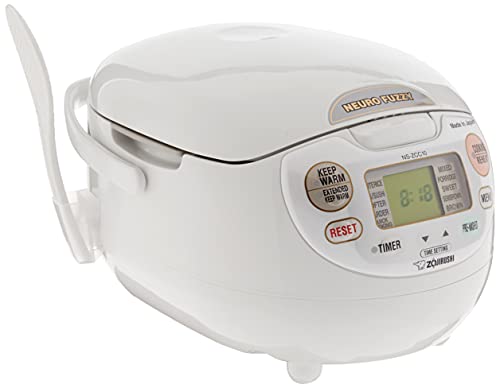
4. Zojirushi Neuro Fuzzy NS-ZCC10 Rice Cooker
A well-regarded rice cooker with fuzzy logic that adjusts cooking. It is a long-running favorite among rice eaters. Rice is cooked more carefully than in a basic switch-style cooker.
Suits: households that eat rice often. Strengths: careful rice cooking. Weaknesses: it is a single-purpose appliance. Skip it if you want a pressure cooker.
Best for a simple pressure cooker
5. Cuisinart CPC-600 6-Quart Pressure Cooker
A pressure cooker with a stainless steel build and simple controls. Cuisinart’s design leans toward straightforward operation. Check the listing for the exact model, since versions differ in presets.
Suits: a simple pressure cooker. Strengths: a clean design. Weaknesses: fewer functions. Skip it if you want air frying too.
View Cuisinart CPC-600 6-Quart Pressure Cooker on Amazon
Best for set-and-leave meals
6. Hamilton Beach Set ‘n Forget Programmable Slow Cooker
A programmable slow cooker that includes a temperature probe and shifts to warm when done, which suits busy households. It saves effort on workdays because you load it in the morning and come home to dinner.
Suits: set-and-leave meals. Strengths: a probe and auto warm. Weaknesses: slow cooking time. Skip it if you want fast results.
View Hamilton Beach Set ‘n Forget Programmable Slow Cooker on Amazon
Care and Setup
- Wash the inner pot by hand or as the manual says.
- Clean the sealing ring and replace it when it holds odors.
- Check the steam vent before each use.
- Wipe the heating base only with a damp cloth.
- Store with the lid off to avoid smells.
Mistakes to Avoid
- Overfilling past the max line.
- Skipping the sealing ring check.
- Quick-releasing foamy foods.
- Buying a size that is too small.
Matching a Cooker to How You Eat
The word cooker covers several quite different appliances, so the best starting point is the meals you make most often. A pressure cooker raises the boiling point by sealing steam inside, which cuts time on beans, stews, stock and tough cuts of meat. A slow cooker holds low heat for many hours and suits soups, braises and pulled meats when you are away from home. A rice cooker focuses on grain, controlling water absorption and keeping rice warm. A multi-cooker combines several modes in one pot, which is handy when you want flexibility and have limited storage.
A simple test is to list your five most common dinners and see which appliance would help with most of them. If you cook rice several times a week and rarely anything else, a dedicated rice cooker is likely a better fit than a multi-cooker. If you meal-prep stews and shredded meats, a pressure or slow cooker will earn its place. If you want to sear, saute, steam and cook under pressure in one pot, a multi-cooker covers most of it, though each mode may not match a dedicated appliance.
- Fast weeknight meals: pressure or multi-cooker.
- Set-and-leave dinners: slow cooker.
- Daily rice or grains: rice cooker, often with fuzzy-logic or a keep-warm setting.
- Small kitchen with many tasks: multi-cooker.
Count the counter and cabinet space too. Multi-cookers are tall and heavy, and the lid and accessories need a place to live.
Pressure Cooking Basics and Safe Release
Electric pressure cookers have made the technique much easier, but a few habits keep it safe and predictable. Always add enough thin liquid, as the manual states, because the cooker needs steam to build pressure. Do not fill the pot past the maximum line, and stay below the lower line for foods that foam or expand, such as beans, grains and pasta. Check that the sealing ring is in place and that the steam vent is clear before each use, and set the vent to the sealing position.
How you release pressure affects the food. Natural release lets pressure drop on its own, which is gentler for meats and for foamy or starchy foods because the liquid does not boil violently. Quick release opens the vent to let steam out and stops cooking faster, which suits vegetables and seafood. Keep your hands and face away from the vent, and never force the lid open. Foods such as oatmeal, thick sauces and some legumes can splatter through the vent in a quick release, so use natural release for those.
- Thicken sauces after cooking, not before, since thick liquids can scorch and trigger burn warnings.
- Deglaze the pot after sauteing to lift browned bits, which helps avoid burn messages.
- Cooking times in recipes depend on the cut size and the cooker, so follow your manual’s charts.
- Inspect the lid and gasket regularly for damage.
If anything seems wrong, such as steam leaking around the lid, stop and cool the unit before opening.
Slow Cooking and Food Safety
Slow cookers are forgiving, but they still demand good food-handling habits. Start with thawed meat, because frozen cuts can spend too long in the temperature range where bacteria grow. Fill the pot between the levels the manual suggests, usually somewhere between half and about three-quarters, so heat spreads properly. Keep the lid on, since each lift loses heat and can add a long delay. Cook on the setting that suits your schedule, and make sure the food reaches a safe internal temperature, checking with a thermometer rather than guessing.
Flavor and texture benefit from a few simple steps. Browning meat first adds depth, and the pot should not hold too much liquid, as vegetables and meat release water as they cook. Dense root vegetables belong near the bottom, and delicate ingredients such as dairy, fresh herbs and quick-cooking vegetables are better added near the end. Tougher cuts with connective tissue become tender over long cooking, while lean cuts can dry out if left too long.
- Do not use a slow cooker to reheat cold leftovers from the fridge, since it warms too slowly.
- After cooking, move leftovers into shallow containers and refrigerate promptly rather than leaving them on warm for hours.
- Programmable models that switch to warm save effort but follow their time limits.
- Check the lid and crock for chips before each use.
Removable ceramic crocks are heavy and can crack from sudden temperature changes, so avoid placing a hot crock on a cold surface or adding cold liquid to a hot pot.
Rice Cooker Features That Matter
A rice cooker looks simple, but the control system affects results. Basic models use a thermostat switch that moves from cook to warm when the water is gone. Fuzzy-logic models use a microcontroller and sensors to adjust heat through the cycle, and they often include settings for white rice, brown rice, porridge or sushi rice. Induction and pressure types go further, but they cost more and are best for people who eat rice daily and care about texture. The inner pot matters too: a thicker pot spreads heat evenly, and a nonstick coating releases rice but can scratch.
The keep-warm function is useful, but rice left warm for too long will dry, yellow and develop off flavors. Many cookers include a reheat or extended keep-warm option, so check how long the maker recommends holding rice. Measuring is another everyday detail. Rice cooker cups are often smaller than standard measuring cups, so use the cup supplied with the cooker and the water lines inside the pot.
- Rinse rice before cooking for cleaner flavor and less stickiness, unless the package says not to.
- Let rice rest for a few minutes after the cycle, then fluff it.
- Check whether the cooker has a delay timer if you want rice ready when you arrive home.
- Look for a removable steam vent and lid for easier cleaning.
If you often cook other grains, check that the manual lists approved uses.
Sizing, Inner Pots and Upkeep
Size should reflect how many people you cook for and how much you batch cook. A mid-sized pot suits many households, while single people and couples may do well with a smaller one that heats quickly and takes less space. Large families and meal-preppers may want a bigger pot, but remember that cookers work best when filled within the recommended range, and a large pot with a small amount of food can cook unevenly. Check the maximum fill line for pressure cooking, since it is often lower than the total volume.
Inner pots come in stainless steel, nonstick-coated aluminum and ceramic. Stainless resists scratches and handles metal utensils, but food can stick unless you use enough fat or liquid. Nonstick releases food easily and cleans quickly, but it needs gentle utensils and soft sponges. Ceramic crocks in slow cookers hold heat well, but they are heavy and can chip. Spare pots are useful when you cook two dishes in a row, so check availability before buying.
Upkeep is straightforward:
- Wash the pot and lid after each use, and dry them fully.
- Replace sealing rings when they stretch, crack or hold odors, and consider having a spare, for example one for savory and one for sweet dishes.
- Wipe the heating base and rim only with a damp cloth, never submerged.
- Check the cord, plug and steam release for wear.
Replace the cooker if the pot is warped, the lid no longer seals, the controls fail or parts are no longer available.
Sorting Out What the Word Cooker Covers
The word cooker covers a wide group of appliances: rice cookers, pressure cookers, slow cookers and multi-cookers that try to do all of those jobs in one pot. Each has a different strength. A rice cooker is built to make grains and hold them warm. A pressure cooker raises the pressure inside the pot to cook food faster than an open pot. A slow cooker works at low temperatures over many hours, which suits stews and tough cuts of meat. A multi-cooker combines several modes, and some add steaming, sauteing or yogurt making. Knowing these differences stops you from buying an appliance that does not match your cooking style.
Think about the dishes you make most often and how much time you have. A single multi-cooker can replace several pots, but a dedicated rice cooker may still be the simplest tool for daily rice.
Comparing the Main Cooker Types
| Type | Best known for | Keep in mind |
|---|---|---|
| Rice cooker | Reliable grains with little attention | Limited to grains and a few extras |
| Pressure cooker | Fast cooking of stews, beans and tough cuts | Follow safety steps carefully |
| Slow cooker | Set and leave cooking | Takes hours and plenty of planning |
| Multi-cooker | Several functions in one | Larger, more menus to learn |
Capacity, Inner Pot and Lid Details
Capacity is listed in quarts or liters, and a pot that suits a couple differs from one for a large family. Do not fill the pot beyond the line marked in the manual, especially when pressure is involved. Look at the inner pot material, such as nonstick or stainless steel, and check whether it can be removed for washing. Check the lid design, the sealing ring and the vent. A clear display and well labeled buttons make daily use simpler.
- Match capacity to your household.
- Check that the inner pot is easy to clean.
- Look at spare part availability for rings and valves.
Safe Use and Following the Maker’s Guidance
Cookers use heat, steam and sometimes pressure, so safety matters. Read the manual, place the unit on a stable heat-safe surface and keep the cord out of the way. Never force a lid open, and let pressure release as described. Keep your face and hands away from escaping steam. Follow official food safety guidance for cooking temperatures and for holding cooked food. If the cord, plug or lid looks damaged, stop using the appliance and contact the maker.
Cleaning and Storing a Cooker
Unplug and cool the unit before cleaning. Wash the inner pot and lid, wipe the base with a damp cloth and keep water away from electrical parts. Clean the steam vent and sealing ring according to the manual. Store with the lid placed loosely to allow air in.
Choosing for Your Routine
If you cook rice daily, a rice cooker may do more for you than a multi-cooker. If you like soups, beans and braises, a pressure or slow cooker makes sense. Think about counter space too.
Questions to Settle About Counter Space and Daily Use
Consider where the cooker will live. A multi-cooker is tall and wide, and some models need clearance above for steam. Check the cord length and the position of the outlet. Think about how often you will lift the pot to wash it, and whether the weight suits you. If you share a kitchen, choose clear menus and simple controls. Keep the manual in a drawer near the appliance so you can look up cooking times and safety notes.
A Closer Look at Choosing an All-Round Cooker
A general-purpose cooker is the engine room of a kitchen, asked to boil pasta on a Tuesday, roast for a crowd on a Sunday and grill cheese at midnight, all without complaint. That breadth is exactly what makes choosing one tricky: every design in this guide trades something, whether oven space against hob layout, features against simplicity, or cleaning ease against cooking character. The useful question is not which cooker is best in the abstract but which one’s strengths overlap your most-cooked meals and whose weaknesses fall on dishes you rarely make. Read the reviews with your own week of dinners in mind, weight the daily touches, the knobs, the door, the shelf positions, as heavily as the specifications, and the right choice usually becomes obvious. The sections below unpack the criteria, technique and care in more depth.
Choosing a Cooker in Depth: Format, Fuel and How You Really Cook
Cookers come in several formats, and the right one is the one whose shape matches your cooking rather than the one with the longest feature list. When you compare the picks in this guide, start with the division of labour in your kitchen: how many burners or zones you genuinely use at once, whether the oven works singly or in two cavities, and whether you bake, roast, grill or simmer your way through the week. A keen baker needs even, gentle oven heat and a shelf arrangement that takes wide trays; a family that lives on one-pot dishes needs a hob that holds a big pot without wobbling and an oven that swallows a casserole with room to spare.
Fuel and heat character come next. Gas gives instant, visible control on the hob and a moist oven heat many bakers love; electric offers precise low temperatures, even fan-assisted roasting and easier cleaning, with induction bringing gas-like responsiveness to a flat, cool surface. None is universally best, but each suits different habits, and the reviews above will help you match the character of each pick to your own. Consider also what your kitchen already supports, because changing fuel type can mean new circuits, pipework or ventilation, and those costs belong in the decision.
Finally, judge the details you will touch daily: controls that make sense with wet hands, pan supports or surfaces that are stable and easy to clean, an oven door that opens without fighting the floor, and interior surfaces that wipe down without a battle. Check the dimensions of your largest pans against the hob and your widest tray against the oven, handles included. A cooker is a decade-long purchase for most households, so build quality, available spares and a maker who still answers the phone matter as much as this month’s features.
Before You Buy: Space, Services and Clearances
A cooker is one of the most fitted purchases in the home, so begin with the alcove and the services. Measure the width, depth and height of the space precisely, including skirting and uneven walls that steal centimetres, and check the floor is sound and level. Establish what fuel and electrical supply the space already has and what the models on your shortlist need, because converting between gas and electric, or adding a higher-capacity circuit, is real work with real cost that belongs in the budget from the start.
Check clearances and neighbours too: combustible materials, cupboard doors that open into the cooker’s space, and the extractor above all shape what can be installed safely and legally. Plan the delivery route with the same care, measuring doorways and corners, since cookers are among the bulkiest items in any home. Finally, arrange installation by qualified professionals where gas or fixed wiring is involved, and book it before the old cooker is removed if you want to avoid a week of takeaways. These practicalities, settled early, let you choose from this guide on cooking merit rather than on what happens to fit.
Getting the Best From Your Cooker, Meal After Meal
Every cooker has a personality, and the first month is about learning yours. Note which burner suits your big stockpot, where the oven’s hot spots are by baking a tray of pale biscuits or slices of bread and seeing how they colour, and how long the oven honestly takes to reach temperature. That small investment of attention turns guesswork into instinct: you will know which shelf roasts vegetables hardest, which ring simmers a sauce without catching, and when to rotate a tray for an even bake.
Use the oven’s features with intent. Fan heat suits roasting and multi-shelf baking, while gentler conventional heat can be kinder to delicate sponges and meringues; grills want preheating and food at the right distance, not just the hottest setting. On the hob, match pan size to burner size so heat climbs the base of the pan rather than licking up its sides, wasting energy and scorching handles. Lids are free efficiency: they speed boiling, steady simmering and cut the steam your extractor must handle.
Plan oven use in batches when you can. A roast followed by a traybake as the oven cools, or bread proved while the oven preheats for dinner, makes the most of energy you have already spent. Rest meats while vegetables finish, and keep a simple notebook or phone note of timings that worked for your regular dishes. Cookers vary more than recipes admit, and your own record for your own appliance becomes the most trustworthy cookbook in the house.
Your First Week With a New Cooker: Learning Its Character
Give the new cooker a gentle, observant first week. Burn off any manufacturing residues as the manual directs, with the room ventilated, before food goes near it. Then cook familiar dishes rather than ambitious ones: a tray of biscuits or bread slices to map the oven’s hot spots, a sauce you know well to judge the hob’s simmer, a grill session watched closely to learn its fierceness. Familiar food makes differences visible, because you know exactly how the result should look.
Write down what you learn: which burner suits the big pot, which shelf roasts hardest, how long preheating honestly takes, and any setting that runs hotter or cooler than expected. Share the notes with everyone who cooks in the house, so the whole household calibrates together. By the end of the week the cooker should feel like yours rather than like a stranger’s appliance, and that familiarity is the foundation of years of consistent cooking.
Comparing the Picks in This Guide, Side by Side
Six products can look similar in a list and feel very different in a kitchen. The comparison below restates what each review in this guide already says about the cookers, in one place, so you can match each pick to your household before deciding. Read it alongside the full reviews above: the aim is not to crown one winner, but to make the trade-offs impossible to miss.
Instant Pot Duo 7-in-1
It is positioned for all-around home cooking; its stated strengths are a huge owner base and many presets; its honest limitation is a learning curve for pressure use. As the review notes, skip it if you only make rice. If that profile matches your cooking, this is the pick to examine first; if the limitation touches something you do every day, one of the other five will serve you better, and the contrast with its neighbours in this list is the quickest way to see why.
Ninja Foodi Pressure Cooker Steam Fryer
It is positioned for cooks who like crispy finishes; its stated strengths are pressure and crisp in one; its honest limitation is a big unit to store. As the review notes, skip it if you want the smallest cooker. If that profile matches your cooking, this is the pick to examine first; if the limitation touches something you do every day, one of the other five will serve you better, and the contrast with its neighbours in this list is the quickest way to see why.
Crock-Pot Express Crock Multi-Cooker
It is positioned for slow cooker fans who want speed; its stated strengths are a familiar brand; its honest limitation is fewer accessories included. As the review notes, skip it if you want only a slow cooker. If that profile matches your cooking, this is the pick to examine first; if the limitation touches something you do every day, one of the other five will serve you better, and the contrast with its neighbours in this list is the quickest way to see why.
Zojirushi Neuro Fuzzy NS-ZCC10 Rice Cooker
It is positioned for households that eat rice often; its stated strengths are careful rice cooking; its honest limitation is it is a single-purpose appliance. As the review notes, skip it if you want a pressure cooker. If that profile matches your cooking, this is the pick to examine first; if the limitation touches something you do every day, one of the other five will serve you better, and the contrast with its neighbours in this list is the quickest way to see why.
Cuisinart CPC-600 6-Quart Pressure Cooker
It is positioned for a simple pressure cooker; its stated strengths are a clean design; its honest limitation is fewer functions. As the review notes, skip it if you want air frying too. If that profile matches your cooking, this is the pick to examine first; if the limitation touches something you do every day, one of the other five will serve you better, and the contrast with its neighbours in this list is the quickest way to see why.
Hamilton Beach Set ‘n Forget Programmable Slow Cooker
It is positioned for set-and-leave meals; its stated strengths are a probe and auto warm; its honest limitation is slow cooking time. As the review notes, skip it if you want fast results. If that profile matches your cooking, this is the pick to examine first; if the limitation touches something you do every day, one of the other five will serve you better, and the contrast with its neighbours in this list is the quickest way to see why.
Notice how the six divide: some trade convenience for control, some trade capacity for compactness, and some trade features for simplicity and price-free virtues like durability and easy cleaning. Your own priority among those trades, stated honestly before you shop, is the most reliable decision tool in this whole guide.
Three Household Scenarios: Matching a Cooker to Your Life
The family workhorse kitchen
Family cooking is volume cooking on a schedule: several pans at once, an oven that takes the big tray, and controls that survive being used by tired people in a hurry. Favour the pick whose hob layout fits your largest pans simultaneously and whose oven swallows a family roast with vegetables, and weight durability and easy cleaning heavily, because this cooker will be cleaned by everyone and owned by no one. Simplicity is a feature here, not a compromise.
The keen cook’s instrument
If cooking is your hobby, you will feel the differences between these cookers daily: the finesse of a simmer, the evenness of a bake, the response when you lift a pan’s heat mid-sauce. Choose by heat character and control quality, accept a little more cleaning in exchange, and plan your first month as calibration. Your notebook of settings and timings becomes part of the instrument, and the right cooker will keep rewarding skill for a decade.
The compact or occasional kitchen
In a small kitchen, or one used lightly, the priorities are footprint, safety and honesty about how much cooker you need. A simpler pick that heats quickly, cleans in minutes and does not dominate the room will be loved more than a range-style giant used at a fraction of its capacity. Measure carefully, choose the size that leaves worktop free, and spend the difference on good pans, which you will touch even more often than the cooker.
Cleaning and Caring for a Cooker
Cookers stay pleasant through little-and-often cleaning, because baked-on grease hardens with every heating cycle. Wipe the hob after cooking once it is safe to touch, lift off pan supports or caps for a soak when spills have boiled over, and keep burner ports and ignition points clean and dry so flames burn evenly or elements respond properly. For the oven, wipe spills when the cavity is still slightly warm, especially sugary or acidic ones that attack enamel, and wash shelves and trays in the sink where soaking does the hard work.
If your cooker has catalytic liners or a pyrolytic cleaning programme, use them as the manual directs: catalytic surfaces need regular hot cycles to burn off the grease they absorb, and pyrolytic cycles need the shelves removed, the room ventilated and nothing left inside that should not be there. Glass doors clean best with non-abrasive methods, since scratches cloud the view permanently. Stainless exteriors want a soft cloth along the grain and mild detergent, not scouring pads.
Safety checks belong in the routine. Keep the area around the cooker free of stored papers and oils, check that knobs and timers work as they should, and treat any gas smell, erratic flame, sparking or damaged cable as a stop-and-call-a-professional matter. Gas appliances deserve periodic professional servicing, and any installation or repair involving gas or fixed wiring belongs to qualified engineers. A clean, well-kept cooker is not just nicer to use; it heats more evenly, smells less and lasts longer.
Cooker Mistakes That Undermine Good Cooking
The most common hob mistake is mismatching pan and burner: a small pan on a large burner wastes heat and overheats handles, while a huge pan on a small burner cooks unevenly and takes forever. The second is walking away from heating oil or a grill; both go from fine to smoking in moments, and most kitchen fires start exactly this way. Stay nearby, especially with grills, whose fierce, direct heat catches fatty foods quickly.
In the oven, the frequent errors are crowding and peeking. Trays jammed against walls and each other block circulation and produce the uneven results people blame on the appliance, while opening the door every few minutes dumps heat and upsets rising bakes. Use the oven light and window, and give food room. Another classic is trusting the dial blindly in a new cooker; until you have calibrated it with experience or an oven thermometer, check dishes early. Finally, neglecting cleaning until the cooker smokes at every use makes the eventual job miserable and flavours food. Ten minutes of wiping after a big cook is the cheapest maintenance there is, and the cookers in this guide will reward it with years of even, predictable cooking.
Consider the cooks who will use the appliance besides you. Clear controls, stable pan supports and a door that opens smoothly matter to teenagers learning to cook and to older relatives alike. If several generations use the kitchen, favour the pick in this guide whose controls and layout are the most legible and forgiving, because an appliance everyone can use confidently gets used well.
Ventilation and the cooker should be planned together. A cooker that produces lots of steam and frying vapour needs an extractor that can keep up, positioned to actually capture the plume. If you are replacing one appliance, glance at the other; a mismatch between a powerful range and a feeble hood leaves the kitchen greasy no matter how good the cooker is.
Keep the manual, or a photo of its key pages, and note the model and serial details somewhere findable. The day a knob breaks or an error appears, those details turn a frustrating search into a quick order for the right part. It is a two-minute habit that owners only appreciate once.
Remember that a cooker anchors the kitchen’s workflow, not just its cooking. The triangle between cooker, sink and fridge decides how many steps and collisions a meal costs, so if you are rearranging while replacing the cooker, sketch the movement of your most-cooked dinner before fixing positions. Even in a straight swap, think about where hot pans will land and where the cook will stand; the best cooker in this guide still disappoints in a layout that fights it.
Budget honestly for the whole job: the appliance, delivery, installation by qualified hands where needed, removal of the old cooker and any making-good of floor or walls behind it. Owners are often surprised that the extras rival a meaningful share of the appliance’s own cost. Knowing the full figure in advance lets you choose the cooker on merit, from the right tier of this guide, instead of trimming the appliance to absorb surprises.
One last habit ties everything together: leave the cooker cleaner than the meal required. A wiped hob, an empty drip area and a quick glance at the oven before it cools mean the next cook starts from a known state, with no mystery smoke and no flavours borrowed from last week. Cookers reward that tidiness for years, because nearly every fault owners complain about, smells, smoke, uneven flames, sticky controls, begins as yesterday’s spill left to bake on.
Cookers FAQ
Is a multi-cooker better than separate cookers?
It saves space, but a dedicated rice cooker or slow cooker may do one job better.
What size do I need?
A 6 quart class pot suits many families. Choose bigger for large meal prep.
Are pressure cookers safe?
Modern electric ones have built-in safety features, but always follow the manual.
Can I cook rice in a multi-cooker?
Usually yes, though a dedicated rice cooker often gives more consistent results.
Can I use a pressure cooker for canning?
Not unless the maker states it is approved for that purpose. Most electric pressure cookers are not designed or tested for home canning, so follow the manual and use appliances intended for it.
Why does my pressure cooker show a burn message?
Thick sauces, food stuck to the bottom or too little thin liquid can trigger it. Deglaze the pot, add enough liquid and layer thick ingredients on top rather than stirring them in.
Can I put frozen meat in a slow cooker?
It is generally better to thaw it first, because frozen meat can stay too long in the unsafe temperature range. Check your manual and food safety guidance for the recommendation.
Do I need to replace the sealing ring?
Replace it if it cracks, stretches or keeps strong odors after washing. Many people keep one for savory and one for sweet foods.
Is a multi-cooker as good as a dedicated rice cooker?
It can cook good rice, but a dedicated rice cooker often gives more consistent results and has better keep-warm controls. If rice is a daily staple, a dedicated cooker may be worth it.
Can I leave a slow cooker on while I am away?
Slow cookers are designed for extended cooking, but follow the manual, keep the cooker on a stable surface away from clutter and make sure the cord is safe. Do not leave it running if it shows any damage.
What is the best way to clean the lid?
Remove the sealing ring and any removable parts, wash them in warm soapy water and dry them well. Clean the steam vent and wipe the underside of the lid to avoid odors.
How long should a cooker last?
A well-made cooker, kept clean and used normally, should serve for many years, often well over a decade. Longevity depends on build quality, how heavily it is used, and whether small faults such as failing igniters, seals or thermostats are fixed promptly rather than lived with. Choosing a maker with available spare parts, as with the established names in this guide, makes long service much more likely.
Which is better for baking, a gas or electric oven?
Electric fan ovens generally give the most even heat for batch baking, while gas ovens offer a moister heat that some bakers prefer for certain breads and cakes. Both produce excellent results once you know the individual cooker. If baking is your priority, look hardest at the evenness reports and shelf arrangements in the reviews above rather than choosing by fuel alone.
Do I need an electrician or gas engineer to install a cooker?
Very often, yes. Fixed wiring, high-current circuits and any gas connection are regulated work in most places and must be done or certified by qualified professionals. Even a like-for-like swap deserves proper connection and testing. Freestanding units that plug in and use no gas are the exception, and even then the circuit must suit the appliance’s demands.
Why does my oven cook unevenly?
Check the simple causes first: trays blocking airflow, shelves in the wrong position, a door seal that leaks, or food loaded into an oven that had not finished preheating. Every oven has mild hot spots; learning yours and rotating trays for large bakes usually solves the problem. If unevenness is severe or new, the fan, element or thermostat may need professional attention.
How can I reduce the energy my cooker uses?
Use lids on pans, match pan size to burner, batch oven cooking so the heat serves two dishes, and avoid heating a large oven for a tiny item when a smaller appliance would do. Keep burners, elements and the oven cavity clean, because grease and residue insulate and waste heat. None of this changes what you cook; it just stops paying to heat the kitchen instead of the food.
What size cooker do I need for a family?
Think in terms of your largest regular meal rather than rare feasts. Most families are well served by a standard-width cooker with four burners and a generous main oven, provided their widest tray and biggest pot fit. If you regularly cook two different dishes at two temperatures, a double oven format earns its place; if you mostly cook one dish at a time, a single large cavity is simpler and more flexible.
The Short Version
For all-around use, the Instant Pot Duo. For crisping, the Ninja Foodi. For a slow cooker brand, the Crock-Pot Express. For rice, the Zojirushi. For a simple pressure cooker, the Cuisinart CPC-600. For set-and-leave meals, the Hamilton Beach.