A luxury rice cooker goes far beyond a simple switch. High-end models use fuzzy logic, induction heating or pressure to control temperature precisely, which gives better texture across white, brown, sushi and porridge settings. They also keep rice warm for hours without drying it out.
The six cookers below come from respected makers, mainly Japanese and Korean brands. We have not used them ourselves, so please confirm cup capacity, voltage, included accessories and exact model numbers on the current listing before buying. Capacity is measured in rice cups, so match the size to how many people you cook for. Voltage is worth confirming, since some imported models are made for other markets.
As an Amazon Associate we earn from qualifying purchases. Links below are affiliate links, and they do not change the product information we give.
What to Look For
| Feature | Why it matters |
|---|---|
| Heating | Induction heating warms the whole pot more evenly than a plain heating plate |
| Pressure | Pressure cooking improves the texture of brown rice and grains |
| Menu | Settings for sushi, brown rice, porridge and quick cooking add range |
| Capacity | Choose by the rice cups you cook, not the pot’s overall volume |
In this guide
Specs at a Glance
| Product | Type | Size | Notes |
|---|---|---|---|
| Zojirushi Neuro Fuzzy NS-ZCC10 | Fuzzy logic | 5.5 cup class | Simple and well known |
| Zojirushi Induction Heating Pressure NP-NWC10 | Induction and pressure | 5.5 cup class | Premium Zojirushi |
| Tiger JKT-D10U | Micom, steamer | 5.5 cup class | Tacook plate option |
| Cuckoo Pressure Induction Rice Cooker | Induction and pressure | Several sizes | Voice guidance on some |
| Buffalo IH Smart Cooker Classic | Induction heating | Check the listing | Stainless inner pot |
| Yum Asia Panda Rice Cooker | Fuzzy logic | Several sizes | Ceramic bowl options |
The 6 Best Luxury Rice Cookers
Top pickBest for households that cook rice often
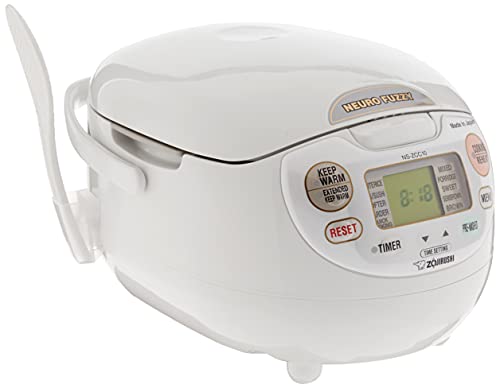
1. Zojirushi Neuro Fuzzy Rice Cooker NS-ZCC10
A famous micom rice cooker that adjusts heat as it cooks, with settings for white, brown, sushi and porridge. Many people regard it as the benchmark for home cookers, and it has a reputation for steady results. Its keep-warm and extended-warm settings let rice stay pleasant for a long evening of dinner service.
Suits: households that cook rice often. Strengths: dependable results and a long track record. Weaknesses: not induction or pressure. Skip it if you want pressure cooking.
Best for serious rice lovers
2. Zojirushi Induction Heating Pressure Rice Cooker NP-NWC10
A step up from the Neuro Fuzzy, with induction heating and pressure. These features aim to cook rice with a firmer, more even texture, especially for brown and mixed grains. Because it has more to learn, it makes the most sense if rice is a staple on your table.
Suits: serious rice lovers. Strengths: induction and pressure together. Weaknesses: a larger footprint and a higher learning curve. Skip it if you only cook rice sometimes.
View Zojirushi Induction Heating Pressure Rice Cooker NP-NWC10 on Amazon

Best for cooks who want flexibility
3. Tiger JKT-D10U Rice Cooker
A Japanese micom cooker that cooks rice and can steam other foods. Tiger models are known for tidy engineering and a good range of settings, with a long track record. Some versions come with a steaming tray and a spatula, so check what is in the box.
Suits: cooks who want flexibility. Strengths: steaming and rice in one unit. Weaknesses: fewer premium features. Skip it if you want pressure cooking.


Best for households that want features
4. Cuckoo Pressure Induction Rice Cooker
A Korean brand known for pressure induction cookers with many menu options and, on some models, voice prompts. The pressure function cooks rice firmly and quickly. Pressure can also shorten cooking for tough grains, which suits busy weeknights.
Suits: households that want features. Strengths: rich menus and pressure. Weaknesses: controls may take practice. Skip it if you prefer a simple switch.

Best for people who dislike nonstick
5. Buffalo IH Smart Cooker Classic
An induction heating cooker with a stainless steel inner pot, an option for buyers who prefer to avoid nonstick coatings. It focuses on even heating and pure rice flavor. A stainless pot is sturdy and does not rely on a nonstick layer.
Suits: people who dislike nonstick. Strengths: a stainless inner pot. Weaknesses: less common, so check the support. Skip it if you want a nonstick pot.
View Buffalo IH Smart Cooker Classic on Amazon
Best for design-minded kitchens
6. Yum Asia Panda Rice Cooker
A stylish fuzzy logic cooker with a ceramic bowl in some versions. It leans toward good looks and a refined finish, with a menu for different rice types. Check the listing for the exact bowl material and size before choosing.
Suits: design-minded kitchens. Strengths: style and cooking options. Weaknesses: fewer service points. Skip it if you want a well-known workhorse.
View Yum Asia Panda Rice Cooker on Amazon
Care and Setup
- Rinse rice before cooking, as the manual advises.
- Wash the inner pot and lid parts by hand after each use.
- Avoid metal utensils that could scratch the pot.
- Wipe the steam vent and rim to keep seals clean.
Mistakes to Avoid
- Choosing a size without counting how many cups you cook.
- Using the wrong water line for the rice type.
- Leaving rice on warm for days.
- Ignoring voltage and plug type on imported models.
What a Higher Price Usually Buys
A luxury rice cooker is a combination of heating method, control logic, build and extras. Instead of a single heating plate and a switch, high-end models may use induction heating, pressure, or a microcomputer that adjusts heat during the cycle. These features aim to produce more even results and more menu options, such as settings for different rice types or porridge. Whether you will notice the difference depends on how often you cook rice and what kind you eat.
Build quality also tends to be part of the cost: thicker inner pots, sturdier lids, better steam vents and more detailed controls. Some cookers have a clear display, voice prompts or a menu in multiple languages. Others offer extra functions such as steaming, slow cooking or baking. These can be helpful, but they add complexity, so be honest about what you will use.
Ask yourself what problem you are solving. If your current cooker gives gummy or uneven rice, a better heating system may help. If you cook for a family every day, a durable unit with a long keep-warm function may be worth considering. If you cook rice occasionally, a simpler model may be enough. Check each listing for the features claimed, and keep in mind that results depend on the rice, the water ratio and your technique too.
Inner Pot Materials and Coatings
The inner pot is where the cooking happens, and it comes in several materials. Nonstick-coated pots make cleaning easy and are common across brands. Stainless steel pots, like the one described for the Buffalo, avoid a coating, but rice can stick more, and some cooks find they need a bit more attention. Ceramic or other specialty bowls, mentioned for the Yum Asia, have their own handling needs, so read the manual.
Thickness and construction affect how heat spreads. Multi-layer pots, thicker walls and induction-compatible bases are common in more advanced cookers. The listing may describe the layers, but the details vary and are the makers’ own claims. Look for information on whether the pot is removable, since a removable pot is much easier to wash.
Care for the pot as the manual instructs. Use the supplied paddle or a soft utensil instead of metal, and avoid abrasive scouring pads, which can wear coatings. Do not heat the pot empty or on a stove unless the maker says it is allowed. A scratched coating, flaking or rice that sticks despite correct use are signs the pot may be reaching the end of its life. Check whether replacement pots are sold for your model, since that can extend the cooker’s use.
Matching Capacity to Your Household
Rice cooker capacity is listed in cups, but the cup is usually a small measuring cup that comes with the unit, often smaller than a standard US cup. This catches many buyers out. A 5.5-cup cooker, for example, may produce more cooked rice than the name suggests. Check how the listing defines a cup, and use the supplied cup when following the water lines.
Think about the most rice you cook at once and how often. A small cooker is efficient for one or two people but may be tight if you host. A larger one can cook small batches, but many makers advise a minimum amount of rice for good results, so look at the manual. Cooking a tiny portion in a very large pot may produce uneven results.
Consider the space on your counter and in your cabinet. Pressure and induction models can be bulky and heavy, and the lid may need clearance to open. Measure the height with the lid raised if you plan to keep it under a cabinet. Also check the cord length and where steam will vent. If you move the cooker often, weight and a carry handle can matter. Comparing the interior capacity with your usual meals makes the choice clearer than relying on the product name.
Voltage, Plugs and Imported Models
Some high-end rice cookers are made for other markets, and the listing may not make that obvious. Voltage is the first thing to check: the cooker needs to be rated for the electricity supply in your country. Using a unit built for a different voltage can damage it or create a safety risk. A plug adapter alone does not solve this, because it changes only the shape of the prongs, not the voltage.
Check the plug type, the cord, the warranty and where the product ships from. Warranties on imported models may not be valid in your region, and support for repair can be difficult. Ask the seller who handles service and whether replacement parts such as inner pots, lids or gaskets are available locally. If you buy a model sold by a third party, read the return policy.
Menus and displays may be in another language on some imported units. That can be fine if you are comfortable, but make sure the manual is available in a language you understand. Look for safety marks and compliance information on the listing for your region, and check the manual for the maker’s usage instructions. These steps may seem fussy, but a premium appliance is worth checking carefully before buying.
Keep-Warm, Cleaning and Long-Term Care
Keep-warm functions hold cooked rice at a safe serving temperature, but they are not meant for days of storage. Rice left warm for a long time can dry out, change texture and develop odors. Follow the maker’s guidance on how long to keep rice warm, and refrigerate leftovers promptly in a clean container. Food safety guidance generally advises not leaving cooked rice at room temperature for long periods.
Cleaning is straightforward if you do it after each use. Wash the inner pot and removable lid parts with a soft sponge and mild soap. Wipe the steam vent, the rim and the heating area, and make sure nothing is stuck around the sensor. On pressure models, check the pressure seal, valve and gaskets as the manual describes, because food residue can affect sealing. Never immerse the base in water.
Over time, gaskets can wear, pots can scratch and sensors can get dirty. If rice is cooking unevenly, the lid does not seal or a control stops responding, check the manual before assuming the unit is finished. Descale or clean the vent as instructed, and store it with the lid slightly open to avoid odors. Know when to replace: repeated errors, damaged cords, cracked parts or inconsistent results after cleaning are signs that it is time to consider repair or a new cooker.
Quick Checklist Before You Buy a High-End Cooker
These cookers are built for people who eat rice often, and their features reward a little planning.
- Decide the capacity you need, measured in the maker’s own cup size.
- Check the counter space, including room for the lid to open and for steam to escape.
- Look at the heating method: fuzzy logic, induction or pressure induction.
- Read the list of menu settings and see whether they match the rice you cook.
- Confirm the voltage and plug type for your home supply.
Fuzzy Logic Against Pressure Induction: A Two-Option Table
| Point | Fuzzy logic | Pressure induction |
|---|---|---|
| Heating | Adjusts from sensors | Heats the whole pot with added pressure |
| Settings | Many menus | Many menus plus pressure options |
| Complexity | Moderate | Higher |
| Cleaning | Lid, pot, vent | Lid, gasket, valve and pot |
The Zojirushi NS-ZCC10 and Tiger JKT-D10U sit nearer the left column, while the Zojirushi NP-NWC10 and the Cuckoo lean to the right.
How to Read a Cooker Listing
Begin with capacity, written in cups, and remember that these cups are smaller than a standard measuring cup. Next, go through the cooking modes: white, brown, mixed, porridge, quick and so on. Look at the inner pot description for thickness and coating. A listing may mention a delay timer, a keep-warm function or a detachable lid. Check the cord length and the dimensions, as these machines can be large. Read the notes about voltage, which matters for imported models. If any part is unclear, consult the maker’s manual before ordering.
Which Cooker for Which Home
- Daily rice eater: a premium model with many modes makes sense.
- Single person: a smaller capacity avoids leftovers.
- Family dinners: a ten cup size is common for households of several people.
- Brown rice fan: check that the model offers a dedicated brown setting.
Short Glossary
- Fuzzy logic: computer control that adjusts the cook as it runs.
- Induction heating: magnetic heating applied to the pot.
- Keep-warm: a mode that holds food at serving heat.
- Inner pot: the removable bowl where rice cooks.
- Gasket: the seal around the lid.
Maker’s Manual or Licensed Professional
Use the maker’s manual for water lines, cooking times, keep-warm limits and cleaning. For imported models, follow the maker’s guidance on voltage, plugs and converters, and ask a licensed electrician if you are unsure. Pressure models have valves and seals that must be assembled exactly as the manual states.
Setup and Care Notes
Wash the inner pot and lid parts before first use, and wipe the heating area dry. Measure rice with the cup supplied, rinse it as the maker suggests, and add water to the matching line. After cooking, let the unit cool, remove the pot, and clean the lid, vent and gasket. Dry everything thoroughly before storage.
A Capacity Paragraph for Real Households
Maker cups usually hold less than a standard cup, so a ten cup cooker still fits an ordinary family dinner. A smaller pot can be lighter and quicker to wash, while a larger one handles guests. Cooking well below the minimum line may lead to uneven results, so choose a size that matches your usual batch.
Rinsing, Soaking and Keeping Rice Warm
High-end cookers do the timing, but your prep still counts. Rinse rice until the water looks clearer, drain it well, then add water to the line that matches the rice type. Some menus include a soak stage, so check whether yours does before adding extra time. Once cooking ends, loosen the grains gently with a paddle. Keep-warm modes hold food for a set period, and the maker’s manual explains how long is sensible. For safe handling of leftovers, follow official food safety guidance and do not rely on the cooker alone.
Learning the Extra Menus
Try the porridge, quick and mixed settings once you are comfortable with white rice. Read the maker’s notes about which ingredients are allowed, since some menus are only meant for rice and water.
Luxury Rice Cooker FAQ
Is induction heating worth it?
It heats the whole pot more evenly, which can improve texture, though a basic micom cooker already does well.
What does pressure add?
Pressure helps brown rice and grains cook more soft and even, and it may speed cooking.
How big a cooker do I need?
Think in rice cups: smaller units suit one to three people, larger ones suit families.
Do I need a luxury rice cooker if I only eat rice occasionally?
Probably not. A simpler cooker can make good rice, and the extra features of a premium model matter most to people who cook rice often or want specific textures.
Why does the rice cup that comes with the cooker look small?
Rice cooker cups are typically smaller than a standard US measuring cup. Use the supplied cup with the water lines in the pot, and check the manual for the exact definition.
Can I cook things other than rice in these cookers?
Many models have settings for porridge, steaming or other grains, and some offer additional functions. Check the manual for what is supported and the maker's cautions on foods and quantities.
Is it safe to use an imported rice cooker with an adapter?
A plug adapter does not change voltage. Confirm that the cooker is rated for your electricity supply before using it, and read the manual and listing for safety information.
How long can I leave rice on keep-warm?
Follow the maker's instructions, which often limit the time. Rice kept warm for long periods can dry out or spoil, so refrigerate leftovers promptly.
Why is my rice sticking to the pot?
It can be due to the water ratio, insufficient rinsing, a worn coating or the pot type. Check the manual for the right ratio, and consider whether the pot needs replacing.
What should I rinse rice with before cooking?
Cold tap water is typical. Rinse until the water looks clearer, unless the manual or rice package says otherwise, and then use the water lines for the rice type.
Are replacement inner pots available?
For many popular models, yes, but it varies. Check the maker's site or the listing for replacement parts before you buy, especially for imported models.
How to Judge Luxury rice cookers by the Meals You Actually Cook
Start with your own week, not with the marketing. Write down the dishes you make most often with an appliance like this, how many people you cook for, and how much time you usually have. A choice among luxury rice cookers only makes sense once those answers are clear, because the right size, layout and control style for a household that cooks from scratch every night is different from the right one for a household that reheats, batch cooks at weekends, or feeds a crowd a few times a month. The picks in this guide cover a range of shapes and approaches, so match the format to the routine first and only then compare the details on each listing.
Think about the largest job you ask the appliance to do, and the smallest. Many buyers shop only for the biggest load, a holiday meal or a double batch, and then live every day with a unit that feels clumsy for a single portion. The reverse mistake is just as common: a compact format that is pleasant for weeknight dinners but forces endless rounds when guests arrive. A good middle path is a size that handles your ordinary meals in one go, with a sensible plan, such as a second tray, a paired side dish, or a simple hold-warm routine, for the occasional big occasion.
Pay attention to how the controls fit the way you cook. Some people want presets that remove guesswork on familiar foods, while others prefer simple dials or buttons they can adjust without looking. Neither approach is better in the abstract. What matters is whether you can set, check and change the cooking partway through without fuss, whether the display is readable in your kitchen light, and whether the settings you will use weekly are easy to reach rather than buried. Check the listing and the manual for the exact control layout before you decide.
Use Cases Worth Planning For
Busy weeknights
On a weeknight the best appliance is the one you will actually use when you are tired. That means a short setup, a cooking surface or cavity that takes the food without rearranging the kitchen, and a cleanup you can face the same evening. When comparing luxury rice cookers, picture your most common weeknight meal from start to finish: where the appliance sits, what you set first, what you check halfway, and what gets washed afterwards. If any step sounds like a chore you would avoid, that model will slowly stop being used, whatever its other strengths.
Weekend batch cooking
Batch cooking rewards capacity and consistency. You want to run the same food in repeated rounds and get the same result each time, so even heating, a clear view of progress and parts that cool and clean quickly between rounds all matter. Plan the holding side of the job too: cooked food needs a clean tray, a covered dish or a low oven to wait in while the next round runs. Working through that sequence on paper, using the formats described in this guide, quickly shows which pick suits a cook who prepares lunches for the week in one session.
Cooking for guests and holidays
Entertaining changes the priorities. Timing matters more than novelty: dishes should finish close together, and the appliance should not demand constant attention while you are hosting. Think about which parts of a larger menu this appliance can own completely, and which parts belong elsewhere in the kitchen. A realistic plan, written before the day, beats a hopeful one. Also consider noise, steam and heat in the room where people gather, and whether the appliance can be moved or turned so its vents and doors work comfortably around serving dishes and helpers.
Setup, Placement and the First Week of Use
Unpack and set up slowly, even if the appliance looks simple. Keep the manual, check every part against the parts list, and wash the removable pieces that the maker says to wash before first use. Place the unit where it will live rather than where it is convenient on day one, because luxury rice cookers that have to be dragged out of a cupboard for every use tend to be used less. Confirm the surface is level and heat-safe where relevant, that cords reach the outlet without stretching, and that doors, lids and baskets can open fully without striking cabinets or walls.
Run the first few sessions with familiar food. A recipe you already know gives you a baseline, so any difference in timing or browning is information about the appliance rather than about an untested recipe. Take short notes during the first week: what you cooked, the setting you chose, what you would change. Those notes are worth more than memory, because small adjustments, a minute more, a stir halfway, a different tray position, are exactly how people get consistent results from a new appliance in their own kitchen.
Build a small routine around storage of the accessories. Trays, racks, probes, lids and spare parts get lost or damaged when they live in different drawers. Keep the pieces that belong to the appliance together, near where it is used, and keep the manual or a photo of its key pages in the same place. If other people in the household will use the appliance, walk them through the basics once: how to set it, how to check food safely, and what must be allowed to cool before washing. Shared understanding prevents most early mistakes.
Cleaning, Care and Keeping Results Consistent
Clean little and often. Food residue that is wiped away while it is fresh is a two-minute job; the same residue baked or dried through several more sessions becomes the hardest task in the kitchen and can affect flavour and smoke. Follow the maker guidance on which parts can be soaked, which are dishwasher-safe and which should be washed by hand, and never guess with coated surfaces. Use soft cloths and non-scratch tools on non-stick finishes, dry parts fully before reassembling, and leave doors or lids ajar where the manual allows so the interior airs out.
Keep a simple care rhythm. After each use, deal with crumbs, drips and splashes. Once a week, or after a run of rich or fatty foods, give the interior and removable parts a fuller clean. Periodically check the parts that move or seal: hinges, latches, gaskets, vents and filters where fitted. A surprising number of performance complaints trace back to a vent blocked by storage, a seal with crumbs in it, or a tray warped or loaded so air or heat cannot circulate. The manual for your model is the authority on what can be removed and how.
Store the appliance and its parts with the next use in mind. Cords should be looped loosely rather than wound tight or trapped under the unit. Heavy accessories stored on top can mark finishes or stress lids and doors. If counter space forces you to store the appliance away, measure the cupboard or shelf honestly, including the height with its lid or door closed and the depth with the cord behind it. A model that fits its storage place neatly is far more likely to stay in regular use than one that has to be wrestled in and out.
Comparing the Picks in This Guide, One by One
Zojirushi Neuro Fuzzy Rice Cooker NS-ZCC10: what to check before you choose it
Look at the Zojirushi Neuro Fuzzy Rice Cooker NS-ZCC10 through the questions this guide has built up. Start with how its overall size and shape will sit in the space you have measured, and whether its day-to-day routine matches the way your household actually works. Then re-read the original description of this pick earlier in the article, including who it suits and the honest limitation noted there, and test those points against your own notes rather than against a general idea of what a good purchase looks like. If the strength named for the Zojirushi Neuro Fuzzy Rice Cooker NS-ZCC10 answers your main problem and its limitation touches something you rarely do, it is a strong candidate. If the reverse is true, keep moving, even if the pick is popular.
Zojirushi Induction Heating Pressure Rice Cooker NP-NWC10: what to check before you choose it
Look at the Zojirushi Induction Heating Pressure Rice Cooker NP-NWC10 through the questions this guide has built up. Start with what its listing says about the parts you will handle and wash most often, and whether that cleaning routine is one you will keep up without resentment. Then re-read the original description of this pick earlier in the article, including who it suits and the honest limitation noted there, and test those points against your own notes rather than against a general idea of what a good purchase looks like. If the strength named for the Zojirushi Induction Heating Pressure Rice Cooker NP-NWC10 answers your main problem and its limitation touches something you rarely do, it is a strong candidate. If the reverse is true, keep moving, even if the pick is popular.
Tiger JKT-D10U Rice Cooker: what to check before you choose it
Look at the Tiger JKT-D10U Rice Cooker through the questions this guide has built up. Start with how its format lines up with the use cases described earlier in this guide, especially the meals or loads you repeat every week rather than the ones you cook once a year. Then re-read the original description of this pick earlier in the article, including who it suits and the honest limitation noted there, and test those points against your own notes rather than against a general idea of what a good purchase looks like. If the strength named for the Tiger JKT-D10U Rice Cooker answers your main problem and its limitation touches something you rarely do, it is a strong candidate. If the reverse is true, keep moving, even if the pick is popular.
Cuckoo Pressure Induction Rice Cooker: what to check before you choose it
Look at the Cuckoo Pressure Induction Rice Cooker through the questions this guide has built up. Start with whether the controls and layout described for it suit the person who will use it most, including anyone who cooks less confidently and needs a setup that explains itself. Then re-read the original description of this pick earlier in the article, including who it suits and the honest limitation noted there, and test those points against your own notes rather than against a general idea of what a good purchase looks like. If the strength named for the Cuckoo Pressure Induction Rice Cooker answers your main problem and its limitation touches something you rarely do, it is a strong candidate. If the reverse is true, keep moving, even if the pick is popular.
Buffalo IH Smart Cooker Classic: what to check before you choose it
Look at the Buffalo IH Smart Cooker Classic through the questions this guide has built up. Start with what is actually included in the box according to the current listing, since versions and bundles change, and whether anything you are counting on is listed as an optional extra. Then re-read the original description of this pick earlier in the article, including who it suits and the honest limitation noted there, and test those points against your own notes rather than against a general idea of what a good purchase looks like. If the strength named for the Buffalo IH Smart Cooker Classic answers your main problem and its limitation touches something you rarely do, it is a strong candidate. If the reverse is true, keep moving, even if the pick is popular.
Yum Asia Panda Rice Cooker: what to check before you choose it
Look at the Yum Asia Panda Rice Cooker through the questions this guide has built up. Start with how it compares with the pick listed just before and just after it in this guide on the single question that matters most to you, because narrowing by your top priority is the fastest honest way to choose. Then re-read the original description of this pick earlier in the article, including who it suits and the honest limitation noted there, and test those points against your own notes rather than against a general idea of what a good purchase looks like. If the strength named for the Yum Asia Panda Rice Cooker answers your main problem and its limitation touches something you rarely do, it is a strong candidate. If the reverse is true, keep moving, even if the pick is popular.
Mistakes That Lead to Disappointing Results
Overloading and crowding
More food in one round rarely means a better meal. Crowding blocks the movement of hot air or steam, traps moisture and leaves some pieces overdone while others lag. The fix is unglamorous: cook in a single, spaced layer where the food needs dry heat, stir or turn at the halfway point where the recipe suggests it, and accept a second round for large amounts. Results improve immediately, and the total time is often no longer than one crowded round that has to be rescued at the end.
Trusting a preset without checking
Presets and default settings are starting points built around average portions and average starting temperatures. Frozen food, a thicker cut, a fuller load or a cold tray all shift the timing. Check progress a little before the expected end, use a food thermometer where the food calls for one, and treat doneness cues, colour, texture and temperature together, as more reliable than any single timer. Once you have cooked a dish twice in the same appliance, write down the setting that worked; your own record beats any generic chart.
Skipping the manual on materials
Not every dish, liner, rack or utensil suits every appliance. Heat limits, coatings and clearances differ, and the wrong accessory can damage a finish or spoil a meal. Before using foil, parchment, silicone, glass or metal inside a model you have not owned before, check what its manual permits and how it should be placed so circulation and sensors still work. The same care applies to sprays and cleaning products: if the maker warns against a type of coating spray or abrasive, that warning is there because it shortens the life of the surface.
A Calm Final Decision Worksheet
Before you order, answer five questions in writing. What will I cook most often? What is the largest load I realistically need? Where will it live, and have I measured that space including clearance and door swing? Which parts will I wash most, and am I happy with how they clean? And which pick in this guide matches those answers with the fewest compromises? Scoring each of the picks against the same five questions turns a vague preference into a decision you can defend, and it usually makes one option stand out clearly.
Finally, re-read the current listing for the model you choose on the day you buy. Versions, included accessories and bundles change, and the listing is where the exact configuration is stated. Confirm the size, the included parts and the care instructions match what this guide led you to expect, and keep your order details and the manual together. If two picks still feel equal after all of this, choose the one whose controls and cleaning routine fit your daily habits better; that is the tiebreaker that matters most over years of ordinary use.
Adapting Familiar Recipes to a New Appliance
Expect almost every familiar recipe to need a small translation. A different cavity shape, basket depth or heating arrangement changes how quickly surfaces brown and how evenly the middle cooks, even at the same marked setting. Change one element at a time, the setting, the timing, the load or the position, and judge by the food rather than by the clock alone. After two or three attempts at the same dish you will have a conversion you trust, and that personal conversion is worth writing on the recipe itself so future you does not have to rediscover it.
Build a small settings library for your household staples. A single page, kept with the manual or photographed on your phone, listing the dish, the amount, the setting and the result, turns guesswork into routine within a month. Include the failures as well as the successes, because knowing that a particular load was too deep or a particular dish dried out at a higher setting saves you from repeating the experiment. This habit matters more as the appliance ages into everyday use, when nobody wants to think hard about a Tuesday dinner.
Think about how the appliance works alongside the rest of the kitchen rather than in isolation. The most useful setups share the work: one dish holding, one cooking, one fresh element prepared on the counter. Planning that division before you start, even roughly, prevents the bottleneck where everything needs the same appliance in the same ten minutes. It also reveals the true value of capacity and layout, because an appliance that can be loaded, set and left alone frees the cook for everything else the meal needs.
More Questions Buyers Ask About Luxury rice cookers
Should I buy the largest size available?
Only if your cooking justifies it. A larger appliance takes more counter or storage room, more washing and often more time to preheat or to handle, while a size matched to your normal meals is quicker and easier every day. Use the biggest load you cook regularly, not the biggest you can imagine, as your guide, and plan a workaround for rare occasions.
How do I know if it will fit my kitchen?
Measure the space where it will live, including height under cabinets, depth for the cord and clearance for doors, lids or baskets to open, then compare those numbers with the dimensions on the listing. Also measure the route it takes if you plan to store it away. A model that fits the counter but cannot be put away comfortably will slowly take over the kitchen.
What should I cook first in a new appliance?
Choose a familiar dish you have made many times by another method. You will spot differences in timing and browning straight away, and you can adjust with confidence. Take a short note of the setting and the result, and change one thing at a time on the next attempt. Within a few sessions you will have your own reliable settings for your staple meals.
Do I need special accessories to get good results?
Usually not at first. Learn the appliance with the parts included in the box, and note anything you genuinely miss while cooking, a second tray, a rack, a particular dish, before buying extras. Accessories bought to solve a real, repeated problem earn their storage space; accessories bought speculatively tend to fill drawers. Always check the manual for which materials and sizes the maker allows.
How can I stop food cooking unevenly?
Look first at loading and arrangement. Spread food out, avoid deep stacking, turn or stir where the recipe suggests it, and do not block vents or circulation paths. Check that the appliance sits level and that seals and doors close properly. If one area consistently runs hotter, rotate the tray or basket partway through; most appliances have a character, and cooking with it, rather than against it, fixes most unevenness.
Is it better to hand wash or use the dishwasher?
Follow the manual for each part, because coatings, seals and electronics all have different needs. Where a part is listed as dishwasher-safe, it can still last longer with hand washing, and sharp or heavy items in the same load can damage finishes. Whatever the method, dry parts fully before reassembling and never put a part away damp in a closed appliance.
What if my first results are disappointing?
Change one variable at a time: the amount loaded, the setting, the timing or the position of the food. Most early disappointments come from crowding or from settings copied from a different appliance. Keep short notes for the first few weeks. If a fault is suspected, smoke, error messages, a door or control that does not respond, stop, unplug where the manual directs, and contact the maker rather than persisting.
The Short Version
For the classic, the Zojirushi Neuro Fuzzy. For top-tier features, the Zojirushi induction pressure. For steaming, the Tiger. For a menu-rich pressure cooker, the Cuckoo. For stainless, the Buffalo. For style, the Yum Asia Panda.