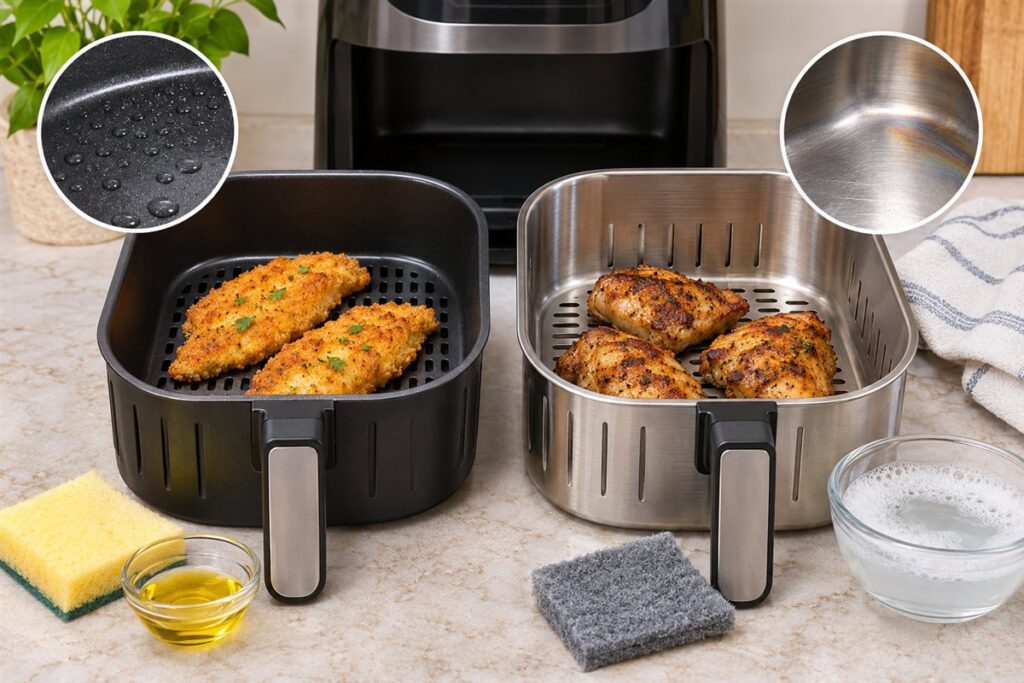
Nonstick baskets release food easily and wipe clean quickly, while stainless steel baskets handle rougher treatment and have no coating to wear away. The better choice depends on what you cook and how gently you are willing to clean.
What Sets Them Apart
A nonstick basket has a slick coating over a metal base. Sticky foods such as marinated chicken or breaded fish slide out more easily. A stainless steel basket has a bare metal surface. It can grab onto food if you skip oil, but it tolerates firmer scrubbing.
Many air fryers ship with a nonstick basket, and some offer stainless steel versions or inserts. Check what your model uses before you shop for replacements.
Comparing the Two
| Factor | Nonstick | Stainless steel |
|---|---|---|
| Food release | Easy | Needs a light coat of oil |
| Scratch tolerance | Low, coating can wear | Higher, no coating to lose |
| Cleaning style | Soft sponge only | Firmer scrubbing is usually fine |
| Look over time | Can dull or flake with misuse | May stain or discolor lightly |
| Utensils | Use soft or silicone tools | More forgiving |
Looking After Each Type
- Read the maker’s care guide first. It tells you which parts can go in a dishwasher.
- Let the basket cool before washing to protect both the material and your hands.
- For nonstick, use a soft sponge and mild soap. Avoid steel wool, harsh powders and metal tools.
- For stainless, soak stuck-on bits in warm soapy water, then scrub with a non-scratch pad.
- Dry both thoroughly before putting them away.
If a nonstick coating looks damaged, peeling or flaking, stop using that basket and contact the maker about a replacement.
Who Should Choose Which
- Choose nonstick if you cook sticky, marinated or breaded foods and prefer quick, gentle cleanup.
- Choose stainless steel if you want a basket that tolerates more scrubbing and metal utensils, and you do not mind using a little oil.
- Be mindful of fit either way. Only use a basket that the maker states is made for your model.
Thinking About Longer Use
Over time, every basket shows wear. Nonstick coatings can lose their slickness if cleaned harshly, and bare metal can show marks and light staining. A gentle routine extends the life of either type. Wash after each use, avoid stacking heavy items in the basket, and store it dry. If the maker sells replacement baskets, note that for the future.
How the Materials Handle Heat and Cooking
The material of the basket influences how food browns and releases. Stainless steel conducts heat more slowly than aluminum, and it holds a steady temperature once it is hot. Nonstick baskets are usually aluminum or steel with a coating on top, and the base metal affects how quickly the basket heats. In an air fryer most of the cooking is done by moving hot air, so the basket matters less than it would in a pan, but contact points still differ.
Where food touches the basket, the surface decides what happens. On a stainless surface, proteins and starches can bond to the metal, especially at the start of cooking, and then release once the crust forms. A light coat of oil on the food helps this. On a nonstick surface, the food glides, so you see less tearing of delicate items such as fish or egg-based dishes. Browning on the contact side depends on the airflow and the food, not only on the basket.
- Stainless steel: steady and sturdy, with food that may need a bit more oil to release.
- Nonstick: smooth release and a gentle fit with sticky or delicate foods.
- Perforation pattern: holes or mesh affect airflow and contact area for either material.
- Basket depth: a deeper basket piles food higher, which matters for crisping.
Look at the design of the basket and not just the material, since mesh baskets and flat perforated trays behave differently.
Coating Types and Heat Limits
Nonstick is a broad term and covers several coating technologies. Some are polymer-based and others are ceramic-style finishes. Makers may use different layers and describe them in different ways, so the product listing and manual are the places to learn what your basket has. Each type has its own temperature limits, cleaning advice, and expected lifespan, so a statement from the maker is more reliable than a general assumption.
Heat limits deserve attention. Running a coated basket above its rated temperature or leaving the unit running empty at high heat can wear the coating and, with some polymer coatings, may release fumes that can bother people and are especially harmful to pet birds. Good ventilation and following the maker’s guidance on empty preheating protect both the coating and your household. Ceramic-style coatings can also lose their slickness over time, so they are not maintenance-free.
- Find the stated maximum temperature for the basket.
- Check whether preheating without food is advised against.
- Ask whether the coating contains any substances you want to avoid, and read the listing for statements about what it is free from.
- Keep birds and other sensitive pets well away from the kitchen when using nonstick cookware.
Do not assume that a claim on the packaging applies to a replacement part. Check each item.
How Each Basket Ages Over Time
No basket stays new forever, but they age differently. A nonstick coating tends to lose its slickness gradually, first in the spots that get the most contact, then in corners and edges. You may notice more sticking, dull patches, or fine scratches. Eventually the coating can chip or flake, and that is the point at which it should be replaced. The rate of wear depends on how often you cook, how you clean, and which tools you use.
Stainless steel ages in more cosmetic ways. It can pick up rainbow-like heat tint, light scratches, or brown stains from baked-on oils. These usually do not affect cooking, and many marks can be reduced with gentle cleaning, following the care guide. Stainless may show pitting or rust in rare cases if it has been exposed to harsh chemicals or left wet for long periods, so it still needs drying after washing.
- Nonstick: function declines before appearance does, and wear shows as sticking.
- Stainless: appearance changes first, while function stays largely intact.
- Both: poor handling shortens life, especially dropping and stacking.
- Replacement: easier if the maker still sells parts for the model.
When thinking about value, consider the lifespan of the basket and how easy it is to replace, not only the first impression.
Matching the Basket to Your Cooking Habits
The best basket is the one that suits your daily routine. List the foods you cook most. If your menu is full of marinated meats, fish fillets, egg dishes, or anything coated and delicate, a nonstick surface can save frustration. If you mostly cook frozen chips, vegetables, wings, and meat with skin that releases its own fat, stainless can work well without much fuss.
Think about who cooks. A household with several people, some of whom reach for metal tongs and a scouring pad, may get more life from a stainless basket. A single cook who is careful with tools and cleaning may be perfectly happy with nonstick. Consider your tolerance for oil too, since stainless usually needs a light coat, and your patience for hand-washing, since many coated baskets are better treated gently.
- Write down your five most frequent foods.
- Note which of those usually stick or tear.
- Think about how you wash up and which tools you use.
- Check whether the model you want offers both options.
- Choose the surface that fits the habits you actually have, not the ones you plan to have.
It is fine to pick a model on other grounds, such as capacity and controls, and then adapt to the basket it has. Liners and good technique narrow the gap between the two.
Questions to Ask Before You Buy a Basket or a Unit
A few targeted questions can prevent regret. For a new air fryer, confirm exactly what the basket is made of and whether the maker offers spare or alternative baskets for the model. Look for a statement about dishwasher use, since this changes how much effort cleanup takes. Check the warranty terms, and whether the coating is included or excluded from cover, because some warranties treat coating wear as normal use.
For a replacement basket, check the compatibility list and the material description in the listing. A part that does not fit properly can change airflow and may not seat securely. If a listing makes strong claims, such as being safer or longer-lasting, look for specifics from the maker and treat vague wording with caution.
- Is the basket removable and easy to handle?
- Are replacement baskets available, and for how long?
- What is the stated temperature limit for the coating or metal?
- Is it dishwasher safe, according to the maker?
- What does the warranty say about wear?
- Are liners and accessories sold for the model?
Answers to these questions tell you more about long-term satisfaction than the basket material alone.
FAQ
Do I need oil in a stainless steel basket?
A light coat usually helps prevent sticking, though how much depends on the food. Follow your recipe and the maker’s guide.
Can I swap my basket for another material?
Only if the maker offers a compatible part. Using a part not meant for your unit can affect airflow and fit.
Is stainless steel always more durable than nonstick?
It tolerates scratching better because there is no coating to lose, but durability also depends on build quality, handling, and cleaning. Check the maker's care guide for either type.
Can nonstick coatings give off fumes?
Overheating some coatings can release fumes that irritate people and can be dangerous to pet birds. Follow the temperature limits, avoid running the unit empty at high heat, and ventilate the kitchen.
Do I still need oil with a nonstick basket?
A light coat on the food often helps browning even when the basket releases easily. Follow your recipe and the manual, particularly if the maker advises against certain sprays.
Are ceramic-style baskets different from other nonstick ones?
They use a different type of coating, with their own care needs and heat limits. Check the maker's description and instructions for your specific basket.
Will a liner make either type work better?
Perforated liners can help with sticky foods in both. They should leave airflow gaps and be weighed down by food, and they may reduce browning on the underside.
Is it worth buying a spare basket?
Only if the maker sells one for your model and you cook often or in batches. A spare can also be handy if one basket is damaged.
How do I tell if a stain on stainless steel matters?
Light brown or rainbow marks are usually cosmetic. Rust spots, pitting, or rough areas are worth checking against the manual and, if needed, asking the maker.
The Short Version
Nonstick is easier for sticky foods and fast cleaning but needs gentle care. Stainless steel is tougher but needs a bit of oil. Choose based on what you cook and how you like to clean up.