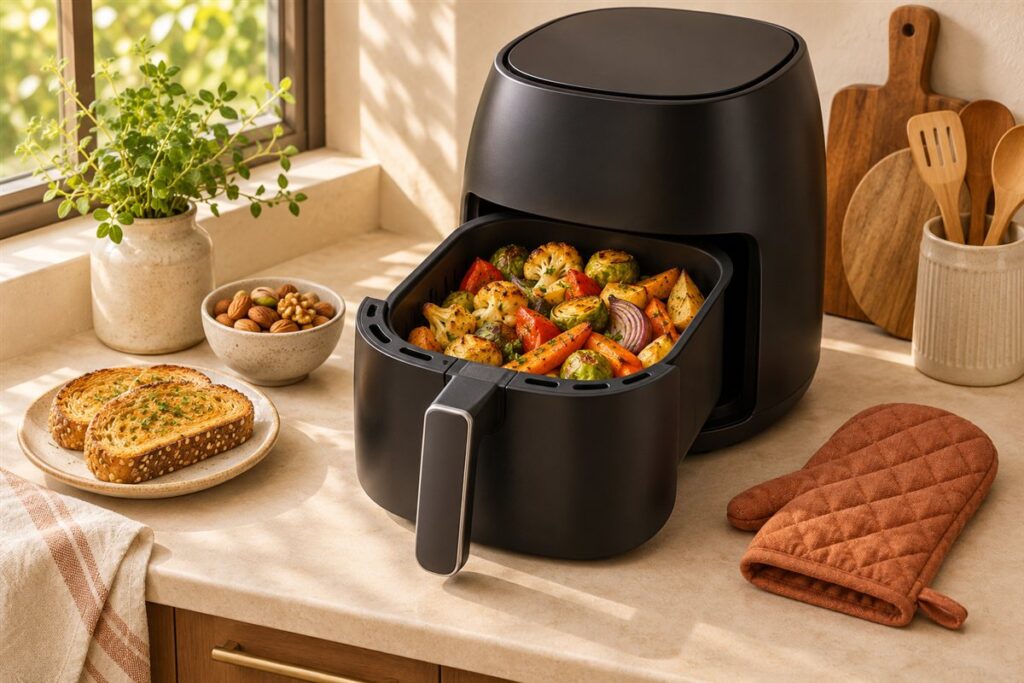
Tofu browns well in an air fryer when it is pressed, cut into even pieces, and coated lightly. Most cubes need about 12-20 minutes at roughly 370-400 F, shaken a few times. Moisture is the main enemy, so spend your effort on draining.
Drain and Press
Choose extra-firm or firm tofu for air frying. Soft and silken types fall apart. Drain the block, wrap it in a clean towel, and set something heavy on top for 15-30 minutes. A purpose-made tofu press also works.
Pressing removes water, which helps the pieces turn firm and golden instead of soft and pale.
Cut, Coat, and Season
- Cut into cubes of about three-quarters of an inch, or into sticks or thick slabs.
- Toss with a teaspoon or two of oil, and add soy sauce or salt.
- For extra crunch, dust with cornflour or a spoonful of potato flour and toss until lightly coated.
- Add spices such as garlic powder, smoked paprika, or ginger.
Cooking Method
- Preheat the air fryer for a few minutes.
- Spread the tofu in a single layer. Crowding slows browning.
- Cook for 6-8 minutes, then shake or turn each piece.
- Cook for another 6-12 minutes, until the outsides are golden and firm to the touch.
- Toss with a sauce once cooked, if you want a glaze.
Cut Shapes and Timing
| Shape | General time | Result |
|---|---|---|
| Small cubes | 12-16 minutes | Chewy and crunchy |
| Large cubes | 15-20 minutes | Crisp outside, softer middle |
| Thin sticks | 10-14 minutes | Crisp throughout |
| Thick slabs | 14-20 minutes | Flip once |
Sauce Without Sogginess
Wet sauces soften the crust. Add them at the end, toss quickly, and serve right away. Thick sauces, such as teriyaki or sweet chili, can also go into the basket for the last minute or two, but watch for burning.
Storing and Reusing
Cooked tofu keeps in the fridge for a few days in a covered container and can be added to salads, noodles, wraps and rice bowls. Reheat it in the air fryer for 3-4 minutes to bring back the crust. Unused fresh tofu should be kept in clean water in the fridge, with the water changed daily, and used by the date on the package.
Firm tofu keeps its shape best. If you use extra-firm, you may need less pressing time. Always check the use-by date on the package.
Picking the Right Block of Tofu
Not every package labelled tofu behaves the same way in hot circulating air. Firm and extra-firm blocks sold in water hold their shape and brown well, while soft and silken styles are built to be creamy and will collapse into crumbs or steam in the basket. Read the front of the pack for the firmness word, and check the ingredients if you want the simplest result: water, soybeans and a coagulant is a common pattern, though styles vary by maker.
Extra-firm usually contains less water to start with, so it needs less pressing and gives a chewier bite. Firm tofu has a slightly more tender middle and can be a good choice if you like a contrast between crisp edges and a soft centre. Pre-seasoned or smoked blocks are already drier and saltier, so go lightly on soy sauce or salt when you coat them, and check the package for any cooking suggestions.
Check the date on the pack and use the block soon after opening. Once opened, tofu that is not cooked the same day should be stored covered in fresh water in the refrigerator, with the water changed daily, and used within the time the package recommends. If it smells sour or feels slimy, do not cook it. Buying the size that matches your basket also helps: a single block usually fills one layer in a medium basket, and a bigger family batch is better cooked in two rounds than piled up.
Freezing First for a Chewier Bite
Freezing and thawing changes tofu’s texture in a way many cooks like. As the water inside turns to ice it forms small pockets, and after thawing the block becomes spongier, more porous and noticeably chewier. Those pockets also soak up marinades more readily, so thawed tofu takes on flavor deeply and tends to crisp quickly on the outside.
To try it, freeze the unopened block or a drained, wrapped block, then thaw it fully in the refrigerator, usually overnight. Do not thaw on the counter for hours, since food safety rules favor the refrigerator. Once thawed, squeeze it gently in a clean towel. It will release much more liquid than a fresh block, and you can press it firmly without worrying about it cracking, because the texture is more resilient.
Cut it after thawing, not before, and expect a slightly darker, more golden color than fresh tofu. Because the texture is drier and more open, the pieces can brown a little faster, so start checking a minute or two earlier than you would for fresh. Frozen-then-thawed tofu is a good pick for crumbles, nuggets and bite-size cubes, but it is less suited to a delicate slab where you want a smooth middle.
Marinades and Coatings That Work
Because moisture is the enemy of crisping, the best coatings are thin and dry-leaning. A short toss in soy sauce, a little oil and spices, followed by a light dusting of starch, gives a surface that dries and sets as it cooks. Heavy wet marinades run into the basket and steam the pieces, so if you marinate, pat the cubes dry afterward and keep the liquid to a few tablespoons for a block.
- Dry rubs: garlic powder, onion powder, smoked paprika, cumin or chili flakes stick well after a light oil film.
- Starch dusting: cornstarch or potato starch creates a thin crust. Shake off the excess so it does not form pasty patches.
- Breadcrumb coatings: dip in a thin batter or plant milk first, then crumbs, and spray with oil so the crumbs brown instead of staying pale.
- Sticky glazes: sweet or sugary sauces burn easily, so add them in the last few minutes or toss after cooking.
Salty marinades can draw out more water over time, so do not leave tofu sitting in them for hours unless you plan to dry it again. Fifteen to thirty minutes is usually enough for flavor on the surface. Keep a spare silicone-tipped spatula or tongs nearby so you can lift slabs out whole, and wipe the basket between batches because stray starch and oil can scorch and add a bitter note to the next round.
Basket Prep and Batch Size
Tofu can stick to bare metal, especially when starch is in the coating. Lightly oil the basket or use a perforated parchment liner made for air fryers, and leave the holes uncovered so air can pass. A solid sheet of parchment blocks airflow underneath the pieces and leaves the bottoms soft. Check your manual for what liners it allows, and never run a liner in an empty preheating unit where it can lift into the heating element.
Arrange pieces in a single layer with a little room between them. Air needs to reach every side, so a crowded basket gives patchy color and a longer cook. If your basket is small, work in two rounds and keep the first batch warm on a rack rather than stacking it.
Shake or turn at the midpoint, and use a flexible spatula for slabs, since a hard tool can tear the surface of the crust. If your unit has a different power level or basket depth from the one a recipe assumes, treat the timing as a starting guess and judge by color and firmness. Smaller cubes finish sooner, so keep sizes uniform so that every piece is ready at the same moment.
Fixing Common Tofu Problems
If the tofu comes out rubbery or tough, it has usually cooked too long at too high a temperature, or the pieces were cut too small. Next time, cut larger cubes or lower the heat a little and extend the time. If the outside stays pale and soft, the likeliest cause is moisture: press longer, pat dry after marinating, or reduce oil that pools.
Crumbling usually means the block was too soft, was handled roughly while hot, or was shaken too vigorously. Use a gentler turn and let the crust set before the first shake. Sticking points to a cold basket or thin coating, so oil the surface lightly and avoid moving pieces too early, since they release more easily once the crust forms.
Uneven browning often comes from uneven cutting or crowded placement. Finally, if the flavor is bland, remember that tofu itself is mild: season the surface generously, and add a finishing sauce, a squeeze of citrus or fresh herbs after cooking. Keep notes on what you changed, one adjustment at a time, so each batch teaches you something specific. If the pieces are still pale at the end, add a few minutes at the same heat rather than raising it sharply, because a sudden jump can darken the coating before the inside has dried and firmed.
FAQ
Do I have to press it?
It is not required, but pressing gives a much better texture. If you skip it, add several minutes of cooking time.
Can I cook it from frozen?
Frozen then thawed tofu is chewier and drains well. Thaw fully, squeeze out the water, and cook as above. Follow the package for any pre-cooked varieties.
Can I use soft or silken tofu in an air fryer?
It is not a good fit for plain cubes, because soft and silken blocks break apart and hold too much water to crisp. They suit sauces, soups and blended dishes better. If you want a crunchy result, choose firm or extra-firm.
Do I need to use oil?
A small amount helps the coating brown and keeps the surface from drying out or sticking. You can use very little if the tofu is well pressed and coated in starch. Check your manual if you plan to use oil sprays on the basket coating.
Why is my tofu chewy instead of crisp?
Chewy results usually come from long cooking at moderate heat or from pieces that were cut small. Crisp requires a dry surface, so press well, coat thinly and avoid crowding. Larger pieces give a crisp shell with a softer middle.
Can I cook marinated tofu without it burning?
Yes, if you keep sugar-heavy marinades for the end. Pat the pieces dry before they go in, and add glazes in the last few minutes or after cooking. Watch the color closely, since sugars darken quickly.
Is it safe to eat tofu straight after pressing?
Packaged tofu is generally sold ready to eat, but follow the package guidance and keep it refrigerated. Cooking it through in the air fryer is a good habit for the best texture and food safety.
How do I reheat leftover air fryer tofu?
Return it to the air fryer for a few minutes at a moderate temperature, in a single layer, until hot and crisp again. Cooked tofu should be refrigerated promptly and eaten within the time food safety guidance allows. Microwaving works but softens the crust.
What size should I cut tofu for the best texture?
Cubes about three-quarters of an inch are a reliable middle ground, giving crisp edges and a tender center. Smaller pieces turn chewy and dry, while larger slabs need more time. Aim for even sizes so everything finishes together.
The Short Version
Press firm tofu, cube it, coat lightly, and cook in a single layer for about 12-20 minutes with a shake in the middle. Adjust for your model and follow your maker’s manual.