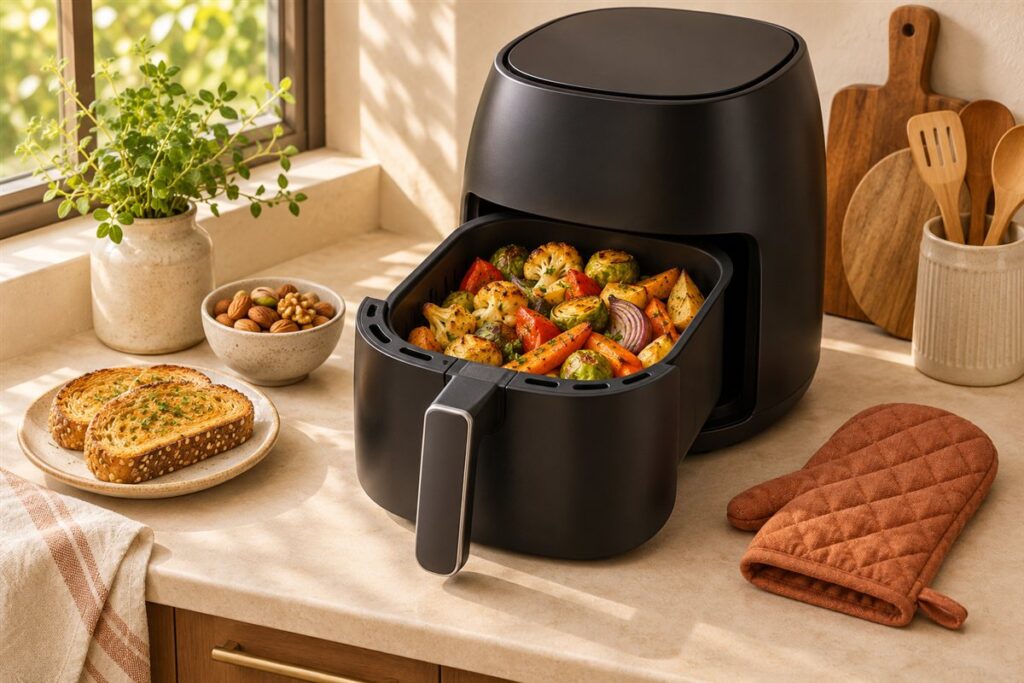
Broccoli cooks quickly in an air fryer, usually in about 6-10 minutes at roughly 350-390 F. The florets take on browned, crunchy tips while the stems turn tender. The main risk is burning the tips, so check often.
Cut for Even Cooking
Cut broccoli into florets of similar size, about the width of a large walnut. Peel the thick stem and slice it into coins or sticks if you want to use it too. Stem pieces need slightly longer, so cut them thin.
Rinse the florets and then dry them well. A salad spinner or clean towel works nicely. Wet broccoli steams in the basket and stays dull.
Cooking Method
- Toss the florets with a teaspoon or two of oil and a pinch of salt.
- Add garlic powder, pepper, or chili flakes if you like.
- Spread in one layer in the basket.
- Cook for 4 minutes, then shake.
- Continue for 2-6 minutes, until the tips are browned and the stems pierce easily with a fork.
What Changes the Timing
- Floret size: Smaller pieces brown faster and can burn.
- Oil amount: More oil browns faster. Too little leaves dry, dusty tips.
- Basket load: A full basket slows the airflow and needs extra time.
- Frozen or fresh: Frozen florets may need a few more minutes and give a softer finish.
Finishing Ideas
| Finish | How to do it |
|---|---|
| Lemon | Squeeze fresh juice over the hot florets |
| Cheese | Sprinkle shredded cheese in the last minute so it melts |
| Garlic butter | Toss with a spoonful of melted garlic butter after cooking |
| Sesame and soy | Add a light drizzle and seeds once the broccoli is out |
Reheating and Meal Prep
Cooked broccoli keeps in the fridge for a few days in a covered container. To warm it again, return it to the air fryer for 2-3 minutes at a moderate setting, shaking once. It will be softer than when freshly cooked but still tasty. Broccoli also works well in meal prep bowls with rice, chicken or tofu, and the stems make good additions to stir fries and soups.
When cooking for a crowd, work in batches and keep each batch in a single layer. The tips are the best part, and they only brown when air can reach them.
Choosing and Buying Good Broccoli
Good results start with the vegetable. Look for firm heads with tightly packed buds in a consistent green color, and stems that feel solid rather than rubbery. Yellowing florets, soft spots or a strong smell suggest the broccoli is past its best and will cook up bitter or limp. Smaller crowns tend to be tender, while large heads may have woody stems that need peeling.
Fresh is not the only option. Pre-cut florets save time, though they vary in size and can be drier, so sort them before cooking. Frozen florets are convenient and can crisp reasonably well if you keep the basket uncrowded and dry the surface as far as you can. Check the package for any cooking directions, and treat them as a starting point for your own machine.
Store fresh broccoli in the refrigerator, loosely wrapped or in a ventilated bag, and use it within a few days for the best flavor. Wash it just before cooking rather than before storing, since extra moisture speeds spoilage. Trim the base of the stem and remove any leaves that are wilted. Broccolini or broccoli rabe can be cooked in a similar way but cook faster, so check them early.
Organic or conventional makes no difference to the method, so choose whichever suits your budget and taste, and wash either kind well before cooking.
Cutting, Stems and Using the Whole Vegetable
The stem is edible and often sweeter than people expect once peeled. Use a vegetable peeler to remove the tough outer layer, then slice the inside into coins, sticks or thin planks. Because stems are denser than florets, cut them thinner or start them a minute or two earlier so everything finishes at the same time.
Cut florets so each has a flat face, which browns better against the basket. Aim for similar sizes, and split larger florets lengthwise through the stem. Very small pieces and loose bits can burn, so set them aside or add them near the end. If your pieces are uneven, shake the basket at the halfway point and remove finished pieces as you go.
- Large crowns: halve or quarter lengthwise.
- Stems: peel, then cut to a thickness similar to the florets.
- Leaves: they crisp like chips, so keep them if you like, but they cook quickly.
Handle sharp knives with care and use a stable cutting board. A damp towel under the board stops it from sliding.
A pair of kitchen scissors can snip florets from a crown quickly, which many cooks find faster and safer than slicing with a large knife.
Keep a bowl for scraps and a second one for cut florets, which keeps the board clear and the work moving.
Seasoning, Sauces and Flavor Ideas
Broccoli takes seasoning well, and the best moment to add each flavor depends on how it behaves in heat. Salt, pepper, garlic powder, smoked paprika and chili flakes can go on before cooking with the oil. Fresh garlic and delicate herbs burn easily, so stir them in after cooking. Cheese is best in the last minute or two, or sprinkled on after.
Sauces can be added once the broccoli is out. A squeeze of lemon, a drizzle of soy or sesame oil, a spoonful of yogurt sauce or a splash of vinegar-based dressing all lift the flavor. Sticky glazes with sugar or honey can burn if added too early, so brush them on at the end and return to the basket briefly if needed.
For variety, try different directions through the week. An Italian approach uses garlic, lemon and grated hard cheese. A spicy option adds chili and a little honey after cooking. A simple Asian-style finish uses soy, ginger and sesame seeds. Taste as you go, since salty sauces and cheeses add seasoning of their own, and check labels if you need to avoid certain ingredients.
Nutritional yeast, sesame seeds, chopped nuts and crushed red pepper are other easy toppers that add texture, and they are best added once the florets are out.
Serving, Meal Prep and Using Leftovers
Air fried broccoli works as a side for almost any main, but it also does well as part of a bowl, a pasta toss or a salad topping. Add it to rice with a protein, fold it into an omelet, or chop it into a grain salad. The browned tips add texture to soft dishes such as mashed potatoes or soups.
For meal prep, cook in batches with space in the basket and let the broccoli cool before storing it in a covered container in the refrigerator. Follow general food-safety guidance on how long cooked vegetables keep. It is best reheated in the air fryer for a short time, which brings back some crispness, rather than in a microwave where it can turn soft.
If you plan to eat the leftovers cold, undercook slightly the first time so the florets keep a bite. Dress them just before serving so the sauce does not make them soggy. Mixing broccoli with other roasted vegetables is a useful way to use odds and ends, as long as you group items with similar cooking times.
Whichever way you serve it, cook just enough for the meal, because broccoli is at its best fresh from the basket rather than after long storage.
Fixing Common Broccoli Problems
Dry, dusty tips usually mean too little oil or too long a cook. Add a little more oil next time and check earlier. Bitter or sharp flavors can come from over-browning, so lower the heat slightly and shake more often. A sulfur smell tends to appear when broccoli is overcooked, so watch the time and remove it while it is still bright green with browned edges.
If the stems stay hard while the tips burn, cut stems smaller or give them a head start. If the florets are soggy, they were probably wet or the basket was crowded. Dry them thoroughly, cook in smaller batches and leave space between pieces. Loose bits that blow around can be placed in a small foil-free container or added late, following your manual.
Finally, clean the basket after cooking. Small pieces and oil can stick to the surface, so wash with warm soapy water and a soft sponge once cool. A tidy basket keeps flavors from carrying over and helps the next batch brown properly. If your air fryer smokes at the temperature you choose, lower it and check your manual for guidance.
Small changes help most, so try one adjustment at a time, such as less oil or a lower setting, and note what you see.
FAQ
Why are the tips burnt?
The setting may be too high, or the florets very small. Lower the heat a little, cut larger pieces, and check earlier.
Can I cook it with other vegetables?
Yes, if the pieces are cut so they cook in similar time. Add slower items such as carrots first, then broccoli later.
Can I cook frozen broccoli without thawing?
Often yes, though it may need a few more minutes and finish softer. Spread it in a single layer, skip extra liquid and check the package for directions.
Should I blanch broccoli before air frying?
It is not required. Blanching softens the stems first, but it adds a step and moisture, so dry the florets very well if you do it.
Why does my broccoli smell strong when cooked?
Overcooking releases stronger sulfur compounds. Shorter time and lower heat usually reduce the smell.
Can I use a spray oil?
A thin spray works if your manual and the oil are suitable for your basket coating. A brush or toss with a small amount of oil is another option.
How do I get the florets crispier?
Dry them well, use a thin coat of oil, avoid crowding and shake partway through. Cut faces that touch the basket brown best.
Is it safe to eat the stems and leaves?
Yes, both are edible. Peel tough stems and cook leaves briefly since they crisp quickly.
The Short Version
Cut evenly, dry the florets, coat lightly with oil, and cook for about 6-10 minutes with a shake partway. Adjust for your model, and follow your maker’s manual for settings and cleaning.