
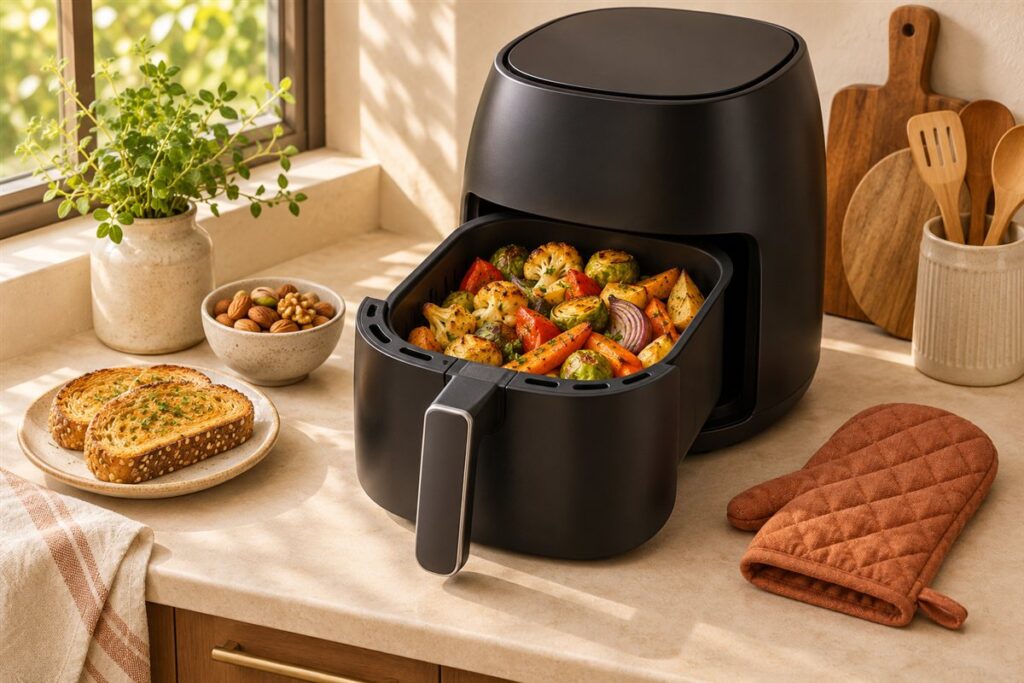
Popcorn chicken is one of the easiest air fryer jobs. Frozen bites usually take 8 to 12 minutes, and homemade pieces take a similar time once breaded. In both cases, a single layer and a few shakes matter more than any special setting.
If You Are Using Frozen Popcorn Chicken
- Check the packet first. Its instructions are written for that exact product, and they come before any general advice here.
- Heat the air fryer to about 180 to 200 C (355 to 390 F) if the packet suggests a similar range.
- Pour the frozen pieces into the basket without thawing, and spread them out.
- Cook for 5 minutes, shake hard, then cook for 3 to 7 more minutes.
- Break open a larger piece. The meat should be hot and white throughout with no pink, and a thermometer reading should meet the food-safety guidance for poultry.
Making It From Scratch
Cut boneless chicken into pieces about 2 to 3 cm (one inch). Keeping them the same size lets them finish together.
- Season the chicken with salt, pepper, paprika and garlic powder.
- Set up three bowls: flour, beaten egg, and breadcrumbs (panko gives extra crunch).
- Coat each piece in flour, then egg, then crumbs, pressing the crumbs on.
- Spray the pieces lightly with oil so the coating colours.
- Cook in a single layer at about 180 to 200 C (355 to 390 F) for 8 to 12 minutes, turning or shaking halfway.
Wash hands, boards and utensils well after touching raw chicken, and use separate bowls for the dry and wet coating hands where possible.
Crunch Troubleshooting
| Issue | Likely reason | Fix |
|---|---|---|
| Coating falls off | Chicken was wet | Pat dry before flouring |
| Pale crumbs | Too little oil | Spray more evenly |
| Dry centres | Pieces too small or overcooked | Cut larger, check sooner |
| Stuck bites | Basket crowded | Cook in two rounds |
Dips and Serving
Pair with ketchup, sweet chilli sauce, barbecue sauce or a yoghurt and herb dip. Serve soon after cooking, because the coating loses crunch as steam builds up. Leftovers can be stored in the refrigerator within a couple of hours and reheated in the air fryer until piping hot.
For a meal, serve popcorn chicken in wraps with lettuce and a creamy sauce, over a rice bowl with vegetables, or on top of a salad. You can also cook a handful of vegetables such as broccoli or peppers in the same basket after the chicken is out, using the leftover heat to save a little time. Keep raw and cooked foods on separate plates and boards at all times, and wash anything that touched raw chicken before it meets food that is ready to eat.
Choosing and Cutting the Chicken for Even Bites
Popcorn chicken is only as good as its pieces. Uniform size is the key, because small bites cook fast and unevenly sized ones finish at different times. If you cut chicken yourself, aim for pieces about the same size, small enough to cook through quickly but large enough to stay juicy. Very tiny cubes dry out, while large chunks may brown before the center is done.
Breast meat is lean and can turn dry, so cook it with care and do not overshoot. Thigh meat has more fat and stays moister, but needs trimming of excess fat and any gristle. Whichever you choose, pat the pieces dry before coating, since surface moisture prevents crumbs from sticking and leads to a pale, soft crust.
Think about food safety from the start. Keep raw chicken refrigerated until you are ready to cut, use a separate cutting board and clean knife, and wash your hands and surfaces afterward. Do not rinse raw chicken, which can spread bacteria around the sink. If you buy pre-cut pieces, check the label for freshness and use by dates. Cutting chicken partly frozen can make it easier to slice evenly, but let it thaw fully in the refrigerator before cooking, and follow the guidance on thawing safely.
Building a Coating That Stays On
A three-step coating of flour, egg and crumbs is the classic approach. The flour dries the surface, the egg acts as glue and the crumbs give crunch. Season each layer lightly, because seasoning in only one place can leave other parts bland. Press the crumbs firmly onto the pieces so they cling during cooking.
Crumb choice affects texture. Fine breadcrumbs make a thinner, smoother crust, while panko gives a larger, crispier crunch. Crushed cereal or crackers are other options with their own flavor. Crumbs that are very fine can blow around in the basket, so press them well and consider a short rest after coating so the layers set.
- Use one hand for dry coating and one for wet to avoid clumps.
- Shake off excess flour and crumbs.
- Lay coated pieces on a rack or tray, not a flat plate, so the underside does not get soggy.
- Chill for a short time to help the coating set.
A light spray or brush of oil on the surface helps browning. Follow the maker’s advice on oils and sprays for nonstick baskets, as some products can damage coatings.
Basket Layout and Shaking Strategy
Small pieces cook best in a single layer with gaps. A pile of popcorn chicken traps steam in the middle and leaves the pieces at the bottom soft. If your basket is small, cook in batches rather than crowding. Batches are quicker than you might expect, because each round takes only a short time.
Shaking helps, but gently. A harsh shake can knock off the coating, particularly on home-made pieces. Pull the basket out, give it a light shake or use tongs to turn pieces, then return it. Doing this once or twice partway through is usually enough. If your unit has a pause function, make use of it.
Some bites will brown faster, particularly those near the edges or toward the fan. Move darker pieces to the center and lighter ones outward when you turn them. Watch for loose crumbs that fall to the bottom and can burn, and clear them between batches. Keep an eye on the color and aim for an even golden tone. Cooking on a rack, if one is available for your unit, can improve airflow around the pieces, but check that it fits before use.
Doneness and Food Safety Checks
Do not rely on color alone. A crisp golden crust can hide an undercooked center, especially if you used large pieces. Use a food thermometer to check a few pieces, including a larger one, and follow current food safety guidance for the correct internal temperature of poultry. Cut open one piece to confirm that there is no pink and the juices run clear.
If pieces are browning too quickly, lower the temperature a little and extend the time, or cut the pieces smaller next time. If they look done but the middle is cold, finish them for a short while longer. Keep notes of what worked, because your unit may differ from the recipe writer’s.
Serve promptly while the coating is crisp. Cooked chicken should not sit at room temperature for long, so keep hot food hot or refrigerate it soon. Store leftovers in a shallow, covered container in the refrigerator, and follow standard guidance on how long they are safe to keep. For reheating, use the air fryer for a short time until steaming hot throughout. Discard any food that has been left out too long. For packaged frozen products, follow the label for cooking directions and temperature checks.
Making It Ahead, Freezing and Reheating
Popcorn chicken suits make-ahead plans. Coat the pieces, spread them on a tray in a single layer, freeze until firm, and then move them into a freezer bag or container. This stops them freezing into a single lump and lets you cook just the amount you need. Label the container with the date.
When cooking from frozen, avoid thawing on the counter. Some coated pieces cook well from frozen with a slightly longer time, but check the center carefully, as the outside can brown before the middle is hot. Follow the thawing and cooking guidance for raw chicken. If you are unsure, thaw in the refrigerator first and pat dry.
Reheating cooked popcorn chicken in the air fryer usually restores more crispness than a microwave. Spread pieces in a single layer and warm them briefly, checking often. They may be a little drier than when fresh, so serve them with a sauce. Do not reheat repeatedly. If a batch has been cooked and cooled, reheat only the amount you plan to eat. If the chicken smells off or has been stored too long, throw it away.
FAQ
Do I need to preheat?
It helps browning but is not essential. Your manual or the product packet will say whether to preheat.
Can I use thighs instead of breast?
Yes. Thigh pieces tend to stay juicier, though they should still be cooked until fully done.
How big should the chicken pieces be?
Aim for bite-sized pieces of a similar size so they cook at the same pace. Very tiny pieces dry out and large ones may stay raw in the middle.
What type of crumbs works best?
Panko gives a crunchier, coarser texture, while fine breadcrumbs make a thinner crust. Press either firmly onto the chicken.
Why are my crumbs falling off?
Wet chicken, light pressing or heavy shaking can all cause it. Pat the chicken dry, press the coating on and shake gently.
Can I cook from frozen?
Frozen packaged products often can be, following the label. For home-made pieces, check the center carefully with a thermometer.
How do I keep breast pieces juicy?
Avoid overcooking and keep the pieces uniform. Check early with a thermometer and remove them as soon as they are done.
Do I need to use oil?
A light coating of oil helps browning, but follow the maker's advice on oils and sprays for your basket.
How long do leftovers keep?
Follow standard food safety guidance for cooked chicken, storing it promptly in the refrigerator. Reheat until steaming hot throughout.
The Short Version
Spread the bites in one layer, cook hot with a hard shake mid-way, and confirm the chicken is fully cooked. Follow packet directions for frozen products, and your manual for your machine.









