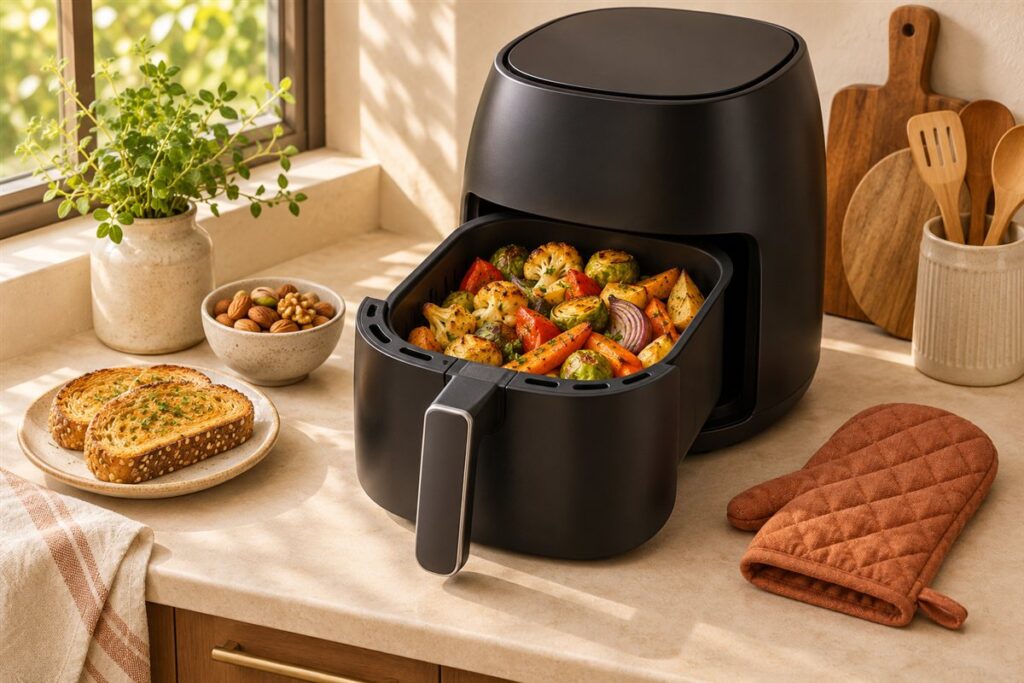
An air fryer can bake small bread rolls or simply warm up bought ones. Baking suits small batches of four to six rolls, and the time is typically 8 to 15 minutes. Warming takes only a few minutes.
Baking Rolls From Dough
Use any basic yeast dough that has already been mixed and risen once. The basket is small, so keep rolls about the size of a golf ball or slightly larger.
- Divide the risen dough into equal pieces and shape each into a smooth ball by tucking the edges underneath.
- Place them on a parchment round cut to fit, or in a small baking dish approved in your manual. Leave space between them for expansion.
- Cover loosely and allow them to rise again until puffy, about 20 to 40 minutes.
- Brush with milk, egg wash or melted butter, and sprinkle seeds if you like.
- Cook at about 160 to 175 C (320 to 350 F) for 8 to 14 minutes.
- Check the colour at about 7 minutes. If the tops brown faster than the sides, lower the temperature slightly.
- Tap the base. A hollow sound and an evenly golden crust mean the rolls are done.
Parchment can lift in strong airflow, so only use it if food holds it down and your manual allows it.
Warming Ready-Made Rolls
- Fresh rolls: 2 to 4 minutes at about 150 to 160 C (300 to 320 F).
- Day-old rolls: spritz with a little water first, then 3 to 5 minutes.
- Frozen rolls: thaw if possible, or allow 5 to 8 minutes and check the middle for warmth.
- Part-baked rolls: follow the packet, which usually gives a time and temperature.
Common Problems
| Problem | Cause | Adjustment |
|---|---|---|
| Dark top, pale sides | Strong top heat | Lower temperature, add minutes |
| Dense crumb | Short second rise | Allow more proofing time |
| Stuck together | Too little space | Bake in smaller batches |
| Dry crust | Over-baked | Brush with butter, shorten time |
A small batch of fresh rolls is good for sandwiches, soup or burgers. Slice and toast them briefly to add crunch to the cut side, or leave them soft for dipping. If you bake often, note the exact rise time, temperature and bake time that worked in your model, as even slight changes in room warmth or dough softness affect the result. Cool rolls on a rack before storing so steam does not make the crust damp, and keep them in a bread bin or a bag.
Choosing the Right Dough for Small Batches
Not every roll recipe adapts well to an air fryer. The basket is small and the air moves fast, so doughs that are very wet, very sweet, or very large often brown too much on the outside before the middle sets. Lean doughs, soft dinner-roll doughs, and enriched doughs made with a little milk or butter usually behave well, provided you shape the rolls modestly.
Think about size first. Rolls roughly the size of a golf ball or a little larger fit the basket and bake through evenly. Large burger-bun sizes may need a lower setting and more time, and may not fit alongside each other. If your basket is round, a small ring of rolls with space between each one works better than a tight block.
You can also scale down a standard recipe. Many people halve or quarter a recipe to produce only as many rolls as one basket will hold. Make notes on how the first batch behaves, because every air fryer runs a bit differently. Hydration matters too: a dough that slumps or spreads when shaped will flatten in the basket, so add flour in small amounts if it will not hold its shape. Check your recipe for guidance, and follow the manual for your machine’s maximum safe load.
Shaping and Proofing for Even Rising
Shaping decides how the roll rises and browns. Press out the air gently, fold the edges underneath, and roll the dough against the counter in a cupped hand until the top is taut and smooth. A tight surface gives a taller roll and a more even crust. Place the seam side down.
Most doughs need a final rise after shaping. Rolls that go into the heat underproofed may bake dense and crack at the sides, while overproofed rolls can collapse and taste yeasty. A reasonable test is a gentle poke: if the dent springs back slowly and only part way, the roll is ready. If it springs back instantly, give it more time. If it stays dented, bake right away.
Proof the dough in a warm, draft-free spot, covered loosely so the surface does not dry out. Place the rolls on a piece of parchment cut to fit the basket, with small gaps between them since they will expand. Perforated parchment made for air fryers allows airflow, but check your manual before lining the basket, and never let loose paper float up toward the heating element. Weigh it down with the rolls before the machine starts.
Controlling Crust Color and Browning
Air fryers brown the top of food fast because the heating element is close above it. Rolls can look done outside while the center remains doughy, so treat color as a signal to adjust, not to stop.
- Lower the setting: If the tops darken in the first few minutes, reduce the temperature and extend the time slightly.
- Tent with foil: Some manuals allow a small piece of foil placed loosely on top, held down by the food. Confirm that this is permitted for your model.
- Egg wash or milk: An egg wash gives a deep gold shine and browns quickly. A brush of milk or melted butter gives a softer, paler crust.
- Flip partway: Turning the rolls once helps the bottoms color evenly, since the base can stay pale.
Seeds and toppings such as sesame, poppy seeds, or oats can burn when they sit close to the element. Press them on firmly so they do not blow around. For a crisp crust, leave the rolls uncovered as they cool on a rack. For a soft crust, brush with butter while hot and cover loosely with a clean towel.
Checking That the Crumb Is Baked
Because the outside colors early, rely on other cues to decide if rolls are done. Lift one and tap the bottom: a baked roll sounds hollow. Press the side gently. It should feel springy rather than damp or sticky. If you have a kitchen thermometer, doneness for yeast breads is commonly judged by internal temperature, and many bread recipes give a target number, so follow the figure given in your own recipe.
Break open one roll from the first batch. A gummy, shiny, or wet-looking crumb means it needs more time. Gumminess can also come from cutting into rolls too soon, so let them rest for several minutes before testing. If the inside is underdone but the top is dark, lower the temperature and return the rolls for a few more minutes, covering the top if your manual permits.
Take notes after each try. Write down the shaping size, setting, time, and what the crumb looked like. After two or three batches you will have a dependable routine for your machine. Remember that a crowded basket extends cooking time because it blocks airflow, so repeat the same loading each time to get repeatable results.
Storing, Freezing, and Refreshing Rolls
Homemade rolls stale faster than store-bought ones, which often contain preservatives. For the best texture, eat them the day they are baked. Once cooled completely, store them in a bag or airtight container at room temperature for a day or so, and avoid the refrigerator, which speeds up staling in bread.
To keep rolls longer, freeze them. Cool completely, wrap them well or place them in a freezer bag with the air pressed out, and label the date. You can freeze fully baked rolls, or shaped unbaked dough, though unbaked dough needs a recipe designed for freezing. Baked rolls thaw at room temperature in about an hour, or can go straight from the freezer into the air fryer at a lower setting for several minutes.
To refresh a stale roll, mist the surface lightly with water or wrap it loosely and warm it briefly. A short cycle revives the crust and softens the crumb. Do not repeat the process several times, because each reheat dries the bread further. Rolls that have gone moldy, smell sour, or feel slimy should be discarded rather than refreshed. Stale rolls that are still safe make good breadcrumbs, croutons, or bread pudding.
FAQ
Can I proof the dough inside the air fryer?
Some models have a proof setting. If yours does not, proof in a warm spot outside and use the machine only to bake.
How do I keep the crust soft?
Brush with butter as the rolls come out and cover them with a clean towel for a few minutes.
Can I bake rolls from refrigerated dough tubes?
Often yes, but check the package. Bake at a slightly lower setting than the oven instructions suggest, keep the rolls apart, and check early because air fryers brown quickly.
Why are the bottoms of my rolls pale?
Air fryers heat from above, so bottoms can lag behind. Flip the rolls partway through, or place them on a perforated sheet that lets air reach the underside.
Can I use a gluten-free roll mix?
Many mixes can work, though the dough is often wetter and needs a mold or cup to hold its shape. Follow the instructions on the mix and check doneness carefully, since these rolls can stay gummy inside.
How many rolls fit in one batch?
It depends on basket size and roll size. Leave space around each roll so they can expand and air can flow, and bake in rounds rather than crowding the basket.
Do I need an egg wash?
No, it is optional. It adds shine and deeper color, but milk, melted butter, or plain water also work depending on the crust you want.
Can I make garlic bread rolls?
Yes. Brush with garlic butter near the end of cooking so the garlic does not scorch, and watch closely because buttered tops brown fast.
Why did my rolls collapse after baking?
This usually points to overproofing, where the dough rose too far before baking. Shorten the final rise next time and use the gentle poke test.
The Short Version
Shape, proof and bake small rolls at a moderate heat, checking early. For bought rolls, warm them briefly and use a water spritz when they are stale. Follow your manual for bakeware.