
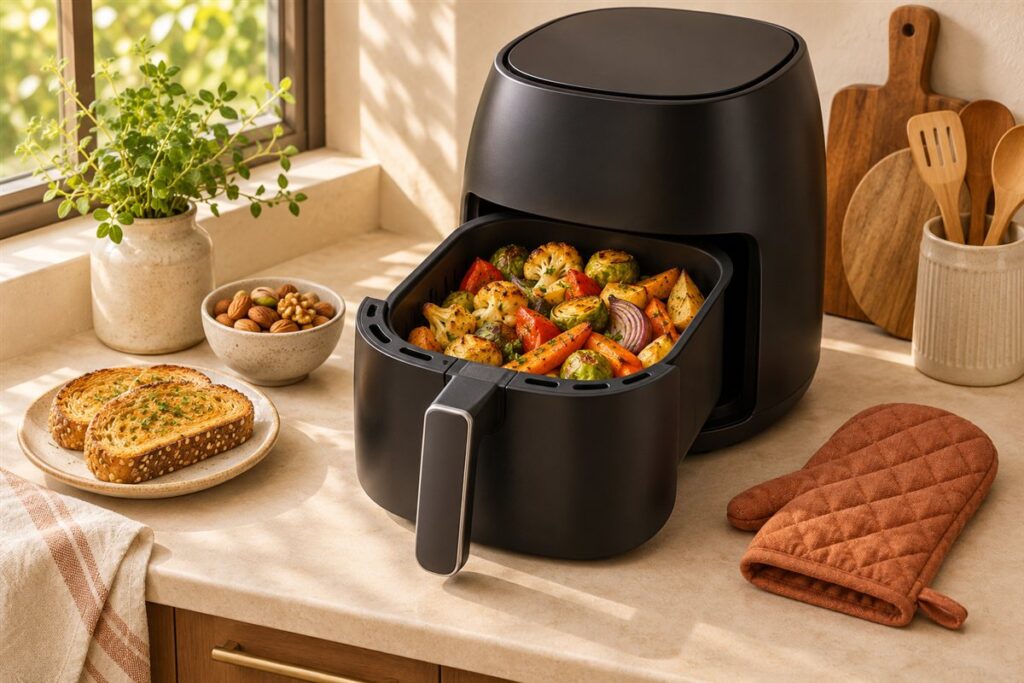
The right container depends on your model, so the final answer is always in your maker’s manual. As a general rule, use materials made for high, dry heat, keep them clear of the heating element, and avoid anything that can melt, burn, or fly up in the airflow.
Materials Often Used
- Oven-proof glass or ceramic: Often used for small baking dishes. Check that it is labeled for oven use and avoid sudden temperature swings that can crack it.
- Metal pans: Small baking tins and cake pans are common. Make sure they fit with room around them.
- Silicone molds: Many are made for oven heat. Check the temperature limit printed on the product.
- Parchment with air holes, made for air fryers: Designed to allow airflow. Always weigh it down with food.
Materials to Skip
- Plastic containers and takeout boxes, which can melt or warp.
- Paper plates, bags, and thin cardboard, which can burn or lift into the element.
- Any dish with a damaged or chipped surface.
- Containers that touch the heating element or block the vents.
- Sealed jars or lidded containers, because trapped pressure is a hazard.
- Items with a metal trim, unless your manual says it is fine.
Things to Check Before You Use Any Dish
| Check | Why it matters | What to look for |
|---|---|---|
| Heat limit | Prevents melting or cracking | An oven-use label with a temperature limit |
| Size | Air needs room to move | Space on all sides of the dish |
| Weight | Light items can blow around | Heavy enough to stay put |
| Condition | Cracks can worsen with heat | No chips, cracks, or peeling |
| Manual notes | Rules differ by model | A list of allowed accessories |
Handling Hot Dishes
A dish that comes out of an air fryer is very hot, and so is the steam above it. Use heat-resistant mitts or tongs, lift it straight out, and set it on a trivet or heat-tolerant surface. Keep children and pets away from the unit while it works and while it cools. Do not put a hot glass dish on a wet or cold surface.
Clean the dish and basket according to the care notes for each material, avoiding abrasive scrubbing on coatings.
When You Are Unsure
If you cannot tell whether a dish is suitable, leave it out and cook the food directly in the basket instead. You can also contact the maker with the model number and ask which accessories they allow. A short email is better than a cracked dish or a melted liner.
Glass, Ceramic, and Thermal Shock
Glass and ceramic dishes are popular for casseroles, custards, and reheating, but they are the materials most likely to fail from sudden temperature changes. A dish that goes from a cold fridge straight into a hot air fryer, or from the hot unit onto a damp counter, can crack or shatter. This is called thermal shock, and it can happen even with dishes sold for oven use.
Start by confirming that the dish is labeled for oven use and that your air fryer maker allows it. Let cold dishes sit out briefly before heating, and let hot dishes cool on a dry, heat-safe surface such as a trivet. Avoid adding cold liquid to a hot dish.
Inspect glass and ceramic before each use:
- Look for chips, cracks, or crazing on the glaze.
- Check that the base is flat so the dish sits steady.
- Make sure the walls are not so tall that the dish nears the element.
- Avoid dishes with metallic paint or trim unless the manual approves.
Thick stoneware heats slowly, so food may need more time than in a metal pan. If any doubt remains about a particular dish, it is safer to choose a simpler metal pan or cook directly in the basket.
Metal Options and Coatings
Metal pans are the most forgiving container choice in an air fryer. They heat quickly, tolerate high temperatures, and are lighter to handle than ceramic. Common choices include small cake tins, round baking pans, and pie plates. Pick sizes that fit the basket with a gap around the edge, so air can flow.
Metal still has limits. Coatings can scratch, peel, or darken at high heat, and uncoated aluminum may react with acidic foods such as tomato sauce, leaving a metallic taste or discoloration. Dark pans absorb heat and brown food faster than light ones, so you may need a lower temperature or shorter time.
Points to check on metal containers:
- Is the coating labeled safe at the temperature you plan to use?
- Is the pan flat enough to sit evenly and not tip?
- Do the handles fold or fit within the basket?
- Can the pan be washed gently without damaging the surface?
Avoid scraping coated pans with metal tools, and replace any pan with peeling or flaking coating. Heavier pans stay put in the airflow, while very thin pans can warp or slide when the fan runs.
Silicone and Parchment in Detail
Silicone and parchment sit between containers and liners, and each has its own rules. Silicone molds and cups are flexible and food releases easily. Look for a printed or listed heat limit, and use a firm base or tray under floppy molds so they stay level when you lift them. Low-quality silicone can smell or discolor, so buy from sellers who state the material clearly.
Parchment designed for air fryers often has holes for airflow and is shaped to fit a basket. Plain parchment can lift in the fan, touch the element, and scorch. Always place food or a weight on top before the unit starts, and never preheat with an empty sheet inside unless the manual says it is acceptable.
Keep these points in mind:
- Use the size meant for your basket and trim any overhang.
- Keep paper clear of the heating element.
- Replace silicone that is cracked, sticky, or smells strongly.
- Do not cut inside silicone molds with a knife.
Used correctly, silicone and parchment make cleanup easier. Used carelessly, they can block air or burn, so treat them as helpers that need supervision, not as set-and-forget items.
Foil, Wood, and Other Gray Areas
Some materials are allowed in some units and forbidden in others. Aluminum foil is the best-known example. Small amounts can catch drips or shield a bake, but foil can also block airflow and lift into the element, and acidic foods can react with it. Read your manual before using foil, and if you do use it, keep it flat and weighted.
Wooden and bamboo items such as skewers and picks may scorch in dry heat, so soaking or shorter cooking can help, though metal skewers avoid the issue. Cardboard, paper plates, and takeout containers are poor choices because they can burn or release fumes. Stainless steel bowls are usually fine if they fit, but flat-bottomed and heavy enough to stay put.
Gray area items to treat with caution:
- Metal-trimmed or decorated dishes.
- Enamel-coated pans that may chip.
- Wax paper, which is not designed for dry heat.
- Plastic wrap or lids that can melt.
When the label or manual does not clearly allow a material, assume the answer is no. The cost of a lost dish is small compared to a fire hazard or damaged unit, and cooking directly in the basket is always an option.
Reading the Manual and Product Markings
The two best sources for what to use are your air fryer manual and the markings on the container. The manual lists permitted accessories, minimum clearances, and sometimes what is forbidden. The container may show a temperature limit, oven-safe symbols, or care notes. When both agree, you can use the item with confidence. When they differ, follow the stricter one.
Look for phrases such as oven safe, heat resistant to a stated temperature, or made for air fryers. Be cautious about vague marketing language such as heat friendly without a limit. If the item came without a label, check the seller listing, or contact the maker for details. Some people mark safe dishes with a small tag or keep a list inside a cabinet door.
A quick pre-use check:
- Confirm the material and heat limit.
- Measure for a gap around the dish.
- Check the weight so it will not blow around.
- Inspect for chips, cracks, or damage.
If you are replacing a container, choose one with clear markings and a stated heat rating. It makes decisions much easier next time, and it helps anyone else in your home use the unit safely.
FAQ
Can I use any oven dish?
Not automatically. It must fit, stay clear of the element, and be allowed by your maker. Check the manual first.
Is foil allowed?
Some manuals allow small amounts and others do not. See our foil article, and follow your own manual.
Can I use a stainless steel bowl in an air fryer?
Often yes, if it fits with space around it, has no plastic parts, and is allowed by your manual. Use a heavy, flat-bottomed bowl so it stays put.
Is it safe to use a ceramic ramekin?
Many ramekins are oven safe, but check the label and the manual. Let them reach room temperature before heating to lower the chance of cracking.
Can I use wooden skewers?
They can scorch in dry heat. Metal skewers are an alternative, and if you use wood, keep them well covered by food and watch the cook.
What happens if a container touches the heating element?
It can overheat, smoke, or burn, and it may damage the appliance. Always leave a gap and check the manual for clearances.
Can I cover a dish with a lid in the air fryer?
Do not use sealed lids, since trapped pressure is a hazard. A loose cover may be allowed in some manuals, so check yours.
How do I tell if a dish is safe if the label is missing?
Treat it as unknown. Check the seller listing or contact the maker. If you cannot confirm it, use a labeled container or cook directly in the basket.
The Short Version
Choose heat-tolerant, sturdy containers that fit with space around them, skip plastic and paper, and confirm with your manual. When in doubt, cook directly in the basket.









