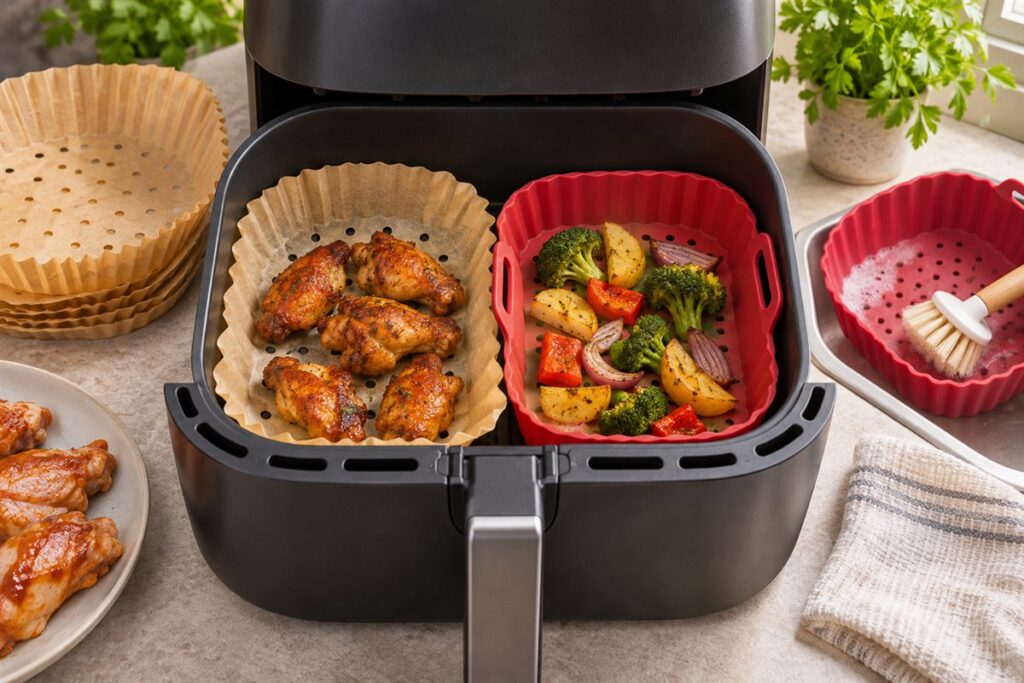
Paper liners are single-use sheets that make cleanup quick, while reusable liners, usually silicone, can be washed and used again. Choose paper if you want a fast, no-wash option for messy foods. Choose reusable if you cook often and want less waste. Either type must have openings for airflow and must be weighed down by food.
What Each Type Is For
Paper liners are shaped like small cups or sheets, often with holes or slits. They catch drips and keep sticky foods off the basket. Reusable liners are made of silicone or similar flexible material and are shaped like a tray or dish. They hold their form and can be rinsed after each cook.
Side-by-Side Differences
| Feature | Paper liners | Reusable liners |
|---|---|---|
| Cleanup | Throw away after use | Wash and dry |
| Waste | Creates ongoing waste | Little waste over time |
| Airflow | Depends on holes or slits | Depends on the design |
| Browning | Can be lighter underneath | Can be lighter underneath |
| Storage | Flat stack in a drawer | Needs a bit more room |
Safe Use Habits
Loose paper can lift in the moving air and touch the heating element. That is why liners should never go into an empty, preheating basket. Always place the food on the liner first, or put the liner in and add food right away. Follow the maker’s manual and safety instructions, and check the temperature limit of any liner you use.
- Choose a liner a little smaller than the basket floor.
- Make sure the sides do not rise above the food and reach the top area.
- Add the food straight away so the weight holds the liner flat.
- Check partway through and press down any corners that have lifted.
- Remove it with care, since it will be hot.
Who Should Choose Which
- Paper: occasional cooks, people with sticky or saucy foods, and anyone who dislikes washing extra items.
- Reusable: frequent cooks, people who prefer to cut down on disposable items, and those who like a firm tray shape.
- Neither: foods that need maximum crispness, where direct airflow to the base matters most.
Upkeep for Reusable Liners
Wash with warm soapy water and rinse well. Greasy films can build up over time, so scrub gently with a soft brush. Dry fully before storing to prevent smells. Replace the liner if it cracks, stains badly or stays sticky after washing.
Cost Over Time and Waste
Paper and reusable liners differ in how their costs show up. Paper is cheap per sheet, but you keep buying it, and the spending adds up if you cook often. Reusable liners cost more at the start, but one can serve many cooks if it is cared for. Which works out cheaper depends on how often you cook and how long a reusable liner lasts in your kitchen.
Waste is part of the picture. Paper liners go into the trash after each use, which suits people who want minimal washing but not those who want to cut down on disposables. Reusable liners reduce waste but use water and soap for cleaning, so the trade-off depends on what matters to you.
- Occasional use: a pack of paper liners may last a long time.
- Frequent use: a reusable liner often makes more sense.
- Messy cooking: paper may be easier than scrubbing silicone.
- Limited storage: paper stacks flat, silicone takes a bit more room.
Avoid buying large quantities until you know which type suits your cooking and your unit.
Fit, Shape and Airflow Checks
A liner has to fit the basket, or it will interfere with cooking. Measure the floor of your basket and compare it with the liner’s dimensions. A liner that is too large will curl up the sides and may block airflow or touch the heating area. One that is too small leaves areas unprotected.
Airflow is crucial. Look for liners with holes, slits or a perforated design, and make sure food does not cover every opening. Solid liners can trap steam and prevent browning underneath. Reusable liners with raised ridges or feet can lift food slightly and let air pass beneath.
Round, square and rectangular liners suit different baskets. For dual drawer models, check that the liner fits a single drawer. If you use a tray model, confirm the liner suits the tray. Inspect the liner after the first use to see how food and grease behaved, and adjust your approach. If juices pool, trim the liner or choose a design with more openings. Always follow your manual regarding what is allowed in the basket.
Which Foods Suit Which Liner
Different foods work better with one type or the other. Sticky, saucy or marinated foods are well suited to paper, since the liner catches drips and goes in the bin. Delicate fish and filled pastries also benefit from the extra protection. For foods you want crisp on the bottom, paper or solid silicone can slow browning, so a liner with plenty of openings, or none at all, may be better.
Reusable silicone liners suit foods that you cook often, such as vegetables, chicken pieces and baked goods. They are also good for foods that tend to stick, because the surface releases cleanly. Heavily greasy foods may leave residue on silicone that needs extra washing, and strong odors can linger.
When cooking for allergies, wash reusable liners thoroughly between uses, or use fresh paper liners for each batch to reduce cross contact. Do not use a liner when the recipe needs direct contact with the basket for crisping. Experiment with a small batch to see the difference, and keep notes on what you prefer for each kind of food.
Heat Limits and Safety Checks
Each liner has a maximum temperature, and you should check it before use. The limit may be on the packaging or in the listing. Do not exceed it. If you cannot find a rating, avoid using the liner at high settings. Also consider the maker’s guidance on liners in your air fryer, since some units have specific advice.
Paper liners can lift in the airflow, so never run the unit with an empty liner. Add food first or put the liner in and load it right away. Make sure no edges reach the heating element. Check partway through and press down any lifted corners. Do not reuse a paper liner that is greasy, dark or brittle.
Reusable liners should be inspected for tears, stickiness or warping before each use. Place them flat, with the food on top. Let them cool before handling and washing. Stop using any liner that smokes, smells burnt or looks damaged. If you see signs of scorching on the basket or element area, stop cooking, unplug the unit, and let it cool before inspecting.
Making the Final Choice
If you cannot decide, think about your habits. Do you cook mostly messy food, or dry items like vegetables and frozen foods? Do you dislike washing up, or do you dislike throwing things away? Do you cook several times a week or only now and then? Your answers point to one type.
It is also reasonable to use both. Keep a small pack of paper liners for sticky foods, and a reusable one for everyday cooking. Starting with a small purchase of each lets you compare without committing. Check that all liners are suitable for food contact and for your temperature range.
Ask questions before buying: Does it fit my basket? Are there enough openings for airflow? What is the temperature rating? Is it easy to clean or dispose of? Is it listed as safe for air fryer use? Replace reusable liners when they show wear, and avoid keeping paper liners in a damp place. Whatever you pick, a good fit and sensible use matter more than the material.
FAQ
Do liners change cooking time?
They can slightly, since they block some airflow beneath the food. Check doneness a little earlier the first few times.
Can I cook without any liner?
Yes. A light coat of oil on the basket, or on the food, works for many dishes.
Which liner is better for crispy food?
Neither is ideal for maximum crispness. A liner with many openings, or cooking directly on a clean basket, usually gives crisper results.
Can I wash and reuse paper liners?
Paper liners are designed for single use. Reusing them risks tearing and absorbing grease, which can be a problem in a hot unit.
How do I clean a reusable liner?
Wash it in warm soapy water with a soft sponge, rinse and dry fully. Follow the listing for dishwasher use.
Do liners affect the taste of food?
They should not, but old grease or lingering odors on reusable liners can. Wash thoroughly and replace if odors persist.
Can I cut a liner to size?
Many can be trimmed, but make sure openings for airflow remain and that edges do not reach the heating area. Check the listing.
Are liners necessary?
No. They are a convenience for cleanup and for sticky foods. Many cooks use them only for certain dishes.
What if my liner keeps moving?
Make sure food covers and weighs it down, and that it is the right size. Never leave an empty liner in the unit while it heats.
The Short Version
Paper suits quick cleanup, reusable suits frequent use and less waste. Choose the type that matches how often you cook, and always keep liners flat and weighed down.