Choosing the best hardwood pellets for smokers is the single easiest upgrade a backyard cook can make to the flavor of brisket, ribs, pork shoulder and whole chicken. The smoker itself sets the temperature, but the pellets set the smoke: the wood species in the bag decides whether the meat comes off the grate sweet, bold, mellow or bitter. A bag of clean, all-hardwood pellets burns steadily, leaves little ash in the fire pot and lays down thin, steady smoke for hours. A bag padded with filler wood, bark or flavor oils burns unevenly, clogs the auger and can push harsh, acrid smoke onto food that took all day to cook.
This guide compares six hardwood pellet fuels that are widely available, made from 100 percent hardwood, and suited to pellet grills and smokers. Every pick below was checked against the live product listing for its brand, blend and bag size, and every link goes to the exact product described. Use the comparison table to narrow the field fast, then read the full section for any pellet you are considering. If you are new to pellet smoking, start with a blend rather than a single wood: blends forgive small mistakes in temperature and timing, and they pair well with almost everything you will cook in your first season.
In this guide
Quick picks: best hardwood pellets for smokers
| # | Product | Where to buy |
|---|---|---|
| 1 | Bear Mountain Gourmet Blend hardwood pellets | Check on Amazon |
| 2 | Pit Boss Competition Blend hardwood pellets | Check on Amazon |
| 3 | Kingsford Craftsmoke Hickory wood pellets | Check on Amazon |
| 4 | Traeger Hickory hardwood pellets | Check on Amazon |
| 5 | Traeger Signature Blend wood pellets | Check on Amazon |
| 6 | CookinPellets Perfect Mix hardwood smoking pellets | Check on Amazon |
How the picks were chosen
Every pellet in this roundup had to clear four checks before it earned a place. First, the wood: only 100 percent hardwood pellets with no fillers, no bark and no flavor oils made the list, because filler woods dilute flavor and raise ash. Second, the blend: the bag had to state its wood species plainly on the listing, so you know whether you are burning hickory, oak, maple, cherry, apple or a stated mix of them. Third, the burn: low moisture content and uniform pellet size matter, because pellets that crumble or swell in the hopper jam the auger and stall a long cook. Fourth, the fit: each pellet had to be listed as suitable for pellet grills and smokers, so the picks work in the cookers most readers own.
Bag size and value were weighed, but they did not override wood quality. A large bag of filler-heavy pellets is a poor buy at any size, while a smaller bag of clean hardwood that burns steadily is worth more across a season of cooks. Flavor pairing notes come from the wood species themselves: hickory is bold and classic for beef and pork, oak is smooth and steady for long cooks, maple and cherry add sweetness for poultry and pork, and apple brings a mild, fruity note that suits chicken, pork and baked goods. We have not tested these pellets in a side-by-side cook; the comparisons below rest on the listed wood species, bag size, stated features and the well-established flavor character of each hardwood.
Best hardwood pellets for smokers at a glance
| Pellet | Wood | Bag size | Best match |
|---|---|---|---|
| Bear Mountain Gourmet Blend | Gourmet hardwood blend | 2 x 20 lb | Everyday smoking, all meats |
| Pit Boss Competition Blend | Maple, hickory, cherry, oak | 15 lb | All-purpose fuel, first bag |
| Kingsford Craftsmoke Hickory | Hickory and oak | 20 lb | Classic bold smoke |
| Traeger Hickory | Hickory | 18 lb | Beef, pork and poultry |
| Traeger Signature Blend | Hickory, maple, cherry | 18 lb | Versatile everyday blend |
| CookinPellets Perfect Mix | Hickory, cherry, maple, apple | 2 x 40 lb | Heavy use, bulk buying |
The picks in detail

Top pick
1. Bear Mountain BBQ Gourmet Blend Hardwood Smoker Pellets
Verified specs: Two 20 lb bags of 100 percent all-natural hardwood pellets in a gourmet blend; low moisture content for clean, consistent smoke; works in pellet grills and smokers as well as gas, charcoal and electric grills.
Strengths:
- Two full 20 lb bags give you enough fuel for many cooks without a mid-season reorder.
- Gourmet blend delivers a sweet, smoky finish that suits red meat, poultry and vegetables alike.
- Low moisture content supports a steady burn and even smoke from start to finish.
Trade-offs:
- The blend is a house mix, so cooks who want a single named wood will need a different bag.
- Two-bag packaging takes more storage space than a single smaller bag.
- Sweet-leaning flavor may be too gentle for cooks who want the strongest possible hickory punch.
This is the bag to buy when you want one pellet that handles a whole weekend of different meats. The gourmet blend is balanced rather than sharp, so it works on ribs on Saturday and chicken on Sunday without changing fuel. It fits cooks who smoke a bit of everything and want a dependable, all-hardwood pellet that does not demand constant hopper attention.
Best for: everyday smoking across beef, pork, poultry and vegetables.
Not suited for: cooks chasing the boldest single-wood hickory flavor or a named single-species pellet.
Check price on Amazon: Bear Mountain Gourmet Blend hardwood pellets
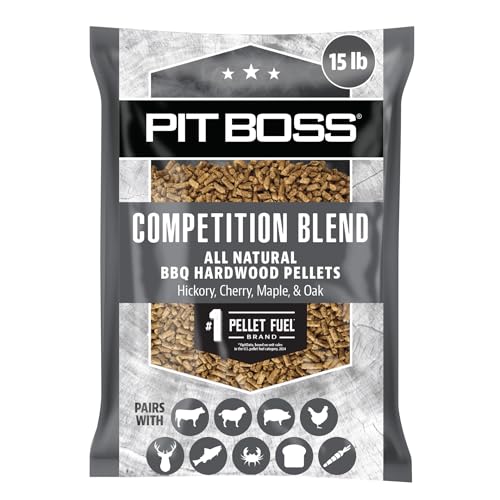
2. Pit Boss Competition Blend Hardwood BBQ Pellets
Verified specs: 15 lb bag of 100 percent all-natural hardwood pellets blending maple, hickory, cherry and oak; made in the USA; listed for use with pellet grills and BBQ smokers for smoking, searing, baking, grilling, roasting and braising.
Strengths:
- Four-wood blend covers the full flavor range: maple sweetness, hickory boldness, cherry fruit and oak steadiness.
- All-purpose design suits beef, pork, poultry and vegetables, so one bag covers a varied menu.
- 15 lb size is easy to carry and store, and it is a sensible first bag for a new pellet smoker owner.
Trade-offs:
- 15 lb is the smallest bag in this roundup, so heavy smokers will go through it quickly.
- Blend flavor is balanced by design, which means no single wood stands out strongly.
- Smaller bag means more frequent reorders across a busy grilling season.
Pit Boss Competition Blend is the sensible default for a first pellet purchase. The four-wood mix is hard to get wrong: it is sweet enough for chicken, bold enough for pork shoulder and steady enough for an all-day brisket. If you own one pellet grill and cook a little of everything, this bag earns its place by never being the wrong choice.
Best for: new pellet smoker owners and all-purpose everyday smoking.
Not suited for: cooks who buy in bulk or want a single-wood flavor profile.
Check price on Amazon: Pit Boss Competition Blend hardwood pellets

3. Kingsford Craftsmoke Premium Grilling Wood Pellets, Hickory
Verified specs: 20 lb bag of 100 percent natural hardwood pellets in a hickory and oak blend; small-batch crafted with uniform pellet sizing; no fillers, no oils and no additives; compatible with all pellet grills and usable in gas, charcoal and electric grills.
Strengths:
- Hickory and oak is the classic barbecue pairing: bold smoke from hickory, steady burn from oak.
- Small-batch production and uniform sizing support consistent feeding and even smoke.
- No fillers, oils or additives, so the flavor comes only from the wood itself.
Trade-offs:
- Hickory-forward flavor can overpower delicate foods such as fish or vegetables if used heavily.
- Single flavor profile means you need a second bag for milder woods like apple or cherry.
- 20 lb bag is a middle size: not as convenient as a small bag, not as economical as a bulk bag.
Kingsford Craftsmoke Hickory is for cooks who know what classic barbecue smoke should taste like and want it every time. The hickory and oak blend is the backbone of competition-style pork and beef, and the uniform pellet size helps the auger feed without stalls. Use it for ribs, pork shoulder and brisket, and keep a lighter wood on hand for chicken and fish.
Best for: classic bold hickory smoke on pork, beef and ribs.
Not suited for: delicate foods, or cooks who want one mild all-purpose bag.
Check price on Amazon: Kingsford Craftsmoke Hickory wood pellets

4. Traeger Hickory Hardwood Pellets
Verified specs: 18 lb bag of all-natural hickory hardwood pellets; made in the USA; low ash, clean burn, no binders; pairs with beef, poultry, pork and vegetables.
Strengths:
- Single-wood hickory gives a clear, assertive smoke flavor that is easy to predict and repeat.
- Low ash output keeps the fire pot cleaner across long cooks.
- No binders in the pellet, so the burn stays clean and the smoke stays true to the wood.
Trade-offs:
- Hickory alone is strong, so it can dominate mild meats if you smoke them for many hours.
- One wood means one flavor direction; variety requires a second bag.
- 18 lb bag sits between small and bulk sizes, so very frequent smokers will reorder often.
Traeger Hickory is the reference pellet for cooks who build their barbecue around one wood. If your menu leans toward beef and pork and you like a full-bodied smoke that announces itself, this is the bag to keep in the hopper. It is also a useful teaching pellet: because the flavor is a single wood, you learn quickly how much smoke a cut needs and how long is too long.
Best for: beef, pork and poultry with a bold, classic smoke profile.
Not suited for: fish, vegetables or anyone who prefers a mild, sweet smoke.
Check price on Amazon: Traeger Hickory hardwood pellets

5. Traeger Signature Blend Wood Pellets
Verified specs: 18 lb bag blending hickory, maple and cherry hardwoods; all-natural, premium quality, clean burn, no binders, low ash; made in the USA; pairs with beef, poultry, pork, lamb, seafood and vegetables.
Strengths:
- Three-wood blend balances hickory boldness with maple sweetness and cherry fruit.
- Widest pairing range in this roundup, covering red meat, poultry, pork, lamb, seafood and vegetables.
- Low ash and no binders support a clean burn and a tidy fire pot.
Trade-offs:
- Blend flavor is versatile rather than distinctive, so it rarely delivers a signature note of its own.
- Cherry and maple sweetness may soften the smoke for cooks who want maximum hickory punch.
- 18 lb bag is a standard size, not a bulk buy, so heavy users reorder more often.
Traeger Signature Blend is the bag for a household where one person smokes brisket and another grills salmon. The hickory gives the blend backbone, the maple and cherry round off the edges, and the result works across nearly everything that goes on the grate. If you could only keep one pellet on the shelf, this blend is a strong candidate for that single spot.
Best for: households that smoke a wide mix of meats, poultry and seafood.
Not suited for: cooks who want a single-wood flavor or the strongest possible smoke.
Check price on Amazon: Traeger Signature Blend wood pellets

6. CookinPellets Perfect Mix Hardwood BBQ Smoking Pellets
Verified specs: Two 40 lb bags of 100 percent natural hardwood pellets blending hickory, cherry, hard maple and apple; no oak or alder filler, no additives, no fillers, no binders; for grills and smokers, pork, brisket, chicken, ribs and vegetables.
Strengths:
- Four popular hardwoods with no oak or alder filler, so every pound in the bag is a flavor wood.
- Two 40 lb bags cover a long season of smoking without frequent reordering.
- Clean, consistent burn with very little ash left in the fire pot.
Trade-offs:
- Bulk size needs dry, dedicated storage; a damp garage will spoil pellets fast.
- Two-bag commitment is a lot of fuel for a cook who smokes only a few times a year.
- Blend of four woods means no single wood dominates, so single-wood purists may prefer a different bag.
CookinPellets Perfect Mix is the bulk buy for serious smokers. The four-wood blend is built from the most popular smoking woods only, with no filler species padding the bag, and the 80 lb total keeps a busy pellet grill fed for months. It fits cooks who smoke most weekends and want to stop thinking about pellet supply until next season.
Best for: frequent smokers and bulk buyers who want a filler-free four-wood blend.
Not suited for: occasional smokers, cooks with limited dry storage, or single-wood purists.
Check price on Amazon: CookinPellets Perfect Mix hardwood smoking pellets
Buying guide: how to pick hardwood pellets for smokers
Start with the wood, not the brand. The species in the bag decide the flavor, and the flavor should match the food. Hickory is the workhorse of American barbecue: bold, a little sharp, and at home on beef, pork and ribs. Oak is the steady partner: milder than hickory, smooth, and excellent for long cooks where you want smoke without bitterness. Maple adds a gentle sweetness that flatters pork and poultry. Cherry brings a fruity note and a rich color to pork and chicken. Apple is the mildest of the group, sweet and light, and it suits chicken, pork, fish and even baked goods. Pecan sits between hickory and maple, nutty and warm. Mesquite is the strongest of all and belongs mostly with beef; use it sparingly until you know how your household likes it.
Blends exist for a reason. A single wood is predictable but narrow; a blend covers more foods and forgives more mistakes. For a first purchase, a blend of hickory, maple and cherry or a four-wood mix is the safest choice. Once you know which flavors your family likes, add a single-wood bag for the meats you cook most. Many experienced smokers keep two bags on hand: a blend for everyday cooking and a hickory or oak bag for long beef cooks.
Read the listing before you buy. A good pellet listing names its wood species, states that the pellets are 100 percent hardwood, and says whether the bag contains fillers, bark or flavor oils. Avoid pellets that hide behind vague words like natural wood blend without naming the woods. Uniform pellet size matters too: pellets that are mostly dust or broken pieces feed poorly and burn fast, while consistent pellets feed smoothly and burn evenly. Low moisture content is the other quiet quality marker; dry pellets light cleanly and produce thin, steady smoke, while damp pellets smolder, produce heavy white smoke and leave more ash.
Bag size should match how often you smoke. A 15 to 20 lb bag is right for a cook who smokes a few times a month. A 40 lb bag suits a weekly smoker. Buying two 40 lb bags makes sense only if you have dry storage and smoke often enough to use them within the season. Pellets absorb moisture from the air, so an opened bag in a damp garage slowly loses quality. Store pellets in their original bag inside a sealed container, off the floor, in a cool dry place, and keep them out of rain and humidity.
Check compatibility with your cooker. Most pellets in this guide are listed for pellet grills and smokers, and several also work in gas, charcoal and electric grills or in a smoke tube. If you run a pellet grill, use pellets sized for pellet grills; oversized or irregular pellets can jam the auger. If you use a smoke tube on a gas grill, any of these pellets will work, because the tube only needs dry, clean-burning hardwood.
How to use hardwood pellets in a smoker
Fill the hopper with dry pellets and keep the lid closed while the smoker runs. A pellet grill feeds pellets automatically, so your main job is to keep the hopper from running empty during a long cook; check the level every couple of hours on brisket or pork shoulder. For the first hour of a cook, smoke matters most: meat absorbs smoke flavor best while its surface is still cool and moist, so resist the urge to open the lid and look. Every time the lid opens, heat and smoke escape and the cook takes longer.
Match the smoke to the meat. Beef and pork shoulder can take heavy smoke for hours. Chicken and turkey do better with a lighter touch: a milder wood such as apple or cherry, or a shorter smoke before finishing at higher heat, keeps the skin from turning bitter. Fish needs the lightest hand of all; a short smoke with apple or alder-style mild wood is usually enough. Vegetables pick up smoke quickly, so a brief spell over a blend is plenty.
Clean the fire pot between long cooks. Ash builds up in the fire pot and, left alone, it chokes airflow and makes the temperature swing. A quick vacuum of the fire pot after every few cooks keeps the burn steady. Empty the hopper if the smoker will sit unused for weeks, especially in humid weather; pellets left in the hopper absorb moisture, swell and can jam the auger on the next start.
Common mistakes with smoker pellets
The most common mistake is using too much smoke. Thick white smoke looks impressive, but it tastes bitter; the goal is thin, pale blue smoke that you can barely see. If your smoker is pouring white smoke, the pellets may be damp, the fire pot may be full of ash, or the temperature may be too low for a clean burn. Fix the airflow and the fuel before adding more wood.
The second mistake is buying on bag size alone. A large bag of filler-heavy pellets is not a bargain; the filler burns fast, leaves ash and adds little flavor. Spend the same money on fewer pounds of clean hardwood and the food will show the difference. The third mistake is storing pellets badly. Pellets left open in a humid garage swell, crumble and jam the auger, and a jammed auger in the middle of an overnight brisket is a cook ruined. Keep pellets dry, sealed and off the floor.
The fourth mistake is switching woods mid-cook without a reason. Changing pellets halfway through a long cook muddies the flavor and tells you nothing about either wood. Pick a wood for the meat, commit to it for the whole cook, and change only on the next cook, so you learn what each wood actually does.
Hardwood smoke flavor chart
Smoke flavor is not one thing. Each hardwood brings its own character, and knowing the chart helps you pick a bag with confidence instead of guessing. Hickory is the boldest of the common smoking woods: strong, a little sharp, with a bacon-like depth that suits beef, pork shoulder and ribs. It is the flavor most people picture when they hear the word barbecue, and it is also the easiest wood to overdo. Use hickory generously on beef and pork, lightly on chicken, and sparingly on fish.
Oak is the quiet professional of the smoke world. It burns steadily, tastes smooth and slightly earthy, and never overwhelms the meat. That steadiness is why oak is the backbone of long brisket cooks: it can smoke for twelve hours without turning bitter. Oak pairs with everything, and it is the wood to choose when you want smoke as a supporting flavor rather than the star.
Maple is gentle and sweet, with a soft warmth that flatters pork, poultry and vegetables. It is a good bridge wood: on its own it is mild, in a blend it rounds off sharper woods like hickory. Cherry is fruity and slightly sweet, and it gives pork and chicken a rich, dark color that looks as good as it tastes. Apple is the mildest wood in this guide, light and fruity, best for chicken, pork, fish and baked goods where a heavy smoke would crush the food.
Pecan is nutty and warm, sitting between hickory and maple in strength, and it is a fine all-round wood for pork and poultry. Mesquite is the strongest smoke of all, earthy and intense, and it belongs mostly with beef; a little goes a long way, and an all-mesquite cook can turn bitter if the smoke runs heavy. Alder is mild and delicate, the traditional wood for fish, and it works wherever you want the lightest possible touch.
| Wood | Strength | Flavor | Best with |
|---|---|---|---|
| Hickory | Strong | Bold, sharp, bacon-like | Beef, pork, ribs |
| Oak | Medium | Smooth, earthy, steady | Brisket, long cooks, everything |
| Maple | Mild | Gentle, sweet, warm | Pork, poultry, vegetables |
| Cherry | Mild-medium | Fruity, sweet, rich color | Pork, chicken |
| Apple | Mild | Light, fruity, sweet | Chicken, pork, fish, baking |
| Pecan | Medium | Nutty, warm | Pork, poultry |
| Mesquite | Very strong | Earthy, intense | Beef, used lightly |
Blends combine these characters on purpose. A hickory, maple and cherry blend gives you hickory backbone with sweet edges. A four-wood blend of hickory, cherry, maple and apple covers the widest menu, because every wood in the mix pulls in a different direction and the result lands in the middle. When you read a blend listing, look at the order of the woods: the first wood named is usually the dominant one, and that tells you which direction the flavor leans.
Pellet quality checklist
Good pellets share a few visible signs. They are uniform in size, roughly the length of a thumbnail, with little dust at the bottom of the bag. They feel dry and hard, and they snap cleanly rather than bending or crumbling. The bag names the wood species plainly and states that the pellets are 100 percent hardwood with no fillers, bark or flavor oils. The listing says the pellets are low in moisture and low in ash, and it names the cookers they fit.
Poor pellets show the opposite signs. The bag is heavy with dust and broken pieces. The pellets feel soft or damp. The listing talks about natural wood flavor without naming a single species. The bag mentions flavor oils, which are a shortcut that real hardwood does not need. Pellets that smell chemical or oddly sweet before burning are a warning sign; clean hardwood smells like wood, nothing more.
Before a long cook, run a short check. Pour a handful of pellets into the hopper and watch the first minutes of the burn: good pellets light cleanly, produce thin pale smoke and hold a steady temperature. If the smoke is thick and white, check the fire pot for ash and check the pellets for dampness before blaming the smoker. Keep a small sealed container of your current pellet for comparison; when a new bag behaves differently, the side-by-side check tells you quickly whether the fuel changed.
How much smoke is enough
Meat takes on smoke flavor mainly in the first hours of a cook, while the surface is cool and moist. After the bark sets and the surface dries, additional smoke adds less flavor and more risk of bitterness. That is why experienced smokers focus their attention early: steady temperature, thin smoke and a closed lid for the first few hours matter more than anything you do later.
As a rough guide, brisket and pork shoulder welcome several hours of steady smoke. Ribs do well with two to three hours of smoke before wrapping or finishing. Chicken takes smoke fast, so a shorter smoke with a milder wood keeps the skin pleasant. Fish needs the least: an hour or less with apple or another mild wood is usually plenty. Vegetables pick up smoke in minutes, so a brief spell over a blend is enough. When in doubt, use less smoke than you think you need; you can always add a little more next time, but you cannot take smoke flavor out of a finished cook.
Temperature and smoke are linked. Low, slow cooking produces more smoke flavor because the meat spends more time in the smoke. Hot, fast cooking produces less. If your smoker has a dedicated smoke setting, use it for the first part of the cook, then move to your target cooking temperature. Keep the lid closed as much as possible; every peek lets out heat and smoke and stretches the cook.
Final recommendation
For most readers, the best hardwood pellets for smokers are a filler-free blend that covers many foods: the Pit Boss Competition Blend for a first bag, or the Traeger Signature Blend for the widest pairing range. Cooks who know they love bold smoke should go straight to Kingsford Craftsmoke Hickory or Traeger Hickory. Heavy users who smoke most weekends will get the most from the CookinPellets Perfect Mix bulk buy, while the Bear Mountain Gourmet Blend is the easy everyday bag that handles a mixed menu without fuss. Whichever bag you choose, keep it dry, match the wood to the meat, and let thin, steady smoke do the work.
Frequently asked questions
What are the best hardwood pellets for smokers overall? A filler-free blend is the safest all-round choice, because it pairs with beef, pork, poultry and vegetables. Single-wood hickory is the best choice when you want the boldest classic barbecue flavor, and a four-wood blend is the best choice for heavy use across many cooks.
Do hardwood pellets work in any pellet grill? Most pellets listed for pellet grills work across brands, and several also work in gas, charcoal and electric grills or in a smoke tube. Check the listing for your cooker type, and use pellets sized for pellet grills to avoid auger jams.
How should I store smoker pellets? Keep them in a sealed container in a cool, dry place, off the floor and out of rain and humidity. An opened bag in a damp garage will absorb moisture, swell and crumble, which leads to poor burns and auger jams.
Which wood is best for brisket? Oak and hickory are the classic brisket woods: oak for a smooth, steady smoke across a long cook, hickory for a bolder flavor. A hickory and oak blend gives you both, and it is the pairing behind several picks in this guide.
Can I use the same pellets for chicken and beef? Yes, especially with a blend. Blends of hickory, maple and cherry work across beef, pork and poultry. For the mildest result on chicken, lean toward apple or cherry, and keep heavy hickory smoke shorter on poultry than on beef.
Can I mix two pellet flavors in one cook? Yes, and many smokers do. Mixing is easiest in the hopper: pour one bag, then the other, and the auger blends them as it feeds. A common mix is hickory with apple for pork, or oak with cherry for beef. Keep notes on the mix you used, so a cook you love can be repeated. Avoid mixing more than two woods at once, because the result becomes hard to read and harder to repeat.
How long does a bag of pellets last? It depends on the cooker, the temperature and the length of the cook. A pellet grill burns roughly one to two pounds per hour at smoking temperatures, so a 20 lb bag covers about ten to twenty hours of smoking. Long brisket cooks use more, short chicken cooks use less. Buying a little more than you think you need is wise for a weekend of cooking, and sealed dry storage keeps the extra good until the next session.
Do pellets go bad? Dry pellets kept sealed last a long time, but pellets that get damp go bad quickly. Damp pellets swell, crumble into sawdust and jam the auger, and they burn with thick white smoke that tastes bitter. If a bag has been open in a humid space, pour a handful out and check: good pellets are hard, dry and snap cleanly, while spoiled pellets feel soft and fall apart. When in doubt, replace the bag rather than risking a long cook on suspect fuel.
Related reading on this site: if you are still choosing the cooker itself, see our guides to pellet smokers under 1000, affordable pellet smokers and pellet BBQ smokers.


