The best smokers for meat when outside temperature is cold are the ones that hold a steady temperature while the air around them drops. Cold wind, frozen ground and a long cook are a hard combination: a thin-walled smoker loses heat through every panel, the fire or heating element works harder, and the meat spends longer in the danger zone between raw and done. A smoker that is built for cold weather changes that picture. Insulation, a tight lid, a controller that reacts quickly and a cooking chamber that does not leak heat all help the smoker stay where it was set, even when the thermometer outside reads well below freezing.
This guide looks at six smokers that suit cold-weather meat cooking, from pellet grills with digital controllers and WiFi to a large barrel offset smoker and an insulated kamado. Each pick below is a real smoker with a defined cooking area, a named controller or heating system, and a body style that suits winter use. The guide explains what makes a smoker work in the cold, how to set one up when the wind is biting, and which mistakes turn a long brisket cook into a stalled, dried-out disappointment. If you cook through winter, the right smoker is not the biggest one on the shelf. It is the one that keeps its heat, feeds its fire steadily and lets you check the meat without opening the door every half hour.
Cold-weather smoking is mostly about heat management. A smoker in summer can afford to lose some heat through its walls because the air outside is warm and the fire does not have to work hard to replace it. In winter, every degree lost through the wall has to be replaced by burning more fuel or drawing more power, and the temperature inside the chamber swings more widely between the heating cycles. That swing matters for brisket, pork shoulder, ribs and whole chickens, because those cuts need hours of steady, gentle heat to break down connective tissue and develop smoke flavour. A smoker that holds temperature within a narrow band gives the meat a smoother cook and a more even result from edge to centre.
In this guide
Quick picks: best smokers for meat when outside temperature is cold
| # | Product | Where to buy |
|---|---|---|
| 1 | Traeger Pro 22 Wood Pellet Grill and Smoker | Check on Amazon |
| 2 | Pit Boss 500 FB2 Series Wood Pellet Grill and Smoker | Check on Amazon |
| 3 | Brisk It Zelos-450 Wood Pellet Grill and Smoker | Check on Amazon |
| 4 | Pit Boss 500 Carbon Series Wood Pellet Grill and Smoker | Check on Amazon |
| 5 | Royal Gourmet CC1830S BBQ Charcoal Grill and Offset Smoker | Check on Amazon |
| 6 | Char-Griller AKORN 20-Inch Kamado Charcoal Grill and Smoker | Check on Amazon |
How the Picks Were Chosen
The six smokers in this guide were chosen for cold-weather meat cooking, not for summer grilling. The first test was insulation and body construction. A smoker with thick walls, a double-wall or triple-wall body, or a kamado-style insulated shell loses less heat than a thin single-wall box, so it was ranked higher for winter use. The second test was temperature control. A digital controller or a PID controller holds a set temperature more reliably than a simple dial, and that matters when the outside air is cold enough to drag the chamber temperature down between heating cycles.
The third test was cooking area and layout. A cold-weather cook is often a long cook, and long cooks suit large cuts such as brisket and pork shoulder. Each pick here has a stated cooking area that fits a family-sized cut or several racks of ribs, and a vertical or horizontal layout that lets smoke move around the meat instead of pooling in one corner. The fourth test was practical winter use: a large hopper means fewer refills in the cold, a meat probe means the lid stays shut while the cook is checked, and WiFi monitoring means the cook can follow the smoker from indoors.
Finally, every pick had to be a smoker first, not an accessory or a different type of cooker. Each product below is a smoker with a named brand and model, a stated cooking area and a heating system that matches the description. No pick in this guide is a grill accessory, a cover, a stand or a thermometer sold on its own. The six picks cover the fuel types that work in cold weather: wood pellets and charcoal, including an insulated kamado body and a large barrel offset smoker. That range lets a reader choose by fuel, by cooking area and by how much hands-on fire management they want on a cold day.
Quick Comparison: Best Smokers for Meat When Outside Temperature Is Cold
| Smoker | Fuel | Cooking area | Cold-weather strength |
|---|---|---|---|
| Traeger Pro 22 | Wood pellets | 572 sq in | Digital control and meat probe |
| Pit Boss 500 FB2 | Wood pellets | 518 sq in | LCD digital controller, flame broiler |
| Brisk It Zelos-450 | Wood pellets | 450 sq in | WiFi monitoring, cover included |
| Pit Boss 500 Carbon Series | Wood pellets | 543 sq in | LCD digital controller |
| Royal Gourmet CC1830S | Charcoal offset | 783 sq in | Large barrel, no power needed |
| Char-Griller AKORN Kamado | Charcoal | 20-inch | Triple-wall insulated steel |
Use the table above to narrow the list by fuel and cooking area, then read the full section for the models that fit your space and your winter cooking habits. Pellet smokers suit cooks who want a digital controller to do most of the temperature work. The offset smoker suits cooks who want charcoal flavour and a large cooking area without needing power. The kamado suits cooks who want charcoal flavour and a heavily insulated body that holds heat with very little fuel.
The Picks in Detail

Top pick
1. Traeger Pro 22 Wood Pellet Grill and Smoker
Key specs: 572 sq in cooking area; wood pellet fuel; 6-in-1 BBQ versatility; meat probe; 450 degrees F maximum temperature; 18 lb hopper.
The Traeger Pro 22 is a wood pellet grill and smoker with a 572 sq in cooking area, which is enough room for a full brisket or several racks of ribs with space for air to move. Its digital controller and meat probe are the features that matter most in cold weather. The controller manages the pellet feed to hold the set temperature, and the probe lets the cook follow the internal temperature of the meat without opening the lid and letting a cloud of warm air escape into cold wind. That combination suits long winter cooks, where every lid opening costs heat that the smoker then has to rebuild.
The 18 lb hopper is a practical winter feature. A long brisket cook in cold air burns pellets faster than the same cook in summer, so a larger hopper means fewer refills in the cold and fewer interruptions to the cook. The 450 degrees F maximum temperature gives the smoker enough range for a hot finish after a long low smoke, which is useful when the meat needs a firmer bark at the end of the cook. The 6-in-1 versatility covers grilling, smoking, baking, roasting, braising and barbecuing in one unit, so the same smoker that handles a winter brisket can also handle everyday grilling when the weather warms up.
Strengths:
- Digital controller and meat probe help hold a steady temperature in cold air.
- 572 sq in cooking area fits large cuts such as brisket and pork shoulder.
- 18 lb hopper supports long cooks without frequent refills in winter.
Trade-offs:
- Pellet use rises in cold weather, so fuel planning matters more in winter.
- Needs a power supply for the controller and the pellet feed system.
- The cooking area suits family cooks better than very large gatherings.
Who it fits: cooks who want a pellet smoker with digital control and a probe for long, cold-weather meat cooks, and who have a sheltered spot with power for the unit.
Best for: steady winter brisket and pork shoulder cooks with minimal lid opening. Not suited for: cooks who want a smoker with no power connection at all.
Check price on Amazon: Traeger Pro 22 Wood Pellet Grill and Smoker


2. Pit Boss 500 FB2 Series Wood Pellet Grill and Smoker
Key specs: 518 sq in cooking space; wood pellet fuel; flame broiler; LCD digital controller.
The Pit Boss 500 FB2 Series is a wood pellet grill and smoker with 518 sq in of cooking space and an LCD digital controller. The digital controller is the core of its cold-weather case: it reads the chamber temperature and adjusts the pellet feed, which keeps the cook closer to the set temperature when cold air is pulling heat away from the body. The flame broiler adds a direct-heat option for finishing, so a piece of meat that has spent hours in low smoke can be given a hotter finish without moving it to a separate grill in the cold.
The 518 sq in cooking space fits a brisket, a pork shoulder or several racks of ribs, and the pellet system means the fire is fed automatically rather than by hand. That matters on a cold day, because hand-feeding a fire means standing outside, opening doors and losing heat. With a pellet feed, the cook can stay inside, watch the controller and check the meat far less often. The LCD display is easy to read at a glance, which helps when the cook steps outside briefly to check progress and wants a quick answer before going back indoors.
Strengths:
- LCD digital controller adjusts the pellet feed to hold temperature.
- Flame broiler gives a direct-heat finish without a second cooker.
- 518 sq in fits a brisket or several racks of ribs.
Trade-offs:
- Pellet consumption rises in cold and windy conditions.
- Needs power for the controller and pellet feed.
- Direct-heat finishing needs care so the outside does not overcook.
Who it fits: pellet cooks who want a digital display, a flame broiler for finishing and a mid-sized cooking area for family winter cooks.
Best for: pellet smoking with a hot finish in cold weather. Not suited for: cooks who want a fully manual charcoal fire.
Check price on Amazon: Pit Boss 500 FB2 Series Wood Pellet Grill and Smoker

3. Brisk It Zelos-450 Wood Pellet Grill and Smoker
Key specs: 450 sq in cooking area; wood pellet fuel; WiFi; 7-in-1 BBQ versatility; waterproof cover included.
The Brisk It Zelos-450 is a wood pellet grill and smoker with a 450 sq in cooking area, WiFi and 7-in-1 BBQ versatility. Its WiFi connection is the feature that matters most on a cold day: it lets the cook follow the smoker from indoors instead of standing outside in freezing air to check the temperature. A long winter cook means hours outside in the cold if the smoker has to be checked by hand, and a WiFi link cuts those trips down to the moments that genuinely need a look, such as wrapping the meat or checking the bark.
The 450 sq in cooking area fits a pork shoulder, a whole chicken or several racks of ribs, and the 7-in-1 versatility covers grilling, smoking, baking, roasting, braising and barbecuing in one unit, so the same smoker that handles a winter pork shoulder can also handle everyday grilling when the weather warms up. The waterproof cover included with the smoker helps keep snow and rain off the body and the controller between cooks, which matters when the unit lives outside all winter. Pellet fuel is fed automatically, so the fire is maintained without hand-feeding in the cold, and the digital side of the unit manages the temperature while the cook stays warm inside.
Strengths:
- WiFi lets the cook follow the smoker from indoors in cold weather.
- 450 sq in cooking area fits a pork shoulder or several racks of ribs.
- Waterproof cover helps protect the smoker between winter cooks.
Trade-offs:
- Pellet use rises in cold weather, so fuel planning matters more in winter.
- Needs power for the controller, the pellet feed and the WiFi link.
- The cooking area suits family cooks better than very large gatherings.
Who it fits: cooks who want to monitor a pellet smoker from indoors through a long, cold-weather meat cook, and who value a cover for outdoor winter storage.
Best for: WiFi-monitored pellet smoking with minimal time outside in the cold. Not suited for: cooks who want a smoker with no power connection at all.
Check price on Amazon: Brisk It Zelos-450 Wood Pellet Grill and Smoker

4. Pit Boss 500 Carbon Series Wood Pellet Grill and Smoker
Key specs: 543 sq in cooking space; wood pellet fuel; LCD digital controller.
The Pit Boss 500 Carbon Series is a wood pellet grill and smoker with 543 sq in of cooking space and an LCD digital controller. The digital controller is the core of its cold-weather case: it reads the chamber temperature and adjusts the pellet feed, which keeps the cook closer to the set temperature when cold air is pulling heat away from the body. The LCD display is easy to read at a glance, which helps when the cook steps outside briefly to check progress and wants a quick answer before going back indoors.
The 543 sq in cooking space is the largest pellet cooking area among the pellet picks in this guide, with room for a brisket plus a second item such as a tray of chicken pieces or a rack of ribs. That extra room suits a cook who wants to smoke a full batch in one run rather than cooking in two shifts on a freezing day. The pellet system feeds the fire automatically, so the cook does not have to stand outside feeding fuel by hand, and the temperature is managed by the controller rather than by guesswork. For a long winter cook, that combination of a larger cooking area and automatic feeding is a practical advantage.
Strengths:
- LCD digital controller adjusts the pellet feed to hold temperature.
- 543 sq in cooking space fits a brisket plus a second item.
- Automatic pellet feed means no hand-feeding a fire in the cold.
Trade-offs:
- Pellet consumption rises in cold and windy conditions.
- Needs power for the controller and pellet feed.
- A larger chamber takes longer to warm up from cold at the start of a cook.
Who it fits: pellet cooks who want a digital display, a larger cooking area and automatic feeding for family winter cooks.
Best for: larger-batch pellet smoking in cold weather. Not suited for: cooks who want a fully manual charcoal fire.
Check price on Amazon: Pit Boss 500 Carbon Series Wood Pellet Grill and Smoker
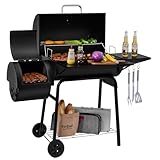

5. Royal Gourmet CC1830S BBQ Charcoal Grill and Offset Smoker
Key specs: 783 square inch barrel charcoal grill; offset smoker; charcoal fuel.
The Royal Gourmet CC1830S is a BBQ charcoal grill and offset smoker with a 783 square inch barrel cooking area. Its size is its cold-weather strength: the barrel fits a full brisket, several racks of ribs or a pork shoulder with room for smoke to move, and the offset firebox keeps the fire to one side so the meat cooks in indirect heat. Charcoal flavour is the reason to choose an offset smoker, and the CC1830S gives that flavour in a large, straightforward barrel body that needs no power at all, which suits a yard with no outdoor outlet.
An offset smoker needs more hands-on fire management in cold weather than a pellet smoker, and that trade-off should be understood before buying. Cold air pulls heat from the barrel, so the cook will feed the firebox more often and watch the temperature more closely than in summer. The reward is a charcoal smoke character that pellet and electric smokers do not reproduce, and a cooking area large enough for a crowd. A sheltered spot out of the wind matters more for this pick than for any other in the guide, because wind across a barrel offset smoker strips heat faster than wind across a small insulated body. Set it in a corner, keep spare charcoal dry and nearby, and start the fire early so the barrel is fully warm before the meat goes in.
Strengths:
- 783 sq in barrel fits a brisket or several racks of ribs at once.
- Offset firebox gives indirect charcoal heat and a strong smoke character.
- Needs no power, so it can stand anywhere in the yard.
Trade-offs:
- Charcoal fire needs more hands-on management in cold weather than a digital smoker.
- Fuel use rises in the cold, so spare charcoal must be kept dry and nearby.
- The barrel needs a sheltered spot, as wind strips heat from a large body.
Who it fits: charcoal cooks who want a large barrel offset smoker, a strong smoke character and no power need, and who are willing to tend the fire through a winter cook.
Best for: large-batch charcoal smoking with no power supply. Not suited for: cooks who want a set-and-forget digital controller.
Check price on Amazon: Royal Gourmet CC1830S BBQ Charcoal Grill and Offset Smoker


6. Char-Griller AKORN 20-Inch Kamado Charcoal Grill and Smoker
Key specs: 20-inch kamado charcoal grill and smoker; triple-wall insulated steel; cast iron grates.
The Char-Griller AKORN 20-Inch Kamado Charcoal Grill and Smoker is the most cold-focused body in this guide. Its triple-wall insulated steel shell is designed to hold heat inside the cooking chamber, which is exactly what a smoker needs when the air outside is cold. Insulation slows the loss of heat through the walls, so the charcoal burns more slowly, the chamber temperature stays steadier, and the cook does not have to feed the fire as often. For a long meat cook in winter, that insulation is worth more than extra cooking area or extra features.
The kamado shape helps too. A round, insulated body with a tight lid and a controlled air intake lets the cook set a low, slow temperature and leave it there, with the charcoal burning at a slow, even rate. The cast iron grates hold heat and give the meat a solid cooking surface, and the 20-inch size fits a brisket, a pork shoulder or a whole chicken with room for smoke to circulate. Charcoal flavour is the other reason to choose this pick: a kamado gives a wood-and-charcoal smoke character that pellet and electric smokers do not reproduce, and it does so while using less fuel in the cold than a thin-walled charcoal smoker.
Strengths:
- Triple-wall insulated steel holds heat and slows fuel use in cold air.
- Kamado body with controlled air intake suits low, slow meat cooks.
- Cast iron grates hold heat and suit large cuts.
Trade-offs:
- Charcoal fire needs more hands-on air control than a digital pellet or electric smoker.
- The 20-inch size suits family cooks better than very large batches.
- Lighting and settling a charcoal fire takes longer in cold weather.
Who it fits: charcoal cooks who want the best insulation in this guide, a strong smoke character and low fuel use through a long winter cook.
Best for: insulated charcoal smoking in cold weather with minimal fuel use. Not suited for: cooks who want a set-and-forget digital controller.
Check price on Amazon: Char-Griller AKORN 20-Inch Kamado Charcoal Grill and Smoker
Buying Guide: How to Choose a Smoker for Meat When Outside Temperature Is Cold
Start with insulation. In cold weather, the body of the smoker matters more than any other feature, because heat lost through the walls has to be replaced by fuel or power. Look for thick walls, double-wall or triple-wall construction, a kamado-style insulated shell or a well-sealed vertical cabinet. A thin single-wall smoker can still work in winter, but it will use more fuel, swing more widely in temperature and need more attention. If the smoker will live outside all winter, insulation is not a luxury feature. It is the feature that decides whether a long cook is calm or a constant fight.
Next, look at temperature control. A digital controller or a PID controller reads the chamber temperature and adjusts the heat in small steps, which keeps the cook closer to the target when cold air is dragging the temperature down. A pellet controller does the same job without a live fire to tend by hand. A charcoal kamado controls temperature with air intake, which is effective once the fire is settled but needs a steady hand at the start. Whichever system you choose, make sure it can hold a low smoking temperature for hours, not just reach a high grilling temperature for a short time. Long meat cooks live at low temperatures for most of their life, and a controller that cannot hold low heat steadily is a poor winter tool.
Cooking area comes third. Measure the cuts you cook most often. A brisket needs length, a pork shoulder needs height and depth, and ribs need either length or enough racks to lay them flat. A smoker that is too small forces the cook to cut meat to fit, which changes the cook and can dry out the cut edges. A smoker that is much larger than needed wastes fuel heating empty space in winter. The picks in this guide range from 518 to 725 sq in, plus a 20-inch kamado, so there is a size for a family brisket without heating a chamber built for a crowd.
Think about how the smoker is fed and checked. A large hopper, a side chip loader and a meat probe all reduce the number of times the door or lid has to open in the cold. A viewing window helps too. Before buying, check where the smoker will stand: it needs a flat, sheltered spot out of the strongest wind, with power nearby if it is electric or pellet-fed, and with enough clearance from walls and fences for safe use. A windbreak, a wall or a corner of a patio can make a real difference to temperature stability, and it costs nothing. Finally, check the fuel you can buy easily in winter. Pellets, charcoal and wood chips all need dry storage, and a smoker is only useful in cold weather if its fuel is on hand when a long cook is planned.
Shelter and power deserve a closer look before any money is spent. A smoker that stands in open wind will use more fuel and swing more widely than the same smoker tucked behind a fence, a garage wall or a purpose-built windbreak, even when both are set to the same temperature. The shelter does not need to be enclosed: an open-sided cover that blocks the prevailing wind while leaving plenty of air flow above and around the smoker is enough, and it also keeps snow off the lid and the controller. Power is the second practical check. Pellet and electric smokers need a reliable outdoor outlet, and a long extension lead run across a snowy yard is a poor substitute for a properly placed socket. Check the lead length, the outlet cover and the route the cable will take, and make sure the controller and the display stay dry when snow melts and refreezes around the unit.
How to Use a Smoker in Cold Weather
Set the smoker up before the meat goes in. Place it in a sheltered spot out of the wind, on a flat surface, with the lid or door facing away from the strongest gusts. Give it extra time to come up to temperature, because a cold body absorbs heat at the start of the cook and the chamber will take longer to settle than it does in summer. Start with a full hopper or a full load of charcoal, and have extra fuel and wood chips ready nearby so a refill does not mean a trip back inside in the middle of the cook.
Keep the door shut. This is the most important habit in cold-weather smoking. Use the meat probe and the viewing window to check progress, and open the door only when the meat needs wrapping, turning or removing. When the door does open, work quickly and close it firmly. A tight seal matters in winter, so check the gasket or lid fit before the cook and replace a worn seal rather than letting warm air leak out around the edges for hours.
Plan for longer cooks. Cold air slows the climb to temperature and can extend the time a large cut spends in the smoker. Start earlier than you would in summer, and use the probe to judge doneness by internal temperature rather than by the clock alone. Rest the meat after the cook in a warm place, covered, so the juices settle before slicing. After the cook, clean the racks and the drip area while the smoker is still warm enough to wipe, and store pellets and chips somewhere dry so they are ready for the next cold day. A smoker that is cleaned and covered after each winter cook starts the next one in better shape and holds temperature more reliably.
Probe care matters more in winter than in summer, because the probe is the tool that keeps the door shut. Insert the probe into the thickest part of the meat, away from bone and away from fat pockets, and route the cable so the door or lid can close fully around it without pinching. A pinched cable can give a false reading, and a false reading can lead a cook to open the door to check by eye, which defeats the purpose of the probe. Wipe the probe clean after each cook, check that the display reading looks sensible at the start of the next cook, and keep a spare probe on hand if the smoker model allows it. A small habit of checking the probe before the meat goes in saves a long cook from drifting off course in the middle of a cold afternoon.
Common Mistakes in Cold-Weather Smoking
The most common mistake is opening the lid too often. Every opening drops the chamber temperature and lets smoke escape, and in cold air the smoker takes longer to recover. A cook who checks the meat every twenty minutes will spend the whole day chasing the set temperature. Trust the probe, trust the controller and open the lid only when there is a job to do. A second mistake is under-fuelling the cook. A hopper that is half full at the start of a winter brisket can run out at the worst moment, and a charcoal load that would last in summer may not last in the cold. Fill the fuel before the cook starts, and keep a reserve within reach.
A third mistake is placing the smoker in the wind. Wind strips heat from the body faster than still cold air, and it can make a digital controller work much harder to hold temperature. A sheltered corner, a windbreak or a wall makes a measurable difference, and it is free. A fourth mistake is skipping the warm-up. A cold smoker body needs time to absorb heat before the meat goes in, and meat placed in a smoker that has not settled will cook unevenly at the start. Finally, many cooks forget that cold weather changes the rest of the cook too: resting, slicing and serving all take place in cold air, so plan a warm resting spot and serve promptly once the meat is sliced.
Another mistake is trusting the clock instead of the meat. Cold weather changes how long a cut takes, and a brisket that finished in ten hours in summer may need twelve in winter, or the other way round if the smoker is well sheltered and the day is calm. A cook who pulls the meat at a fixed time, without checking the probe, risks serving meat that is still tough in the middle or meat that has been held too long and dried out. The probe reading is the guide, and the clock is only a rough plan for when to start checking. The same habit applies to wrapping: wrap when the bark looks set and the internal temperature suggests a stall, not at a fixed hour written down before the cook began.
Final Recommendation
For most cold-weather meat cooks, the Traeger Pro 22 and the Pit Boss 500 FB2 are the easiest starting points: both are pellet smokers with digital control and enough cooking area for a brisket, and the Pit Boss 500 Carbon Series gives the same digital control with a larger 543 sq in cooking space for bigger batches. Cooks who want to follow the smoker from indoors should look at the Brisk It Zelos-450, whose WiFi link cuts down the time spent outside in the cold. Cooks who want charcoal flavour and the biggest cooking area in this guide should choose the Royal Gourmet CC1830S offset smoker, while cooks who want the best insulation should choose the Char-Griller AKORN kamado, whose triple-wall steel body holds heat with the least fuel. Whichever pick fits, the winter rules are the same: shelter the smoker, fill the fuel, keep the door shut and let the probe decide when the meat is done.
Frequently Asked Questions
Can I use a smoker when the outside temperature is below freezing? Yes, with a smoker that holds heat well and a sheltered spot out of the wind. Insulated bodies, digital or PID controllers and a full fuel load all help. Allow extra time for warm-up and for the cook itself, and keep the door shut as much as possible.
Do pellet smokers work in cold weather? Yes. A pellet smoker feeds fuel automatically and its controller adjusts to hold temperature, which suits cold conditions. Pellet use rises in the cold, so start with a full hopper and keep spare pellets dry and nearby.
Is an offset smoker good for winter meat cooks? Yes, for cooks who are willing to tend the fire. An offset smoker gives a strong charcoal smoke character and a large cooking area, but cold air pulls heat from the barrel, so the fire needs feeding more often and the smoker needs a sheltered spot out of the wind.
Why does my smoker lose temperature in the cold? Heat escapes through the walls and the lid, and cold wind speeds that loss. Insulation, a tight seal, a sheltered position and a controller that reacts quickly all reduce the drop. Opening the door makes it worse, so use a probe instead.
Should I wrap meat sooner in cold weather? Wrapping is a matter of bark and internal temperature, not of the weather alone. In cold weather, wrapping can help the meat push through a stall without losing more heat, but the decision should follow the meat and the probe, not the thermometer outside.
More Smoker Guides on Airfryer Kitchen Supply
For more ideas on the same topic, see our guides to the best electric smokers under 300, the best pellet smokers under 500 and the best insulated smokers. Each guide covers a different angle on choosing a smoker, and together they help narrow the choice by fuel, budget and insulation before a winter cook is planned.


