Disclosure: As an Amazon Associate, airfryerkitchensupply.com earns from qualifying purchases. Links on this page are affiliate links; they cost you nothing extra. Prices and availability change often, so check the current Amazon listing before you buy.
Reading vegetable chopper reviews is a confusing way to spend an evening, because the same models attract devotion and fury in roughly equal measure — one cook calls a chopper life-changing while another reports it cracked on the third onion. This roundup of vegetable chopper reviews exists to explain that split rather than just average it out. The disagreement is rarely about the product; it is about the match. A press chopper in the hands of a batch-cooking parent is a revelation, and the identical tool in the hands of someone who cooks one small meal at a time is a bulky disappointment with a fiddly wash-up. So these reviews are organised by fit: what each leading design actually does well, where owners consistently praise it, where they consistently complain, and who should take each verdict seriously. No star ratings or review counts are printed here — those figures shift constantly and would mislead you — but the patterns underneath them are stable, and patterns are what this page trades in.
Six designs anchor these vegetable chopper reviews: the Mueller Pro-Series Vegetable Chopper and the Fullstar Vegetable Chopper, the two big multi-insert press sets; the OXO Good Grips Vegetable and Onion Chopper, the single-purpose press; the Brieftons QuickPush Food Chopper, the plunger design; the NutriChopper, the compact direct-to-container chopper; and the Ninja Express Chop, the electric mini-chopper that plays by different rules entirely. Between them they cover every mechanism on the market and every tier from entry to mid, with the electric reaching toward premium convenience. If you read only one section, read the complaints — in this category, the complaints are a specification sheet for what to check before you buy.
Key Takeaways
- Best all-round press: the Mueller Pro-Series, for hinge strength and clean pusher action across batch-sized jobs.
- Best value breadth: the Fullstar, whose many inserts suit experimenters — with a more demanding wash-up as the price.
- Best for onions and small households: the OXO, one dice size done exceptionally well and the easiest grid to clean.
- Best for small jobs: the Brieftons QuickPush and the compact NutriChopper, sized for one onion rather than a batch.
- Best for mincing: the Ninja Express Chop — herbs, garlic, and cooked bases — but it does not dice, and no review should pretend it does.
- The pattern in every complaint: cracked hinges trace to oversize pieces and off-centre pressing; grid frustration traces to skipped brush-cleaning. Technique, not luck.
In this guide
How to Read Vegetable Chopper Reviews Without Being Misled
Before the model-by-model verdicts, a short field guide to the genre, because vegetable chopper reviews — including owner reviews on retail sites — follow predictable distortions. The first is the honeymoon effect: a chopper is thrilling in week one, when the comparison is against slow knife dice, and its real test is month six, when the wash-up has been done a hundred times. Reviews written after long ownership are worth several written on delivery day. The second distortion is the tomato problem: a meaningful share of one-star fury in this category comes from buyers who pressed ripe tomatoes, soft fruit, or frozen vegetables through a grid designed for firm produce, and reviewed the tool rather than the mismatch. The third is bundle confusion: the same model name ships with different insert sets at different times, so a review praising a slicing blade may describe a box that no longer includes one — always check the current listing’s contents rather than an old review’s.
The fourth distortion runs the other way: five-star enthusiasm from cooks whose previous baseline was genuinely slow knife work. Their joy is real, but it measures their starting point as much as the tool. What survives all four distortions, and what these reviews lean on, are the mechanical facts owners keep repeating across years and models: which hinges crack and why, which pushers clear their grids and which leave a mat of food behind, which grids stain, which containers skate across the counter, and which designs people quietly stop using. A chopper is a simple machine under repeated load; its reviews are engineering reports written by amateurs, and they are most useful read that way. With that lens in place, here is what the evidence says about each design — starting with the safety rules that every reviewer, enthusiastic or furious, ends up endorsing.
Blade Safety: The Rules Every Reviewer Ends Up Endorsing
Whatever model you choose, these rules are part of owning it. A vegetable chopper’s blade grid — and on some sets a slicing blade in the lid — is extremely sharp, with many edges close together exactly where trapped food tempts a fingertip. Read this block before the model reviews, because several verdicts below turn on how safely a design handles its sharp parts.
- Press food with the pusher or lid only, never your fingers. If food sits wrong on the grid, open the press, reposition it, and press again. Palms belong on the lid, spread wide.
- Clear stuck food with the cleaning comb or a brush from the back of the grid. Never pick pieces out of the blades with a fingertip, and never use a knife point, which damages edges.
- Wash blades with a brush, moving away from the edge — never bare-hand a grid in soapy water. A blade grid hidden under suds is how these tools cut people. Keep it visible, brush it, lay it aside in sight.
- Store all blades guarded and out of children’s reach — in the storage box or inside the lidded container, never loose in a drawer.
- Check for cracked plastic before use. A cracked hinge, lid, or grid frame can fail mid-press and carry your hand toward the blades. Retire cracked parts; never press harder on a damaged tool.
- Work on a dry, flat surface with the non-slip base down. A chopper that slides while you press is a hazard, not a nuisance.
Kept faithfully, these rules make a press chopper one of the safer cutting tools in the kitchen, because the cut itself happens enclosed. Every injury story in the review literature involves a shortcut through one of the rules above.
The Reviews: Six Designs, Judged on the Evidence

Mueller Pro-Series Vegetable Chopper
The Mueller Pro-Series is the reference point for the full-size press format, and the praise it collects follows a consistent theme: it feels engineered for the press itself. The lid is broad, the hinge action is confident, and the pusher fingers meet the grid precisely enough that a press finishes clean — dice in the container, almost nothing left in the blades. Owners who batch-cook gravitate to it because the container swallows a family-sized pile of dice and the two principal grids cover the vast majority of real cooking. On hard vegetables it is the manual model reviewers trust most with sweet potato, provided pieces are sized to the grid first. The complaints are equally consistent and equally fair: it is a large object to store, the full insert set is more than most owners use, and the grid demands the brush routine done properly — the cleaning comb helps, but a rushed fingertip clear-out is both unsafe and ineffective. Verdict: the strongest all-round press in this roundup, in the mid tier. Best for: families, batch cooks, soup and curry households. Not suited for: small kitchens, minimalists, anyone cooking for one. If you buy one press chopper and use it hard for years, the evidence points here.

Fullstar Vegetable Chopper
The Fullstar’s reviews read like an argument about what value means. Admirers point to the sheer spread of functions in one entry-tier box — dice grids in more than one size, slicing and julienne inserts, and spiralizing among them — and for a first-time buyer unsure which cuts they will actually use, that breadth is a genuine service: one purchase becomes a survey of the whole category. Critics counter with the ownership costs: the press mechanism feels less substantial than the Mueller’s under heavy loads, the pusher fit leaves more residue to clear, and the insert collection multiplies washing, drying, and guarded storage. Both camps are describing the same product accurately. The Fullstar is a competent press and a broad toolkit; it is not the press you would choose for a decade of daily sweet potatoes. Its spiralizing function is a fair introduction and no more — cooks who fall for spiralized vegetables graduate to a dedicated tool, as our spiralizer reviews coverage explores. Verdict: the best first chopper for experimenters, priced in the entry tier and honest value there. Best for: first-time buyers, variety seekers, occasional choppers. Not suited for: heavy daily use on hard vegetables, or anyone who hates washing multiple parts.

OXO Good Grips Vegetable and Onion Chopper
The OXO attracts the calmest reviews in the category, and the calm is diagnostic: it promises one thing — dice, at one size, with minimal fuss — and delivers it so completely that there is little to argue about. The soft grip and balanced lid make the press feel controlled rather than violent; the pusher sweeps the grid cleaner than any rival’s; the container’s markings and pour spout show a designer who has actually emptied diced onion into a pan. It is also, reviewers agree, the fastest press chopper to wash, because a single smooth grid has nowhere for food to hide. The criticism writes itself: one dice size only, a capacity that suits households of two to four rather than batch day, and no slicing or sticks for cooks who want range. Owners who bought it expecting range feel short-changed; owners who bought it for onions call it the most-used gadget they own. Verdict: the finest single-purpose chopper in this roundup, mid tier, and the easiest recommendation to a small household. Best for: onion-heavy everyday cooking, smaller households, anyone who values a ninety-second wash-up. Not suited for: multiple cut sizes, big batches, slicing jobs.

Brieftons QuickPush Food Chopper
The Brieftons QuickPush is reviewed by a different tribe: cooks who wanted help with small, frequent jobs rather than batch prep. Its plunger action — push down, rotate the food a quarter turn, push again — turns an onion or a few carrots into a coarse, serviceable chop in well under a minute, and the whole unit rinses clean almost as fast. Praise centres on exactly that immediacy and on its compact footprint. Criticism centres on uniformity: repeated plunging cannot match a single press for evenness, so pieces vary, and the chamber size firmly caps ambition — nobody batch-preps a kilo of onions in a QuickPush, and reviewers who tried mark it down for failing a job it never claimed. The mechanism also asks your hand to work directly over the housing, which makes the pusher-only discipline a live habit rather than a formality. Verdict: an entry-to-mid tier small-job specialist that succeeds precisely where the big presses feel like overkill. Best for: small kitchens, quick single meals, garlic-and-onion-for-one cooking. Not suited for: presentation dice, batch cooking, cooks who want one tool for everything.
NutriChopper
The NutriChopper’s idea is containment: a compact press that chops directly into its own storage container, with interchangeable plates for slicing and different cut sizes, so prep and storage become one motion. Reviews from meal-preppers are warm — dice a pepper straight into the tub, lid it, refrigerate it, and the counter never sees a board — and its small footprint suits genuinely tight kitchens and even desk-adjacent cooking in small flats. The reservations are about scale and robustness: the container that makes it neat also makes it small, the press is built for moderate loads rather than dense root vegetables in quantity, and swapping plates adds fiddly moments to what rivals do with a single grid. It is, in other words, a well-aimed tool for a specific lifestyle rather than a generalist. Verdict: entry-to-mid tier, and the pick of this roundup for portion-scale meal prep. Best for: meal-preppers, small households, salads and packed lunches. Not suited for: family batches or heavy hard-vegetable work.
Ninja Express Chop
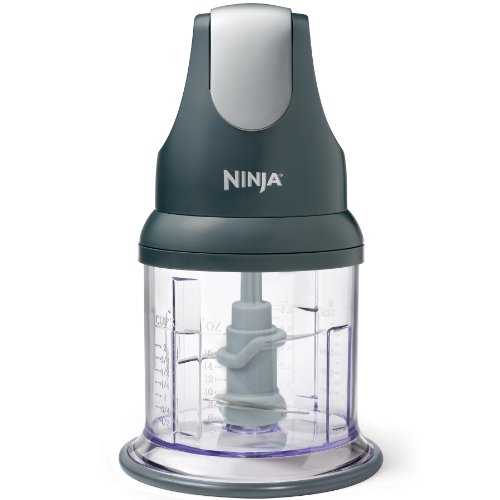
The Ninja Express Chop must be reviewed against its own mechanism, because comparing its output to a press grid’s dice is a category error reviewers make constantly. It spins a stacked blade in a small bowl: pulse briefly for a coarse chop, longer for a mince, longer still and you are making a purée whether you wanted one or not. Judged as a mincer, it is excellent — herbs, garlic, nuts, breadcrumbs, and onions destined for cooked bases are handled faster than any manual tool here, with a bowl and blade that wash easily. Judged as a dicer, it fails, and its negative reviews are dominated by buyers who expected cubes and got confetti. It also introduces the electric trade-offs: a cord, a motor pod to store, noise, and a hard no to any task while it is unplugged and dirty. Verdict: mid tier, the best mincing tool in this roundup, and a complement to a press chopper rather than a substitute. Households choosing only one should decide by output: cubes, choose a press; mince, choose this — and the comparison with full-size processors in best food processors shows what stepping up buys. Best for: herbs, garlic, nuts, cooked bases, small fast jobs. Not suited for: neat dice, salsa, salads, garnishes.
What the Complaints Teach: Failure Modes Across All Six
Read enough vegetable chopper reviews and the negative ones sort themselves into four piles, each with a lesson attached. The cracked-hinge pile is the largest, and its own details acquit the tools more often than the reviewers intend: the breaks cluster on dense vegetables pressed in oversize pieces, on lids pushed at a corner rather than centred, and on grids not fully seated, which makes the pusher strike at an angle. The lesson is technique — size the food, seat the grid, press centred — and the models with the strongest hinges (the Mueller above all) forgive technique lapses longest. The stuck-grid pile teaches the second lesson: pusher fit varies, cleaning combs exist for a reason, and a grid cleared immediately with a brush never becomes the welded mess described by owners who left it overnight. The skating-container pile is solved by a dry surface and a non-slip base, and the disappointment pile — the largest of all — is not about breakage at all: it is buyers discovering that a press cannot slice, that an electric cannot dice, or that a four-part wash-up is the true price of the tool. Every one of those discoveries is available in advance, in this roundup and in the companion vegetable chopper buying guide, for the cost of reading before buying.
Strengths and Trade-Offs of the Category
Strengths
- Consistent dice that cook evenly — the benefit owners praise most after long use, ahead of speed.
- Contained, enclosed cutting with hands on a lid rather than near a moving blade.
- A model for every scale — from a plunger for one onion to a press that feeds a family’s batch day.
Trade-Offs
- Wash-up is the subscription fee: grid, pusher, lid, and container, every single use.
- Mechanisms do not overlap: press, plunger, and electric each fail at the others’ best jobs.
- Plastic under load has a lifespan: hinges age, and honest ownership includes crack checks and eventual replacement.
Who Each Verdict Is For
Reviews mislead when a verdict written for one household is read by another, so here is the mapping plainly. If you cook for a family or batch-cook weekly, the Mueller’s verdict is yours. If you are equipping a first kitchen and do not yet know your own habits, the Fullstar’s breadth lets you learn them cheaply in effort if not in washing. If you cook for two and dice an onion most nights, the OXO is the review to trust. If your jobs are small and constant, the Brieftons and NutriChopper reviews describe your life. If your prep is garlic, herbs, and sauce bases, the Ninja’s verdict is the relevant one — and if slicing is secretly the job you care about, none of these reviews is, and you belong in mandoline slicer reviews instead. The full decision framework, with the questions to ask in order, lives in how to choose a vegetable chopper, and the value question — whether any chopper repays its cupboard space — is argued in is a vegetable chopper worth it.
Care Essentials That Keep the Good Reviews Coming
Long-ownership reviews diverge from early ones mainly on care, and the habits of the happy owners are boringly consistent. They wash immediately — a grid rinsed within minutes needs only a brush and seconds, while the same grid tomorrow needs soaking and picking. They brush from the back of the grid, away from the edges, per the safety rules, and they keep the pusher or cleaning comb doing the clearing rather than a fingertip. They dry parts fully before storage, store every blade guarded in its box or lidded container away from children, and they run a monthly crack check over hinge and lid, because catching a hairline crack at the sink beats discovering it mid-press over a sweet potato. They also size food to the grid as a matter of routine, which is simultaneously a performance habit, a hinge-preservation habit, and a safety habit. None of this is skilled work; it is thirty seconds of routine that separates the five-year owners from the donation-box owners. The complete method, including stain and odour removal and dishwasher guidance, is in how to clean a vegetable chopper.
Performance by Vegetable: Where the Reviews Agree
Across hundreds of owner accounts, the per-vegetable verdicts are remarkably consistent, and they draw the category’s true map. Onions earn near-universal praise for the press format: one motion, even dice, minimal tears, and output that cooks the way recipes assume it will. Peppers follow close behind, with the single refinement that skin-side-down placement gives cleaner cuts. Carrots and potatoes score highly on every press with a sound hinge, with the recurring caveat that pieces must be sized to the grid — reviewers who pre-cut report a different, better tool than reviewers who forced whole vegetables through. Sweet potato is the great divider: strong presses handle it in sized pieces; lighter lids flex, creak, and occasionally fail, and its reviews are where hinge reputations are made and lost.
Courgettes and cucumbers review well on large grids and poorly on small ones, where watery flesh crushes. Celery dices cleanly and is a quiet favourite for soup bases. Mushrooms divide opinion by grid size in the same way. Then come the honest failures, consistent across every brand: ripe tomatoes collapse into juice and skin under a press, soft stone fruit fares no better, and leafy herbs are simply not grid food at all — they belong to the knife or the electric mincer. Cheese, which some product pages cheerfully suggest, gums grids and disappoints nearly everyone who tries it in quantity. Frozen vegetables are out entirely. The pattern under all of this is the category’s founding bargain: a press chopper is superb inside the firm-vegetable fence and useless outside it, and the happiest owners are the ones whose cooking lives mostly inside that fence.
Press, Plunger or Electric: The Mechanism Divide
If the reviews teach one structural lesson, it is that mechanism determines destiny. The hinged press is a dicing machine: its grid defines an exact piece size, its single motion guarantees uniformity, and its weaknesses — size, wash-up, hinge load — are the costs of that precision. The plunger trades precision for immediacy: no setup, a small footprint, results that vary with your rhythm, and a ceiling on batch size set by its chamber. The electric mini-chopper abandons geometry altogether: spinning blades produce a distribution of sizes centred wherever your pulse timing puts it, which is liberation for mincing and uselessness for presentation dice. Reviewers who understand which mechanism they bought are satisfied at a strikingly high rate; reviewers who bought a mechanism hoping it would impersonate another are the source of most of the category’s one-star anger. This is also why combination advice — own a press for dice and use a knife or electric for the rest — recurs in long-ownership reviews: experienced owners stop asking one tool to cover the whole map. The head-to-head with the other great prep specialist, the mandoline, is its own question, settled in vegetable chopper vs mandoline slicer.
Durability: The Two-Year View
Short reviews measure delight; long reviews measure hinges. The two-year accounts converge on a clear hierarchy of wear. Blade grids, being stainless steel with no moving parts, essentially do not wear out in home use — they dull slowly if abused with knife-point clearing, and they stain if stored wet, but a cared-for grid outlasts everything around it. Containers scratch and cloud but keep working. The hinge and lid are the consumables: they absorb the full force of every press, and their lifespan is set by the heaviest work they are given and the technique of the hands driving them. Owners who size hard vegetables and press centred report hinges going strong for years; the failure stories almost always include a season of forcing oversize sweet potato. Pushers sit between the two — their fingers can chip if repeatedly struck against a mis-seated grid. The practical conclusion is that a chopper is not a buy-it-for-life tool like a cast-iron pan, but a buy-it-for-years tool whose years you personally control through technique and crack checks. Budget mentally for eventual replacement of the press body, keep the grids, and the economics still favour the category comfortably.
What the Tiers Actually Buy
Because these reviews deliberately avoid printed prices, the tier language needs defining. Entry tier buys the mechanism in its simplest honest form: a working press or plunger, adequate grids, lighter plastics, and fewer refinements — the Fullstar’s breadth and the Brieftons’ simplicity both live here, and for occasional use they are genuinely sufficient. Mid tier buys load-bearing quality: hinges and lids built for daily hard work, pushers fitted precisely to their grids, non-slip bases, cleaning combs, and containers designed by people who cook — the Mueller and OXO sit here, and it is the tier long-ownership reviews endorse most warmly. The electric Ninja prices its motor and convenience into the same broad band. What no tier buys is an escape from the category’s physics: every tier still needs brush-washing, guarded storage, and sized pieces, and every tier still fails on a ripe tomato. Spend upward for strength and fit, not for promises.
A Week of Real Cooking: What Daily Use Actually Feels Like
Abstract verdicts hide the lived texture of ownership, so here is the composite week that long-term reviewers describe, day by day. Monday is soup: two onions, three carrots, celery, and potatoes through the press in a few unhurried minutes, dice so even that the soup cooks as one thing rather than a race between ingredients — this is the evening the chopper justifies itself most completely, and the wash-up, done while the pot comes to a simmer, is genuinely trivial because everything is still wet and loose. Tuesday is a stir-fry: peppers and courgette on the large grid, carrots in batons, garlic — pointedly — done by knife in seconds, because the grid has nothing to offer garlic and the wise owner does not ask. Wednesday is the test of honesty: a salad built on ripe tomatoes, and the chopper stays in the cupboard while the knife works, a small moment that separates owners who understand their tool from owners who resent it.
Thursday is tacos and salsa, the press’s showcase: onion and pepper dice at the small setting, consistent enough to distribute evenly through every bite, produced faster than the meat browns. Friday is where the electric earns its shelf space — a sauce base of onion, garlic, and herbs pulsed to a mince in the Ninja while the press rests, the two mechanisms dividing the evening between them without rivalry. The weekend brings the batch session, the press working through a market haul of firm vegetables for the freezer and the week’s soups, and it is here, somewhere around the fortieth press, that hinge quality stops being a specification and becomes a feeling in the shoulders: the strong lids still feel boring, and boring is the highest praise a hinge can earn. Woven through the whole week is the ninety-second ritual — brush, rinse, dry, store guarded — repeated until it is as automatic as rinsing a board. That week, or something like it, is what the positive long-term reviews are actually reporting; the negative ones usually describe a week where the tool was asked to be a knife, a slicer, and a processor as well, and was punished for being only itself.
Bundles, Spares and Accessories: What Is Worth Having
Because these models ship in shifting bundles, reviewers offer consistent guidance on what to value in the box. A second dice grid in a genuinely different size is worth more than any three novelty inserts, because dice size is a cooking variable you will actually use. A cleaning comb matched to the grid is a small object with an outsized effect on both safety and wash-up time, and its absence is a recurring complaint in reviews of sets that omit one. A storage box that holds every insert with blades guarded is not packaging — it is safety equipment, and sets that include one get stored properly while loose inserts get drawers and dull edges. A lidded container that doubles as storage earns praise from meal-preppers specifically. Spare grids matter less than buyers fear: grids rarely fail, and when a press dies it is the hinge, which bundles do not spare. Replacement-part availability from the maker is worth checking on the listing if you are buying for the long term. What is not worth paying for: duplicate inserts in near-identical sizes, novelty shapes used once for a photograph, and any accessory that adds washing without adding a weekly job. Judge the box by the week described above, and most bundles sort themselves.
The Consensus Scorecard, in Words
Distilling the whole field into one paragraph per criterion: for dice quality, the full presses lead and tie — Mueller and OXO produce the cleanest, most uniform cubes, the Fullstar close behind, the plunger and compact designs a step down, the electric in a different event entirely. For speed on a single small job, the plunger and the OXO win; for speed across a batch, the big presses win by a widening margin as the pile grows. For hard vegetables, hinge strength rules and the Mueller takes the criterion outright. For ease of cleaning, the OXO’s single grid is the field’s best, the Ninja’s bowl-and-blade second, and the multi-insert sets trail in proportion to their insert count. For storage, the compact NutriChopper and the Brieftons win by simply being small. For versatility, the Fullstar’s bundle is unmatched, with the caveat that versatility is the criterion owners value most before purchase and least after a year of reaching for the same two grids. For longevity, the evidence favours strong hinges and simple designs. No model wins the card, which is precisely why this roundup refuses to crown one: the criteria you weight first are a description of your cooking, and your cooking should pick the chopper.
Second Choppers: What Owners Buy When They Buy Again
The most revealing reviews are the repeat purchases, because they show what experience teaches. Owners replacing a broken entry-tier press overwhelmingly move up to a stronger hinge rather than a bigger bundle — they have learned that load-bearing quality, not insert count, was the binding constraint. Owners whose first chopper was a maximalist set frequently simplify on the second purchase, choosing the OXO-style single grid or a two-grid press, having discovered their true repertoire. A distinct group adds rather than replaces: press owners buy the electric mini-chopper for garlic and herbs, and electric owners buy a press after one salsa too many, ending with the two-mechanism kitchen the mechanism section recommends. Almost nobody who followed the safety and sizing rules reports regretting the category itself; regret concentrates among those whose first purchase mismatched their cooking, which is a reading failure this cluster of articles exists to prevent. If you are buying your first chopper, the repeat buyers’ lesson is free: buy the hinge and the fit, keep the bundle modest, and let your second purchase — if you ever need one — be an addition, not a correction.
Where Reviewers Genuinely Disagree — and Why Both Sides Are Right
Three arguments run through this category’s reviews without resolution, and each is worth understanding rather than settling. The first is whether a chopper is faster than a knife. Skilled knife users are correct that a single onion falls to a good knife in comparable time once washing is counted; batch cooks are equally correct that by the sixth onion the press has lapped the knife while producing better dice. Both are measuring honestly — at different volumes. The crossover point sits somewhere around two to three onions’ worth of dice, which is why household size predicts satisfaction better than almost any product feature. The second argument is whether the wash-up is trivial or intolerable. Owners who brush immediately describe ninety seconds; owners who wash later describe a siege. The tool is identical; the habit is the variable, and since you know your own habits better than any reviewer does, your honest self-knowledge outranks their testimony here.
The third argument is whether multi-function sets are value or clutter. For the cook still discovering their repertoire, a broad set is a cheap education; for the cook with settled habits, the same inserts are guarded-storage obligations that never cook anything. Notice that all three arguments have the same shape: the reviewers are not disagreeing about the product at all, but reporting from different kitchens, volumes, and habits. That is the deepest reason this roundup is organised by fit rather than by ranking, and why the most useful sentence in any chopper review is the one describing the reviewer’s cooking. When you read owner reviews after this page, read them that way — extract the kitchen first, then decide whether the verdict travels to yours. The buying framework in vegetable chopper buying guide turns exactly that reading skill into a checklist.
Final Verdict
The vegetable chopper market makes more sense once you stop asking which model is best and start asking which verdict describes your kitchen. On the evidence collected across these vegetable chopper reviews: the Mueller Pro-Series is the press to buy for volume and longevity, the OXO for effortless everyday onions, the Fullstar for breadth on a first purchase, the Brieftons and NutriChopper for small-scale cooking, and the Ninja Express Chop for mincing — with the standing warning that an electric chopper is not a dicer. Choose by mechanism first, model second, and follow the safety and care rules as part of the purchase, and the review you write in a year is likely to be one of the calm ones. For the single-model deep dive, see the companion vegetable chopper review; for the tool that owns slicing, see vegetable chopper vs mandoline slicer.
One closing observation from the whole body of reviews: satisfaction in this category is unusually predictable. Cooks who matched mechanism to cooking, sized their pieces, pressed centred, and brushed the grid immediately report a tool that quietly improves weeknight cooking for years; cooks who skipped any two of those four report a gadget. The models above differ in strength, breadth, and refinement, but none of them repeals that arithmetic. Choose the design whose strengths cover your most common evening, forgive it its known limits in advance, and you will very likely join the calm majority of owners for whom the vegetable chopper simply works.
Reading Vegetable Chopper Reviews Critically: Patterns That Matter More Than One Opinion
The purchase is the easy part. A vegetable chopper proves itself at the prep area, where onions, peppers and salads begin, in the middle of getting uniform pieces quickly for weeknight cooking and meal preparation, long after the packaging has gone. So work backwards from daily life: fix the routine, the space and the people in your mind first, and only then weigh the features that looked persuasive on a product page. Start with that the blade grids match the dice and slice sizes your recipes actually use. If that check fails, stop there, since the remaining virtues of any vegetable chopper are built on a foundation your home has already rejected. The easiest items to own are the ones that ask for nothing between uses. If a vegetable chopper asks for something, make sure the routine gives it automatically rather than relying on memory.
Check for duplicated function in your own home first, because the item you already own that does part of this job changes what the new vegetable chopper actually needs to be. Other people in the household get a vote too, since the person who cleans, moves, stores or shares the vegetable chopper will find friction that the buyer, focused on the main job, can easily miss. Keep the paperwork, digital or printed, in one known place: instructions, guarantee details and the measurements you took. Future you, troubleshooting at an inconvenient hour, will be grateful. Most disappointment with a vegetable chopper traces back to food forced through the wrong grid, bending blades and leaving half-cut pieces. It is a slow, predictable process, which is good news, because predictable problems can be designed out before you buy.
- Note any workaround owners mention and judge if you would accept it.
- Read the newest comments to catch version changes.
- Treat single dramatic stories as anecdotes, not evidence.
- Look for the same specific observation repeated by different owners.
- Weight comments from households like yours most heavily.
Then turn to whether the container, lid and blades come apart for complete washing. It sounds secondary while you are shopping and becomes primary the moment the vegetable chopper joins your routine. Ownership is easier with a small paper trail. Keep the instructions, note the model details from the listing, and record any quirk as it appears rather than reconstructing it months later. The opposite mistake is just as costly over time: a vegetable chopper that is slightly too small, too light or too basic for a daily routine will be resented long after the saving is forgotten. Think about what the vegetable chopper has to live alongside. The neighbouring furniture, fittings and appliances in your home are fixed facts, and the newcomer is the one that has to fit in.
There is always a learning curve, however small. Decide who in the household faces the steepest part of it with this vegetable chopper and whether the design helps or hinders them. Storage between uses is part of ownership, so decide where the vegetable chopper and anything it needs will live when idle, and be honest if the only answer is a surface you cannot spare. When reading many owners’ comments about a vegetable chopper, look for repeated, specific observations about the same detail, because patterns across households are evidence while one dramatic story is only an anecdote. Every item leaves a footprint on the home beyond its dimensions: noise, mess, heat, moisture, effort or visual clutter. Weigh that footprint for a vegetable chopper as seriously as its size.
Cleaning time is an ownership cost like any other, so favour the design whose care routine fits the time you genuinely have, not the time you would have in an ideal week. Think about handing the task over: if someone else had to use, clean or reset the vegetable chopper from your brief description alone, the design and your setup would pass or fail together. Uncertainty about your own routine cannot be fixed by research about products. Settle how, where and how often the vegetable chopper will be used, and the shortlist usually shortens itself. The most future-proof question is also the simplest: if your routine changed moderately, would this vegetable chopper adapt, or would it become the wrong tool kept out of guilt?
If a guest can use the vegetable chopper correctly without instruction, the design is intuitive; if they cannot, expect the same friction, softened only by habit, in your own routine. Most faults that appear months in are really maintenance or setup faults wearing a disguise, so return to the basics, position, load, cleanliness and fit, before concluding anything has failed. Oversizing is the quietest buying mistake: capacity you never use still has to be stored, cleaned, moved and worked around every single day. Set a review date about a month after purchase and judge the vegetable chopper then against the three jobs you named, while adjusting, exchanging or returning is still practical.
Anything heavy, hot, sharp, load-bearing or electrically powered deserves a respectful pause in the decision, and the maker’s own guidance, read before purchase, is part of the specification. Ask which part of the vegetable chopper will look tired first and whether that tiredness is cosmetic, cleanable, repairable or terminal, because the answer sets the realistic lifespan. Read the included-parts list as carefully as the feature list. Many disappointing first days with a vegetable chopper are simply the discovery that an essential accessory was never in the box. Get the tape measure out before you get the shortlist out. Written measurements settle arguments that photographs start, especially around clearances that only matter when the vegetable chopper is actually in use.
Frequently Asked Questions
Which vegetable chopper do reviewers recommend most for families?
The full-size press format, with the Mueller Pro-Series the most consistently praised example, because batch cooking rewards container capacity, hinge strength, and a pusher that clears cleanly across hundreds of presses. Families dice in volume and in hard vegetables, which is exactly the workload that separates sturdy presses from lighter ones. Smaller households consistently report better experiences with the OXO or the compact options, so let your batch size, not enthusiasm, choose the format.
Why do the same choppers get both glowing and furious reviews?
Because the match matters more than the model. The same press is thrilling for a batch cook and pointless for someone who dices one small onion twice a week; the same electric is perfect for sauce bases and a betrayal for someone expecting salsa cubes. Technique explains the rest: cracked hinges cluster around oversize pieces and off-centre pressing, and grid complaints cluster around skipped brush-cleaning. Read reviews for the mechanical patterns, not the emotions, and match the pattern to your own cooking.
Are expensive vegetable choppers actually better?
Within this category, moving up a tier buys specific things: stronger hinges and lids, pushers that fit their grids more precisely, better non-slip bases, and designs that wash faster. It does not buy sharper results in kind — an entry-tier press still dices an onion evenly. The mid tier is where most long-term owners land, because hinge strength and pusher fit are the qualities that decide whether a chopper is still pleasant in year three. Pay for those, not for extra inserts you will never fit.
How many blade inserts do I actually need?
Most owners, whatever they bought, end up using one or two grids almost exclusively — typically a small dice and a large dice. Extra inserts have value for cooks who genuinely vary their cuts weekly, and for first-time buyers still learning their habits. Otherwise they add washing, storage, and guarded-storage obligations without adding meals. If you already know your cooking, a focused design like the OXO’s single grid can be the smarter purchase than a maximalist set; if you do not know yet, breadth is a reasonable tuition.
Can any of these choppers slice as well as dice?
Multi-insert sets include slicing blades that produce acceptable slices for gratins, salads, and pickling, but slicing is not the press format’s strength: thickness control is limited compared with a dedicated slicer, and the produce size is capped by the frame. If slicing is a major part of your prep — potatoes for gratins, cucumbers for pickles, cabbage for slaw — a mandoline does it better and faster, which is why the two tools are compared head-to-head in vegetable chopper vs mandoline slicer.
What is the most common reason a chopper ends up unused?
The wash-up, by a wide margin. Owners rarely abandon a chopper because the dice disappoint; they abandon it because a grid left unwashed becomes a chore, and the chore becomes a reason to reach for the knife. The fix is procedural, not financial: brush the grid immediately, every time, and the whole tool rinses in about ninety seconds. Storage runs second — a chopper buried at the back of a cupboard is a chopper retired. Keep it reachable and rinsed, and usage takes care of itself.
A final pattern worth naming: the reviews that age best — the ones still accurate years after posting — are the ones that describe a specific kitchen, a specific vegetable, and a specific habit. Everything in this roundup has been filtered for exactly that specificity, and the models that emerge recommended are the ones whose strengths survive contact with real Tuesdays rather than showroom comparisons. Let that be your standard when you read beyond this page, too.
And one more, because it recurs in every comment thread on the subject: nobody in the long-ownership reviews reports missing the inserts they did not buy, while a great many report tripping over the ones they did. Buy the tool your cooking describes, keep the box it came in for guarded storage, and let the neighbours own the spiralizer attachment.
Related Reading
Round out the picture with vegetable chopper pros and cons for the balanced ledger, the deep-dive vegetable chopper review, and the slicing side of the kitchen in mandoline slicer buying guide. For dicing at full processor scale, see best food processors and prep on a board from best cutting boards for home cooks.


